State Guide
Birds of New Jersey
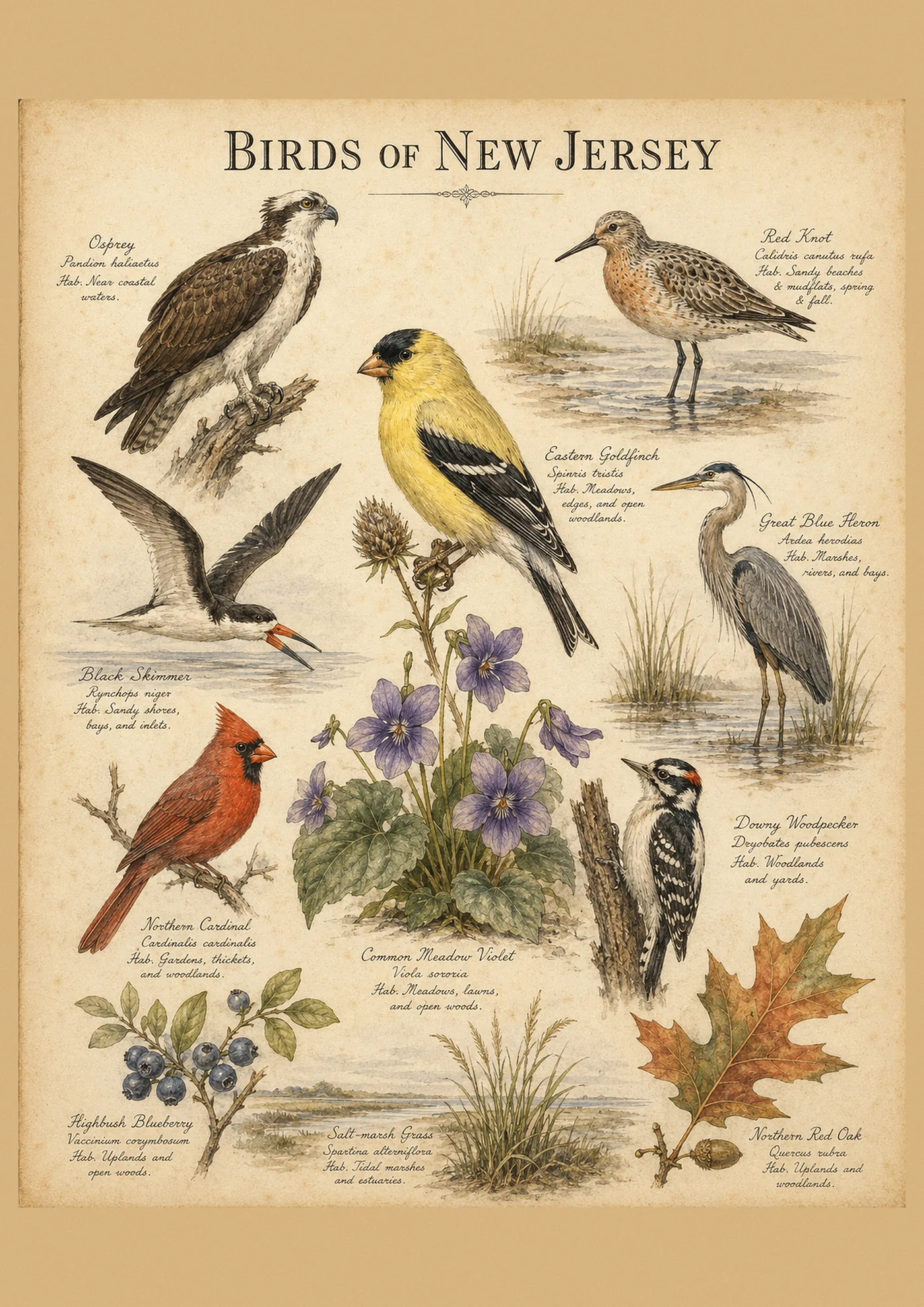
On May 13, 1935, the New Jersey Senate unanimously passed a bill designating the Eastern Goldfinch as state bird. The bill nearly failed. On its first reading, senators had whistled and jeered Senator Dryden Kuser’s advocacy into defeat, rejecting the measure by four votes. Reconsidered in May, it passed without opposition. Governor Harold G. Hoffman signed it into law on June 27, 1935, codified as Chapter 283 of the Laws of 1935. The bird is now listed under its current name: the American Goldfinch (Spinus tristis).
The choice of a bright yellow finch for a coastal, industrialised state has always carried a quiet argument. The goldfinch does not winter in places like Florida. He stays through the Atlantic snow, turning from bright yellow to olive-drab by autumn and back again by spring - a small, visible case for endurance in a state that has historically had to make one.
New Jersey’s real ornithological distinction is not its state bird but its geography. The state is a peninsula, long and narrow, terminating at Cape May where the Atlantic and Delaware Bay shores converge. Every southbound songbird, hawk, and shorebird funnelled down the Eastern Seaboard eventually runs out of land at that point. The New Jersey Bird Records Committee, which maintains the official state list, has documented over 490 species in the state - a count that reflects the Atlantic Flyway’s full breadth compressed through one narrow corridor.
The state’s signature species
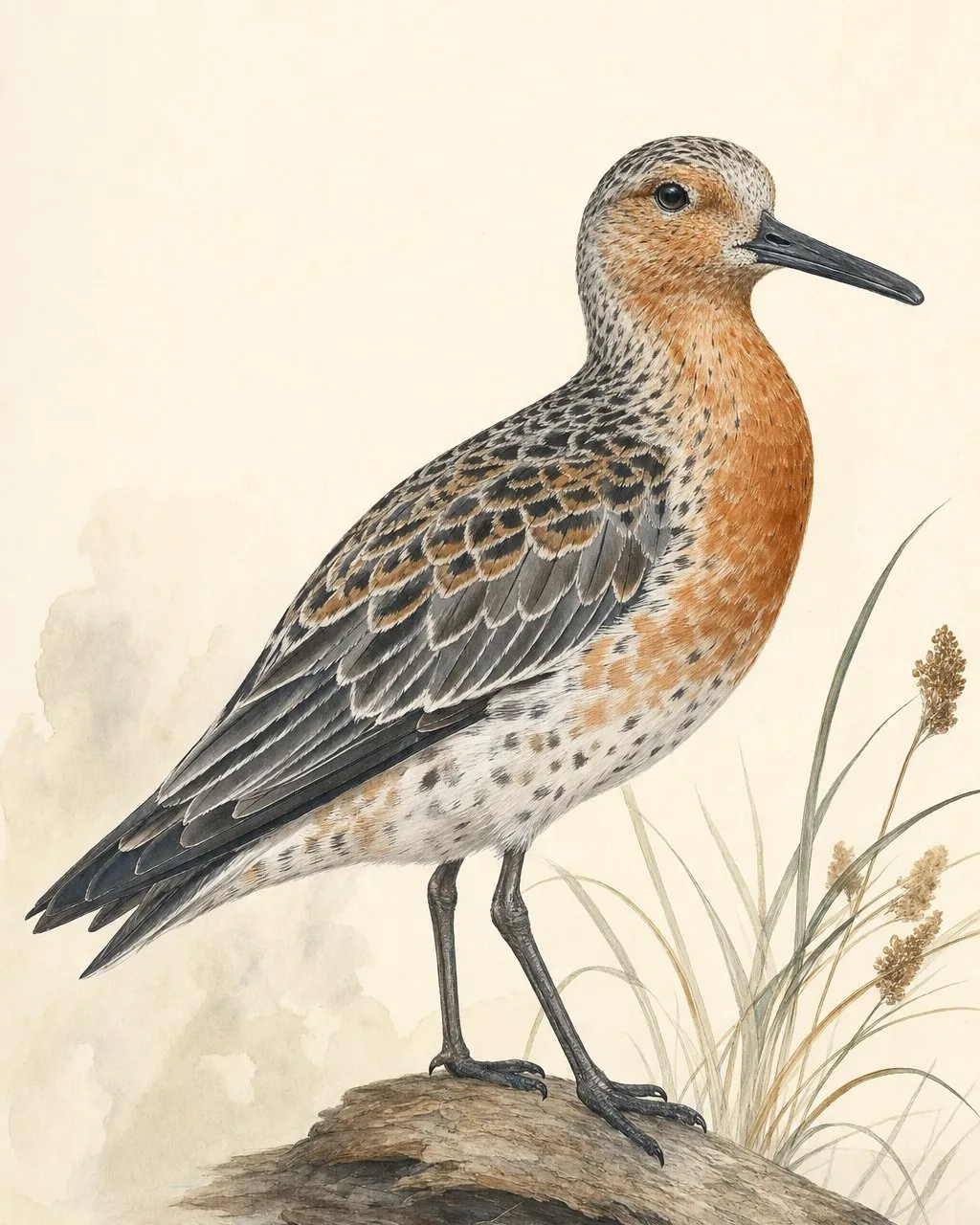
Red Knot (Calidris canutus rufa) is New Jersey’s most ecologically urgent bird story. Each May, tens of thousands of these Arctic-breeding shorebirds arrive on the Delaware Bay shore famished after a non-stop flight from South America. They land to eat horseshoe crab eggs. In the 1980s, peak counts at Delaware Bay exceeded 90,000 birds. By 2007, the population had dropped to roughly 13,000. New Jersey listed the Red Knot as an endangered species in 2012 and banned horseshoe crab harvesting in 2007. Recovery has been slow. The birds still arrive each May at Reed’s Beach and Cook’s Beach in Cape May County, doubling their body weight on crab eggs before continuing north. The Delaware Bay stopover remains one of the most dramatic and fragile wildlife events on the continent.
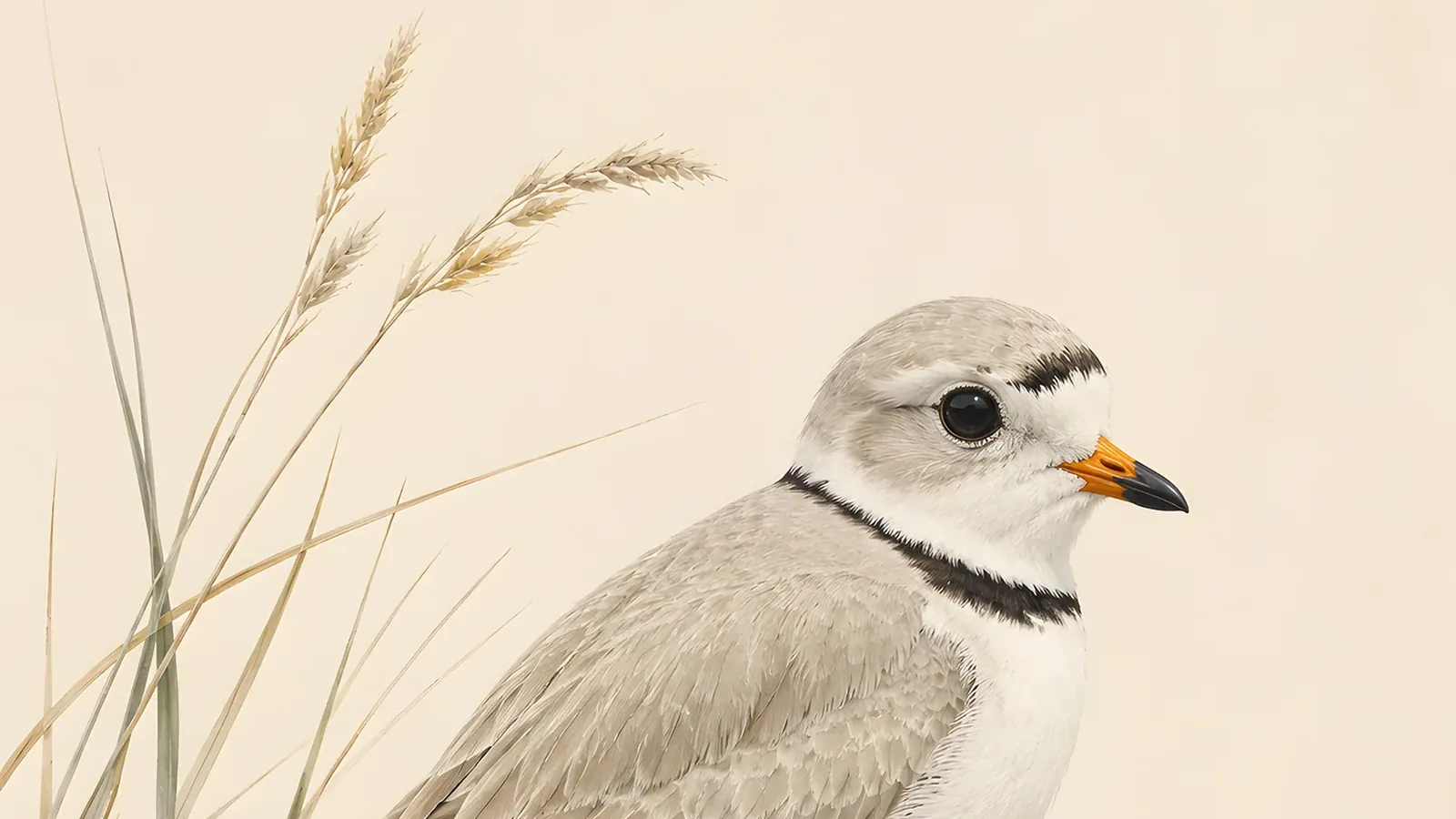
Piping Plover (Charadrius melodus) nests on New Jersey’s barrier island beaches each summer, including at Edwin B. Forsythe National Wildlife Refuge, where the species maintains one of the largest breeding populations in the state under federal threatened status. The beach closures and volunteer steward programmes that protect them have become a fixture of the Jersey Shore from April onward.
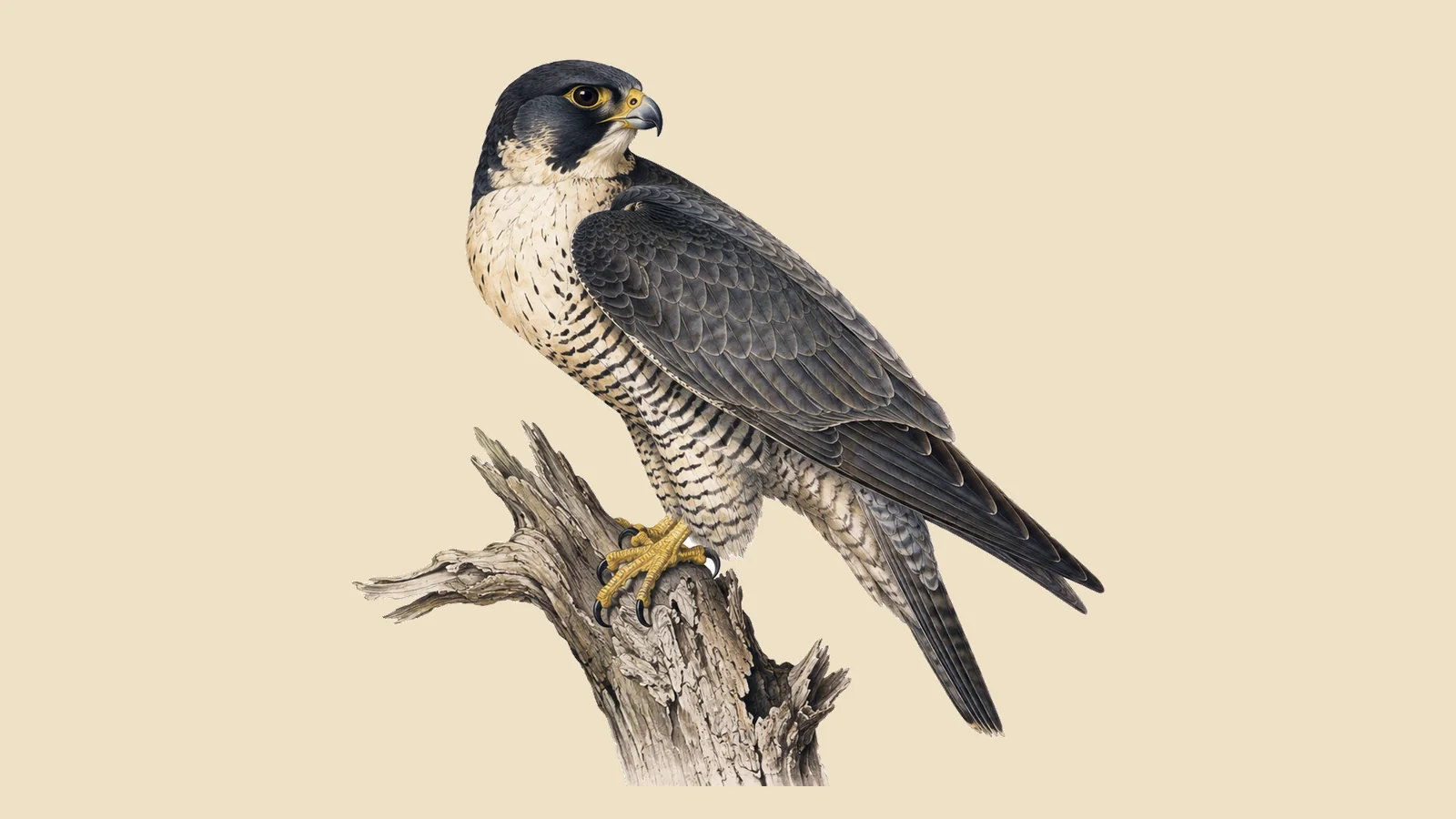
Peregrine Falcon (Falco peregrinus) has recovered dramatically along the New Jersey coast and now nests on cliff ledges, bridge structures, and building cornices from Newark to Cape May. Fall migration at Cape May Point concentrates Merlins alongside Peregrines in October. New Jersey Audubon’s Cape May Bird Observatory, which has conducted a systematic hawkwatch at Cape May Point State Park since 1976, records an average of 30,000 individual raptors each fall across approximately 15 species.
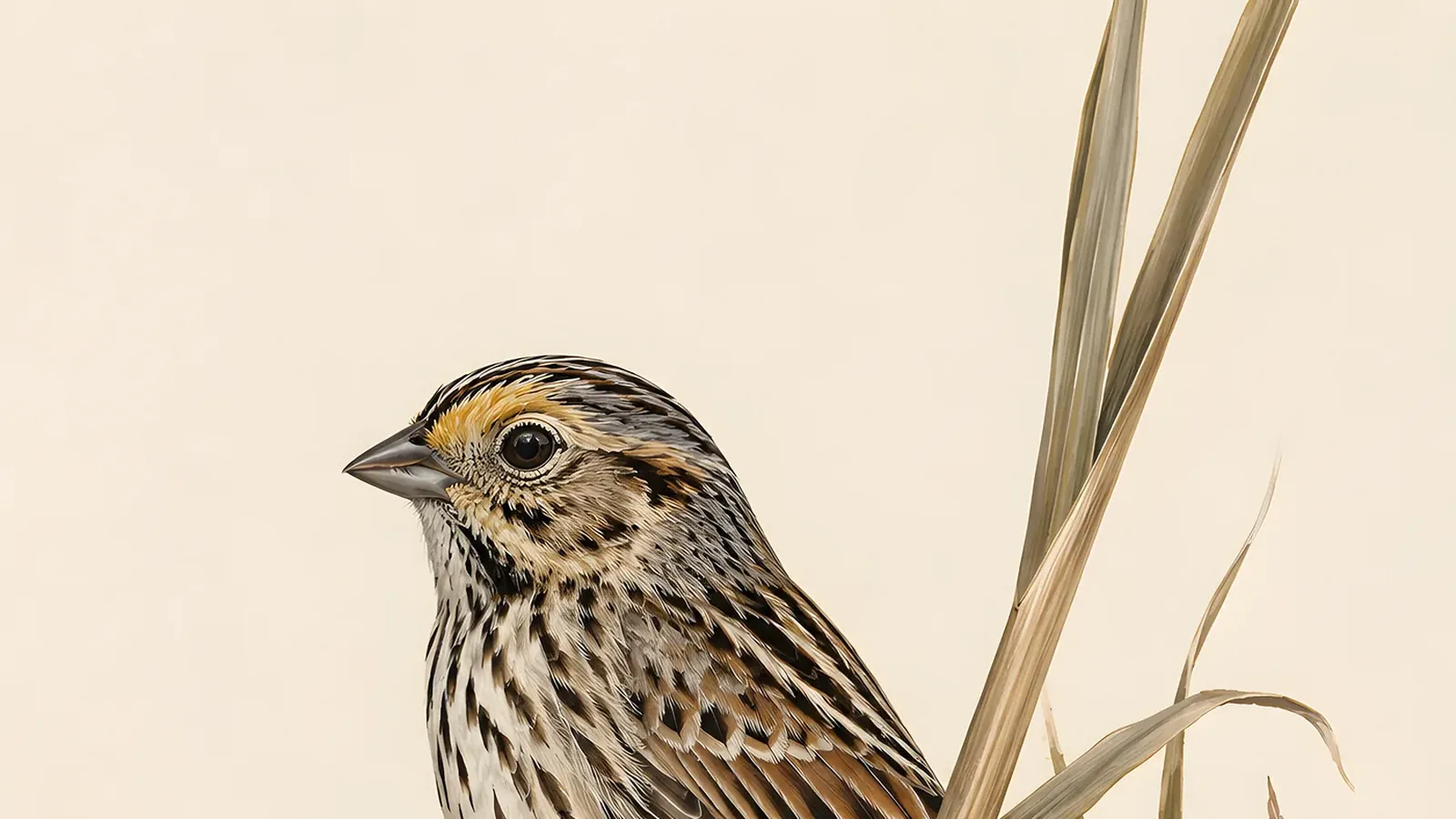
Saltmarsh Sparrow (Ammospiza caudacuta) breeds nowhere reliably except the tidal salt marshes of the Atlantic and Gulf coasts. New Jersey’s extensive saltmarsh habitat - protected in part by Edwin B. Forsythe National Wildlife Refuge’s 48,000 acres outside Atlantic City - holds breeding populations of this inconspicuous, genuinely at-risk species. The bird forages at marsh edge and is easiest to find at high tide when rising water pushes it into the spartina grass margins.
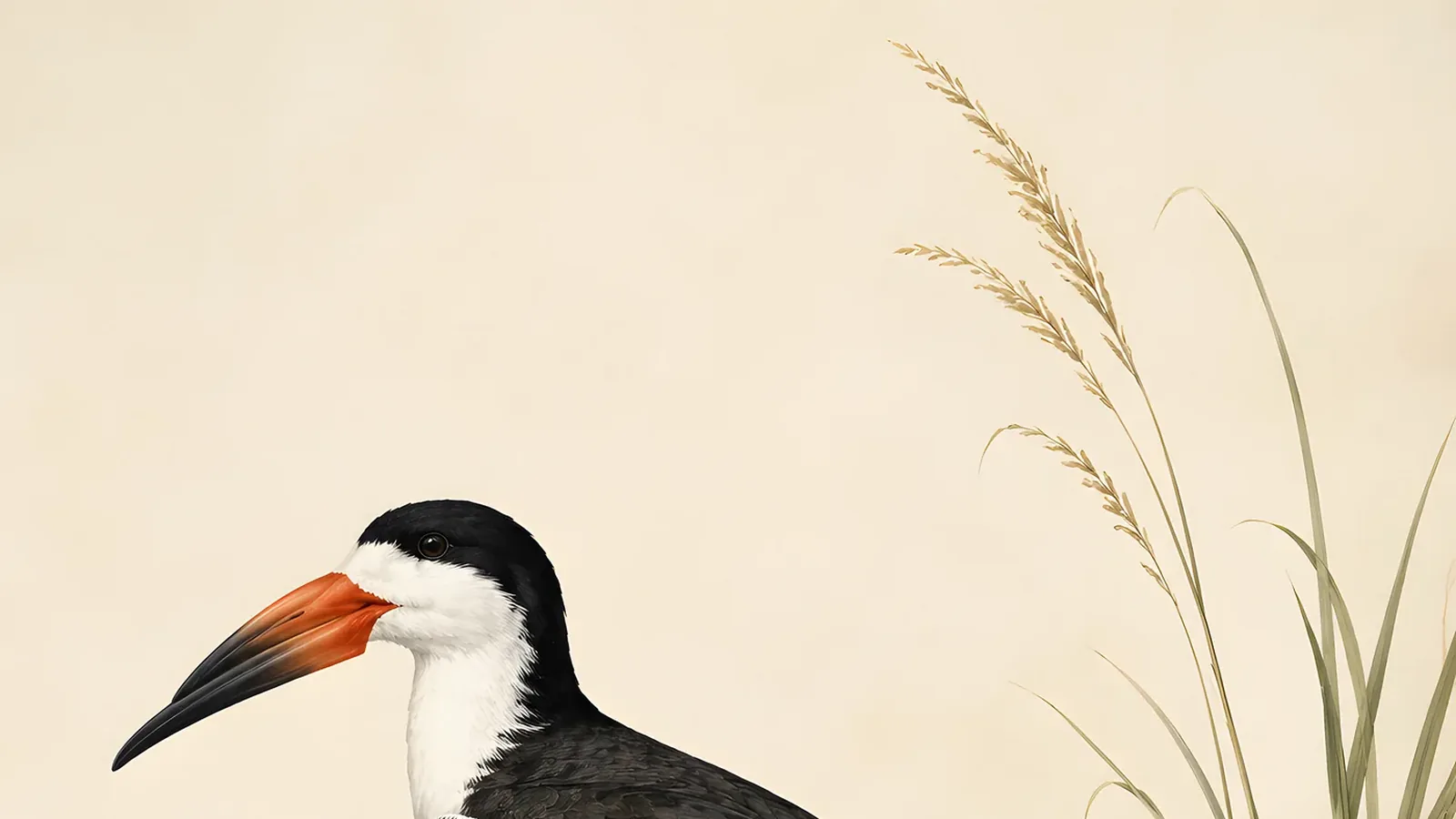
Black Skimmer (Rynchops niger) nests colonially on barrier beach flats. The species’ habit of flying with its lower mandible cutting the water surface at dusk is one of the signature spectacles of the New Jersey shore in summer, visible at Forsythe and at Stone Harbor Point.
Top backyard species
A suburban New Jersey garden through the year:
- American Goldfinch (state bird, year-round, breeding)
- Northern Cardinal (year-round)
- American Robin (year-round, abundant)
- Blue Jay (year-round)
- Carolina Wren (year-round)
- Downy Woodpecker (year-round)
- Tufted Titmouse (year-round)
- Black-capped Chickadee (northern counties) and Carolina Chickadee (southern coastal plain)
- House Finch (year-round)
- Mourning Dove (year-round)
- Canada Goose (year-round, often overwintering in large numbers)
- Dark-eyed Junco (October through April)
- Red-bellied Woodpecker (year-round, expanding)
- Eastern Bluebird (year-round in rural areas)
The goldfinch is straightforward to attract: plant native thistles or coneflowers, or offer nyjer seed in a tube feeder. He stays through even severe winters in New Jersey, his plumage faded but his presence reliable.
When and where to watch
Cape May Point State Park is the epicenter of fall hawk migration on the eastern seaboard. Broad-winged Hawks and Ospreys move through in September; Peregrine Falcons and Merlins peak in October; Golden Eagles and Red-shouldered Hawks appear in November. The hawkwatch platform at the state park runs continuous counts from late August through November. Spring migration reverses the flow, concentrating warblers, shorebirds, and songbirds in May.
Edwin B. Forsythe National Wildlife Refuge (formerly Brigantine) outside Atlantic City offers an eight-mile wildlife drive through coastal salt marsh and impoundments with over 360 species recorded on site. American Black Duck and Atlantic Brant winter here in large numbers. Short-eared Owls quarter the marsh at dusk in late autumn and winter.
Great Swamp National Wildlife Refuge sits 25 miles from Manhattan in Morris County - a remnant glacial lake basin holding forest, meadow, and wetland within one of the most densely populated regions in the country. Wood Duck, Scarlet Tanager, and breeding warblers make it the best inland birding site in northern New Jersey.
Delaware Bay shoreline - Reed’s Beach and Cook’s Beach (Cape May County) is the place to be in the second and third weeks of May when Red Knot numbers peak. The staging happens within a strip of bay shore perhaps 25 km long. eBird data from this area during peak horseshoe crab spawn show shorebird counts - Red Knot, Ruddy Turnstone, Semipalmated Sandpiper, Sanderling - that rival the continent’s most celebrated shorebird sites.
Seasonal rhythm
New Jersey runs four distinct birding seasons. Spring - April into June - brings the northbound push: shorebirds at Delaware Bay in May, warblers through the forests and scrub, Baltimore Orioles arriving in late April to breed in shade trees and suburban parks. Summer concentrates nesting species: terns and skimmers on barrier islands, Saltmarsh Sparrows in the tidal marsh, and goldfinches everywhere. Fall, from August through November, is the spectacle: hawk migration at Cape May, shorebird concentrations at Forsythe, and the late push of waterfowl into the coastal bays. Winter fills the salt marshes and coastal waters with diving ducks, Bald Eagles, and the Short-eared Owl hunting at last light.
The state’s World Series of Birding - a 24-hour competitive count held each May through New Jersey Audubon - regularly records over 230 species in a single day. No state of comparable size elsewhere in the northeastern United States can reliably match that number.
The whistling senators who nearly defeated the goldfinch bill in 1935 may have made their point more accurately than they intended. The goldfinch is the right bird for a state that is easy to underestimate.