State Guide
Birds of Arkansas
On March 5, 1929, Governor Harvey Parnell and the Forty-seventh General Assembly adopted House Concurrent Resolution Number 22, proclaiming the Northern Mockingbird (Mimus polyglottos) the official state bird of Arkansas. The campaign was organised by the State Federation of Women’s Clubs, led by Mrs. W. A. Utley. The bill was initially received as a joke in the chamber. It passed after supporters delivered speeches on the bird’s value to farmers - the mockingbird, they argued, consumed beetles and caterpillars at a rate that put it on the side of the harvest.
The choice has proven more resonant than its advocates perhaps expected. The mockingbird is not a bird that settles for a single identity. He sings through the night in breeding season, cycling through dozens of imitated calls. Cornell’s All About Birds notes that individuals may accumulate more than 200 song types across a lifetime, borrowing freely from every species he hears around him. Arkansas - a state that runs from the Mississippi River lowlands through the Ozark Plateau to the Ouachita Mountains - has a similarly complex character. It is not easily reduced to one landscape or one season.
Signature and speciality species
The Arkansas Audubon Society lists 428 species on the official state checklist. What makes the state ornithologically distinctive is the convergence of several distinct habitat systems within its borders, each supporting its own cast of birds.
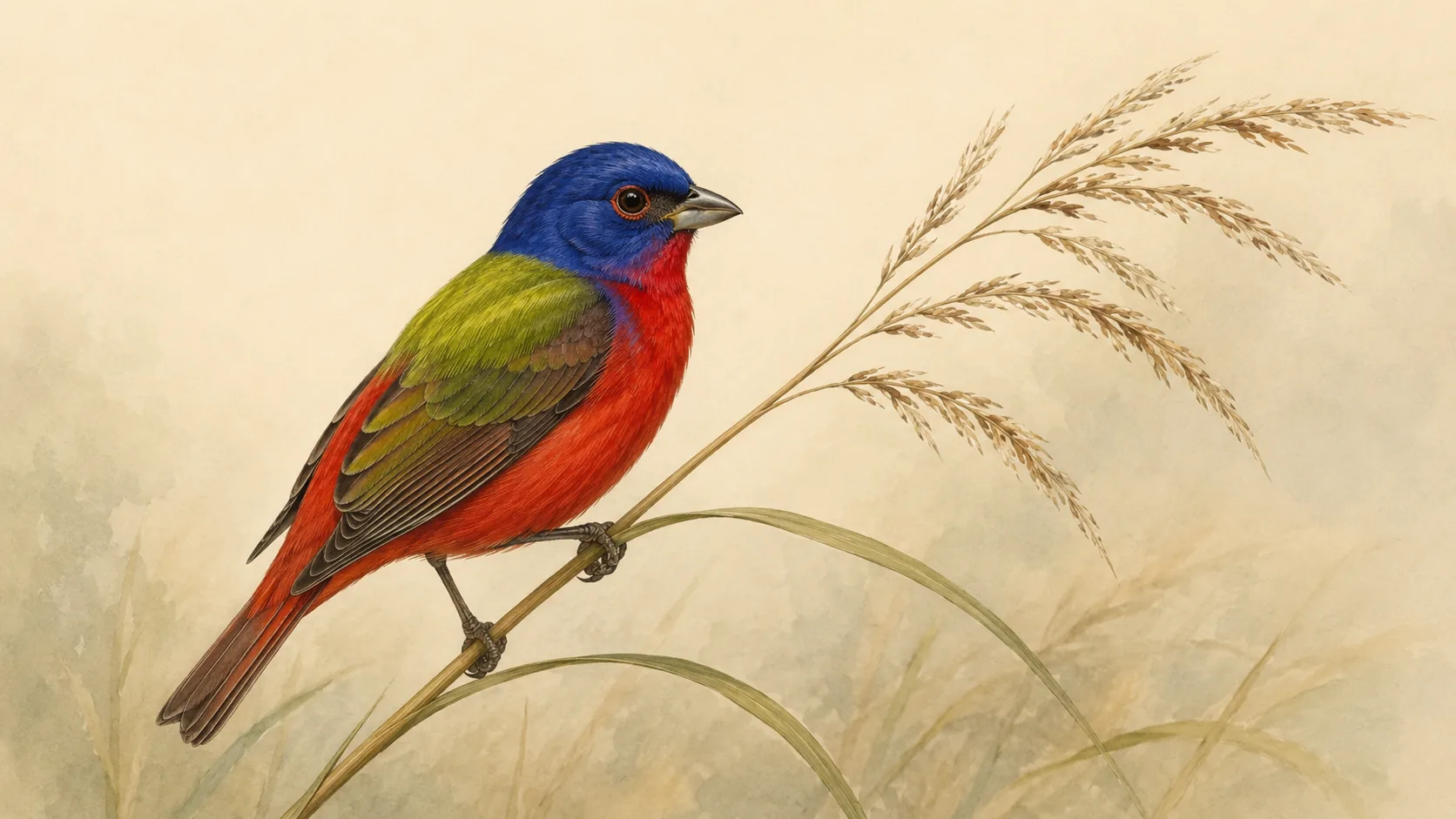
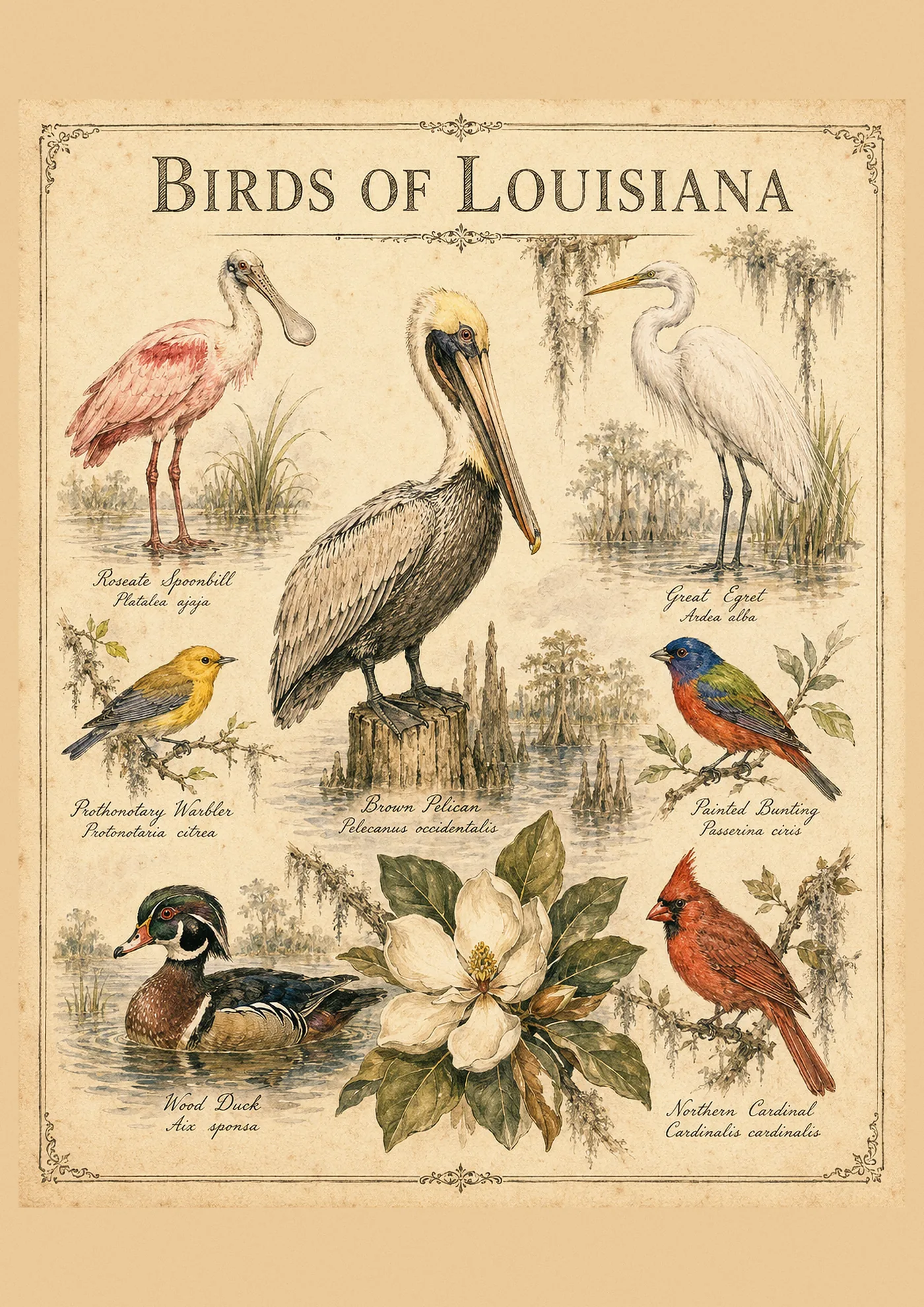
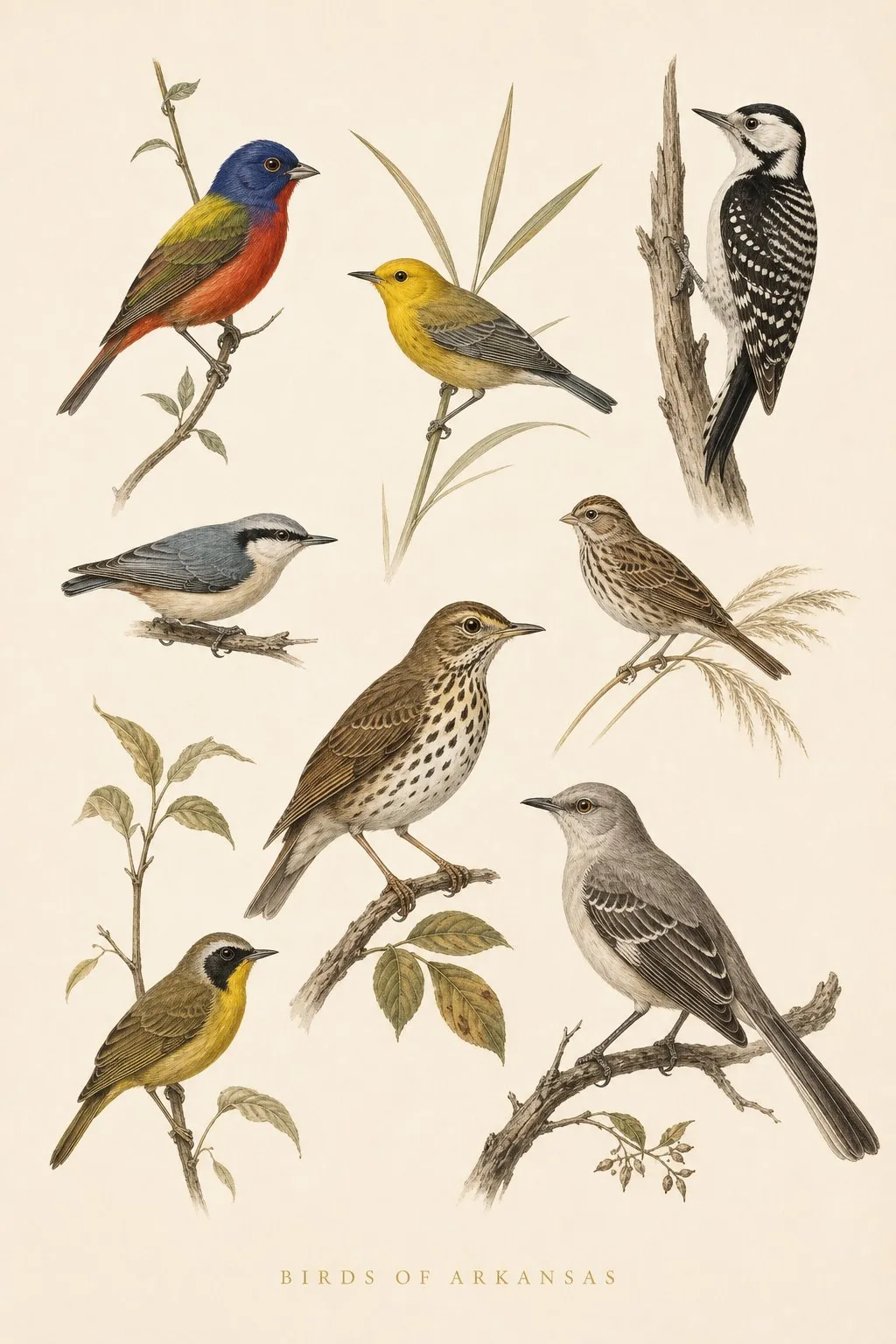
Painted Bunting (Passerina ciris) is one of the most sought-after breeding birds in the state. The male is improbably coloured - scarlet below, blue above, green on the back - and nests in shrubby old fields and woodland edges across much of Arkansas from spring into summer. He is common enough that patient visitors at the right site will find him without unusual effort.
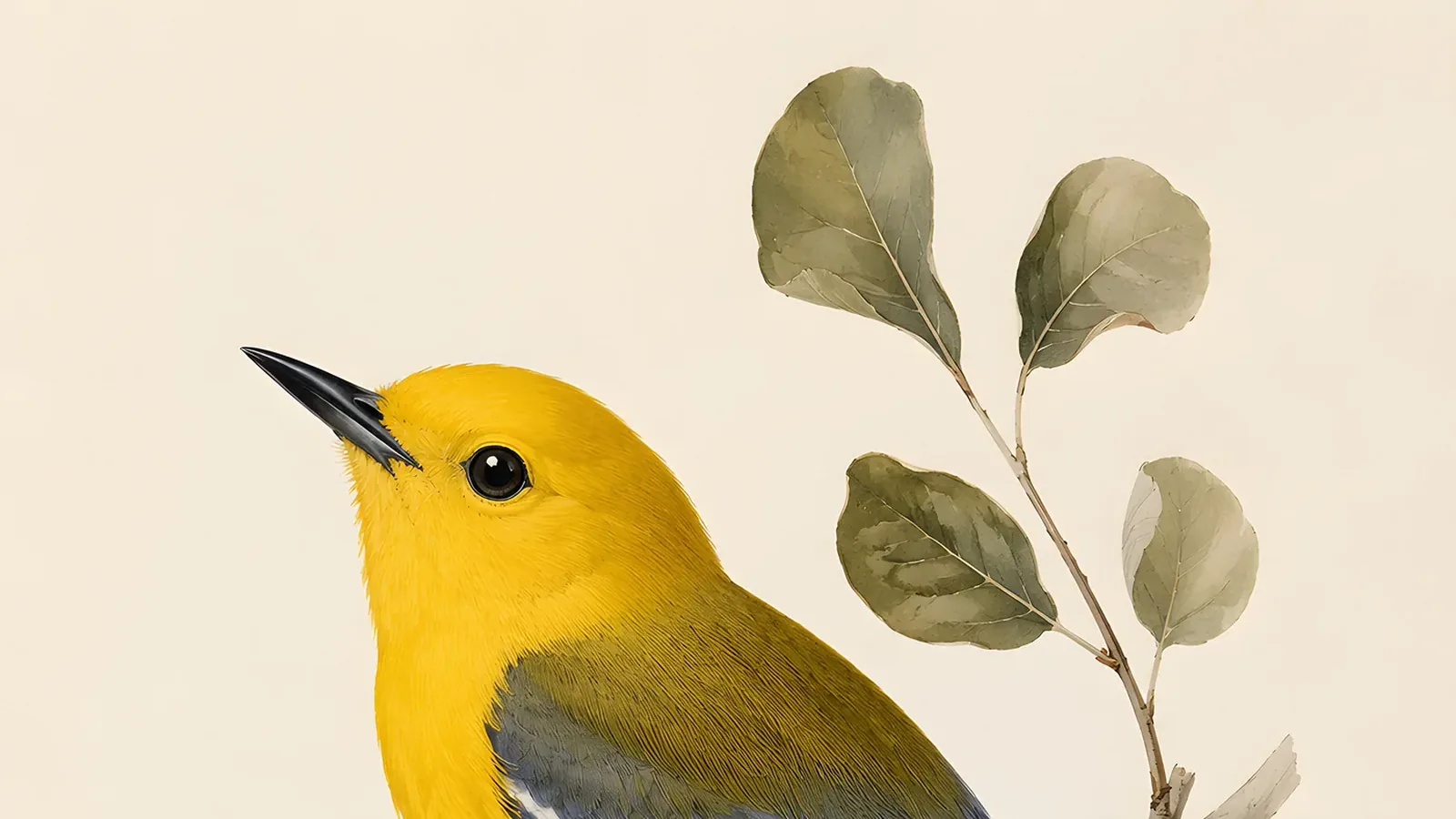
Prothonotary Warbler (Protonotaria citrea) is the bird of the bottomland swamps. He is yellow-gold, cavity-nesting, and territorial over standing water. The flooded hardwood forests of the Arkansas Delta and the cypress wetlands at Wapanocca and Felsenthal National Wildlife Refuges are his territory from April through July.
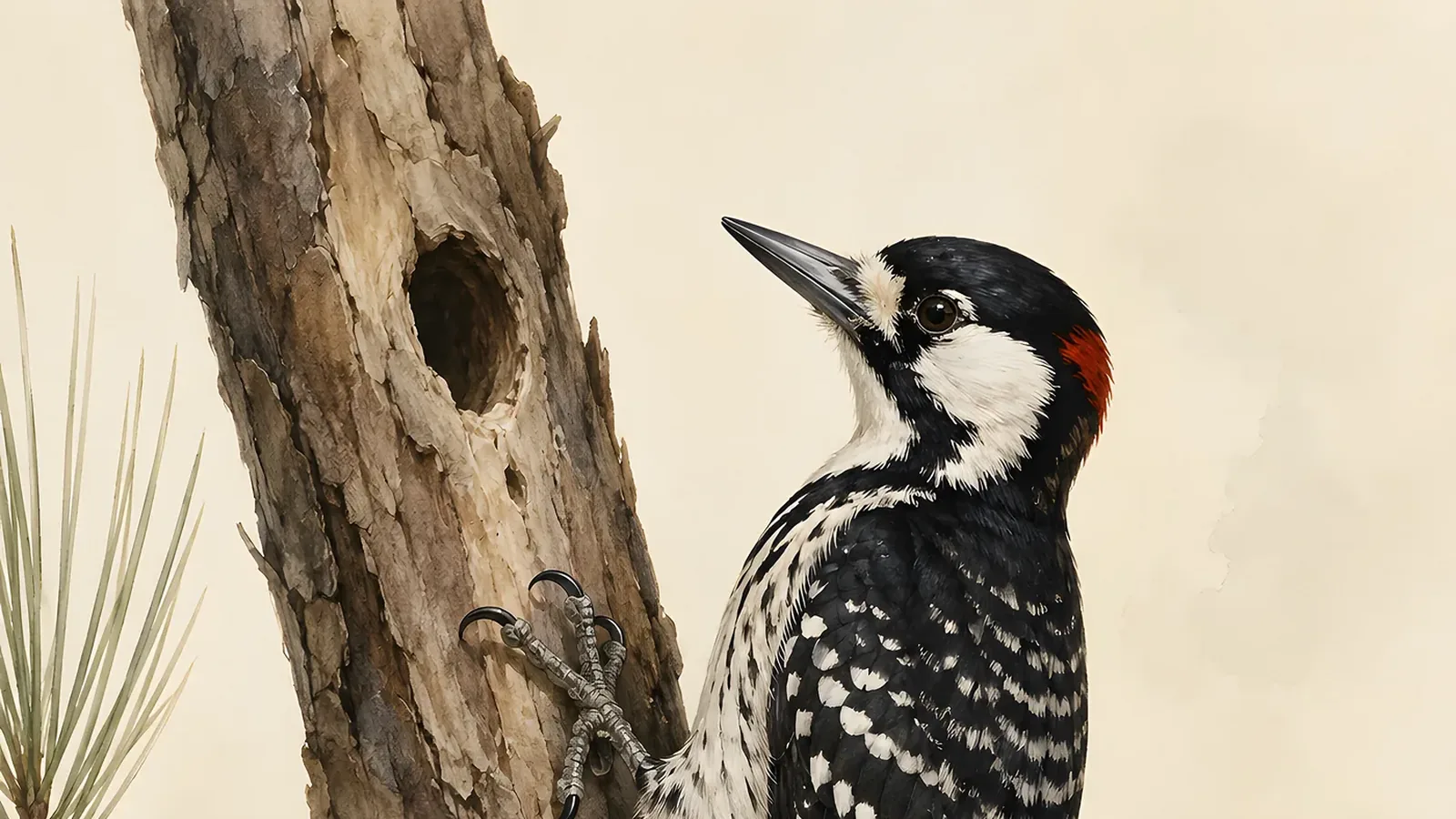
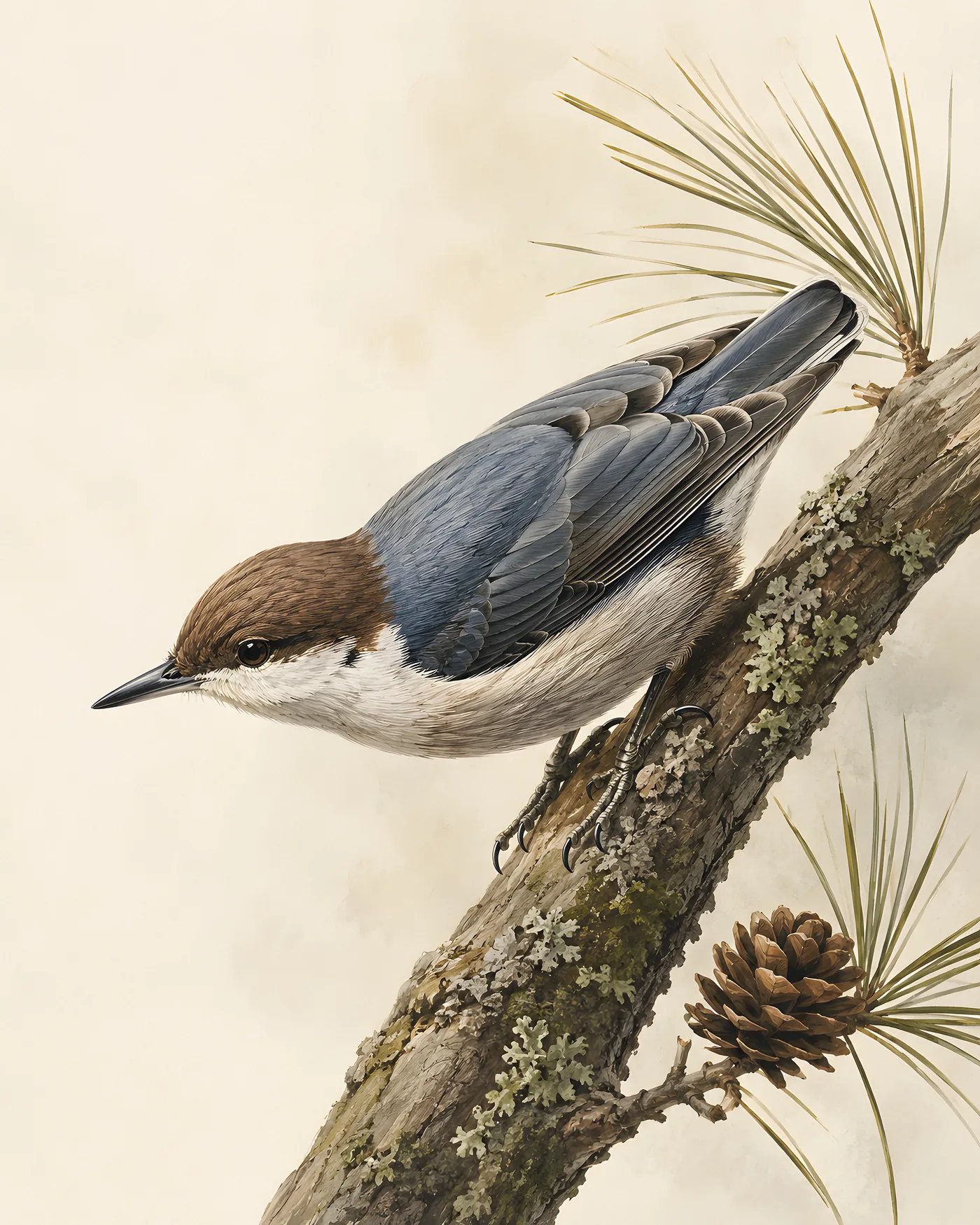
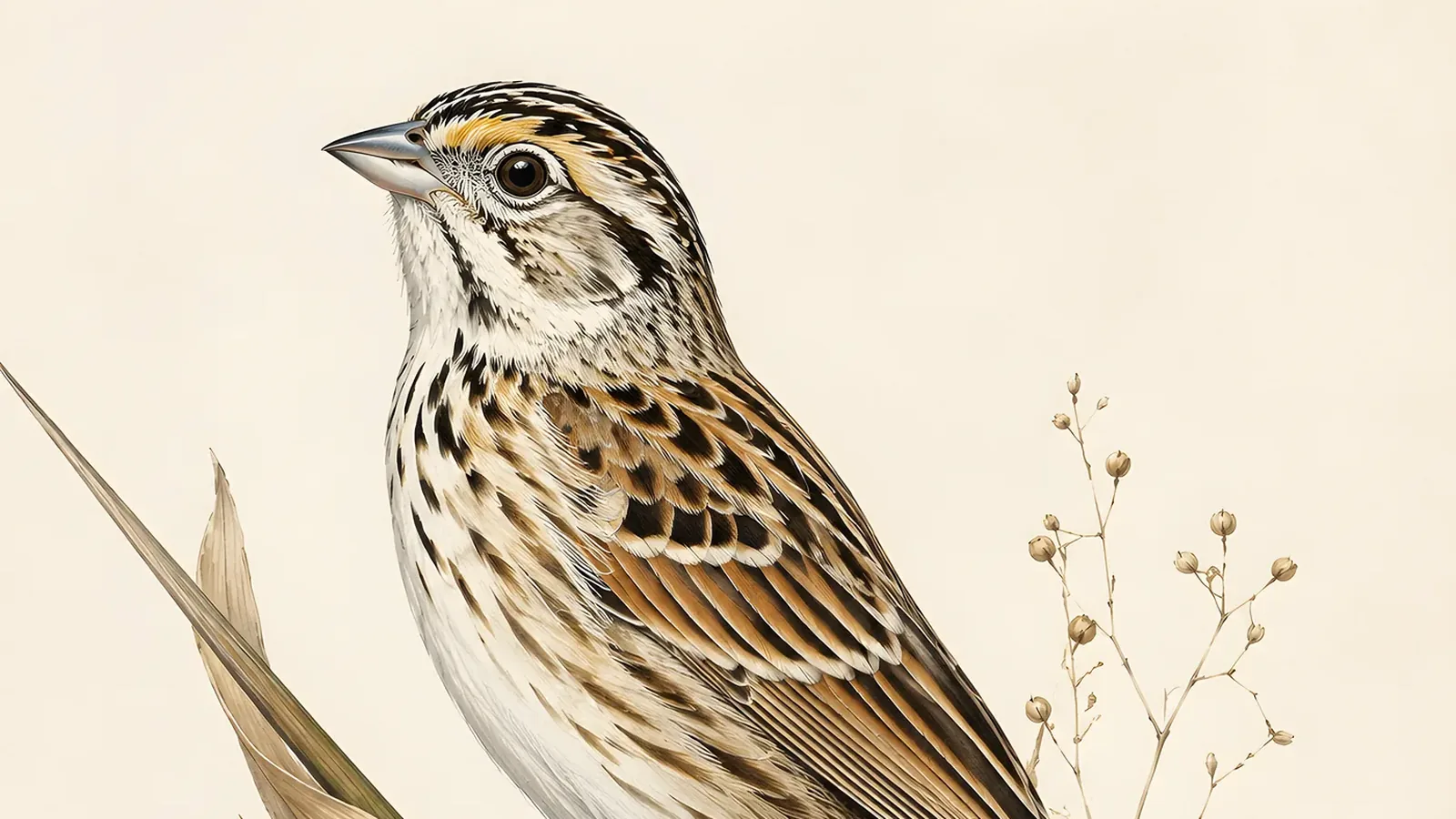
The pinewoods of the southern half of the state hold a sought-after trio. Red-cockaded Woodpecker (Dryobates borealis) is a federally listed species and one of the rarest resident birds in North America; Felsenthal National Wildlife Refuge west of Crossett and the Buffalo Road Demonstration Area south of Waldron are two of the most accessible sites to find it. Alongside the woodpecker in mature longleaf and loblolly pine, Brown-headed Nuthatch (Sitta pusilla) and Bachman’s Sparrow (Peucaea aestivalis) complete the trio. Finding all three in a morning is a day that Arkansas birders do not forget quickly.
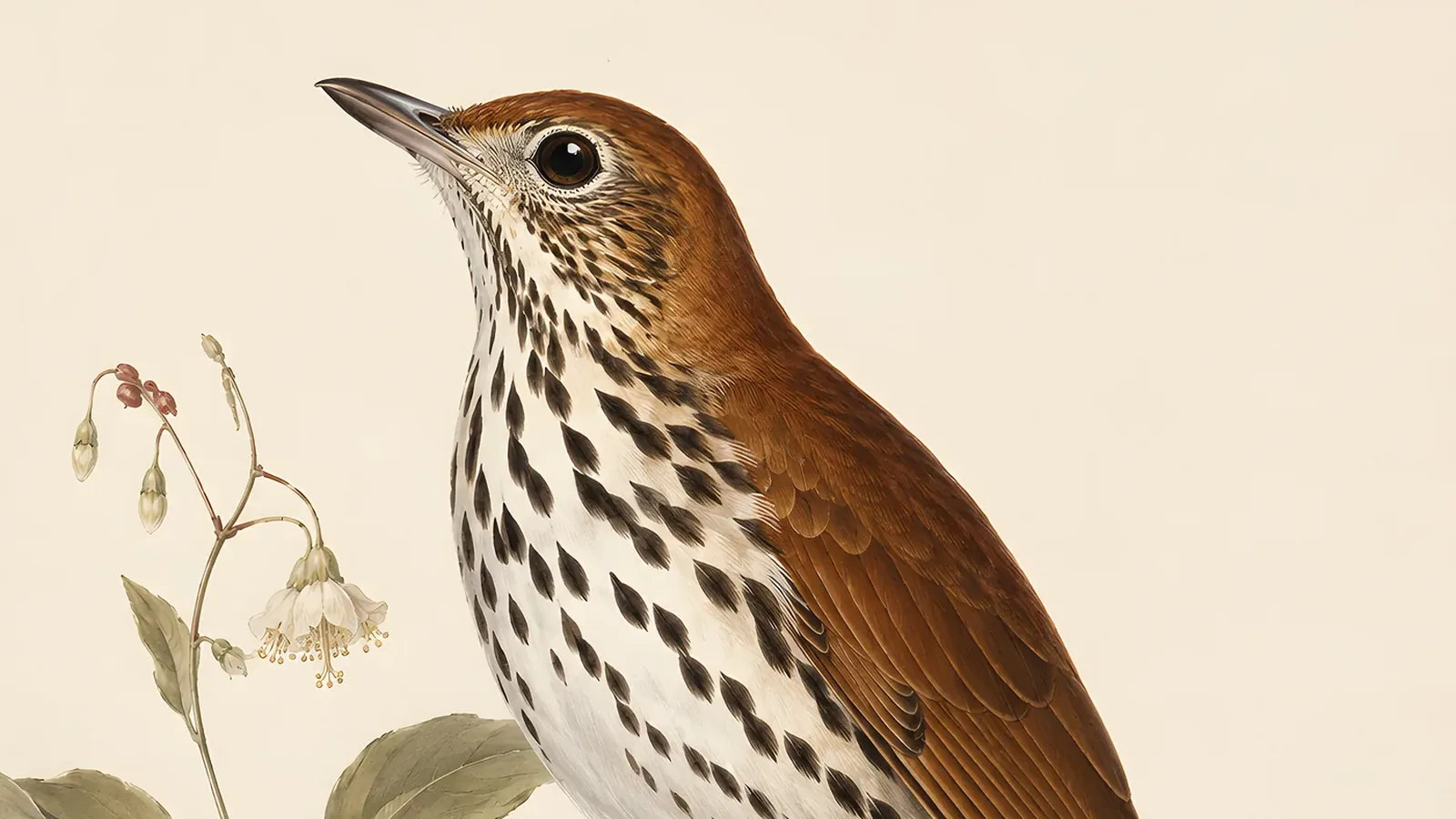
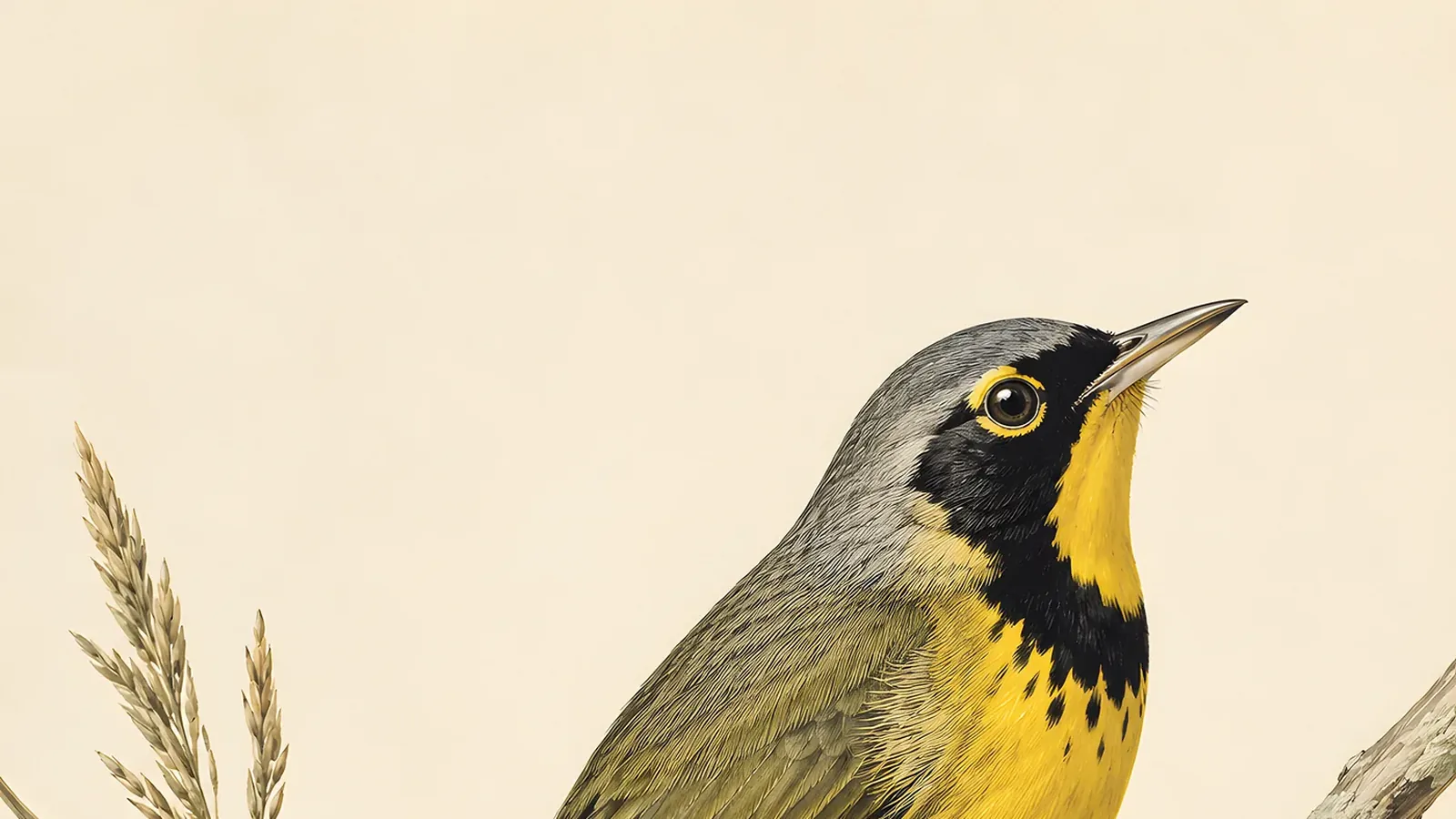
Painted Bunting, Wood Thrush, and Kentucky Warbler represent the broad suite of Neotropical migrants that breed across the Ozark hardwoods. The Encyclopedia of Arkansas notes that approximately 145 species nest annually in the state - a figure that reflects the quality of breeding habitat from the highland forest to the river-delta canebrakes.
Top backyard species
An Arkansas suburban garden attracts a reliable set of year-round residents:
- Northern Mockingbird (state bird, year-round, territorial at feeders and nearby shrubs)
- Northern Cardinal (year-round, abundant)
- Carolina Wren (year-round, loud and persistent)
- Ruby-throated Hummingbird (April to October)
- Downy Woodpecker (year-round)
- Pileated Woodpecker (year-round, wooded suburbs)
- American Robin (year-round, winter flocks in berry trees)
- Mourning Dove (year-round)
- American Goldfinch (year-round, winter flocks at thistle feeders)
- Blue Jay (year-round)
- Eastern Bluebird (year-round, nest boxes)
Where and when to watch
Arkansas sits squarely in the Mississippi Flyway. The Encyclopedia of Arkansas describes the corridor as a major route for species nesting north of the state and wintering further south - or simply passing through. Shorebirds, warblers, vireos, orioles, and buntings move through in numbers from mid-March, peaking in early May. In winter the bottomland swamps fill with mallards in concentrations large enough to be measured in hundreds of thousands; Bald Eagles follow them.
Holla Bend National Wildlife Refuge on the Arkansas River in Yell County is, according to Audubon, “one of the state’s best overall birding sites, regardless of season.” More than 270 species have been recorded there. Its bottomland hardwood forests and river frontage make it especially productive in spring.
Millwood Lake in the southwest corner of the state is the place to be from autumn through spring for waterfowl, gulls, and the rare vagrants that turn up reliably year after year - Parasitic Jaeger, Vermilion Flycatcher, and Sabine’s Gull have all appeared here. More than 300 species have been found in the Millwood area.
Wapanocca National Wildlife Refuge in Crittenden County offers the classic Delta experience: more than 5,600 acres of open water, hardwood forest, and bald-cypress wetland. Over 260 species have been recorded. The flooded cypress stands are among the most reliable sites for Prothonotary Warbler in spring.
Felsenthal National Wildlife Refuge in Ashley and Union Counties in the southern Coastal Plain is the place for the pinewoods trio. The Red-cockaded Woodpecker here is a genuine conservation success story - the birds nest in cavities they excavate in living pines, and the refuge manages the mature pine stands on which the species depends.
The Arkansas Audubon Society notes that the state’s fish farms - concentrated in the Delta counties - have created unexpected shorebird habitat. The flooded ponds and their mudflats draw species that might otherwise pass Arkansas by entirely.
The mockingbird will still be singing at midnight when the last migrants have gone through. He borrowed his repertoire from every bird he has heard since hatching, and he does not stop adding to it. Arkansas, at the intersection of flyway and highland, wetland and pinewood, has given him a great deal to work with.