State Guide
Birds of Arizona
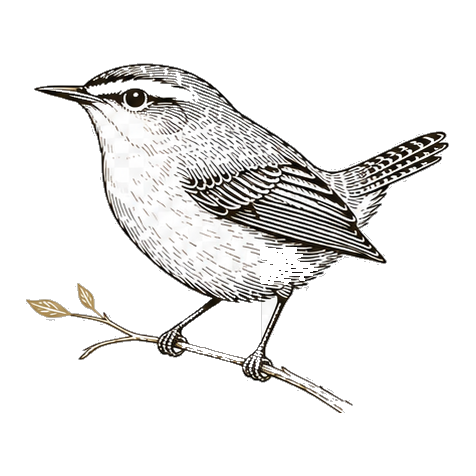
On March 16, 1931, the Arizona Legislature passed House Bill 128, and the governor approved it the same day. The Cactus Wren became the official state bird. The impetus was civic rather than scientific: the General Federation of Women’s Clubs was scheduled to hold its Biennial Council in Phoenix that April, and local organisers wanted Arizona - the youngest state in the Union at the time - to have a bird to present. The wren won by a landslide in the selection campaign. It is a fitting choice. The Cactus Wren (Campylorhynchus brunneicapillus) is the largest wren in North America, as loud as it is large, and as tied to the Sonoran Desert as any creature alive.
The wren’s nest is a football-shaped mass of coarse grass and plant fibre, built low in cholla, palo verde, or mesquite, surrounded by thorns on all sides. A pair maintains several nests simultaneously and may raise three broods in a season, roosting in the spare nests year-round. Cornell Lab of Ornithology notes the entrance tunnel is just wide enough for the adults to squeeze through - and that is the point. The bird is not merely Arizona’s symbol. It is one of the state’s most behaviorally interesting residents.
Signature and specialty species
The Arizona Bird Committee’s 2024 state list stands at 570 accepted species. That figure reflects a geography that no other US state can match: the Sonoran Desert to the west, the Colorado Plateau to the north, and the sky-island mountain ranges of the southeast - the Huachucas, the Santa Ritas, the Chiricahuas - rising from near-desert grassland to pine-oak forest within a few kilometres. Each elevation band holds different birds.
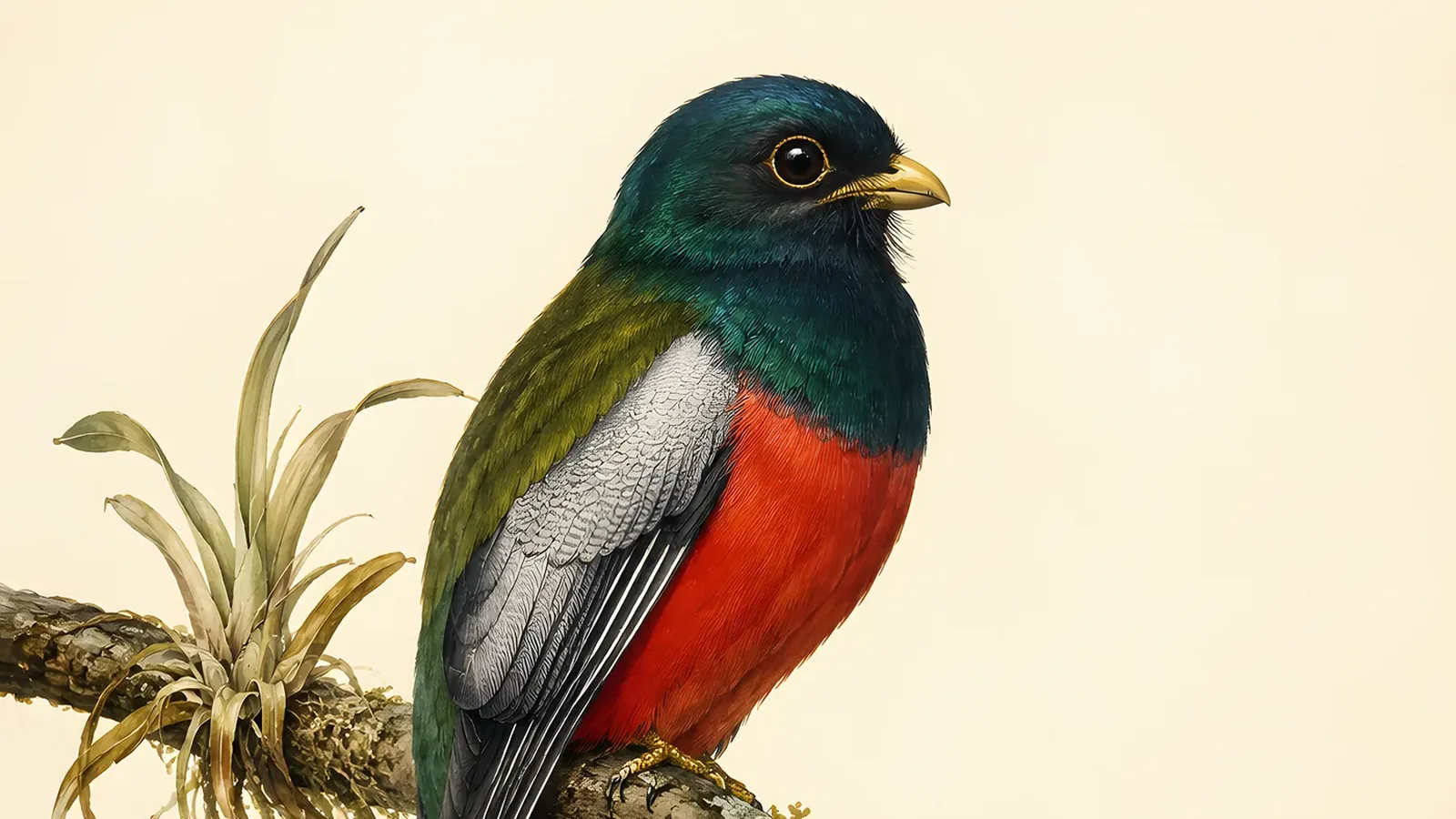
Elegant Trogon is the bird most visitors travel to Arizona to find. It breeds in the riparian canyons of the Santa Rita and Chiricahua Mountains, where it nests in woodpecker-excavated cavities in sycamores. Cave Creek Canyon in the Chiricahuas and Madera Canyon in the Santa Ritas are the two most reliable sites. The species is the southernmost trogon in North America, reaching Arizona from Mexico along the canyon corridors.
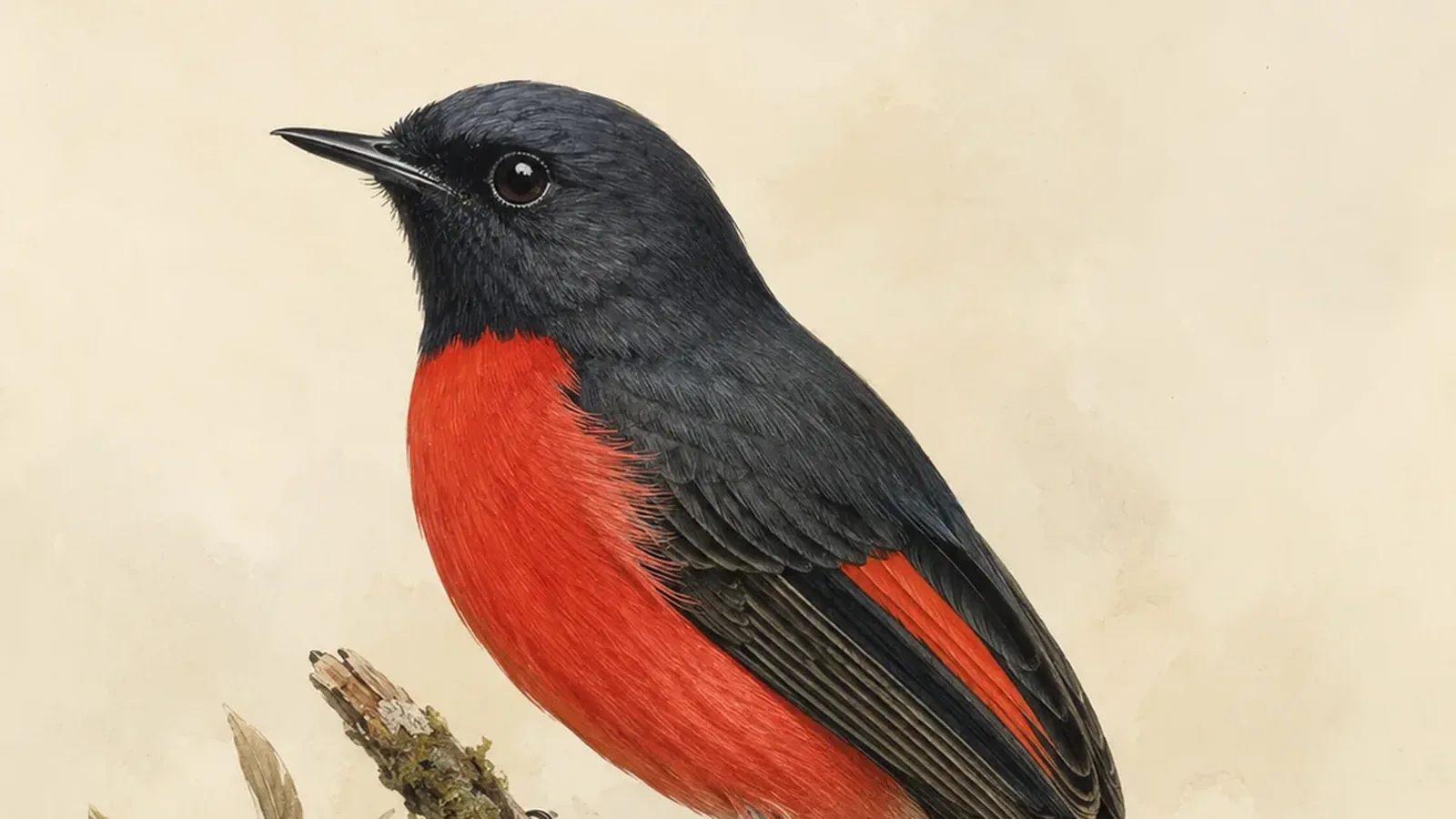
Painted Redstart is among the more unmistakable birds in any North American field guide - black above, crimson below, with white wing patches it fans as it forages. It breeds in the sky-island canyons from late April through summer, foraging by spreading its wings and tail in a fanning motion that is thought to flush insects from bark. Ramsey Canyon and Madera Canyon both hold breeding populations.
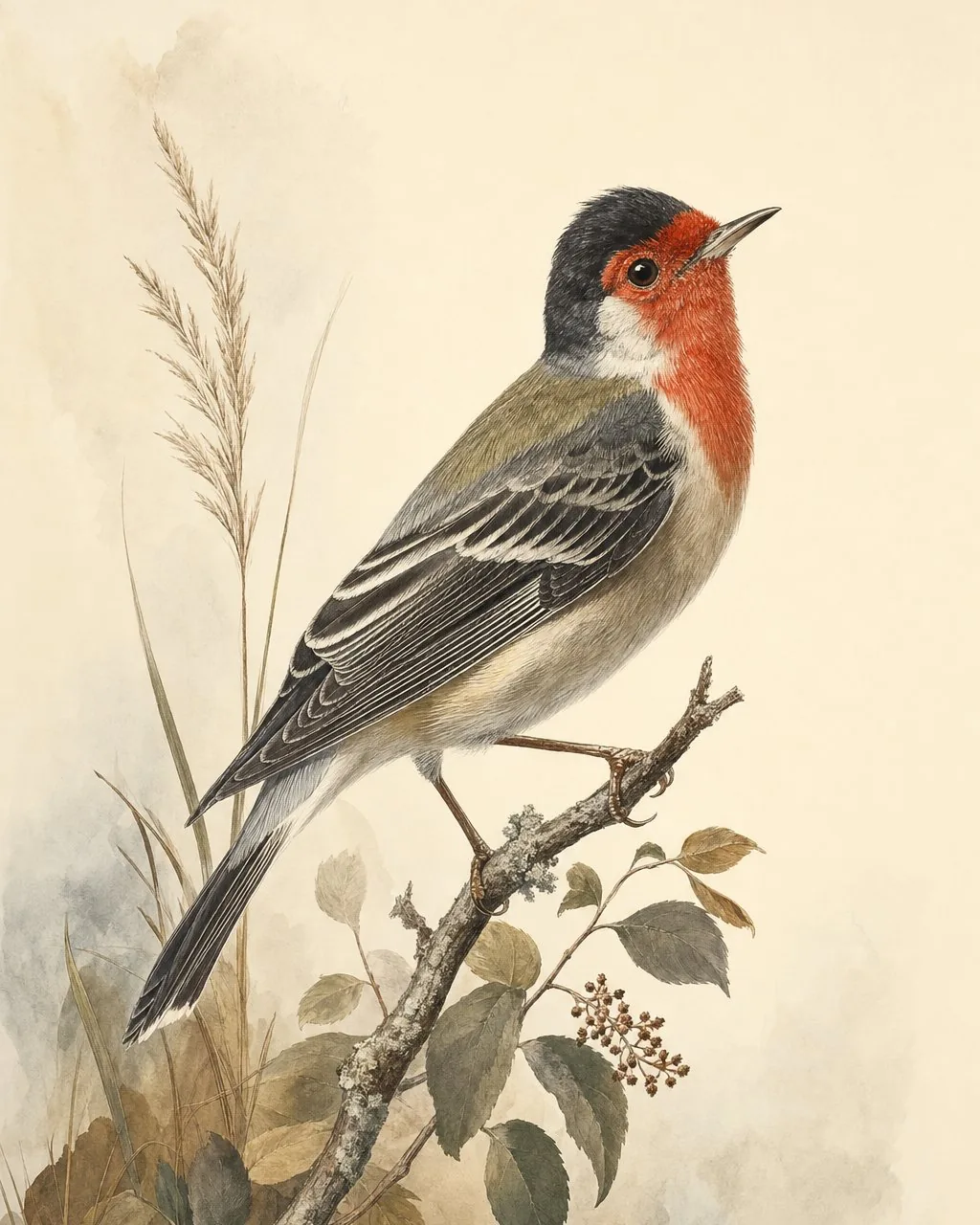
Red-faced Warbler is a montane breeding specialist of the pine-oak zone, arriving in the sky islands from Mexico in April. The red-and-black face pattern and pale nape are unlike any other warbler in the United States. The species is confined in the US almost entirely to Arizona and a thin strip of New Mexico.
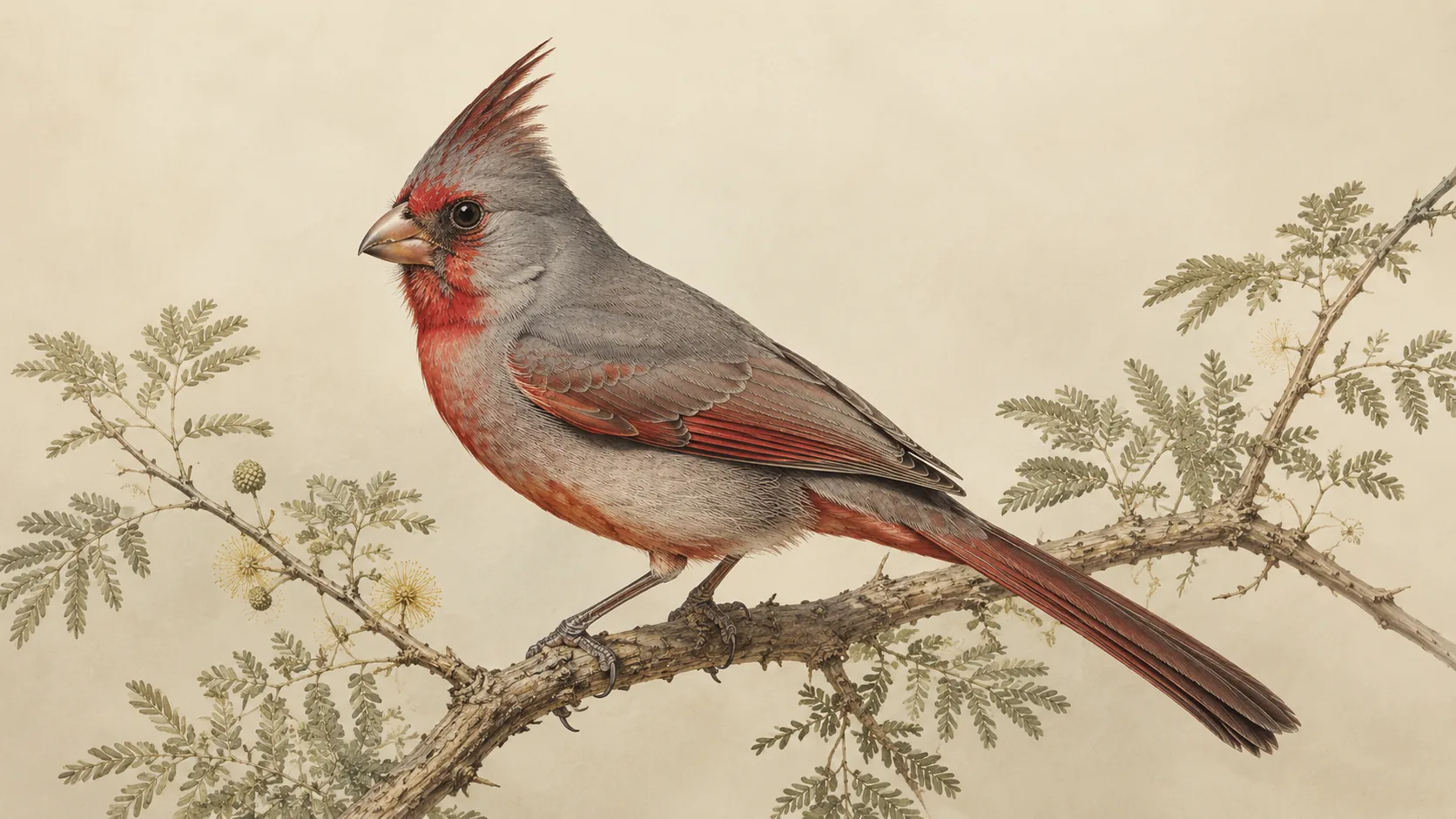
Pyrrhuloxia - the desert cardinal - is a year-round resident of desert scrub and brushy washes across southern Arizona. Where the Northern Cardinal owns the woodland edge, the Pyrrhuloxia (Cardinalis sinuatus) owns the thornscrub. The male’s red crest and parrot-curved yellow bill are distinctive. It is one of the more reliably seen specialty birds for visitors arriving in Tucson or Phoenix, often appearing at feeders with little encouragement.
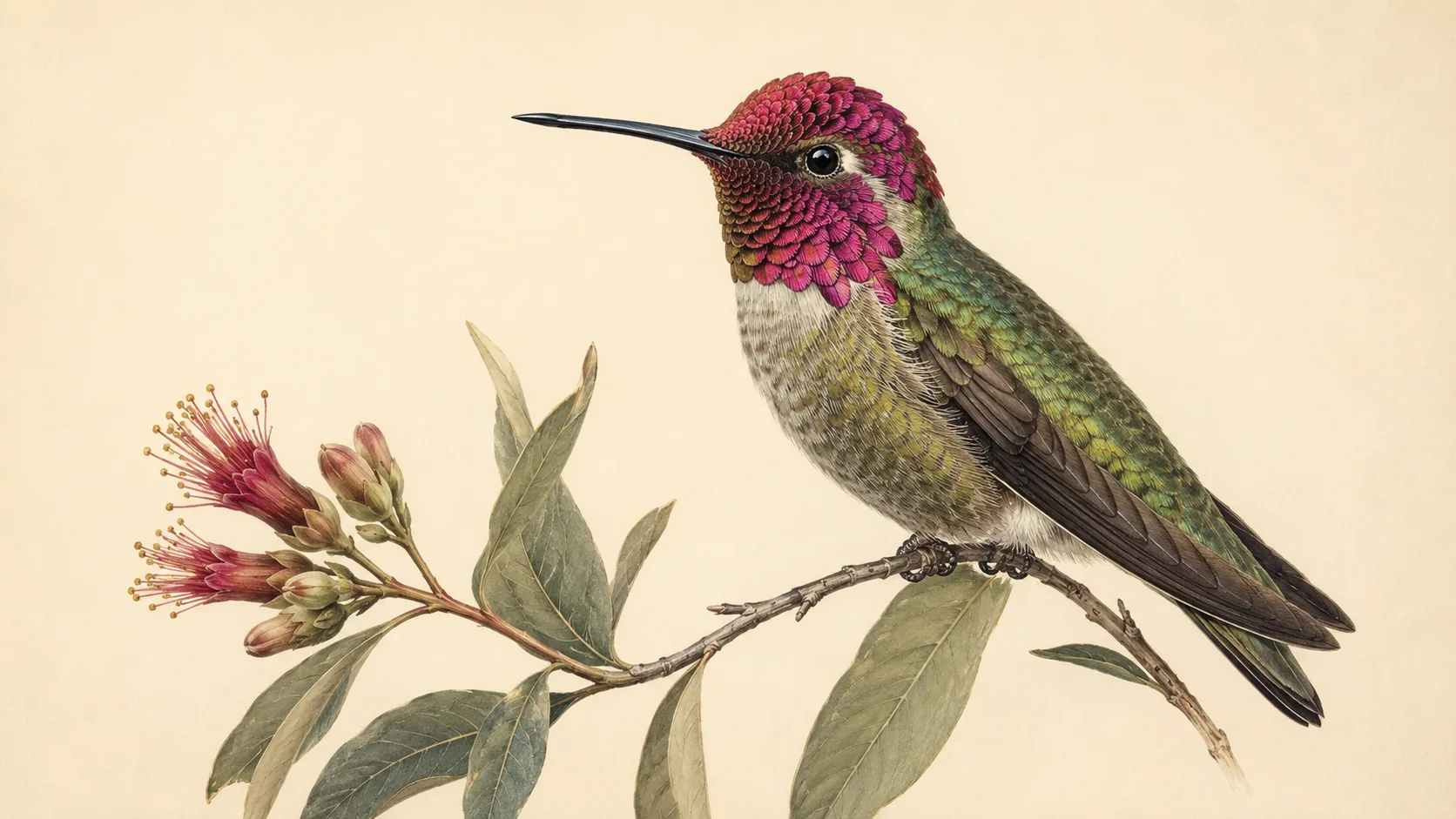
Anna’s Hummingbird (Calypte anna) is the one hummingbird that stays through the Arizona winter, a year-round resident in the lower desert and suburban gardens. The male’s iridescent rose-red head is visible on still mornings when he perches at the top of a desert willow or ocotillo and delivers his buzzy, scratchy song - one of the few hummingbirds in the world that sings in any formal sense. Arizona’s southeastern mountains also host more than a dozen additional hummingbird species during the summer months, the highest concentration in the United States, including Broad-billed, Violet-crowned, White-eared, and Blue-throated Mountain-gem.
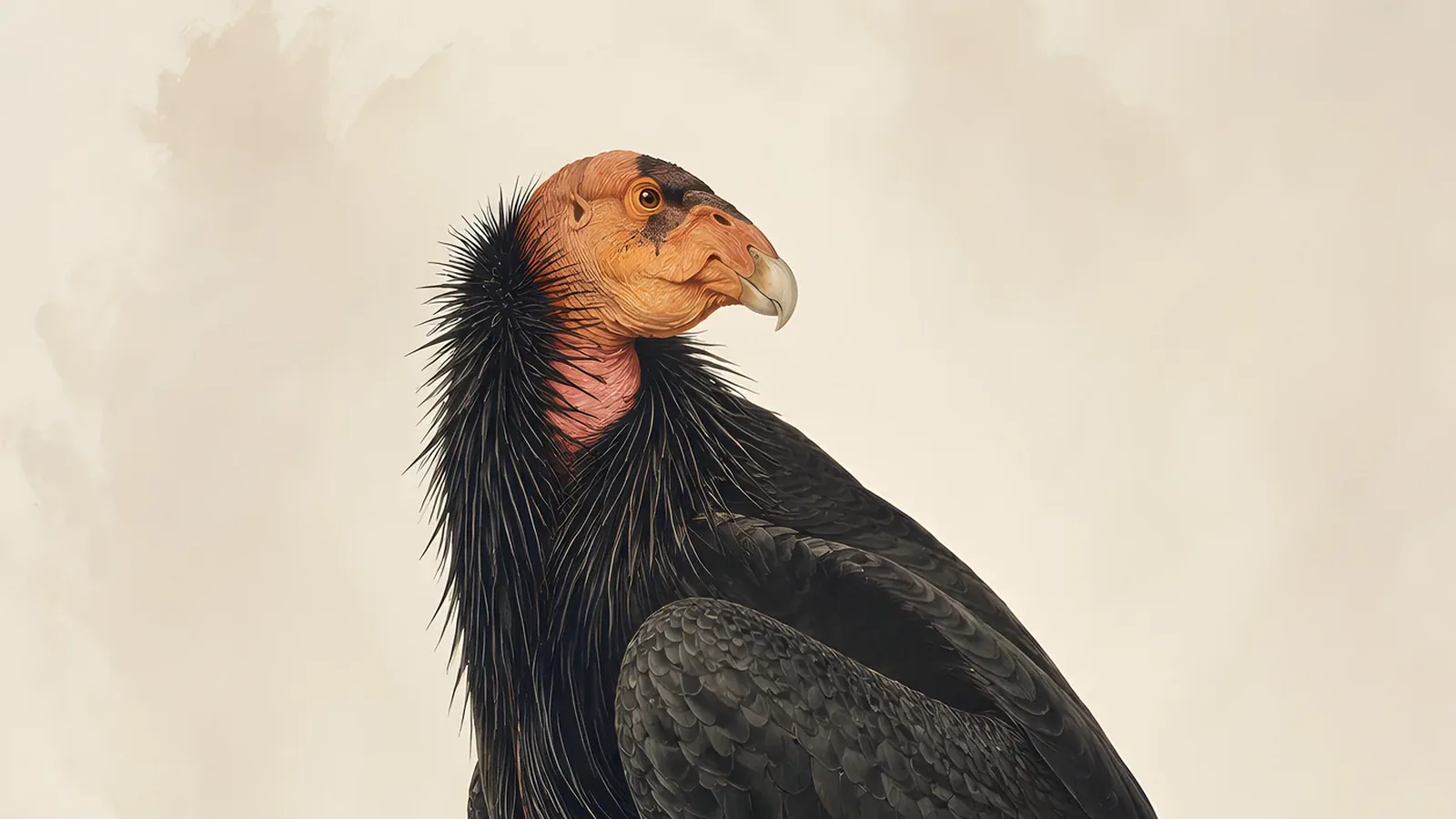
California Condor was extirpated from Arizona but has been reintroduced at the Vermilion Cliffs north of the Grand Canyon since 1996. Sightings along the South Rim of the Grand Canyon are now routine. The birds bear wing tags and are individually known to wildlife managers - a conservation programme that has brought the species back from a population low of 22 individuals worldwide (reached in 1987, when the last wild birds were taken into captivity).
Top backyard species
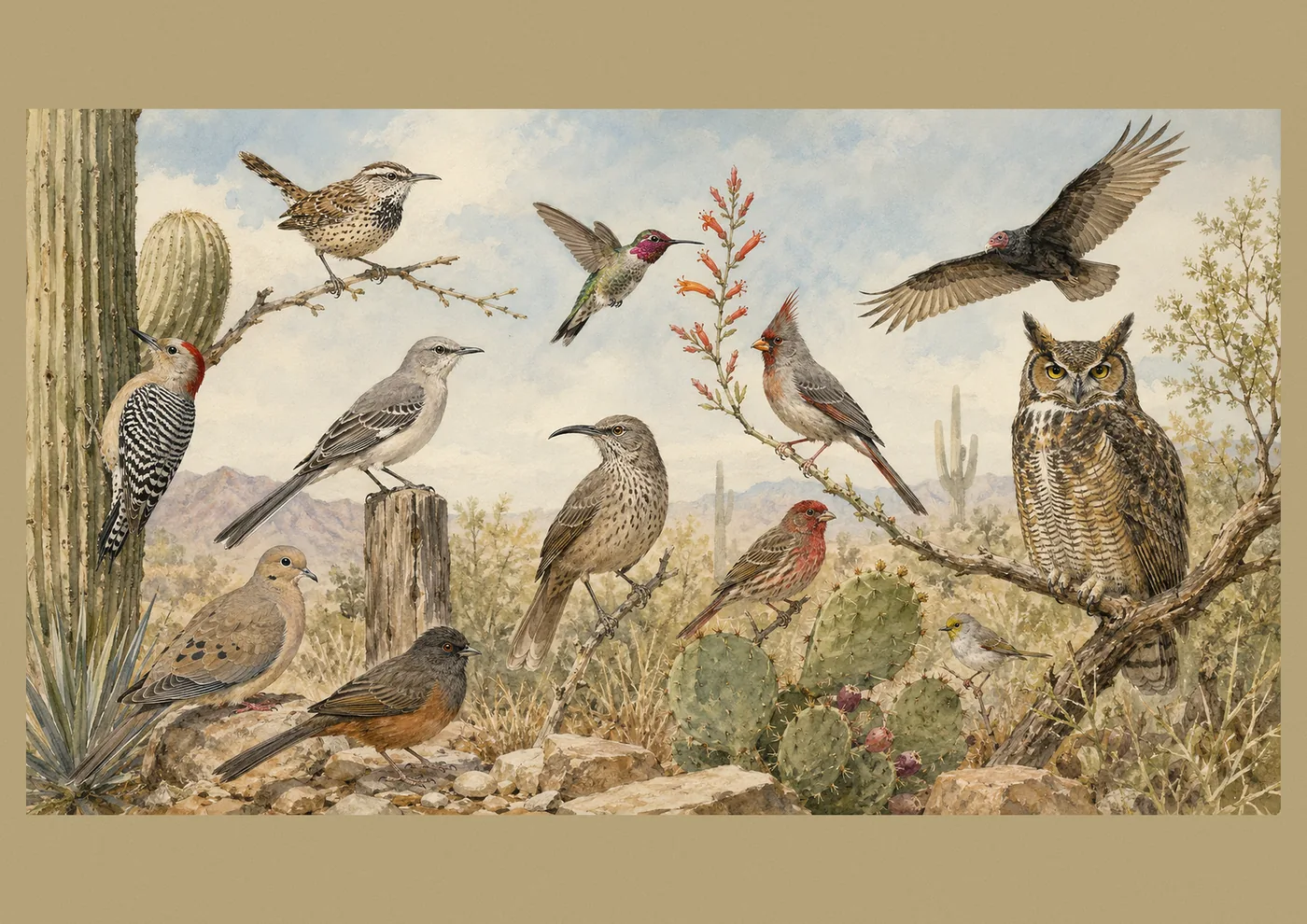
An Arizona suburban yard - particularly in the Tucson or Phoenix metro - reliably attracts:
- Cactus Wren (state bird, year-round, Sonoran Desert zone)
- Anna’s Hummingbird (year-round, desert and gardens)
- Pyrrhuloxia (year-round, desert scrub)
- Northern Mockingbird (year-round, widespread)
- House Finch (year-round, abundant)
- Mourning Dove (year-round)
- Turkey Vulture (year-round in southern Arizona, departing north in October)
- Curve-billed Thrasher (year-round, common in Sonoran Desert yards)
- Gila Woodpecker (year-round, the dominant woodpecker of the saguaro zone)
- Verdin (year-round, tiny grey bird of desert washes)
- Abert’s Towhee (year-round, riparian edges and suburban plantings)
- Great Horned Owl (year-round, often nesting in saguaro cavities excavated by Gila Woodpeckers)
Where and when to see birds
Madera Canyon in the Santa Rita Mountains southeast of Tucson is the best-known birding site in Arizona and one of the most visited canyon sites in the United States. Over 250 species have been recorded. Spring and summer are the peak months: Elegant Trogon, Elf Owl, Sulphur-bellied Flycatcher, and five or six hummingbird species are all present from April through August. The canyon’s elevation gradient - from desert grassland at the lower trailhead to pine-oak forest at the upper - means a single morning walk can yield birds from three or four habitat types.
Ramsey Canyon Preserve in the Huachuca Mountains, operated by the Nature Conservancy, is one of the premier hummingbird sites in North America. As many as 15 hummingbird species have been recorded at the preserve’s feeders and in adjacent riparian woodland. The canyon also holds breeding Red-faced Warbler, Painted Redstart, and the rarely seen Spotted Owl. The preserve operates by timed-entry reservation in summer.
San Pedro Riparian National Conservation Area is a 40-mile corridor of cottonwood-willow gallery forest running south from the Mexican border toward Benson. Managed by the Bureau of Land Management, it holds over 350 species of birds and is one of the four most important inland bird migration corridors in the American West. Spring migration in April and May brings warblers, tanagers, and flycatchers moving north through the river corridor, with resident species including Gray Hawk and Common Black-Hawk.
Whitewater Draw State Wildlife Area in the Sulphur Springs Valley is Arizona’s answer to crane staging. Each autumn, Sandhill Cranes begin arriving in October, and the wintering population can reach 20,000 or more birds by December and January. The pre-dawn departures and late-afternoon returns fill the valley with sound. The draw also attracts large flocks of Lapland Longspurs and Mountain Bluebirds in winter, along with raptors hunting the open agricultural land.
The seasonal rhythm of Arizona birding divides neatly: winter brings grassland and wetland species to the southern valleys; spring and summer open the mountain canyons; and autumn concentrates migrants along the river corridors. Year-round, the Sonoran Desert itself - saguaro forest, desert wash, and suburban borderland - holds a resident community that requires no season to find.
The Cactus Wren won by a landslide in 1931, and it still earns the vote. No other bird is as audible, as adaptable, or as native to the ground underfoot.