State Guide
Birds of Wisconsin
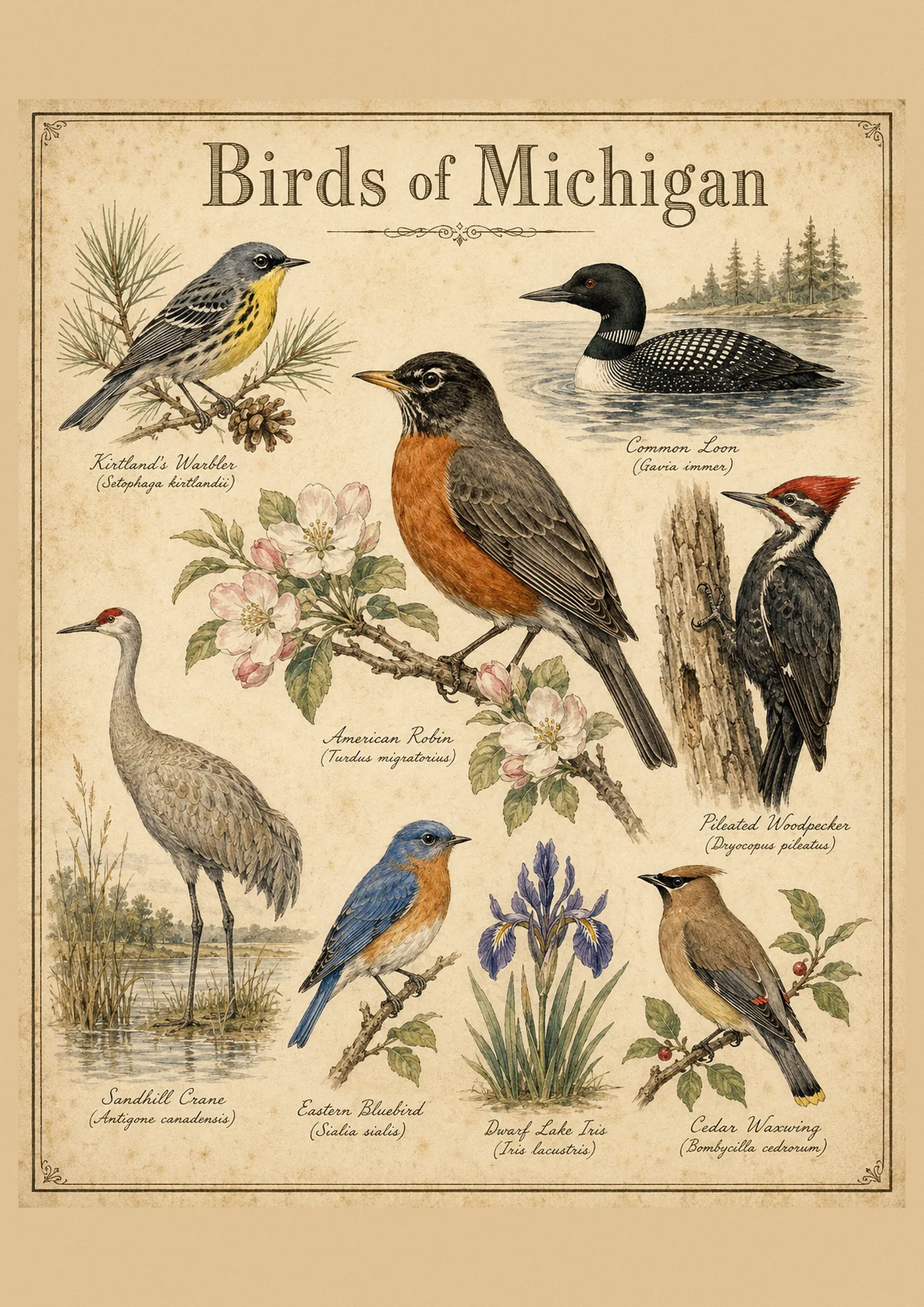
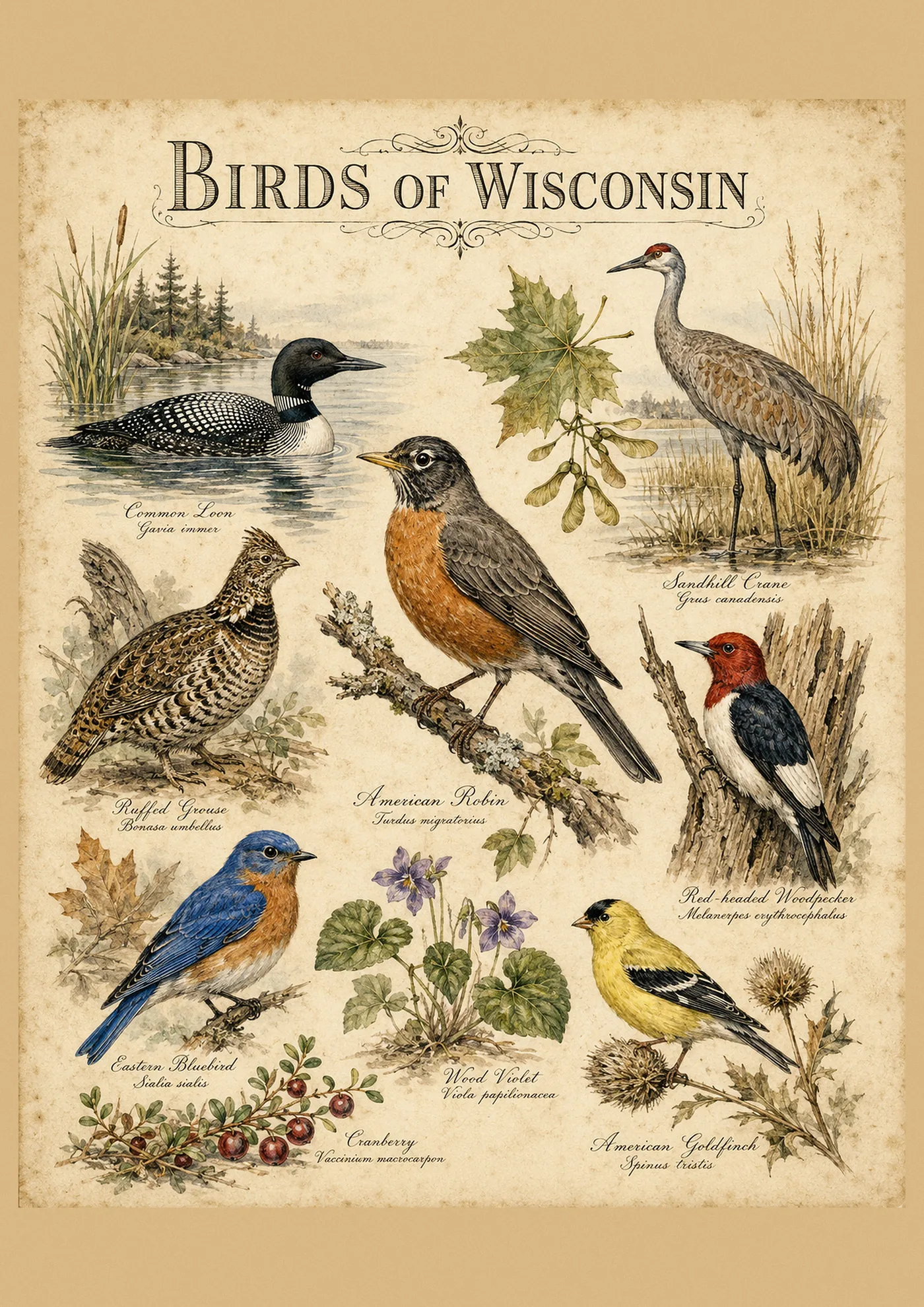
Wisconsin schoolchildren voted for the American Robin in 1926-27. The robin received twice as many votes as any other candidate. The legislature waited until 1949 to make it official - a 22-year gap that says something about how democratic birding politics actually moves. The robin has held the designation ever since, making Wisconsin one of three states that share the choice (Connecticut and Michigan are the others, a fact Cornell’s All About Birds notes without much ceremony).
The American Robin is not a surprising choice. He is the bird Wisconsin children know on sight: brick-orange breast, yellow bill, the first song at the end of a long winter. He arrives reliably in March when the ground begins to soften and earthworms reach the surface again. By April he is everywhere - suburban lawns, city parks, lakeshore edges, forest clearings. Cornell’s All About Birds notes that the robin’s year-round presence across most of Wisconsin is deceptive: the birds visible in February are not the same individuals that nest in May. Northern breeding birds winter further south; the ones probing a Milwaukee lawn in January are often birds from populations that breed in Canada.
Signature species
Wisconsin’s ornithological story is told in its wetlands and its north-woods transition zone.
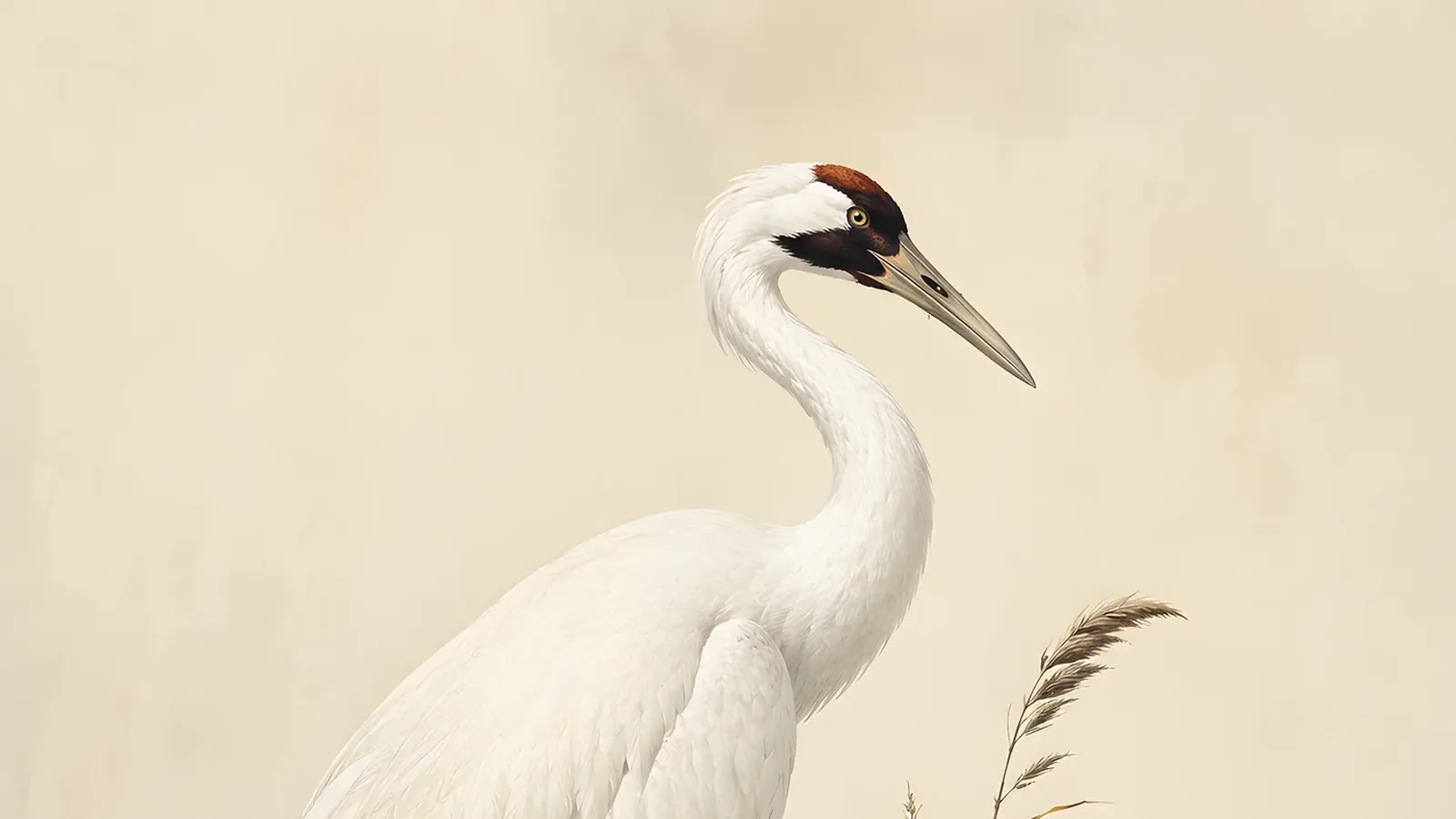
Whooping Crane (Grus americana) is the most consequential bird in Wisconsin today. A reintroduced migratory population - trained by ultralight aircraft to follow a Florida-to-Wisconsin route - now stages at Horicon Marsh and the Necedah National Wildlife Refuge. The Wisconsin Society for Ornithology records this population as a high-priority species on its annual checklist. With roughly 600 birds in the world at the time of writing, a Whooping Crane visible from the Horicon observation tower in October is not a routine sighting.
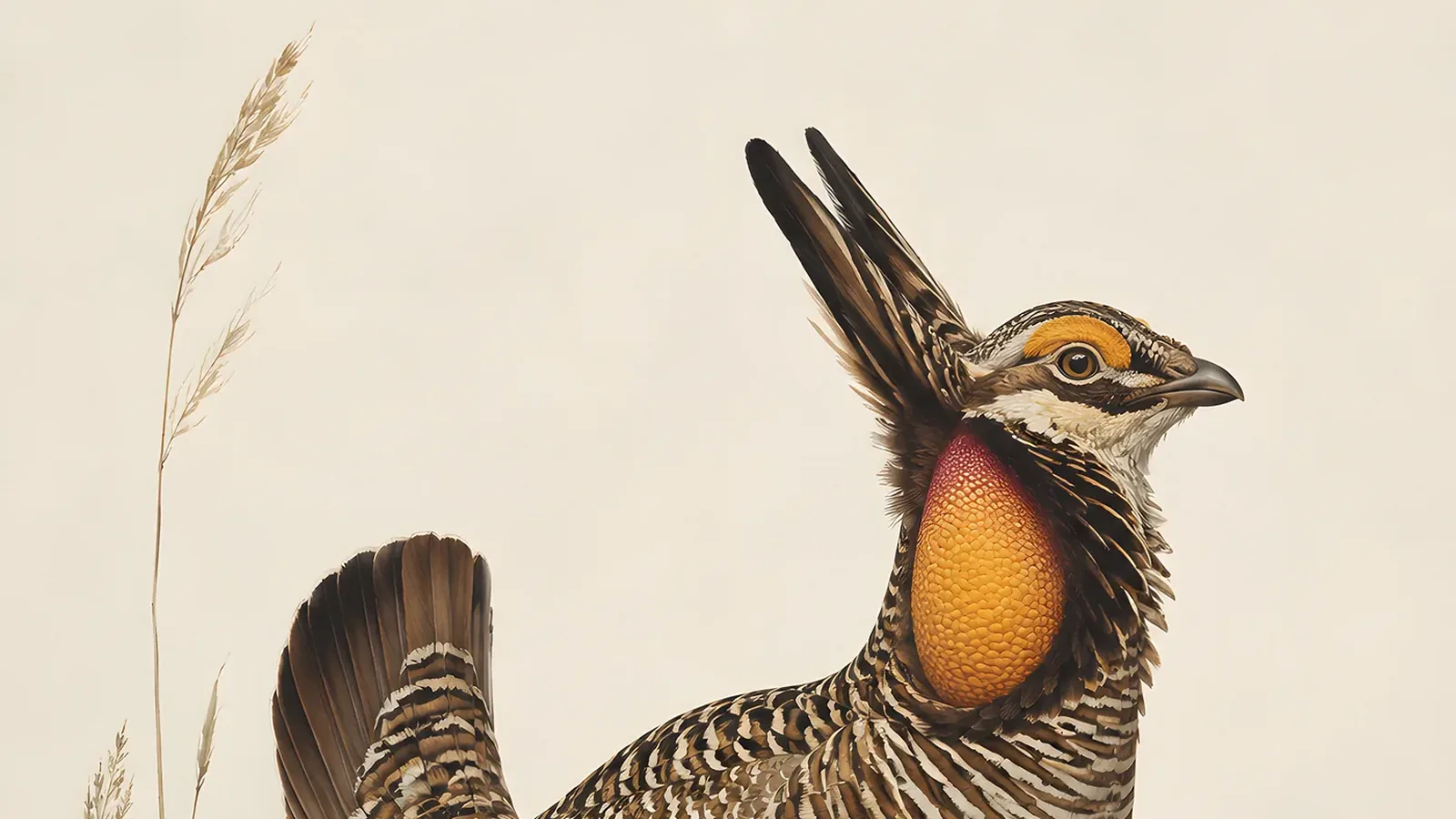
Greater Prairie-Chicken (Tympanuchus cupido) still booms at Buena Vista Grasslands in Portage County, one of the few viable populations east of the Mississippi River. The Wisconsin DNR operates a blind programme at Buena Vista each spring so observers can watch lekking display without disturbing the birds. The species is state-threatened, and its survival in Wisconsin depends almost entirely on managed grassland.
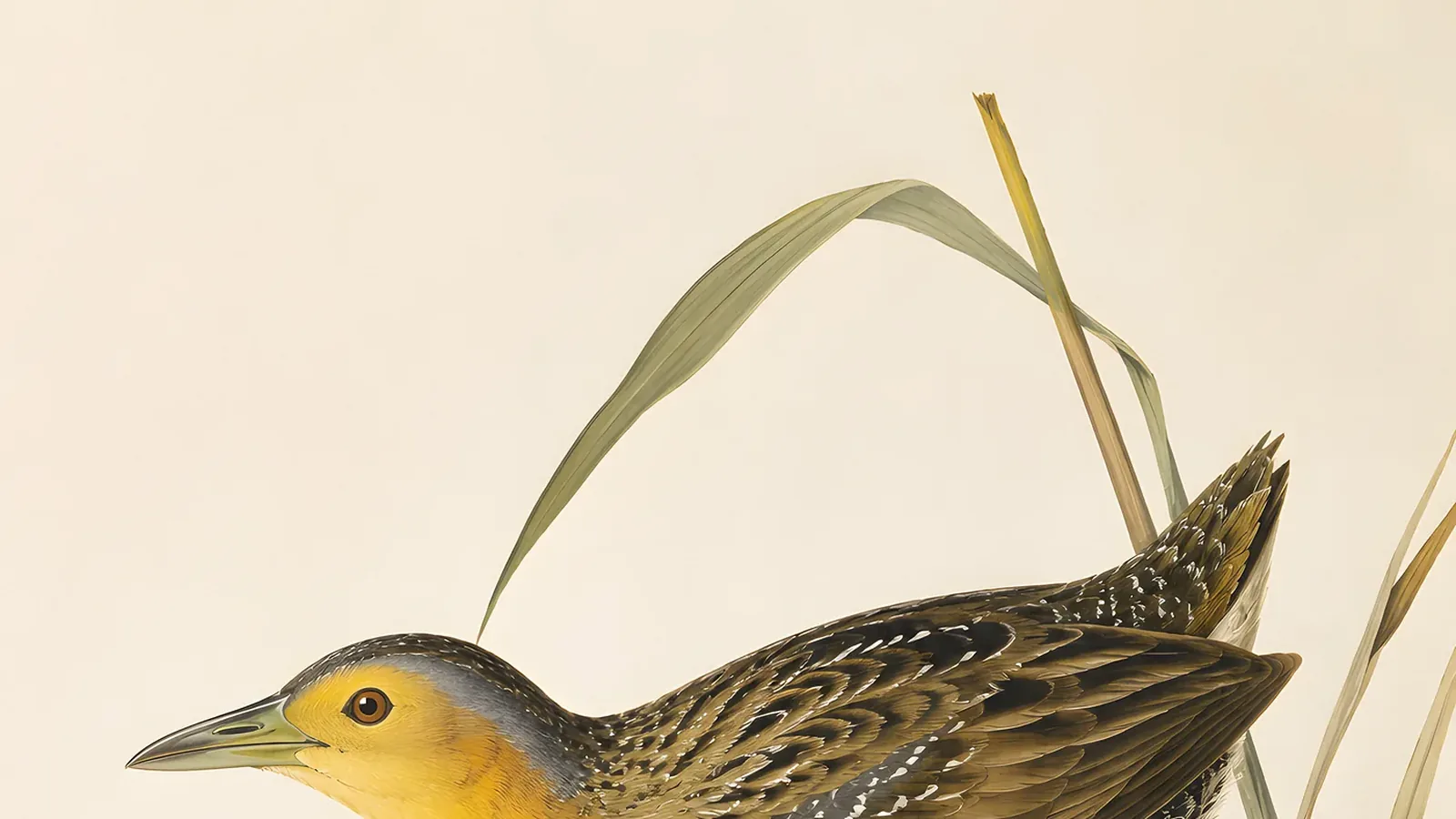
Yellow Rail (Coturnicops noveboracensis) breeds in the sedge marshes at Crex Meadows Wildlife Area in Burnett County. The Wisconsin Society for Ornithology lists Yellow Rail as a threatened species in the state - a secretive ground bird that is more often heard than seen, its distinctive double-click call detectable at night in May and June.
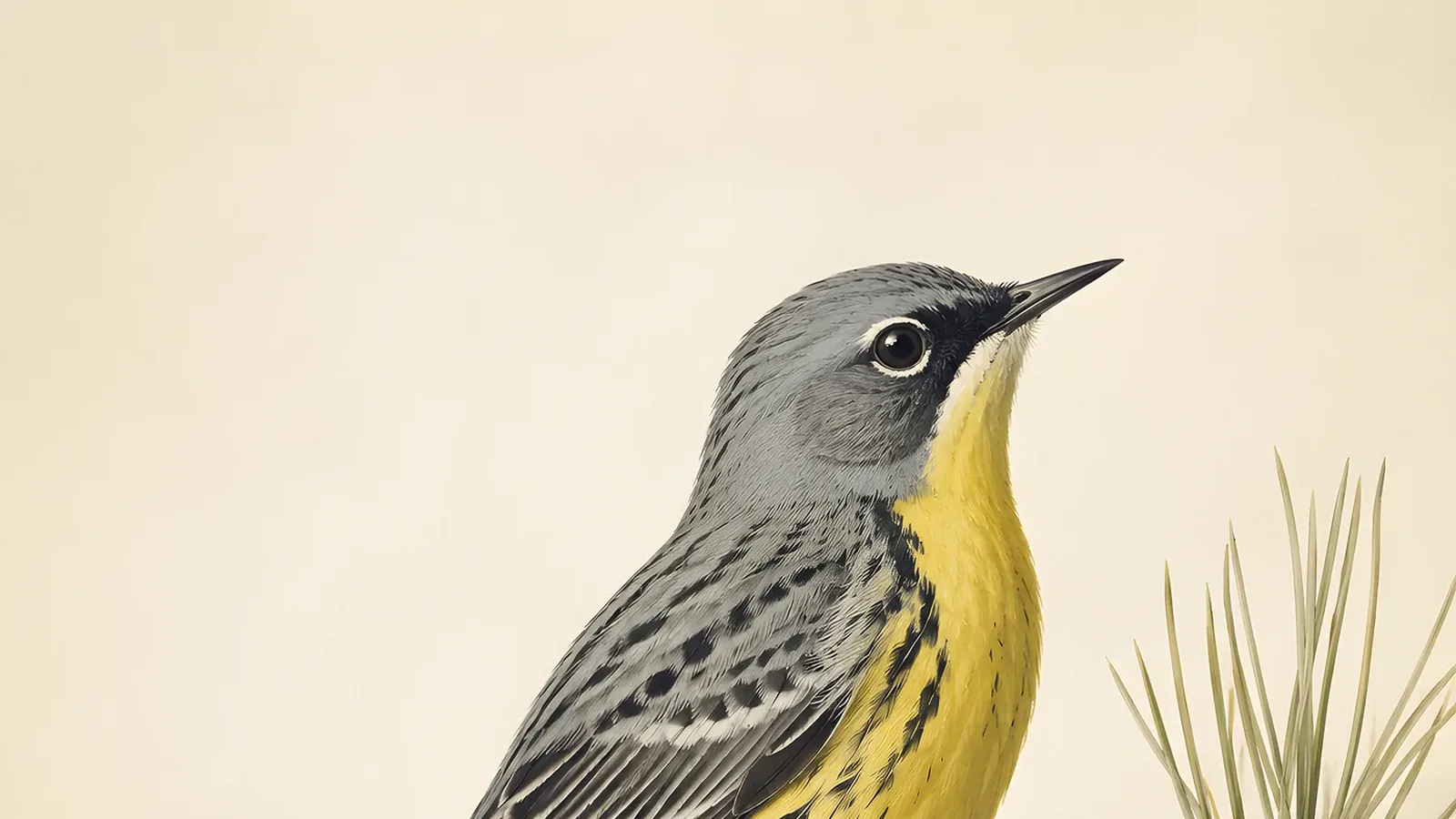
Kirtland’s Warbler (Setophaga kirtlandii) is classified as a recovered federal endangered species and now breeds in limited numbers in the jack-pine barrens of northern Wisconsin as well as Michigan. The Wisconsin Breeding Bird Atlas documented confirmed and probable breeding records in Marinette and Langlade counties.
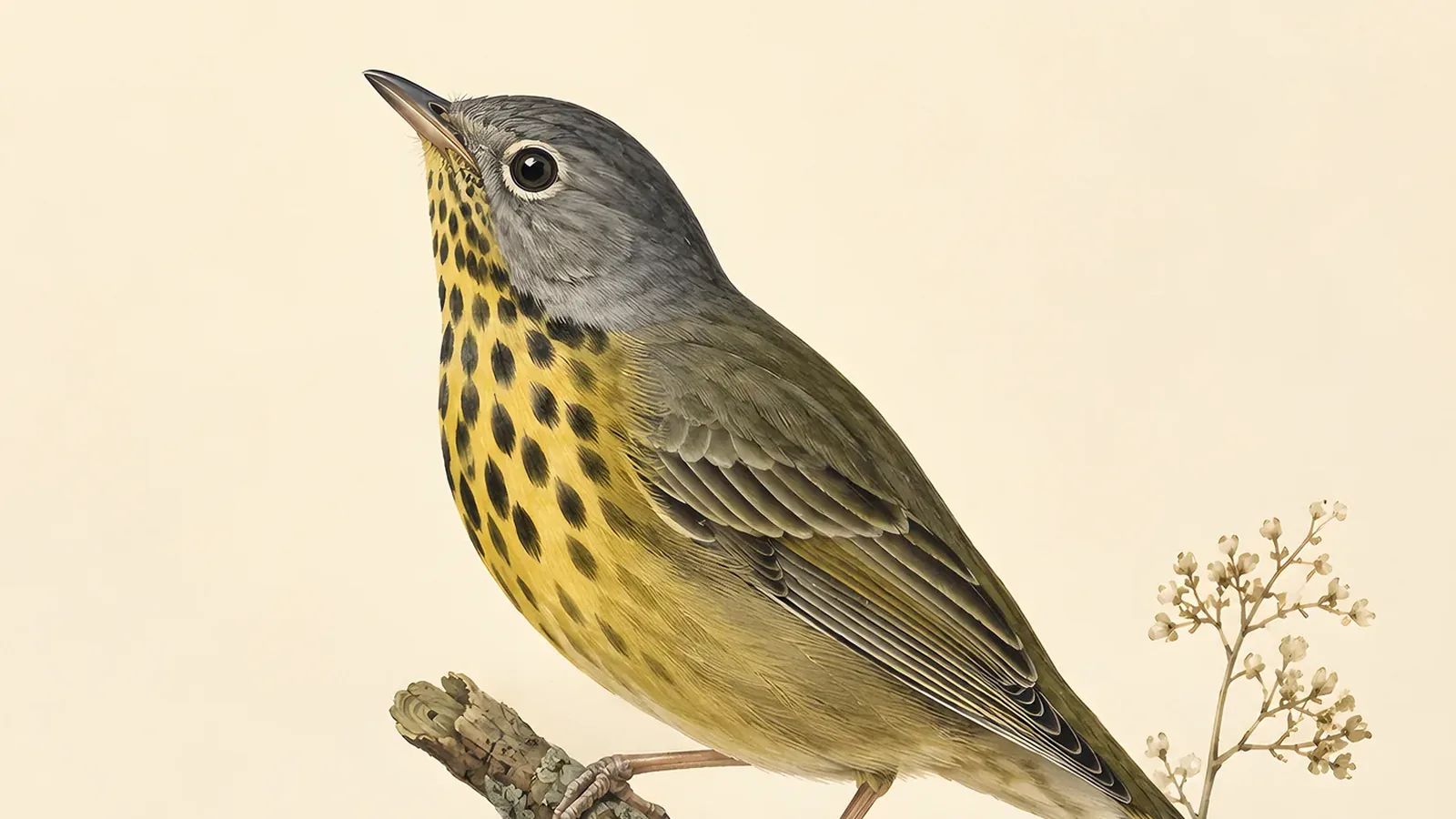
Connecticut Warbler (Oporornis agilis) breeds in the boreal-edge habitats of the north, in sedge bogs and alder thickets. It is notoriously difficult to locate, visible reliably only during migration - a bird that generates genuine field lists for visiting birders.
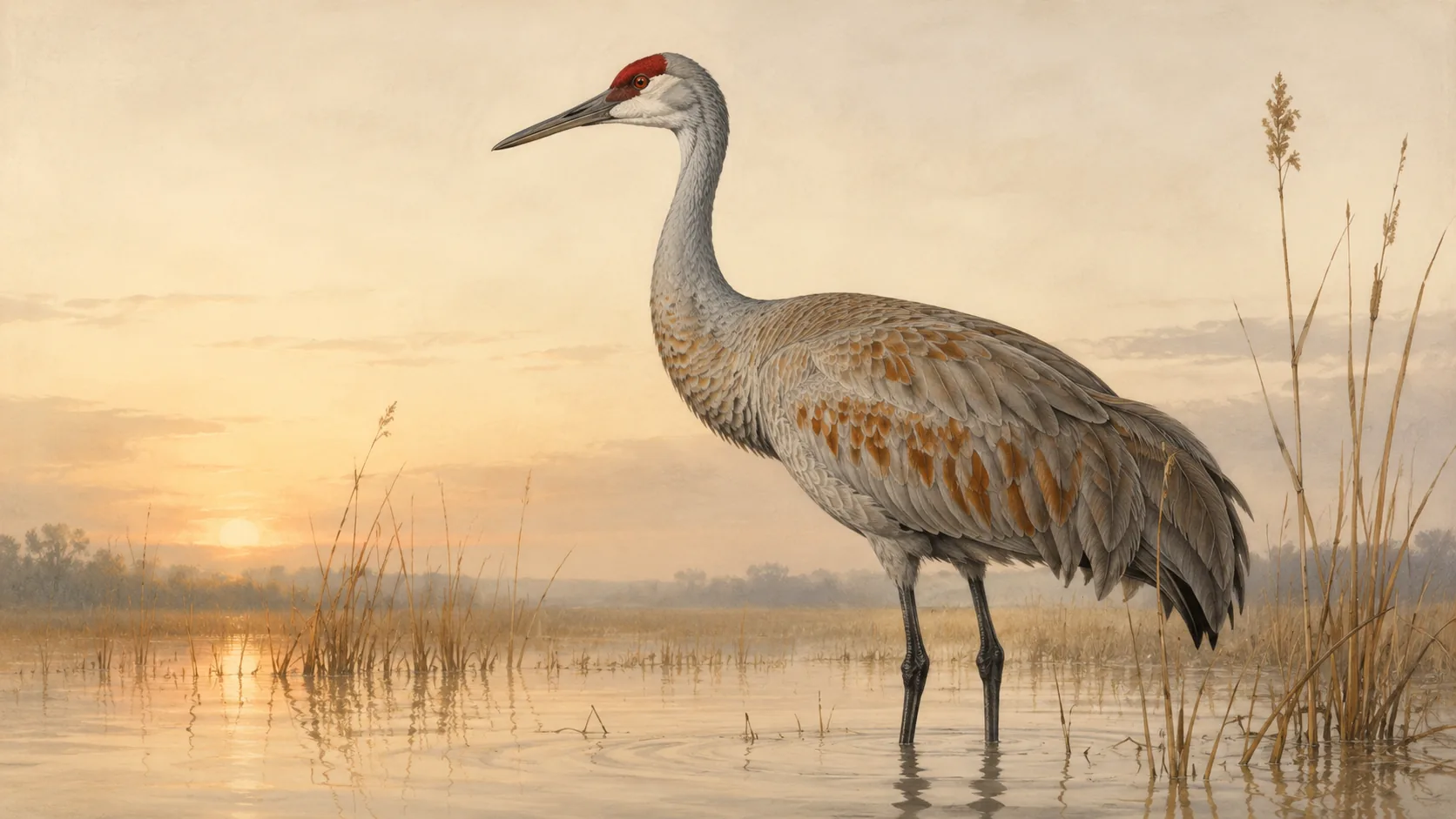
Sandhill Crane (Antigone canadensis) is a Wisconsin success story. The species was locally extirpated by the early twentieth century and has since recovered to breed across much of the state. Fall concentrations at Horicon Marsh and Crex Meadows now number in the thousands. The birds’ rattling bugle call, audible a kilometre away, has become one of the defining sounds of a Wisconsin September.
Backyard species
A typical Wisconsin suburban yard across the southern two-thirds of the state:
- American Robin (state bird, year-round with seasonal turnover)
- Black-capped Chickadee (year-round; dominant across the whole state)
- American Goldfinch (year-round; flocks at nyjer feeders in winter)
- Downy Woodpecker (year-round)
- Northern Cardinal (year-round; northern limit of reliable breeding)
- Blue Jay (year-round)
- Mourning Dove (year-round)
- House Finch (year-round)
- White-breasted Nuthatch (year-round)
- Dark-eyed Junco (winter visitor in numbers)
- Canada Goose (year-round, abundant on any body of water)
In the northern boreal counties, Black-capped Chickadee gives way to nothing - it is present throughout - but Boreal Chickadee becomes possible in the far north near Lake Superior. The Wisconsin DNR notes that Sharp-tailed Grouse can be viewed from a blind at Namekagon Barrens and Douglas County Bird Sanctuary in spring.
Where and when to watch
Horicon Marsh is the entry point for most visiting birders. At 33,000 acres it is the largest freshwater cattail marsh in the United States. The Wisconsin DNR and the U.S. Fish and Wildlife Service manage it jointly, and it holds the largest breeding population of Redhead east of the Mississippi River. Fall goose migration here peaks at over 200,000 Canada Geese in October. Spring brings American White Pelican, Black Tern, Black-crowned Night-Heron, and the occasional Whooping Crane.
Crex Meadows Wildlife Area in Burnett County offers 30,000 acres of managed sedge marsh, open water, and boreal-edge scrub. eBird data consistently place Crex among the state’s top-ranked hotspots for both species diversity and rare finds. The Wisconsin Society for Ornithology’s hotspot guide names it the most reliable site in the state for Yellow Rail, Trumpeter Swan, and Sharp-tailed Grouse.
Buena Vista Grasslands in Portage County is the place for Greater Prairie-Chicken in Wisconsin. The DNR-run blind programme runs from early April through mid-May each year and requires advance booking. The birds begin displaying before sunrise.
Wind Point on Lake Michigan - the northernmost point of Racine County - has recorded over 270 species in eBird, among the highest site totals in the state. Lake Michigan concentrates southbound migrants in autumn and produces Snowy Owl and unusual gulls in winter. The Wisconsin Society for Ornithology’s hotspot factsheet identifies it as a reliable trap for species that get pushed up against the lakeshore during northwest wind events.
Seasonal rhythm
March is the month Wisconsin birders watch for. The robin returns, the crane migration begins along the Mississippi, and the first waves of waterfowl come off the ice on the inland lakes. May is warbler month, with the Lake Michigan shoreline acting as a funnel for neo-tropical migrants moving through. Breeding season runs June and July, when boreal species in the north and grassland species in the central counties are easiest to confirm. September brings the Sandhill Crane gathering at Crex Meadows and Horicon. October is peak goose migration at Horicon. December and January bring Dark-eyed Juncos to every feeder, occasional Snowy Owl along the lakeshore, and Bald Eagles concentrated at open water along the Wisconsin River.
The Wisconsin Society for Ornithology lists 457 accepted species on the state checklist as of March 2025. That total reflects the state’s position at the junction of the Mississippi Flyway, the Great Lakes shoreline, and the boreal forest - a geography that pulls birds from three directions through every season.
The robin the schoolchildren chose in 1927 arrives first every March, well before most birders are ready for him.