Field Guide
Red Knot
On a grey May morning at Delaware, the sand at Mispillion Harbor is alive with birds. Not dozens - thousands. Small, compact shorebirds packed so tightly that the beach appears to move. Every one of them is eating. They have come from the tip of South America and they will not stop until they reach the Canadian Arctic. What happens here, in the next two weeks, will decide whether they live or die.
The birds are Red Knots, and the food they are eating is horseshoe crab eggs.
What it looks like
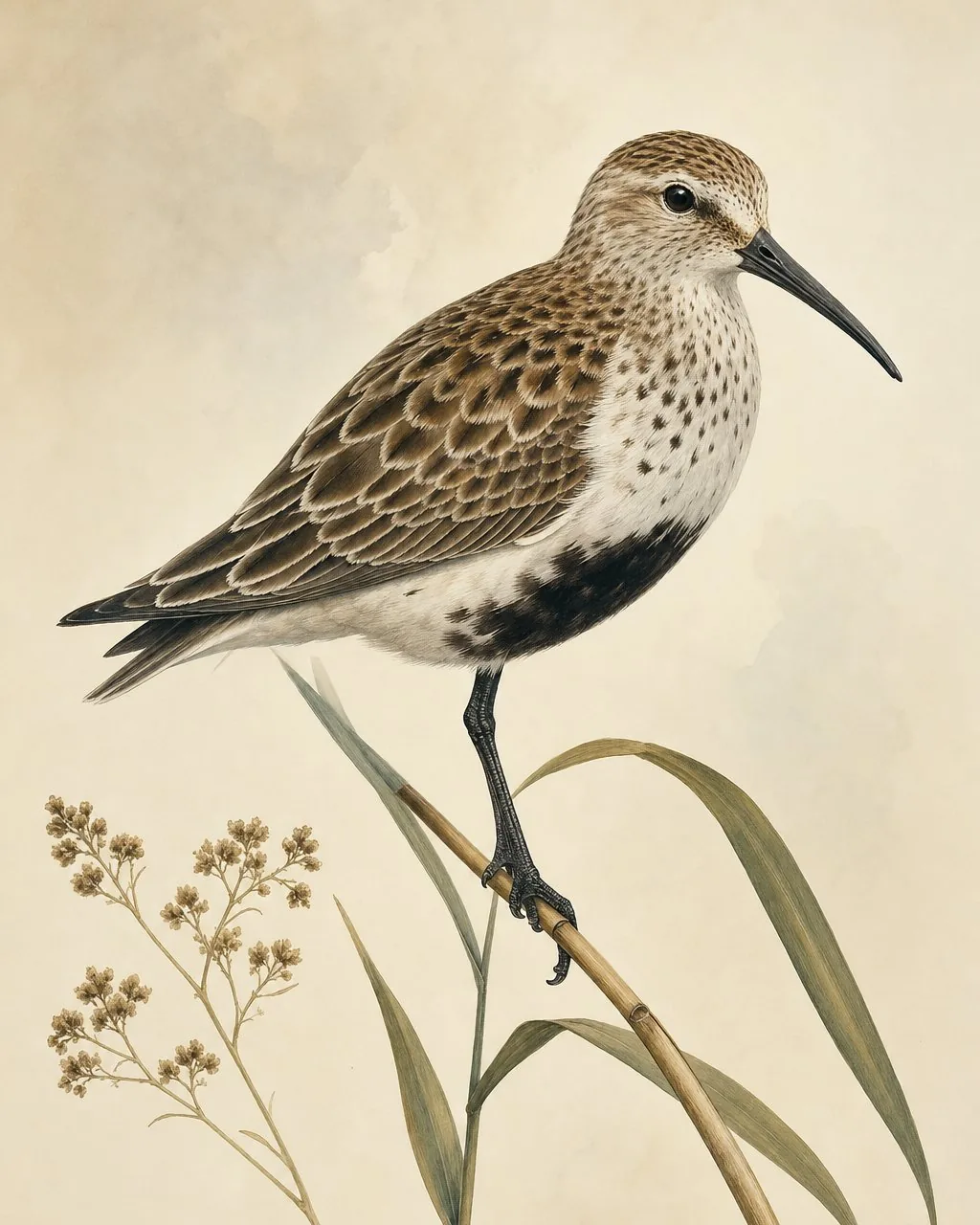
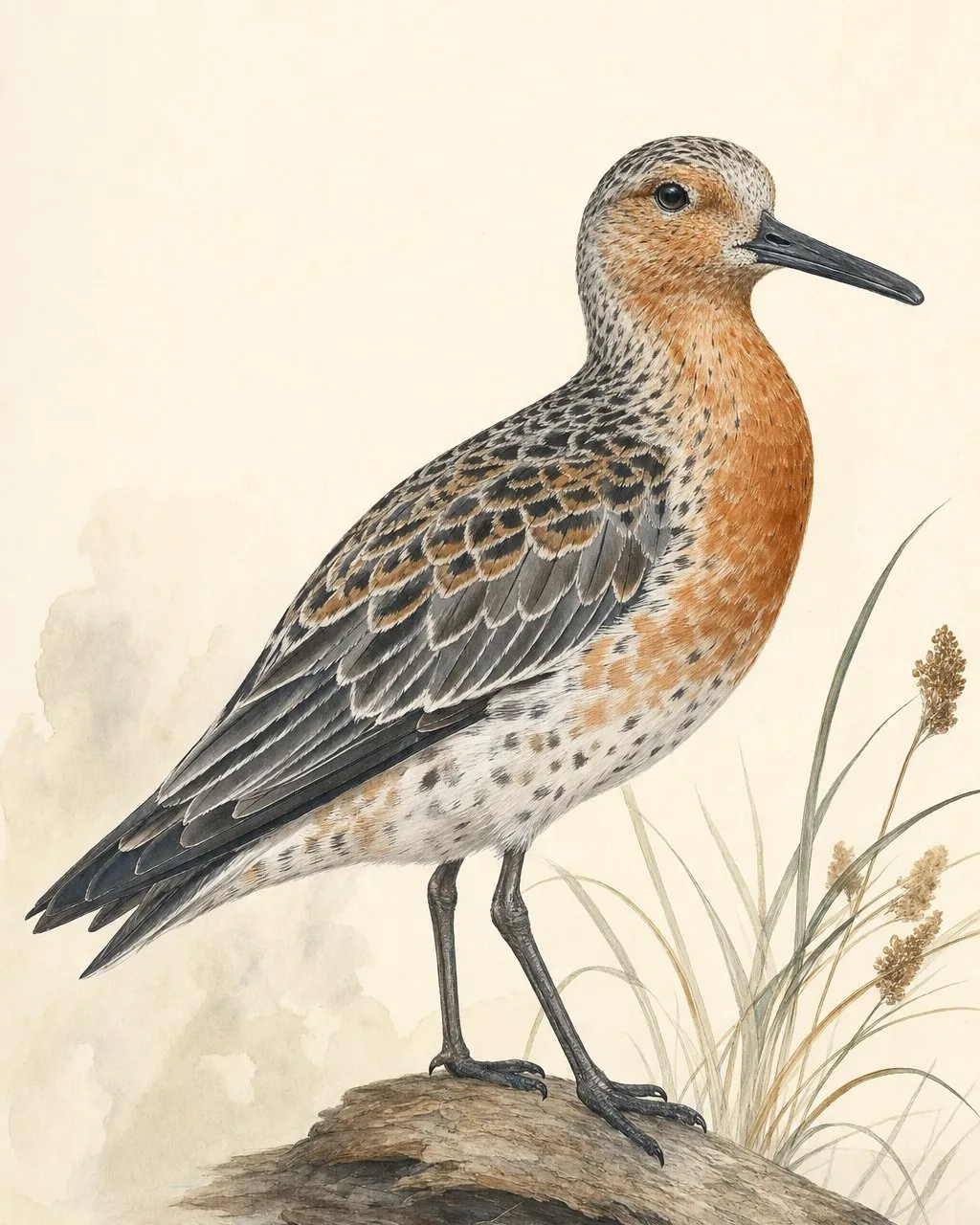
In breeding plumage the Red Knot is one of the most striking shorebirds in North America. The face and underparts flush a deep brick-red, almost orange, that runs from chin to belly. The back is a complicated mosaic of black, rufous and grey - each feather edged and spotted so the upperparts look woven. The legs are short and dark. The bill is straight, medium-length and black, with the slightly swollen tip typical of knots.
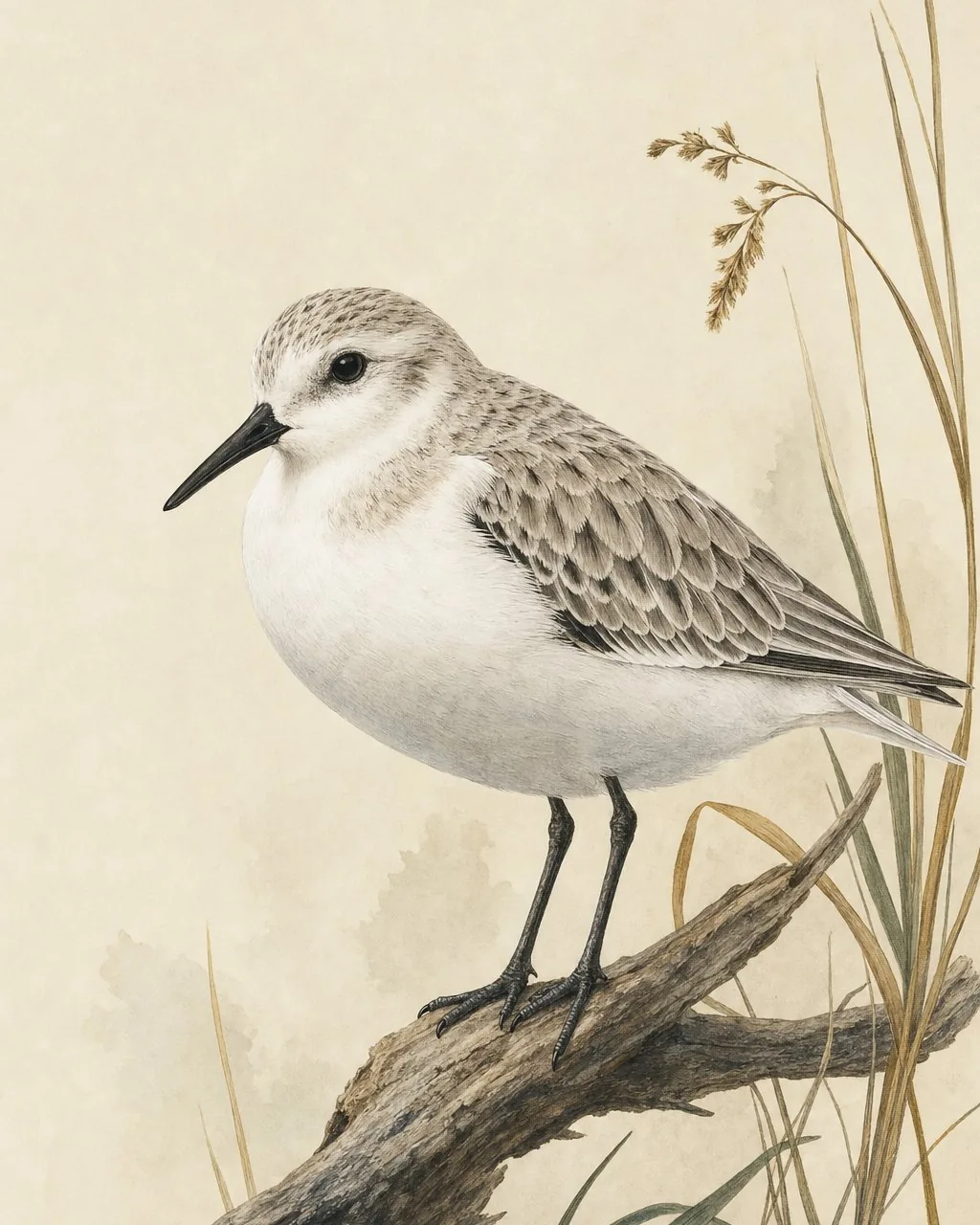
By the time these birds reach their wintering grounds in South America, the drama is gone. Winter plumage is plain grey above and white below, the bird unremarkable at a glance among the other peeps and plovers on a mudflat.
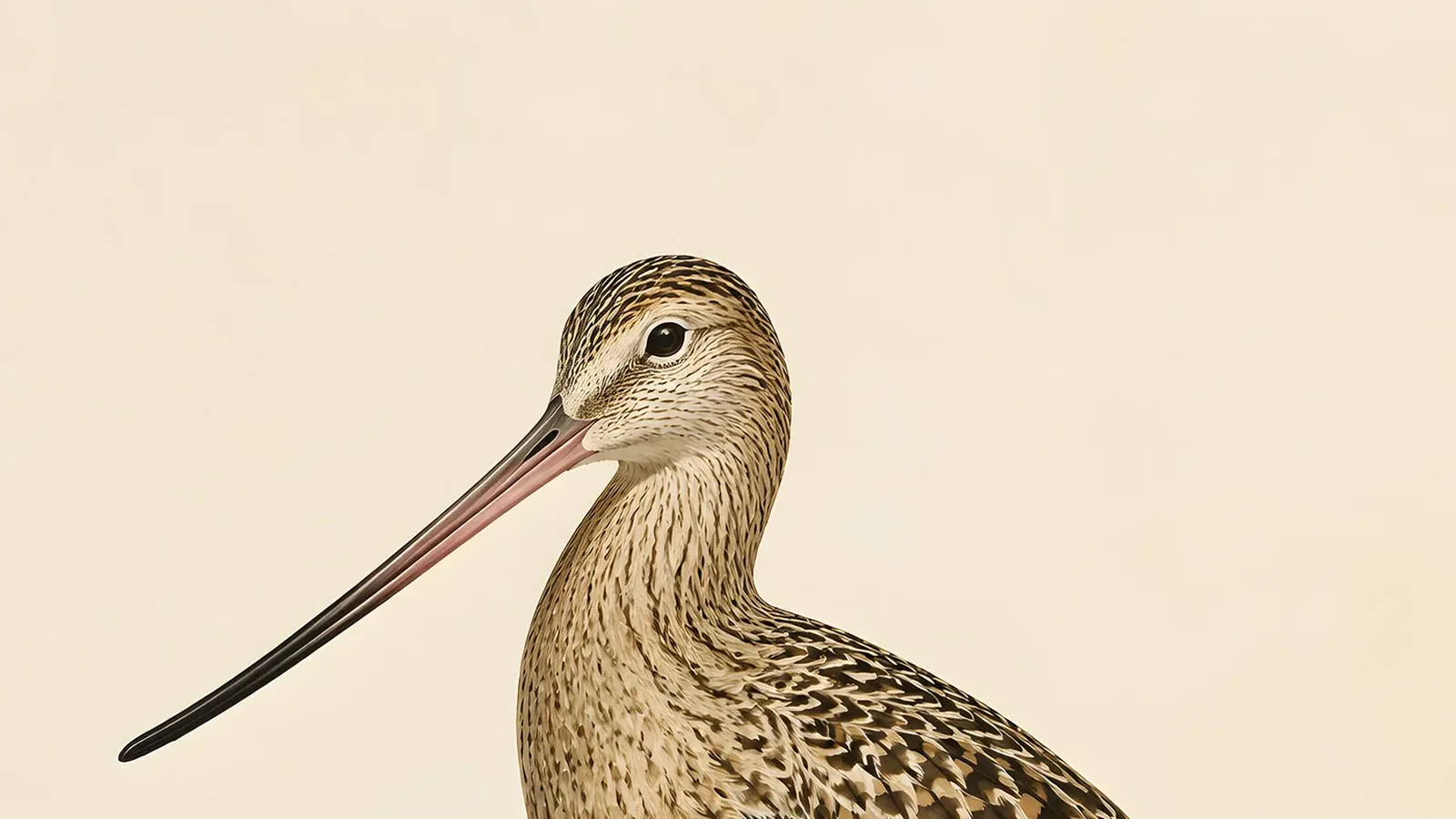
Size puts it between a Dunlin and a Dowitcher. Chunkier than either, with a shorter bill and a more barrel-chested silhouette.
| Measurement | Range |
|---|---|
| Length | 23 - 26 cm |
| Weight | 100 - 200 g |
| Wingspan | 47 - 53 cm |
| Lifespan | 4 - 20 years |
“A bird that carries an entire ecosystem on its wings - break one link in the chain and the whole migration fails.”
Voice
Not a bird you notice for its song. The flight call is a low, husky knutt - which gave the species its common name, and reputedly also gave the name to King Canute, though that etymology is disputed. At the breeding grounds in the High Arctic it produces a mellow purring trill. During migration it is mostly silent, or utters soft conversational notes within the flock.
Range and habitat
The rufa subspecies - the one in crisis - breeds in the central Canadian Arctic on low tundra. Each autumn it migrates to the southern tip of South America, wintering on the tidal flats of Tierra del Fuego. The round trip is roughly 30,000 kilometres.
The bird does not fly that distance in one push. It needs fueling stops, and the most critical of all is Delaware and New Jersey in May. Here, for just two weeks, the beaches load with the eggs of spawning horseshoe crabs - an ancient invertebrate that has been laying eggs on these same beaches for 450 million years. A knot that arrives at Delaware Bay at the right time and doubles its body weight on crab eggs will reach the Arctic in condition to breed. One that misses the window, or finds the beach empty, will not.
Other subspecies winter in Europe, West Africa and Australia. The species is globally distributed, but rufa is the one under the most acute pressure.
Diet
Red Knots are generalist shorebird feeders for most of the year - small molluscs, crustaceans, worms and other invertebrates taken by probing damp sand or mudflat. The tip of the bill contains densely packed mechanoreceptors (Herbst corpuscles) that detect buried prey by pressure changes in wet substrate, allowing knots to feed in murky water or at night.
But at Delaware Bay in May, the diet narrows to a single item. Horseshoe crab eggs are calorie-dense and accessible in extraordinary quantities. Knots can double their mass in a fortnight on nothing else.
Breeding
The birds that survive the Delaware Bay fuelling arrive at the Arctic tundra in June, lean and urgent. Pair bonds form quickly. The male arrives first and establishes a territory on low, dry tundra near water. He performs flight displays, a slow, moth-like fluttering on bowed wings over the nesting area.
The nest is a shallow scrape lined with lichen and leaves. Both parents incubate four olive-green spotted eggs for roughly three weeks. The chicks are precocial and leave the nest within hours. The female typically departs before the chicks fledge, leaving the male to complete parental duties alone. By late July or August the adults are southbound, long before the year’s young birds follow.
The collapse - and what it tells us
In the 1980s the rufa Red Knot population was estimated at roughly 100,000 birds. By the mid-2000s surveys counted fewer than 15,000. The cause was not mysterious. Commercial harvest of horseshoe crabs along the Mid-Atlantic coast, primarily for the conch and eel bait fishery, had stripped the beaches of eggs just as knots were arriving to eat them.
The connection between one invertebrate and one subspecies of shorebird had simply not been anticipated. The horseshoe crab was not listed as a species of conservation concern. Its harvest was managed as a fishery, not as a wildlife resource. The result was a collapse in refueling success that translated directly into lower breeding condition, lower chick survival and a spiralling decline in the population.
Management changes - harvest limits, beach closures during spawning season, later opening dates for crabbing - have stabilised some Delaware Bay populations, though not reversed the trend. The USFWS lists rufa as a threatened subspecies under the Endangered Species Act. The IUCN lists the full species as Near Threatened.
The Red Knot has become a signal species for migratory bird conservation - a demonstration that protecting a bird means protecting every node in its journey, not just the breeding ground. You cannot save a bird in the Arctic if you destroy its fueling stop in New Jersey.
What the knot teaches is that migration is not a feat of individual endurance. It is a network. Remove a single node and the network fails.
The small, brick-red bird running the tide-line at Mispillion in May is not just extraordinary in itself. It is carrying a question: whether the world’s largest horseshoe crab spawning beach is a wildlife resource or a commercial one. The answer will be given one count at a time, each autumn in Tierra del Fuego, when biologists string nets across tidal flats and count the birds that made it back.