State Guide
Birds of Alaska
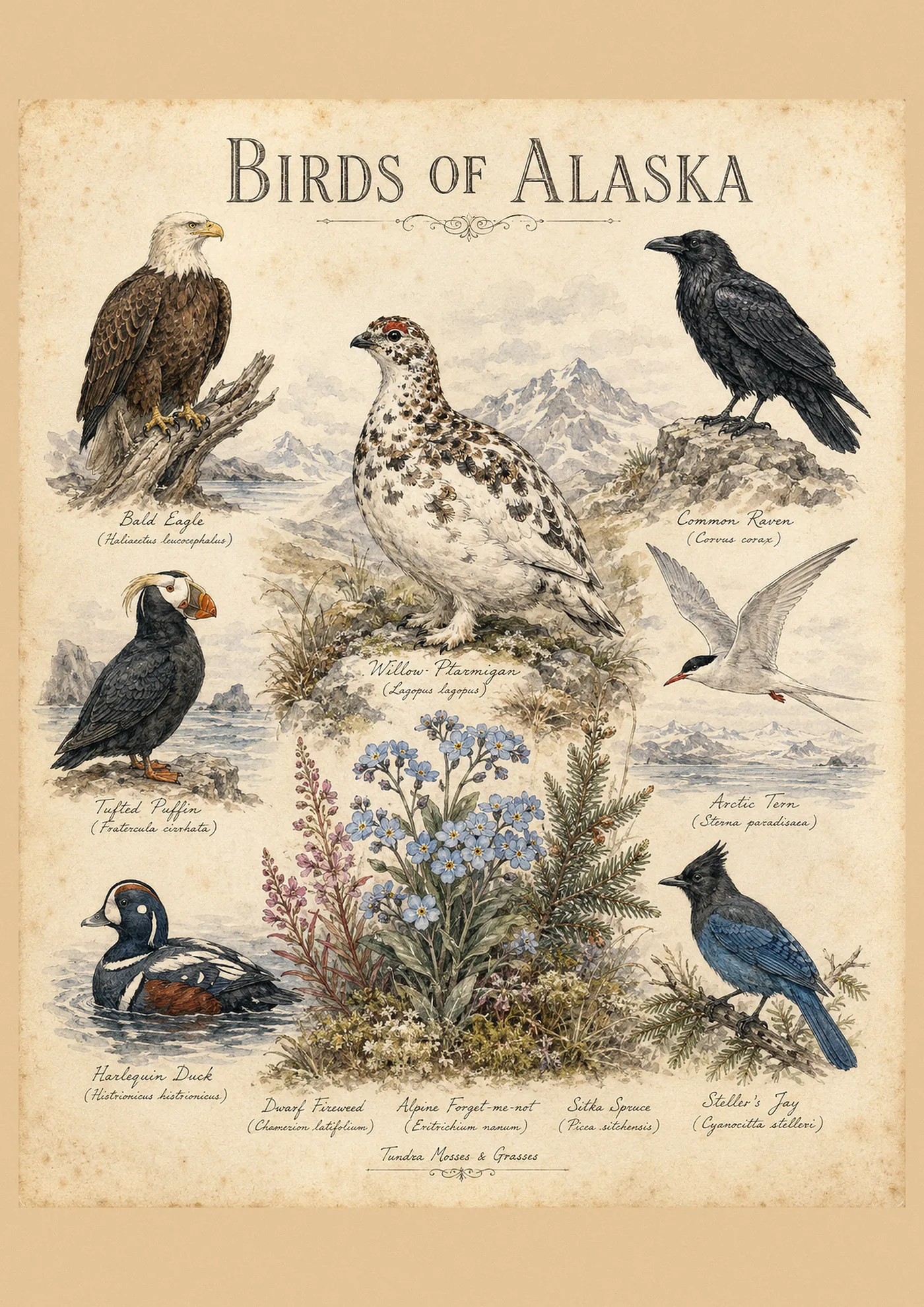
Alaska schoolchildren chose the Willow Ptarmigan (Lagopus lagopus) as their state bird in 1955, four years before Alaska joined the Union. The Territorial Legislature formalised the choice that same year under Chapter 1 of the 1955 Laws of Alaska. When statehood came in 1959, the ptarmigan came with it.
The choice says something about what Alaska is. The ptarmigan does not migrate. It does not winter over the border in a milder state. It stays - buried in snowdrifts on days when the temperature drops past -40, its plumage cycling from snow-white in winter to mottled brown in summer, matching the tundra’s own transformation month by month. The Inupiaq name for the bird is agazrgiq. It has been here longer than the state.
Geographically Alaska is less a state than a continent attached by a corridor. It spans 2,400 km east to west and runs from Pacific rainforest in the southeast to Arctic tundra on the North Slope, with the Aleutian chain extending another 1,900 km toward Siberia. That spread shows in the bird list. The University of Alaska Museum’s 32nd edition Checklist of Alaska Birds, published in 2026, records 551 species - more than any other state except Texas, and assembled from habitats that include boreal forest, alpine scrub, sea cliffs, pack ice, and open ocean.
The state’s signature species
Alaska holds birds that birders from the lower 48 will not see anywhere else on the continent.
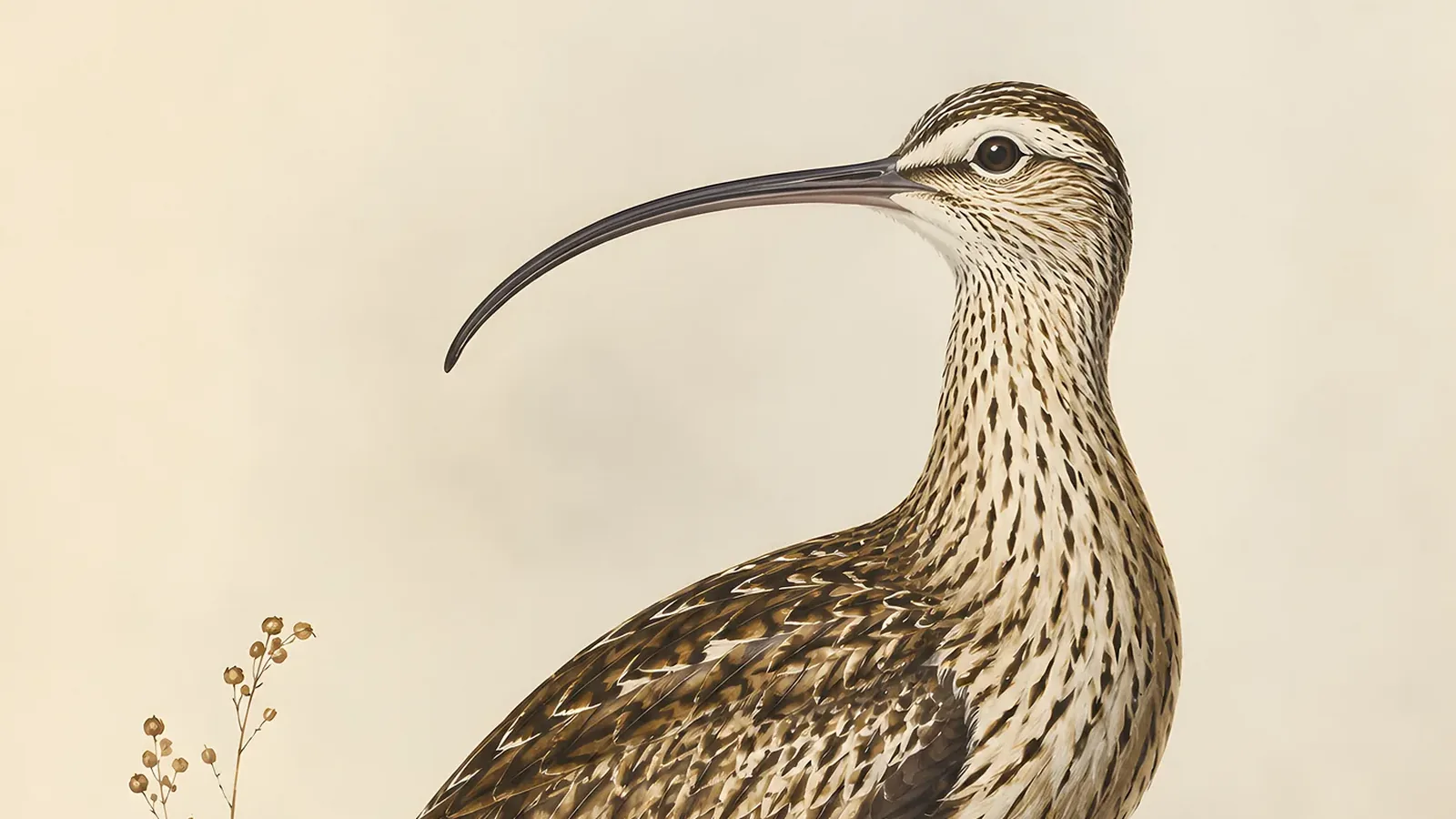
Bristle-thighed Curlew breeds on a small patch of inland tundra in western Alaska - the lower Yukon River and the central Seward Peninsula - and nowhere else in the world. After nesting, the birds gather on the Yukon Delta to fuel up, then fly non-stop roughly 4,000 km to wintering grounds on Hawaiian and South Pacific islands. The Alaska Department of Fish and Game identifies the Kougarok Road near Nome, particularly around miles 72 and 84, as one of the most reliable places on earth to find this bird in late May and early June.
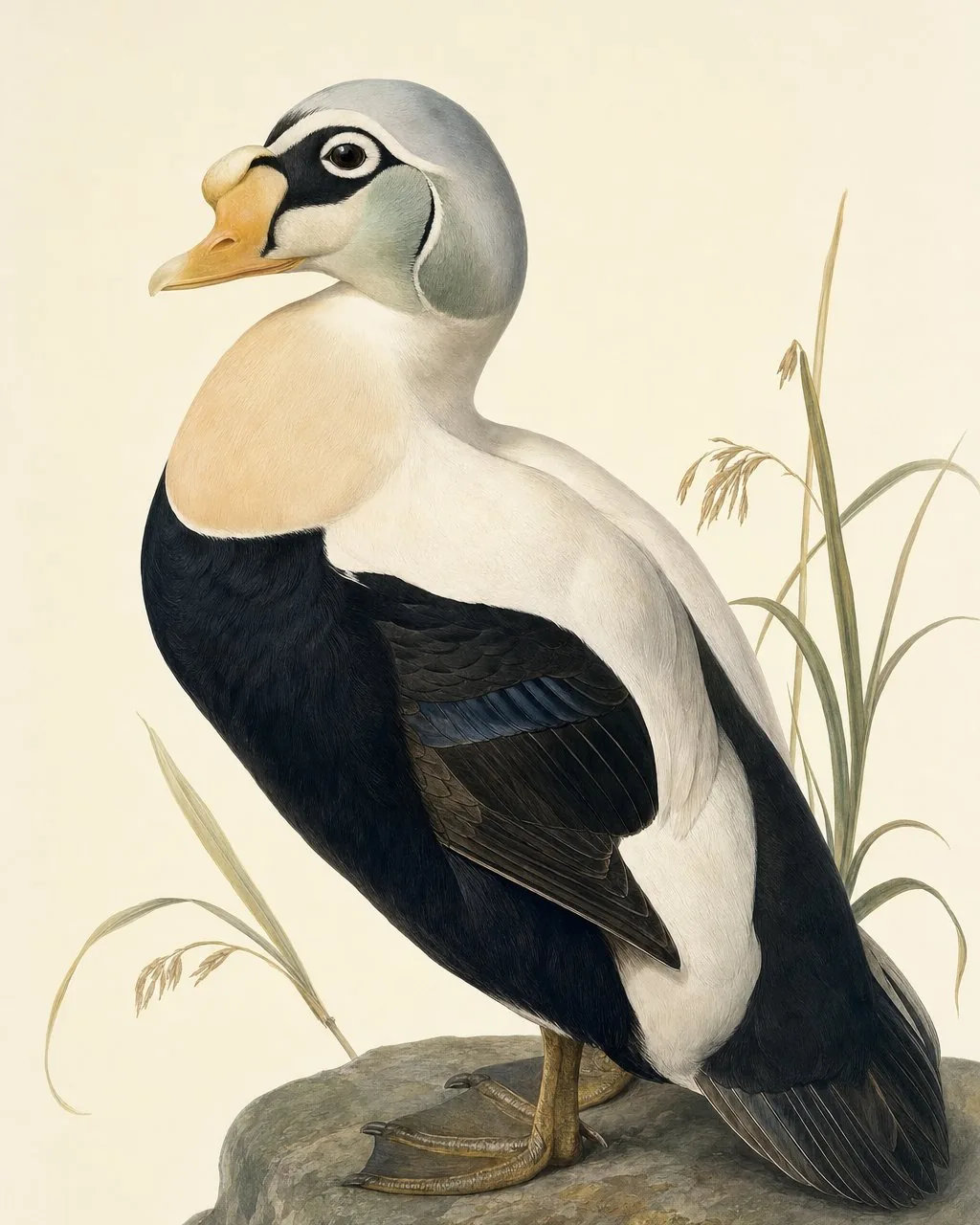
Spectacled Eider breeds on Arctic coastal tundra along the Yukon-Kuskokwim Delta and the northern Alaska coast from Wainwright to Camden Bay. The male’s pale goggle markings are unlike any other sea duck. Outside the breeding season the species winters on pack ice over the Bering Sea, making it one of the harder eiders to observe well. The Colville River Delta on the North Slope in early June is the most reliable land access point.
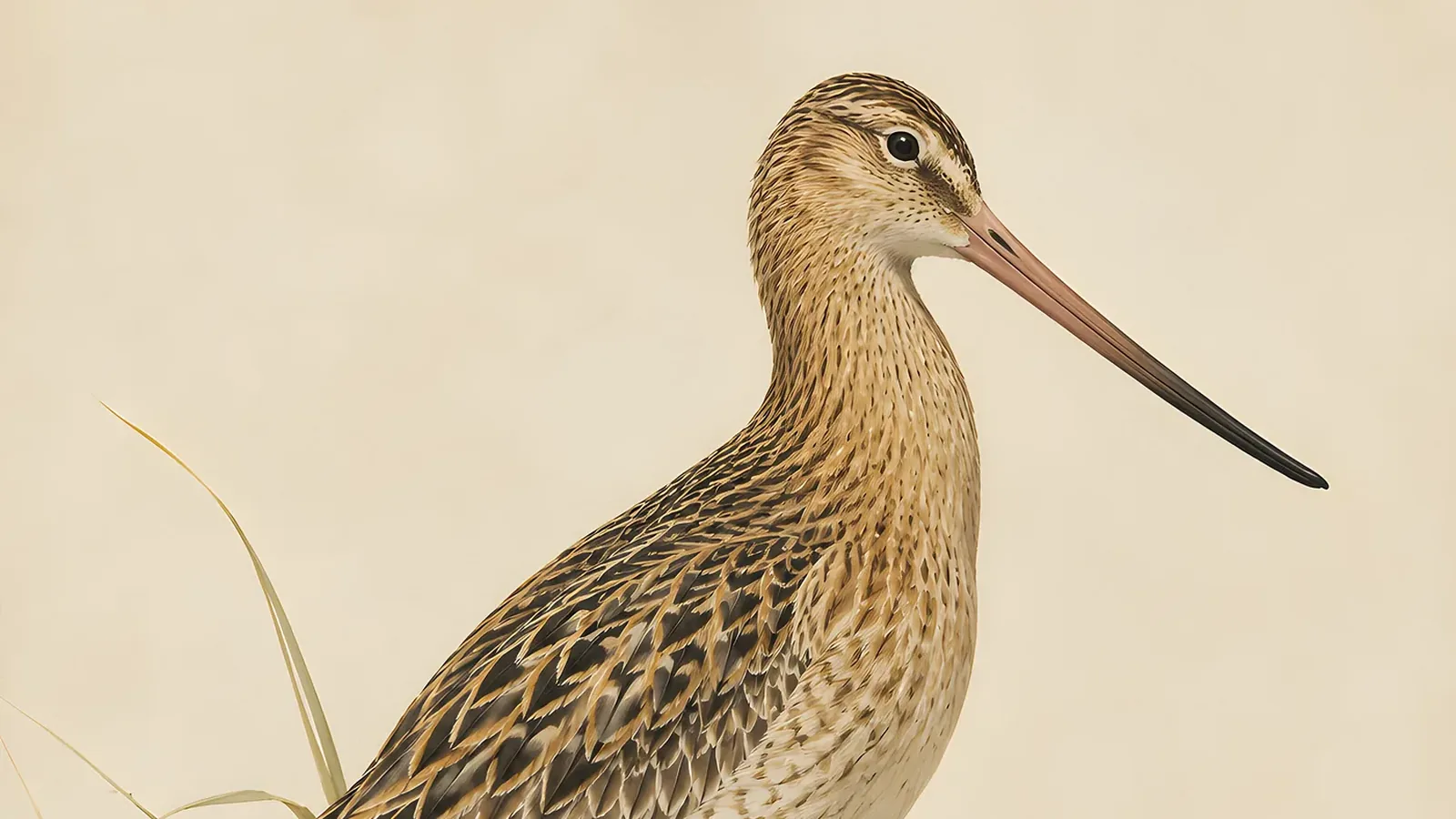
Bar-tailed Godwit breeds across Alaska’s western tundra and then makes one of the longest non-stop migrations of any bird - the Alaska Department of Fish and Game documents the flight from Alaskan staging grounds to New Zealand as roughly 11,000 km without landing. Nome is a productive area for this species in spring before the birds spread to nesting sites.
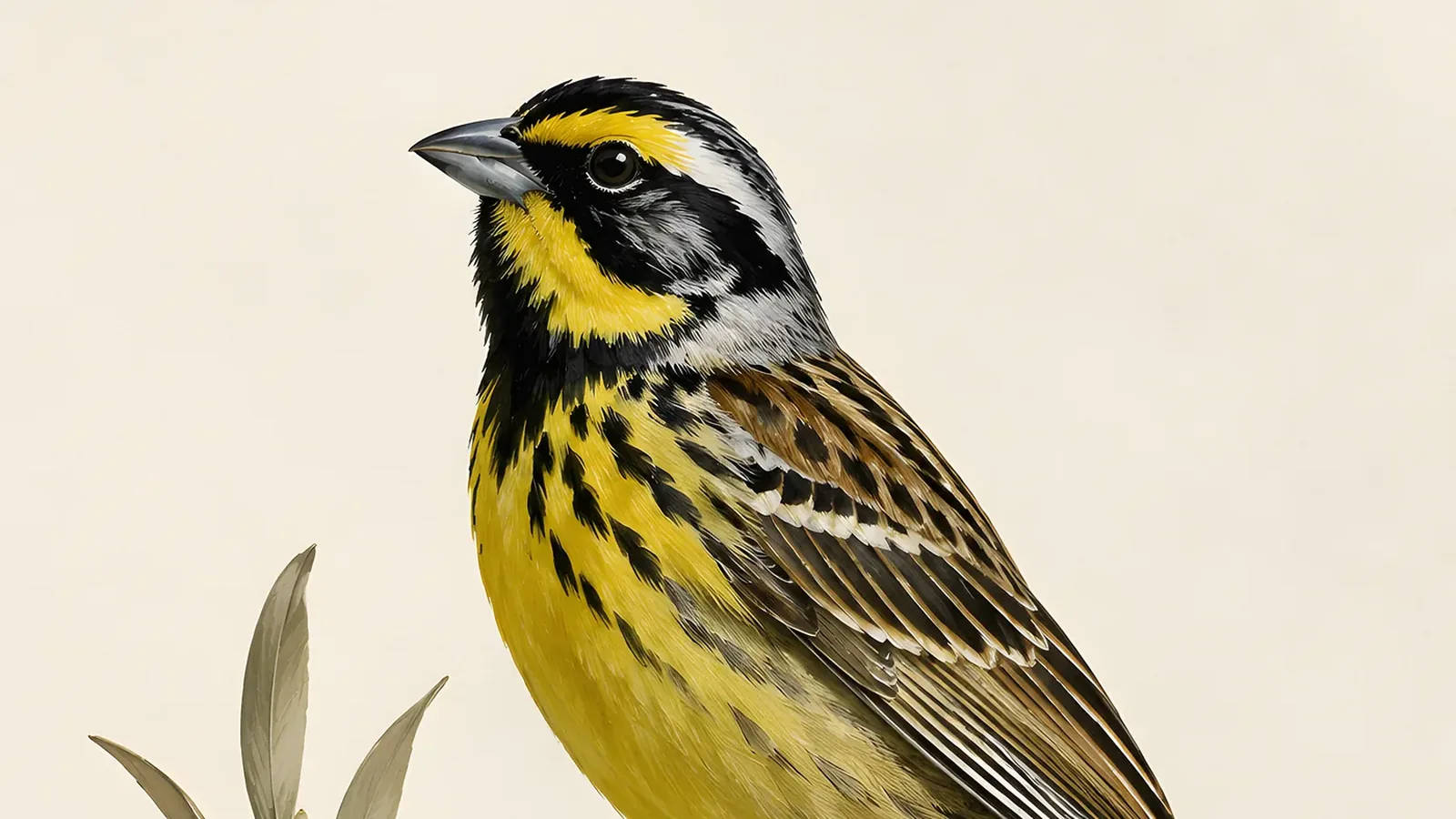
McKay’s Bunting breeds only on Hall and St. Matthew Islands in the Bering Sea and is almost entirely white in breeding plumage. Gambell on St. Lawrence Island is one of the few accessible places where the species appears with any regularity. The Alaska Department of Fish and Game lists it among the state’s sought-after specialities.
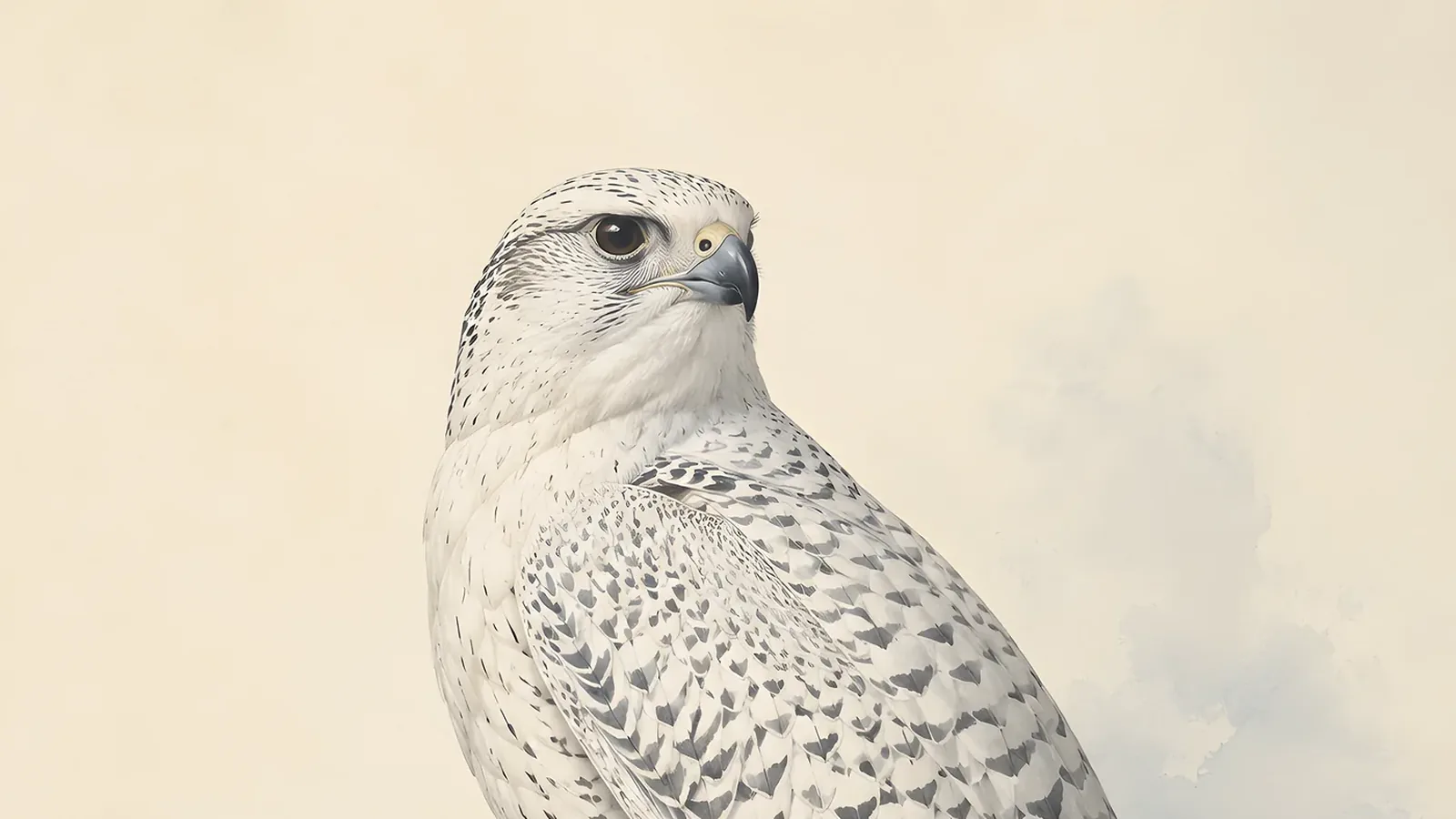
Gyrfalcon (Falco rusticolus) nests on cliff ledges throughout Alaska’s mountain ranges and is the largest falcon in the world. Denali National Park and Preserve records it among the park’s 167 registered species. In winter, individuals spread south and are occasionally seen along the Alaska Highway corridor.
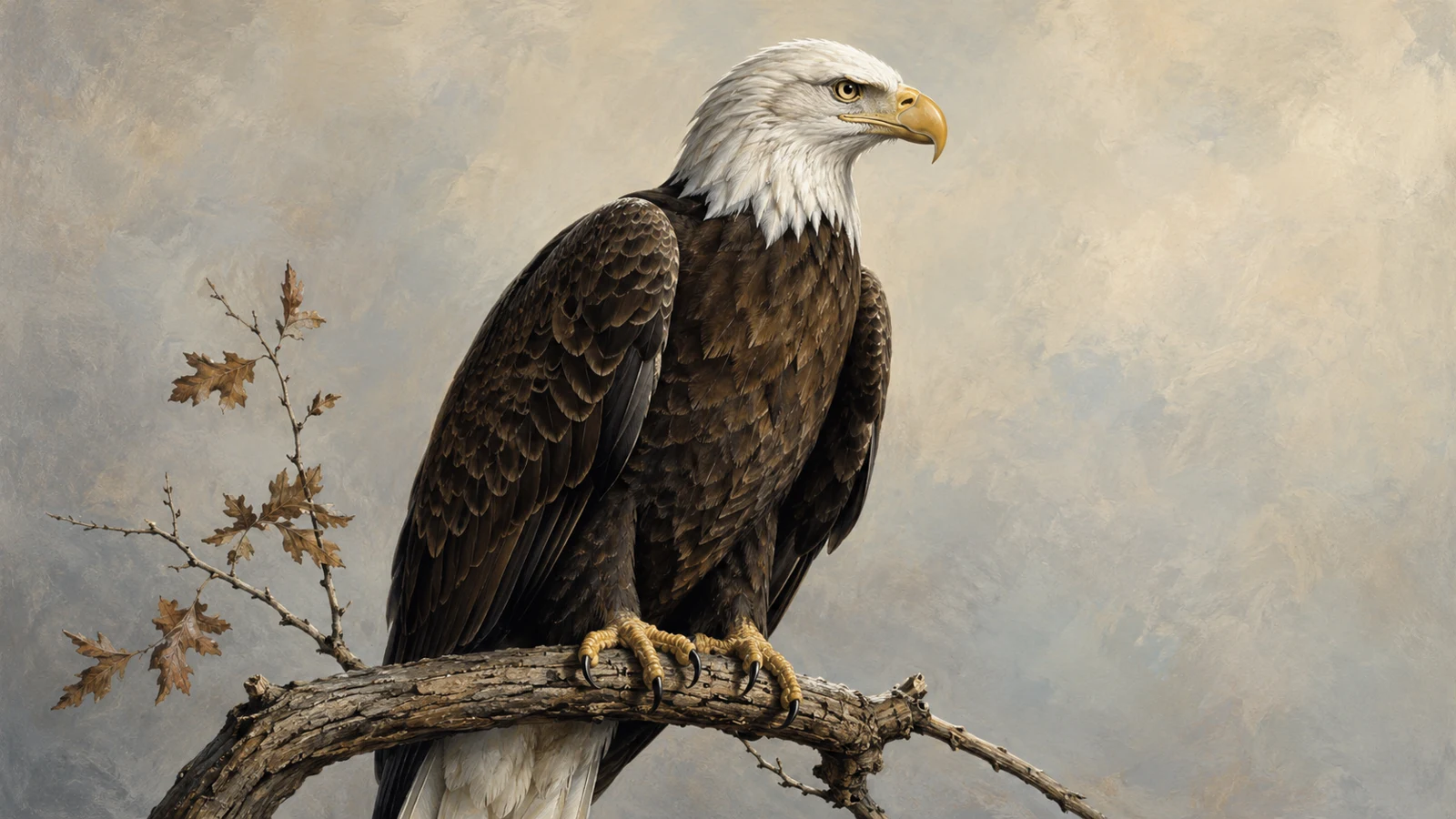
Bald Eagle is familiar across North America, but the density of the species in Alaska deserves its own mention. The Chilkat Bald Eagle Preserve near Haines in southeast Alaska hosts one of the world’s largest concentrations of the bird each autumn, with counts of more than 3,000 individuals gathering along the Chilkat River to feed on late-run salmon.
Top backyard species
For residents of Anchorage and Alaska’s larger towns, the regular feeder and garden birds are a different set from anything in the lower 48:
- Black-capped Chickadee (year-round, common at feeders)
- Common Redpoll (winter irruptive, often abundant)
- Pine Siskin (year-round in southern Alaska)
- American Robin (breeding season, April to September)
- Steller’s Jay (year-round in southeast Alaska forests)
- Common Raven (year-round, present in every habitat zone)
- Downy Woodpecker (year-round in forested areas)
- Canada Goose (spring and summer, nests near lakes and ponds)
- Mallard (year-round in coastal areas and river valleys)
- Dark-eyed Junco (breeding and shoulder seasons)
The Common Redpoll (Acanthis flammea) deserves a word. In irruption years it appears at Anchorage feeders in flocks of dozens or more, stripping nyjer and birch catkins. In lean years it is scarce and irregular. No two winters are alike.
Seasonal calendar
| Season | What to expect |
|---|---|
| Spring (Apr-Jun) | Shorebird migration peaks on the Copper River Delta in May; up to an estimated 12 million birds stop here during a single spring. Nome specialties including Bristle-thighed Curlew, Bar-tailed Godwit, and Asian vagrants are in place by late May. |
| Summer (Jun-Aug) | Breeding seabirds on the Pribilof Islands in full colony; Denali ptarmigan, gyrfalcon, and nesting raptors. Peak window for tundra specialists. |
| Autumn (Sep-Nov) | Waterfowl staging across the interior; Chilkat Bald Eagle gathering begins in October. Gambell offers autumn shorebird and vagrant watching. |
| Winter (Dec-Mar) | Snowy Owl irruptions reach their southern extent; Common Redpoll flocks at feeders; Spectacled Eiders on Bering Sea pack ice. Arctic coastal sites hold rarities that appear nowhere else in North America. |
Where to watch
Pribilof Islands are the site that most serious birders put first. St. Paul Island holds seabird colonies of an estimated three million birds including Thick-billed and Common Murres, Least and Parakeet Auklets, and Horned and Tufted Puffins. The cliffs of St. George hold one of the largest seabird colonies in the northern hemisphere. The islands also attract Asian vagrants - Brambling, Siberian Rubythroat, Terek Sandpiper - that appear nowhere else on U.S. soil with any regularity. The Alaska Department of Fish and Game identifies these islands among the state’s top 10 birding sites.
Nome and the Seward Peninsula draw visiting birders for the concentration of tundra, boreal, and Asiatic species accessible by road. The Council Road, the Nome-Teller Road, and the Kougarok Road together cover habitats from coast to mountain pass. Spring arrivals in late May include Bluethroat, Northern Wheatear, Arctic Warbler, Yellow Wagtail, and the Bristle-thighed Curlew noted above. Nome sits about 160 km from the Siberian coast, and the proximity shows in the species list.
Copper River Delta near Cordova hosts the largest shorebird staging event in the western hemisphere. eBird data and the Alaska Department of Fish and Game both document the spring concentration, with Western Sandpipers and Dunlin dominant, but with Whimbrel, Hudsonian and Bar-tailed Godwits, and rare shorebirds appearing regularly from late April to mid-May.
Denali National Park and Preserve records 167 species including 149 that occur regularly. Away from the peak summer crowds, the single park road offers consistent access to ptarmigan - all three Alaskan species are present - as well as Gyrfalcon, Golden Eagle, Long-tailed Jaeger, and Arctic Warbler in the spruce-birch margins near the entrance.