State Guide
Birds of Alabama
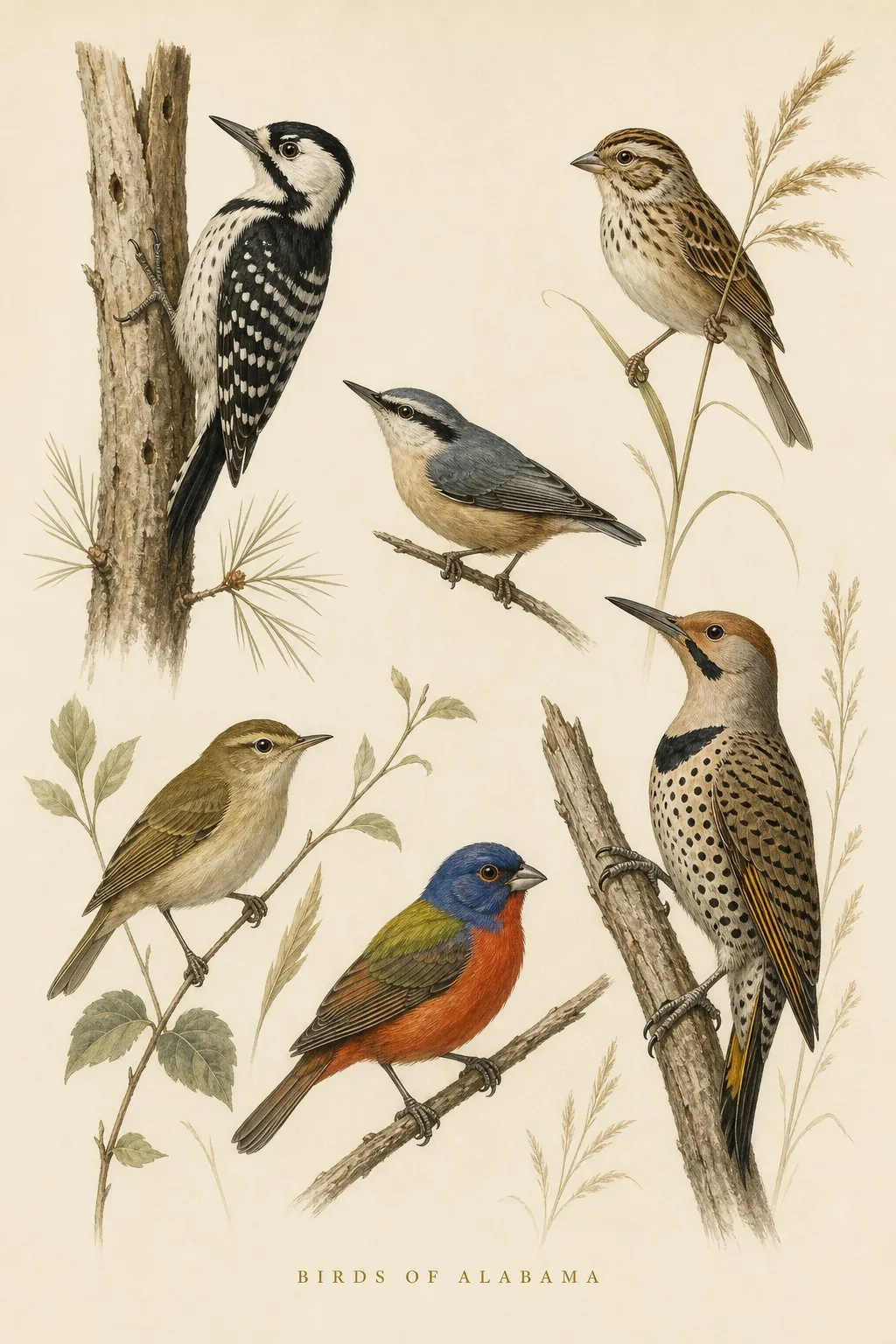
On September 6, 1927, Alabama Governor David Bibb Graves signed into law a bill designating the Yellowhammer as the state’s official bird. The legislation, introduced by Representative Thomas E. Martin of Montgomery County, was terse by design: “The bird commonly called the yellow-hammer is hereby designated the state bird.” The bird is the Northern Flicker (Colaptes auratus), and Alabama remains the only state in the country to honor a woodpecker at that level.
The name carries Civil War weight. A cavalry company organized in Huntsville wore gray uniforms trimmed with brilliant yellow cloth - the same gray-and-yellow pattern that the yellow-shafted Northern Flicker displays when it opens its wings and reveals the gold beneath. Confederate soldiers from other states called the Alabama cavalrymen “Yellowhammers,” and the nickname transferred first to the regiment, then to the state. The bird became the emblem of a state that had already named itself by it.
The Northern Flicker is an unusual choice for a state bird because it behaves unlike most woodpeckers. It forages primarily on the ground, working open areas and lawn edges for ants. In Alabama it is a year-round resident throughout the state, rated at moderate conservation concern by the Alabama Department of Conservation and Natural Resources - common but not abundant, declining slowly as large snag-bearing trees disappear from developed landscapes.
Signature species
The Alabama Ornithological Society currently lists over 420 species recorded in the state, reflecting a geography that runs from the southern end of the Appalachians to the Gulf of Mexico.
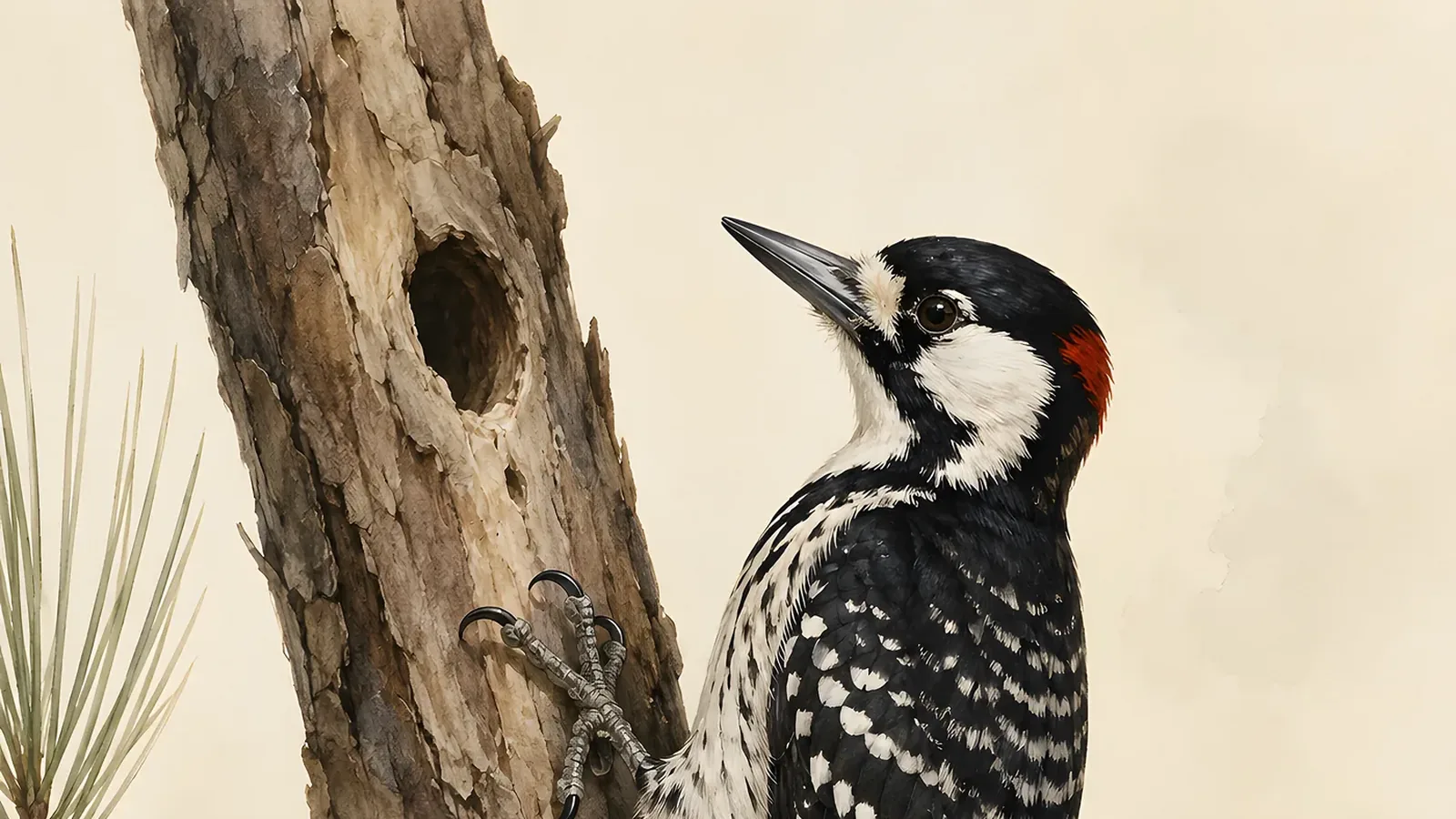
Red-cockaded Woodpecker is the state’s highest-profile conservation bird, a federally endangered species tied entirely to old-growth longleaf pine. The species needs trees 80 to 120 years old to excavate its roost cavities. Alabama holds colonies in the Oakmulgee, Talladega, and Conecuh National Forests, and the Conecuh unit carries a dedicated watchable-wildlife site. A morning walk into the right stand of open pinewoods, listening for the species’ high nasal call, is one of the more quietly charged experiences Alabama birding offers.
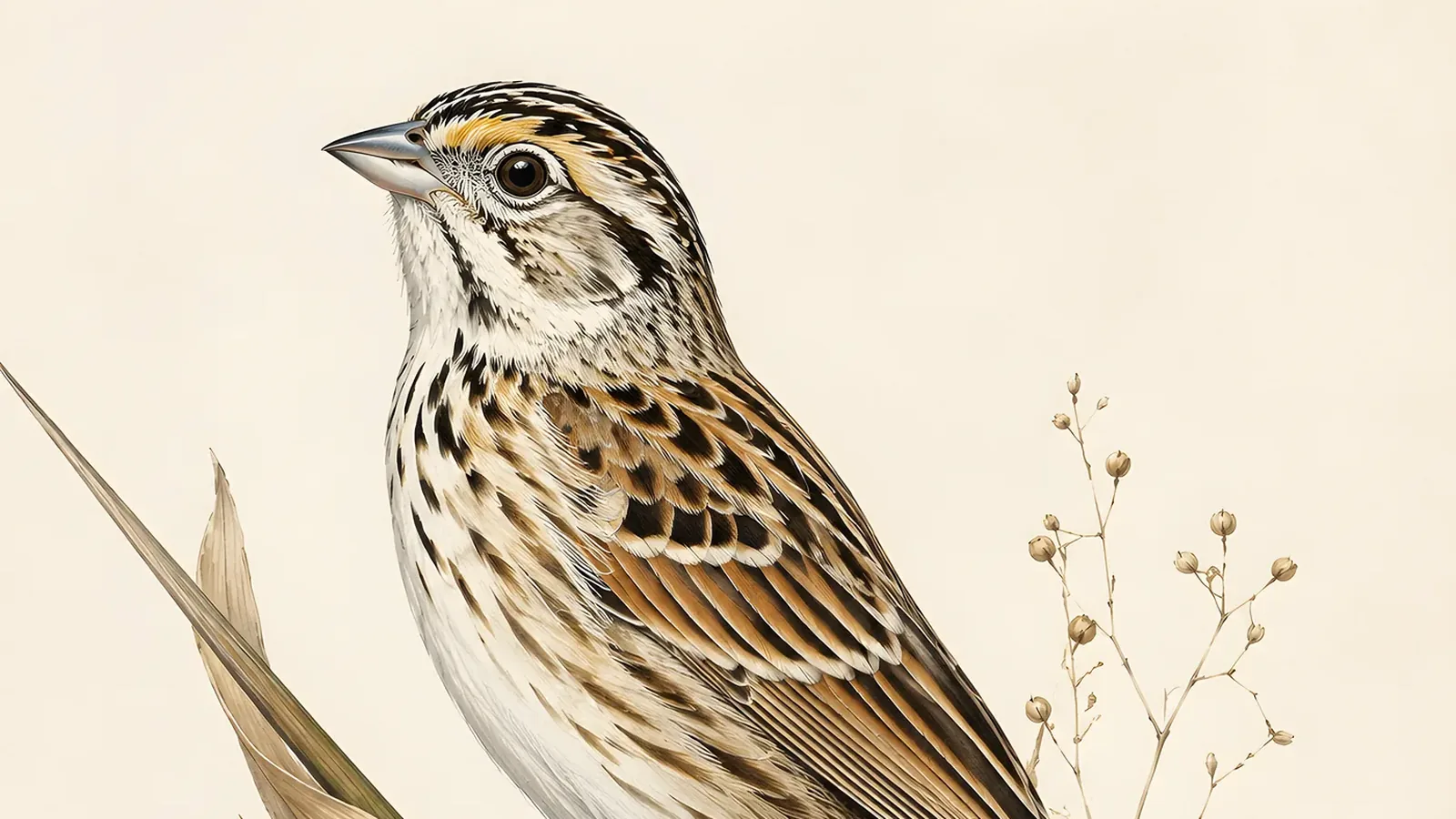
Bachman’s Sparrow occupies the same open longleaf and wiregrass understory. The species is of global conservation concern - its entire range has contracted as longleaf was converted to loblolly pine plantations through the twentieth century. In Alabama, the Conecuh National Forest supports a viable breeding population, and the Audubon Society lists the state’s longleaf remnants as among the most important remaining habitat for the species in the Southeast.
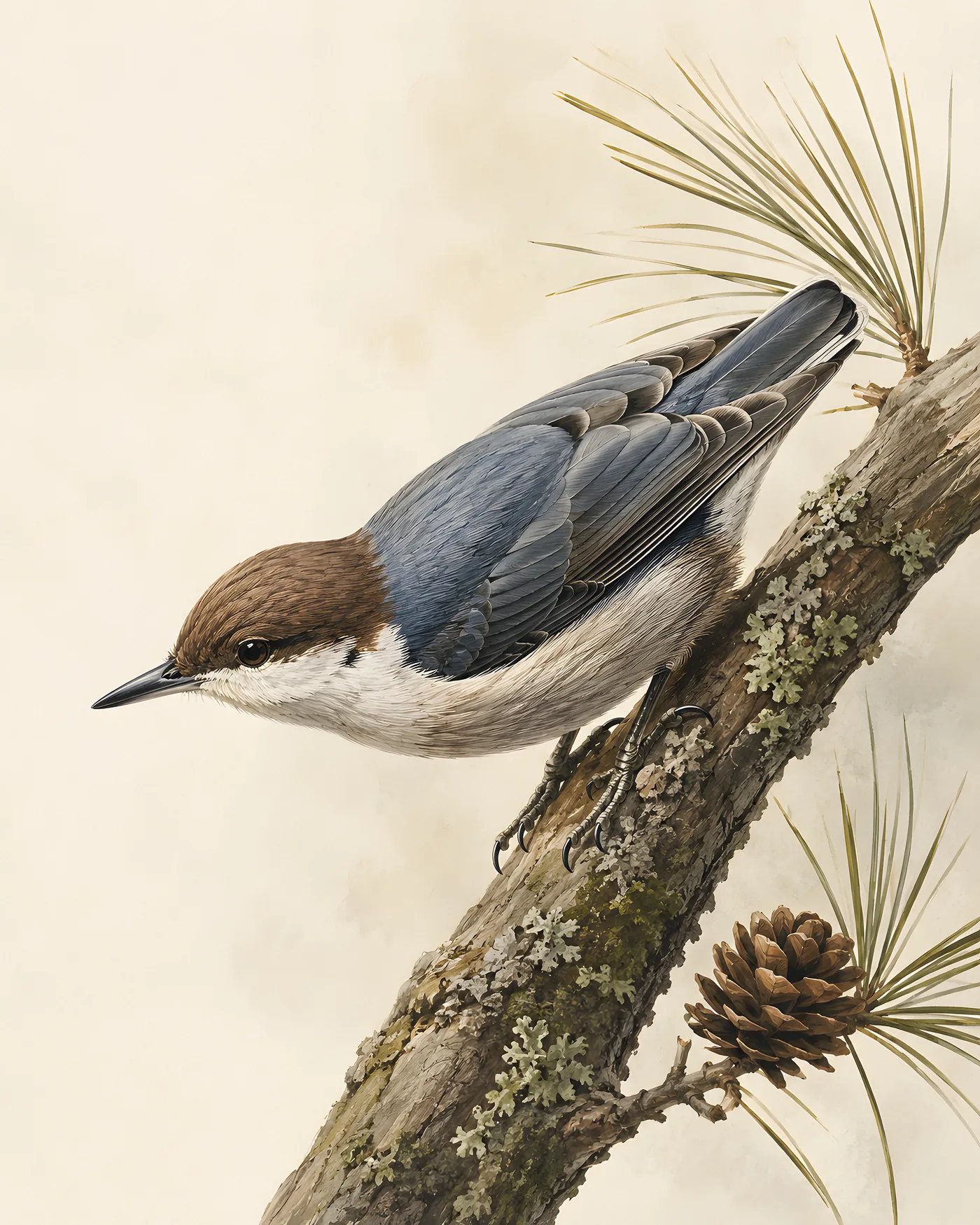
Brown-headed Nuthatch completes the longleaf pine specialist trio. Small, loud, quick-moving, and genuinely hard to locate until you learn to trace its squeaky-toy call to the upper trunk of a living pine, it breeds widely across Alabama’s coastal plain forests.
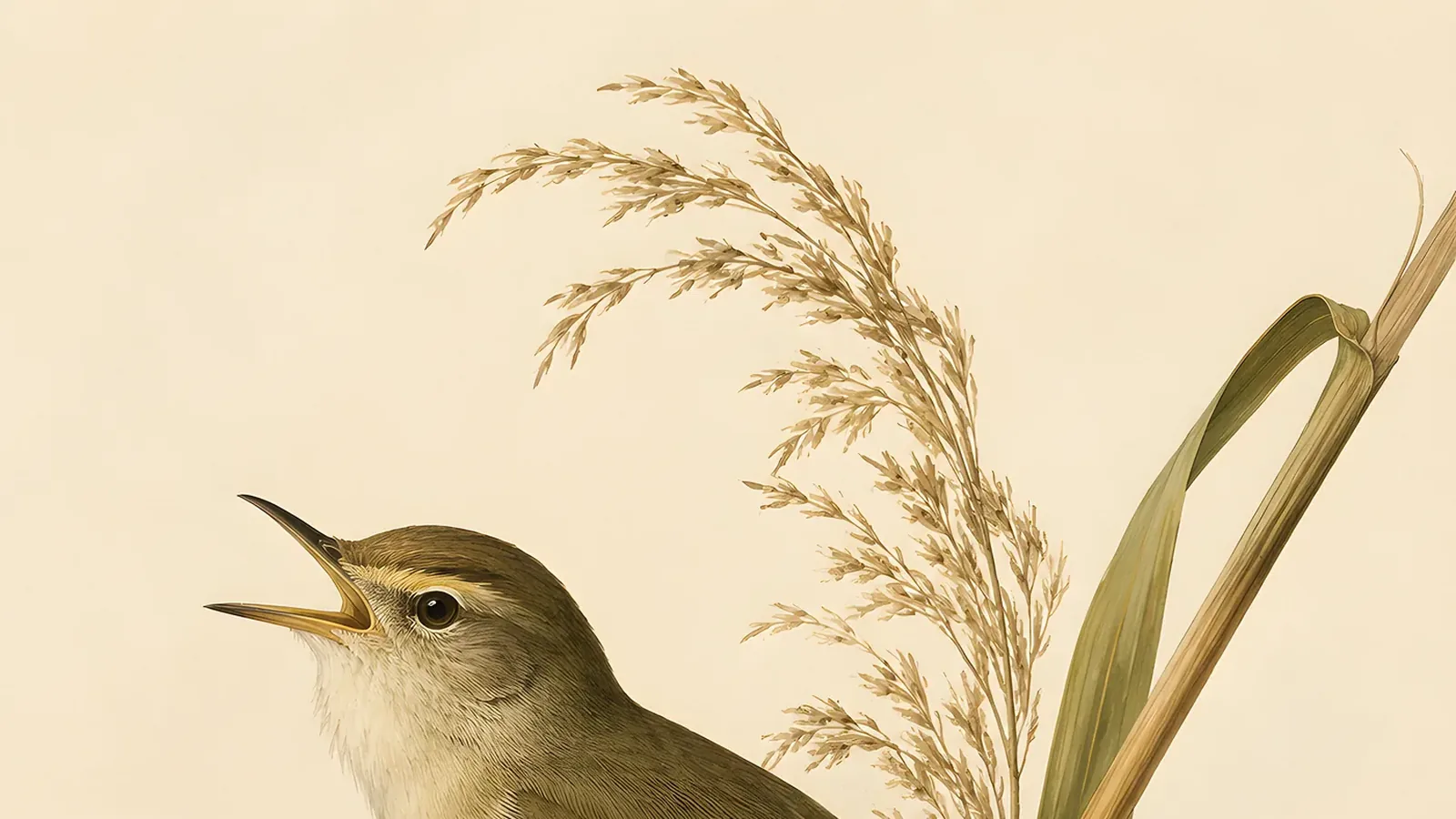
Swainson’s Warbler is the South’s secretive specialty - a rich brown bird that nests in dense cane thickets along river bottoms and in rhododendron-choked ravines in the Appalachian section. It is one of the harder Alabama species to see well, which is most of its appeal. The Talladega National Forest and the river corridors in the Black Belt region both hold breeding birds.
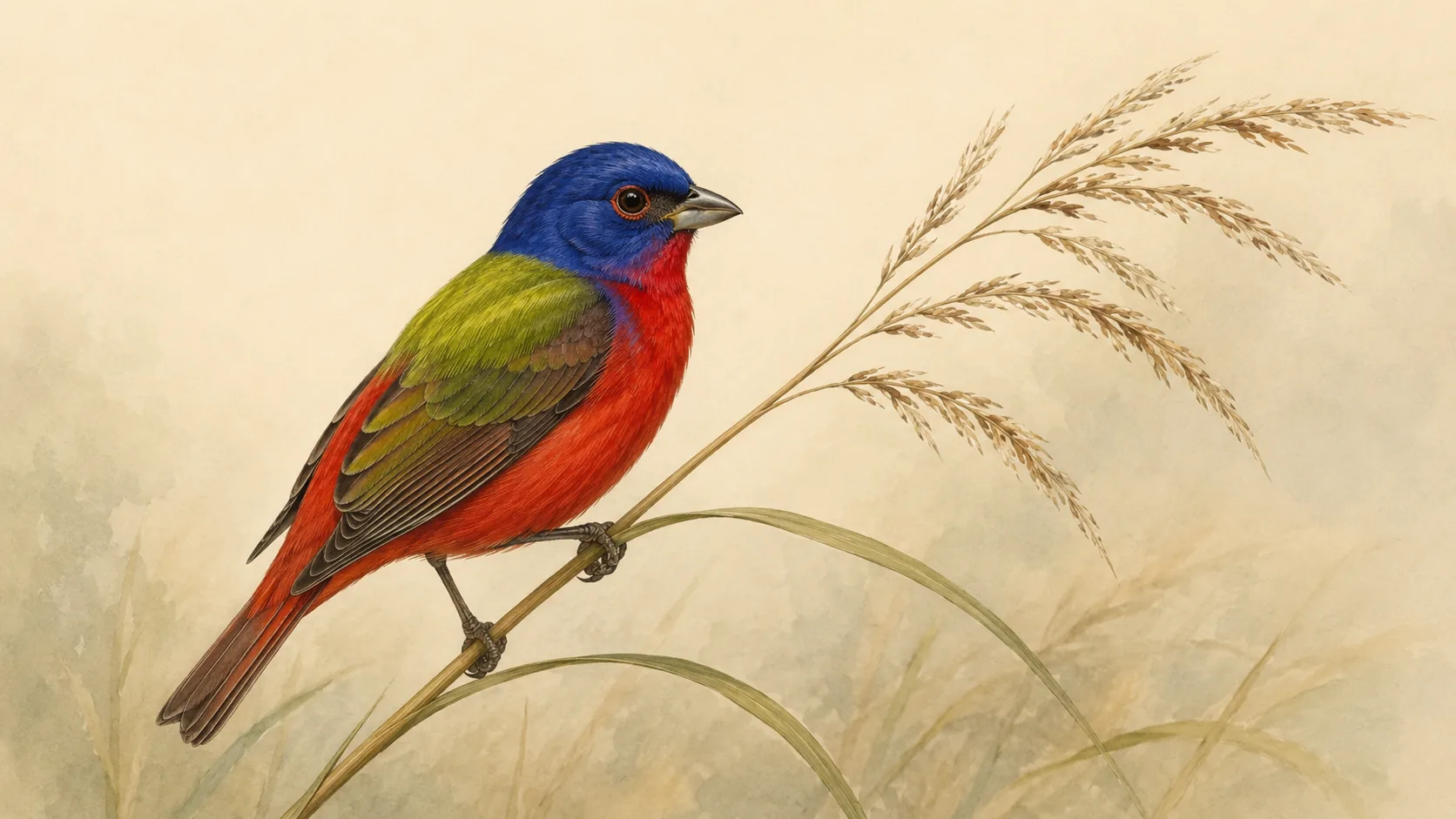
Painted Bunting winters along the Gulf Coast and breeds in shrubby edge habitat inland. The male, one of the most startlingly colored birds in North America, turns up reliably at Dauphin Island feeders from October through April.
Top backyard species
A typical Alabama suburban yard, from Birmingham to Mobile:
- Northern Cardinal (year-round)
- Carolina Wren (year-round, one of the loudest year-round voices)
- Northern Mockingbird (year-round, the South’s ubiquitous nocturnal singer)
- American Robin (year-round)
- Eastern Bluebird (year-round in open yards with nest boxes)
- Downy Woodpecker (year-round)
- American Goldfinch (abundant October through April, breeds sparingly in the north)
- Ruby-throated Hummingbird (April through October)
- House Finch (year-round)
- Mourning Dove (year-round)
- Blue Jay (year-round)
- American Crow (year-round)
Where and when to watch
Dauphin Island is the state’s premier birding site and one of the legendary spring migrant traps on the entire Gulf Coast. When birds have crossed the open Gulf from the Yucatan and hit headwinds or rain, they pile into the first trees they find - and Dauphin Island is that first land. A single morning in early May during a “fallout” can produce 20-plus warbler species in an hour. The island’s bird list exceeds 320 species. The Audubon Bird Sanctuary, Shell Mound, and the Airport Wetlands are the core sites.
Fort Morgan, at the tip of the peninsula opposite Dauphin Island, mirrors the island’s spring fallout potential and adds a strong autumn hawk watch. In September and October, hundreds of Sharp-shinned and Cooper’s Hawks move west along the coast daily. Winter brings sparrow diversity and waterbirds along the shoreline.
Wheeler National Wildlife Refuge, near Decatur and Huntsville in the northern part of the state, holds a cumulative list of more than 260 species and is the state’s showpiece for winter waterfowl and Sandhill Cranes. The visitor centre operates heated, scope-equipped viewing windows overlooking the impoundments. Peak crane staging runs November through February, and the spectacle - flocks of thousands dropping into the fields at dusk - is the kind of thing that converts non-birders.
Bon Secour National Wildlife Refuge on the Gulf Coast has recorded over 230 species and provides access to beach, scrub, and freshwater pond habitats within a short drive of Fort Morgan. It is quieter and less trafficked than Dauphin Island, which makes it the better choice for serious photography.
Seasonal rhythm
| Season | What is happening |
|---|---|
| Spring (Mar - May) | Ruby-throated Hummingbirds arrive in April; warbler migration peaks in early May; Dauphin Island fallouts in late April and May |
| Summer (Jun - Aug) | Breeding warblers and tanagers in Talladega highlands; Bachman’s Sparrow and Red-cockaded Woodpecker in Conecuh pinewoods |
| Autumn (Sep - Nov) | Hawk flights at Fort Morgan; Painted Buntings arrive on the coast; Sandhill Cranes begin staging at Wheeler by November |
| Winter (Dec - Feb) | Wheeler waterfowl spectacle; wintering sparrows in coastal scrub; American Goldfinch at every thistle feeder across the state |
The state’s position at the northern edge of the Gulf means it captures two migration systems - the trans-Gulf movement concentrated at the coast, and the broader Appalachian-corridor movement through the northeastern counties - which is a large part of why a state the size of Alabama carries a list north of 420 species.