Print Shop
from $39
Any 2 prints save 10 percent. Any 3 or more save 15 percent. Applied automatically at checkout.
A pair of Mourning Doves for anyone who loves the sound of a quiet garden. Archival paper, from $39.
Each print is made to order. You can cancel within 12 hours of ordering, after which it goes into production and cannot be cancelled. Secure checkout via Stripe.
Printed on Hahnemuhle Photo Rag 308gsm.
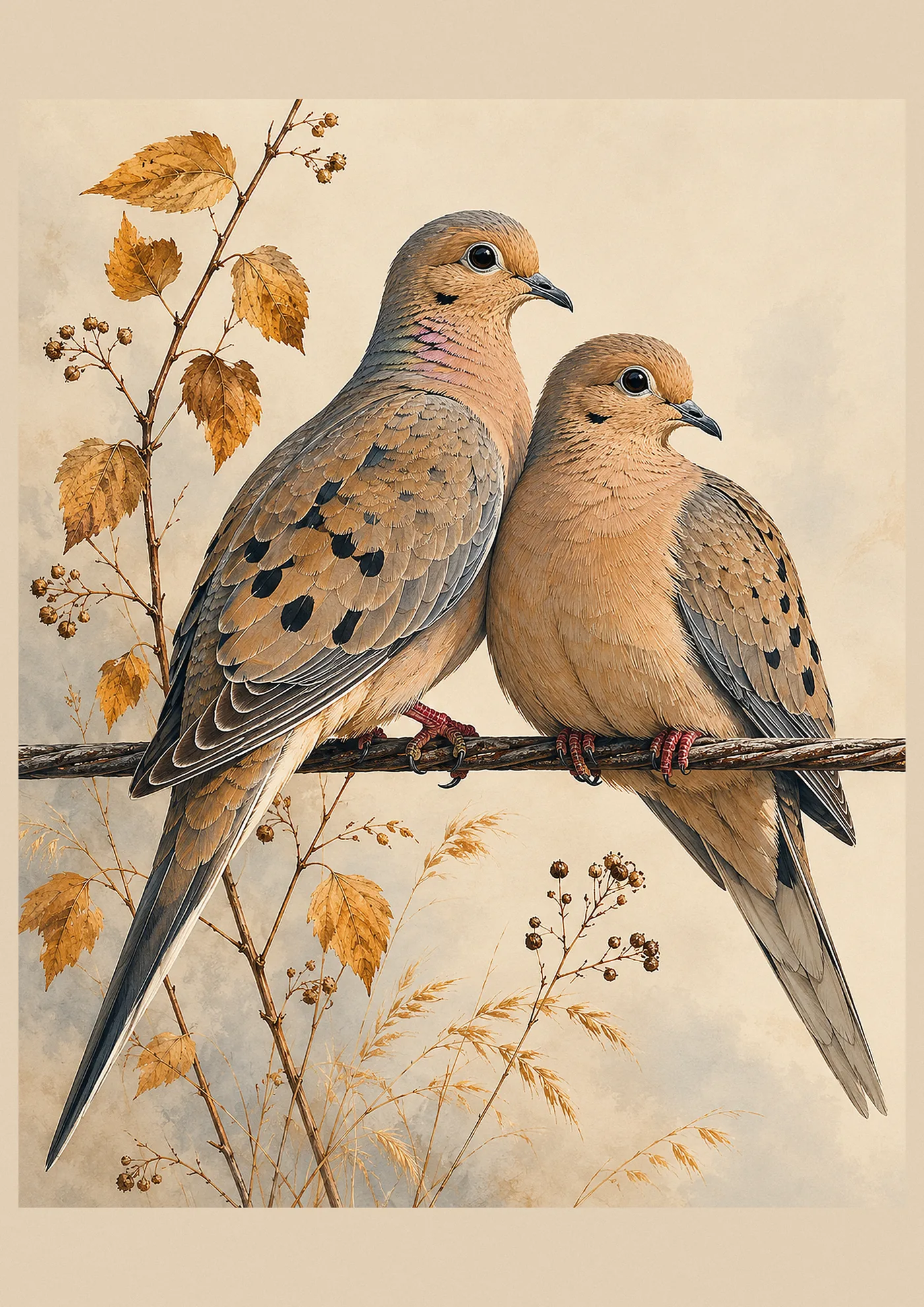
A pair of Zenaida macroura on a flowering branch, settled close against open sky. A calm, companionable plate that suits a bedroom or hallway, and a fitting gift to mark a long partnership.
Printed on Hahnemuhle Photo Rag 308gsm archival cotton rag, in three sizes from 8x10 to 24x30, from $39. Framed options available.
The Mourning Dove is named for its four-syllable coo, carrying several hundred metres on still air. Doves are birds of open ground, agricultural fields, suburban lawns and roadsides, and pair closely through a long breeding season, sometimes raising five or six broods a year in the south.
In the tradition of Audubon, where a quiet pair earns its place on the page.
Each print is made to order through our global print partner and shipped from the production lab nearest you - allow a few days for printing plus local tracked delivery.
Each print is made to order. You can change or cancel it within 12 hours of ordering. After that it goes into production and can no longer be cancelled, though we will always put right anything that arrives damaged.
The available sizes (up to 24x30 inches) and any framed finishes are shown above. Choose yours before checkout.
Yes - each print is sized to fit standard frames. Framed finishes are offered on many prints.
Because each print is made to order, contact us within 14 days of delivery and we will put it right.