State Guide
Birds of Indiana
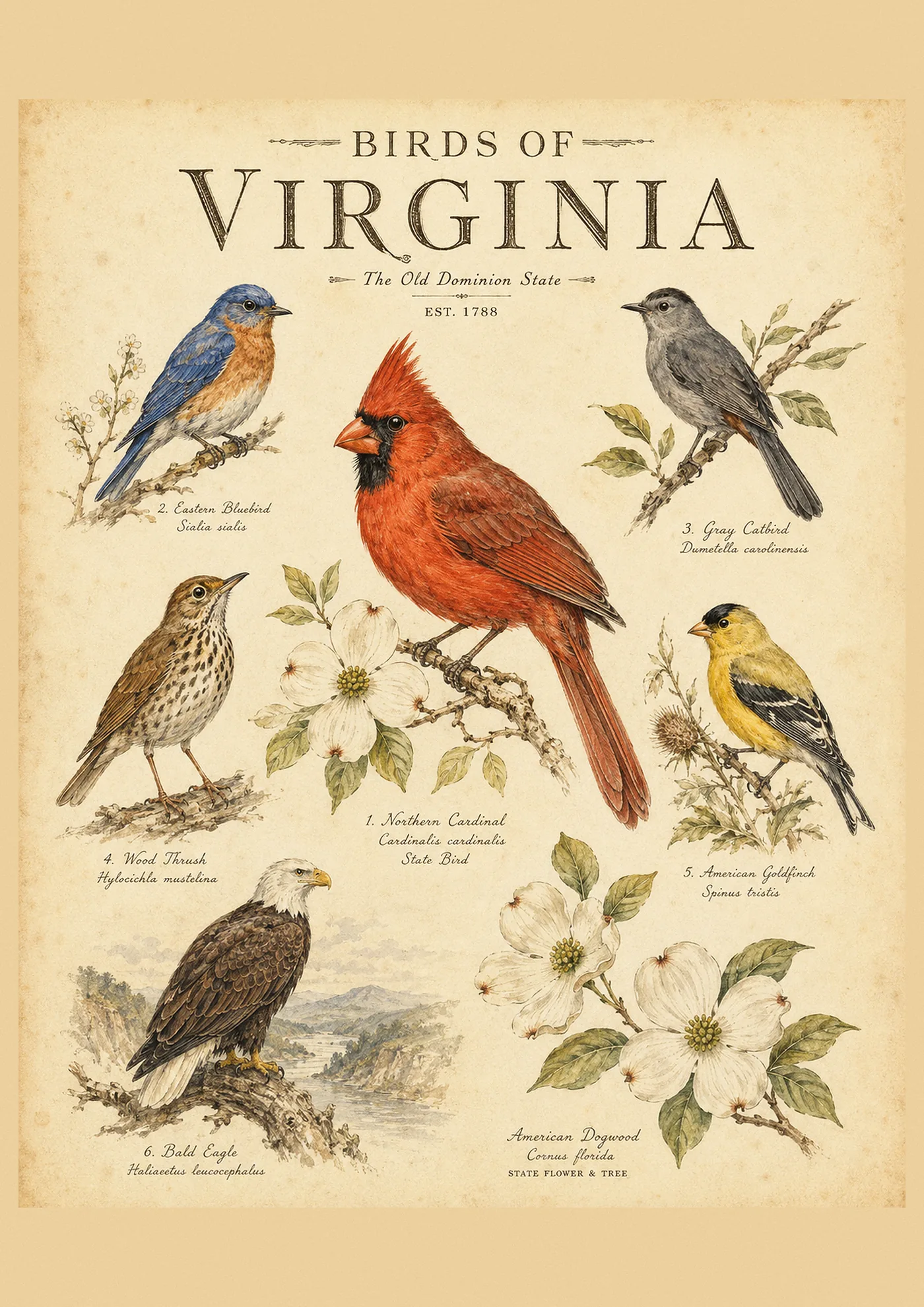
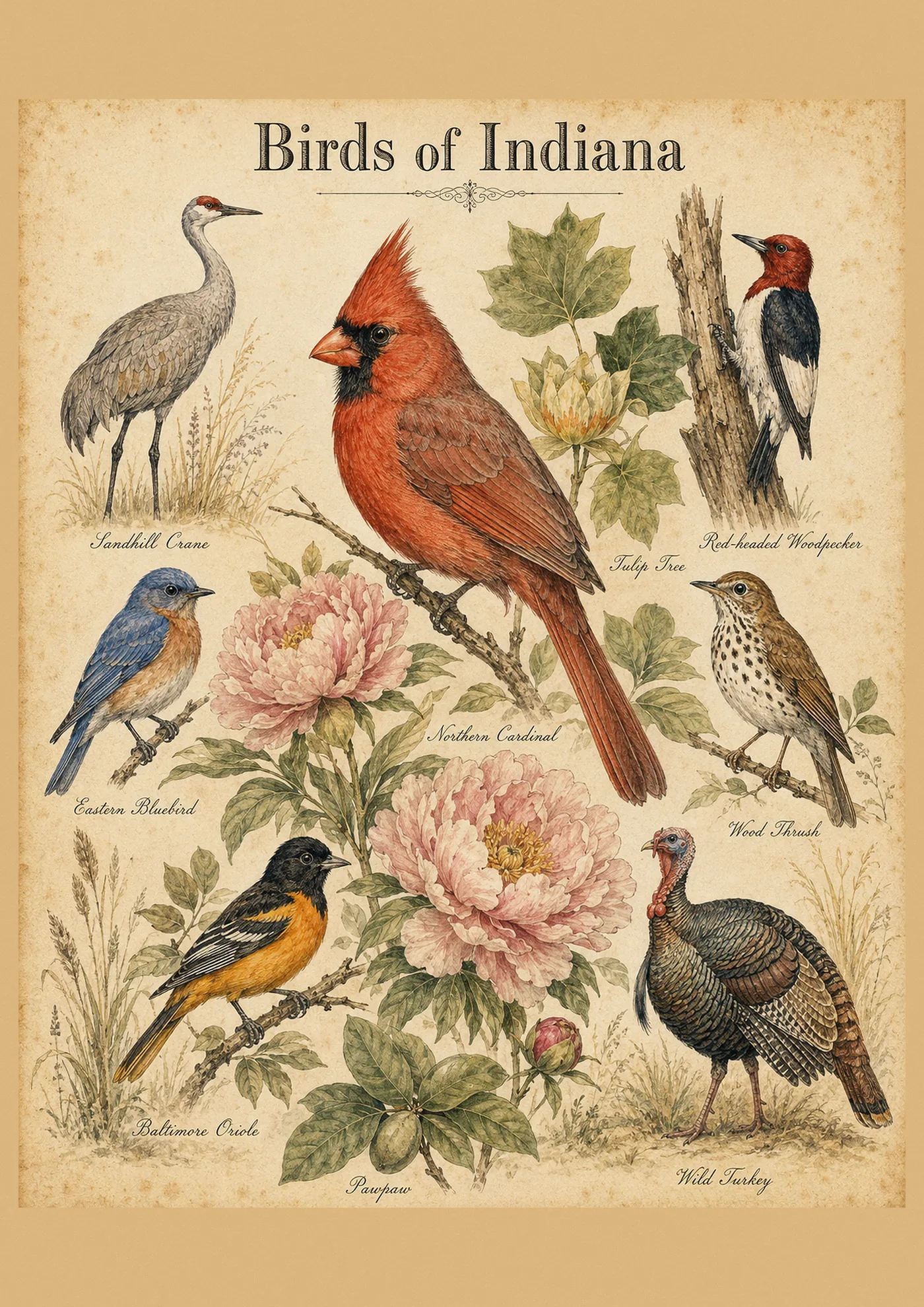
Indiana adopted the Northern Cardinal as state bird in 1933, the same year as Ohio. The bird is a year-round resident in every Indiana county, common at suburban feeders from the Lake Michigan dunes to the Ohio River bottomlands.
Indiana is one of the heavily agricultural Midwestern states, but it is more varied geographically than the corn-state shorthand suggests. The state includes the Indiana Dunes on Lake Michigan (one of the most diverse small parks in the United States, with over 350 bird species recorded), the rolling Brown County hill country in the south-central uplands, the limestone karst landscape of the south, and the Ohio River bottomlands. About 400 bird species have been recorded in the state.
The Jasper-Pulaski phenomenon
Indiana’s signature bird event happens every November at Jasper-Pulaski Fish and Wildlife Area in the northwest corner of the state. From late October through mid-December, Sandhill Cranes stage in flocks that can exceed 20,000 birds at peak. The cranes are eastern North American breeders moving south to wintering grounds in Florida and southern Georgia. Jasper-Pulaski is the single most important staging point in their flyway.
At dawn the flocks fly out from roost wetlands to feed in adjacent farm fields. At sunset they fly back. The mass return at dusk - thousands of cranes bugling and circling at 200 metres above a sandy refuge - is one of the great bird spectacles of North America. The Indiana DNR maintains an observation tower. Visitor numbers peak the first weekend of December.
The state’s signature species
Beyond the cardinal:
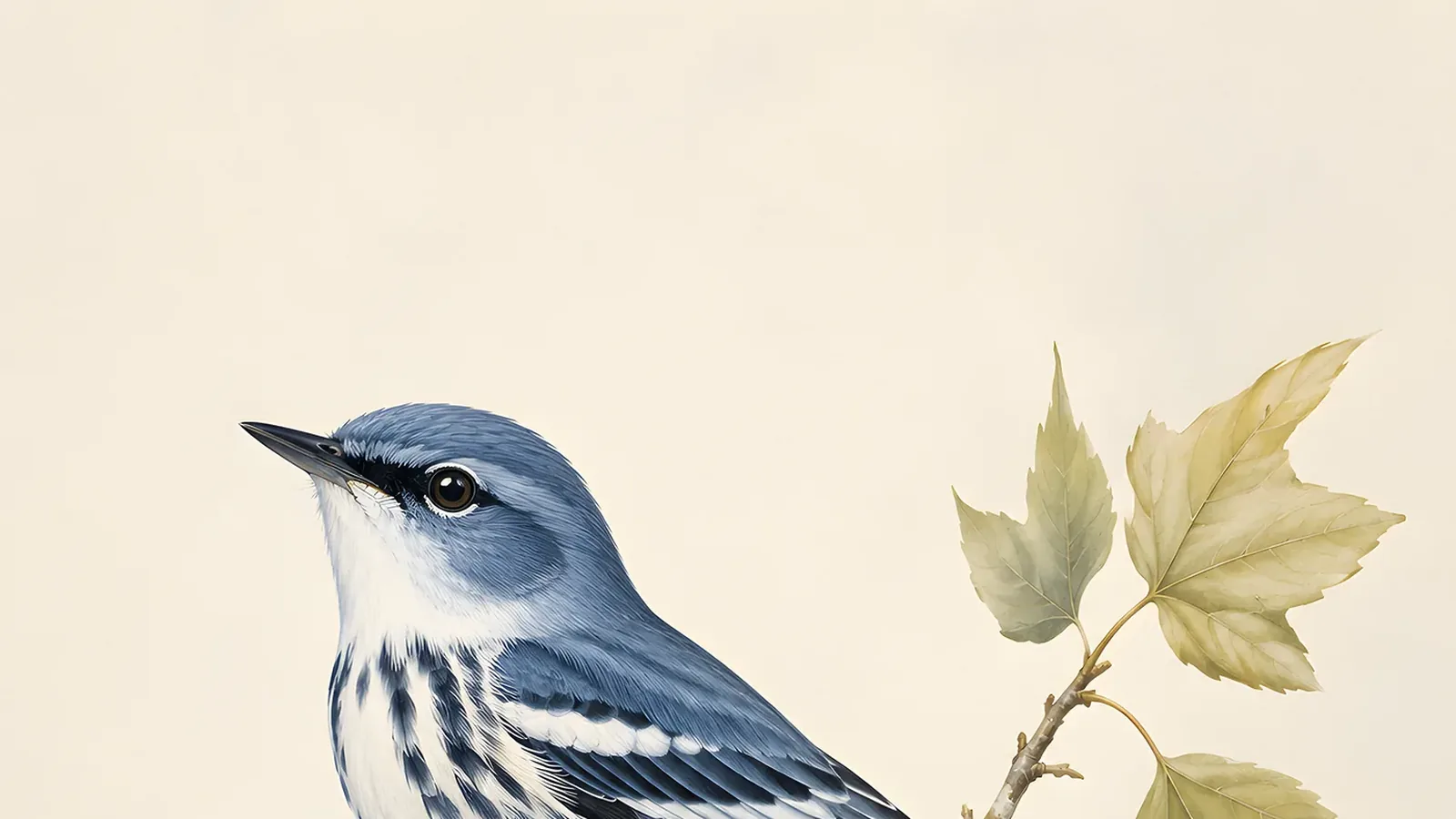
Cerulean Warbler breeds in the mature hardwood canopies of southern Indiana’s Brown County uplands and Hoosier National Forest. The state holds some of the densest remaining breeding populations of this declining species.
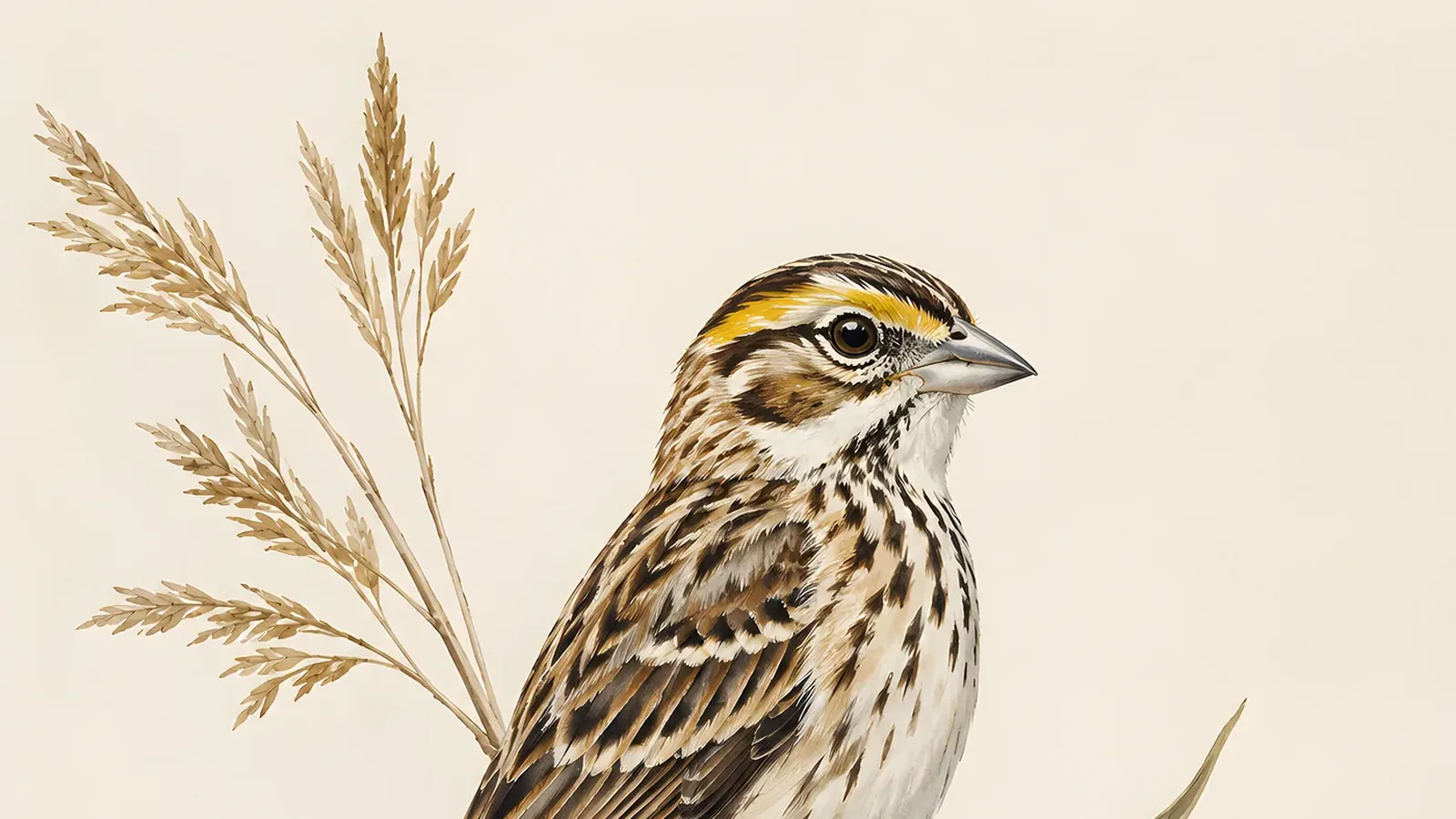
Henslow’s Sparrow has recovered on reclaimed strip-mine grasslands in southwestern Indiana, the same pattern documented in eastern Ohio.
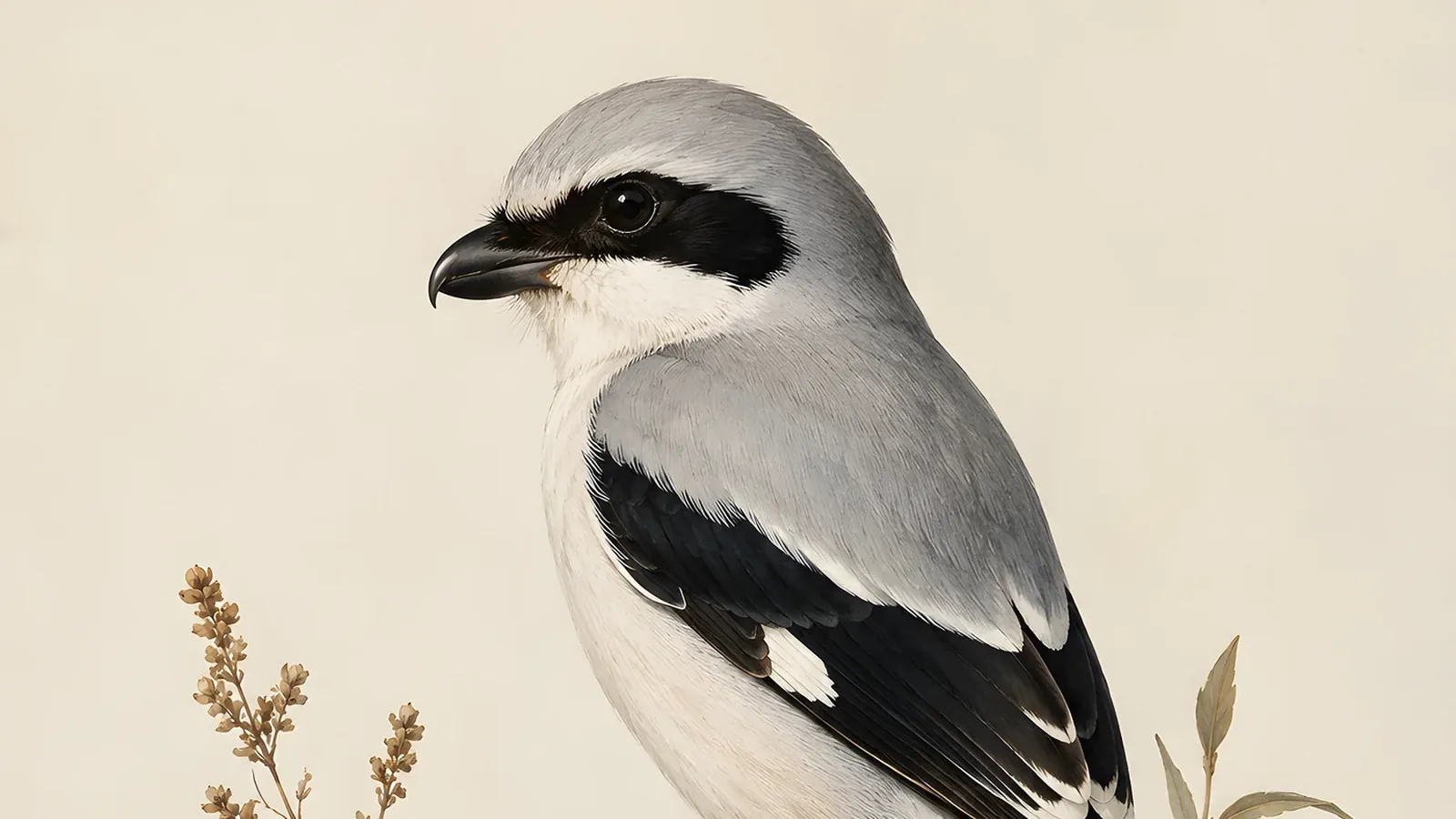
Loggerhead Shrike is the state’s signature open-country songbird, declining but still breeding in scattered farmland.
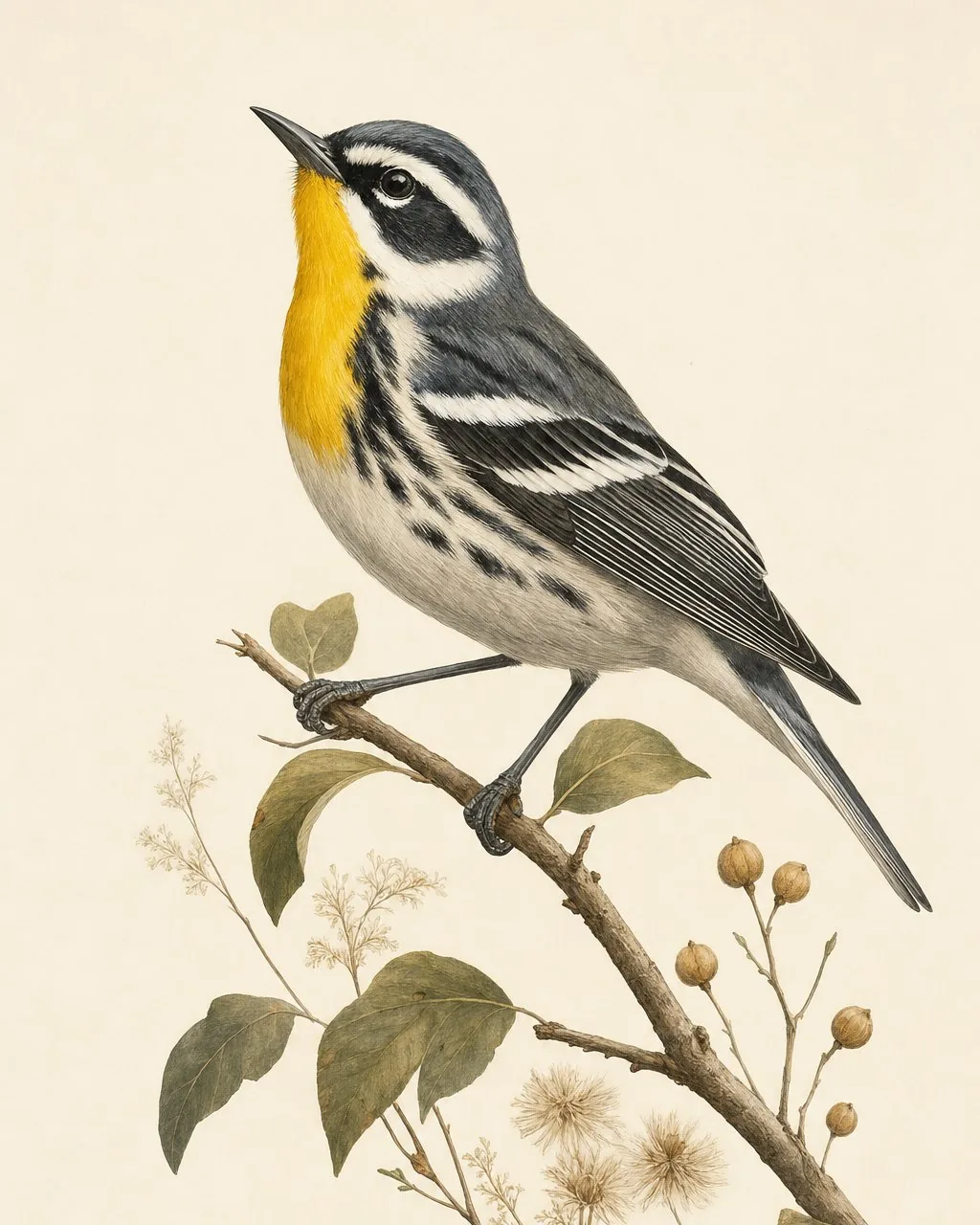
Yellow-throated Warbler is the southern Indiana sycamore specialist, breeding along Ohio River tributaries and in lowland forest.
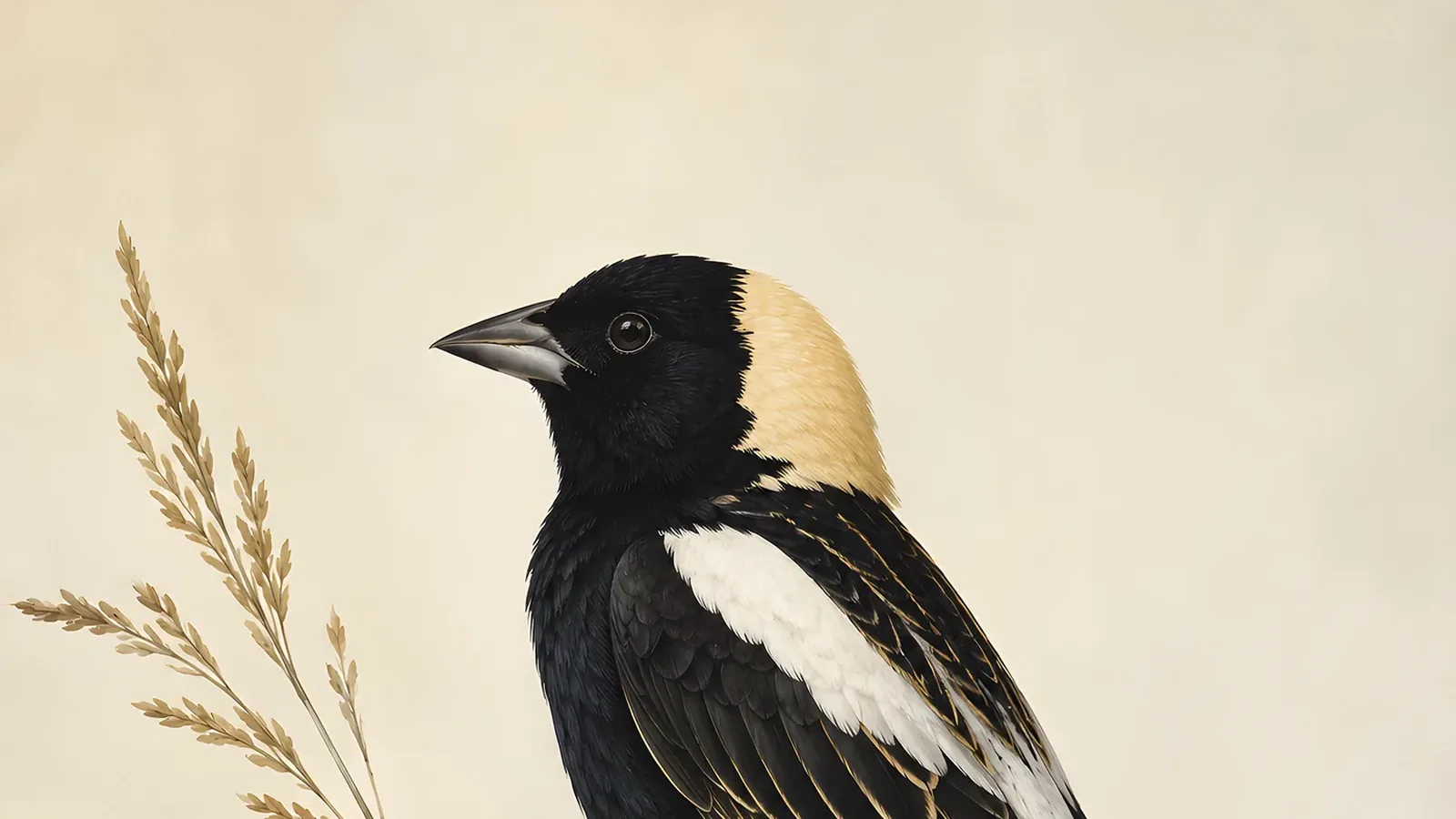
Bobolink breeds in restored grasslands across the state. The male’s electric jingling song over hayfields in late spring is one of the most distinctive sounds of the Indiana farm country.
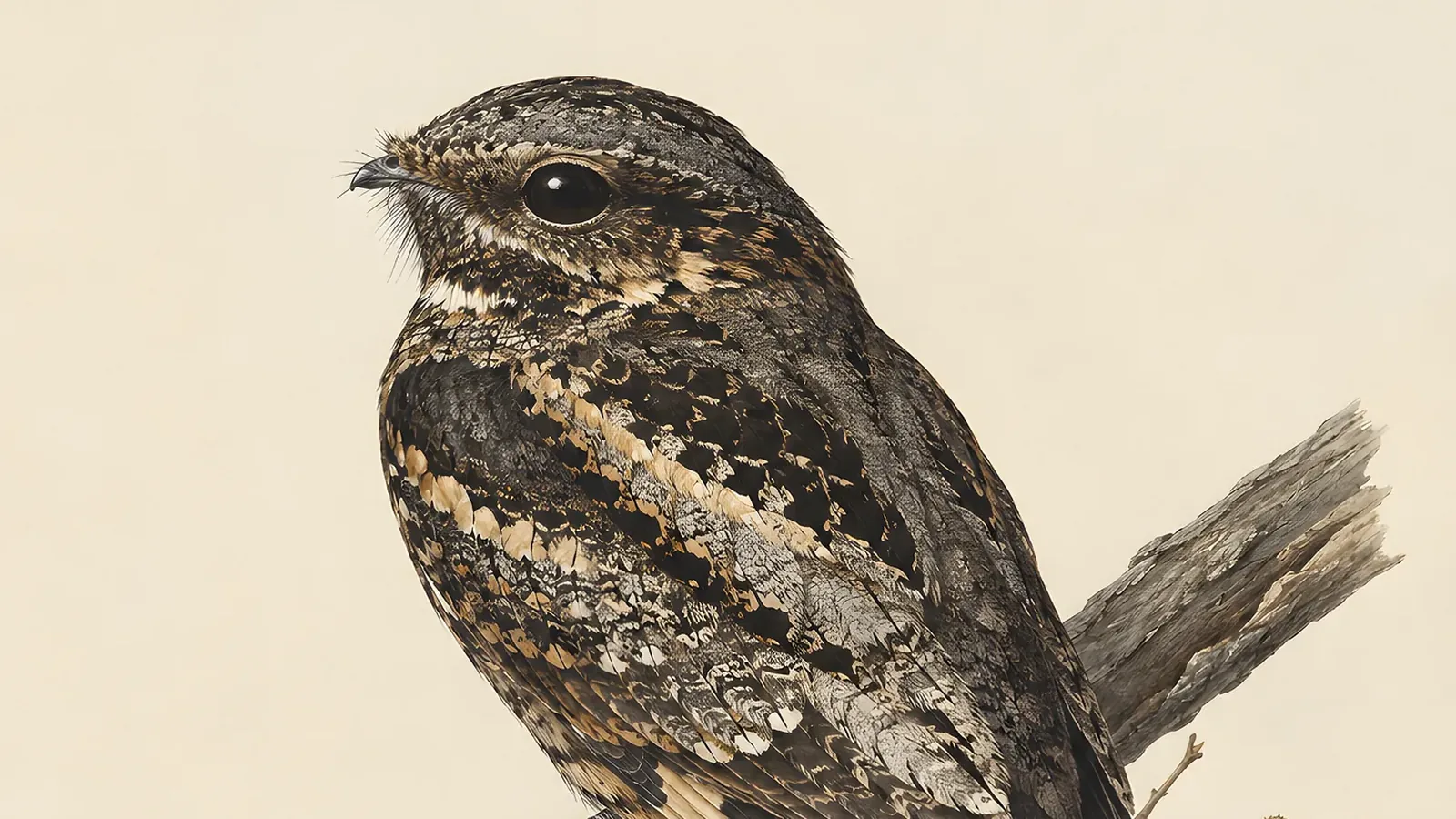
Eastern Whip-poor-will breeds in dry oak woodlands of the south. The call is heard far more often than the bird is seen. Indiana’s population has declined sharply since the 1960s.
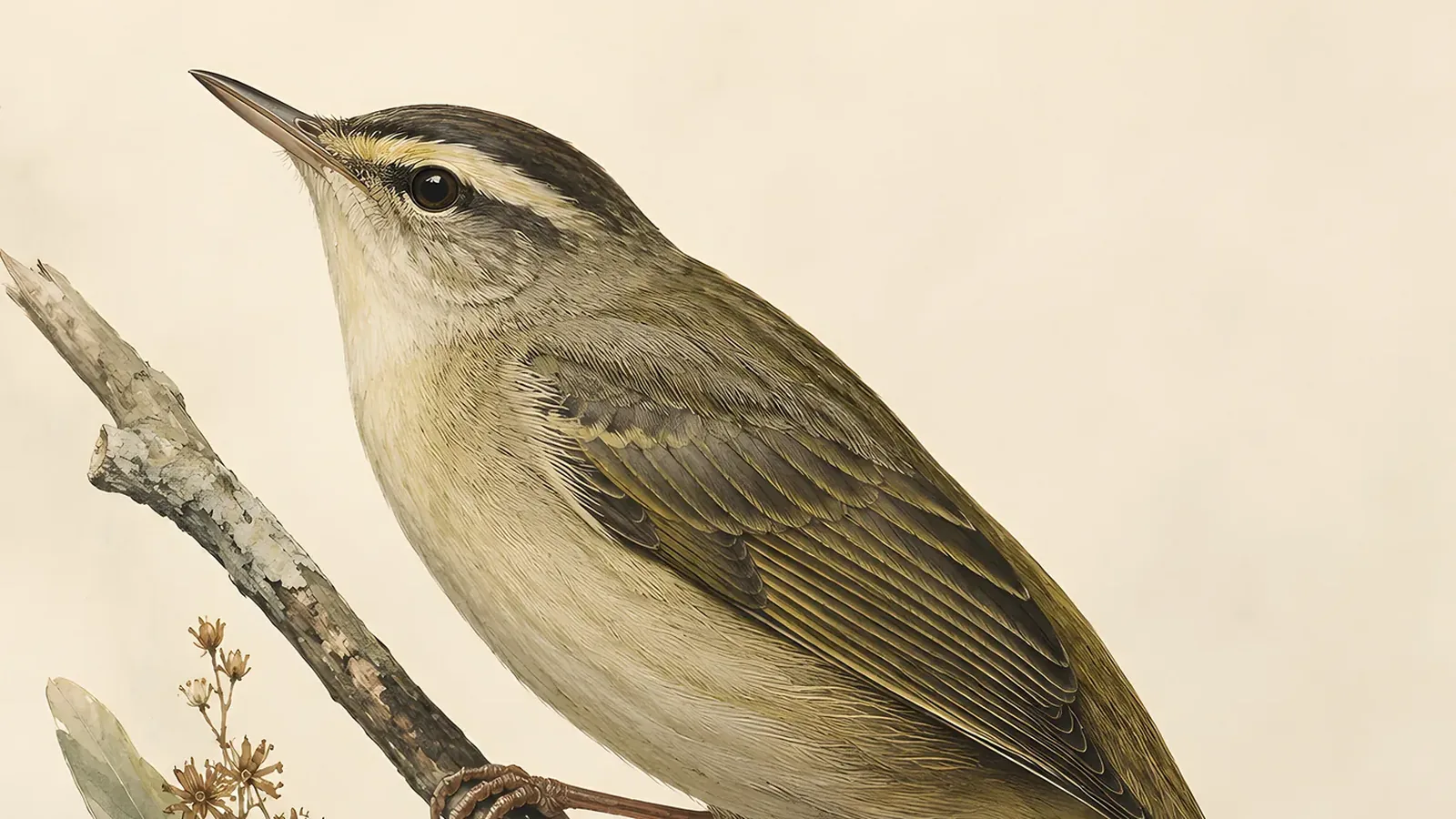
Worm-eating Warbler breeds in the steep slopes of southern Indiana’s wooded ravines. Specialist habitat, easy to overlook.
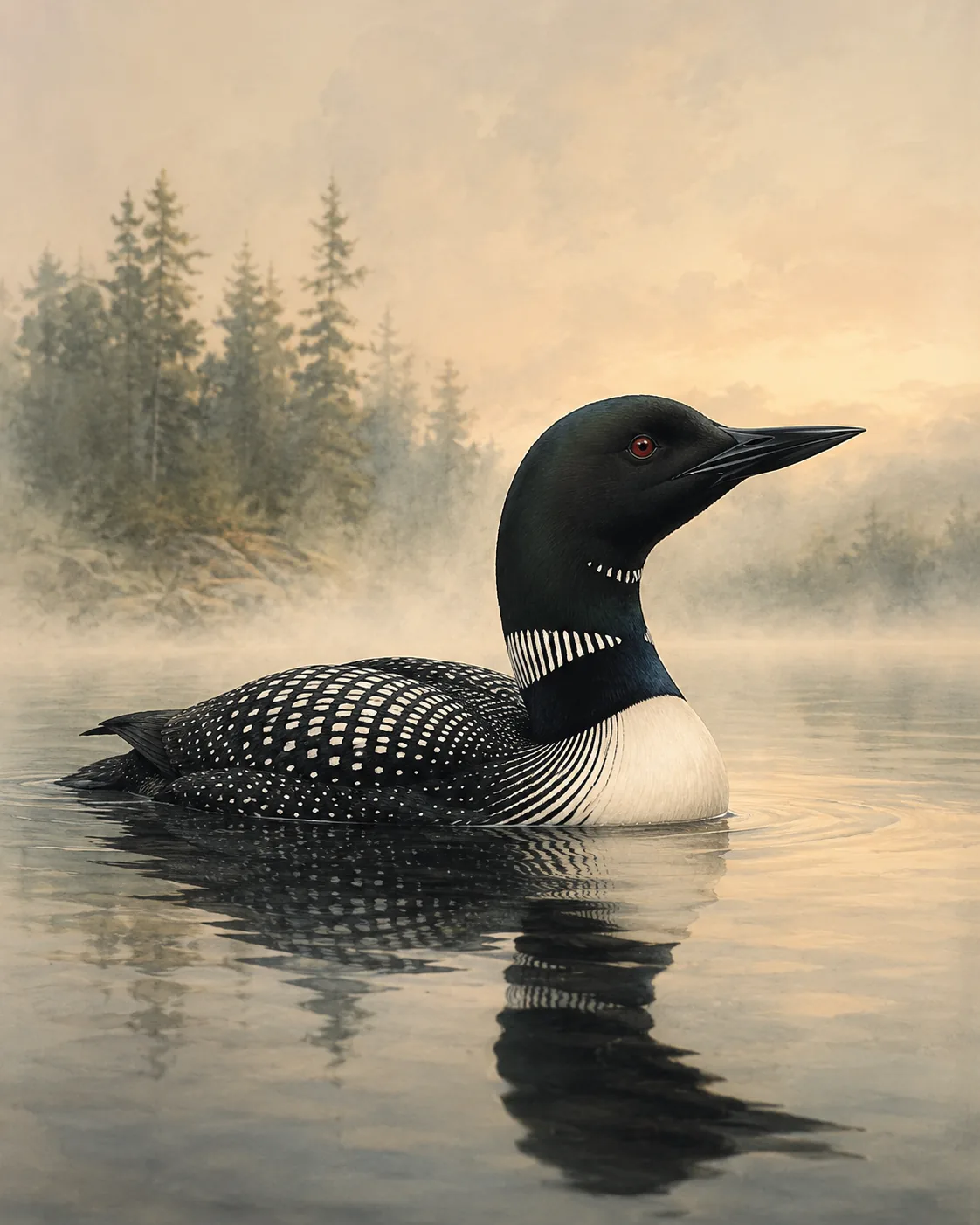
Common Loon moves through Indiana on the spring and autumn migration but does not breed in the state. Lake Monroe and Patoka Lake hold significant migration concentrations in late March and again in October.
Top backyard species
A typical Indiana suburban garden:
- Northern Cardinal (state bird, year-round)
- American Robin (year-round, with winter influxes)
- Blue Jay (year-round, abundant)
- Carolina Chickadee (year-round, south of about Lafayette)
- Black-capped Chickadee (year-round, north of about Lafayette)
- Tufted Titmouse (year-round)
- White-breasted Nuthatch (year-round)
- Carolina Wren (year-round)
- Mourning Dove (year-round)
- House Finch (year-round)
- American Goldfinch (year-round)
- Downy Woodpecker (year-round)
- Red-bellied Woodpecker (year-round)
- Northern Flicker (year-round)
- Eastern Bluebird (year-round, abundant in farmland with nest boxes)
Seasonal calendar
| Season | What is happening |
|---|---|
| Spring (Mar-May) | Cardinal first broods early March; northbound Sandhill Cranes through northern Indiana; warbler migration peaks late April through early May |
| Summer (Jun-Aug) | Breeding season; cardinal molting begins late July |
| Autumn (Sep-Nov) | Sandhill Crane staging at Jasper-Pulaski peaks mid-November; hawk migration over the Indiana Dunes |
| Winter (Dec-Feb) | Cardinal pair-bond maintenance; Snowy Owl irruptions on Lake Michigan shoreline in some years; Bald Eagles on the Ohio River |
Where to watch
- Jasper-Pulaski Fish and Wildlife Area (Medaryville) - the Sandhill Crane staging spectacle, October through December.
- Indiana Dunes National Park (Lake Michigan shoreline) - one of the most species-rich small parks in the US. Spring migrants, sand-dune nesting birds, Lake Michigan migrant trap.
- Brown County State Park (south-central Indiana) - mature hardwood forest, breeding warblers including Cerulean and Worm-eating.
- Hoosier National Forest - breeding habitat for declining forest interior species.
- Goose Pond Fish and Wildlife Area (Linton) - large wetland complex, migration concentration, breeding King Rails.
- Patoka Lake (southern Indiana) - eagle nesting, migrant waterfowl.