State Guide
Birds of Washington
In 1951, Washington schoolchildren resolved a debate that had been running since 1928. That year the Legislature had let pupils choose a state bird and the Western Meadowlark won handily - only to discover that seven other states had already claimed it. A second poll in 1931 by the Washington Federation of Women’s Clubs gave the goldfinch a clear margin over the tanager and the song sparrow. The Legislature, with two unofficial state birds and no official one, finally put the question to schoolchildren again in 1951, codified the result, and signed it into law as Chapter 249. RCW 1.20.040 has read the same ever since: “The willow goldfinch is hereby designated as the official bird of the state of Washington.”
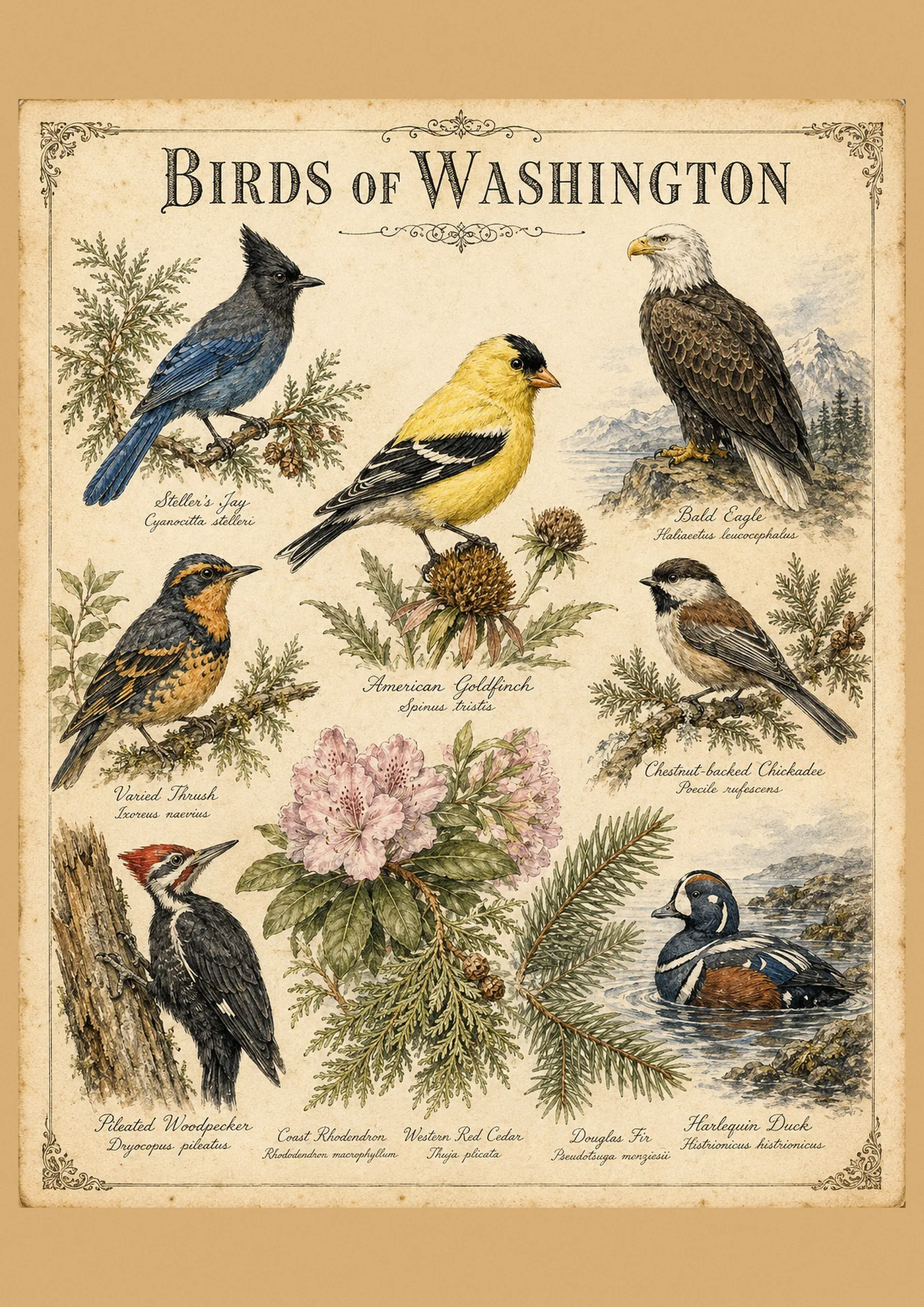
‘Willow goldfinch’ is a regional name for the American Goldfinch (Spinus tristis). In Washington the bird is genuinely common in willow thickets and open woodland edges from the Puget Sound lowlands east to the Okanogan Highlands. The male’s lemon-yellow breeding plumage, acquired in late spring, is as bright here as anywhere in North America. He is an appropriate symbol for a state whose west side runs to grey skies and dark conifers for much of the year.
Washington itself is two states ecologically. West of the Cascades: temperate rain forest, salt water, fog-draped Douglas fir, and one of the most productive estuary systems in the lower 48. East of the Cascades: shrub-steppe, ponderosa pine, rolling wheat country, and the Columbia River and its tributaries. The Washington Ornithological Society’s official checklist, updated November 2025, stands at 529 species - a figure driven partly by the state’s position at the junction of oceanic, montane, and interior-steppe habitats, and partly by the Pacific Flyway compression along the coast.
The state’s signature species
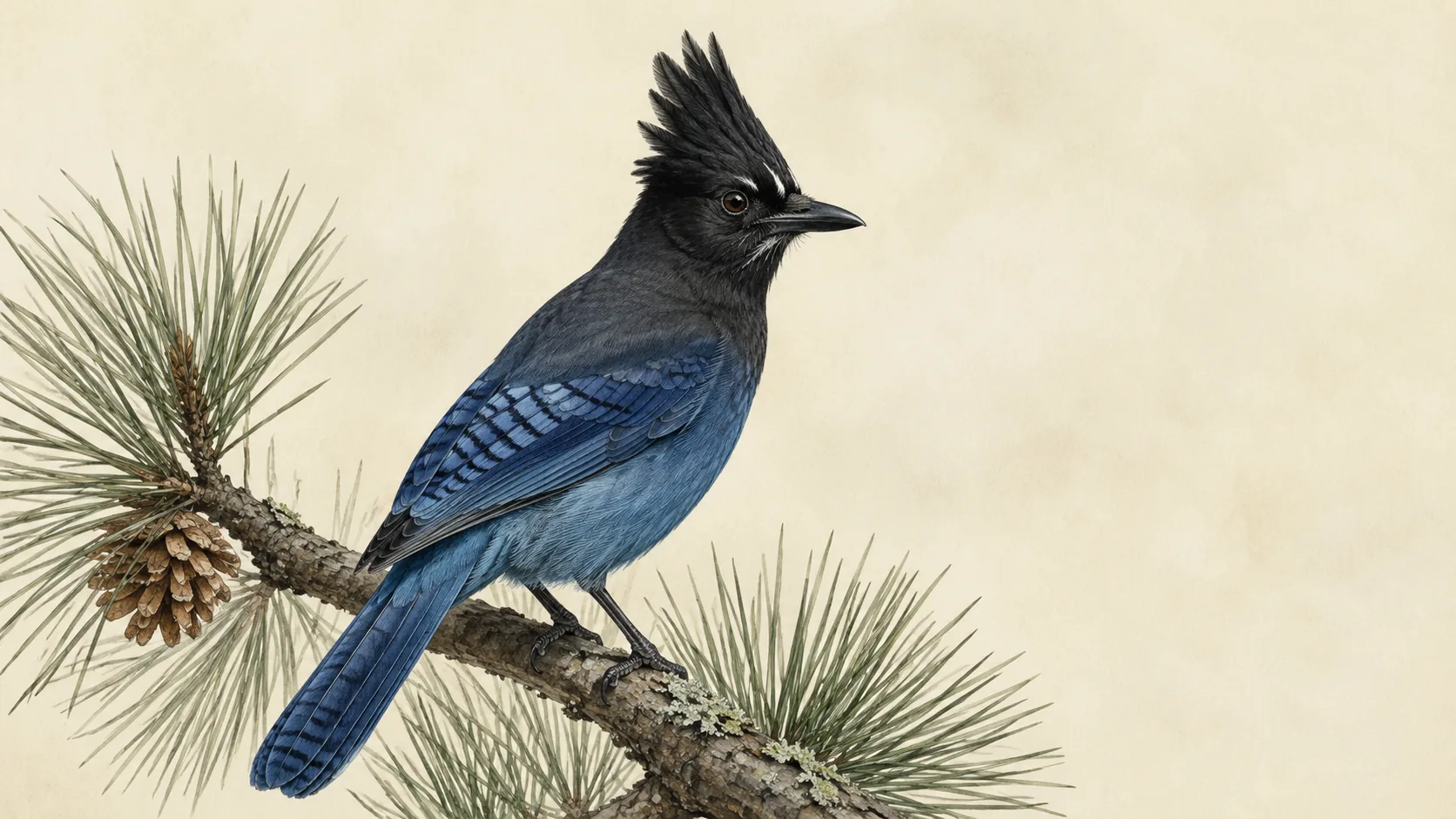
Steller’s Jay (Cyanocitta stelleri) is the bird most visitors to western Washington will encounter first. Bold, dark-crested, and loud, it works conifer forests from Olympic National Park to Mount Rainier and is a constant presence at campground picnic tables. Cornell’s All About Birds lists it as among the most common birds of Pacific Coast forests.
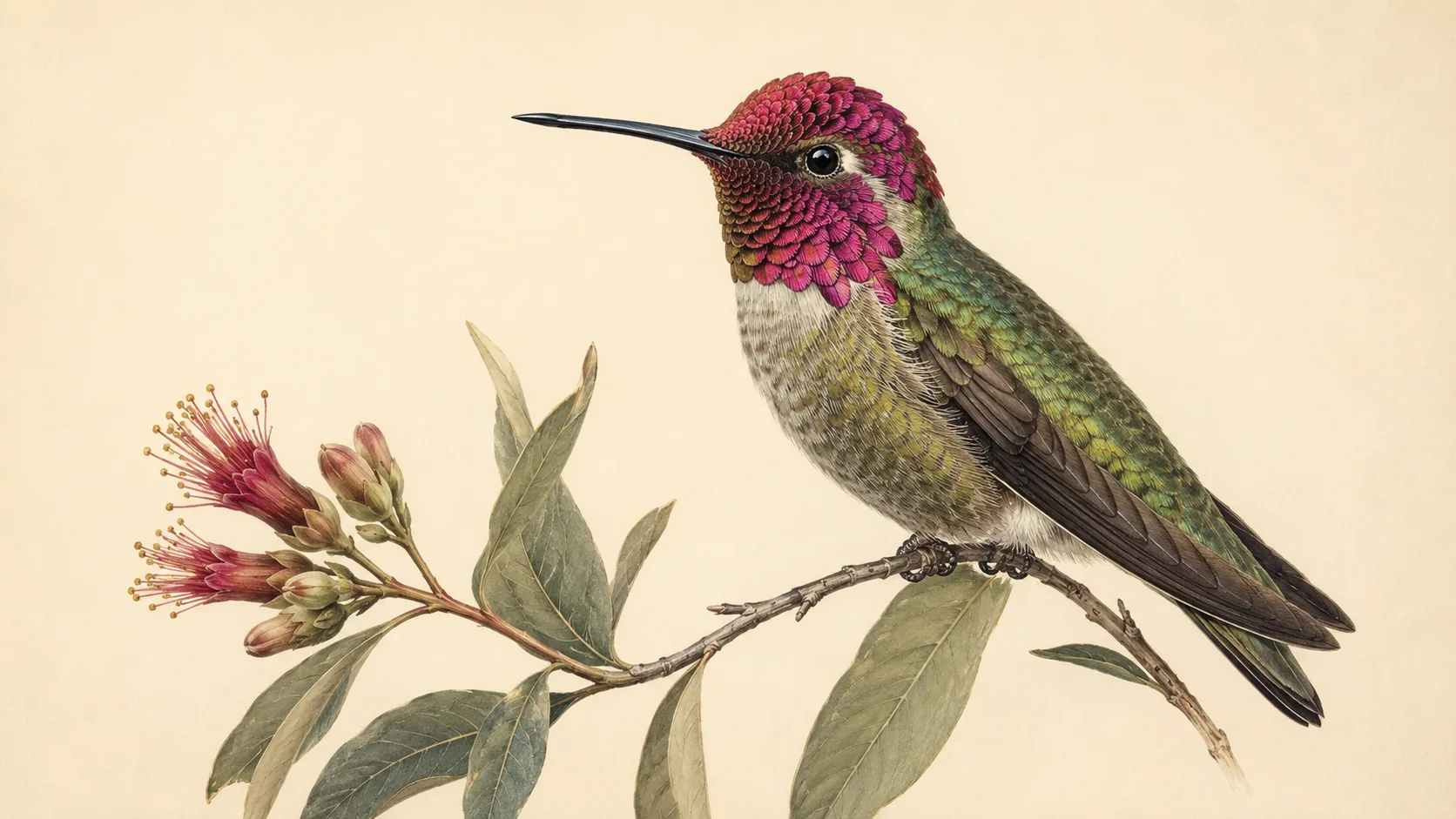
Anna’s Hummingbird (Calypte anna) does something most hummingbirds do not: it winters in Washington. While Ruby-throated Hummingbirds desert their eastern ranges before the cold, Anna’s routinely overwinter on the western slopes and in Seattle suburbs, feeding at garden salvias and winter-blooming heaths. The male’s rose-iridescent head, catching light at odd angles, is one of the more startling sights at a February feeder.
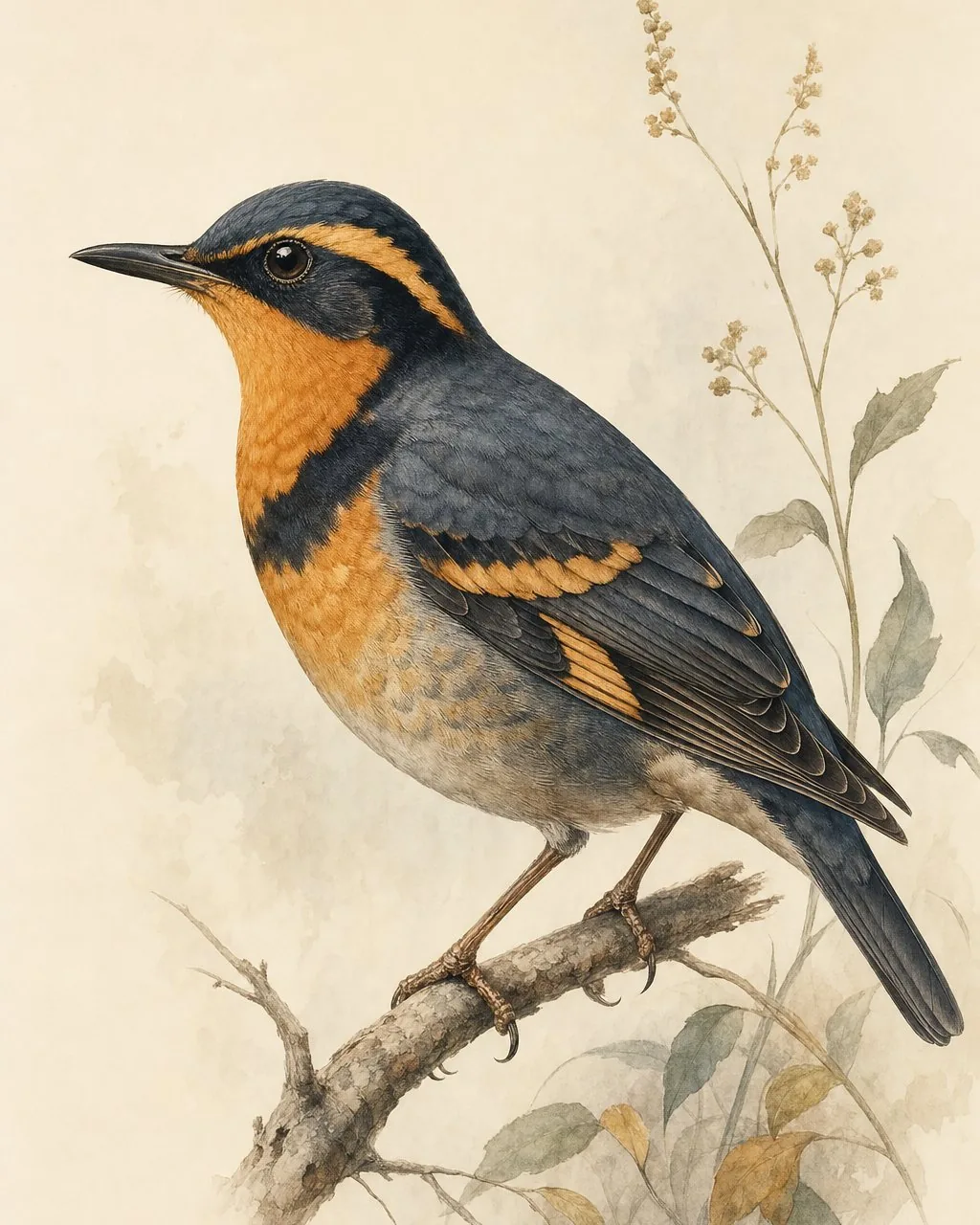
Varied Thrush (Ixoreus naevius) is the forest interior’s most atmospheric bird. Its song is a single sustained note held for several seconds, then silence, then a note a semitone higher - a sound that reads as mist and old-growth fir. Audubon’s guide to Washington birding identifies it as one of the signature species of the Olympic Peninsula rain forest, breeding in dense conifers and descending to lowland thickets in winter.
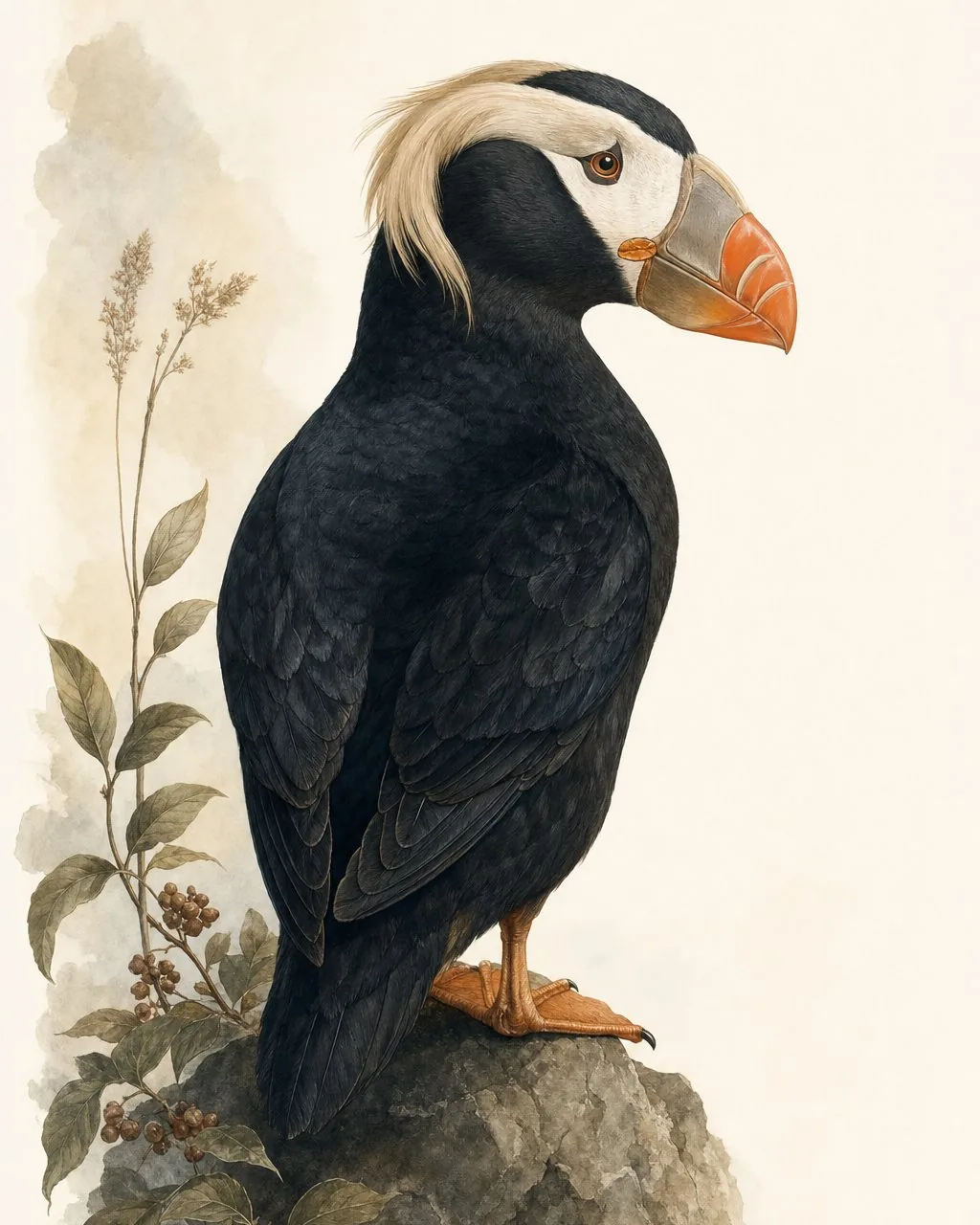
Tufted Puffin (Fratercula cirrhata) nests in burrows on the sea stacks and rocky headlands of the outer coast, visible from Cape Flattery - the northwesternmost point in the contiguous United States - and from pelagic trips out of Westport. The species arrives at its breeding sites in April and departs by August. Its white face and golden tufted plumes in breeding condition make it unmistakable.
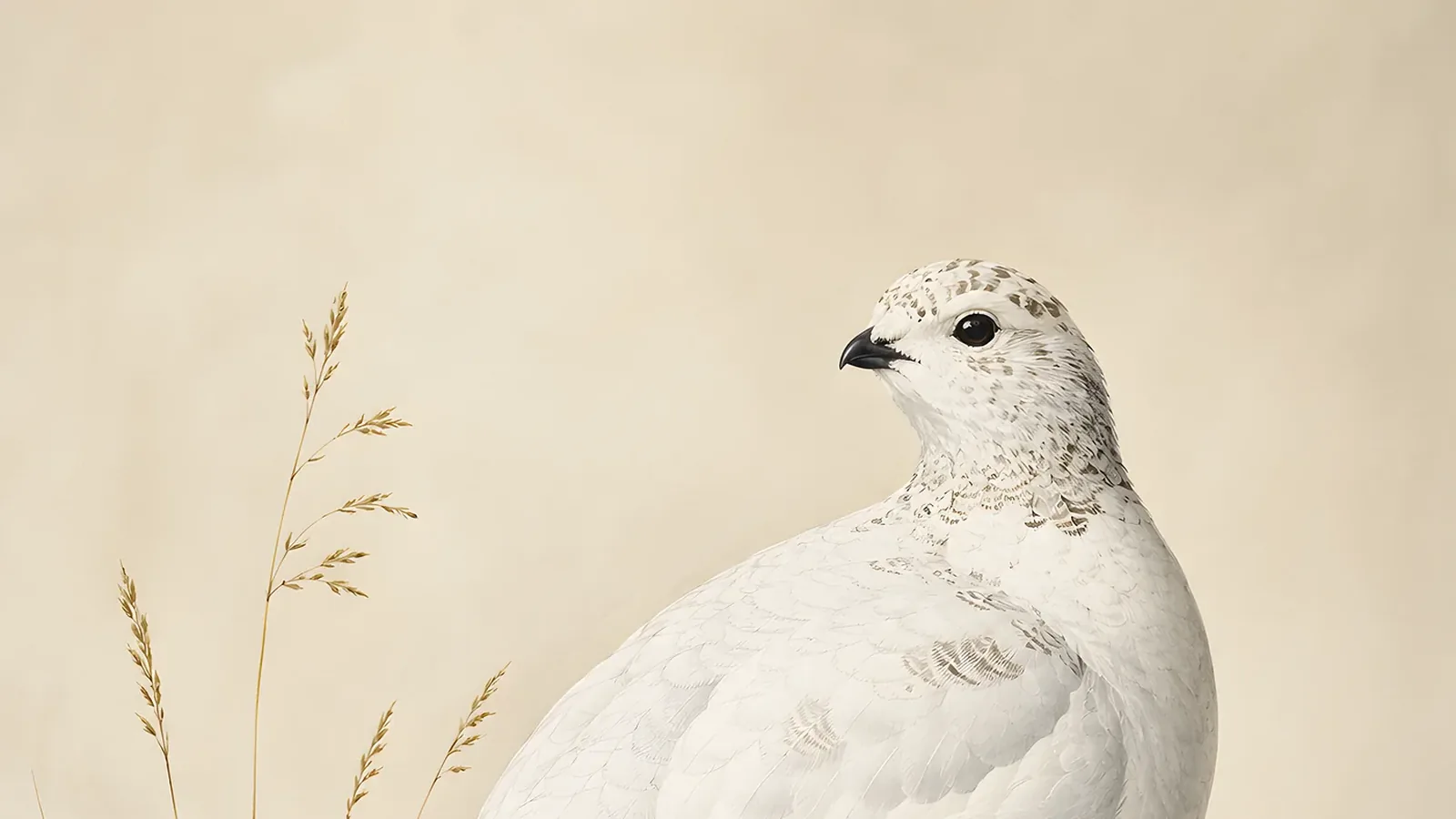
White-tailed Ptarmigan (Lagopus leucura) holds the high Cascades above 6,000 feet. In summer it picks through talus and alpine meadow in mottled brown plumage; in winter it goes entirely white. The species requires no migration because it simply moves to whatever elevation has enough wind-scoured ridge to find food. Mount Rainier and the North Cascades are the reliable locations.
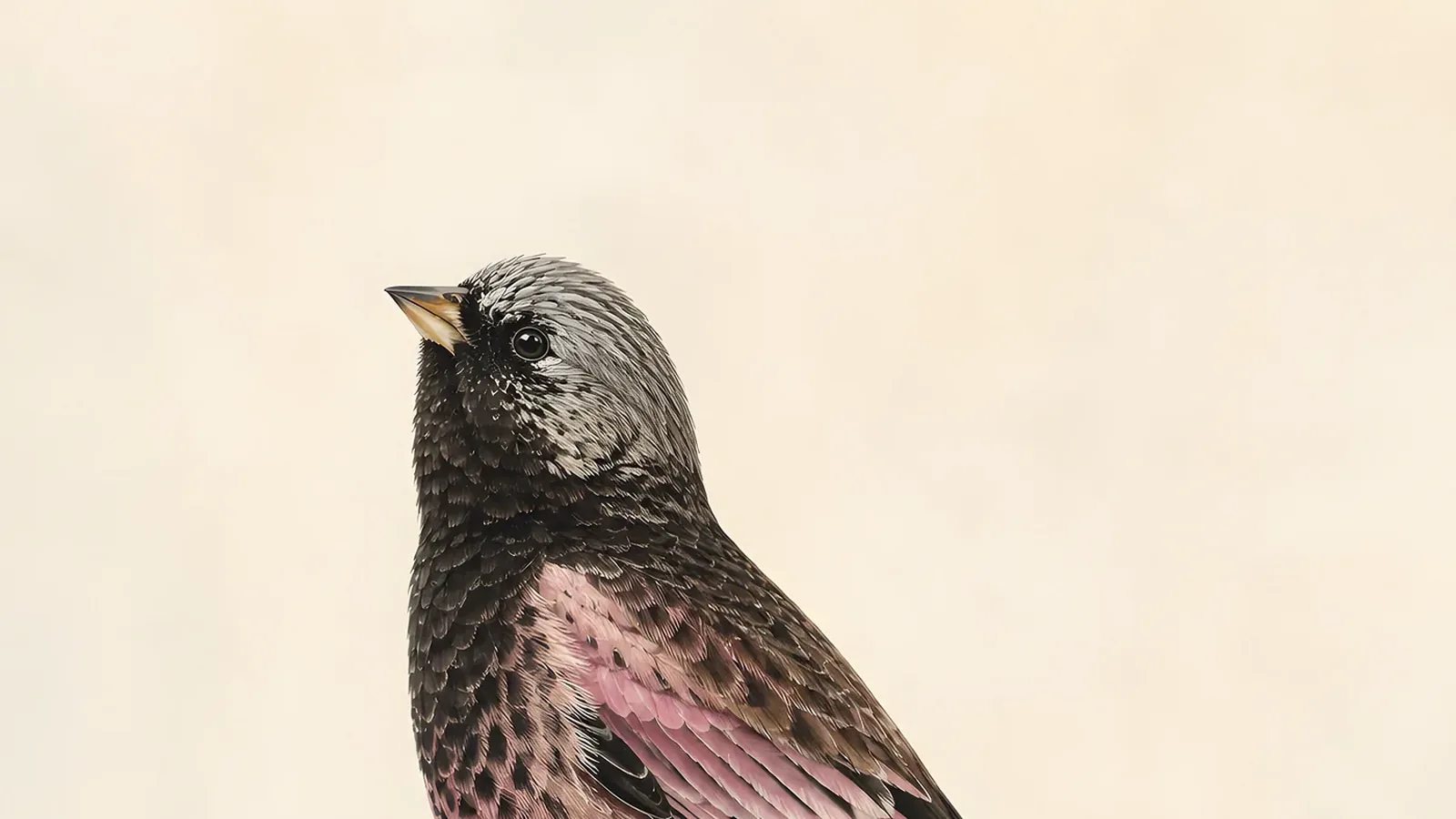
Gray-crowned Rosy-Finch (Leucosticte tephrocotis) feeds on insects and seeds stranded on snowfields at high elevation, sometimes within sight of glaciers. Audubon lists it among Washington’s Cascade signature species. In winter, flocks move down to the Columbia Basin and can appear at feeders in unexpected numbers.
Top backyard species
A western Washington suburban garden - roughly Seattle, Tacoma, Olympia - in winter and spring:
- Anna’s Hummingbird (year-round, keep feeders up in winter)
- Steller’s Jay (year-round)
- Black-capped Chickadee (year-round)
- American Goldfinch / Willow Goldfinch (year-round, most visible in breeding plumage May-August)
- Dark-eyed Junco (year-round, very abundant)
- Spotted Towhee (year-round)
- Song Sparrow (year-round)
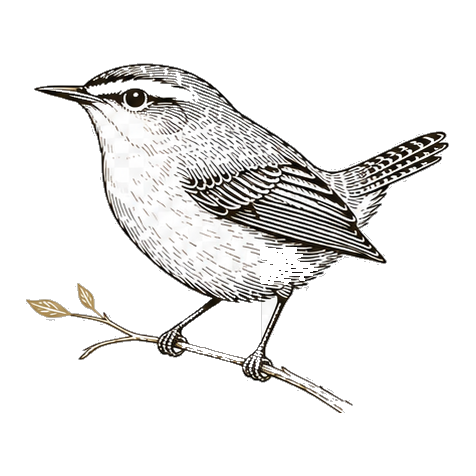
- Bewick’s Wren (year-round)
- American Robin (year-round)
- Downy Woodpecker (year-round)
- House Finch (year-round)
- Canada Goose (year-round in parks and lawns)
- Bald Eagle (year-round, often visible near water)
East of the Cascades the list shifts. Black-capped Chickadee and Steller’s Jay remain, but Spotted Towhee and Bewick’s Wren thin out, replaced by Western Meadowlark, Horned Lark, and American Kestrel in the open country east of the passes.
Where and when to watch
Grays Harbor National Wildlife Refuge (Grays Harbor County, southwestern coast) holds one of the largest shorebird concentrations in North America each spring. eBird data show that Western Sandpiper numbers at the Bowerman Basin unit peak in late April and early May, when the mudflat can hold hundreds of thousands of birds in a single tide cycle. The site’s Sandpiper Trail puts observers within metres of this movement.
Ridgefield National Wildlife Refuge (Clark County, southwestern Washington) is the premier wintering waterfowl site in the state. From October through March the refuge’s wetland units hold Tundra Swan, Trumpeter Swan, Cackling Goose, Greater White-fronted Goose, and at least a dozen duck species simultaneously. Sandhill Cranes are regular. The River ‘S’ Unit auto tour is passable year-round.
Skagit Wildlife Area and Samish Flats (Skagit County, north of Seattle) are known principally for winter raptors. The flat farmland draws Rough-legged Hawk, Northern Harrier, Bald Eagle, and in some years Gyrfalcon and Short-eared Owl. Snow Geese and Trumpeter Swans feed in the fields in the same months, making the combination of raptors and spectacular white-bird flocks one of the more compelling winter spectacles in the Pacific Northwest.
Dungeness National Wildlife Refuge (Clallam County, Olympic Peninsula) is a five-mile sand spit extending into the Strait of Juan de Fuca. The spit concentrates migratory shorebirds and passerines funnelling along the Olympic Peninsula in spring and autumn, and the rocky nearshore holds Harlequin Duck, Pigeon Guillemot, and Rhinoceros Auklet year-round. The hike to the lighthouse and back covers the length of the spit.
The Cascades’ east slope deserves separate mention. Wenas Wildlife Area near Ellensburg is the most reliable location in Washington for spring songbird migration in shrub-steppe and ponderosa pine habitat. The annual Wenas Campout, run by local birding clubs, has documented over 180 species in a single May weekend.
Seasonal rhythm
Spring migration at Grays Harbor is the headline event, but the state’s birding calendar is dense year-round. August brings post-breeding shorebirds back through the coast. September and October see concentrations of migrant passerines and hawks along the Cascade ridgelines. November marks the start of the waterfowl season on the Skagit and Samish flats. Breeding season in the Cascades runs June through July for most species, with White-tailed Ptarmigan and Gray-crowned Rosy-Finch holding territory until late August at altitude.
The Willow Goldfinch comes into full colour in May. By then the rain forest is already running at full noise - Varied Thrush singing through the firs, Anna’s Hummingbird defending flowering currant from everything that moves, Steller’s Jay working the campgrounds. The legislature took three attempts and 23 years to settle on the goldfinch as a symbol. The bird itself never needed the designation.