State Guide
Birds of Virginia
Virginia is the state that, more than any other in the United States, taught Americans how to watch birds. The Audubon Society of Virginia was one of the earliest state chapters of what became the National Audubon Society in the 1890s. The Christmas Bird Count’s eastern axis runs through the state every December. The Great Dismal Swamp and the Eastern Shore are two of the longest continuously surveyed birding sites on the continent.
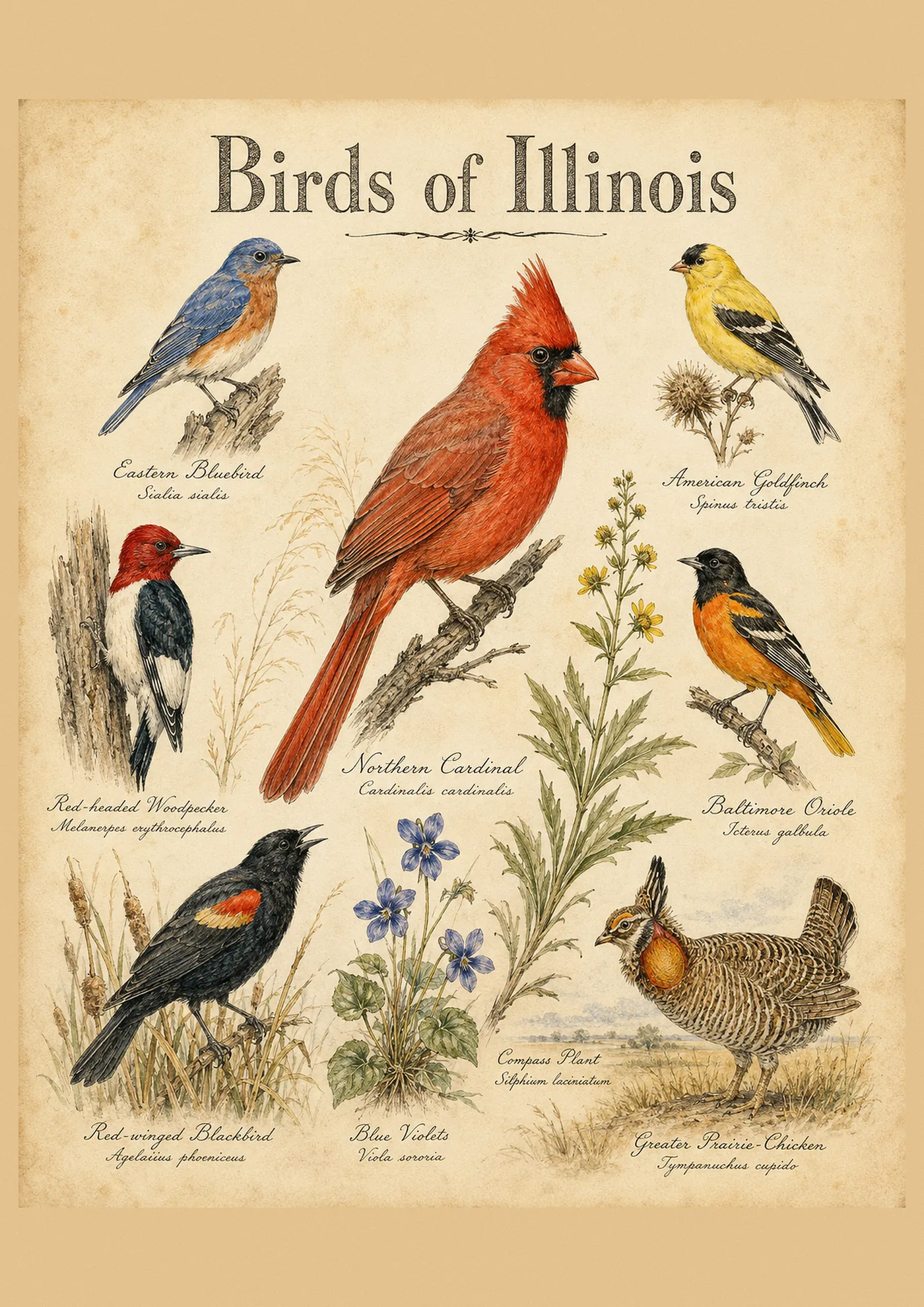
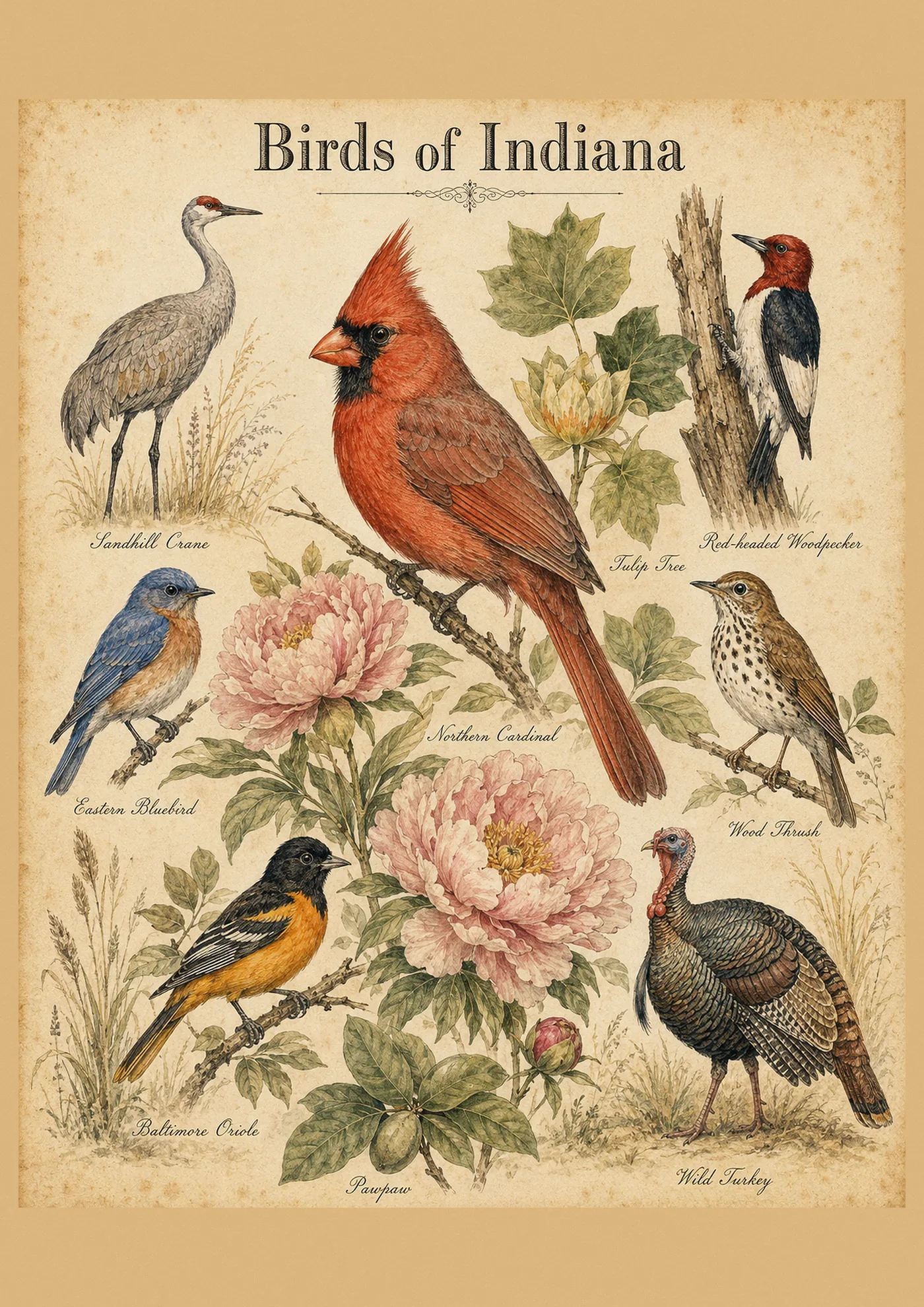
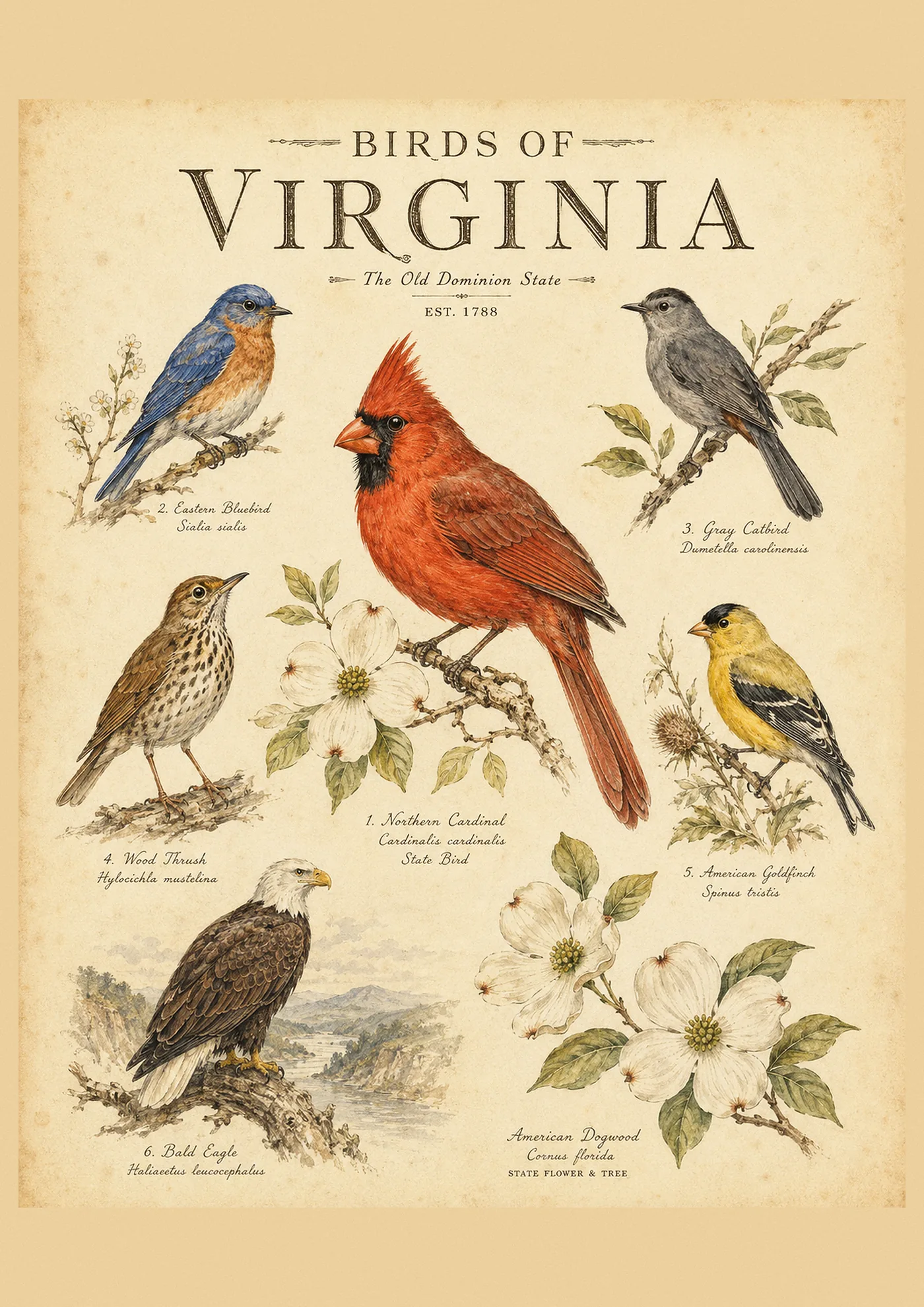
The state’s bird is, fittingly, the Northern Cardinal. Virginia adopted the cardinal as its state bird in 1950, joining a block of six other states (West Virginia, North Carolina, Ohio, Indiana, Illinois, Kentucky) that share the bird as their official symbol. The cardinal is a Virginia year-round resident in every county, from the Blue Ridge above Charlottesville to the salt marshes of the Eastern Shore. He does not migrate. The cardinal on your Virginia feeder in January is the cardinal who was there in July.
The state’s signature species
Beyond the cardinal, Virginia’s bird list is shaped by geography. The state runs from sea level on the Eastern Shore to over 1,700 metres on Mount Rogers, crossing five distinct ecoregions. Each holds birds you do not find in the others.
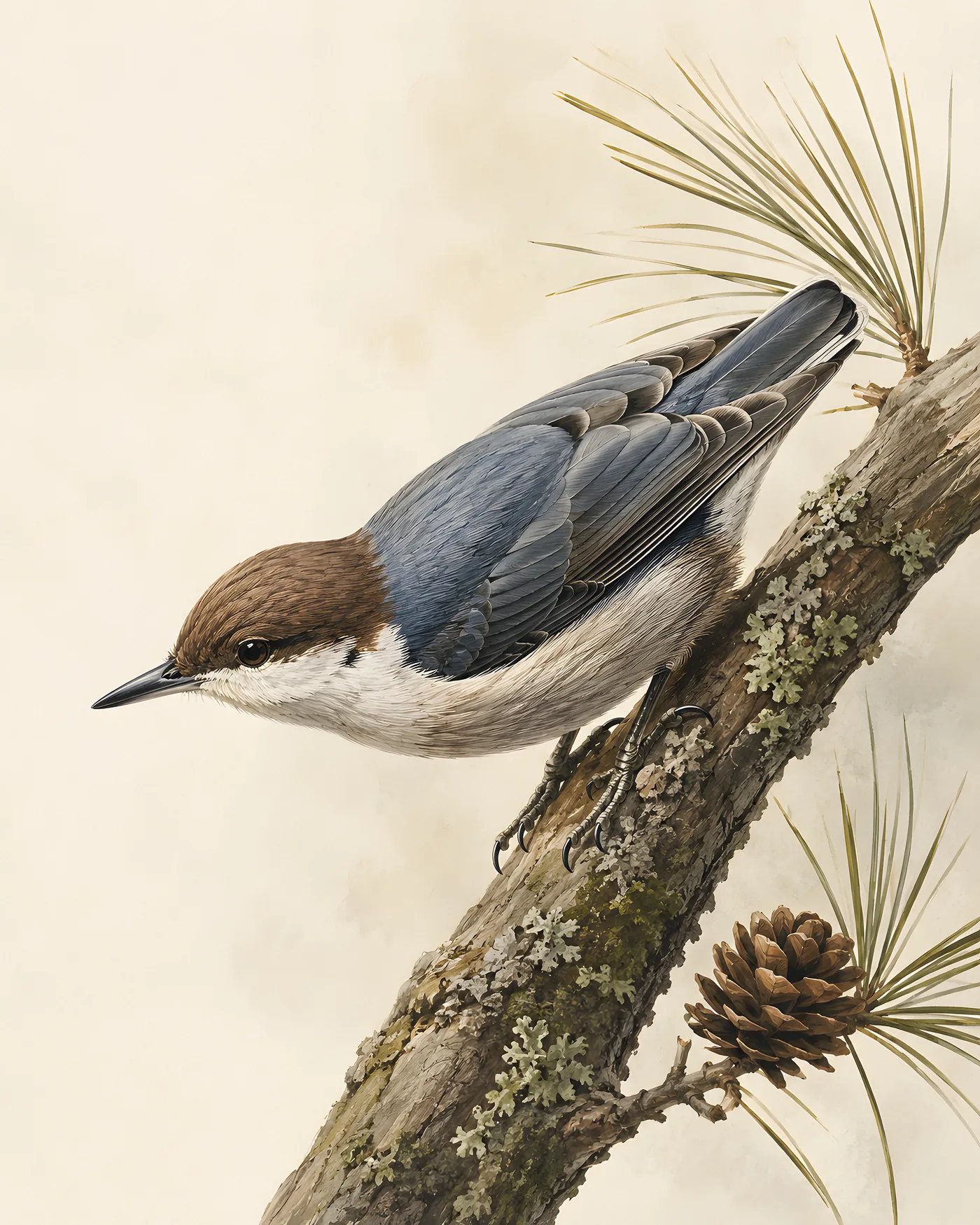
Brown-headed Nuthatch is the state’s signature pine specialist, confined to the open loblolly and Virginia pine woodlands of the southeast coastal plain. The bird is small (10 cm), brown-capped, blue-grey above, white below, with a sharp toy-trumpet call that carries through the open pine stands of the Great Dismal Swamp and southern Tidewater. He is one of the few birds on this list that you cannot easily see in any neighbouring state.
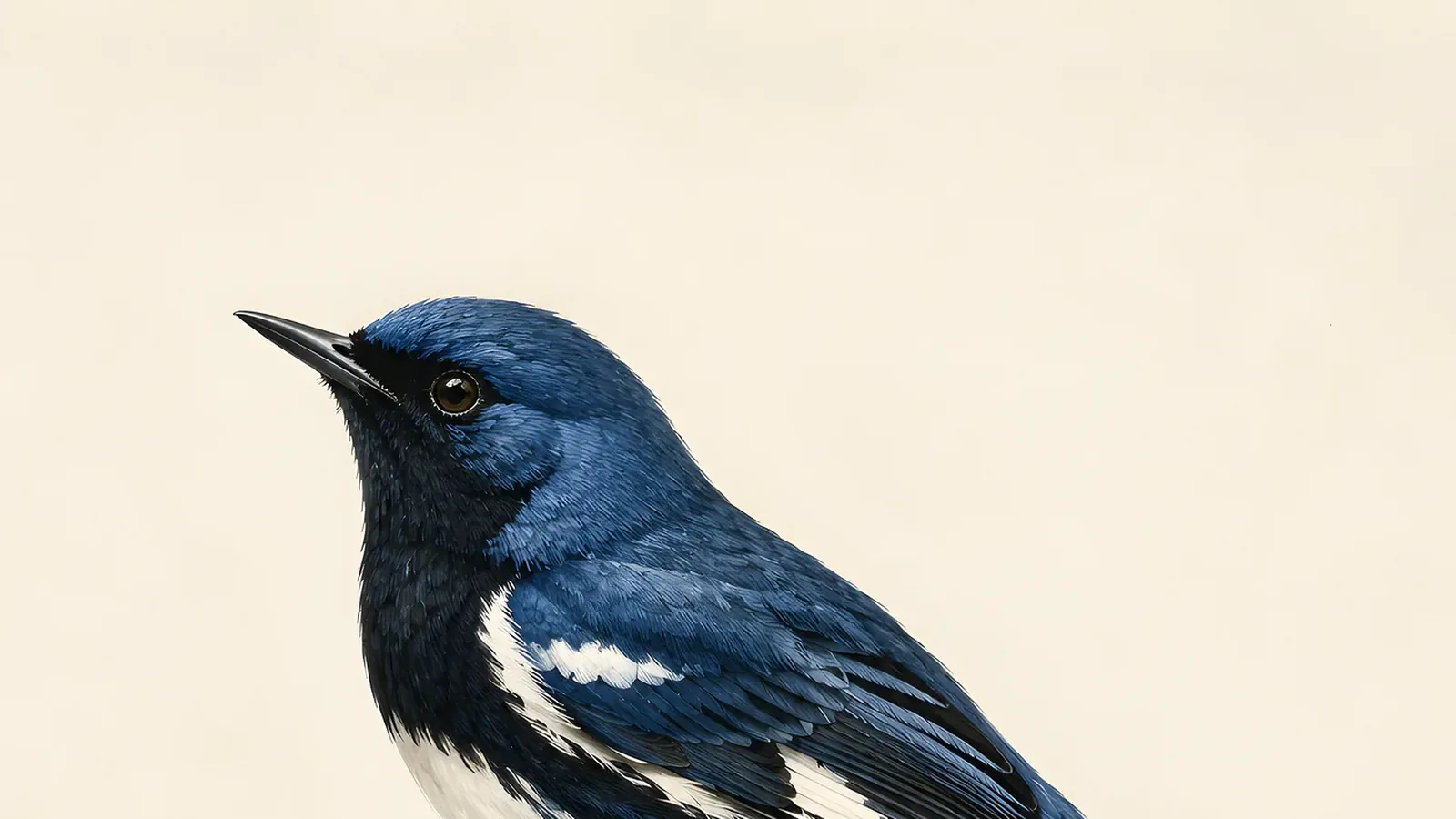
Black-throated Blue Warbler breeds in the higher elevations of the Blue Ridge and Allegheny Highlands. Male: deep blue back, black throat, white belly. The most distinctive warbler of Virginia mountain forests in May and June.
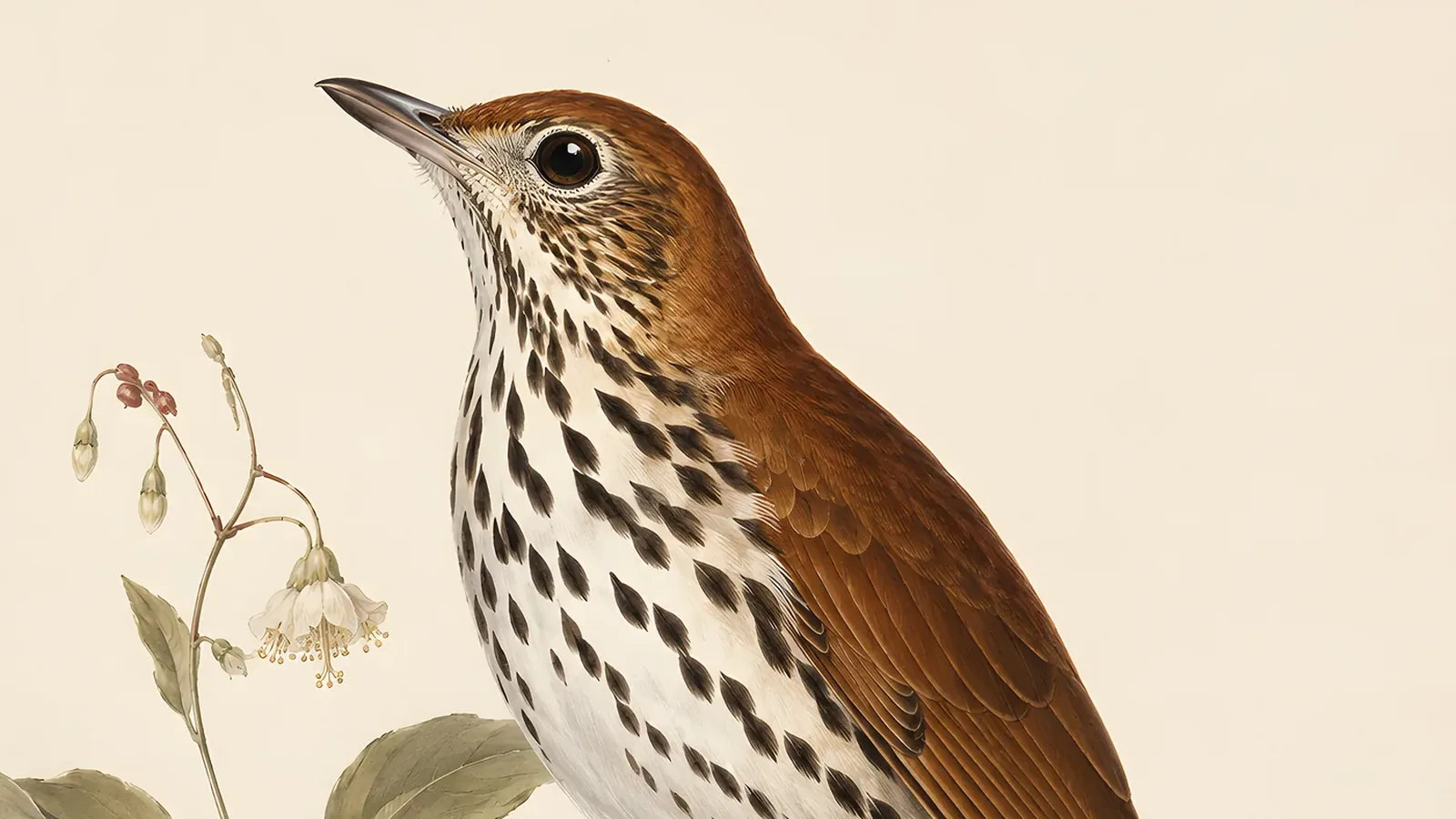
Wood Thrush is the Virginia woodland singer. His flute-like ee-oh-lay song is one of the most evocative bird voices in the eastern forest. The species is in long-term decline across its range, and the Blue Ridge hosts some of the densest remaining populations.
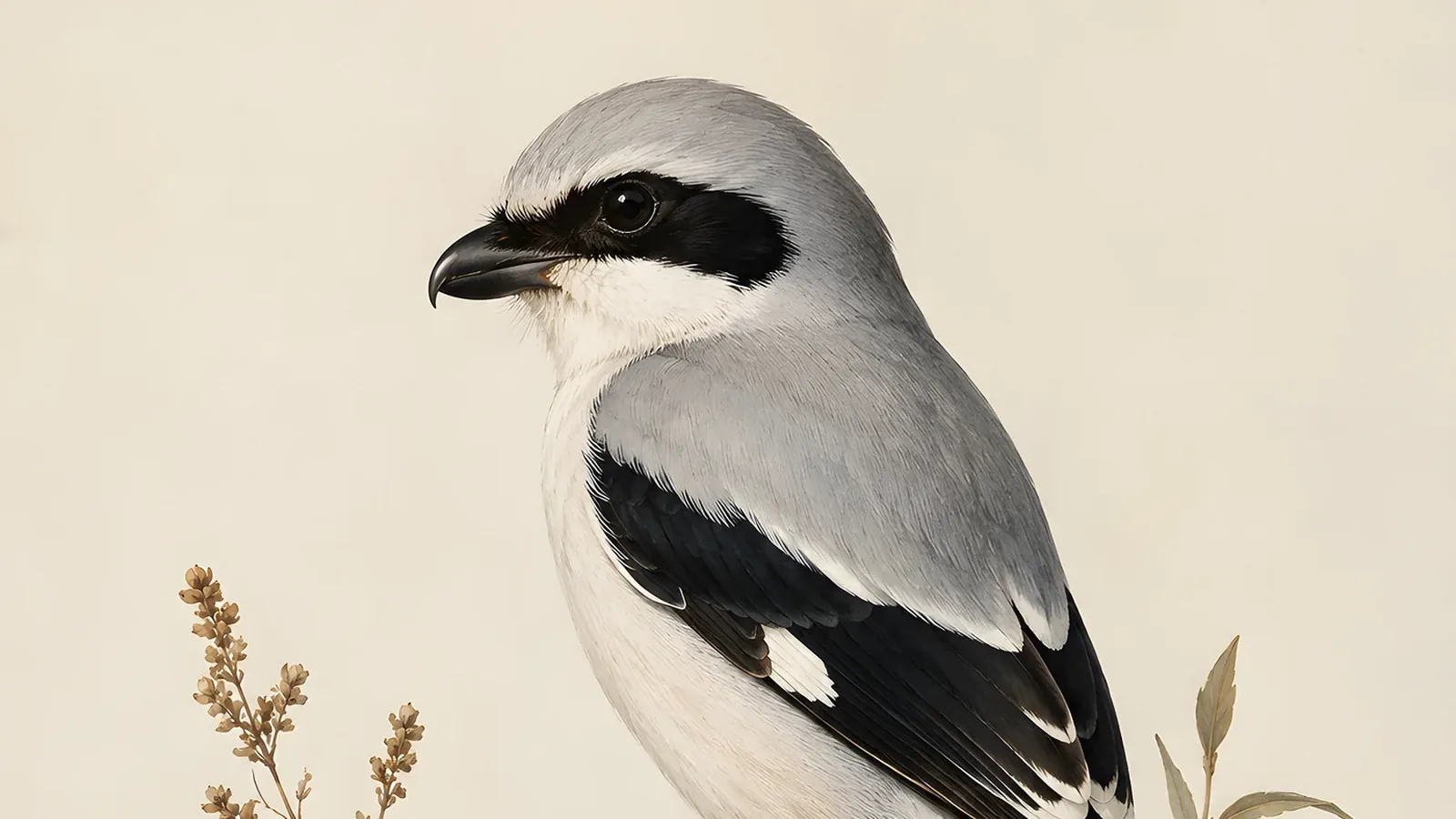
Loggerhead Shrike is the state’s most distinctive open-country bird, a small grey raptor-like songbird that impales prey on thorns. He is in decline across much of his range but still breeds in scattered farmland across central and western Virginia.
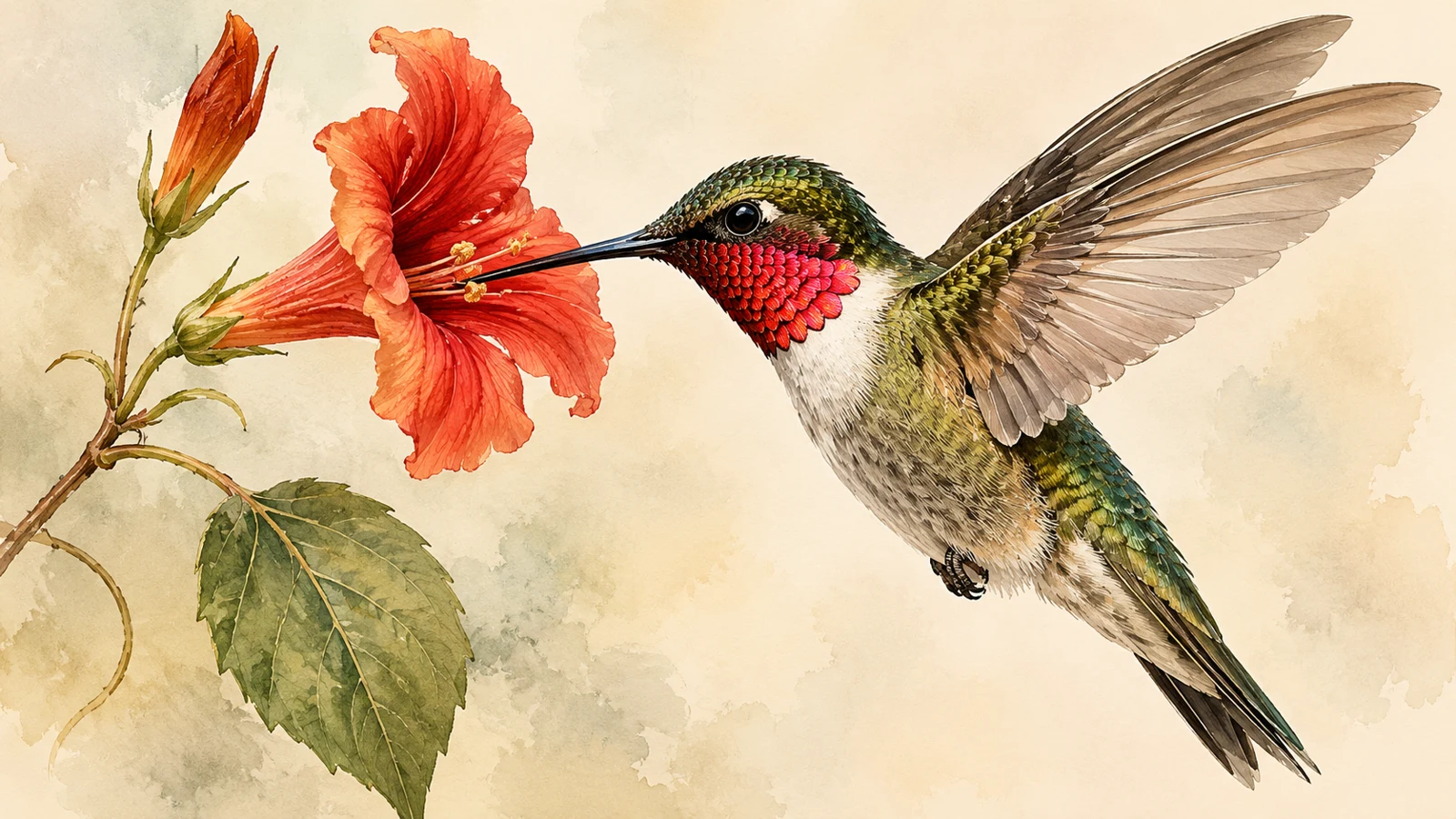
Ruby-throated Hummingbird is the state’s only breeding hummingbird, arriving in late April from the Yucatan and breeding statewide through September.
Top backyard species
A typical Virginia suburban garden hosts a year-round community of:
- Northern Cardinal (state bird, every season)
- American Robin (winter flocks, summer breeder)
- Blue Jay (year-round, often noisy)
- Carolina Chickadee (year-round in the south, contact zone with Black-capped in the north)
- Tufted Titmouse (year-round, feeder regular)
- White-breasted Nuthatch (year-round)
- Carolina Wren (year-round, the loud one)
- Mourning Dove (year-round)
- House Finch (year-round, common at sunflower feeders)
- American Goldfinch (year-round, brightest in May)
- Eastern Bluebird (year-round in most of the state)
In migration, the suburban list expands dramatically. Late April through mid-May brings warblers, vireos and tanagers through Virginia gardens. The most reliable migration draws are oaks (foraging warblers), native fruiting shrubs (thrushes), and an open canopy with low understory.
Seasonal calendar
| Season | What is happening |
|---|---|
| Spring (Mar-May) | Migration peak in early May; cardinals begin first broods in March; Ruby-throated Hummingbirds arrive late April |
| Summer (Jun-Aug) | Breeding season for all residents; cardinal molting begins late July |
| Autumn (Sep-Nov) | Southbound migration through Virginia; hawk migration at Rockfish Gap and Hawk Mountain (PA) just north |
| Winter (Dec-Feb) | Cardinal pair-bond maintenance; northern winter visitors (Dark-eyed Junco, White-throated Sparrow, sometimes Common Redpoll in irruption years) |
Where to watch
Some of the most rewarding birding sites in Virginia:
- Chincoteague National Wildlife Refuge (Eastern Shore) - migrating shorebirds, wintering waterfowl, beach and salt marsh species.
- Great Dismal Swamp National Wildlife Refuge (southeastern Virginia) - Brown-headed Nuthatch, swamp specialists, breeding warblers.
- Shenandoah National Park (Blue Ridge) - mountain breeding warblers, woodpeckers, breeding Ravens, autumn hawk migration along Skyline Drive.
- Kiptopeke State Park (Eastern Shore tip) - extraordinary autumn migration concentration, particularly raptors and passerines funneling south.
- Mount Rogers National Recreation Area (far southwest) - the highest elevation in Virginia, breeding northern forest birds at southern range edge.
- Huntley Meadows Park (Fairfax County, Northern Virginia) - excellent suburban marsh and woodland, well-watched.