State Guide
Birds of Louisiana
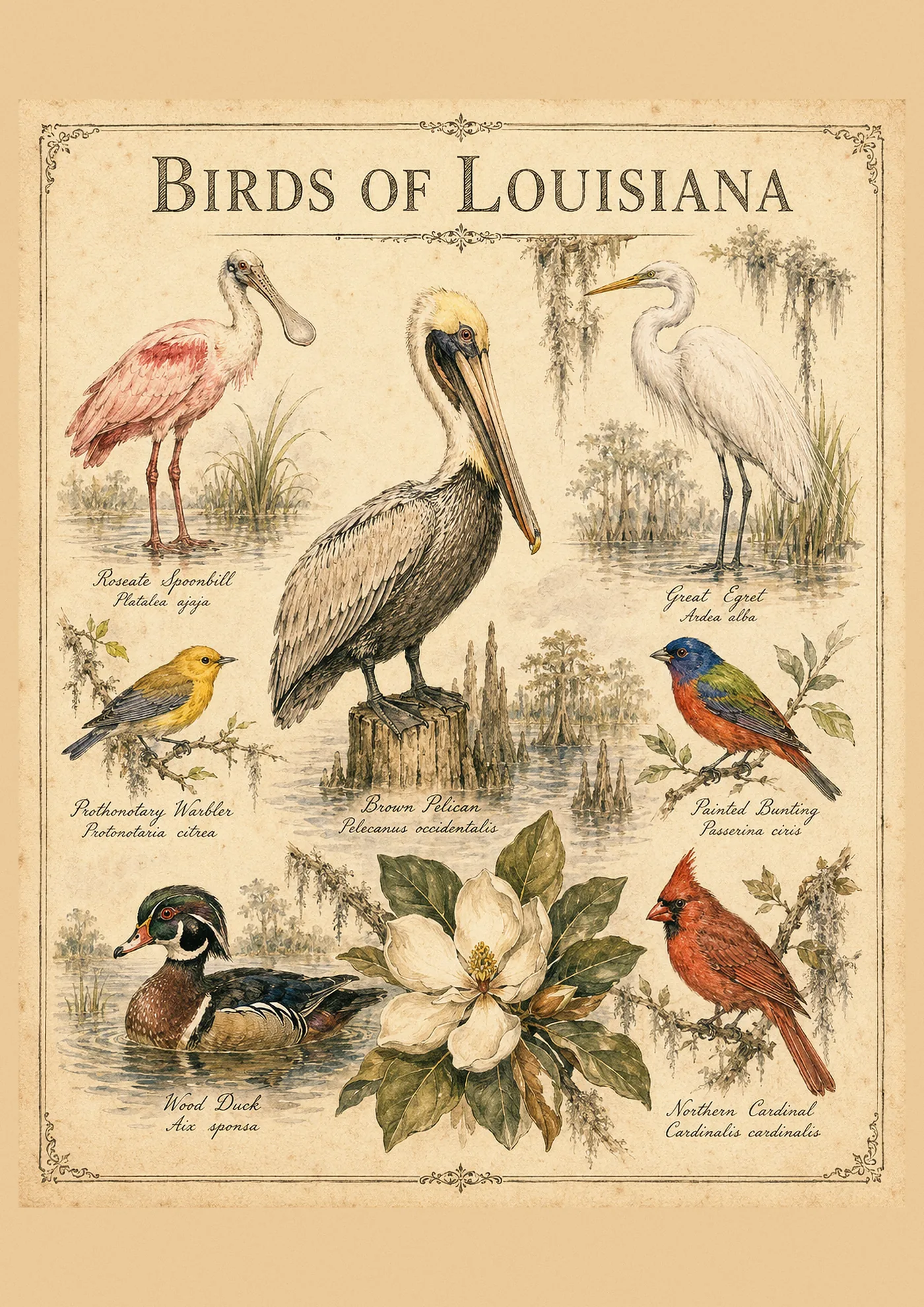
Louisiana made the Brown Pelican (Pelecanus occidentalis) its official state bird on 27 July 1966 - Act 457 of the state legislature, amending an earlier 1958 designation that had named “the pelican” without specifying the species. The timing was grimly apt. By 1963, wildlife authorities had declared the Brown Pelican locally extinct in Louisiana. Pesticide accumulation - primarily DDT moving through Gulf fish into breeding adults - had collapsed what was once estimated at 50,000 birds on the Chandeleur Islands alone. The legislature put the pelican on the seal of the state at the very moment the bird had vanished from it.
Recovery came after the 1972 federal DDT ban. A translocation programme run jointly by the Louisiana Wildlife and Fisheries Commission and the National Audubon Society moved young birds north from Florida colonies beginning in 1968. By the early 1980s, breeding was re-established on Louisiana coastal islands. Today the state hosts an estimated 100,000 Brown Pelicans along the Gulf shore - one of the more complete wildlife comebacks on the North American coast.
The bird’s presence on the state seal predates the formal designation by well over a century. It appears there in the pelican-in-her-piety pose: a mother feeding her young from her own breast. Whether Louisiana ornithologists or heraldic artists chose the symbol first hardly matters. The pelican earned both.
Signature and speciality species
Louisiana’s coastal marshes, cypress swamps, and Gulf barrier islands support a set of species that are either absent or rare in most of the eastern United States.
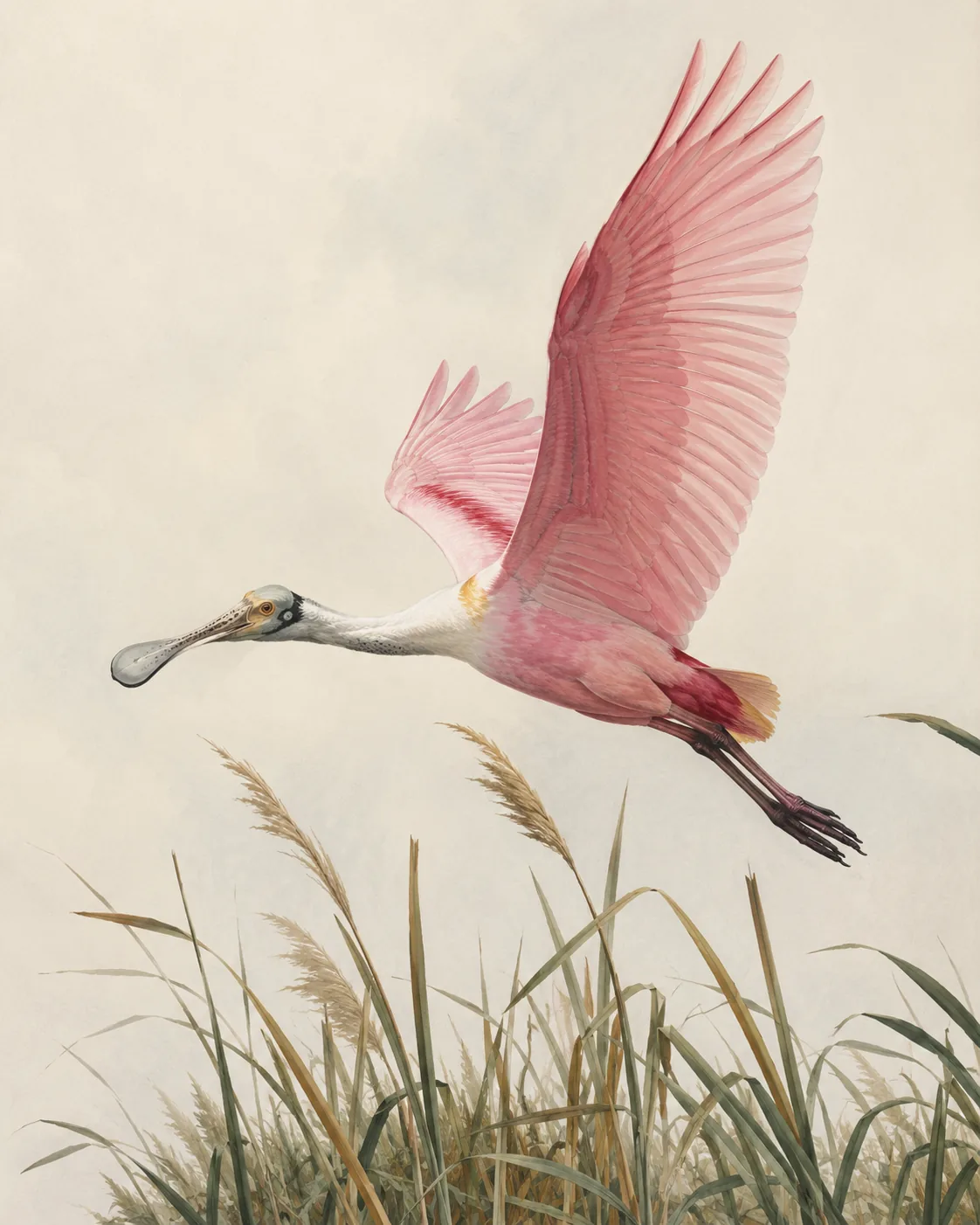
Roseate Spoonbill (Platalea ajaja) breeds colonially on Gulf Coast islands and forages through brackish and freshwater marshes across the state. The species is reliably visible at Lake Martin near Breaux Bridge, home to one of Louisiana’s largest wading-bird rookeries - tens of thousands of herons, egrets, ibises, spoonbills, and anhingas nest each season in the cypress-tupelo swamp. The spoonbill’s pink coloration deepens with age and with carotenoid-rich prey; birds seen in July above a marsh road are unmistakable.
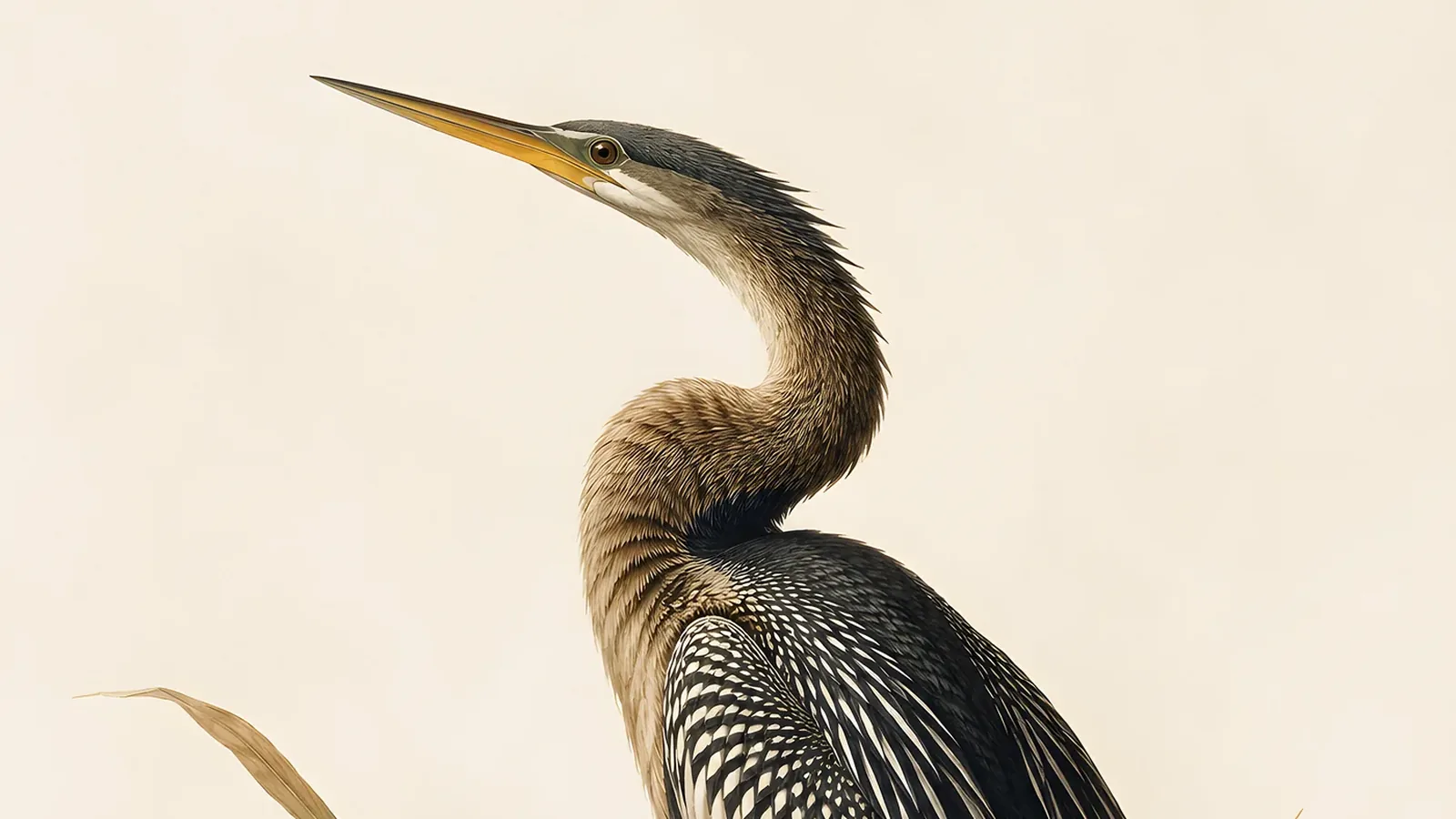
Anhinga (Anhinga anhinga) is a year-round resident throughout the state’s freshwater and brackish wetlands. It lacks waterproof feathers and must dry its wings after diving - the characteristic spread-wing posture on a cypress snag is one of the first field impressions of the Louisiana interior. Cornell’s All About Birds notes the Anhinga swims underwater in pursuit of fish, steering with its feet and using its sharp bill as a spear.
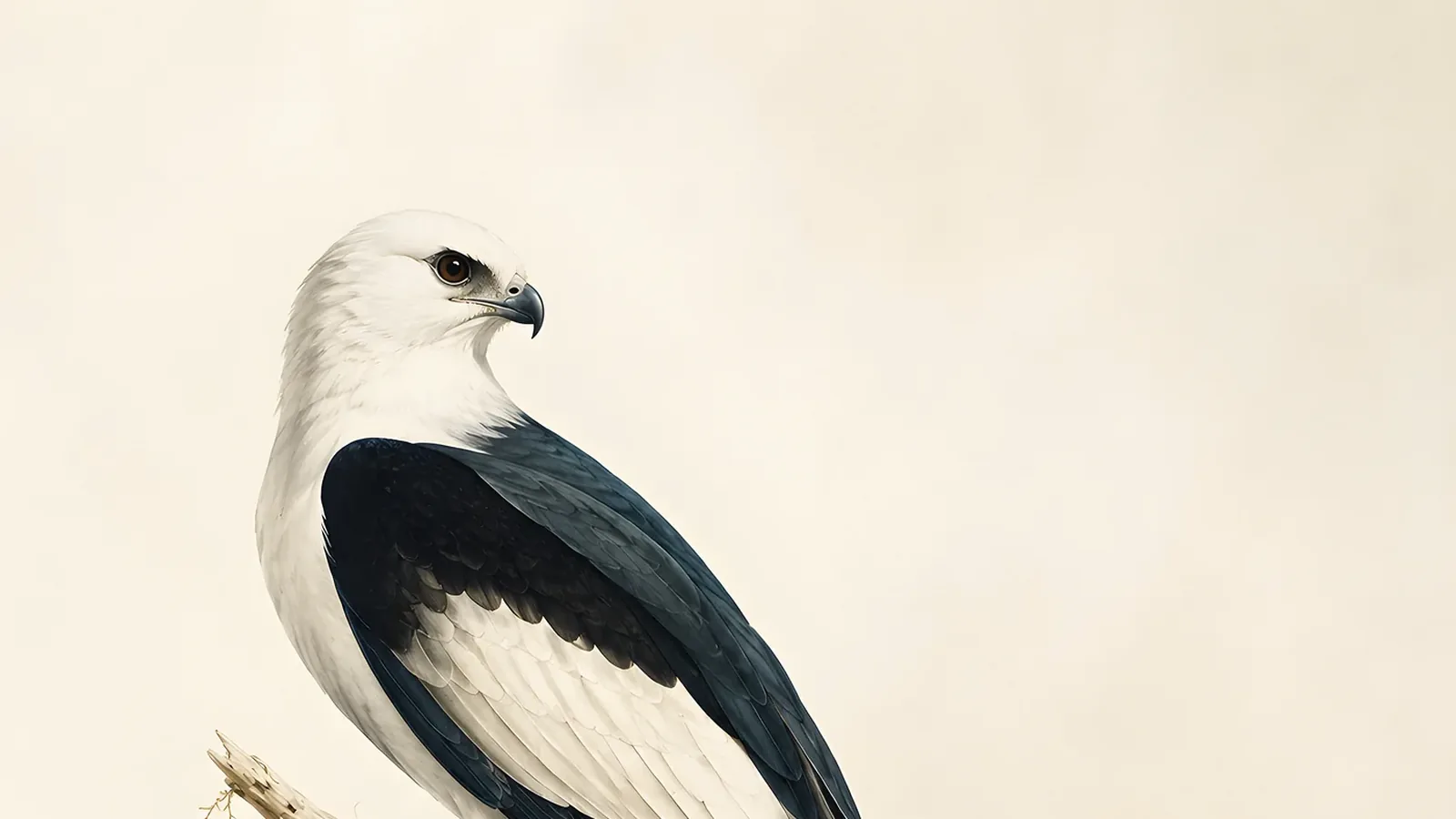
Swallow-tailed Kite (Elanoides forficatus) returns from South American wintering grounds to breed in bottomland hardwood forests across the state each spring. The species arrives in March and departs by late August. Its deeply forked tail and white-and-black pattern make it one of the most visually distinctive raptors in North America. It takes prey - lizards, frogs, large insects - on the wing, eating without landing.
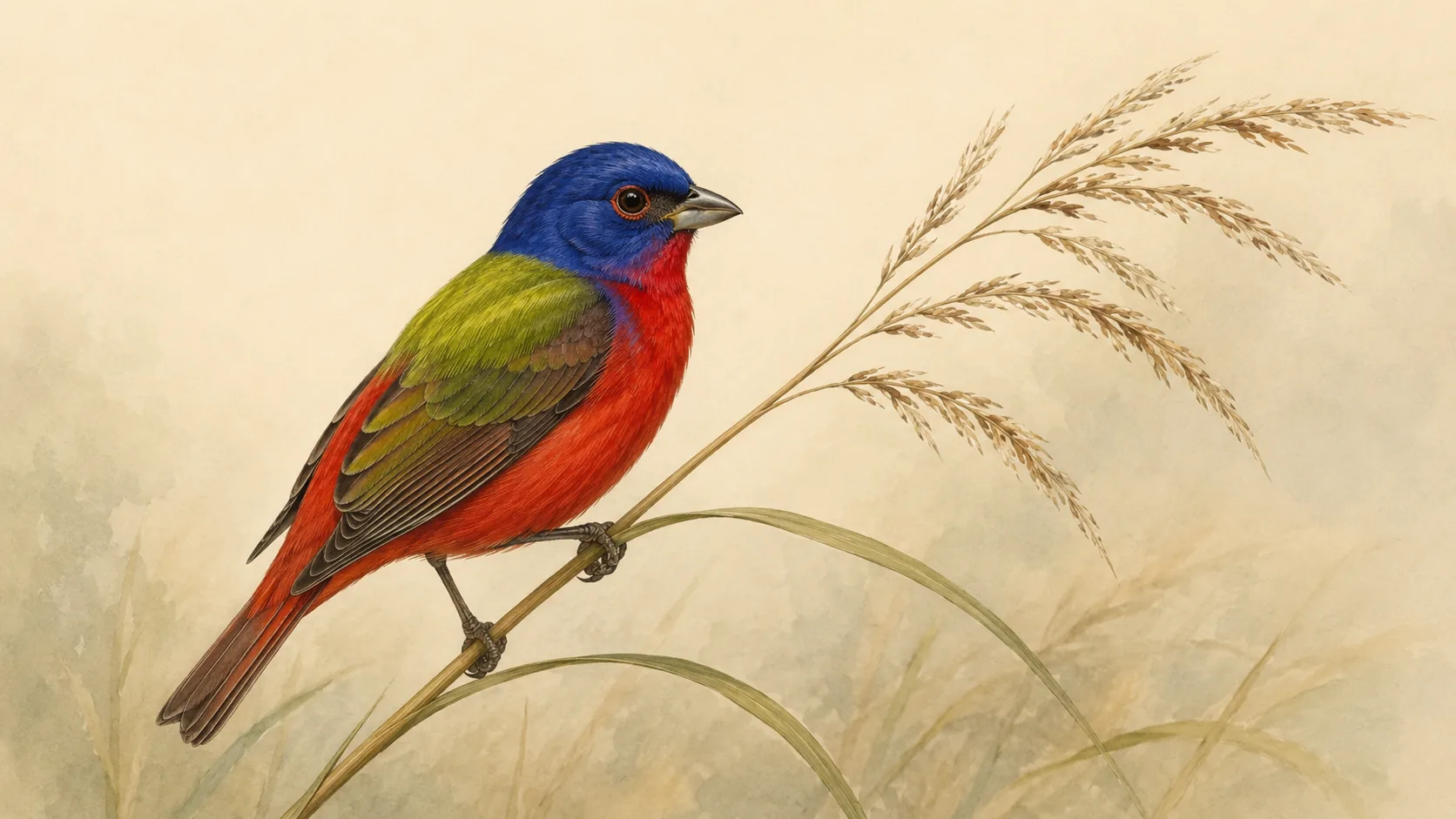
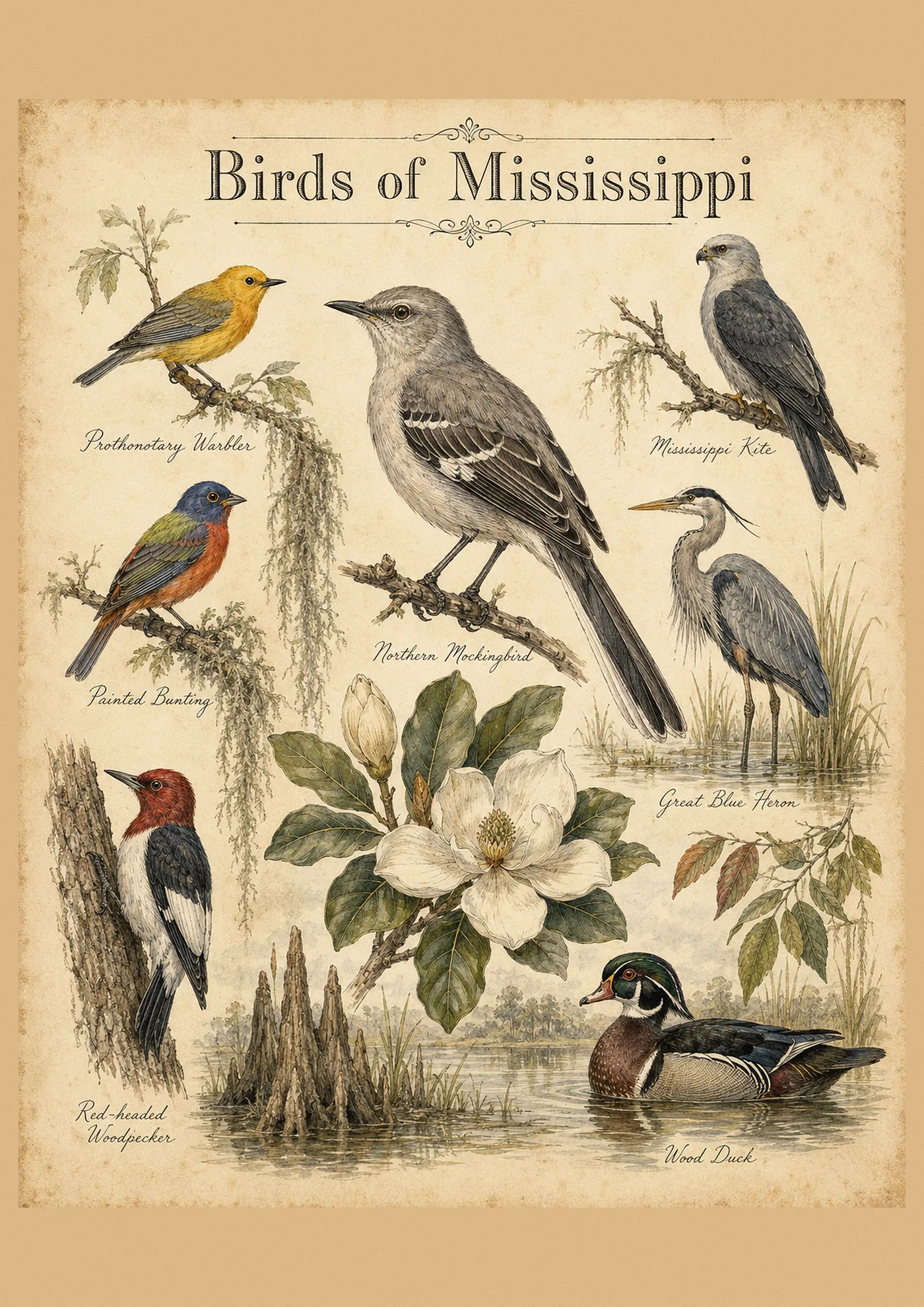
Painted Bunting (Passerina ciris) is the Gulf Coast’s most frequently cited wow-bird. Males in breeding plumage are blue-headed, red-bellied, and green-backed - a combination that reads as impossible in a field guide and then appears, suddenly, at a seed feeder along the Creole Nature Trail. The species winters along Louisiana’s coast in large numbers and breeds in brushy edges and woodland margins. eBird data place the Cameron Parish coast among the most reliable winter sites for the species in North America.
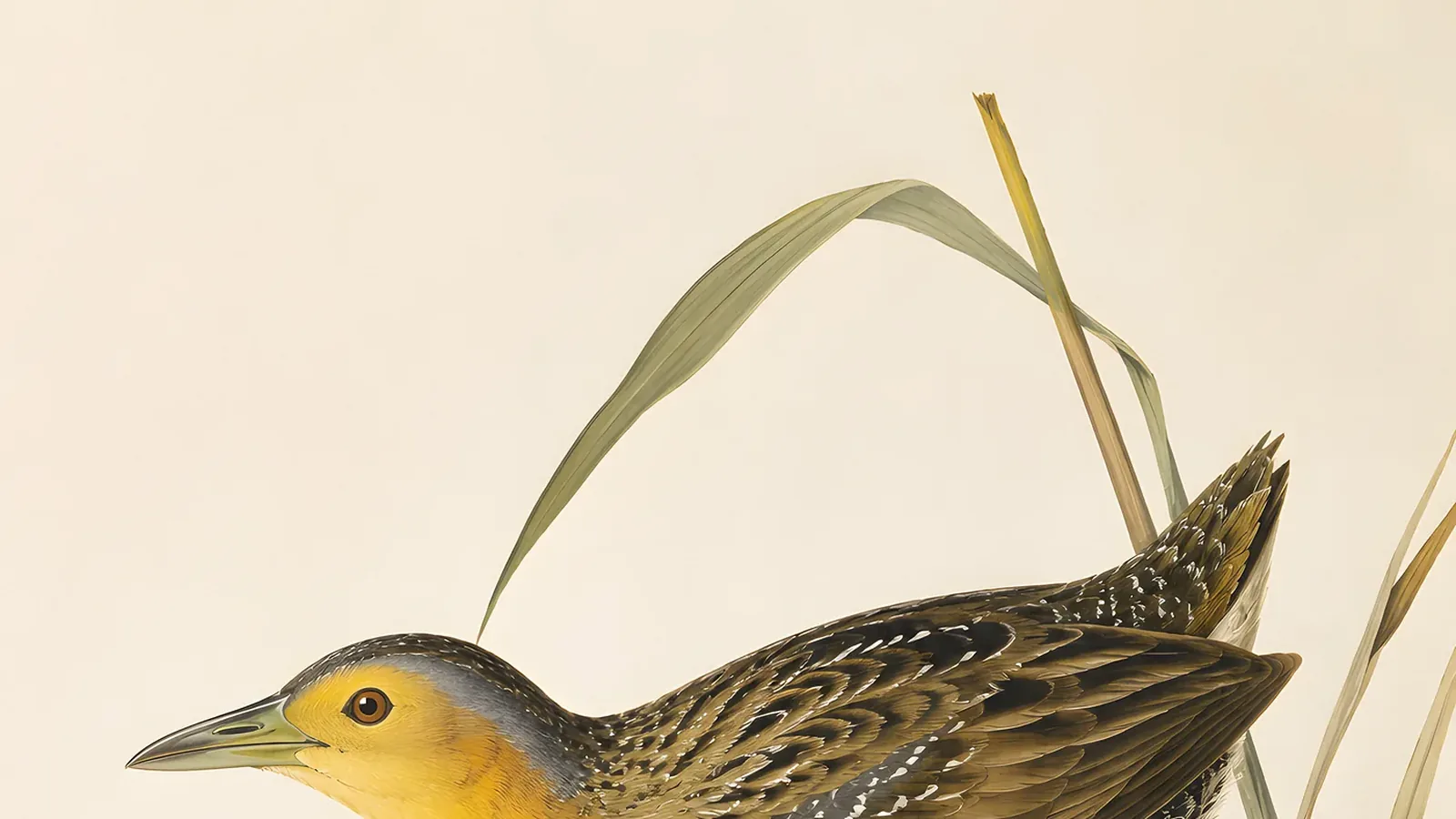
Yellow Rail (Coturnicops noveboracensis) winters in Louisiana’s coastal prairies and wet meadows in numbers that represent a substantial portion of the global wintering population. The bird is notoriously difficult to see - it runs through dense marsh grass rather than flushing - but Cameron and Vermilion Parishes hold it annually from October through April. Birders time visits around rice harvests, when machinery flushes birds into the open.
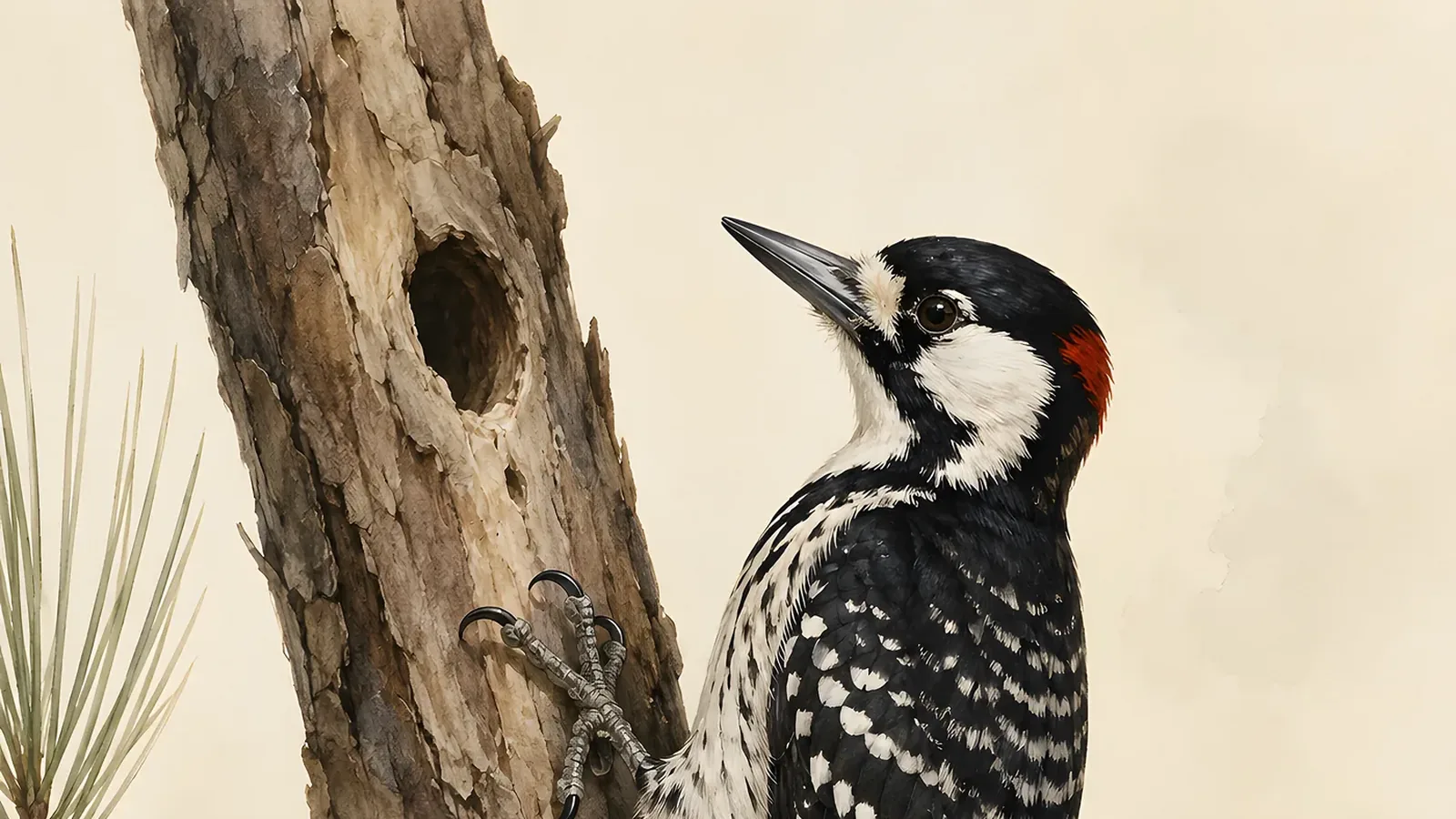
Red-cockaded Woodpecker (Dryobates borealis) clings to survival in mature longleaf pine stands in the Kisatchie National Forest in central Louisiana. The species requires old-growth pines with soft heartwood for cavity excavation and is a federally listed threatened species. The Kisatchie population is small and carefully managed, but accessible to birders willing to search the forest’s longleaf tracts.
Backyard species
Across Louisiana’s parishes - from the New Orleans suburbs to the Shreveport neighborhoods to the small towns of Acadiana - a handful of species are present year-round:
- Northern Mockingbird (state bird of five states but ubiquitous in Louisiana; sings through the night in spring)
- Northern Cardinal (year-round resident, common at feeders)
- Carolina Wren (year-round, loud and persistent)
- Tufted Titmouse (year-round)
- Carolina Chickadee (year-round across most of the state)
- Mourning Dove (year-round, abundant)
- Red-bellied Woodpecker (year-round)
- Downy Woodpecker (year-round)
- House Finch (year-round)
- American Goldfinch (winter visitor in numbers)
- Ruby-throated Hummingbird (April through October; the Gulf crossing migrants fuel heavily at Louisiana gardens before and after the crossing)
- Great Blue Heron (year-round; visible along virtually every bayou, pond, and drainage channel in the state)
Where and when to watch
Grand Isle on the Gulf coast is one of the canonical spring fallout sites in North American birding. Trans-Gulf migrants - warblers, tanagers, orioles, buntings - cross 900 km of open water from the Yucatan to reach the Louisiana coast. When winds are adverse, exhausted birds drop onto the first trees they find. At Grand Isle in late April that means dozens of species in a single live oak. eBird records for Grand Isle in peak years exceed 150 species in a single spring day. Grand Isle State Park provides access to the beach and woodland edges.
Lake Martin near Breaux Bridge is Louisiana’s most accessible wading-bird rookery. The Cypress Island Preserve, managed by the Nature Conservancy, protects a cypress-tupelo swamp where Great Egrets, Great Blue Herons, Roseate Spoonbills, Anhingas, White Ibis, Tricolored Herons, and Black-crowned Night-Herons nest at close range from the public road and boardwalk. March through July is peak season. More than 250 species have been recorded in and around the lake.
Sabine National Wildlife Refuge in southwestern Louisiana covers over 124,000 acres of coastal marsh along the Gulf. A three-mile boardwalk trail over open marsh gives walkers unobstructed views of wintering waterfowl, wading birds, and Roseate Spoonbills. The refuge lies on the Creole Nature Trail All-American Road, which the Audubon Society lists as one of the top birding drives in the country.
Cameron Prairie National Wildlife Refuge - also on the Creole Nature Trail - runs a three-mile Pintail Wildlife Drive where over 230 species have been recorded. The surrounding Cameron Parish oak-cheniere woodlands trap trans-Gulf migrants at Peveto Woods Sanctuary in spring, where the Baton Rouge Audubon Society - which manages the sanctuary - estimates as many as two million birds use the site each year across spring and autumn passages.
Seasonally: spring (April-May) is the migration peak, with Gulf fallouts on the coast and warbler movement through interior bottomlands. Summer brings nesting colonies of herons and spoonbills to full activity. Autumn (September-November) draws shorebirds and raptors. Winter fills the coastal marshes with Snow Geese, Blue Geese, and ducks from the northern prairies, and brings Yellow Rails and Painted Buntings into the Cameron Parish grasslands.
The pelican disappeared from Louisiana in 1963 and was named state bird in 1966. That three-year gap between extinction and legislation is its own kind of lesson in how long official attention takes to catch what is actually happening on the ground.