State Guide
Birds of Michigan
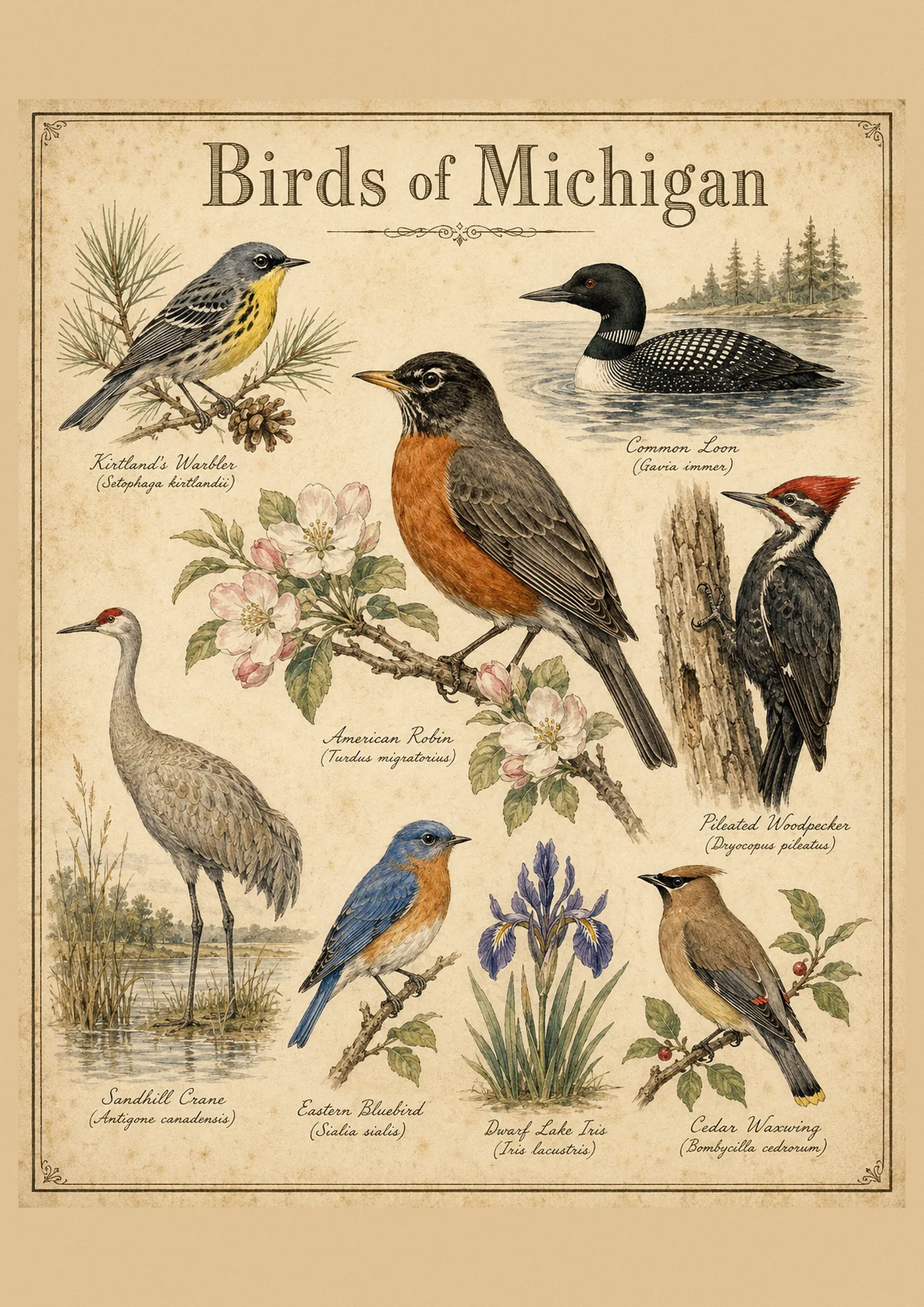
In April 1931, Michigan’s House of Representatives resolved that the American Robin was “the best known and best loved of all the birds in the State of Michigan.” The Legislature was confirming what residents had already decided two years earlier. In 1929 the Michigan Audubon Society ran a statewide contest to choose a state bird. Nearly 200,000 people participated - one of the largest popular votes on a state symbol anywhere in the country. The robin won decisively over the Black-capped Chickadee. Edith Munger, the Michigan Audubon Society president at the time, was not pleased. She believed the voters, many of them children, lacked the ornithological knowledge to choose wisely and said publicly that the result would have been different if people had studied birds more before casting their ballots. Michigan kept the robin.
It was, in hindsight, an honest choice. The robin is everywhere in Michigan: in the Upper Peninsula logging towns, on the lawns of Detroit suburbs, along the Lake Michigan dune edges in June. She arrives from the south in March, often while snow is still on the ground, and her song at dusk is the sound that Michigan residents associate with spring’s return more reliably than any other.
The state’s signature species
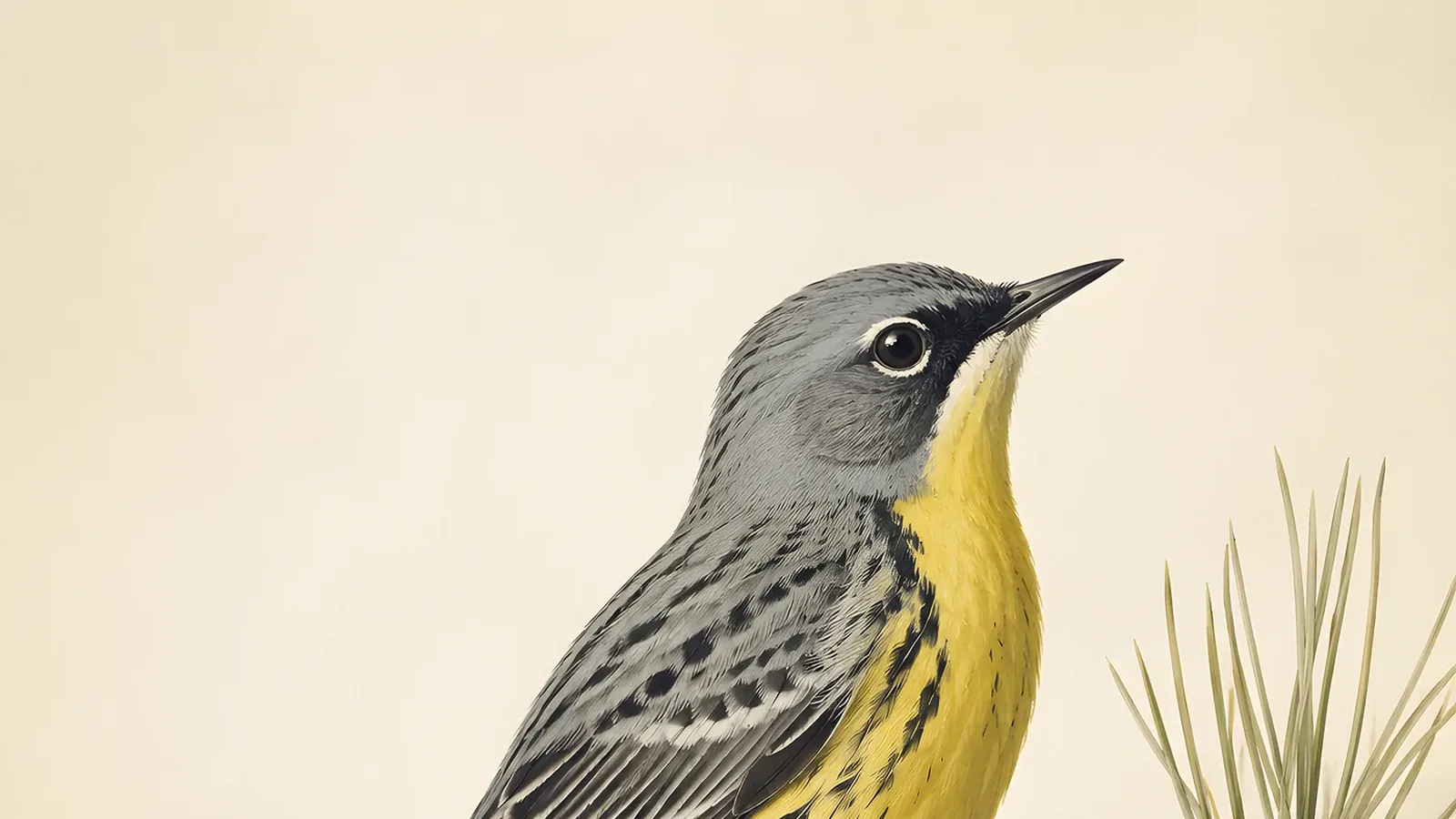
Michigan holds a bird that no other state can claim in the same way. The Kirtland’s Warbler (Setophaga kirtlandii) breeds almost entirely in the jack pine barrens of the northern Lower Peninsula - specifically in young stands between five and 15 years old, in the Au Sable River drainage and nearby areas of the Huron-Manistee National Forest. The bird needs fire. Jack pine cones open with heat; without periodic burns, the forest ages past the warbler’s narrow habitat window. Fire suppression across the 20th century drove the species to the edge: a 1971 census counted fewer than 400 singing males. Intensive management - controlled burns, mechanical clearing, and aggressive Brown-headed Cowbird trapping - brought the population back. The U.S. Fish and Wildlife Service removed the Kirtland’s Warbler from the Endangered Species List in 2019. Cornell’s All About Birds notes that the species now numbers in the thousands of nesting pairs. Guided tours run from Mio and Grayling from late May through June. The bird sings loudly and persistently from low in the pines. You will hear it before you see it.
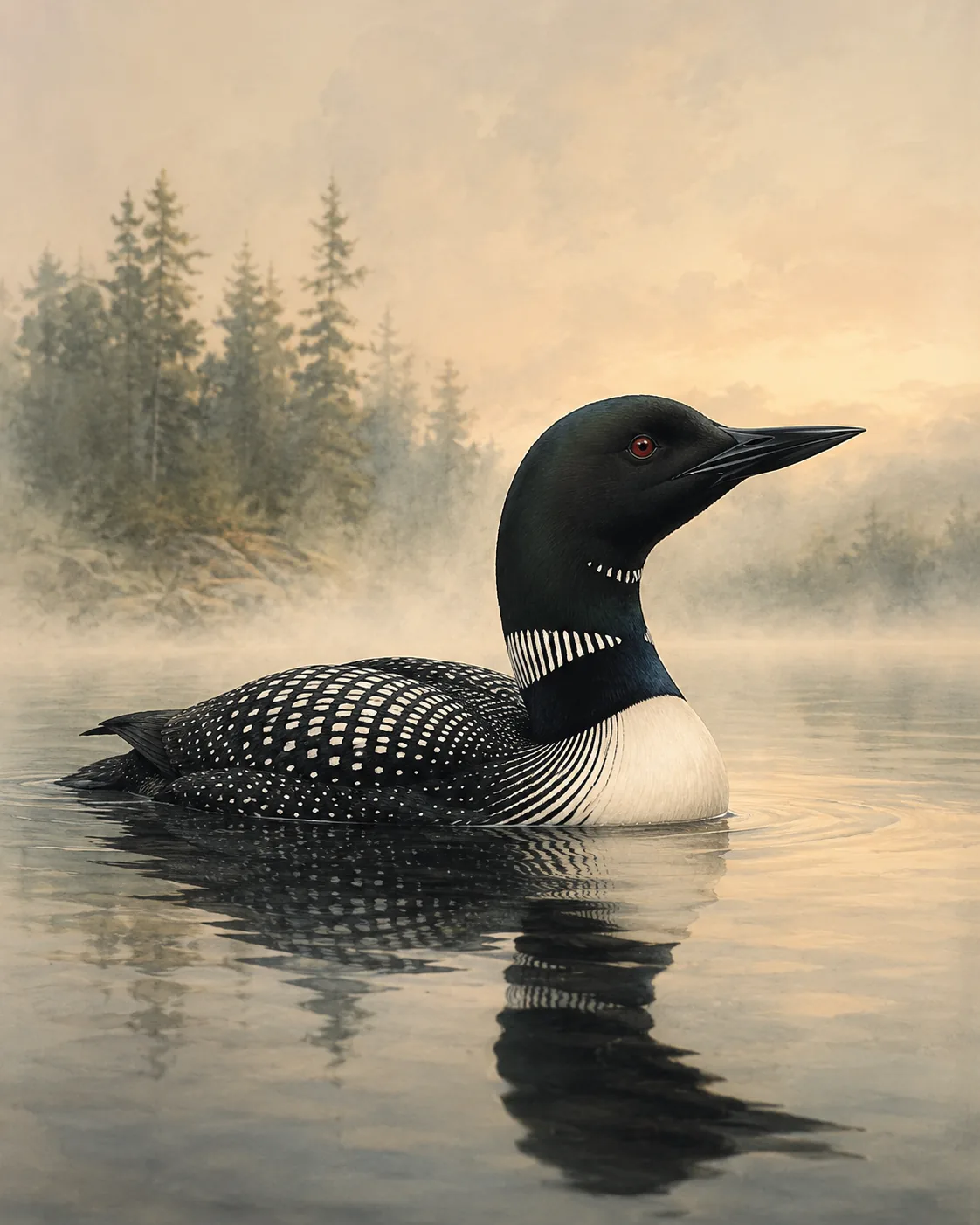
Common Loon (Gavia immer) breeds on the clear lakes of the Upper Peninsula and the northern edge of the Lower Peninsula. Michigan holds one of the largest breeding loon populations in the contiguous United States. The Michigan Loon Preservation Association has tracked individual birds for decades; one female, banded and known to researchers, raised her 43rd and 44th chicks in 2025. Loons require undeveloped shoreline and fish-rich water. Their yodeling at night over a dark lake is the sound most associated with the wild Upper Peninsula.
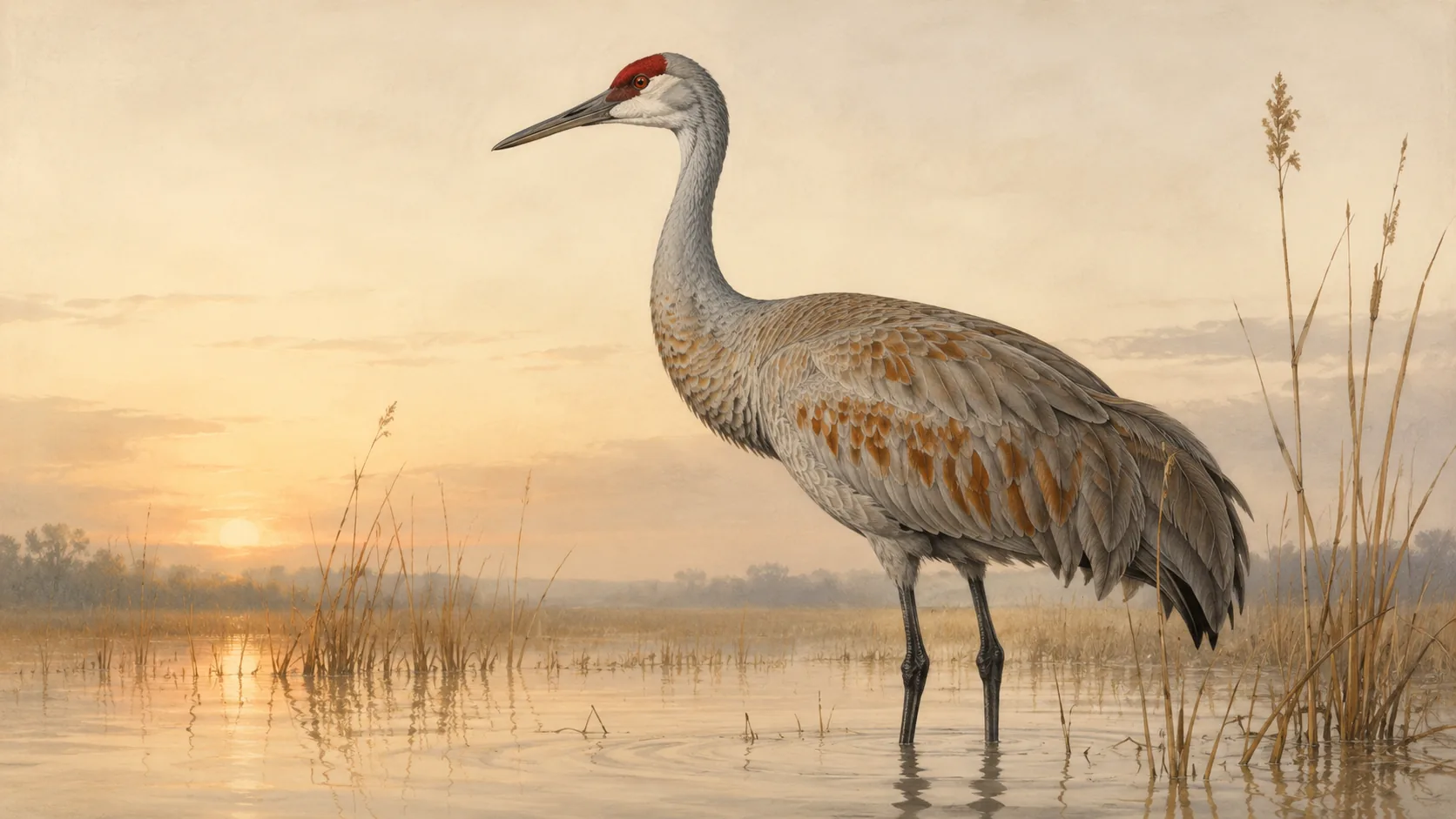
Sandhill Crane (Antigone canadensis) has become one of Michigan’s most visible large birds. Breeding pairs are widespread in wetland habitats across the Lower Peninsula. In autumn, flocks stage in agricultural fields before heading south - numbers in the thousands in some years along the southwestern counties.
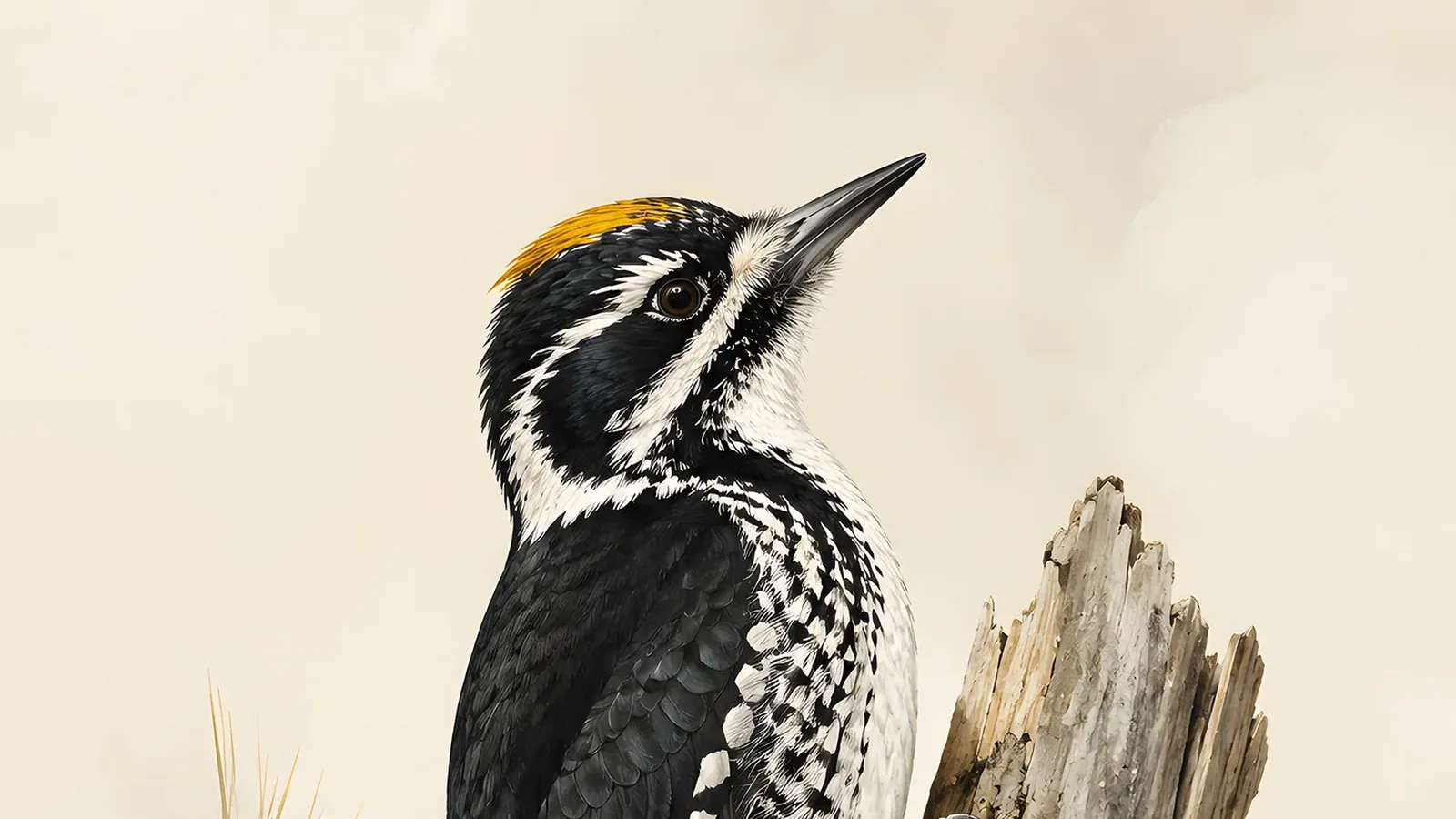
Black-backed Woodpecker (Picoides arcticus) is a boreal specialist found in the mature conifer forests of the Upper Peninsula, particularly in areas of recent fire where it excavates beetle larvae from standing dead trees. This is one of the few places in the lower 48 states where the species breeds reliably.
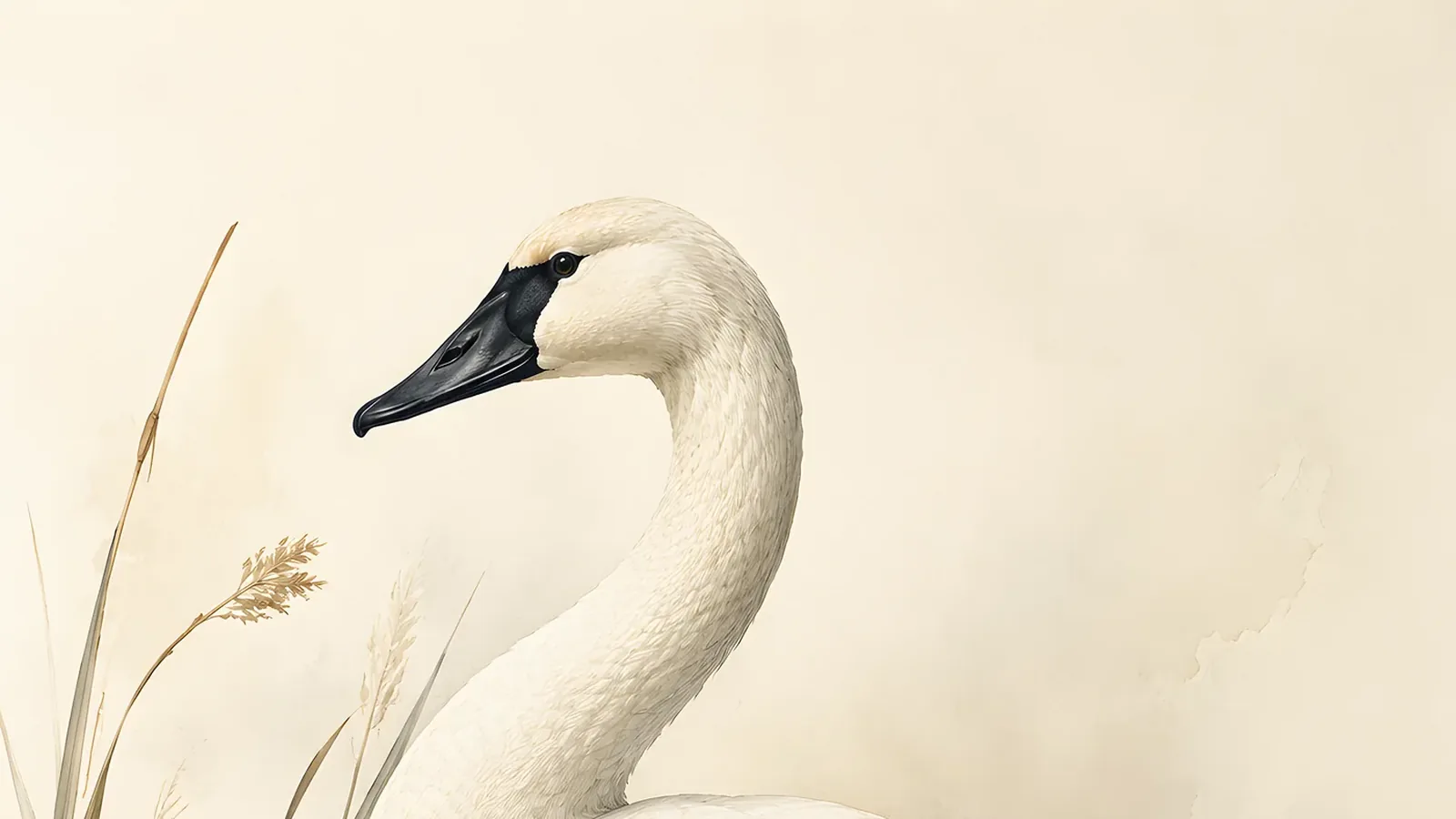
Trumpeter Swan (Cygnus buccinator) was reintroduced to Michigan after being extirpated from the state. Seney National Wildlife Refuge on the Upper Peninsula holds one of the largest trumpeter swan populations in the Midwest - a conservation result that is now textbook-stable.
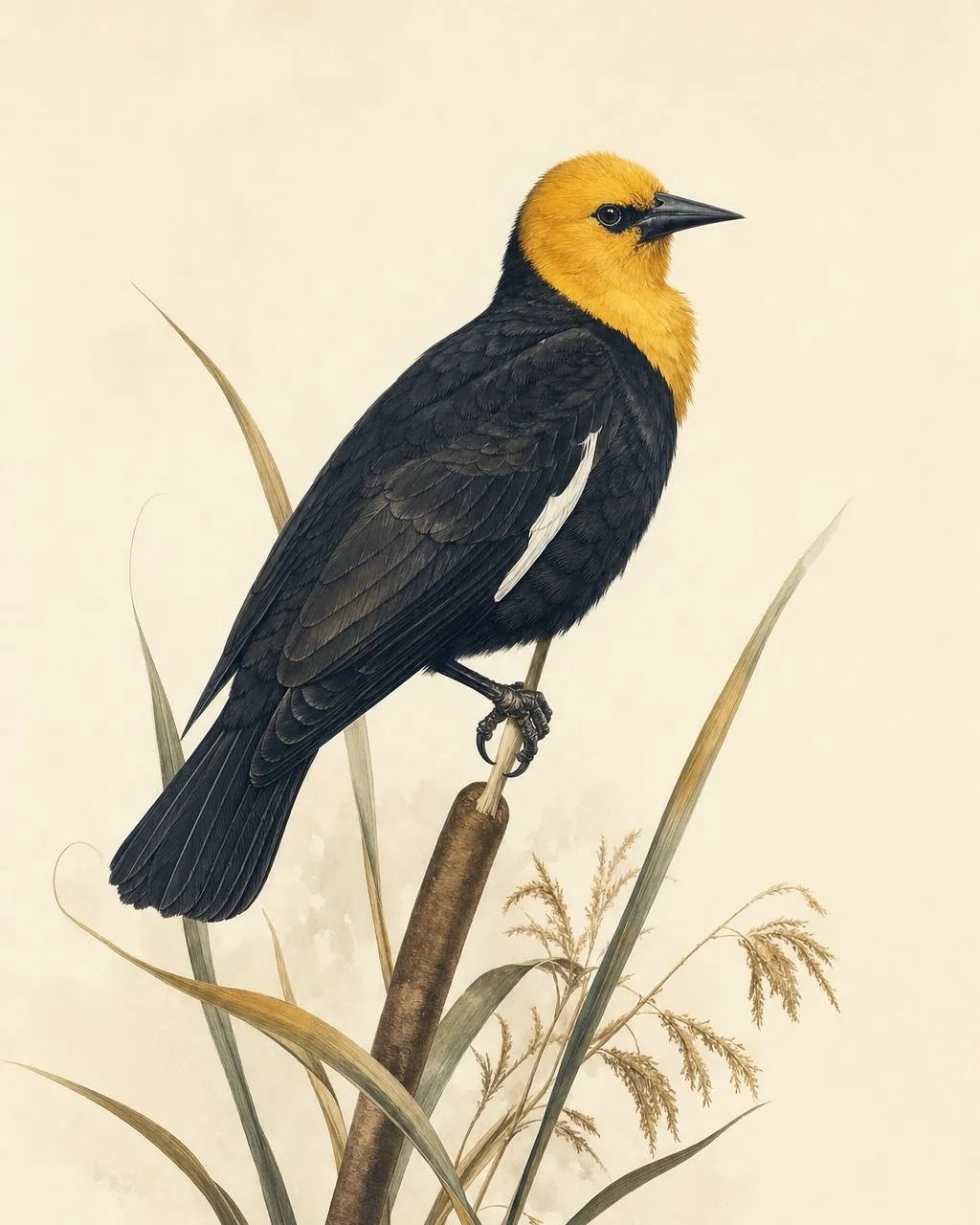
Yellow-headed Blackbird (Xanthocephalus xanthocephalus) has a breeding colony at Nayanquing Point State Wildlife Area near Pinconning - the species is at the eastern edge of its range here, making it an unusual find for eastern birders.
Top backyard species
A Michigan suburban garden through the year:
- American Robin (state bird, year-round in south, migratory in north)
- Black-capped Chickadee (year-round, one of the most reliably present feeder birds)
- American Goldfinch (year-round, brilliant yellow in summer)
- Blue Jay (year-round)
- Downy Woodpecker (year-round)
- Mourning Dove (year-round)
- Northern Cardinal (year-round in lower two-thirds of the state)
- House Finch (year-round)
- White-breasted Nuthatch (year-round)
- Dark-eyed Junco (winter, abundant at feeders)
- American Tree Sparrow (winter visitor from the north)
- Cedar Waxwing (year-round where fruiting trees are present)
- Pileated Woodpecker (year-round in forested areas)
- Canada Goose (year-round in most of the state)
Snowy Owl irruptions bring this Arctic hunter south to Michigan in some winters, particularly to open farmland and Lake Michigan shoreline. The timing and intensity vary from year to year, tied to prey cycles on the Arctic tundra.
Seasonal rhythm
Michigan’s birding calendar runs from ice-out to freeze-up in the north, and from the first robin song in the south in March to the last waterfowl push in November.
| Season | Key activity |
|---|---|
| Spring (Mar-May) | Robins return; Whitefish Point migration peaks for Common Loon and raptors in early May; warblers moving through the Lower Peninsula |
| Summer (Jun-Aug) | Kirtland’s Warbler breeding in jack pine; Common Loon on northern lakes; Sandhill Crane with chicks in wetlands |
| Autumn (Sep-Nov) | Lake Erie Metropark hawk watch; waterfowl staging on Great Lakes; Sandhill Crane flocks in farm fields |
| Winter (Dec-Feb) | Snowy Owl irruptions; Bald Eagles along open water; finch and redpoll irruptions from the boreal north |
Where to watch
Whitefish Point Bird Observatory (Paradise, Upper Peninsula) is Michigan’s most celebrated birding site and a globally significant Important Bird Area. Positioned at the tip of the Upper Peninsula where it juts into Lake Superior, the point funnels migrating birds that have been flying along the shoreline and cannot continue over open water. The observatory has recorded over 340 species. Spring migration brings one of the largest Common Loon flights in the country, typically peaking in early May. Broad-winged Hawks kettle over the dunes in numbers. Owls, including Snowy, Great Gray, and Northern Hawk Owl, move through in some seasons. Waterbird counts run April through November.
Tawas Point State Park (East Tawas, Lower Peninsula) occupies a sand spit on Saginaw Bay. The point acts as a natural concentration point for spring migrants. Audubon describes a good May day at Tawas Point as “a birding spectacle.” Warblers, sparrows, and shorebirds pile up on the peninsula when northwest winds ground migrants over the bay. The site is also one of the more reliable locations in the state for encountering Kirtland’s Warbler during migration.
Pointe Mouillee State Game Area (Monroe County, southeast Michigan) covers 4,000 acres of restored wetlands on Lake Erie’s western shore. The bird list exceeds 280 species. Spring and summer bring American Bittern, Least Bittern, Black-crowned Night-Heron, and Sandhill Crane. The diked impoundments concentrate shorebirds during late summer drawdowns. It is one of the most productive sites in the state for waterbirds and has strong eBird coverage going back many years.
Seney National Wildlife Refuge (Upper Peninsula) preserves 95,000 acres of wetland and boreal forest in the central Upper Peninsula. The refuge holds Michigan’s largest breeding population of Trumpeter Swans, along with Yellow Rails in sedge marshes, Le Conte’s Sparrows, and Black-backed Woodpeckers in fire-affected forest. Common Loons nest on the refuge pools. The auto tour route operates in summer.