State Guide
Birds of Maine
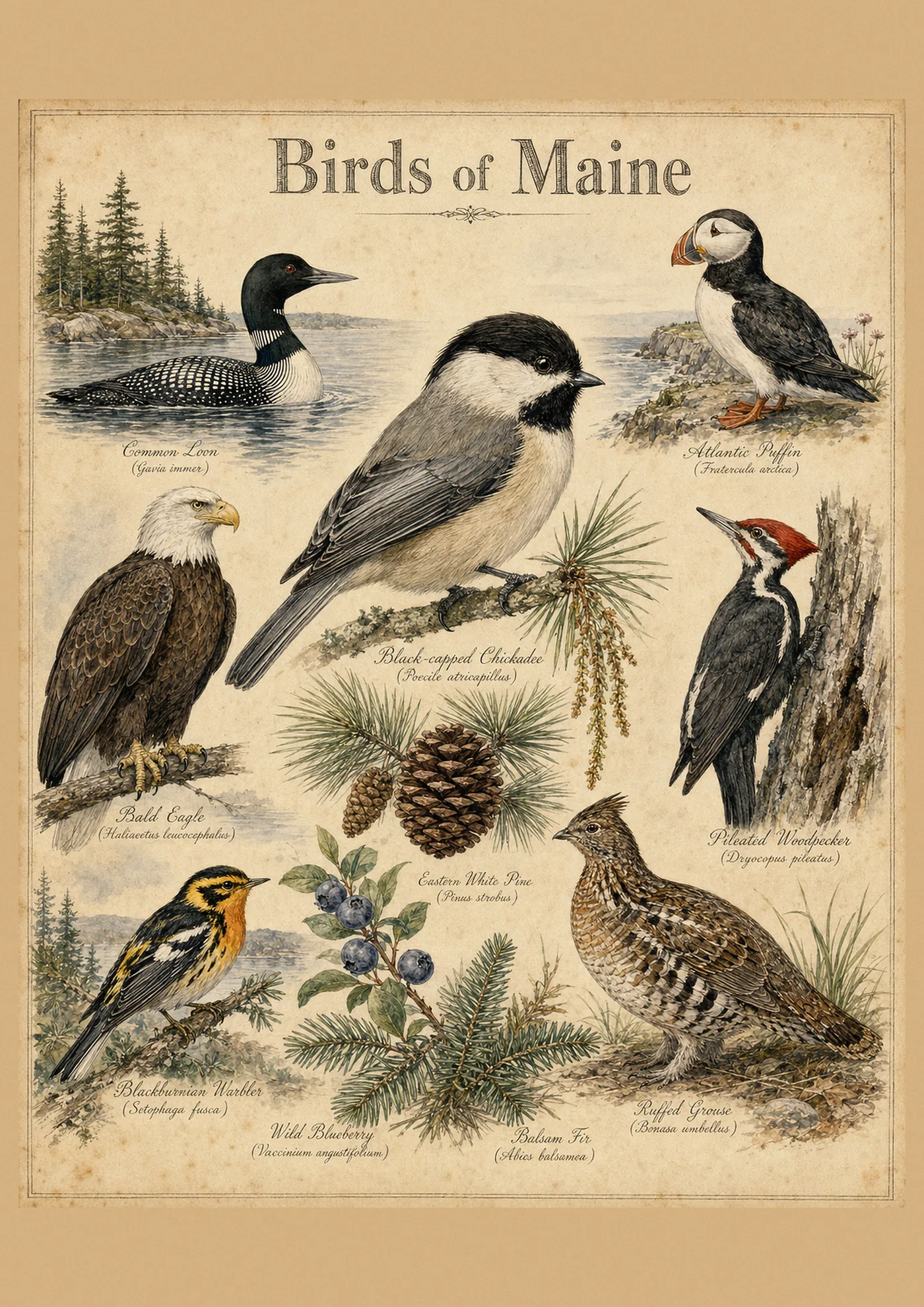
In 1927 the Maine legislature designated “the chickadee” as the state bird. Not the Black-capped Chickadee. Not the Boreal Chickadee. Just: the chickadee. It was a deliberate ambiguity, or perhaps an honest one - Maine is the only state in the continental United States where both species nest in the same forests, calling from the same spruce stands, and the legislators may have felt it would be unkind to choose.
The Black-capped Chickadee (Poecile atricapillus) is the one understood to hold the title. It ranges across the entire state, from the York County suburbs to the last spruce thickets before the Canadian border. The Boreal Chickadee (Poecile hudsonicus) is the one that earns the drive - a rounder, browner bird of deep northern forest, quieter in voice and rarer in sight, found reliably only in Baxter State Park and the fringes of Aroostook County. Maine’s state bird argument is less a scandal than a useful introduction to what makes the state genuinely unusual: the northern forest pushes further south here than anywhere else in the eastern United States, and the species it carries come with it.
The Maine Bird Records Committee lists 475 species recorded in the state. That is a long list for a state the size of Maine, and the length is largely a function of geography. The coast runs nearly 3,500 miles of tidal shoreline once every cove and peninsula is counted. The interior reaches into unbroken boreal forest. The offshore islands sit in the cold convergence of the Gulf of Maine, which concentrates pelagic seabirds from June through October.
The state’s signature species
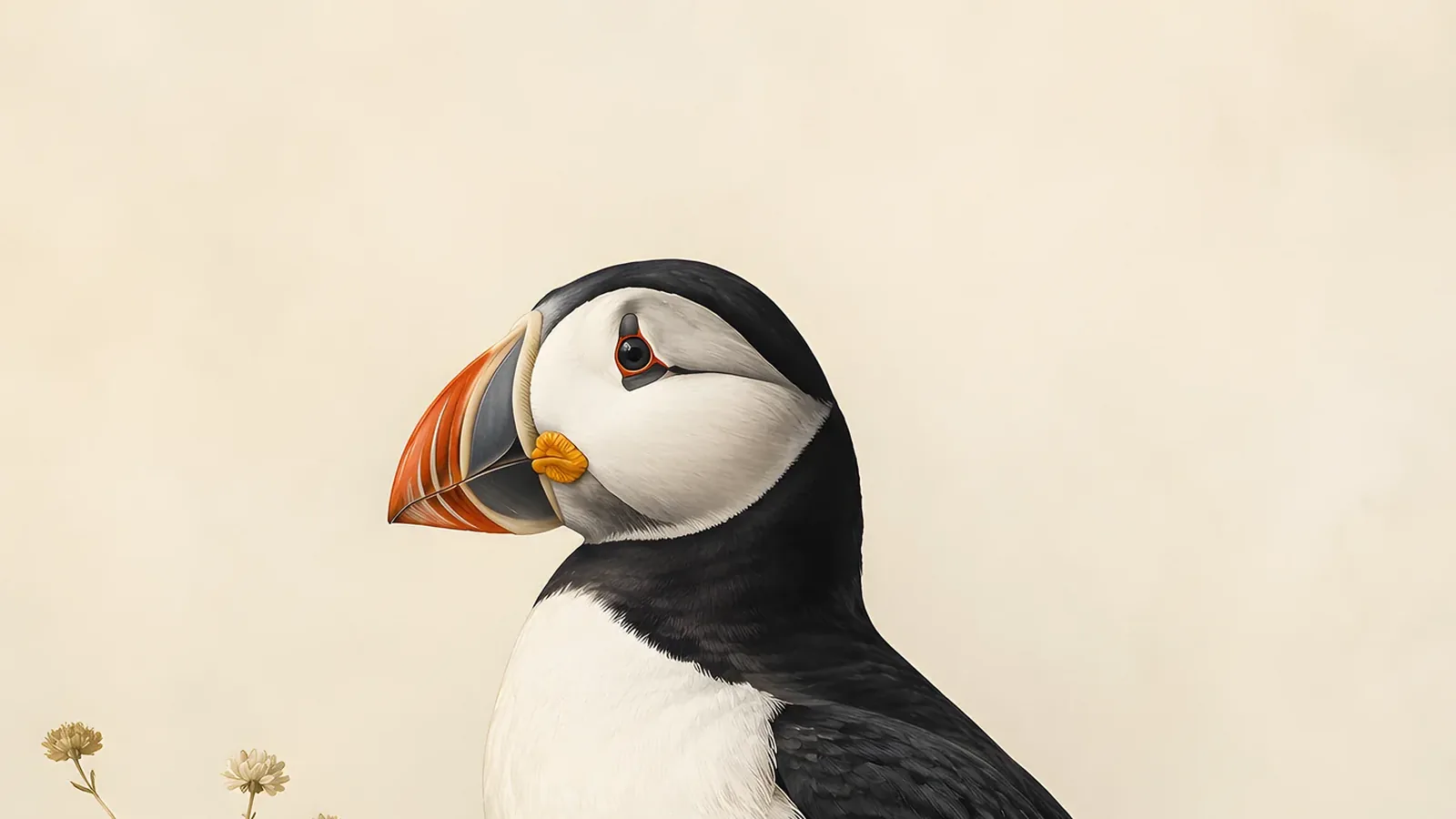
No species better defines Maine’s national birding reputation than the Atlantic Puffin (Fratercula arctica). Puffins had been extirpated from Maine’s islands by the late 19th century - shot for meat and feathers until the last colony was gone. Beginning in 1973, National Audubon’s Project Puffin spent decades transplanting chicks from Newfoundland to Eastern Egg Rock in Muscongus Bay, teaching them to regard Maine as home. The colony returned. Today several Maine islands - Eastern Egg Rock, Seal Island, Matinicus Rock, and Seal Island National Wildlife Refuge - hold active puffin colonies visible from Audubon-operated boats between late May and mid-August. Cornell’s All About Birds notes that Atlantic Puffins spend most of their lives at sea and come ashore only to breed, which makes a Maine island in June one of the few landward windows into their lives.
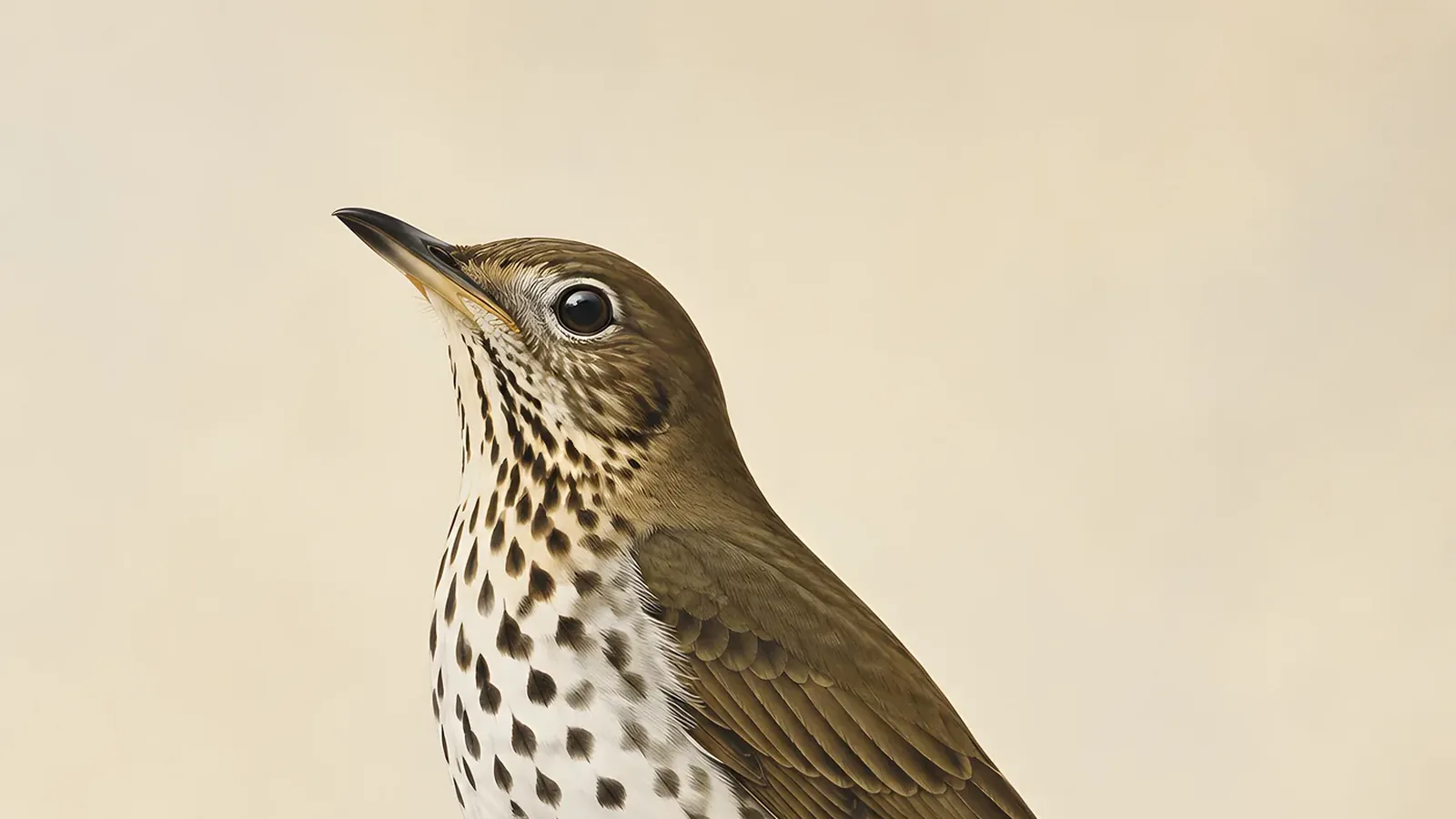
Bicknell’s Thrush (Catharus bicknelli) is the mountain specialist. It breeds in dense balsam fir krummholz on summits above roughly 900 metres in western and central Maine - Mount Katahdin, the Bigelow Range, the peaks above Rangeley. The Maine Department of Inland Fisheries and Wildlife notes that Maine supports approximately 20 percent of the global breeding population, which means the health of the species is partly a Maine problem. The song is a rising, reedy spiral, faint enough at distance that it rewards patient sitting near treeline on a June morning.
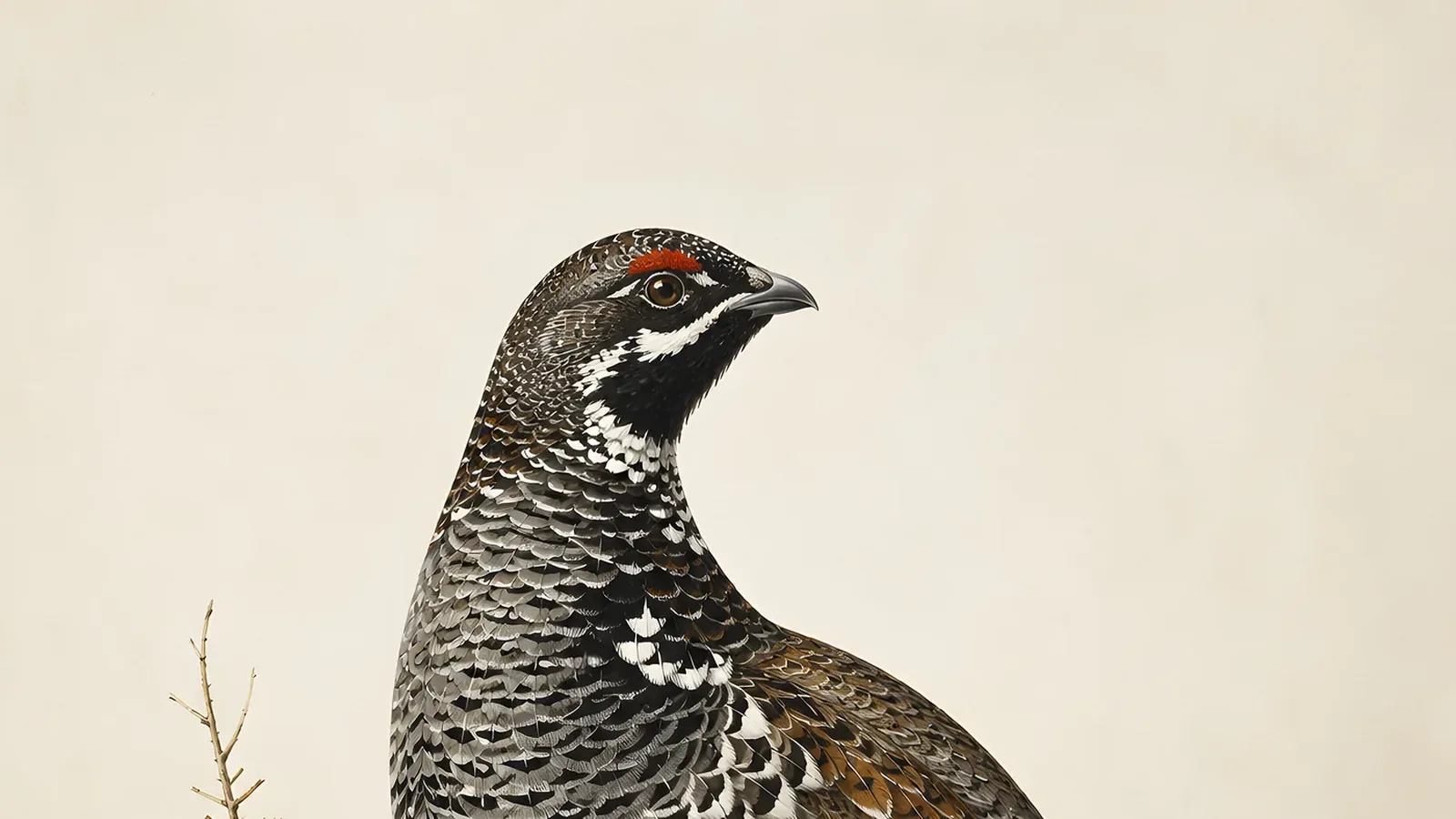
Spruce Grouse (Falcipennis canadensis) is the characteristic bird of the northern interior. Tolerant of humans to the point of seeming indifferent, it feeds on spruce and fir needles through the winter and is reliably found along logging roads in Baxter State Park and the Allagash region. The males’ display in April - a short vertical flight from a spruce bough, wings beating loudly before dropping back to the branch - is a set piece of the boreal spring.
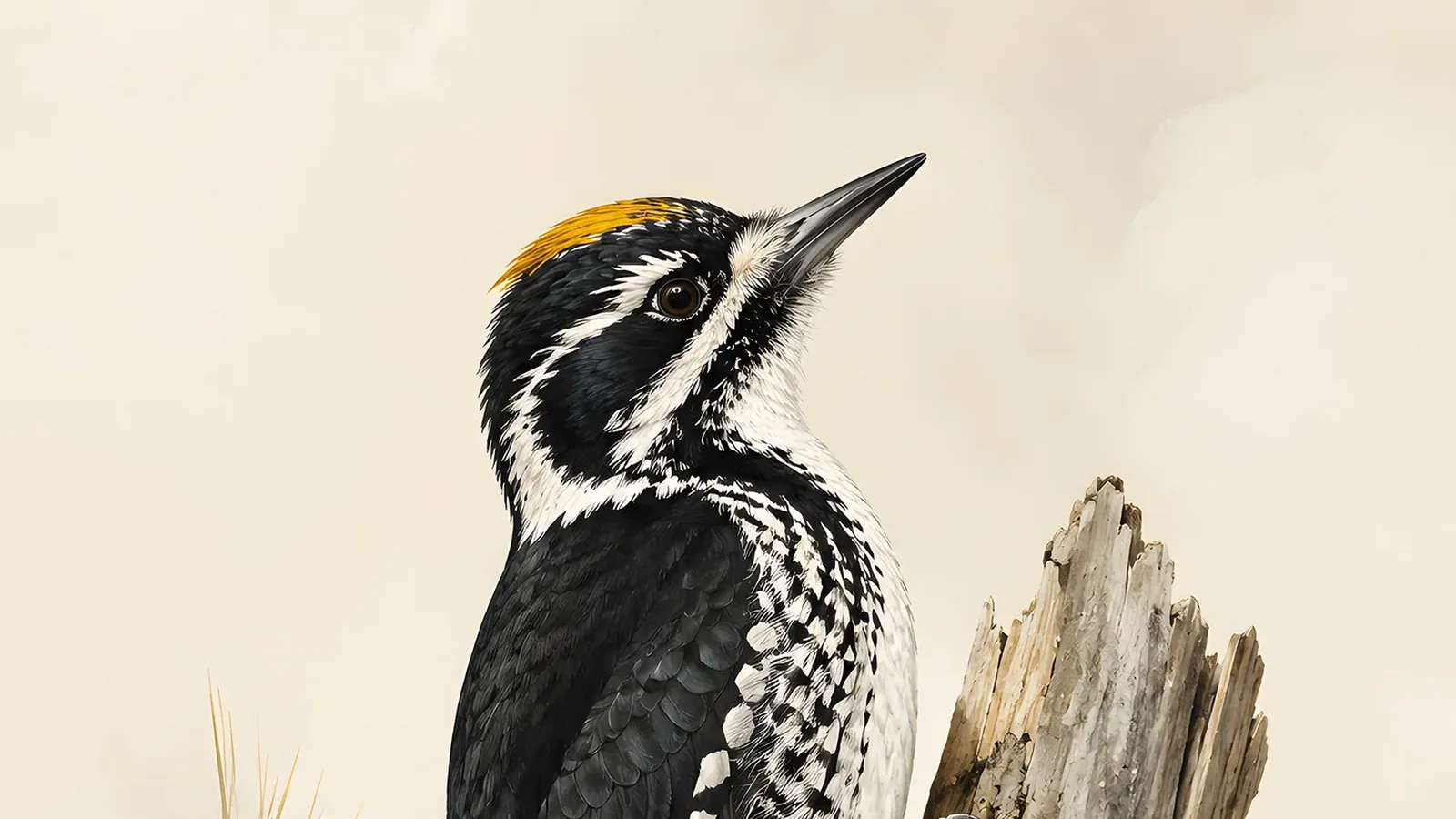
Black-backed Woodpecker (Picoides arcticus) requires a burned or recently disturbed boreal forest, which it finds in abundance in the Maine woods after fire. The three-toed, intensely black-backed bird flakes bark from standing dead conifers in pursuit of wood-boring beetle larvae. Maine Audubon lists it as a resident of northern Maine year-round but not easy to find without specific site knowledge.
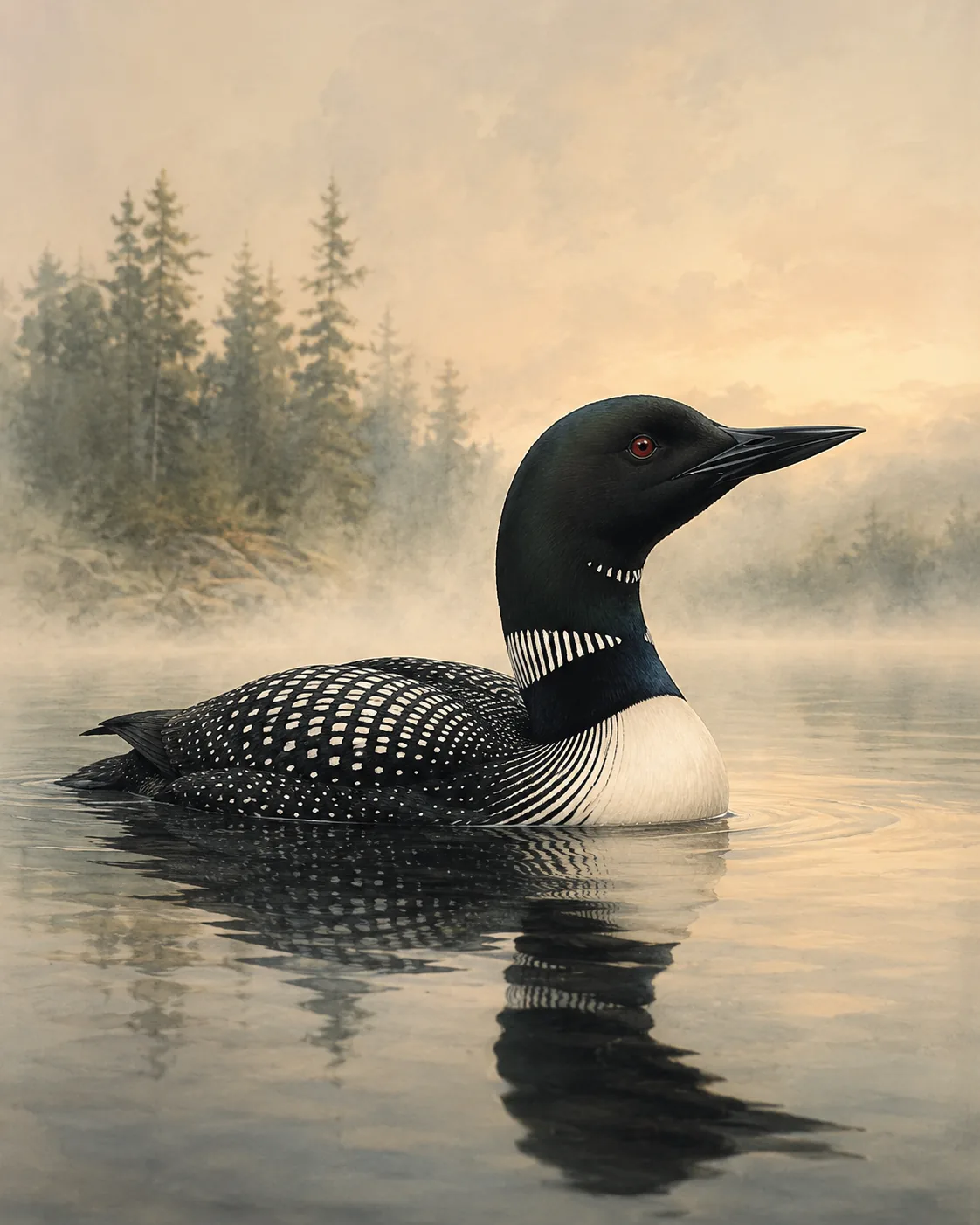
Common Loon (Gavia immer) is the bird that most Mainers, and most visitors, regard as the defining sound of the state. Its wail carries across clear-water lakes from May through August. Maine holds one of the largest Common Loon breeding populations in the eastern United States, with most nesting on inland lakes from Sebago north to the Moosehead Lake region.
Top backyard species
Maine’s suburban and rural feeders, from Portland to the Kennebec Valley, draw a core set of year-round residents:
- Black-capped Chickadee (state bird, year-round)
- American Robin (year-round below the snowline, departing north in late autumn)
- Downy Woodpecker (year-round)
- Purple Finch (year-round; Maine is at the southern edge of its core range)
- American Goldfinch (year-round; winter flocks at nyjer feeders)
- Blue Jay (year-round)
- Common Raven (year-round, more common than American Crow in northern Maine)
- Mourning Dove (year-round)
- White-throated Sparrow (breeding and migration)
- Dark-eyed Junco (year-round in the north, winter visitor to southern Maine)
The Purple Finch is worth noting: Maine holds more of them than most eastern states, and the male’s raspberry-red plumage is a reliable winter-feeder sight from October through March.
Where and when to watch
Monhegan Island sits 18 kilometres offshore in the Gulf of Maine. Audubon describes it as a bucket-list migration site, and the designation holds - the island’s isolated spruce and deciduous cover concentrates songbird migrants in May and again in September and October. Rarities appear regularly. A single May day can produce more than 20 warbler species. The ferry runs from Port Clyde.
Acadia National Park on Mount Desert Island covers a compressed range of habitats: spruce forest, bog edges, rocky headlands, and sheltered coves. The Park supports over 230 species according to Audubon’s site guide. The Cadillac Mountain summit road in May and the Park Loop Road marshes in September are the two most productive entry points for a short visit. Peregrine Falcons nest on the cliff faces above Otter Cove.
Baxter State Park is the access point for Maine’s boreal interior. Spruce Grouse, Boreal Chickadee, Black-backed Woodpecker, and Gray Jay are all findable along the Tote Road and the campground roads in summer. The park’s 810 square kilometres of protected forest has no cell service and limited entry - the road fills early in summer, and pre-dawn starts in June produce the best warbler diversity.
Scarborough Marsh is Maine’s largest salt marsh, south of Portland, managed by Maine Audubon. It is the premier shorebird site on the state’s southern coast, with Glossy Ibis, Willet, and a rotating cast of Calidris sandpipers from July through September. Least Terns and Piping Plovers nest on the barrier beach adjacent to the marsh. The canoe trail through the marsh at high tide in August is one of the quieter experiences on the Maine coast.
Seasonal rhythm
Spring arrives on the Maine coast before the interior. Bald Eagles are on territory along coastal rivers by February. The first Common Loons reappear on inland lakes in mid-April. Atlantic Puffins return to Eastern Egg Rock by late April and the Audubon boat trips begin in late May. Warbler migration on the coast and at Monhegan peaks in the second week of May - the period when eBird data show the highest single-day counts statewide.
Summer is breeding season across the boreal interior. June mornings at Baxter or along any remote logging road in Aroostook County can produce 12 to 15 warbler species before 9 a.m., a figure Maine Audubon cites for the northern Maine woods at their best.
Autumn migration brings Monhegan its second surge: rare western strays that drift east and get funneled to the nearest landfall. The hawk migration along the coast peaks in October, with Sharp-shinned Hawks the dominant species over the headlands.
Winter is Snowy Owl country in irruption years. The coastal fields and airport grasslands of southern Maine draw owls from the Arctic when lemming cycles crash. Moosehorn National Wildlife Refuge in Calais and the Aroostook County potato fields hold American Woodcock in late March - one of the earliest signs of spring in a state where the last frost can come in May.
Maine is one of the few places in the eastern United States where a single day’s birding can move from saltmarsh shorebirds at dawn to boreal warblers at treeline by afternoon. The chickadee was a reasonable choice for a state bird, whichever one they meant.