State Guide
Birds of Tennessee
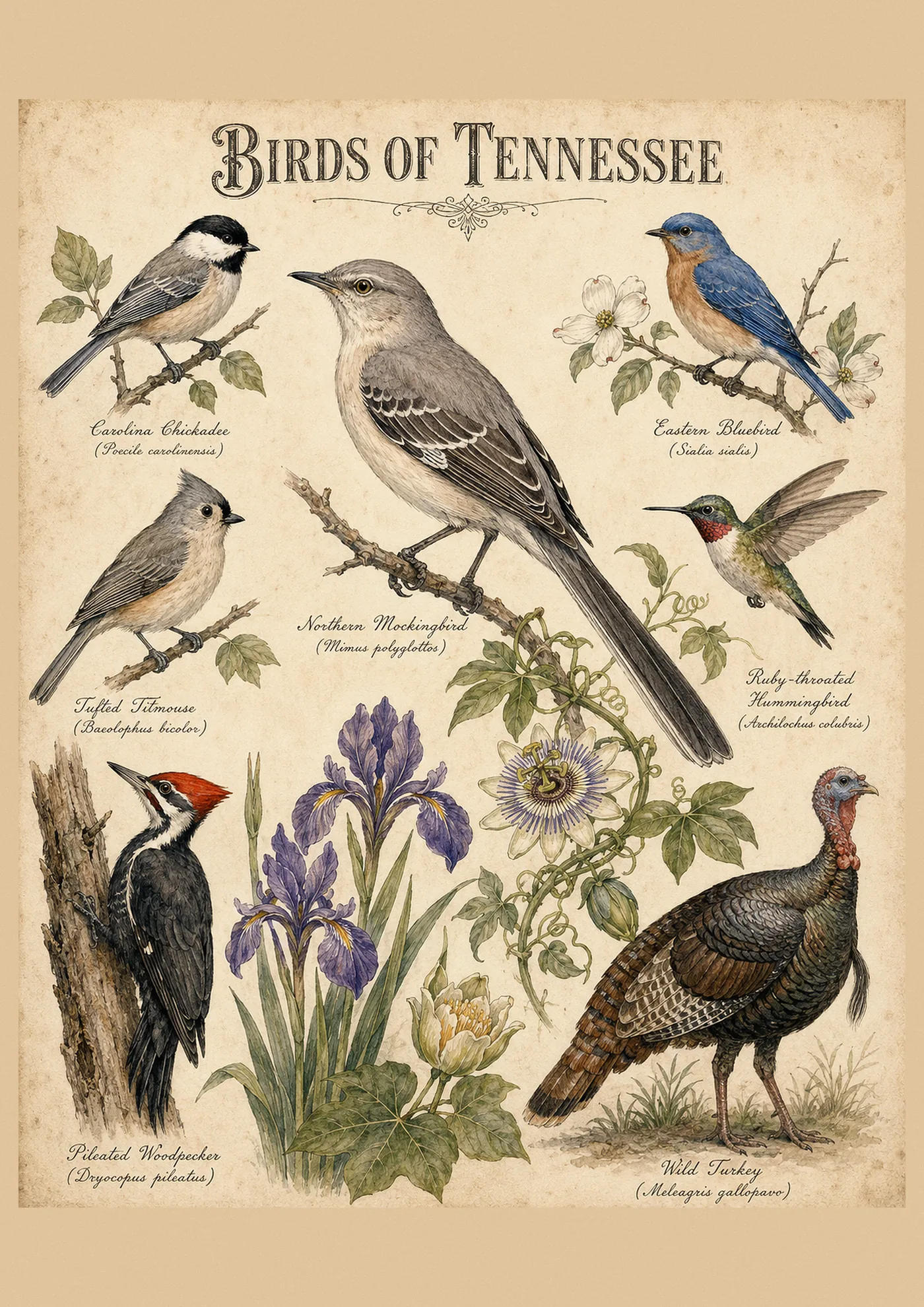
In April 1933, the Tennessee Ornithological Society organised a public vote to choose a state bird. More than 70,000 Tennesseans cast ballots. The Northern Mockingbird (Mimus polyglottos) won. On April 19, 1933, the Tennessee General Assembly formalised the choice by Senate Joint Resolution No. 51. It was not a legislative afterthought but a genuine democratic exercise, and the result has held for over 90 years.
The mockingbird is well chosen for Tennessee. The bird is a year-round resident across every county, tolerates suburb and farmland with equal ease, and produces one of the most varied vocal performances of any North American bird. Cornell Lab’s All About Birds notes that a single male may learn more than 200 distinct song types across a lifetime, borrowing from other species and reassembling them across hours of continuous singing, often through the night during the breeding season. At a Tennessee backyard feeder in late April, the mockingbird is the bird still performing at midnight.
Tennessee’s geography is more varied than its east-west width suggests. Western Tennessee is the Gulf Coastal Plain, with the Mississippi and Hatchie River floodplains and the largest natural lake in the state, Reelfoot Lake, formed by the New Madrid earthquake of 1812. The middle of the state rises into the Nashville Basin and the Cumberland Plateau. East Tennessee is the Ridge and Valley, and then the Great Smoky Mountains, part of the southern Appalachian chain with peaks above 2,000 metres. The Tennessee Ornithological Society - founded in 1915 and one of the oldest state ornithological societies in the country - maintains the official list, which records more than 400 species.
Signature and speciality species
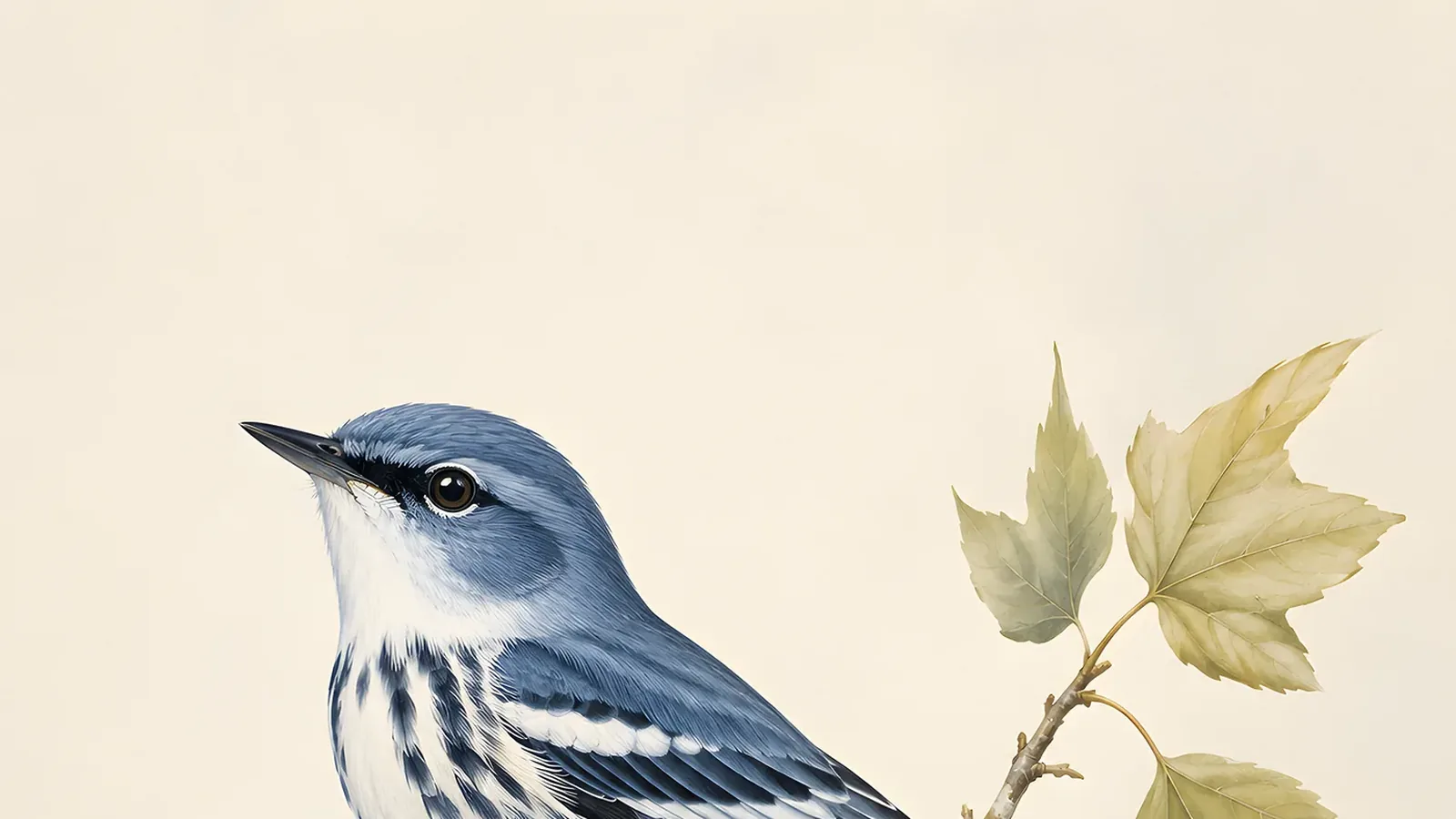
Tennessee holds what the Tennessee Wildlife Resources Agency calls the highest breeding densities ever recorded for Cerulean Warbler (Setophaga cerulea). This small sky-blue warbler breeds in the mature hardwood canopy of ridge tops and slopes, primarily on the Cumberland Plateau and in the Ridge and Valley of East Tennessee. It arrives in mid-April. The species is declining faster than any other eastern songbird by most measures, which makes Tennessee’s role in its range significant. Birders aiming for it in May should focus on the plateau forests in Morgan and Scott counties.
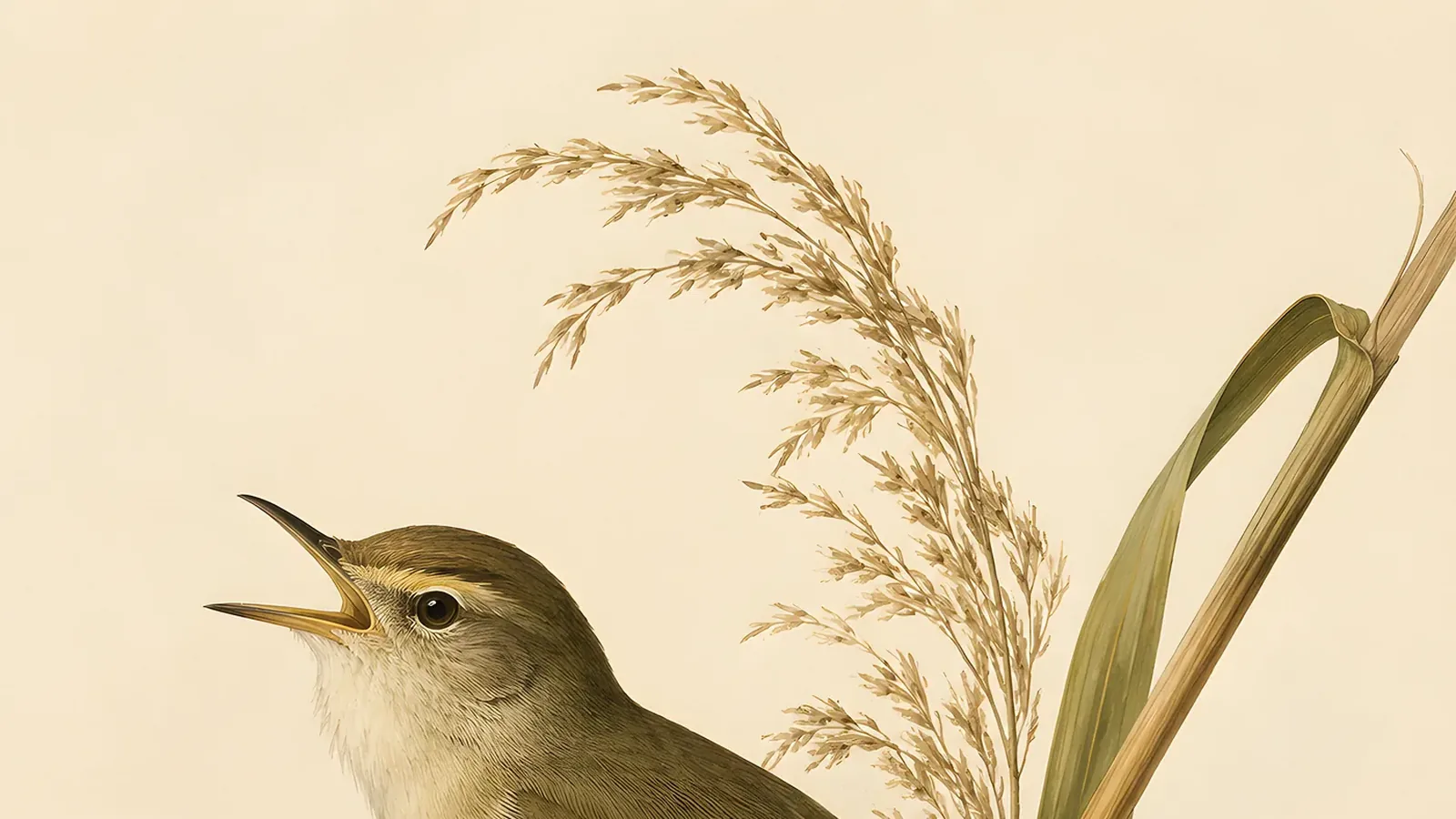
Swainson’s Warbler (Limnothlypis swainsonii) breeds in two distinct habitat types that both occur in Tennessee: cane-thick bottomland hardwoods in the western counties along the Mississippi and Hatchie drainages, and rhododendron-choked ravines in the eastern mountains. The TWRA lists it as In Need of Management. It is secretive enough to go entirely unnoticed except for its loud, ringing song. It arrives in mid- to late April and departs by early September.
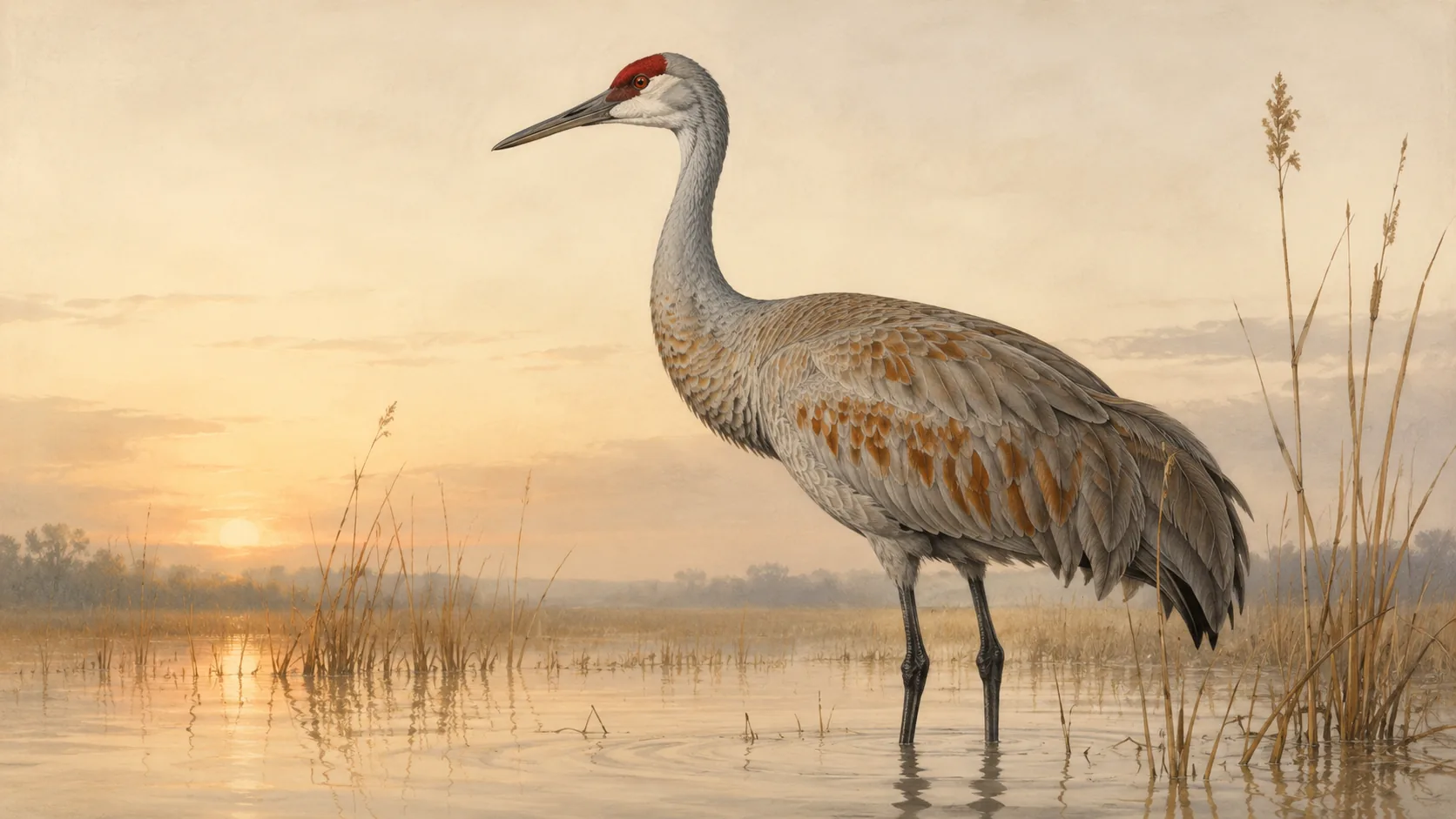
Sandhill Crane (Antigone canadensis) transforms the Hiwassee Wildlife Refuge near Birchwood each autumn. Thousands of cranes stage there on their southbound migration, with peak numbers from late November into January. At dawn and dusk the flocks lift from the river fields in long grey lines. The Tennessee Ornithological Society runs annual field trips to Hiwassee specifically for the crane spectacle. eBird data for Hiwassee in December show Sandhill Crane as the signature species by a considerable margin.
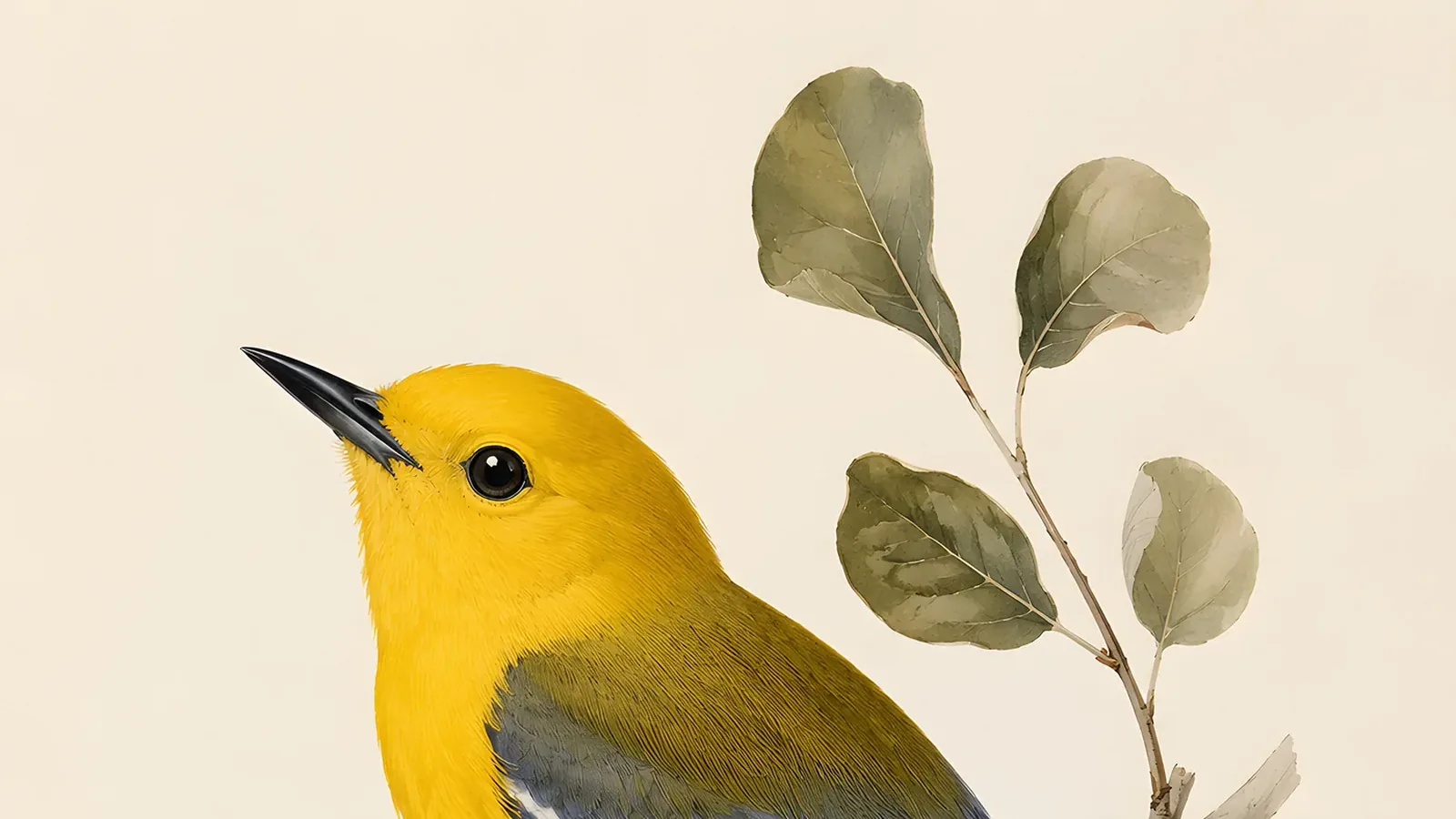
Prothonotary Warbler (Protonotaria citrea) breeds in the bottomland forests of western Tennessee, nesting in cavities over standing water. Reelfoot Lake, with its cypress and tupelo gum, provides ideal habitat. The bird’s gold-orange head against the dark water and grey bark is one of the more arresting encounters in Tennessee birding.
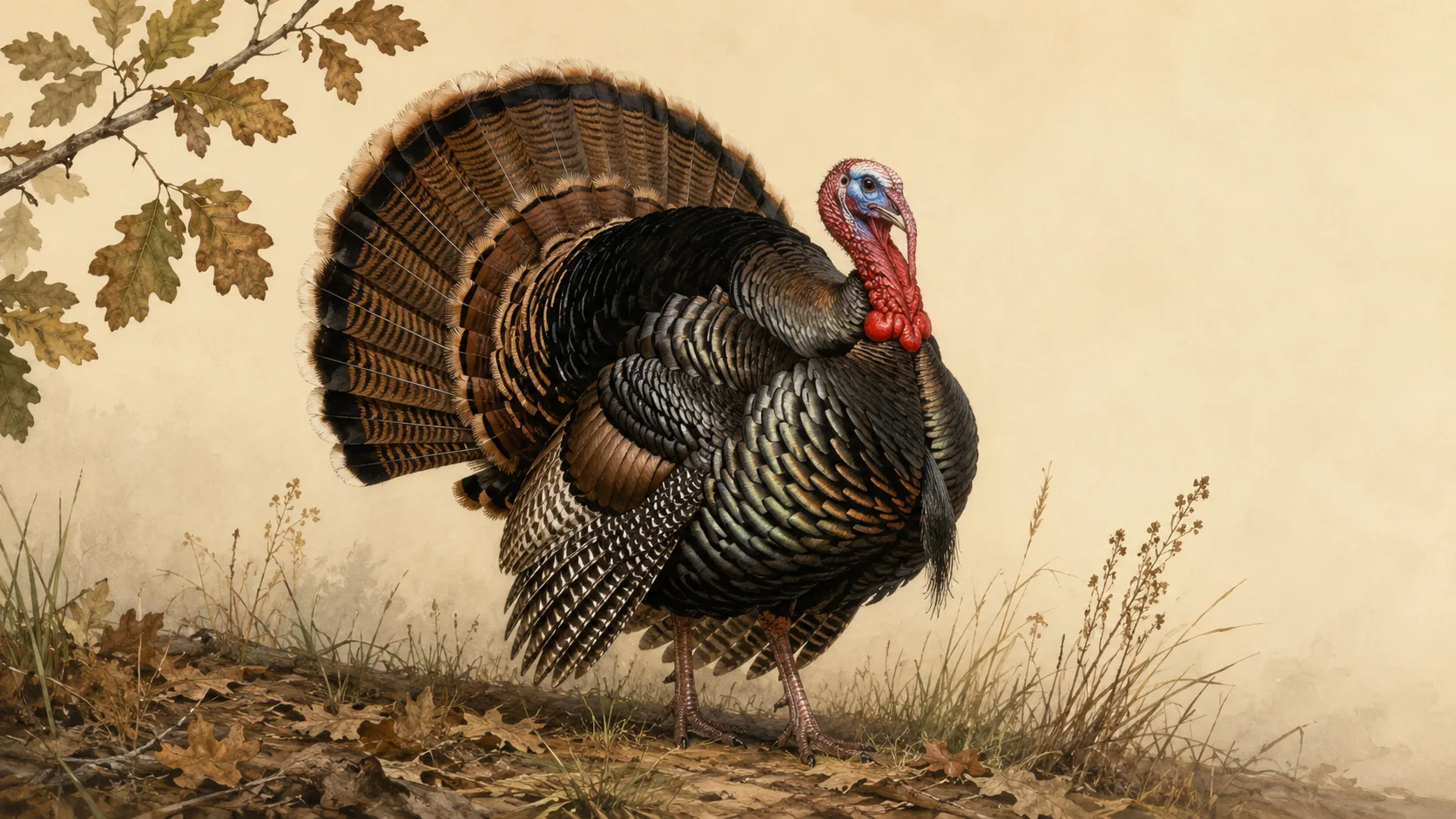
Wild Turkey (Meleagris gallopavo) is native to Tennessee and conspicuous. The species was heavily reduced by the mid-twentieth century and restored through decades of TWRA reintroduction work. Flocks move through mixed woodland and field edges statewide. In the Smoky Mountains foothills, a strutting tom in April is as reliable as any warbler.
Backyard species
A typical Tennessee garden, across most of the state’s suburban and rural counties, holds:
- Northern Mockingbird (state bird, year-round, most reliable in open suburban gardens)
- Northern Cardinal (year-round)
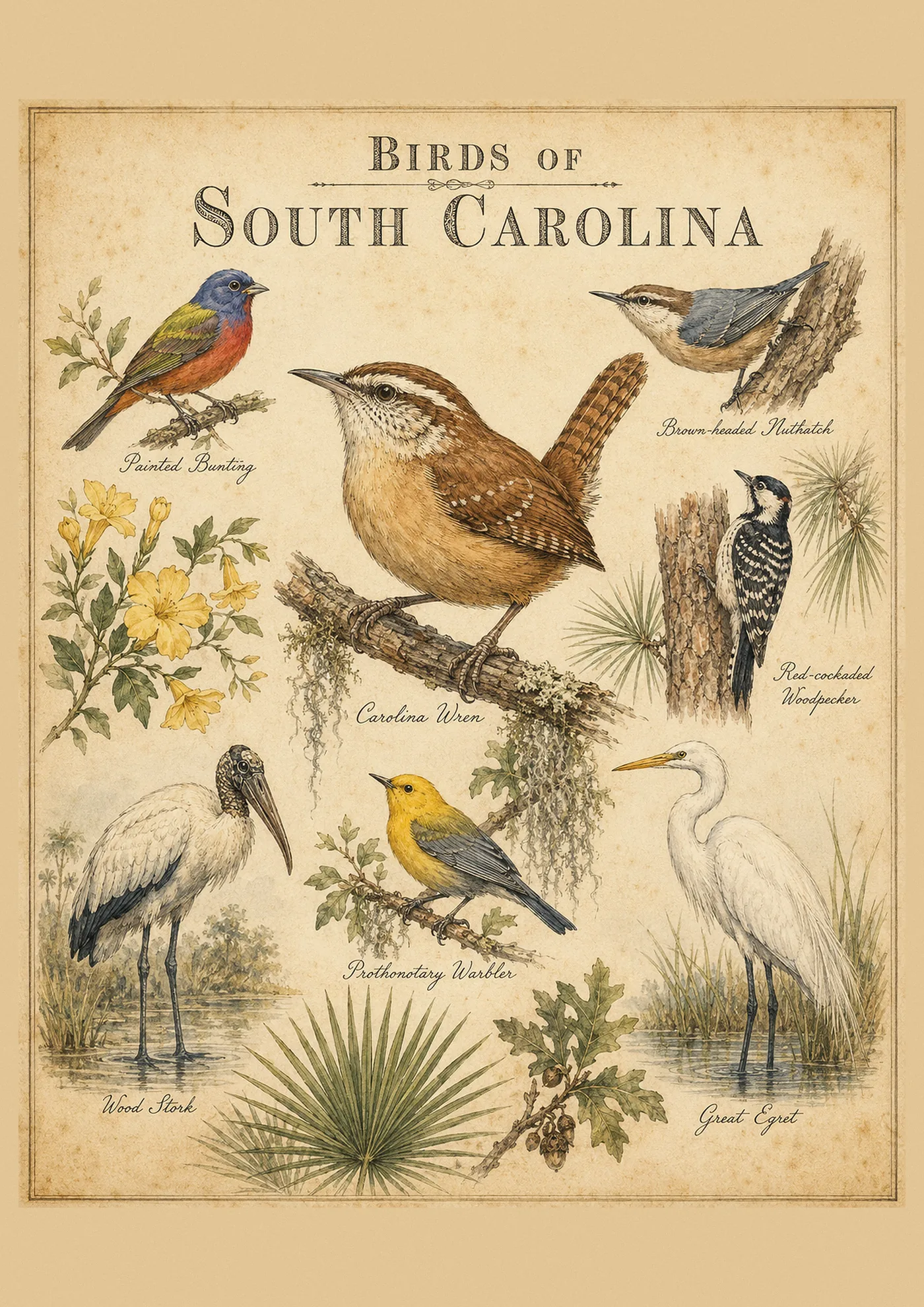
- Carolina Wren (Thryothorus ludovicianus) (year-round, common in woodlot-edge suburbs)
- Eastern Bluebird (year-round, box-nesters from March)
- Mourning Dove (year-round)
- American Robin (year-round, with winter flocks supplemented by northern birds)
- American Goldfinch (year-round, with influx of northern migrants in winter)
- Downy Woodpecker (year-round)
- Red-bellied Woodpecker (year-round)
- Tufted Titmouse (year-round)
- Blue Jay (year-round)
- Dark-eyed Junco (October to April, absent in summer)
The Carolina Wren deserves particular attention. Tennessee sits near the heart of its range, and the bird is one of the loudest voices in winter when migrants have departed. It sings year-round, including on cold January mornings when most other species are quiet.
Where and when to watch
Reelfoot Lake State Park in Obion County in northwestern Tennessee is the state’s most famous birding destination. The lake holds more than 200 Bald Eagles in winter, an eagle concentration that has drawn visitors since the mid-twentieth century. The Reelfoot National Wildlife Refuge, which overlaps with the park, also hosts more than half a million ducks and geese in the colder months. Prothonotary Warblers breed in the cypress-lined margins in spring and early summer. The lake holds records for more than 200 species.
Hiwassee Wildlife Refuge (Meigs County) is at its best from November through January. The staging Sandhill Cranes are the headline, but Bald Eagles, Great Blue Herons, and wintering waterfowl are reliable throughout the season. The refuge sits in the Hiwassee River floodplain east of Chattanooga.
Radnor Lake State Natural Area in Nashville offers 1,368 acres of protected habitat inside a major city. The site is best known to local birders for spring warbler migration, when over 20 warbler species move through, and for winter waterfowl on the lake itself. Sharp’s Ridge Memorial Park in Knoxville serves a similar function on the eastern end of the state, as a migrant concentration point in spring and autumn.
Great Smoky Mountains National Park straddles the Tennessee-North Carolina border and holds over 200 bird species across its elevation range. The lower coves in April and May are productive for breeding warblers; Carolina Chickadee is the expected chickadee across the park. The spruce-fir summits above roughly 4,000 feet mark the extreme southern limit of Black-capped Chickadee in the east - the species is a genuine year-round resident in that narrow high-elevation zone but should not be expected below it - along with Red-breasted Nuthatch and the occasional Peregrine Falcon nesting on cliff faces. The park’s altitude gradient compresses breeding zones that elsewhere span hundreds of kilometres into a single ridgeline.
For timing: spring migration along the Tennessee River corridor and the Appalachian ridges runs from mid-April through mid-May. Summer is breeding season for the state’s warblers, including Cerulean and Swainson’s. Autumn brings crane staging at Hiwassee and shorebird movement at wetland complexes in Middle Tennessee. Winter at Reelfoot is the eagle season - cold, spare, and worth the drive.
Tennessee is one of the few states in the eastern US where a birder on a single long weekend can credibly reach a floodplain cypress swamp at dawn for Prothonotary Warbler, a plateau ridgeline at midday for Cerulean Warbler, and a mountain cove at dusk for breeding thrushes. The mockingbird at the motel parking lot, performing after dark, is the connective thread across all of it.