State Guide
Birds of South Carolina
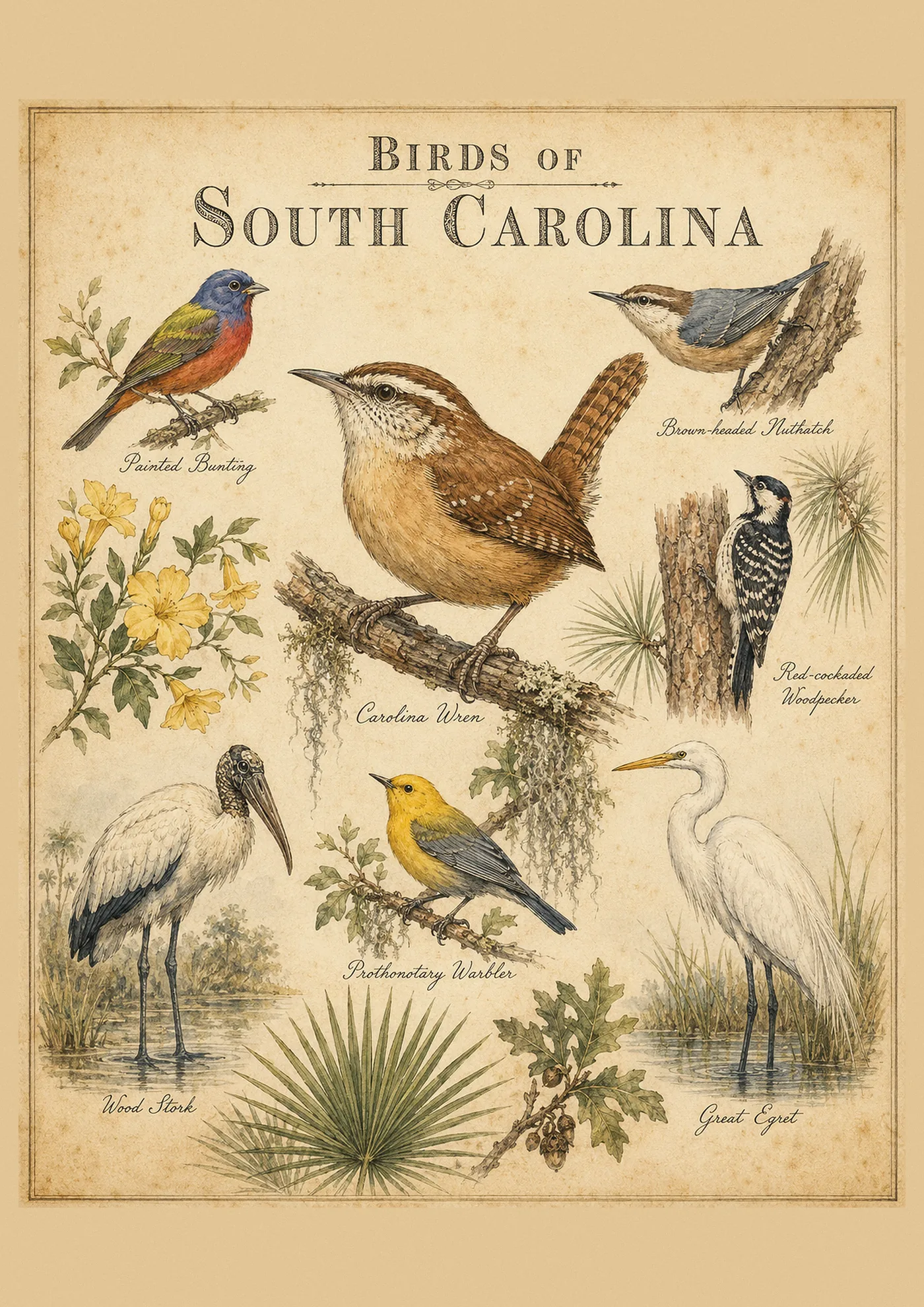
In 1948, the South Carolina General Assembly repealed a 1939 law that had named the Mockingbird as the state bird and replaced it with the Carolina Wren (Thryothorus ludovicianus). The story behind that reversal is worth knowing. The South Carolina Federated Women’s Clubs had nominated the wren back in 1930, beating the Eastern Mourning Dove in an informal poll. The legislature ignored the recommendation and went with the mockingbird instead. Eighteen years later, on April 3, 1948, Act Number 693 corrected that and put the wren on the official books. It has held the designation since.
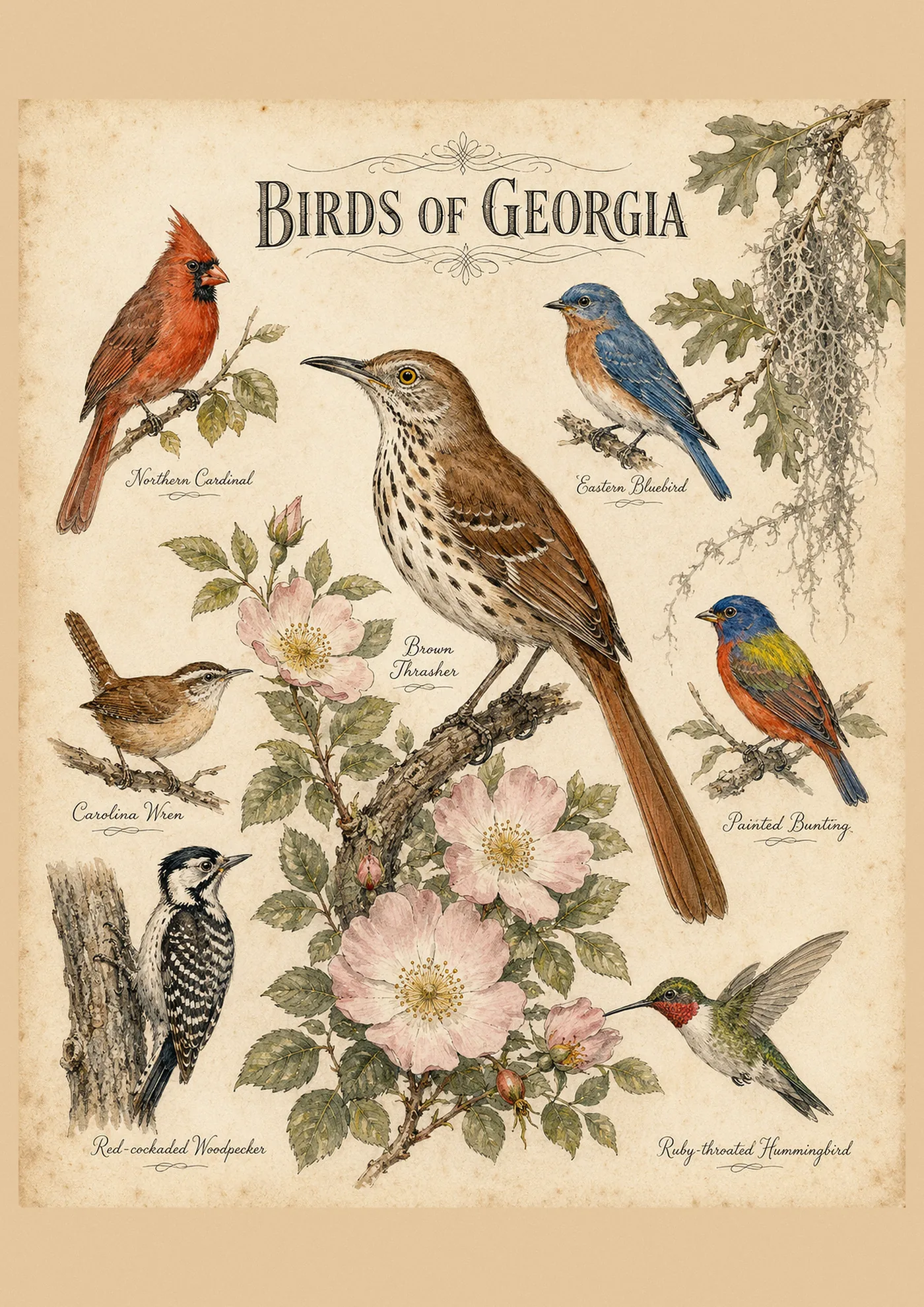
The Carolina Wren is a fitting choice. She is one of the few southeastern birds that sings loudly year-round, including through January cold snaps along the Blue Ridge foothills. Her territory is exactly South Carolina’s: dense shrub edges, tangled creek bottoms, palmetto thickets, suburban woodpiles. Cornell Lab’s All About Birds notes that 93 percent of the Carolina Wren’s diet is insects - beetles, caterpillars, moths - which makes her a bird of thick cover, always working low, rarely still.
The South Carolina Bird Records Committee of the Carolina Bird Club maintains the official state list. As of the 2023 annual report, that list stands at 453 species: 445 with definitive status and eight provisional.
Signature and speciality species
South Carolina’s coastal geography and its mix of longleaf pine savanna, Atlantic barrier islands, and inland river swamps produce a set of birds that serious visitors travel to find.
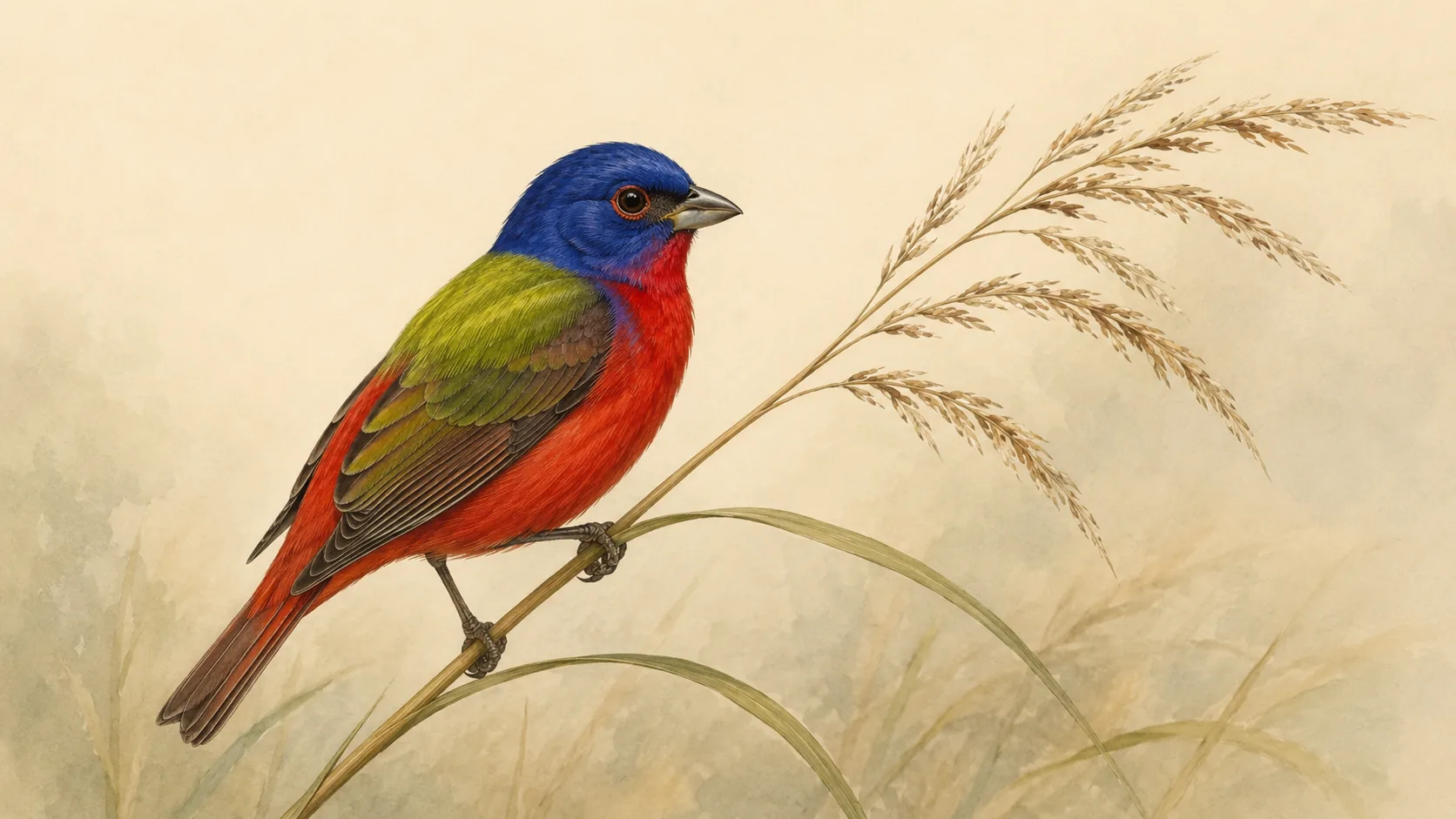
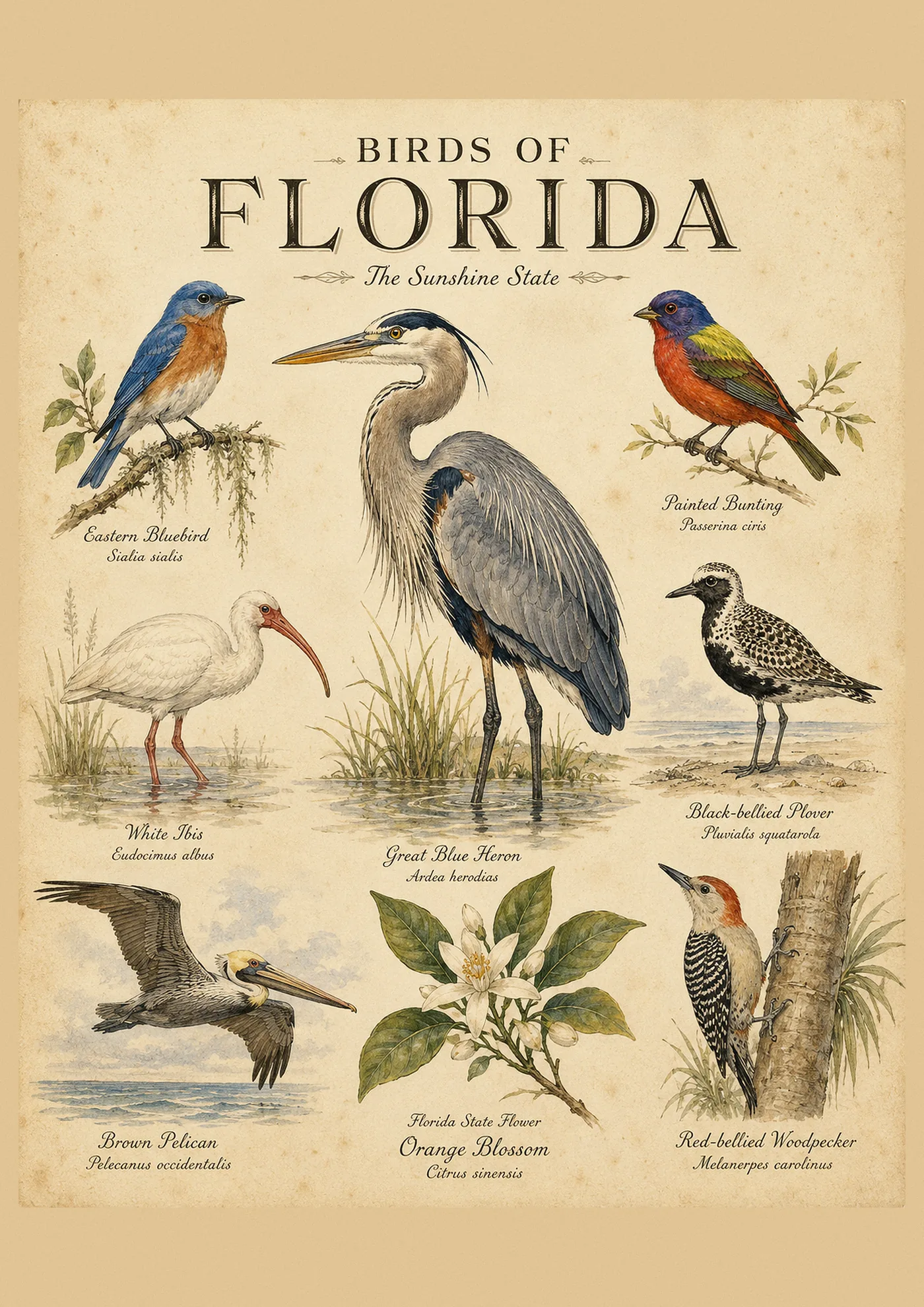
Painted Bunting (Passerina ciris) is the state’s most sought-after summer resident. The male’s plumage - purple head, green back, red underparts - is unlike anything else breeding in North America east of Texas. The eastern population nests primarily in coastal scrub and young pine clearings along the South Carolina and Georgia Lowcountry, with Huntington Beach State Park and the sea islands around Beaufort holding some of the most reliable concentrations. Audubon South Carolina has noted this stretch of coast as the core of the eastern breeding range. The birds arrive back from wintering grounds in Florida and the Caribbean from late March, and breeding continues through August.
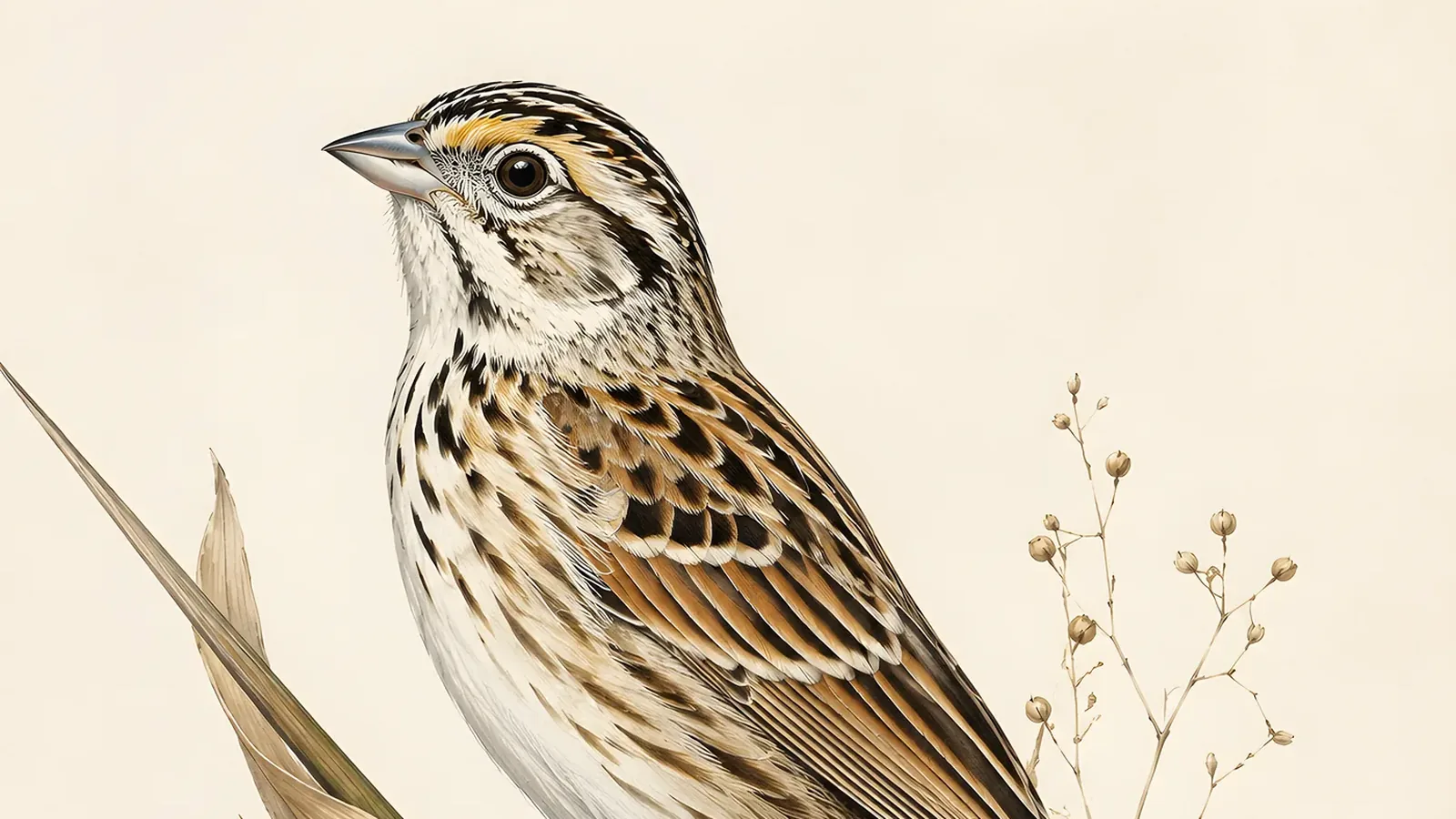
Bachman’s Sparrow (Peucaea aestivalis) has a direct South Carolina connection. The species was collected in Charleston by the naturalist John Bachman - minister, naturalist, and close collaborator of John James Audubon - and named in his honour by Audubon in the 1830s. The bird breeds in open longleaf pine savanna with a sparse grass understory, and Francis Marion National Forest north of Charleston holds one of the more reliable populations in the Southeast. Locating a singing male in spring is the usual approach - the song opens with a long clear whistle before breaking into a sustained trill.
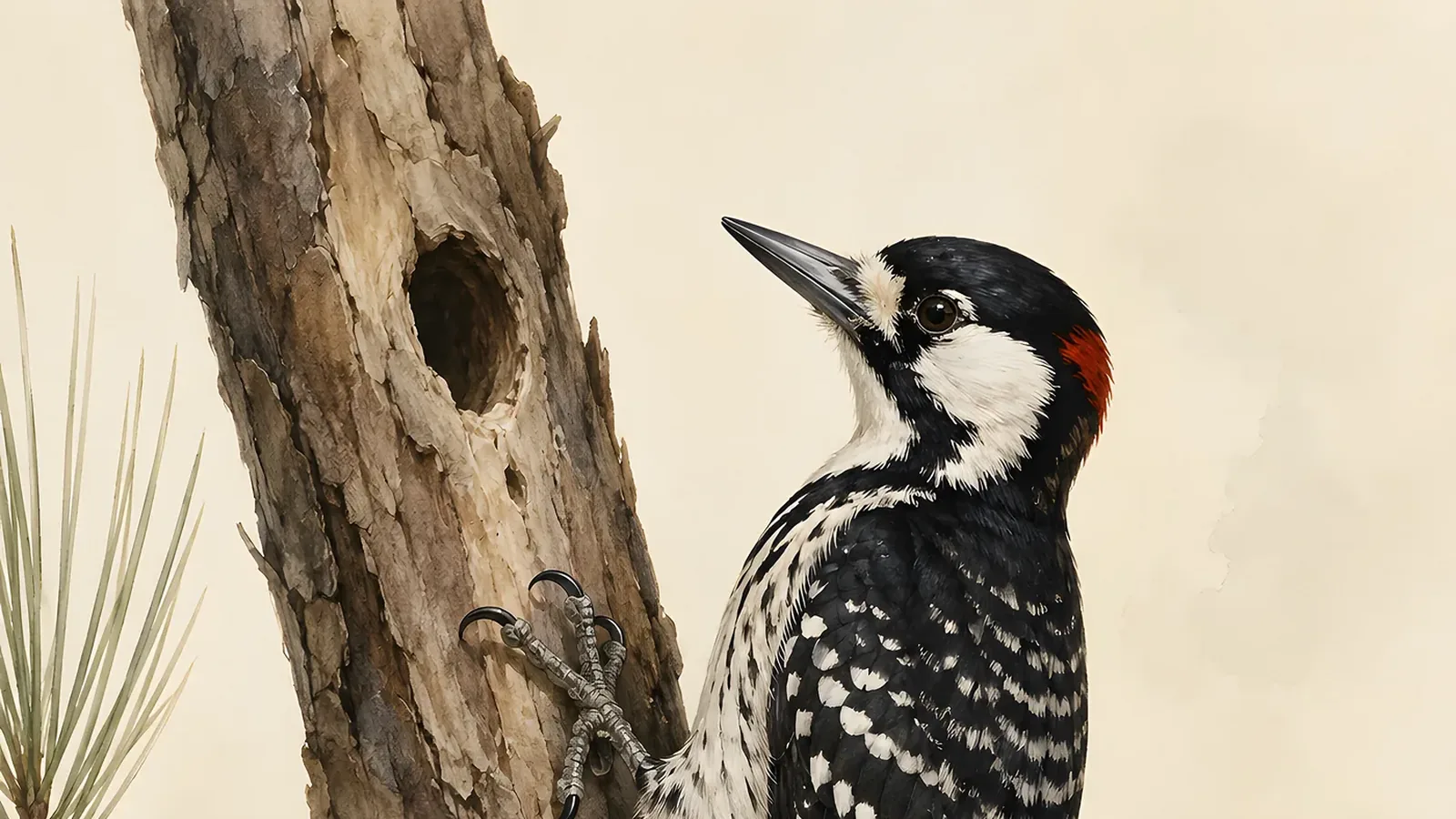
Red-cockaded Woodpecker (Dryobates borealis) is an endangered species that nests exclusively in living longleaf pine trees, excavating cavities over several years in mature timber. Francis Marion National Forest and Carolina Sandhills National Wildlife Refuge in Chesterfield County both support active colonies. The species requires old-growth pine structure that has been reduced to a fraction of its historical range across the Southeast.
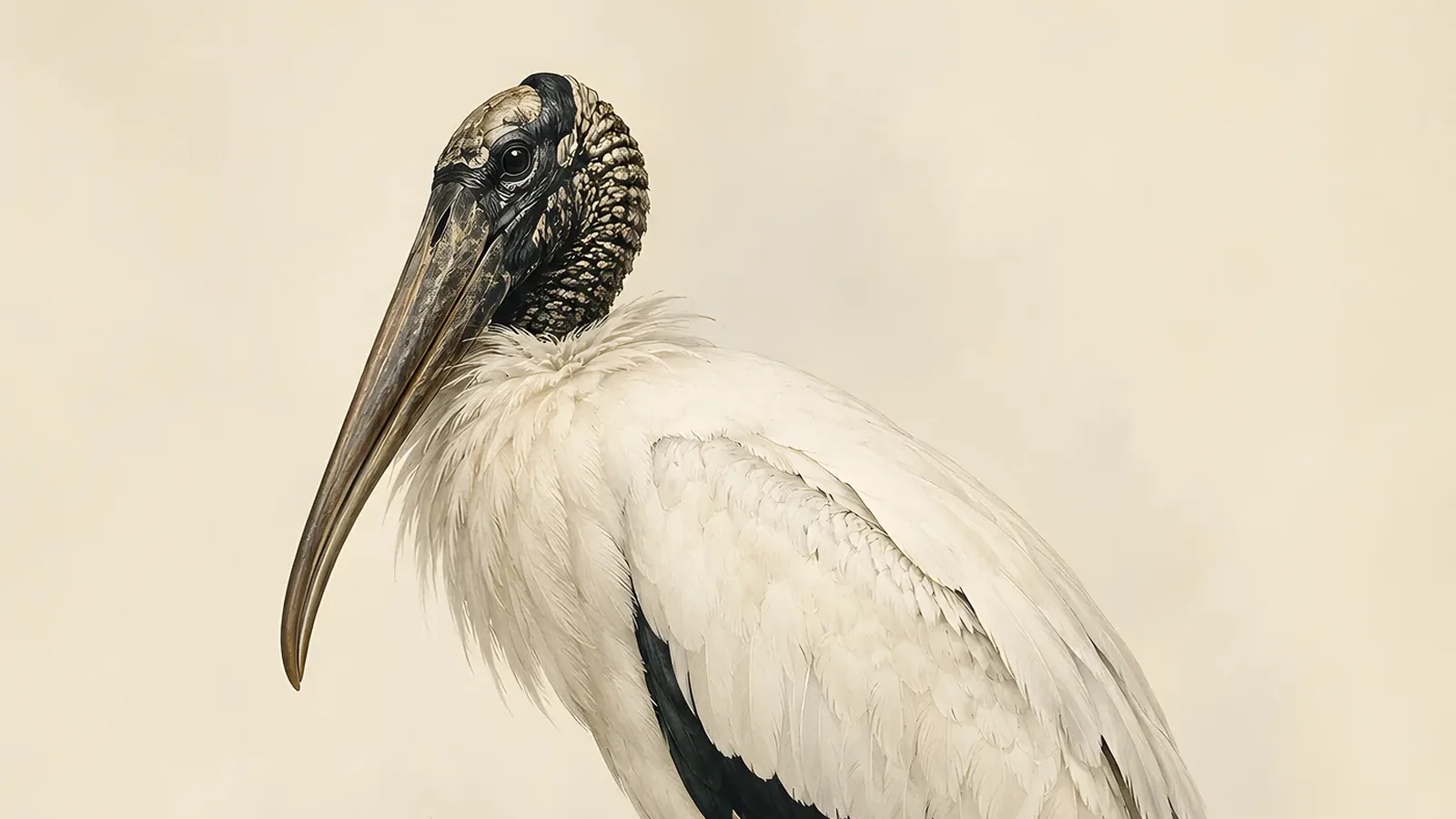
Wood Stork (Mycteria americana) is a large wading bird - roughly 40 inches tall, with a bare blackish head and a heavy down-curved bill - that feeds by a method called tacto-location: it sweeps an open bill through shallow water and snaps shut on contact with fish. Once federally endangered, the species has partially recovered and is now present year-round across South Carolina’s coastal wetlands and river systems. ACE Basin and the refuges around Beaufort County are consistent spots.
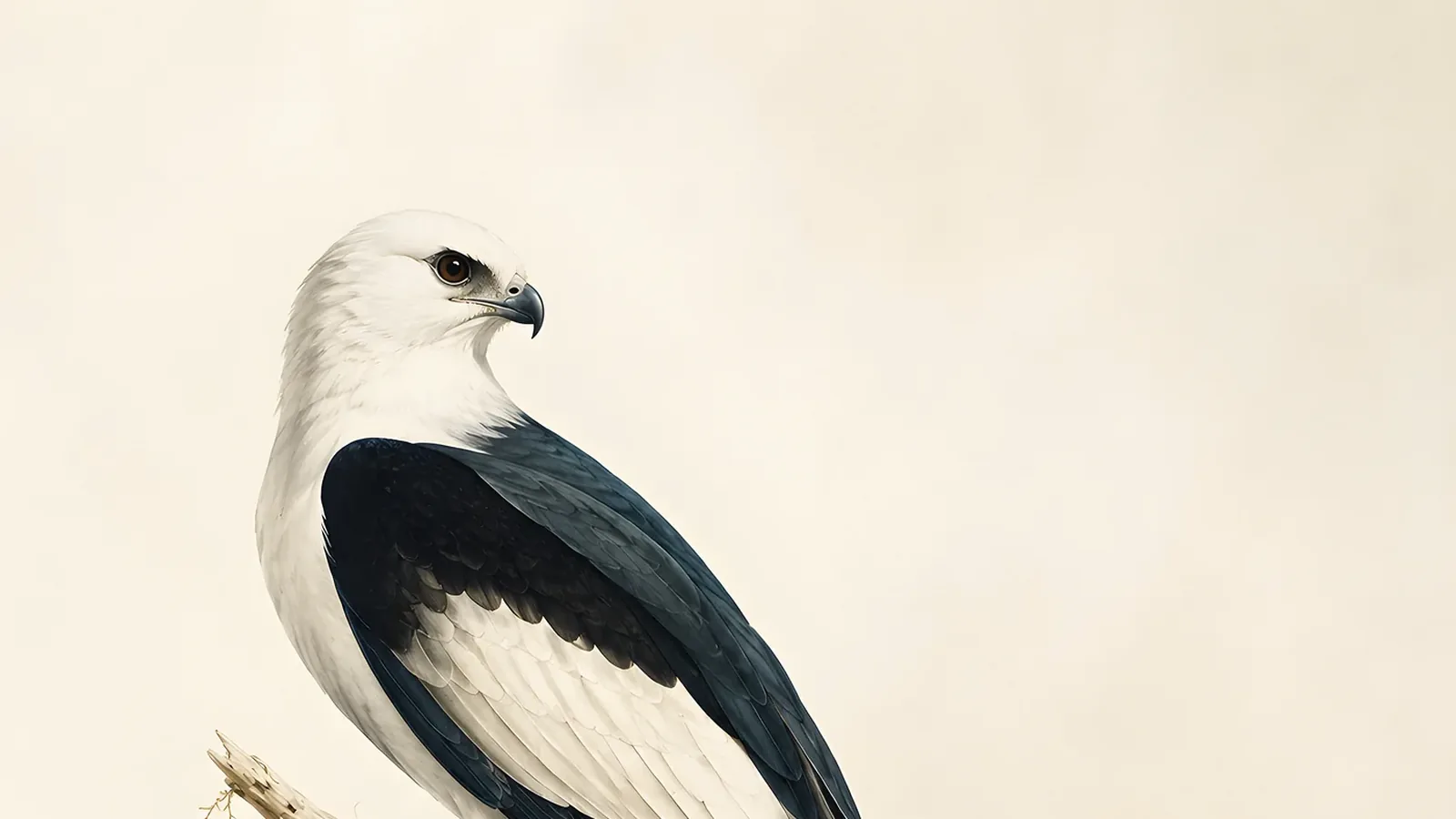
Swallow-tailed Kite (Elanoides forficatus) arrives in spring and hunts dragonflies and small lizards over the state’s river swamps through summer. Its long forked tail and black-and-white contrast make it one of the most recognisable raptors on the wing. eBird data show regular spring sightings from late March across the Lowcountry, with birds departing for South America by late August.
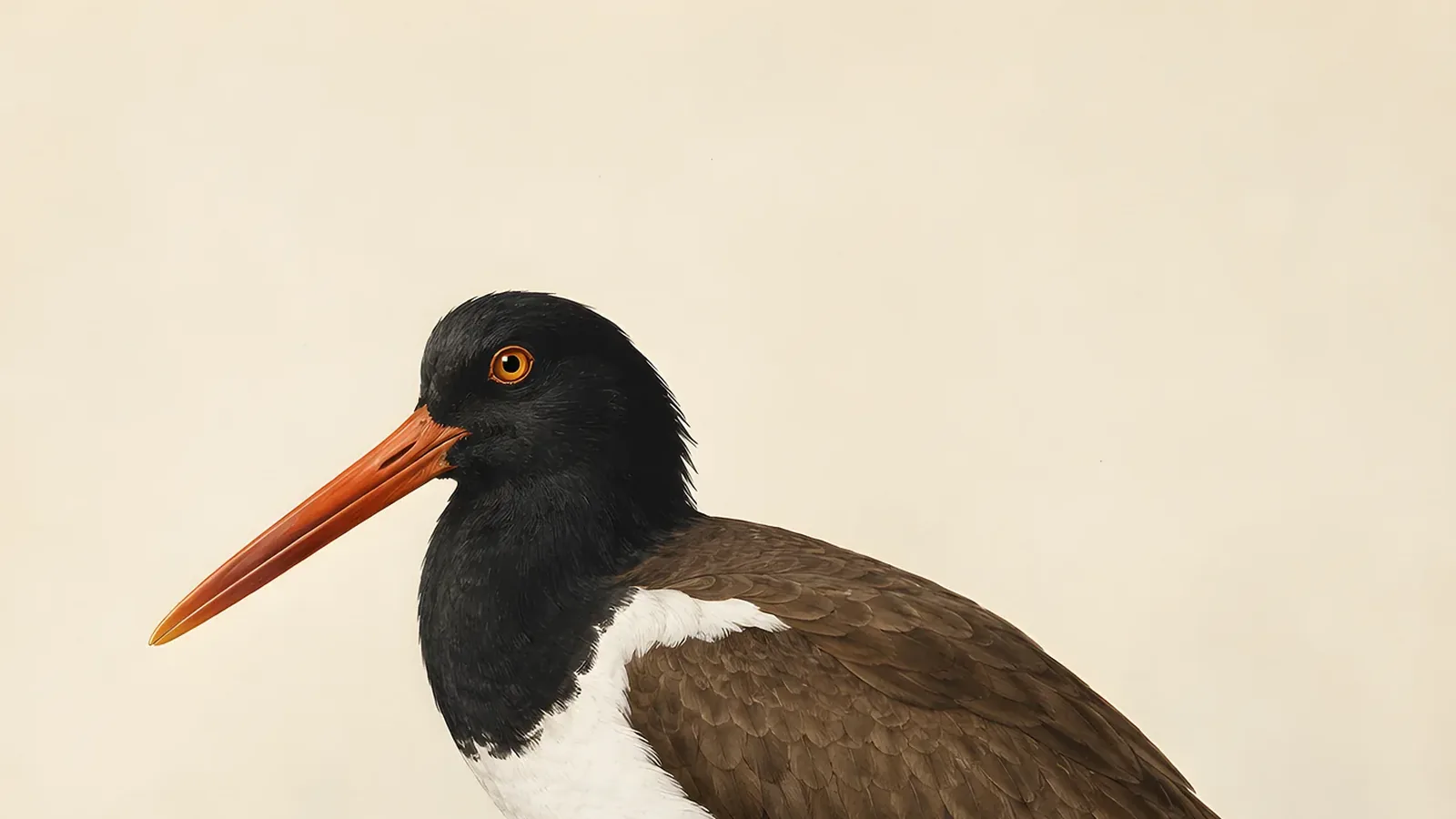
American Oystercatcher (Haematopus palliatus) is a year-round coastal resident with an orange-red bill built to prise open oysters and mussels. The barrier islands and tidal flats at Huntington Beach and along the Grand Strand hold good numbers. The species nests on shell beaches and is sensitive to human disturbance at nest sites.
Backyard species
A Lowcountry garden in spring or summer draws a different set of birds than an upstate yard, but the overlap across the state includes:
- Carolina Wren (state bird, year-round, loud and nearly always present in shrubby gardens)
- Northern Cardinal (year-round, common at seed feeders)
- Northern Mockingbird (year-round, territorial singer)
- American Robin (year-round in the Upstate, winter visitor coastally)
- Mourning Dove (year-round)
- Ruby-throated Hummingbird (April through October at nectar feeders)
- Eastern Bluebird (year-round, nest boxes along open edges)
- Brown-headed Nuthatch (year-round in pine areas)
- Carolina Chickadee (year-round)
- Downy Woodpecker (year-round)
- House Finch (year-round)
- American Goldfinch (winter resident, October through April)
Where and when to watch
Huntington Beach State Park (Murrells Inlet, Georgetown County) is by most accounts the single best birding location in South Carolina at any time of year. The 2,500-acre park sits between the Atlantic barrier beach and Murrells Inlet, combining salt marsh, freshwater impoundments, and ocean frontage. Over 300 species have been recorded here. Shorebird numbers on the tidal flats peak in late summer and autumn. Painted Buntings are present at scrub edges in summer. The causeway and jetty concentrate diving Brown Pelicans and Royal Terns.
ACE Basin National Wildlife Refuge (Colleton County) covers roughly 12,000 acres of managed freshwater wetlands, tidal marsh, and bottomland forest where the Ashepoo, Combahee, and Edisto rivers converge. Wood Storks, Black-necked Stilts, and Mottled Ducks are regular. Waterfowl numbers in winter are substantial across the impoundments.
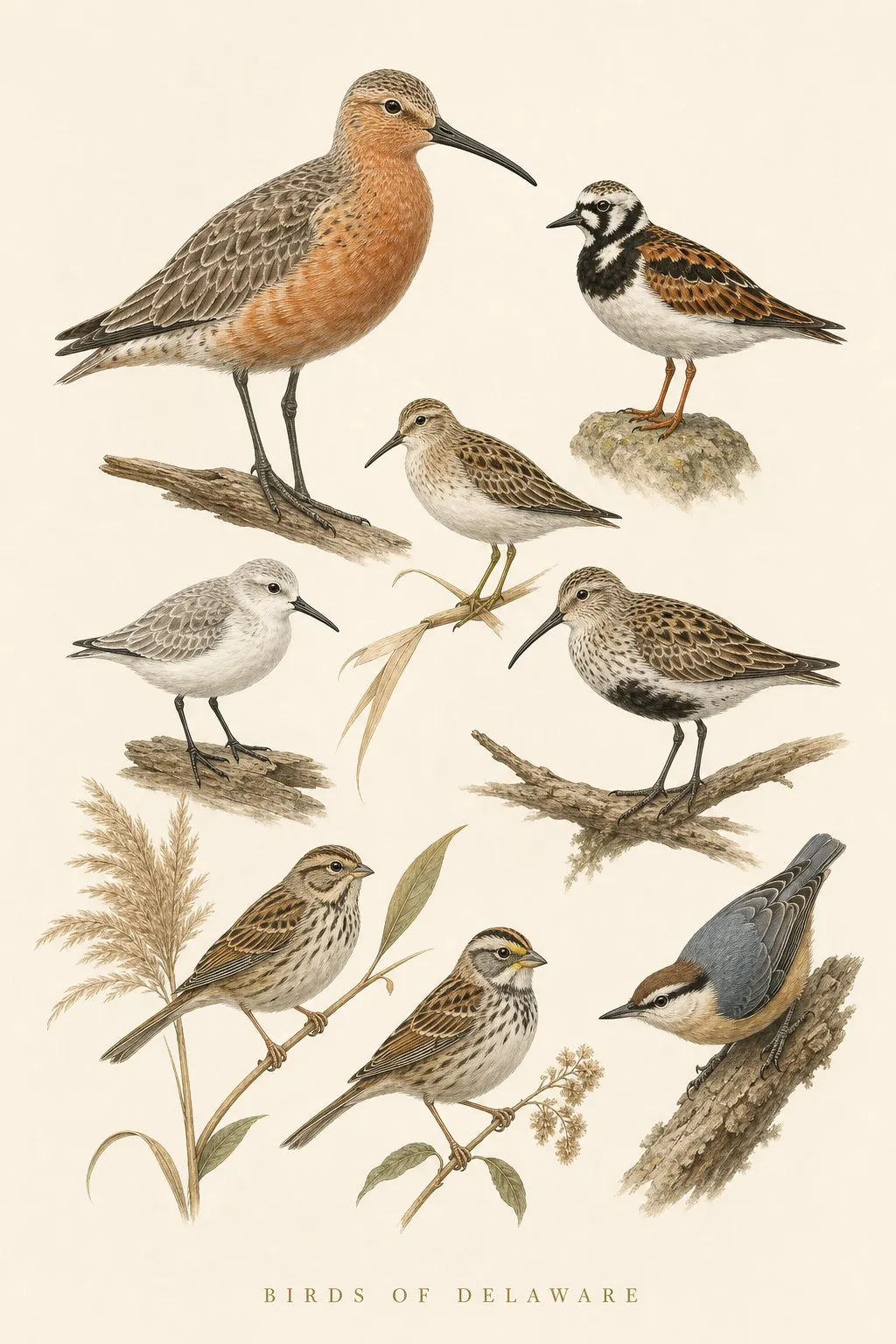
Cape Romain National Wildlife Refuge (north of Charleston) holds 66,000 acres including Bull Island, which functions as a staging area for large shorebird concentrations in migration - up to 10,000 Black-bellied Plovers and Semipalmated Sandpipers have been counted here in a single autumn day. Access to Bull Island is by ferry only, which limits pressure and keeps the habitat intact.
Francis Marion National Forest (Berkeley and Charleston counties) draws birders specifically for its piney-woods specialities: Bachman’s Sparrow and Red-cockaded Woodpecker in the longleaf pine savanna sections, Swallow-tailed Kite over the river swamps in spring and summer, and a range of breeding warblers through the hardwood drainages. The Wambaw District holds the most reliable woodpecker colonies.
The Prothonotary Warbler - a golden-yellow swamp warbler - was designated South Carolina’s official state migratory bird in February 2026 under Act 98, making it the newest state avian symbol. It breeds in the flooded bottomland forests at ACE Basin and along the Congaree River through summer.
The state’s seasonal rhythm runs from the Painted Bunting’s return in late March through the peak shorebird push in August and September along the coast, then into a productive winter for waterfowl and sparrows in the ACE Basin and at Santee National Wildlife Refuge on Lake Marion. A birder willing to work all four seasons in South Carolina will find a list that grows faster than in most eastern states.
The legislature chose the mockingbird in 1939 and the wren in 1948. Both decisions were defensible. The wren was the right call - she is the one that stays.