State Guide
Birds of Oklahoma
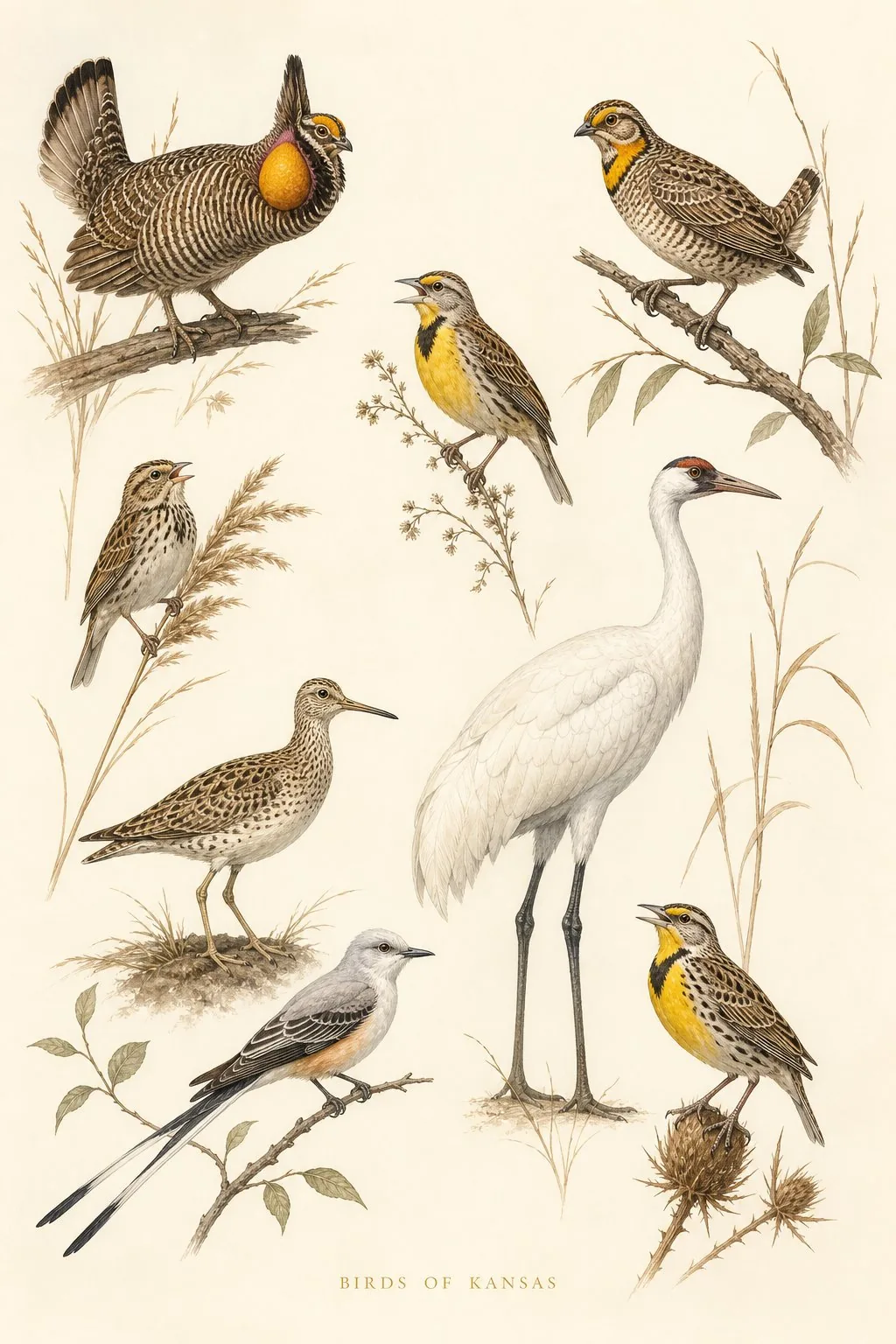
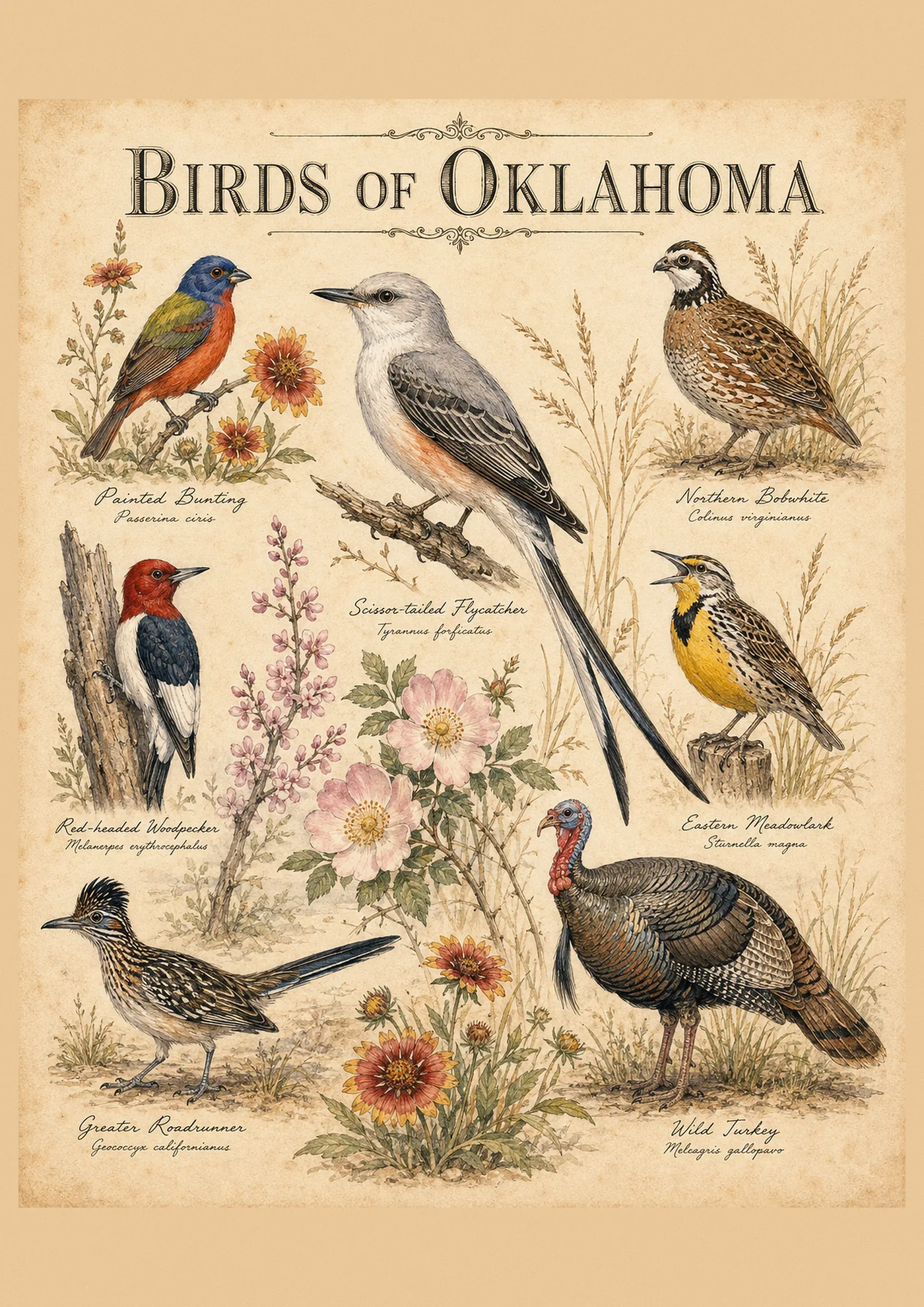
In May of any year in central Oklahoma, a male Scissor-tailed Flycatcher will choose a fence post or a utility wire above an open field and wait. When a grasshopper lifts from the grass below, he drops off the wire, takes the insect in midair, and banks back to the same perch with tail streamers - some of them longer than his own body - trailing behind him like white ribbons. The bird is not performing for any audience. But it is impossible to watch and feel nothing.
Oklahoma designated the Scissor-tailed Flycatcher (Tyrannus forficatus) as the official state bird in 1951. The adoption followed a statewide campaign in which schoolchildren voted, supported by garden clubs and Audubon Society chapters across the state. The result was emphatic: Oklahoma sits at the center of this species’ breeding range, which covers the southern Great Plains from Kansas to Texas, and the bird’s association with Oklahoma’s open grassland and agricultural landscape is genuine and not incidental. It later appeared on Oklahoma’s commemorative quarter, alongside the state wildflower.
Oklahoma spans roughly 530 miles east to west, and that distance contains more ecological change than most maps suggest. The panhandle touches the shortgrass and mixed-grass prairie of the High Plains. The central part of the state sits on rolling blackjack oak and cross timbers. The northeast corner holds the westernmost extension of Ozark mixed hardwood forest. The southeast - known as “Little Dixie” - contains bottomland swamp and cypress forest that shares more with Louisiana than with the Kansas plains. This range of habitats is the structural reason the Oklahoma Ornithological Society’s 6th edition checklist, published in 2022, lists 488 species in the state.
Signature species
The Scissor-tailed Flycatcher is conspicuous and approachable. It is the bird most visitors remember. But Oklahoma holds several species that ornithologists travel specifically to find.
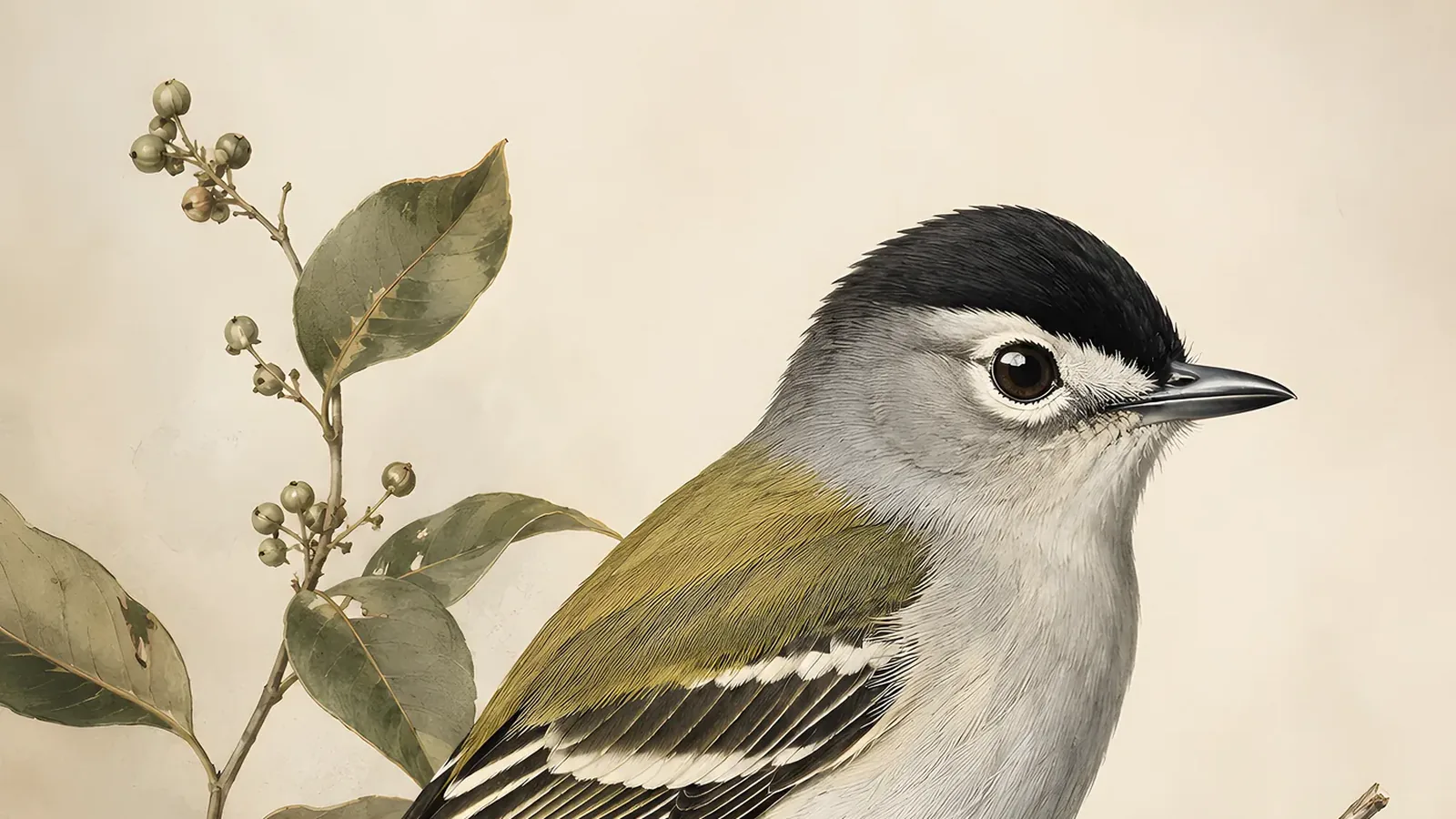
Black-capped Vireo (Vireo atricapilla) breeds at the Wichita Mountains Wildlife Refuge and at a smaller population in the canyon lands of Blaine County. The species was federally listed as endangered and recovered enough to be delisted in 2018 - primarily because of active habitat management at Wichita Mountains and Fort Sill Army Base, both in Comanche County. The male’s bold black cap and slow, persistent song are distinctive in the low scrub oak and shin oak thickets the species requires.
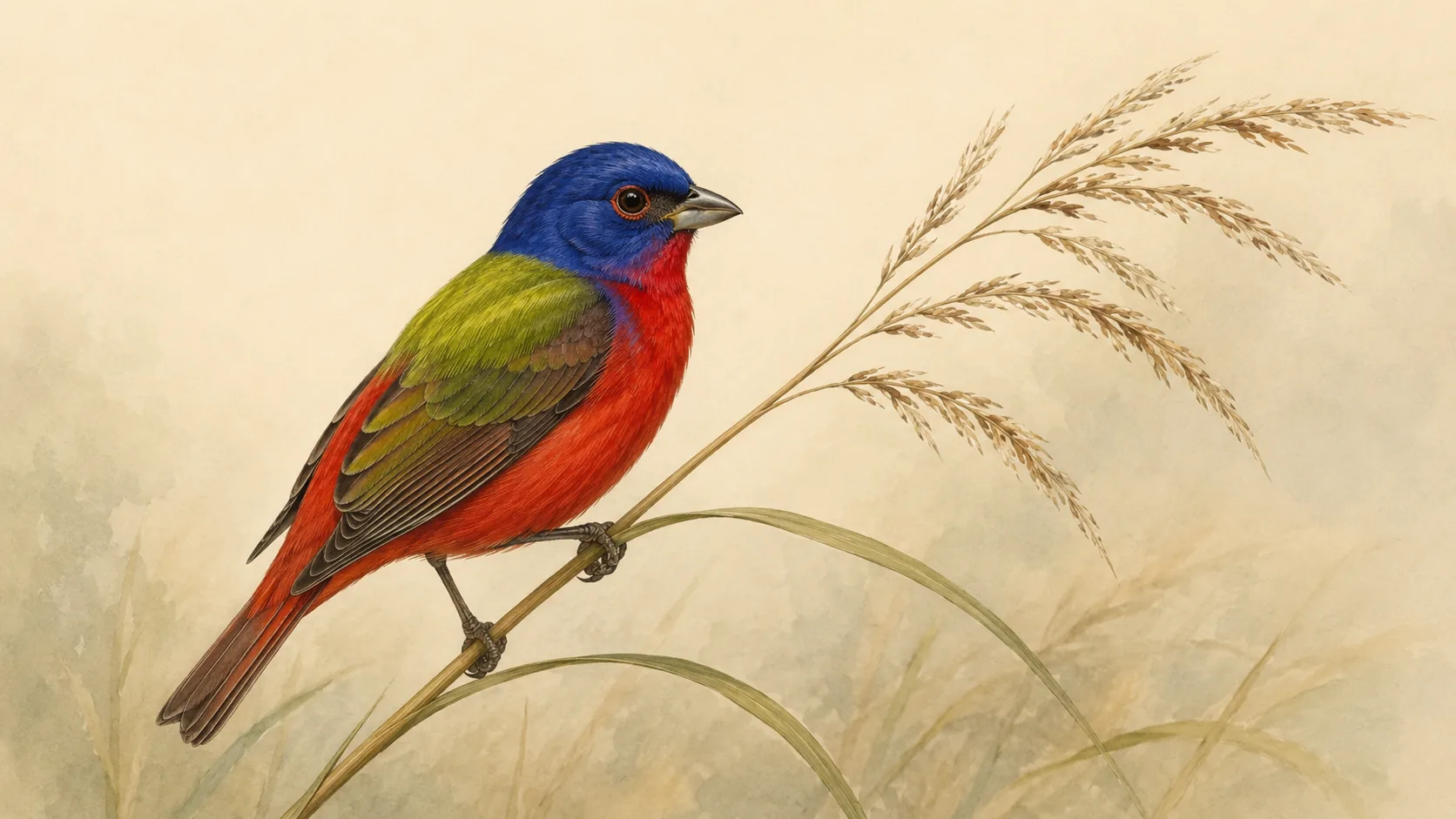
Painted Bunting (Passerina ciris) breeds in brushy river-edge habitat across central and southern Oklahoma. The male is possibly the most vividly coloured bird in North America: red below, blue on the head, green across the back. He sings from treetops in roadside cedar thickets from late April through July. Audubon’s own field guide notes that the species’ Oklahoma range represents the core of its central breeding population.
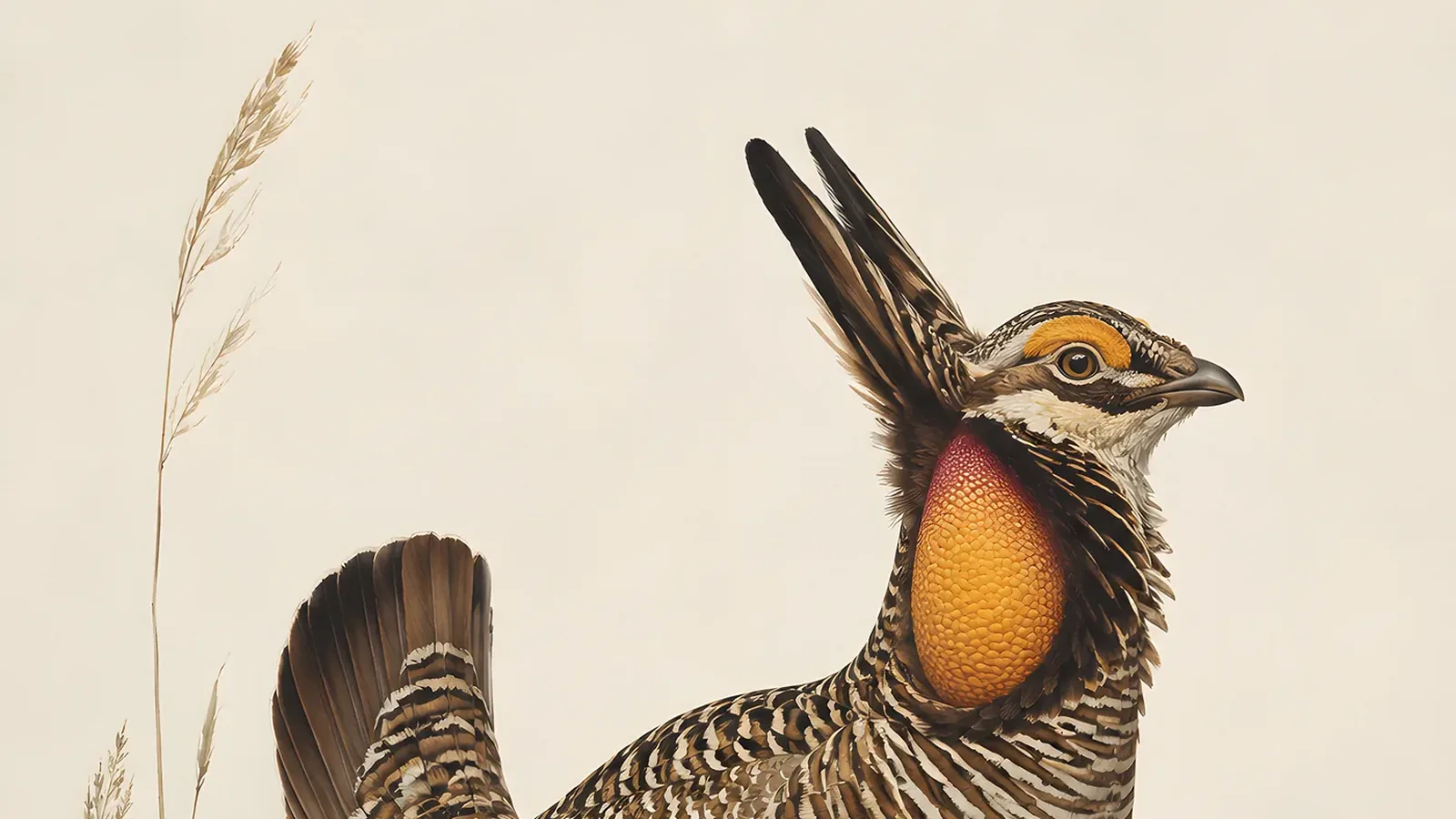
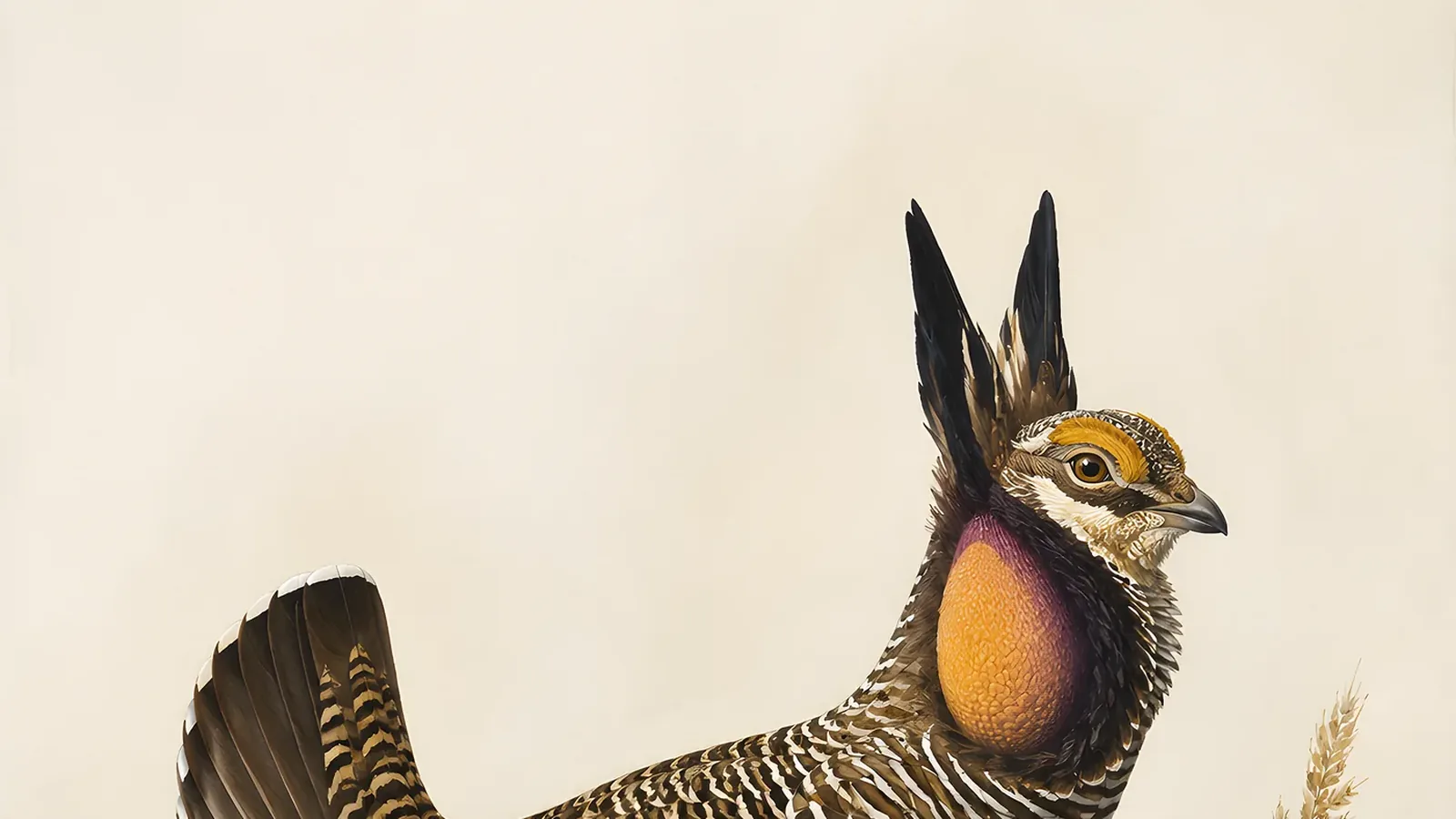
Greater Prairie-Chicken (Tympanuchus cupido) still booms on leks at the Tallgrass Prairie Preserve near Pawhuska in Osage County, which the Nature Conservancy maintains as one of the largest protected tallgrass prairie tracts in North America. Males gather on traditional display grounds before dawn in March and April. The low booming sound carries a long distance across flat ground and is unlike any other bird sound in Oklahoma.
Lesser Prairie-Chicken (Tympanuchus pallidicinctus) occurs in the mixed-grass and shortgrass prairies of far western Oklahoma. The species is range-restricted, listed as vulnerable by the IUCN, and its distribution has declined sharply with grassland conversion. The Oklahoma panhandle and adjacent Cimarron County hold the easternmost populations.
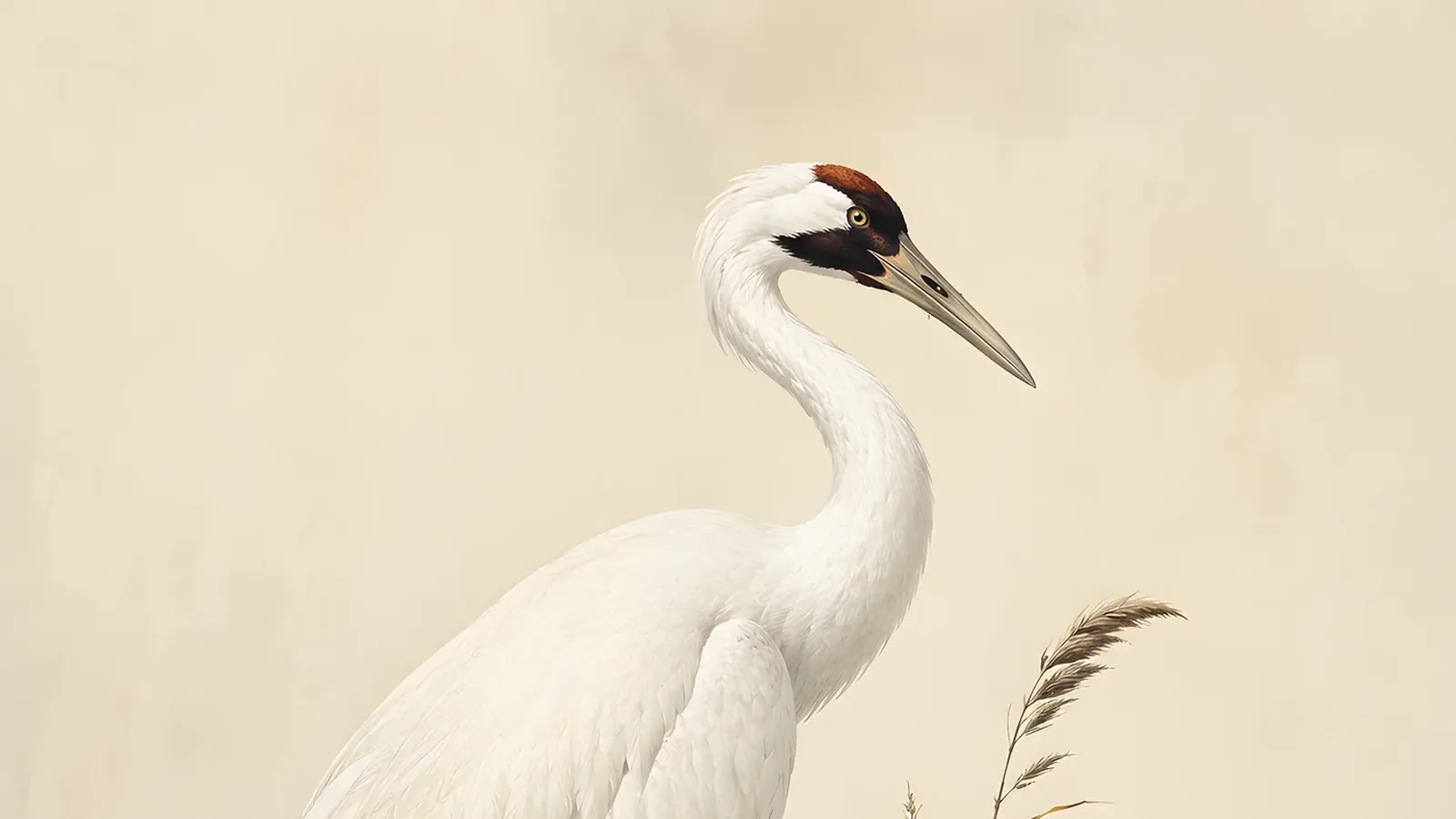
Whooping Crane (Grus americana) appears each October and late March at Salt Plains National Wildlife Refuge during migration along the central flyway between the Gulf Coast wintering grounds and the Wood Buffalo nesting grounds in Canada. The refuge has been designated a Globally Important Bird Area, and the Whooping Crane stopover is one of the more closely watched wildlife events in the state each autumn.
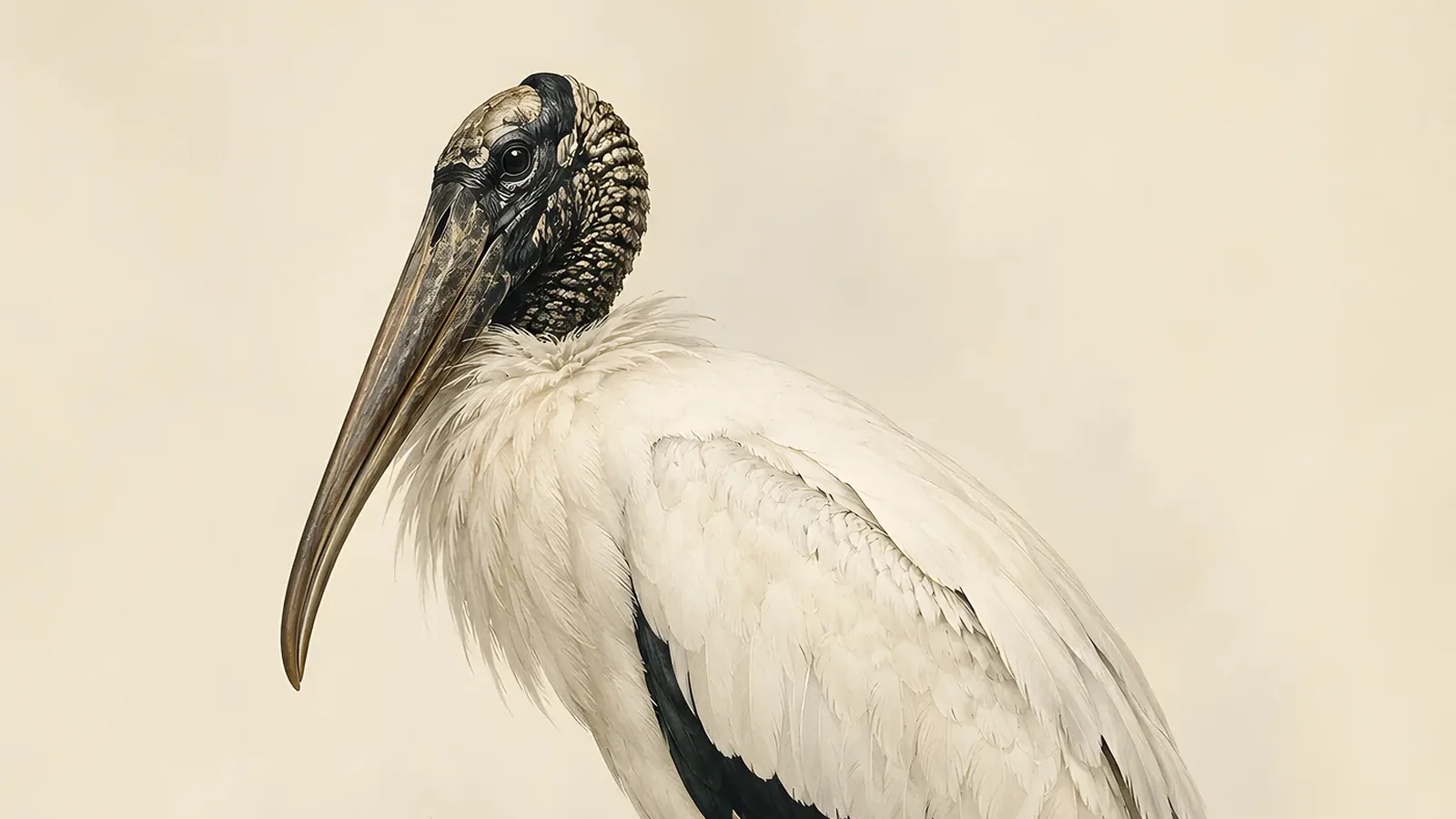
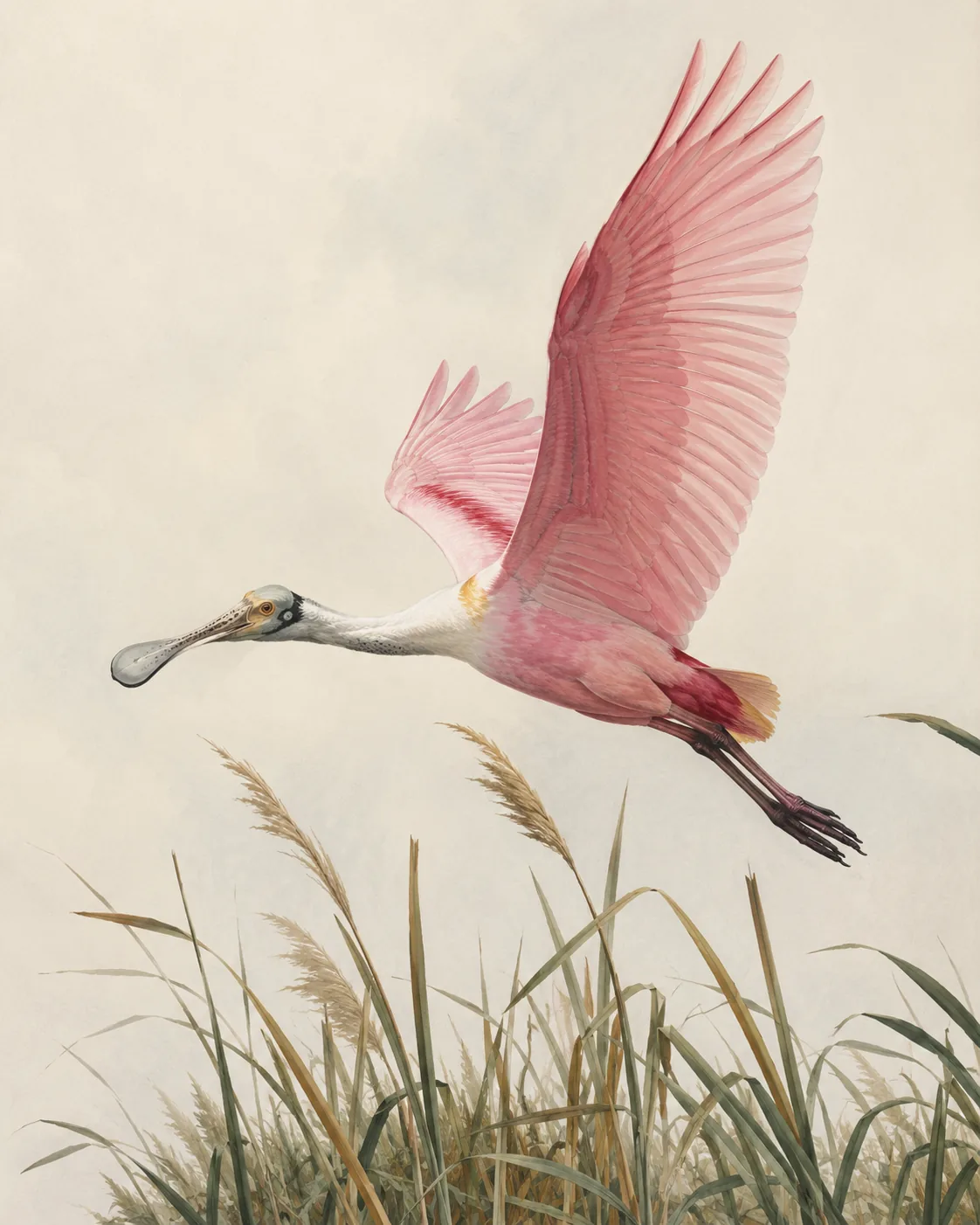
Wood Stork and Roseate Spoonbill breed or post-breed in the southeast corner around Red Slough Wildlife Management Area - species that were essentially unknown in Oklahoma a few decades ago and whose presence now is a product of a warming and shifting distribution.
Common backyard birds
Across most of Oklahoma’s towns and suburbs:
- Northern Cardinal (year-round, found statewide except the far western panhandle)
- American Robin (year-round resident)
- Blue Jay (year-round)
- Northern Mockingbird (year-round, common in towns and along roadsides)
- Mourning Dove (year-round, one of the most abundant breeding birds)
- Eastern Bluebird (year-round, regular in gardens with nest boxes)
- American Goldfinch (year-round, more numerous in winter when northern birds move in)
- Red-tailed Hawk (year-round, common on roadside fence posts and utility poles)
- Downy Woodpecker (year-round)
- Carolina Wren (year-round in the eastern two-thirds of the state)
- House Finch (year-round)
- Turkey Vulture (spring through autumn, soaring over most of the state)
The Northern Mockingbird (Mimus polyglottos) is the state bird of five southern states and is a serious contender as the bird most Oklahomans encounter most often. It holds territory year-round, sings at night under streetlights, and knows several dozen song types per individual. It is not the state bird here, but its case is not weak.
Seasonal rhythm
Spring migration along the central flyway runs through Oklahoma from late March through May. Shorebirds stop at shallow wetlands and exposed mudflats, and Salt Plains NWR concentrates these movements on its 12,000 acres of salt flat and adjacent shallow water. Painted Buntings and Scissor-tailed Flycatchers arrive in late April. By May the state’s bottomland forests are full of breeding warblers and vireos.
Summer belongs to the grassland breeders. Scissor-tailed Flycatchers are everywhere on the open plains. Greater Prairie-Chickens have finished booming but are still present at the Tallgrass Prairie Preserve. Red Slough in McCurtain County - where the Oklahoma Department of Wildlife Conservation has documented over 320 species - holds breeding Purple Gallinule, Yellow Rail, and wading birds through the summer.
Autumn migration returns shorebirds and waterfowl in September and October. Sandhill Cranes move south in large numbers through the central part of the state, and the Salt Plains refuge hosts the annual Whooping Crane passage. Winter brings Bald Eagles to river impoundments along the Arkansas and Red rivers, and Dark-eyed Juncos appear at feeders statewide.
Where to watch
Salt Plains National Wildlife Refuge (Alfalfa County, north-central Oklahoma) covers more than 32,000 acres including the 12,000-acre salt flat - one of the few inland salt flats in North America. The American Bird Conservancy has designated it a Globally Important Bird Area. Sandhill Cranes stage here in tens of thousands from October through March. Whooping Cranes stop in October and late March. American White Pelicans concentrate in autumn. The refuge is also noted for Snowy Plover breeding on the salt flats.
Red Slough Wildlife Management Area (McCurtain County, southeastern Oklahoma) is 5,814 acres of restored wetland, bottomland hardwood, and shrub habitat on the Gulf Coastal Plain. The Oklahoma Department of Wildlife Conservation lists over 320 species for the site. It holds the state’s most reliable populations of southeastern wetland specialties: Roseate Spoonbill, Wood Stork, White Ibis, and Black-bellied Whistling-Duck. The Audubon Society includes it among Oklahoma’s premier sites.
Wichita Mountains Wildlife Refuge (Comanche County, southwestern Oklahoma) is granite upland surrounded by mixed-grass prairie, managed by the U.S. Fish and Wildlife Service and home to free-ranging bison, elk, and longhorn cattle - and to the Black-capped Vireo population whose recovery helped justify the federal delisting in 2018. Rock Wrens nest on the granite outcrops. Painted Buntings and Dickcissels fill the surrounding grassland in summer.
Tallgrass Prairie Preserve (Osage County, northeastern Oklahoma) is managed by the Nature Conservancy and covers nearly 40,000 acres - one of the largest protected grassland tracts remaining in North America. Greater Prairie-Chickens display on leks in early spring. Bobolinks and Dickcissels nest in the tall grass. The preserve is the kind of open ground that does not exist at scale in most of the eastern half of the United States.
Oklahoma is a central-flyway state. Millions of birds cross it twice a year on routes that have been fixed for longer than the state has existed. The Scissor-tailed Flycatcher is the one that stays - the one that claims a fence post in April and is still there in September, and whose absence in October is the clearest sign that the season has shifted.