State Guide
Birds of Nebraska
In 1929, Nebraska schoolchildren voted on their state’s official bird. Three separate polls were held - one by the Nebraska Ornithologists’ Union, one by the Nebraska Federation of Women’s Clubs, and one by schoolchildren across the state - and the Western Meadowlark (Sturnella neglecta) topped every one of them. On March 22, 1929, the Forty-fifth Session of the Nebraska Legislature ratified the choice by Joint and Concurrent Resolution, codifying it in Nebraska Statutes Chapter 90, Section 90-107. The bird was not assigned its role by committee. It was elected by the people who lived alongside it.
That popular mandate made sense. Drive any Nebraska highway in May and you will hear the meadowlark before you see it - a long, liquid phrase from a fence post, one of the clearest songs in North American grassland. The bird is the auditory signature of the Great Plains just as the cardinal is the visual signature of the East.
Nebraska’s geography explains its unusually diverse bird list. The Nebraska Ornithologists’ Union records 467 confirmed species for the state - a figure that reflects a state spanning 490 miles diagonally across three distinct ecological zones: the Sandhills grassland (the largest stabilised dune system in the Western Hemisphere, covering a quarter of the state), the central Platte River valley, and the Missouri River corridor along the eastern edge. Ponderosa pine breaks in the northwest add a western Rocky Mountain element that appears nowhere else in the Great Plains.
The Platte River migration
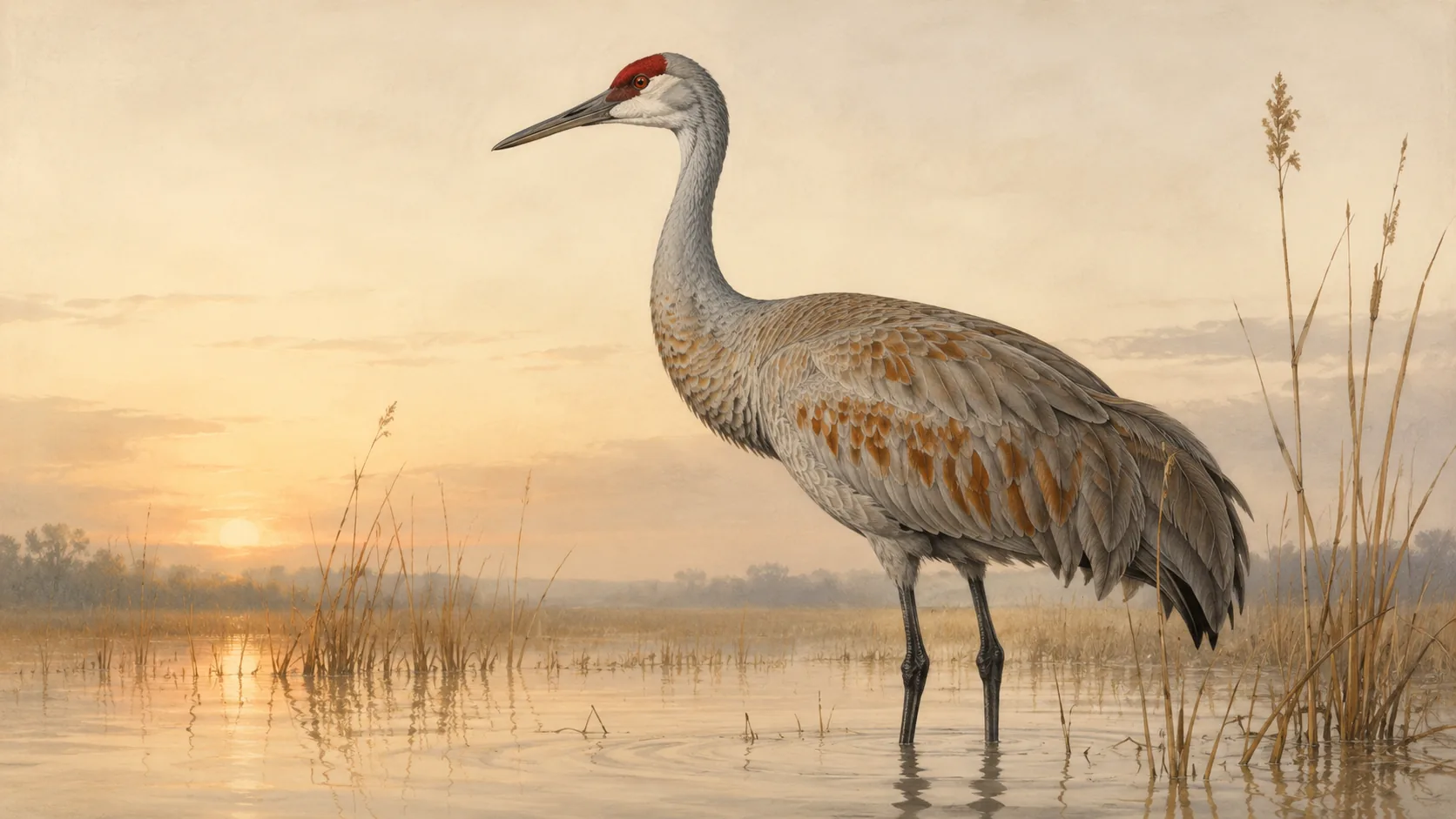
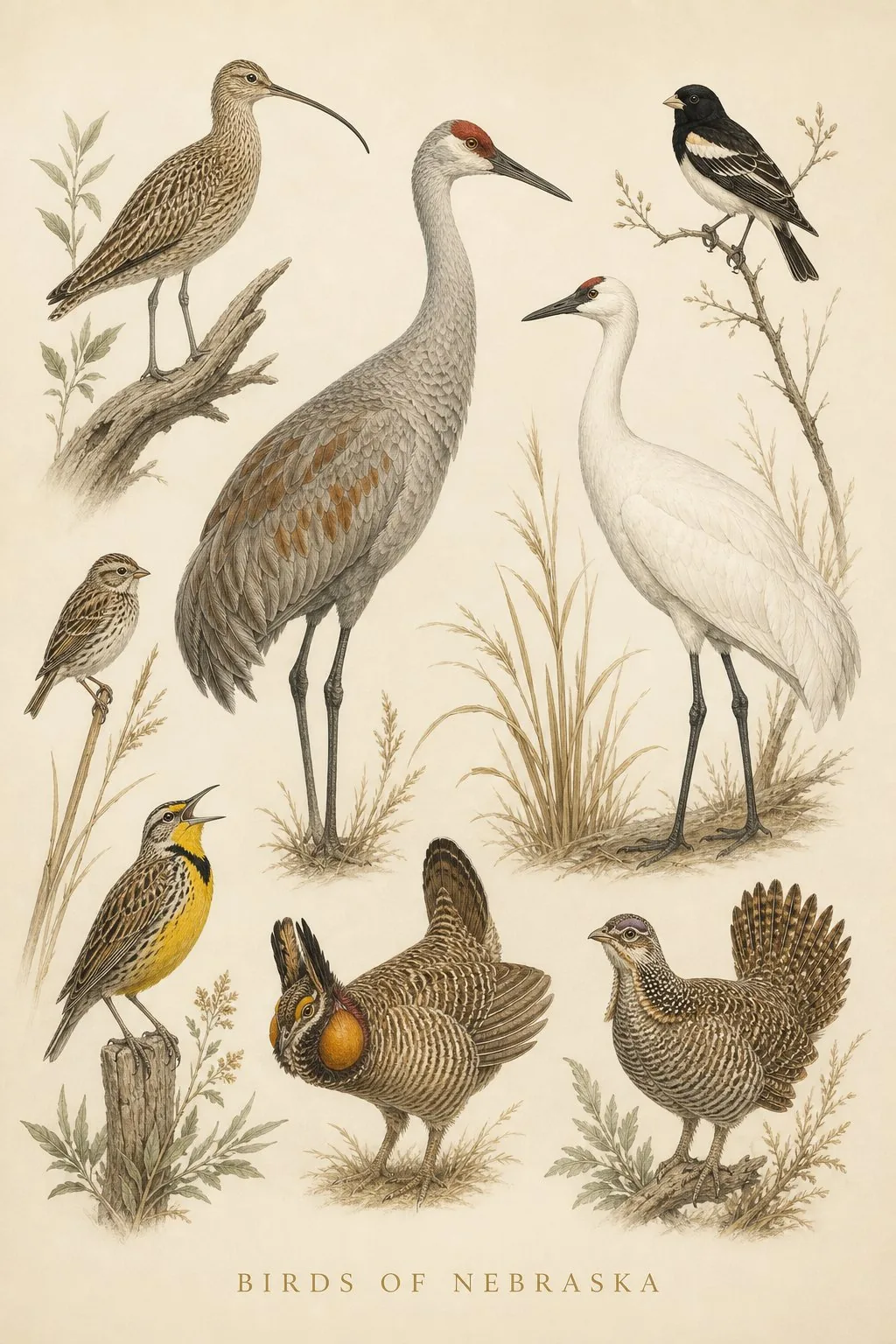
Nothing in Nebraska birding compares with the spring crane staging. From late February through early April, the Platte River valley between Grand Island and Kearney fills with Sandhill Cranes (Antigone canadensis). More than 80 percent of the world’s Sandhill Crane population - numbering roughly 600,000 birds at peak - stops on this 130-km stretch to roost and feed before continuing north to Canadian and Alaskan breeding grounds. The Iain Nicolson Audubon Center at Rowe Sanctuary, near Gibbon, operates guided blind tours at dawn and dusk during this window. Standing in a blind as 40,000 cranes lift off a river roost in grey pre-dawn light is what drew Nebraska to national attention as a birding destination.
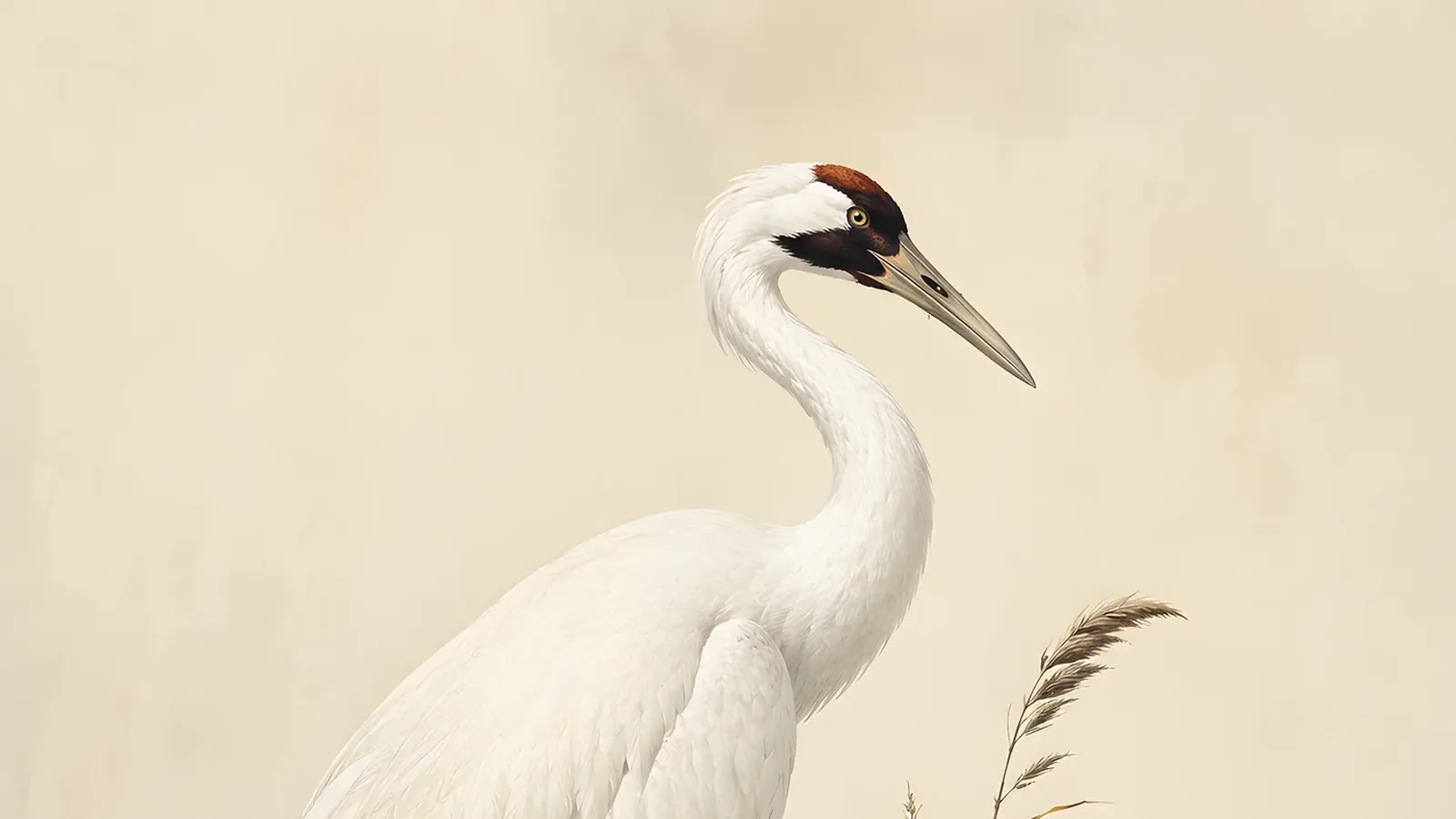
Occasionally a Whooping Crane (Grus americana) forages among the sandhill flocks. The species was reduced to fewer than 20 birds in the mid-twentieth century and remains one of the rarest birds in North America. Any Whooping Crane sighting along the Platte is reported immediately to the US Fish and Wildlife Service.
The crane spectacle has a companion along the Platte: the Interior Least Tern (Sternula antillarum athalassos) and Piping Plover (Charadrius melodus), both federally threatened, nest on the Platte’s open sandbars through summer after the cranes have gone north.
The Sandhills and its grassland specialists
The Nebraska Sandhills is what the American Bird Conservancy has described as the best grassland bird place in the United States. The reasoning is straightforward: this is the most intact native grassland remaining in North America, and the birds that require it are here in numbers rarely seen anywhere else.
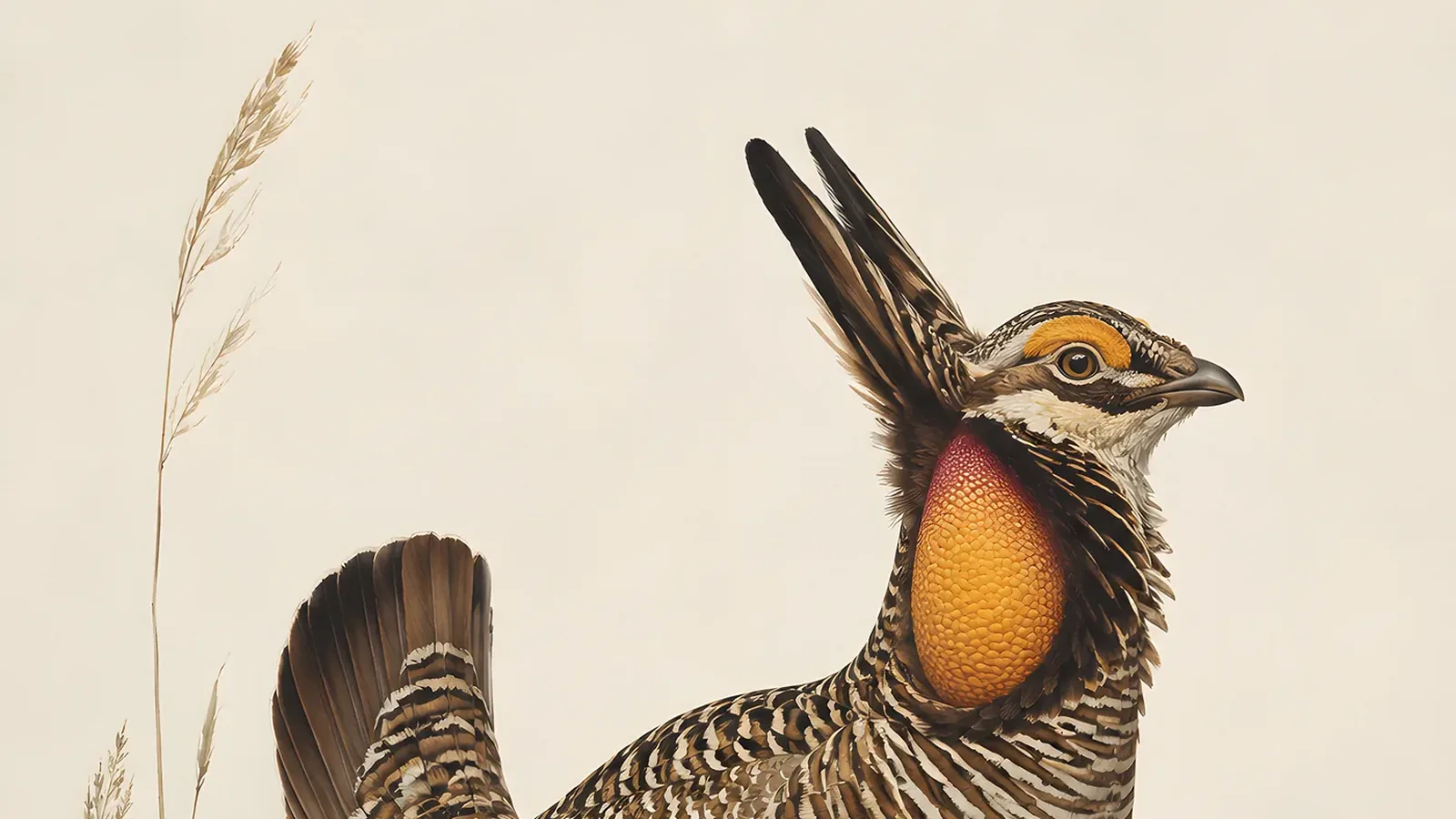
Greater Prairie-Chicken (Tympanuchus cupido) performs its booming display on lek grounds across the Sandhills each spring. Valentine National Wildlife Refuge and the area around Crescent Lake National Wildlife Refuge are reliable sites. Male birds inflate orange neck sacs and boom across the grass on calm mornings in March and April.
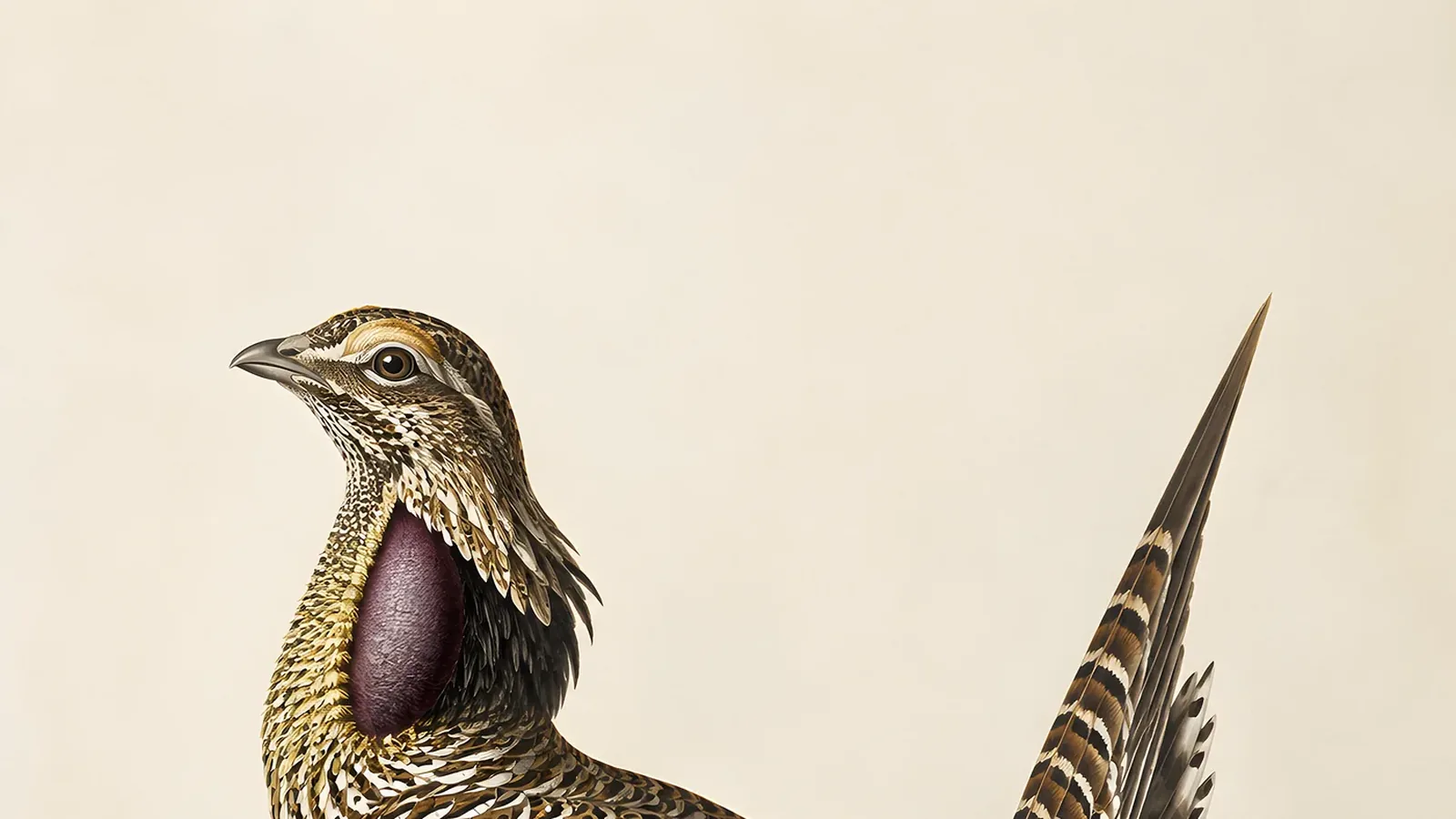
Sharp-tailed Grouse (Tympanuchus phasianellus) dances on leks through the same period, often at sites within a few kilometres of Prairie-Chicken grounds. The species and the Prairie-Chicken occasionally hybridise where their ranges overlap, a circumstance well documented in the Nebraska Ornithologists’ Union records.
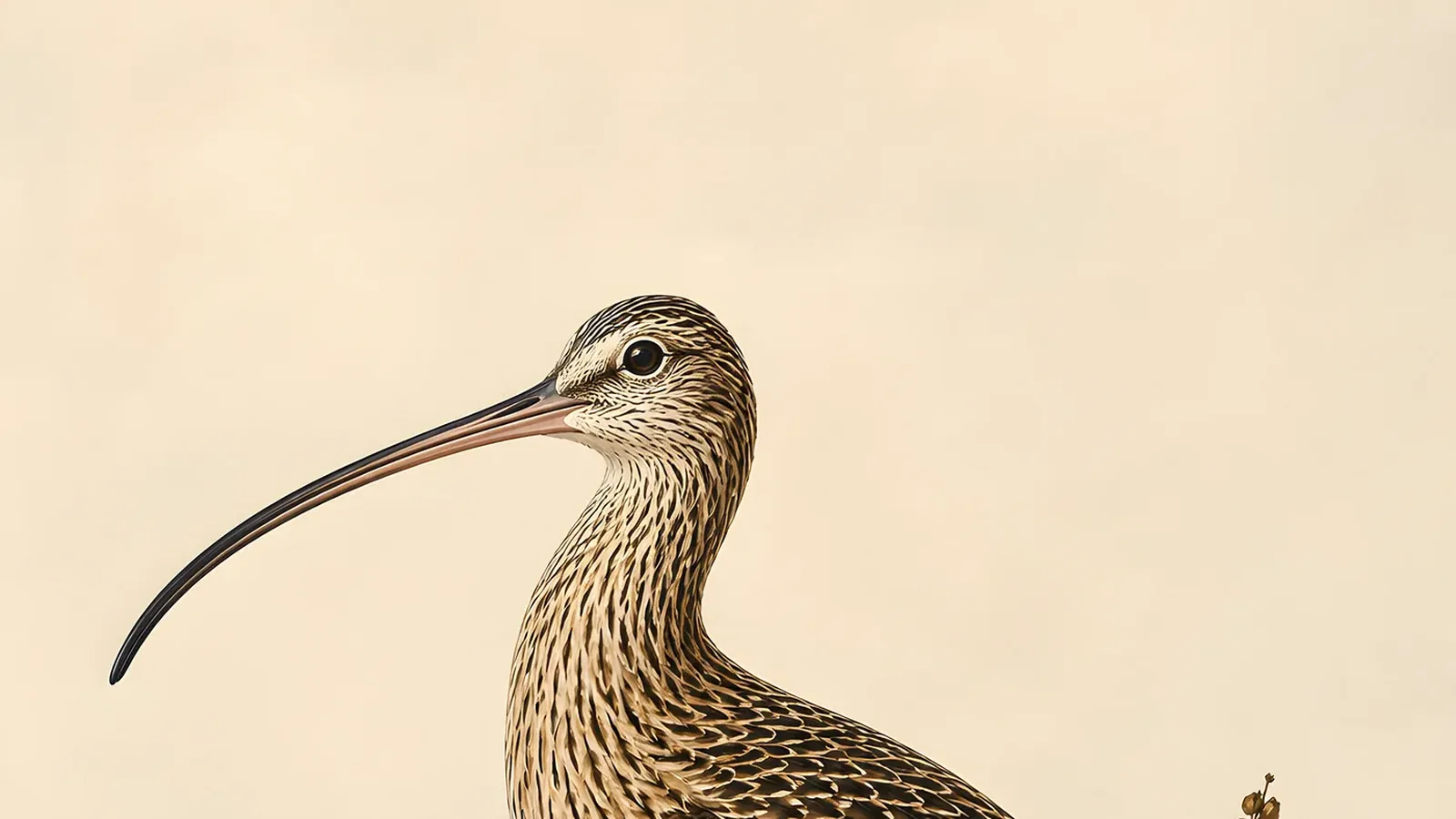
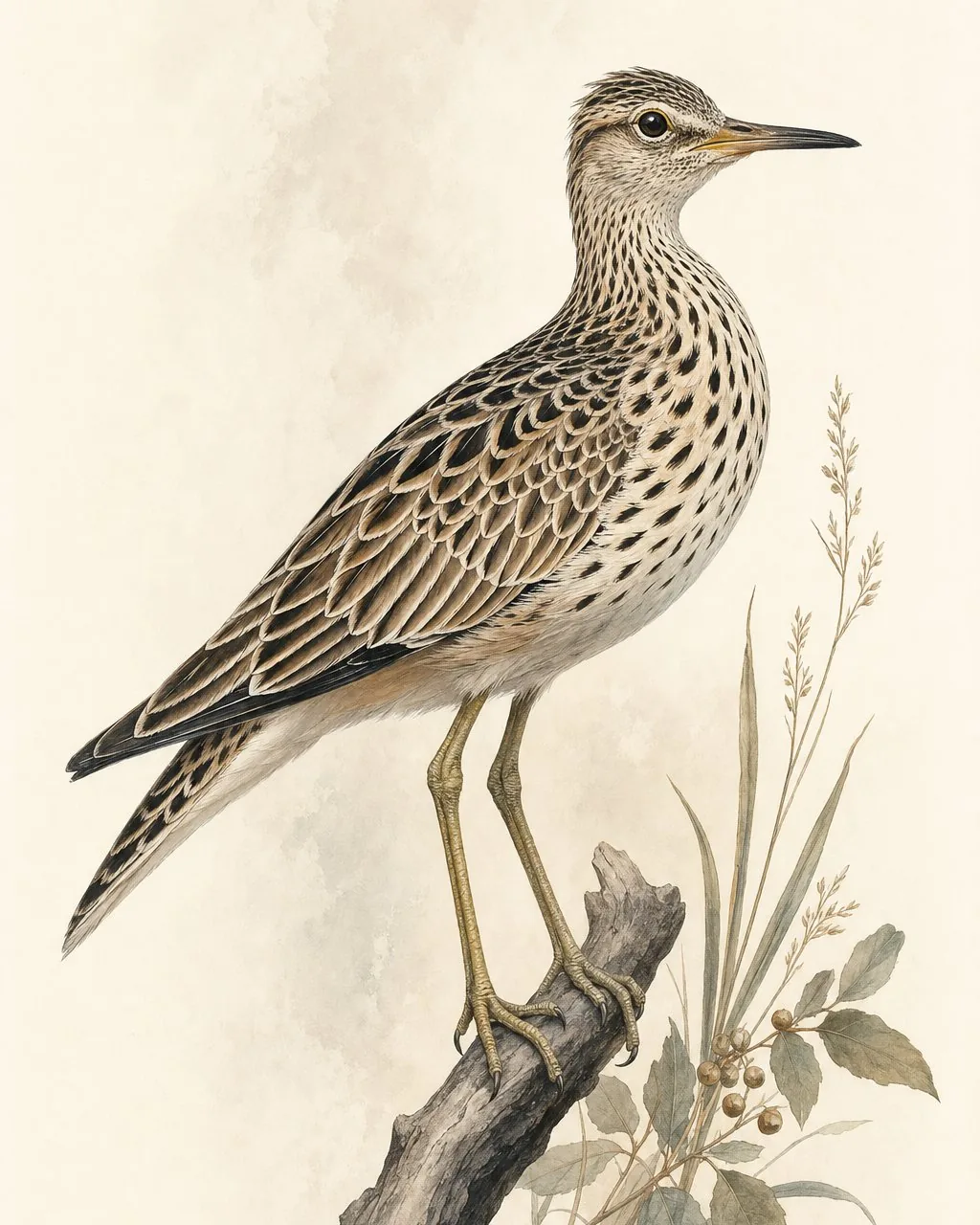
Long-billed Curlew (Numenius americanus) breeds in the Sandhills, using the long bill to probe sandy soil for insects and earthworms. The Sandhills hold a nationally significant breeding population of this, the largest North American sandpiper.
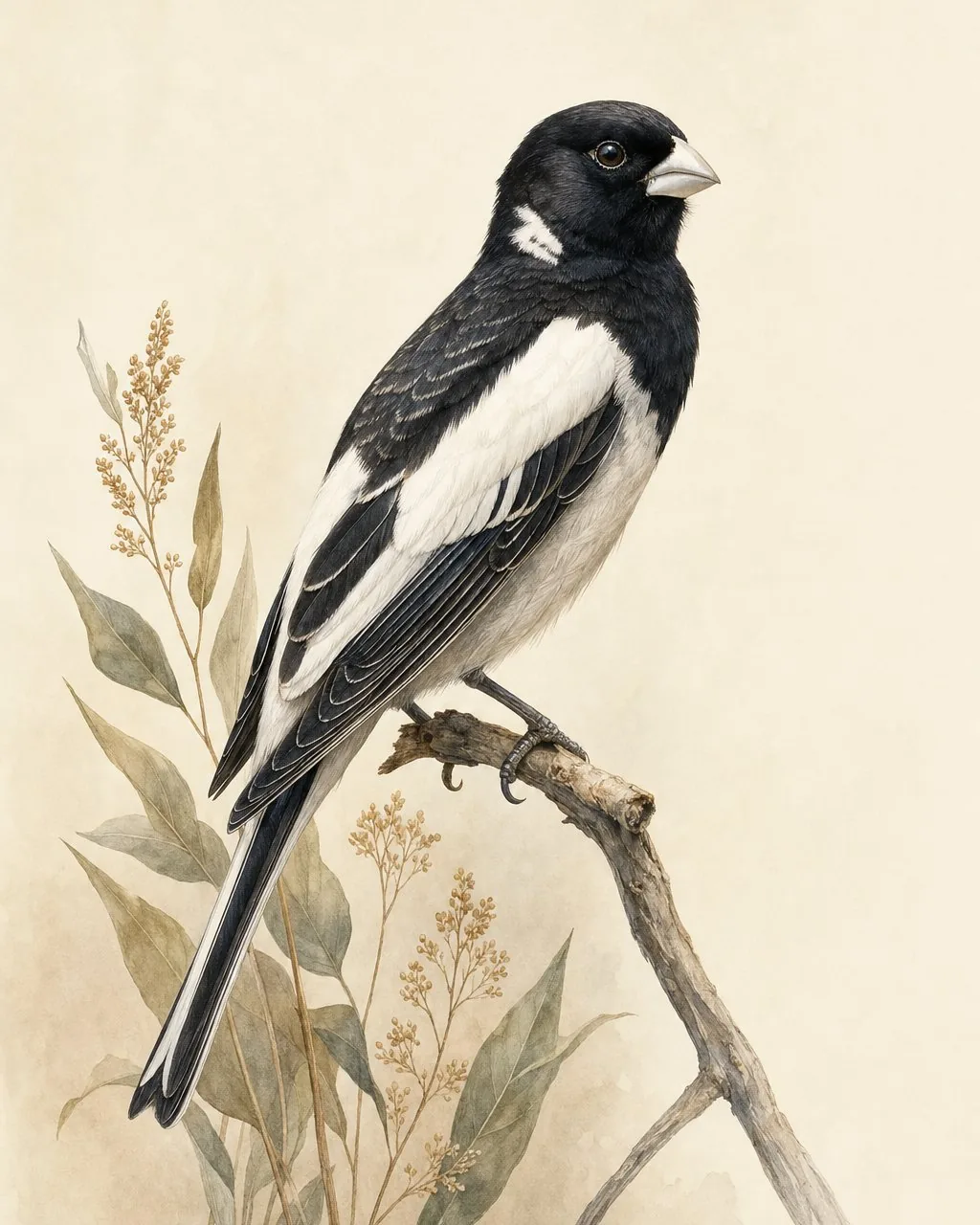
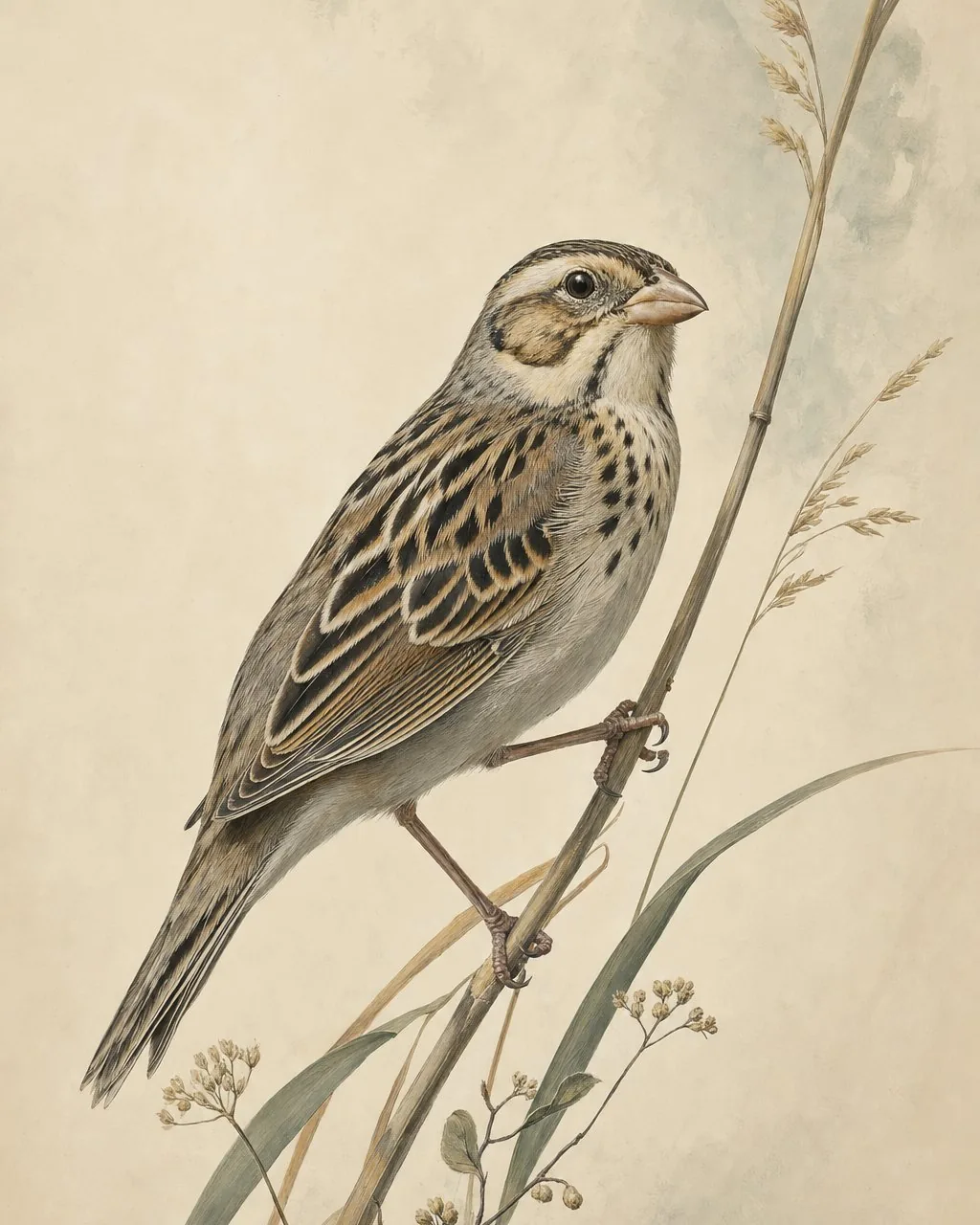
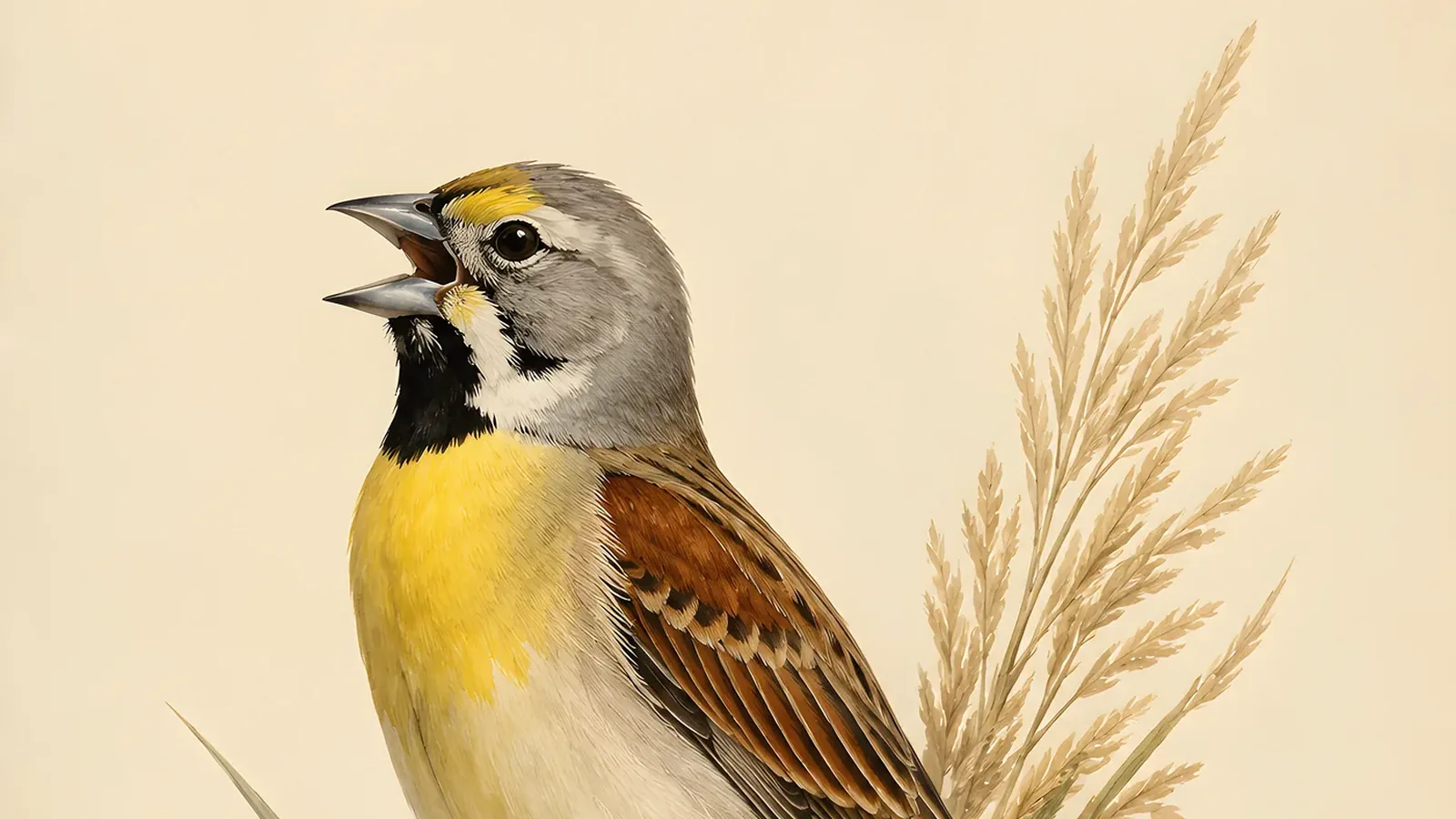
Lark Bunting (Calamospiza melanocorys), Grasshopper Sparrow (Ammodramus savannarum), Dickcissel (Spiza americana), and Upland Sandpiper (Bartramia longicauda) all breed in Nebraska grassland through summer. These are birds that have vanished from most of the continent’s converted farmland. The Sandhills holds them.
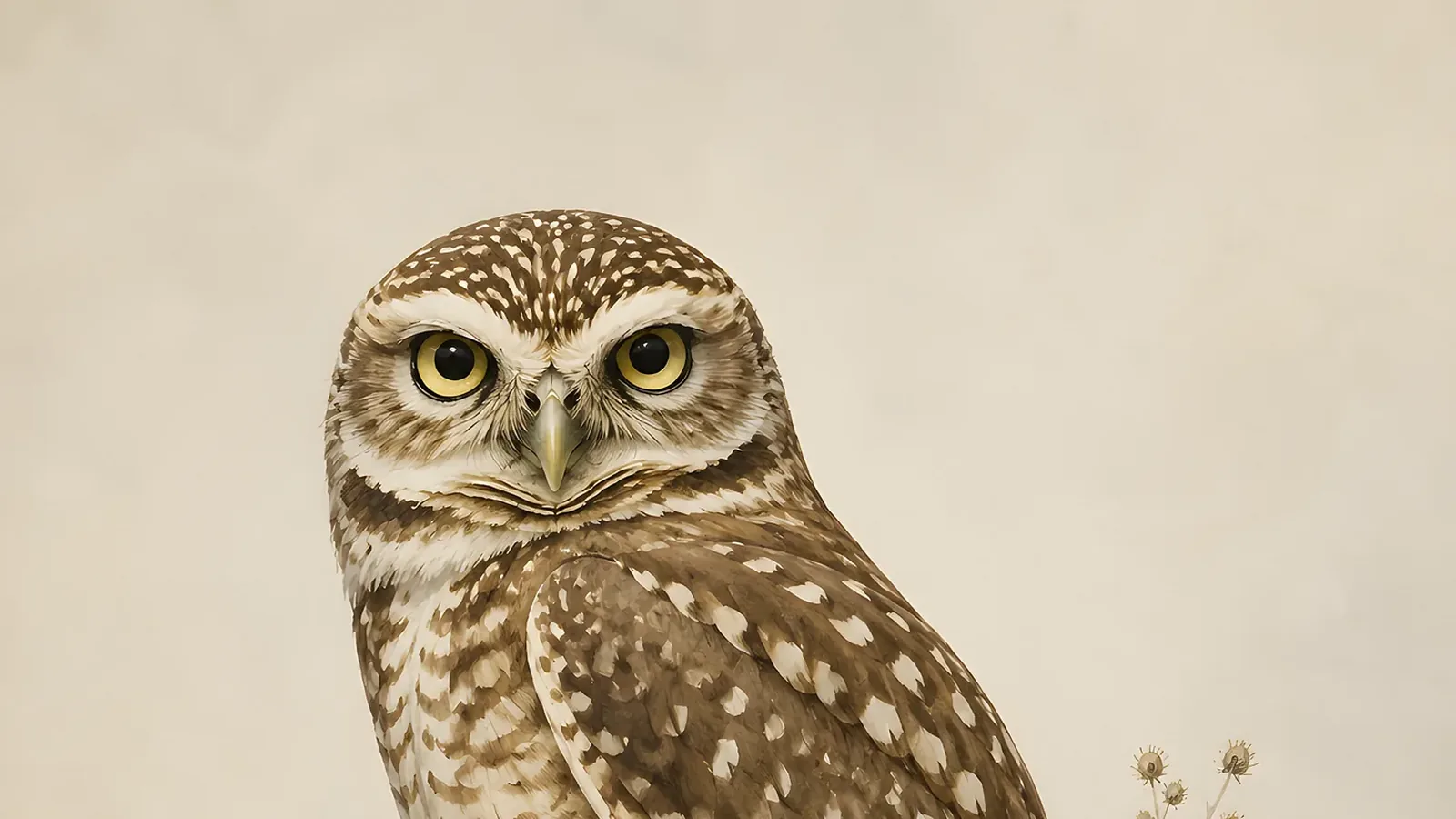
Burrowing Owl (Athene cunicularia) nests in prairie dog towns across the Sandhills and Panhandle. It stands at burrow entrances in full daylight, which makes it unusually approachable by owl standards.
Missouri River corridor and the eastern edge
The eastern strip of Nebraska - where the Missouri River forms the state boundary - carries a very different bird community. Ponca State Park near the South Dakota border has a documented species list of over 200 birds, drawn from the mature bottomland hardwoods and Missouri River bluffs. DeSoto National Wildlife Refuge, straddling the Iowa-Nebraska line near Blair, is the other anchor. Thousands of Snow Geese and other waterfowl use DeSoto’s lakes and wetlands during spring and autumn migration. Bald Eagles concentrate at DeSoto in autumn and winter. The bottomland forest supports Red-headed Woodpecker (Melanerpes erythrocephalus), Yellow-headed Blackbird (Xanthocephalus xanthocephalus), Baltimore Oriole, and Dickcissel through summer.
In the northwest Panhandle, near the Pine Ridge escarpment, Rocky Mountain species appear: Pygmy Nuthatch (Sitta pygmaea) and Pinyon Jay (Gymnorhinus cyanocephalus) reach their easternmost limit in Nebraska’s ponderosa breaks.
The Rainwater Basin
South-central Nebraska holds one of the continent’s most important but least-visited migration staging areas. The Rainwater Basin - a system of shallow seasonal wetlands in around 13 counties south of the Platte - handles extraordinary numbers of waterfowl each spring. The US Fish and Wildlife Service estimates 2 to 3 million geese and 7 to 9 million ducks use the basin as a staging area every spring. Funk Waterfowl Production Area near Holdrege is one of the more accessible entry points. Migrating Whooping Cranes also stop in the basin, which is managed by the Rainwater Basin Wetland Management District.
Top backyard species
A typical Nebraska suburban garden records a different mix depending on whether you are in Omaha, Lincoln, or Kearney, but these species appear on most checklists year-round:
- Western Meadowlark (year-round in rural settings)
- American Robin (year-round, abundant)
- Blue Jay (year-round)
- Black-capped Chickadee (year-round)
- Mourning Dove (year-round)
- American Goldfinch (year-round)
- Downy Woodpecker (year-round)
- House Finch (year-round)
- Red-tailed Hawk (year-round, often visible from roadsides)
- Canada Goose (year-round, especially near water)
- Dark-eyed Junco (winter)
- Baltimore Oriole (breeding season, May to August)
- American Crow (year-round)
Where and when to go
Iain Nicolson Audubon Center at Rowe Sanctuary - The essential Nebraska birding experience. Guided blind tours run from late February to early April. Book well in advance.
Crescent Lake National Wildlife Refuge - 45,800 acres of Sandhills lakes and grassland in Garden County. Greater Prairie-Chicken, Sharp-tailed Grouse, Long-billed Curlew, and nesting shorebirds including American Avocet and Black-necked Stilt. Best in April and May.
DeSoto National Wildlife Refuge - Missouri River bottomlands near Blair. Waterfowl migration in spring and autumn, Bald Eagle in winter, breeding Yellow-headed Blackbird, Red-headed Woodpecker, and woodland warblers.
Rainwater Basin Wetland Management District - Multiple waterfowl production areas scattered across south-central Nebraska. Best from late February through April for geese, ducks, and occasional Whooping Crane.
Seasonally, the state runs from the crane spectacle (late February to early April) through grassland breeding season (April to July), a quieter summer, and a substantial autumn waterfowl migration in October and November, when Snow Geese, Canada Geese, and diving ducks fill DeSoto and the Missouri River corridor.
The meadowlark is the bird Nebraska chose. But the state’s signature experience is the crane on the Platte, a migration so large it predates human settlement of the Plains by millennia and will outlast any state bird designation on the books.