Field Guide
Grasshopper Sparrow
You almost step on it. The bird has been sitting motionless in the base of a clump of broom sedge for several minutes, watching you approach, and it holds until you are close enough to see the yellow between its bill and eye. Then it drops - not flies - out of the grass and runs three metres before lifting low and fast into the next grass clump, where it lands and is immediately invisible. The whole thing takes two seconds.
The Grasshopper Sparrow does not behave like most sparrows. It does not perch in view for identification purposes. It treats the grass as a three-dimensional space, moving through it on foot as much as on wing, emerging only briefly and reluctantly into the open air.
What it looks like
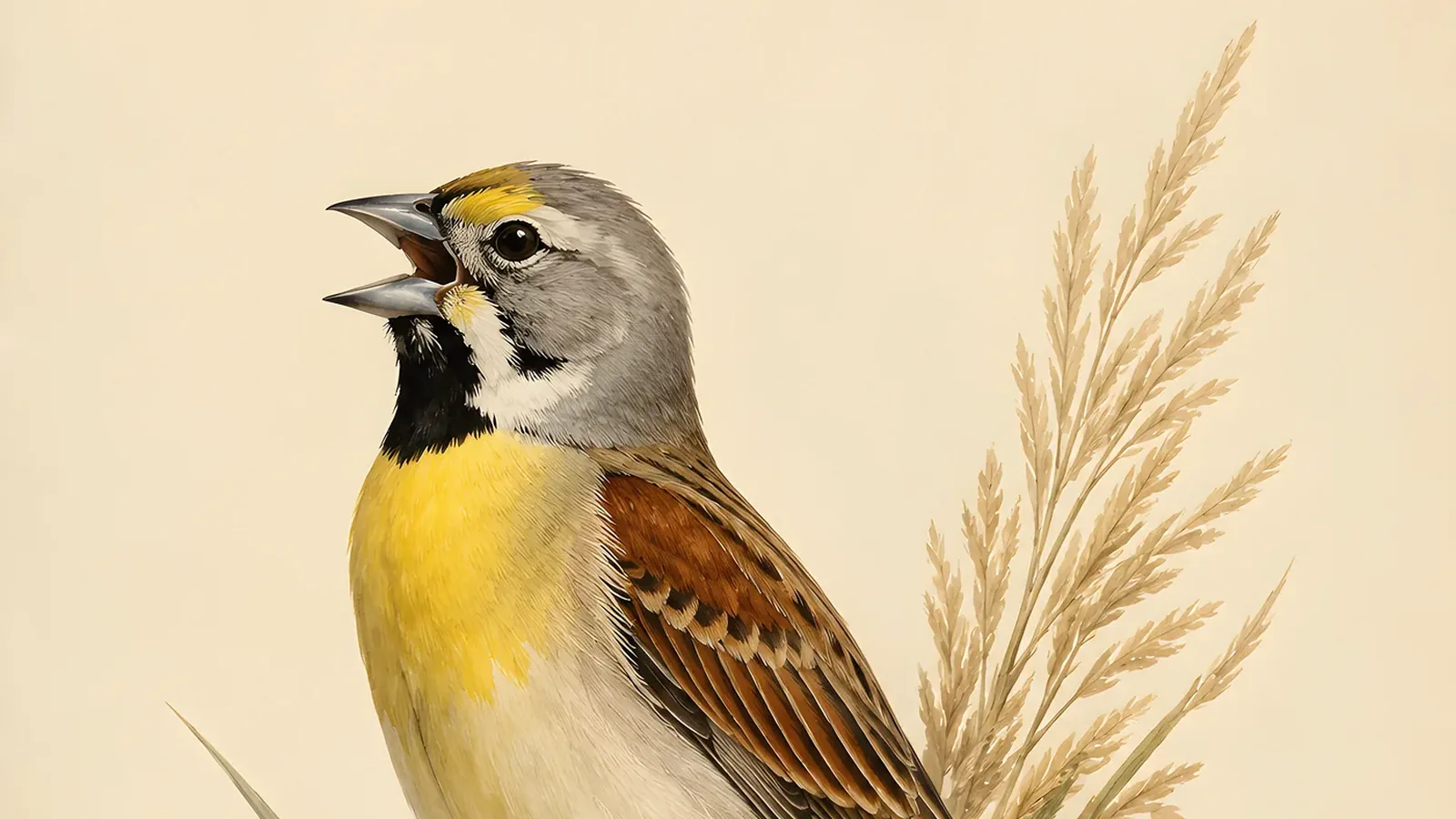
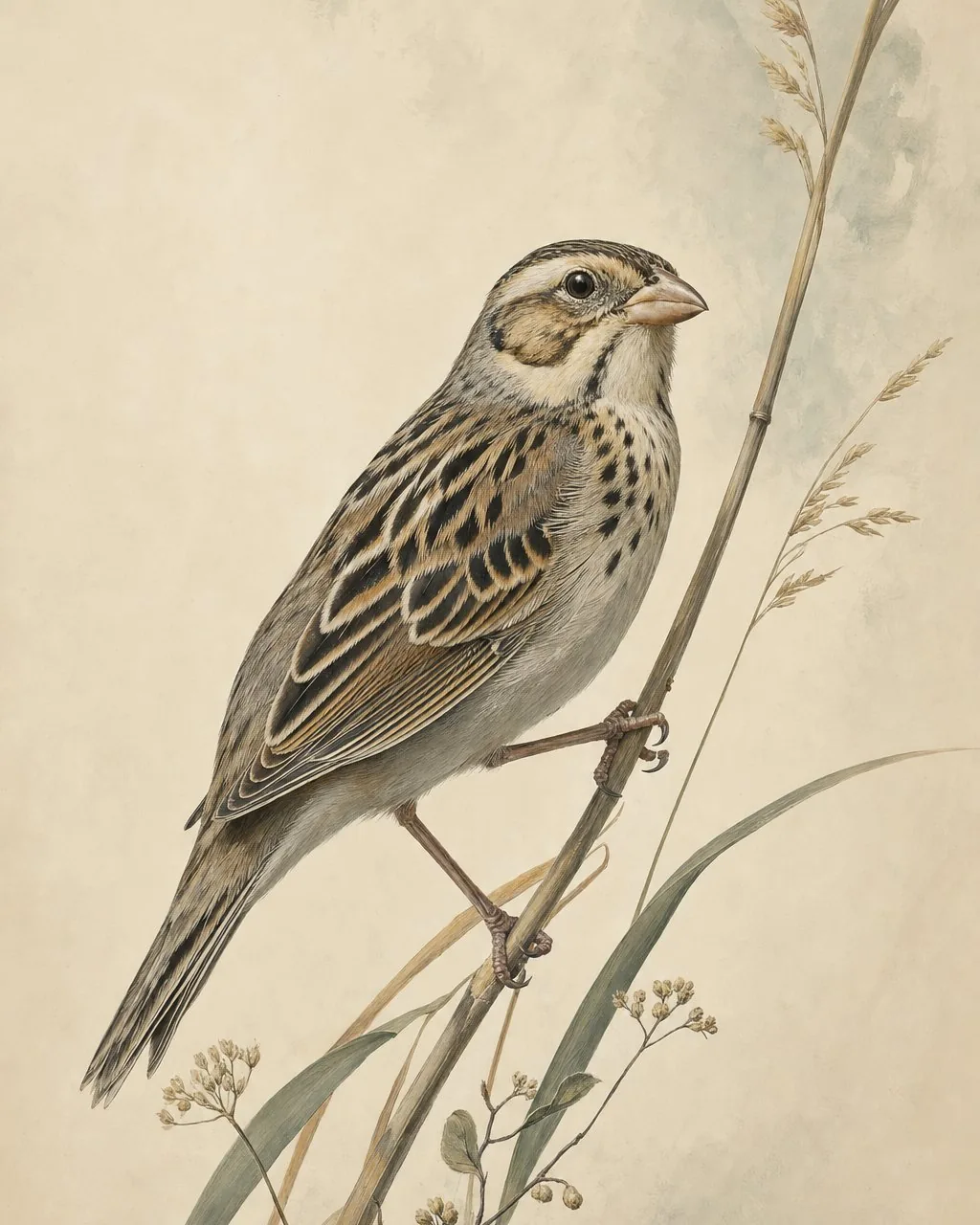
Small and flat-headed. The Grasshopper Sparrow has an unusually flat crown that gives the head a beady, reptilian look not shared by most sparrows. The neck appears short, the body compact, the tail stubby. The combination creates a profile more like a miniature rail than a typical finch.
The face pattern is distinctive: a yellow-orange supraloral spot in front of the eye, a pale median crown stripe, and a broad buffy supercilium. The back is a warm brown with black streaking and white shaft streaks that give the upperparts a scaled look. The underparts are pale buff, plain across the breast and flanks - no streaks, which separates it from most other grassland sparrows of similar size. The bill is large and pale for the bird’s size.
In the hand the wing formula shows the long primary projection of a true migratory sparrow. In the field you rarely get that close.
| Measurement | Range |
|---|---|
| Length | 11 - 13 cm |
| Weight | 14 - 20 g |
| Wingspan | 18 - 20 cm |
| Lifespan | 3 - 7 years |
“The Florida subspecies floridanus is federally endangered, cut off from the main population and now confined to a few dry prairie patches - a population within a species, tipping toward the edge.”
Voice
The song is the reason for the name. The Grasshopper Sparrow’s primary song is a thin, flat, insect-like buzz - a dry tsip-tseeeeee that sounds more like a grasshopper or a cicada than any bird. It is given from a grass stem or low fence and carries only a short distance. Pass through a meadow at noon in June in the right county and you may hear it from several males simultaneously without ever seeing one.
There is also a second song: a longer, warbling, more musical phrase given by males early in the breeding season, which sounds very little like the primary song and confuses birders who have not heard it before.
Calls include a thin, high tsip.
Range and habitat
Breeds across most of the continental United States and southern Canada wherever open, grassy areas exist: native prairie, old-field grassland, airport margins, reclaimed surface mines and dry meadows. It is absent from dense forest, wetland and desert. The bird is a ground-nesting species and it needs ungrazed or lightly grazed grass tall enough to provide cover but not so dense that ground movement is impeded.
In winter it moves south to the Gulf Coast, Florida, Central America and the Caribbean. Some populations resident in the Florida peninsula do not migrate.
Diet
An omnivore but primarily insectivorous during the breeding season. Grasshoppers are indeed a significant prey item, taken with the large bill by pouncing from a low perch or chasing on foot through the grass. Other invertebrates - beetles, caterpillars, spiders, earthworms - are also eaten. Seeds become more important in late summer and winter.
The bird forages almost entirely on the ground, moving through grass on its legs rather than hopping conspicuously as most sparrows do.
Breeding
Males arrive on territory in April or May and sing from grass stems, often invisible. The nest is built by the female on the ground, domed and hidden in a clump of grass, the entrance a tunnel through the surrounding vegetation. It is exceptionally well concealed.
Three to five eggs, white with reddish-brown spots. The female incubates alone for eleven to twelve days. Both parents feed the young, which leave the nest before they can fly, continuing to run through grass on their own legs. Two broods per season are common.
The species is a brood-nest parasitism target for Brown-headed Cowbirds, which reduces productivity in fragmented landscapes where cowbird pressure is high.
Decline and the Florida crisis
Partners in Flight estimates a 68 percent decline in Grasshopper Sparrow populations since 1970. The driver is consistent: grassland loss. Native prairie has been converted to row crops, hay meadows are cut earlier and more frequently, and urban expansion has eliminated old-field habitats that once provided secondary habitat.
The Florida Grasshopper Sparrow (A. s. floridanus) is the most extreme case. This non-migratory subspecies is confined to dry prairie in the Kissimmee Prairie region of central Florida. Habitat loss - from drainage, improved pasture conversion and suppression of natural fire that maintains open prairie - has reduced the population to fewer than 100 wild birds, possibly far fewer in poor years.
Captive-rearing programs have produced chicks for reintroduction, but the wild habitat remains the constraint. Without fire-managed dry prairie, captive-bred birds have nowhere to go.
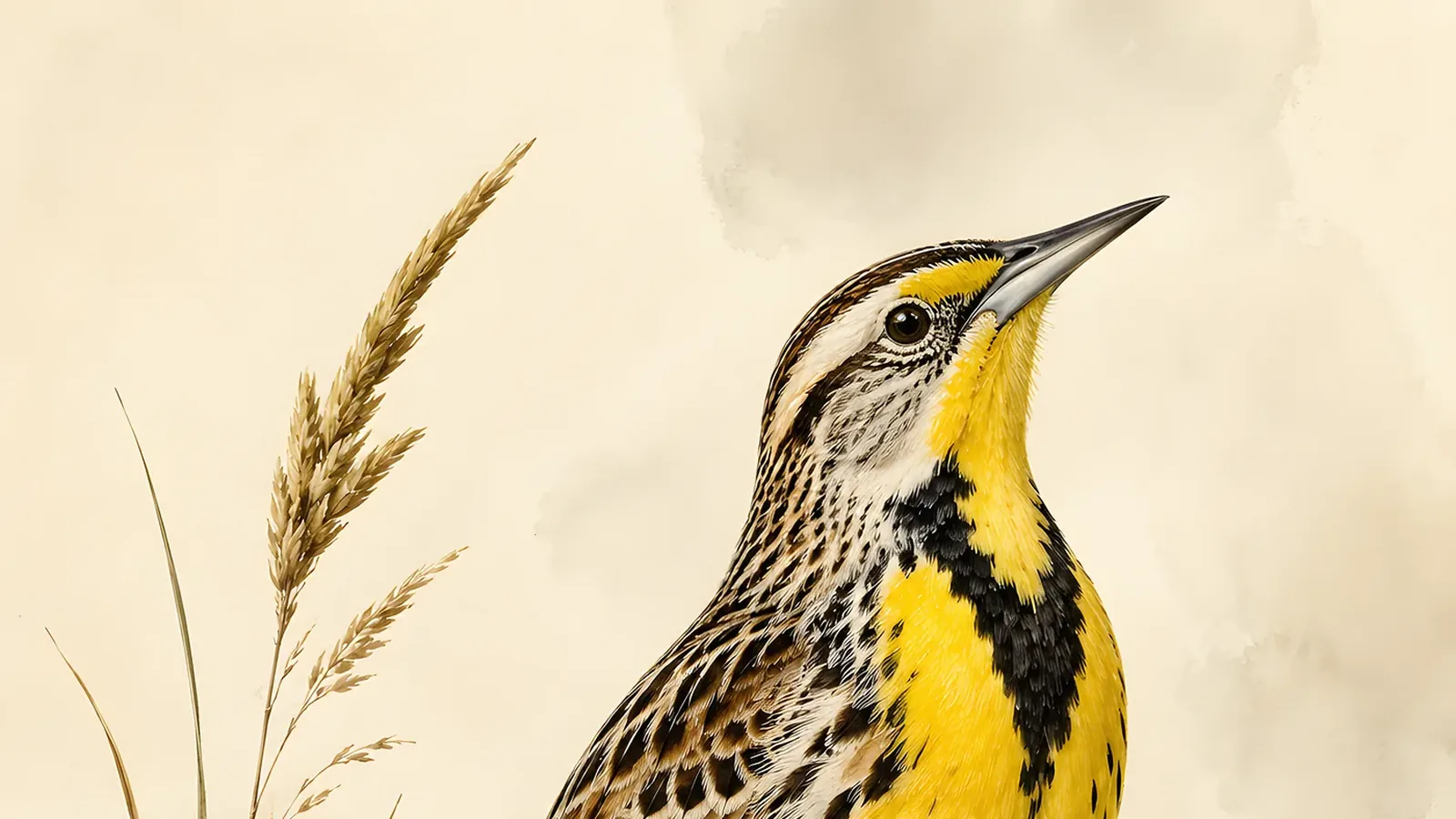
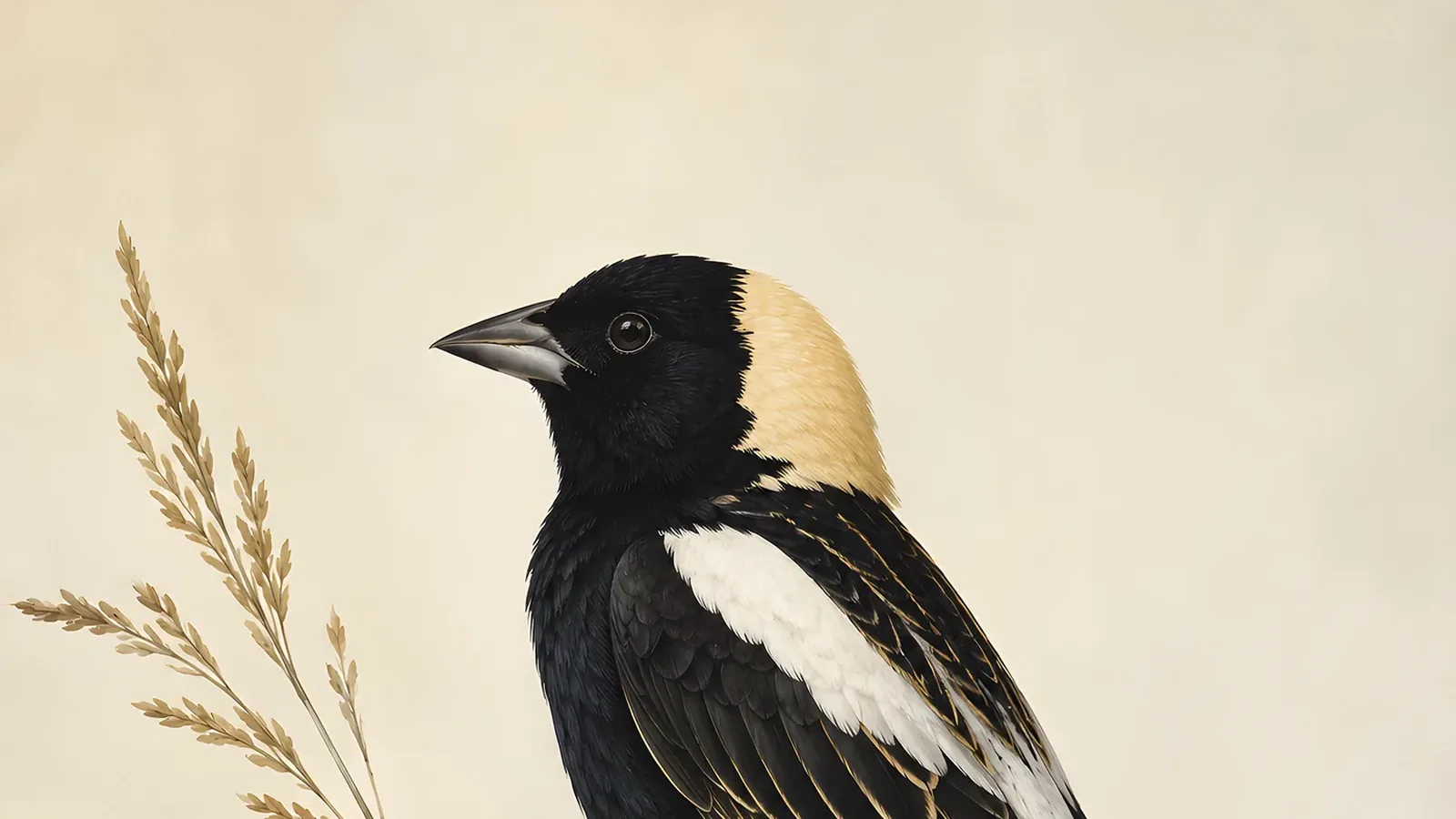
The Grasshopper Sparrow’s situation is a quieter version of the same story that applies to the Eastern Meadowlark and the Bobolink: grassland-dependent birds are declining faster than any other guild of North American birds. The Grasshopper Sparrow is smaller, less visible, and easier to overlook, which means the decline has been less publicized. But the numbers are unambiguous.
The bird that sounds like an insect, crouching in the grass stem base, is a measure of how much grass is left.