Field Guide
Upland Sandpiper
You hear it before you see it: a long, ascending wolf-whistle that rises to a quavering wail and then falls away across the prairie. Nothing about the sound says shorebird. Nothing about the bird’s surroundings - a dry pasture in Oklahoma, telephone wires, an unbroken sweep of bluestem - says shorebird either. But the Upland Sandpiper is one, by ancestry and classification if not by habit. It is a shorebird that traded the coast for the continent’s heart, and the trade suited it perfectly - until the continent’s heart began to disappear.
What it looks like
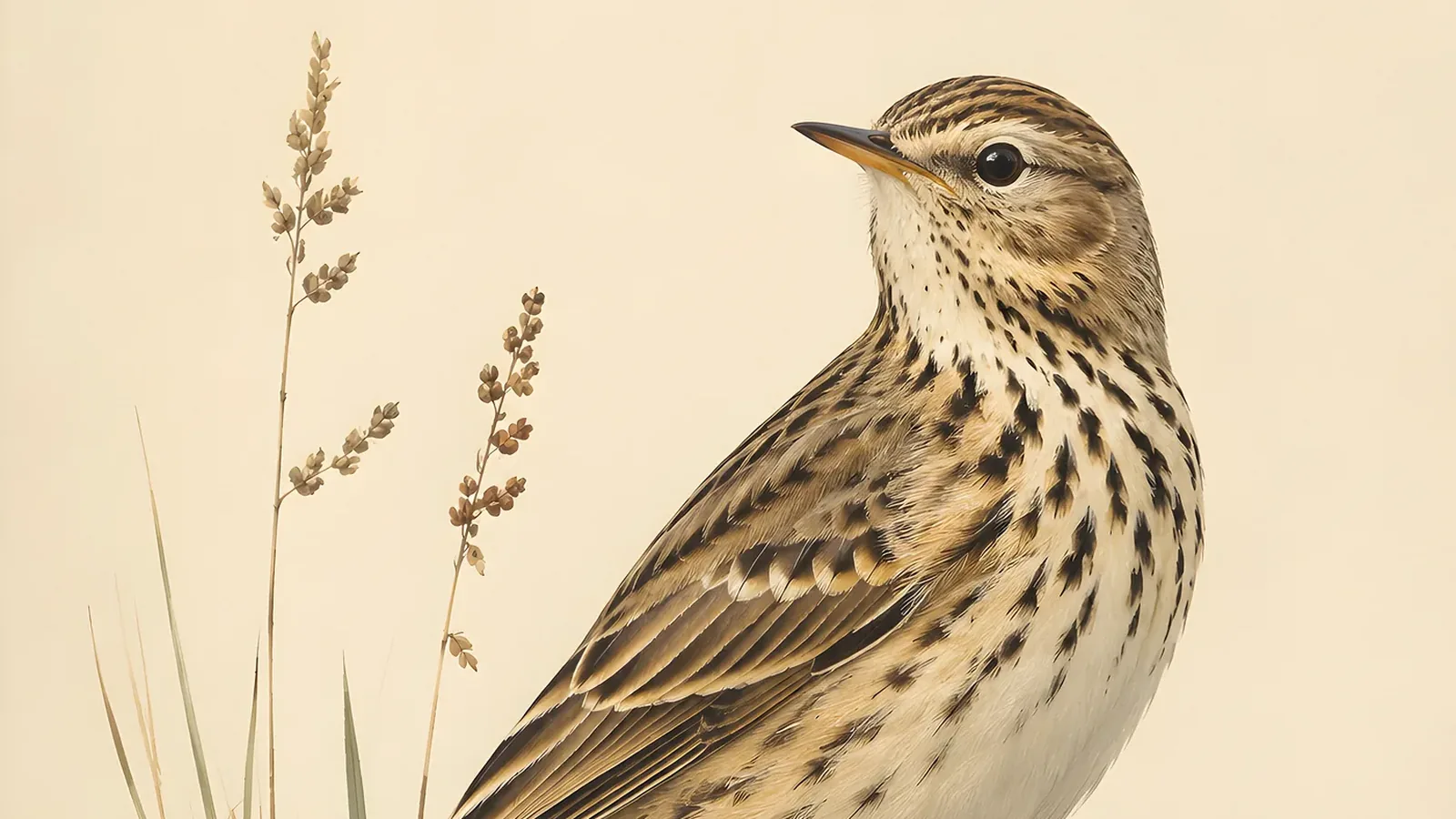
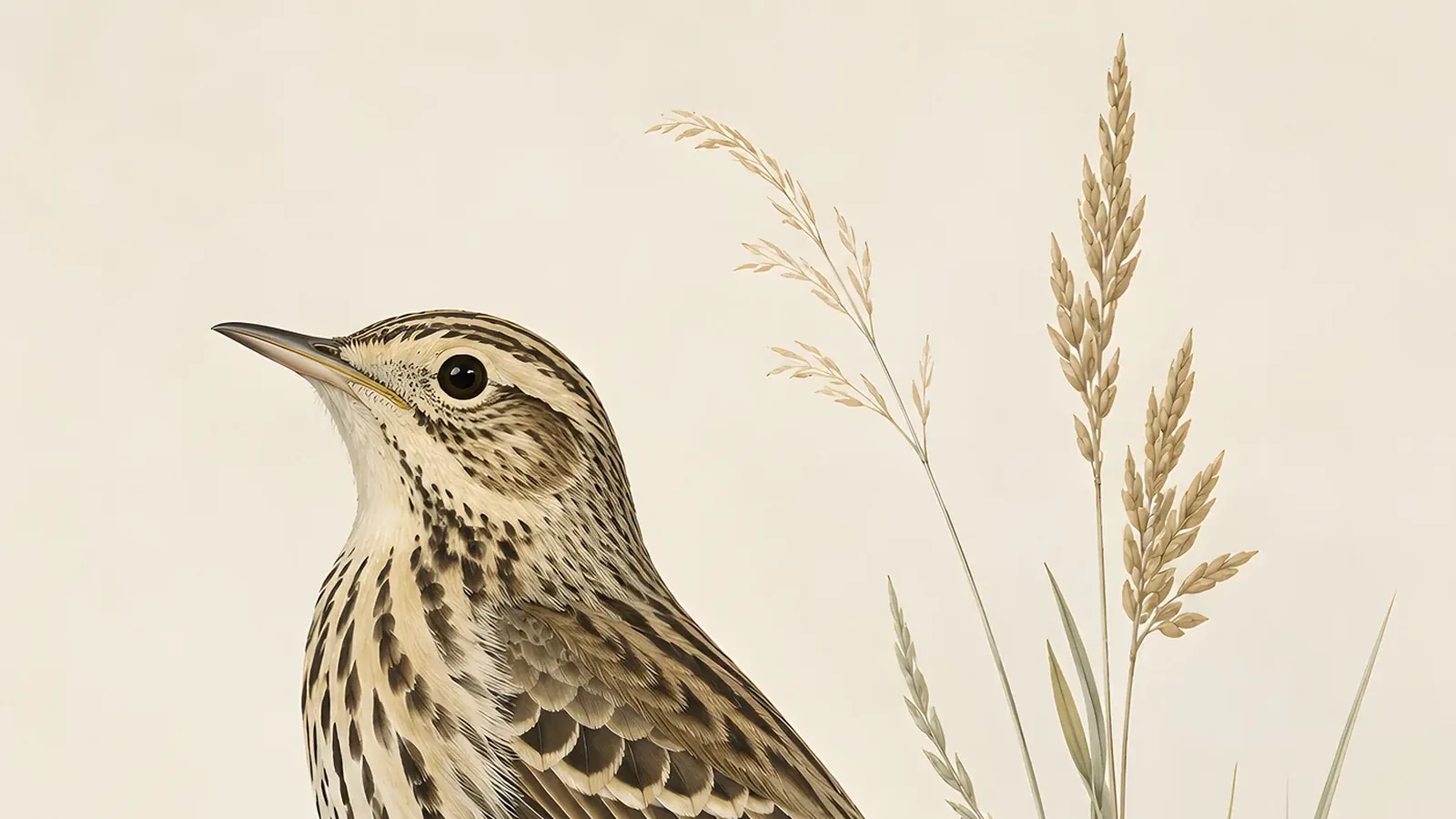
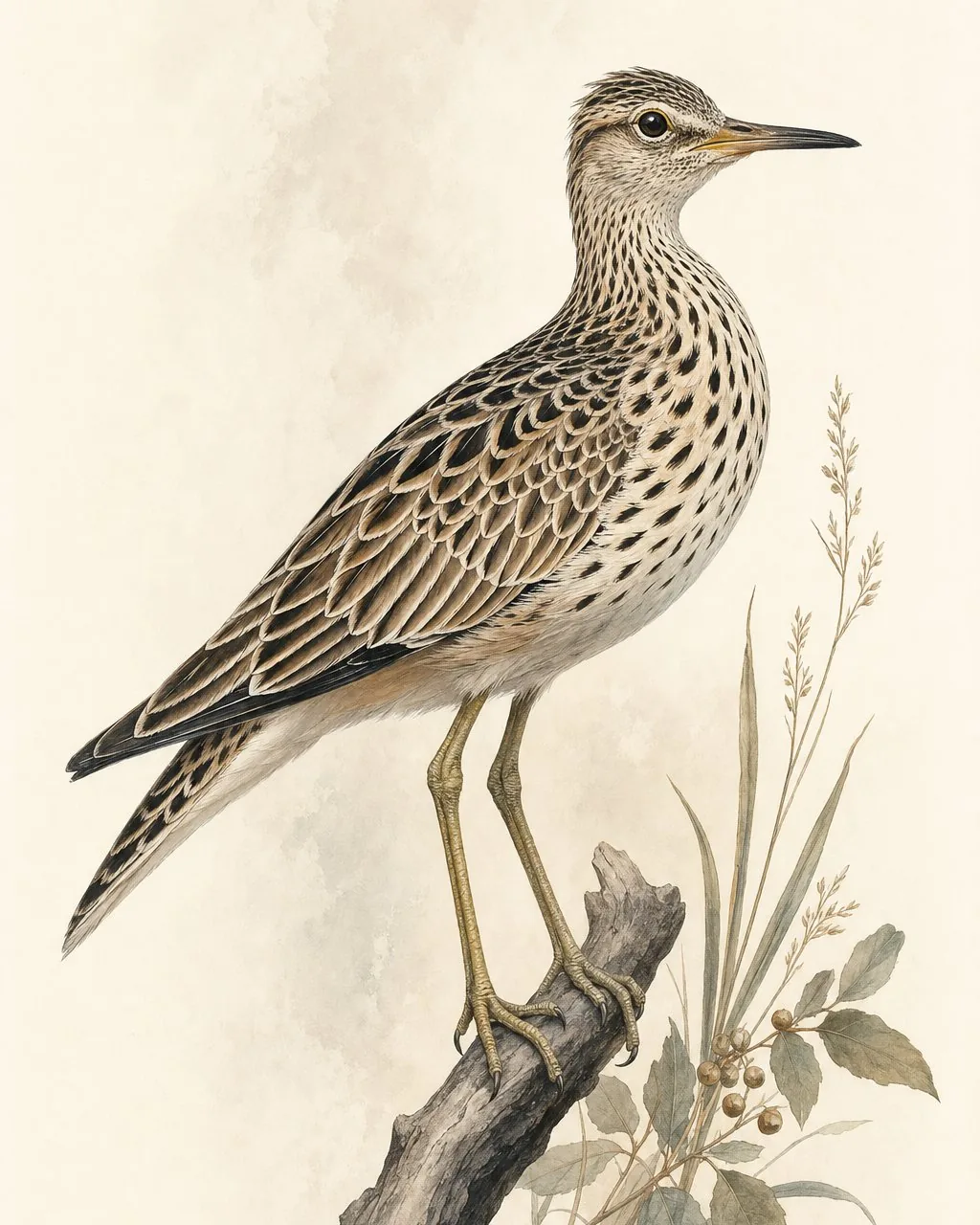
A long-necked, small-headed, oddly proportioned bird. The neck is conspicuously thin for the body size, making the bird look perpetually alert, as if it has just heard something in the grass. The head is round and small, with a large dark eye set well forward. The bill is short and straight, yellowish at the base, not the probing instrument of a tidal flat.
The upperparts are brown and buff, streaked darker. The underparts are pale with brown barring that extends across the breast and flanks. The tail is long and the primaries extend well beyond it when the wings are folded. The legs are yellow. In flight the bird shows dark outer primaries and a barred tail held spread as it drops back into the grass.
Stand one next to a Dunlin and you would not immediately guess they are cousins. The Upland Sandpiper looks less like a shore species and more like a small rail or a young curlew.
| Measurement | Range |
|---|---|
| Length | 28 - 32 cm |
| Weight | 130 - 220 g |
| Wingspan | 50 - 55 cm |
| Lifespan | 4 - 12 years |
“Its genus name honours William Bartram, the eighteenth-century naturalist who walked the American South in the 1770s with a notebook and a gift for clear seeing.”
Voice
The defining sound is the song given on the breeding territory - a long, liquid whistle that begins as a bubbling trill and then lifts into a rising whe-e-e-e-eep that carries across an entire meadow. It sounds more like a steam whistle on a distant train than anything a bird normally produces. It is given on the wing and from fence posts, and once you have learned it you will find yourself hearing it from moving vehicles and turning off the radio to make sure.
The flight call is a rolling pip-pip-pip, quick and quiet. Flushed birds sometimes give a rippling trill as they climb.
Range and habitat
The Upland Sandpiper is a bird of open, tall-grass prairie and pasture. It does not need water except to drink. It breeds across the Great Plains from Oklahoma north through Kansas, Nebraska, the Dakotas, and into Canada, with scattered populations east to New England wherever large open grasslands remain.
It arrives on breeding grounds in April and May, when the grass is still short enough to allow territorial display flights. By mid-July the adults are already moving south, one of the earlier departing neotropical migrants. The young birds follow a few weeks later. The wintering grounds are the Pampas of Argentina, Uruguay and southern Brazil - another vast grassland, though under its own development pressures.
The bird is tolerant of agricultural land in the right form: ungrazed or lightly grazed pasture and hayfields are acceptable. What it cannot use is intensively cultivated row-crop land, and that is what has replaced most of its habitat.
Diet
Almost entirely insects and other small invertebrates. Grasshoppers are the main prey in summer and the bird consumes them in quantities large enough to make it genuinely useful to farmers - a fact noted repeatedly in nineteenth-century agricultural literature. It also takes beetles, caterpillars, earthworms, and occasionally plant seeds. It hunts by walking slowly through grass and picking prey from stems and the soil surface. It does not probe.
Breeding
The male establishes territory in April and performs a slow, bat-like display flight over the prairie, wings held in a deep V. His song fills the flight. Nest sites are shallow scrapes in grass, well hidden and often near a fence line or shrub edge.
The four eggs are buff with brown and lilac spots, and both parents incubate for roughly three weeks. The chicks are precocial and leave the nest quickly, led by the parents through the grass. Fledging takes about a month.
Nesting success is sensitive to hayfield mowing schedules. Nests in hayfields are frequently destroyed by early-season cuts, and populations in agricultural areas have declined sharply. Conservation programs that adjust mowing timing - or compensate farmers for delaying cuts - show measurable benefits.
A grassland ghost
The Upland Sandpiper was once common enough to be a market gunning target. John James Audubon documented it. Naturalists in the 1870s and 1880s described it as abundant across the prairies. By the early twentieth century market hunting had reduced populations severely. It recovered after the passage of the Migratory Bird Treaty Act in 1918, only to face a slower decline as the grasslands themselves shrank.
In the late twentieth century surveys showed steady losses. The current IUCN listing is LC, but partners in flight estimates suggest a 40 percent decline in the North American population since 1970. The cause is the conversion of native prairie to row crops, combined with the intensification of hayfield management.
The bird is not yet in crisis. But it stands as an example of a category of species in quiet freefall - not at a threshold yet, but losing ground each decade with no obvious reversal coming. The wolf-whistle across the pasture is still being given. Whether it is answered depends on what proportion of the Great Plains remains in grass.
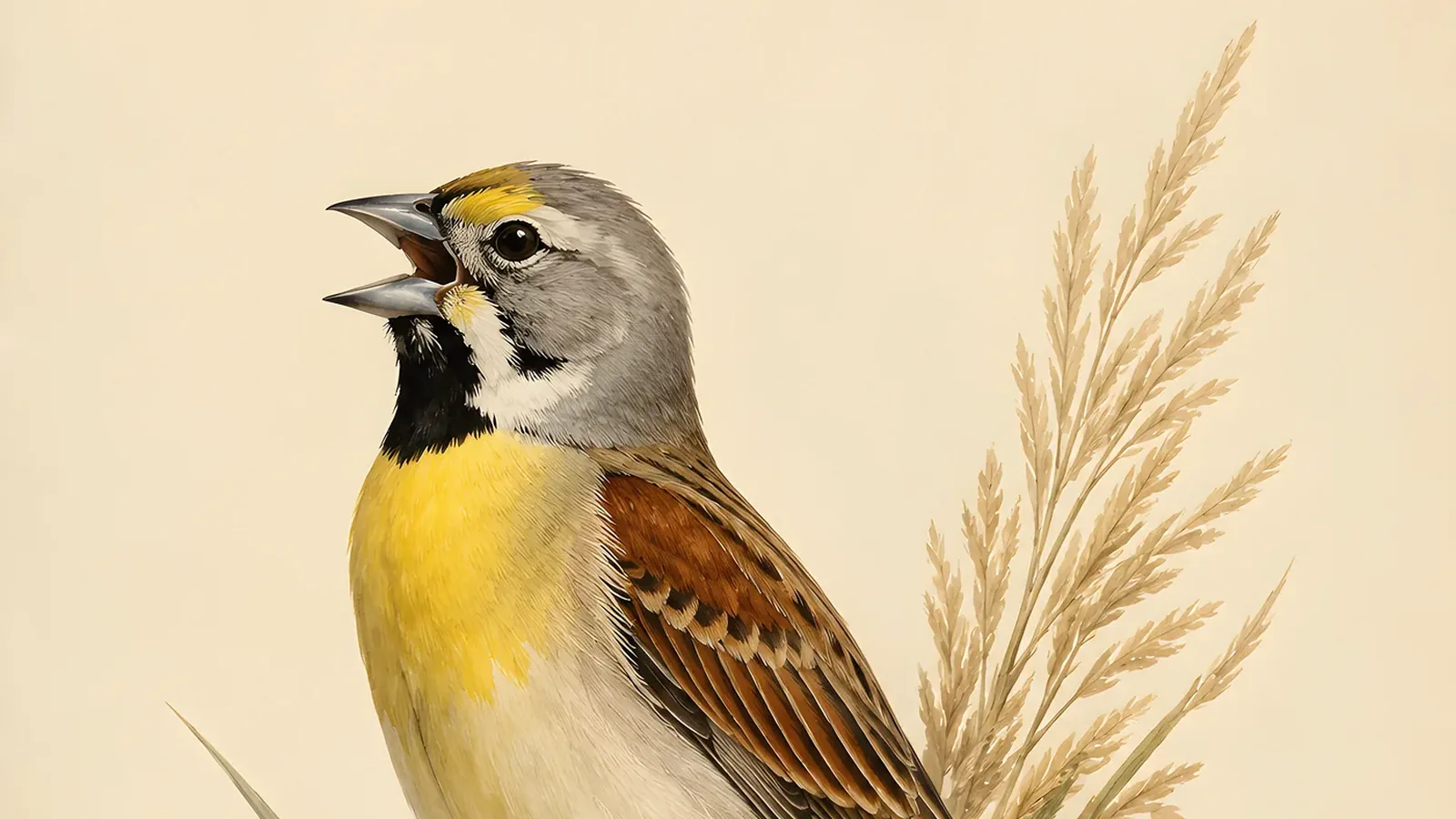
The Steller’s Jay and the Dickcissel share something with the Upland Sandpiper: they are birds that define a specific habitat, and when that habitat contracts, they contract with it, too quietly for anyone to notice until the silence is measurable.