Field Guide
Lark Bunting
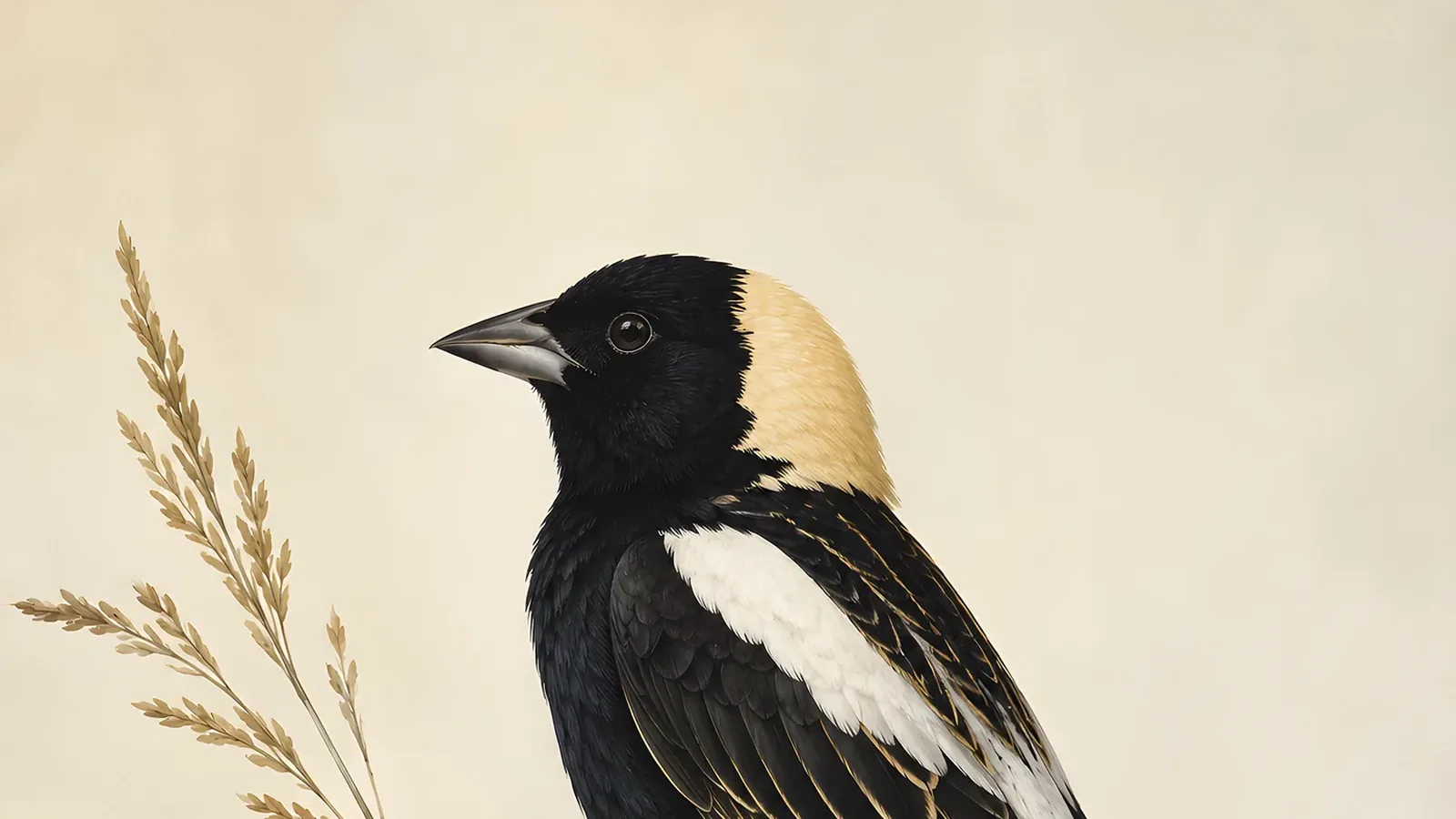
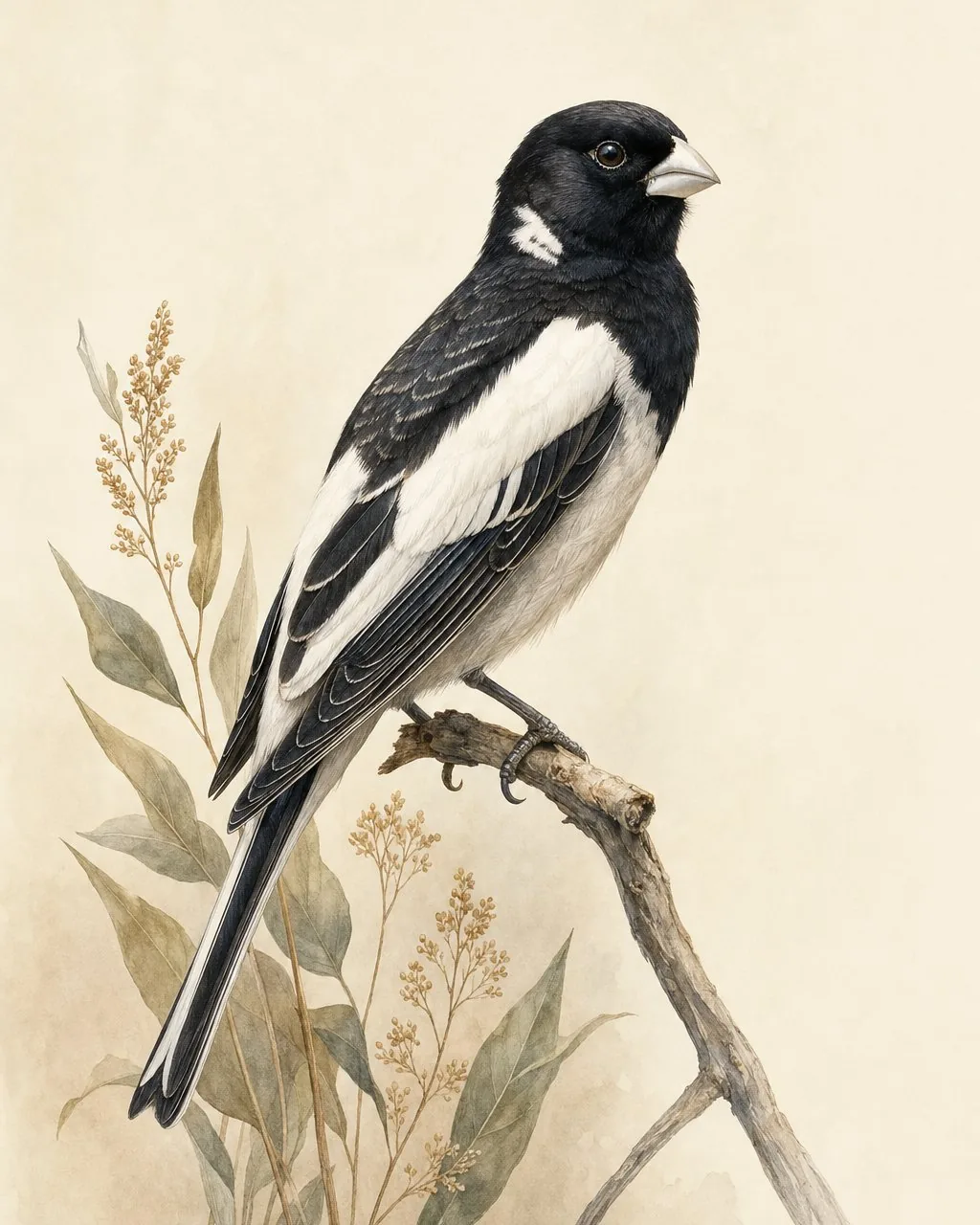
Driving west across the Colorado plains on a May morning, you notice them on the fence wires. A dark bird, then another, then a cluster of fifteen. You pull over. Breeding males, in full dress, are startling - jet black from cap to tail with a large white wing patch that, in flight, flashes like a semaphore signal across the blue sky. These are Lark Buntings. Colorado has chosen them as the state bird, which is appropriate, because they are quintessentially a Great Plains bird, nomadic and seasonal and tied to the landscape in ways that still are not fully understood.
What it looks like
The breeding male Lark Bunting is one of the most unambiguous birds in North America. The plumage is all black except for large white patches on the wing coverts, visible both in flight and at rest, and occasional white tipping on the tail feathers. No other bird in this size range looks like this.
The female is brown above, streaked darker, with a buff supercilium, and has the same white wing patches in reduced form. In winter the male resembles the female: brown, streaked, with white wing patches that remain the best field mark. The bill is large and conical, pale blue-grey - a seed-crushing instrument of some power.
Size is between a sparrow and a small blackbird. The Lark Bunting is heavier-bodied than most sparrows and has a chunkier, finch-like quality. The tail is relatively short.
| Measurement | Range |
|---|---|
| Length | 14 - 18 cm |
| Weight | 31 - 47 g |
| Wingspan | 25 - 29 cm |
| Lifespan | 3 - 7 years |
“The Lark Bunting’s social complexity is unusual for a songbird: males in good years may be monogamous, in poor years polygynous, and flocks wander hundreds of kilometres between breeding seasons with no fixed winter site.”
Voice
The song is rich and varied - a mix of clear whistles, trills and buzzy notes, delivered in longer phrases than most sparrows. It is given from fence posts and in song flights, the male rising from the grass and descending on set wings while singing. The effect is melodic and carrying. Flocks produce a pleasant, murmuring chorus when settled on wires or foraging in grass.
Calls include a soft wheet and a rising hew that are distinct and learnable.
Range and habitat
The Lark Bunting breeds on open short-grass and mixed-grass prairie, from eastern Colorado and Kansas through the Oklahoma panhandle, the Dakotas, and into southern Saskatchewan and Alberta. It is associated with drier, more open prairie than species like the Dickcissel, preferring areas where vegetation is not too tall.
After breeding, the species is highly nomadic. Winter flocks can concentrate in large numbers in the southwestern United States and northern Mexico, but the specific locations shift from year to year with rainfall and food availability. A field that held thousands of Lark Buntings one December may be empty the next.
This nomadism is a Great Plains adaptation. On a landscape where rainfall is variable and plant productivity unpredictable, the ability to track resources across large distances is more useful than site fidelity.
Diet
Seeds are the primary food, particularly grass seeds and weed seeds. During the breeding season, insects become important and the diet shifts toward grasshoppers, beetles, caterpillars and other arthropods, especially for provisioning nestlings. The large bill crushes hard seeds effectively, allowing the bird to exploit food sources that smaller-billed species cannot access.
Breeding
Males arrive on the breeding grounds in May, often in large, loose flocks, before dispersing to territories. Pair formation is rapid and the social system is flexible - monogamy is the default, but polygyny occurs, particularly in years or areas where food is abundant enough to support a male providing for two clutches simultaneously.
The nest is a compact cup placed on the ground in a grass clump, usually under a plant that provides overhead cover. Four to five eggs, pale blue or greenish-white, lightly spotted. Both parents incubate for eleven or twelve days. The male is unusual among songbirds in being an active incubator.
Chicks fledge in about ten days. By mid-July many adults are already forming flocks and beginning to move south, while late-season young are still completing development.
Colorado’s bird and its quiet decline
The Lark Bunting was adopted as the Colorado state bird in 1931, a recognition of its abundance and conspicuousness on the plains that dominate the eastern third of the state. At that time the short-grass prairie was intact enough, and the bird common enough, that the choice seemed obvious.
Partners in Flight now estimates the Lark Bunting has declined roughly 70 percent since 1970, earning it a Near Threatened listing on the IUCN Red List. The cause is the same as for most Great Plains grassland birds: conversion of native and semi-native grassland to row crops, particularly wheat and corn, combined with intensive livestock grazing that degrades the structure of remaining grassland.
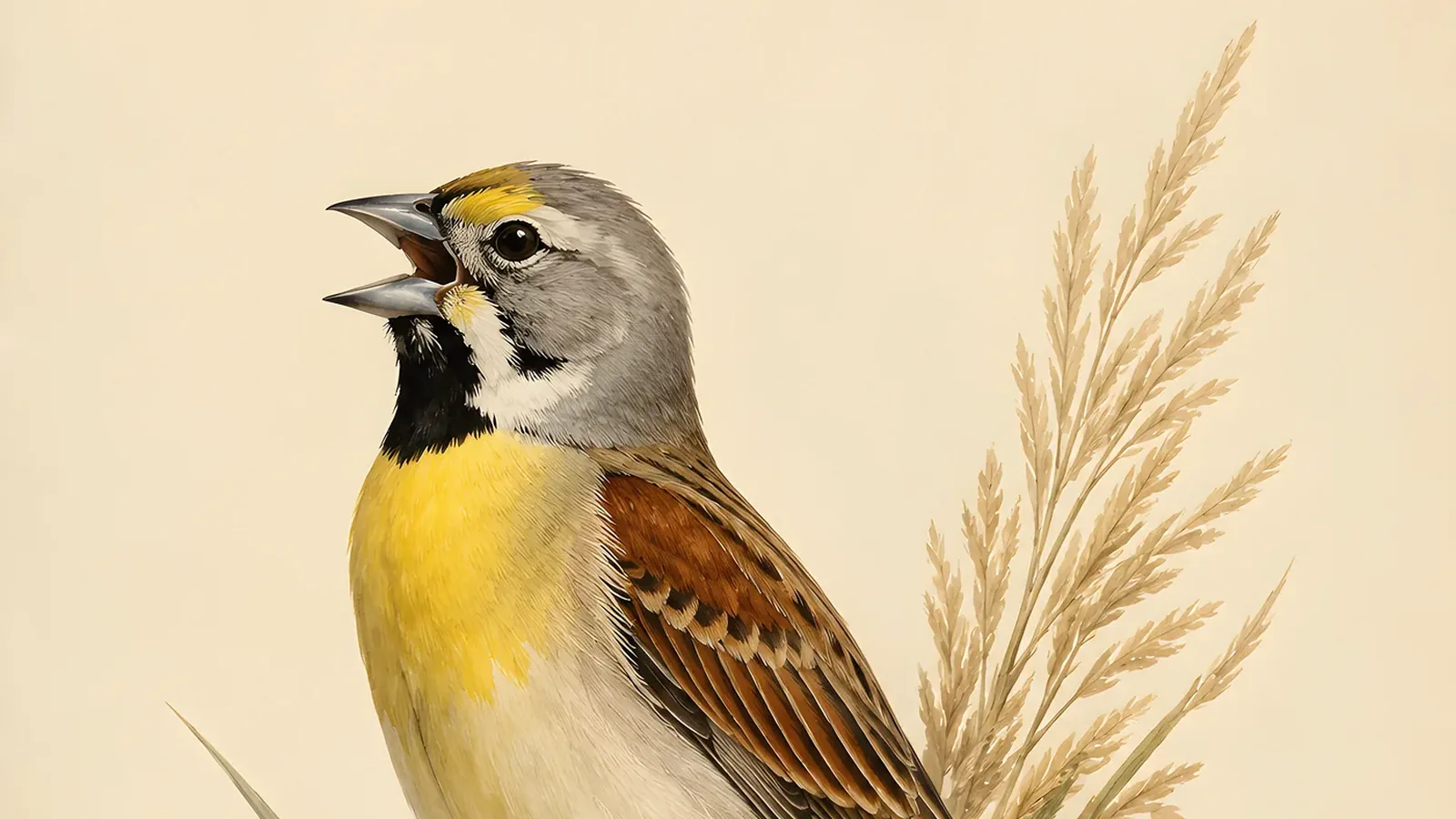
The Bobolink and the Dickcissel have suffered similar declines. What unites these birds is dependence on a habitat type - open, grassy plains - that once covered hundreds of millions of acres of North America and now covers a fraction of its former extent.
The Lark Bunting’s nomadism may provide some buffer against the worst effects - a bird that can shift its wintering grounds to follow food may be more resilient than site-faithful species. But nomadism requires that there is somewhere to go, and the Great Plains grassland that the bird ranges across is contracting on all sides.
Colorado’s state bird is still there, still flashing white in May against the prairie sky. Whether it remains the defining bird of the eastern plains depends on decisions being made about what the land east of the Rockies is for.