State Guide
Birds of New York
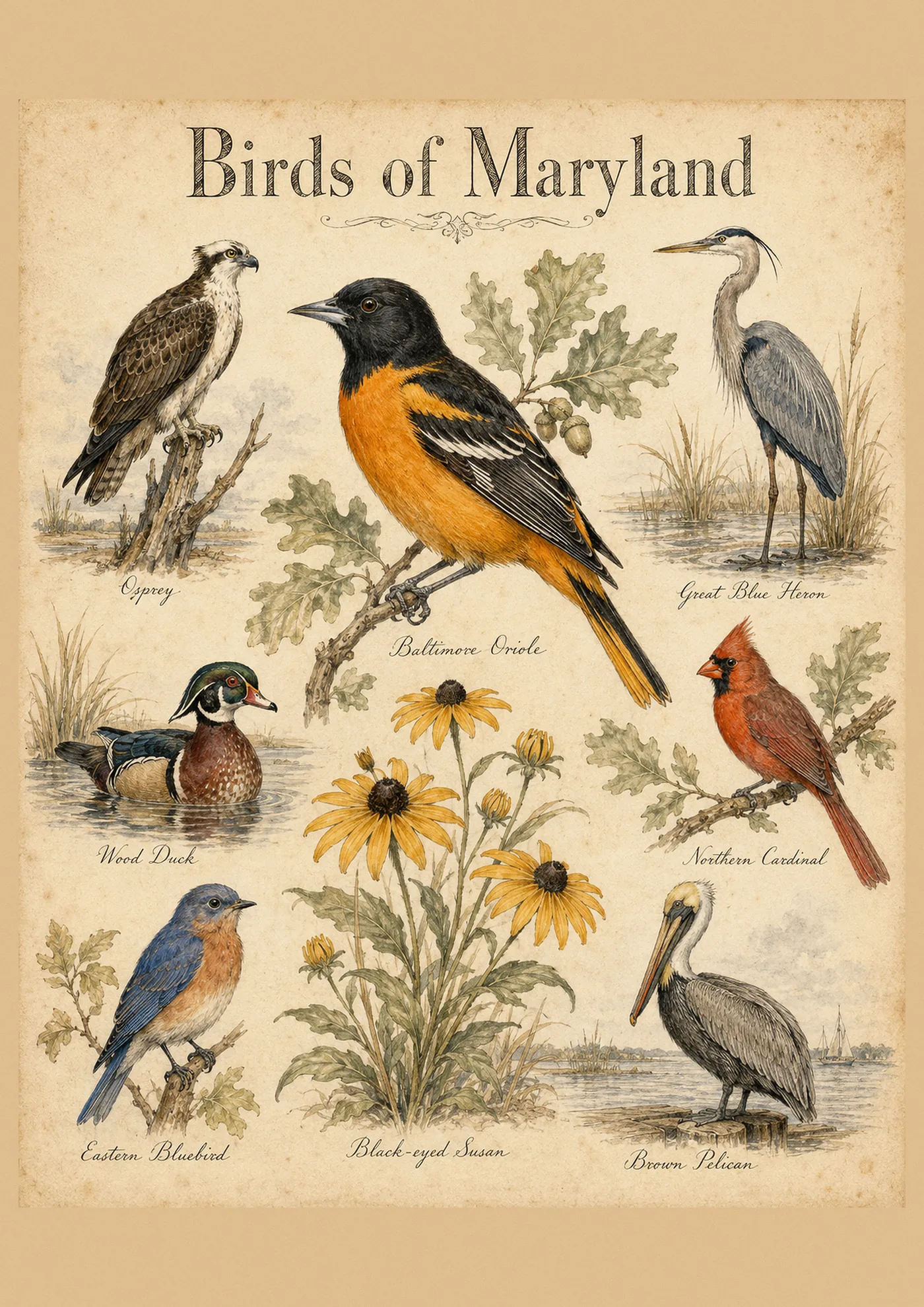
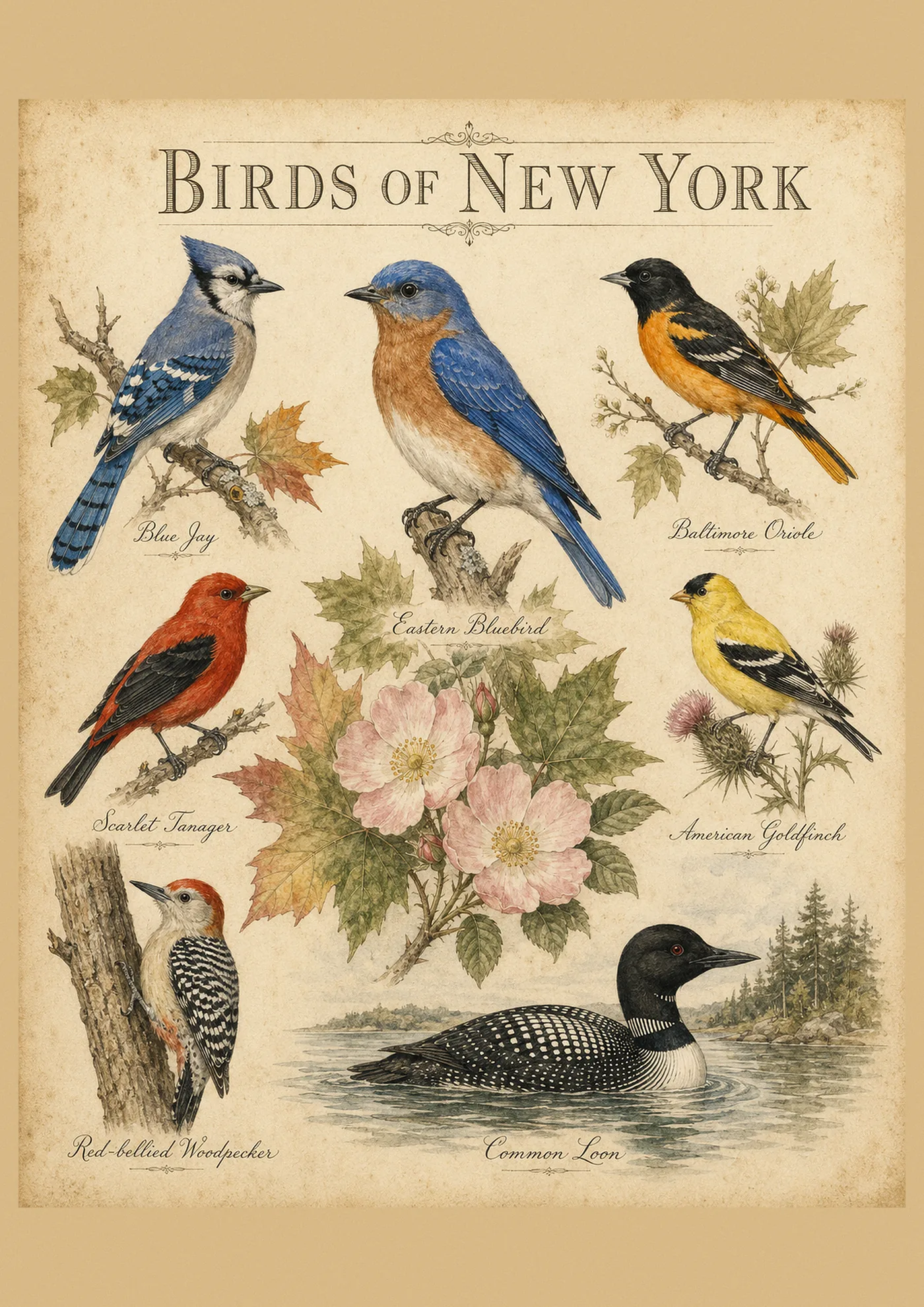
In 1928, the New York Federated Women’s Clubs chose the Eastern Bluebird as the state’s unofficial bird. The American Robin had been the leading candidate until Mrs. Charles Cyrus Marshall, then president of the Federation, campaigned decisively for the bluebird. The state agreed with her in spirit for four decades - and then Governor Nelson Rockefeller made it law on May 18, 1970. New York was the last state in the union to designate an official bird.
The bluebird’s belated legal status is a minor footnote compared to the bird itself. The male (Sialia sialis) is a small thrush carrying a sky-blue back and a rust-coloured breast that looks, in the right morning light, like a piece of sky that has been singed at the edges. He is a cavity nester, dependent on old orchards, open farmland, and nest-box trails. His numbers fell sharply through the mid-twentieth century as starlings and House Sparrows colonised his nest holes; nest-box programmes run by local Audubon chapters across New York have contributed to the species’ recovery since the 1970s. The New York State Department of Environmental Conservation notes that bluebirds ranked among the earliest returning migrants each spring, appearing at nest boxes in the Hudson Valley and Finger Lakes region while frost still holds the ground.
New York’s geography makes the state’s 518-species checklist possible. The state runs from the Atlantic barrier beaches of Long Island north to the St. Lawrence River, west across the Great Lakes plain, and into the Adirondack High Peaks. The New York State Ornithological Association’s checklist records 249 species known to breed here - a figure that encompasses salt marsh, boreal summit, bottomland forest, and suburban lawn.
Signature and speciality species
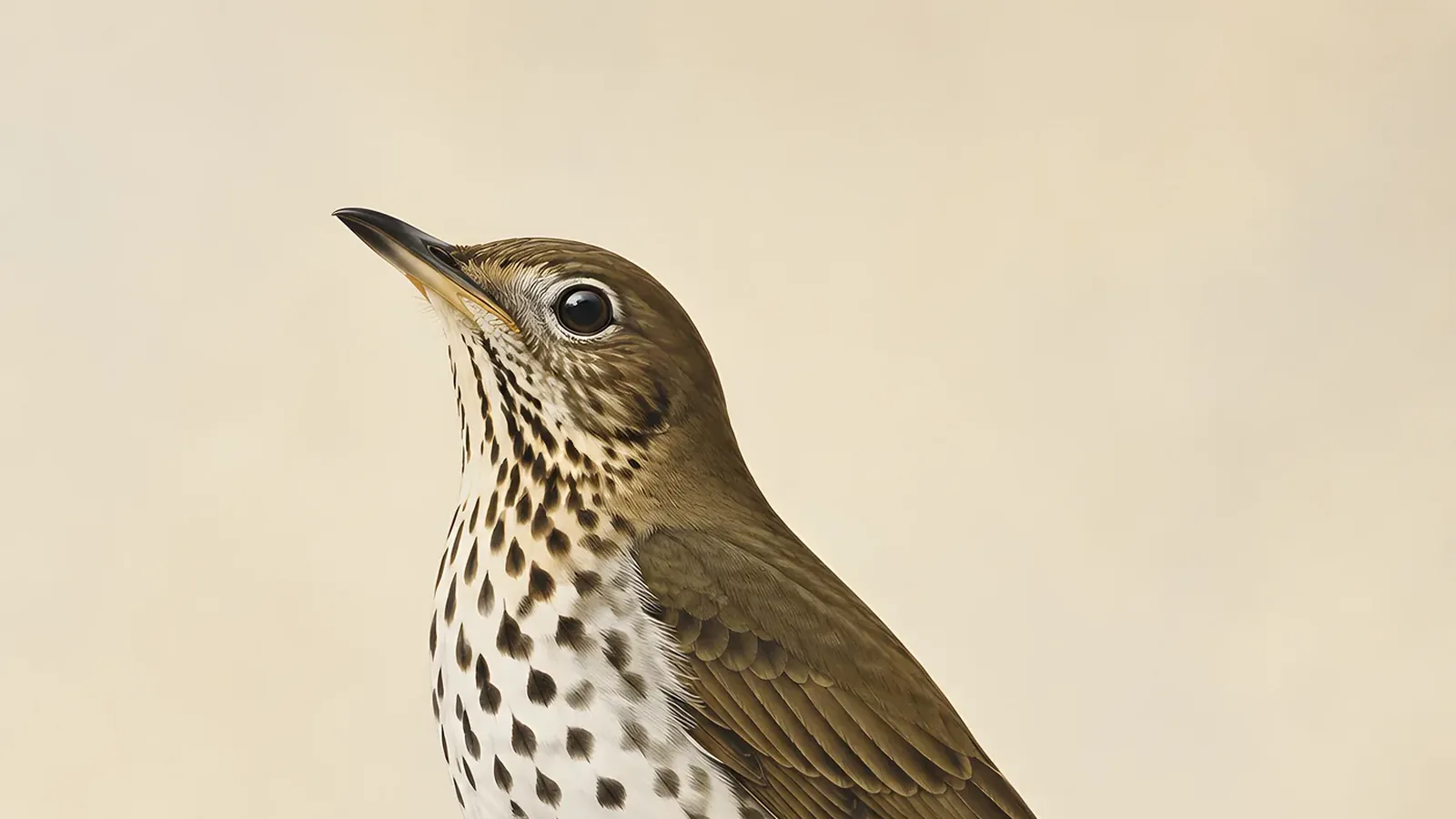
Bicknell’s Thrush is New York’s most geographically constrained breeding bird, and the only species endemic to the northeastern United States and adjacent Canada. It nests in the stunted balsam-fir zone - the krummholz - on Adirondack and Catskill summits, breeding in fir thickets where the canopy rarely exceeds 15 feet. The eBird New York Breeding Bird Atlas names it the state’s sole endemic, and the distinction is not academic: Mountain Birdwatch surveys show a 44% population decline since 2010, with Catskill populations down roughly 70% in 14 years. Climate change is pushing the treeline upward; there is a finite amount of summit left.
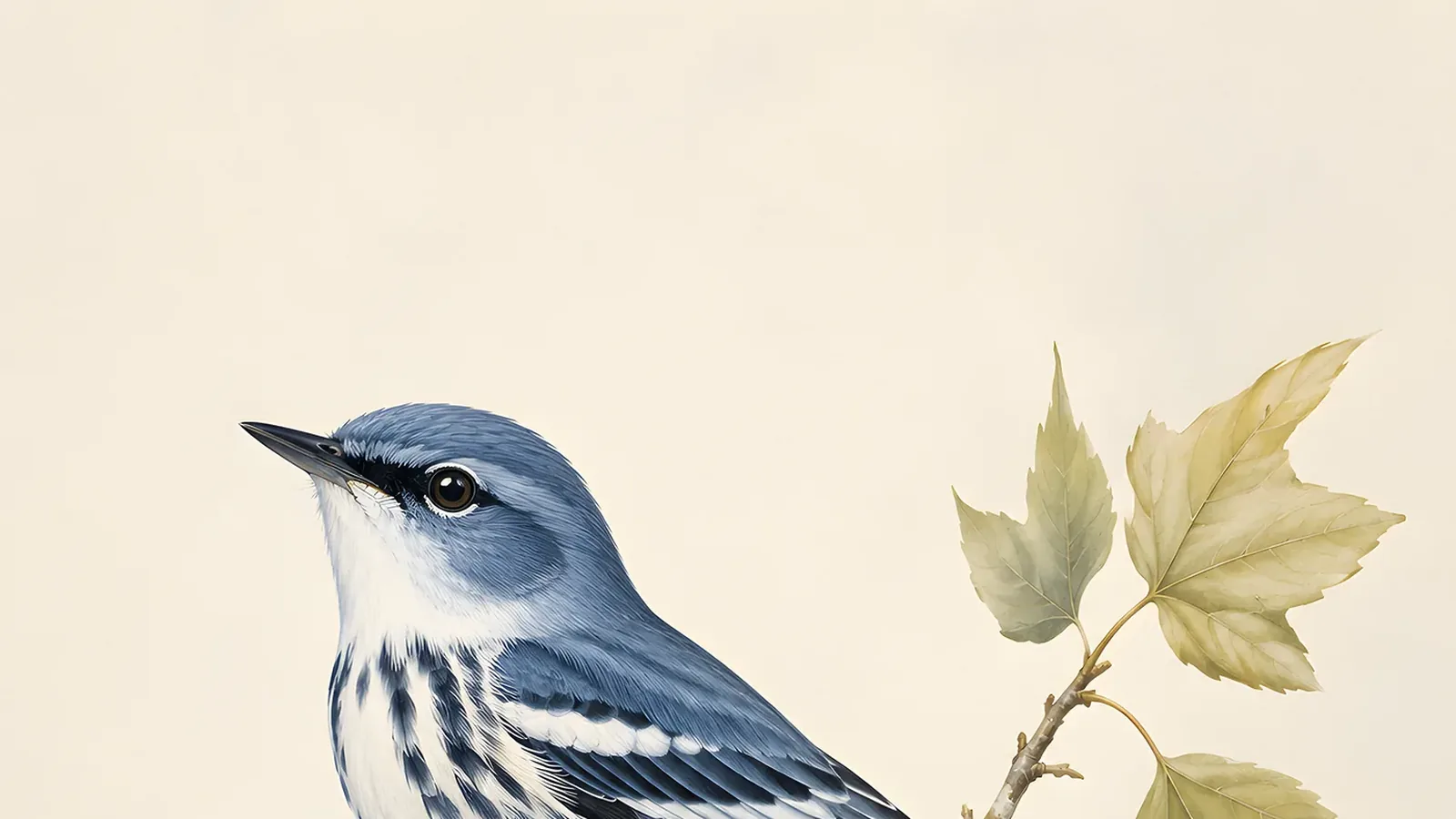
Cerulean Warbler breeds in two habitat types in New York - dry oak-hickory ridgetops and riparian forests with maple, ash, and sycamore - and the New York Natural Heritage Program notes that its breeding distribution declined by 13% between the first state Breeding Bird Atlas (1980-1985) and the second (2000-2005). Finding a male singing from the high canopy on a June morning in the Hudson Highlands remains one of the more sought-after experiences in northeastern birding.
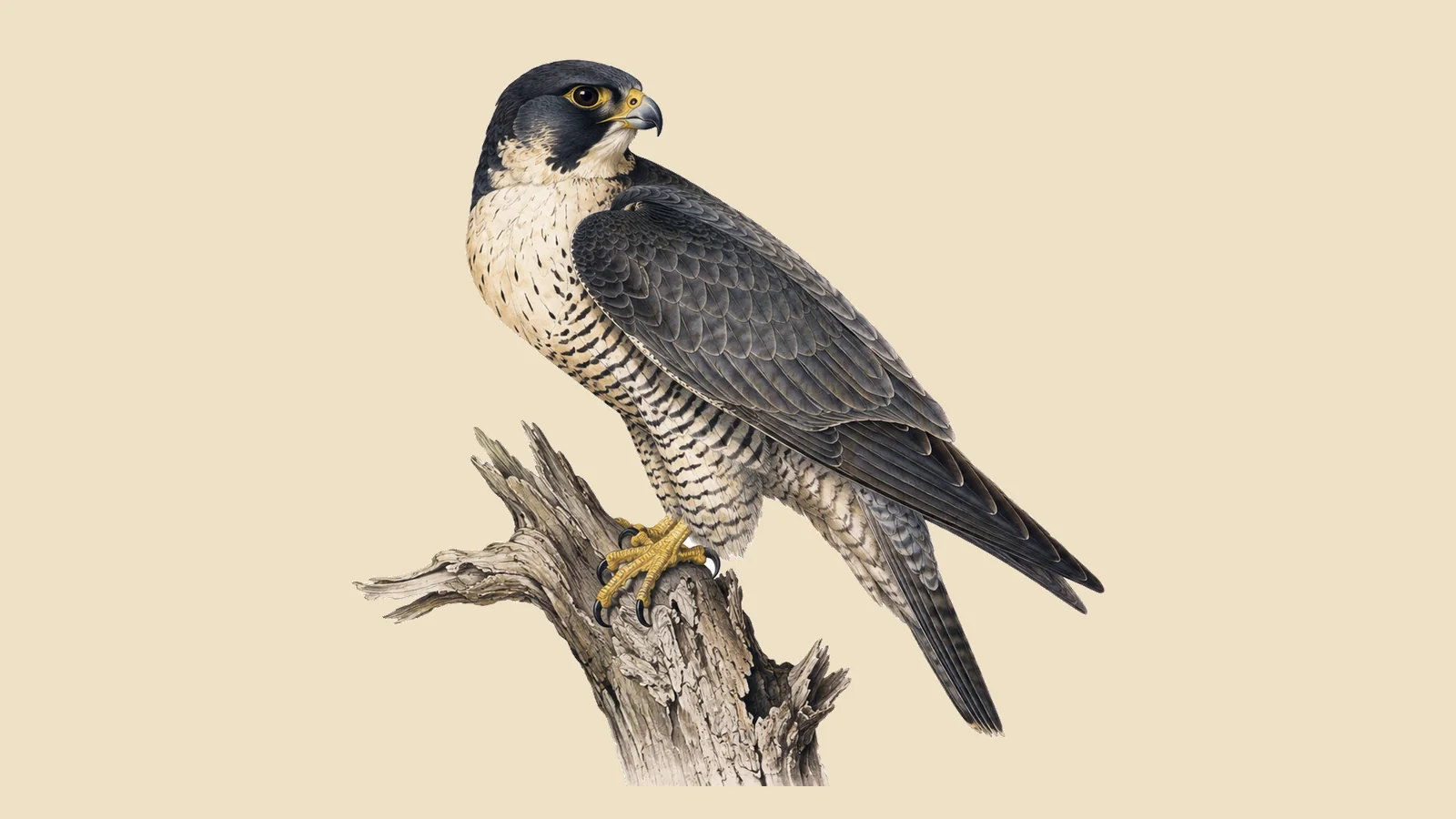
Peregrine Falcon was extirpated from New York by DDT. Its return to Manhattan’s skyscrapers - which serve as artificial cliff faces - is one of the more documented urban conservation stories in American birding. Cornell Lab of Ornithology has tracked the Manhattan pair closely; peregrines now nest on bridges and tall buildings across the state, with eBird recording them year-round in all five boroughs.
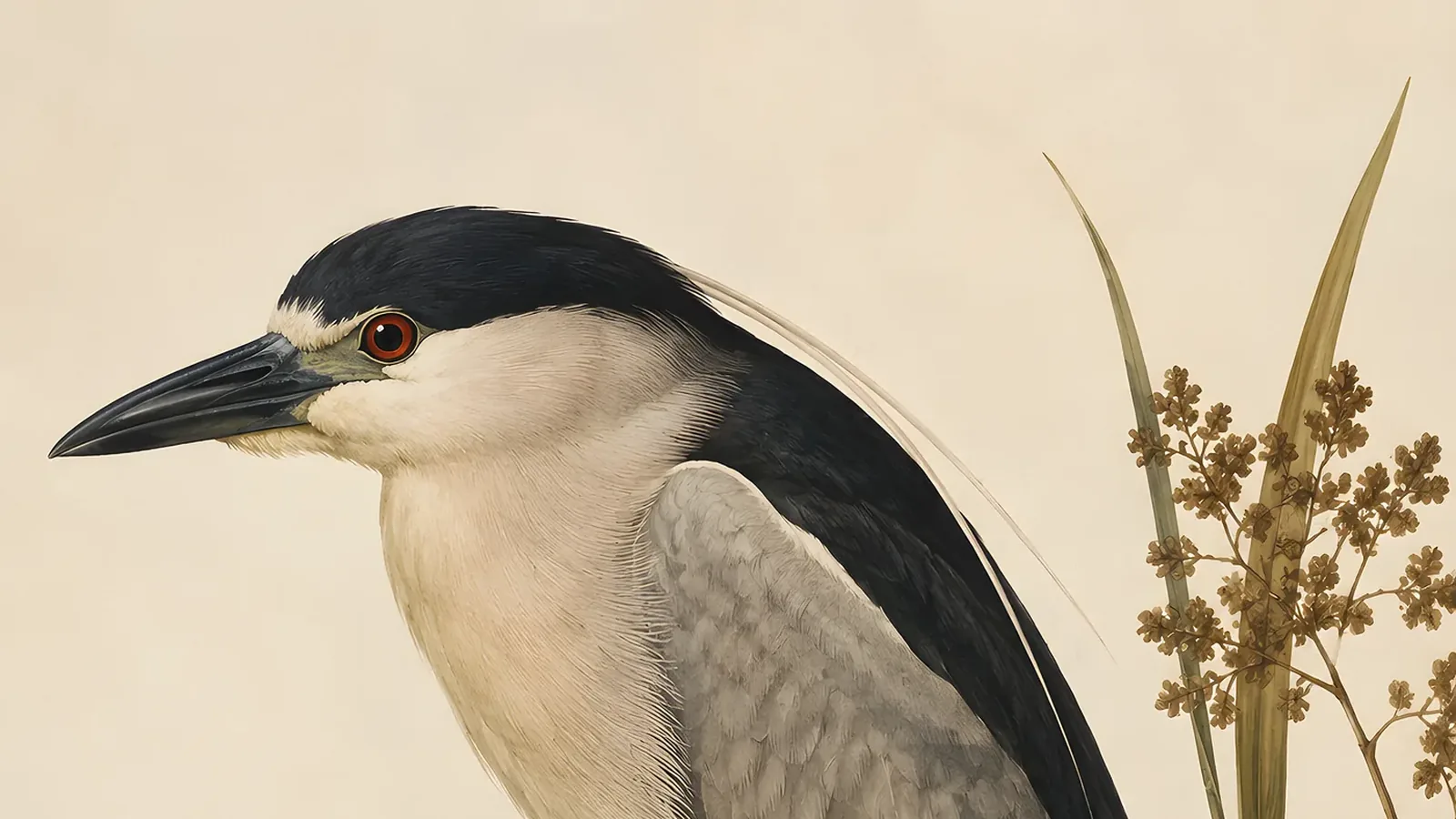
Black-crowned Night-Heron nests in concentrated colonies on harbour islands in New York City, including South Brother Island in the Bronx and several islets in Jamaica Bay. The NYC Bird Alliance records the species at Jamaica Bay and notes that these colonies represent some of the last significant urban wading-bird rookeries on the northeastern seaboard, even as overall populations in the northeastern US have declined by roughly 50% since the 1970s.
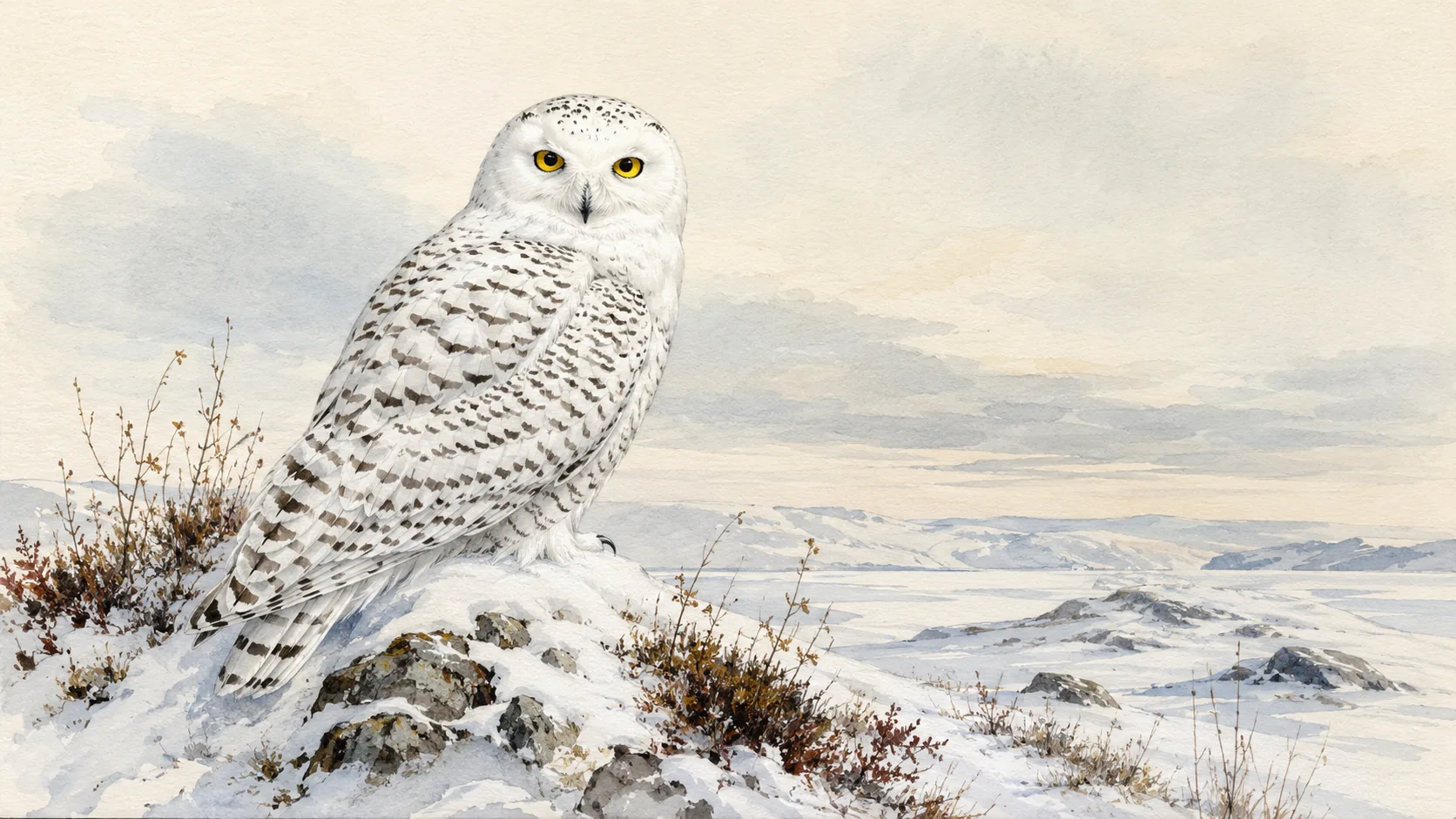
Snowy Owl arrives in some winters from the Arctic tundra in numbers that birders call irruptions. Long Island’s barrier beaches, the shores of Lake Ontario, and Kennedy Airport’s grassland margins are the most consistent New York landing zones. In a strong irruption year, Jamaica Bay and Jones Beach regularly hold multiple individuals from December through February.
Top backyard species
A typical New York suburban garden across the state’s temperate zones:
- Eastern Bluebird (state bird; year-round in much of the state on box trails)
- American Robin (year-round; abundant; rarely at seed feeders, common on lawns)
- Blue Jay (year-round; dominant at feeders, prefers peanuts and sunflower)
- Black-capped Chickadee (year-round statewide; Carolina Chickadee absent in New York)
- Downy Woodpecker (year-round; most common woodpecker at suet feeders)
- Northern Cardinal (year-round; breeding resident across all lower-elevation areas)
- Mourning Dove (year-round)
- American Goldfinch (year-round; plumage duller in winter)
- White-throated Sparrow (winter visitor, swelling during April and October migration)
- Dark-eyed Junco (winter visitor at ground feeders statewide)
Where and when to watch
Jamaica Bay Wildlife Refuge (Queens) holds the most eBird species of any site in New York City - over 320 recorded. The refuge’s mix of salt marsh, fresh and brackish ponds, and shrub habitat draws shorebirds in August and September, wintering waterfowl, breeding herons, and a reliable stream of autumn warblers. The NYC Bird Alliance manages guided walks throughout the year.
Central Park Ramble (Manhattan) is listed in fifty places to see birds before you die, and the designation is earned. Cornell Lab’s All About Birds highlights the Ramble as a migrant trap of unusual concentration: more than 200 species have been recorded in the park, including 36 warbler species. The peak is the first two weeks of May, when a single morning walk through the Ramble can produce 20 or more warbler species.
Montezuma National Wildlife Refuge (Seneca County, Finger Lakes) is the state’s premier waterfowl stop. Canada Geese and Snow Geese number in the tens of thousands during peak migration; the all-access observation platform overlooks the main pool. Spring brings Sandhill Cranes and concentrations of diving ducks; nesting Ospreys occupy the refuge’s artificial platforms through summer.
Iroquois National Wildlife Refuge (Genesee County) lies on the Atlantic Flyway and hosts thousands of migrating ducks and geese each spring and autumn. Its wetland-grassland mosaic also supports breeding American Bittern and Least Bittern - two species that are otherwise hard to locate reliably in western New York.
The seasonal shape of the year
Spring migration in New York begins in March with waterfowl pushing north through the Great Lakes and the Hudson Valley. Warbler migration peaks in early May: Central Park in the first week of May is the canonical New York birding moment. Summer is breeding season, with Bicknell’s Thrush calling at dawn from Adirondack summits and Osprey fishing every large lake and coastal bay. Autumn migration runs from late August through October, with shorebirds in August, warblers in September, and hawks along the Kittatinny and Shawangunk ridges into October. Winter brings the state’s most dramatic wild card: in irruption years, Snowy Owls appear on airport grasslands and barrier beaches in numbers that draw birders from across the region.
New York was the last American state to formalise a state bird. That the bluebird - cavity nester, early migrant, species once threatened by introduced competitors - was the one worth waiting for says something about the instinct Mrs. Marshall followed in 1928.