State Guide
Birds of Kansas
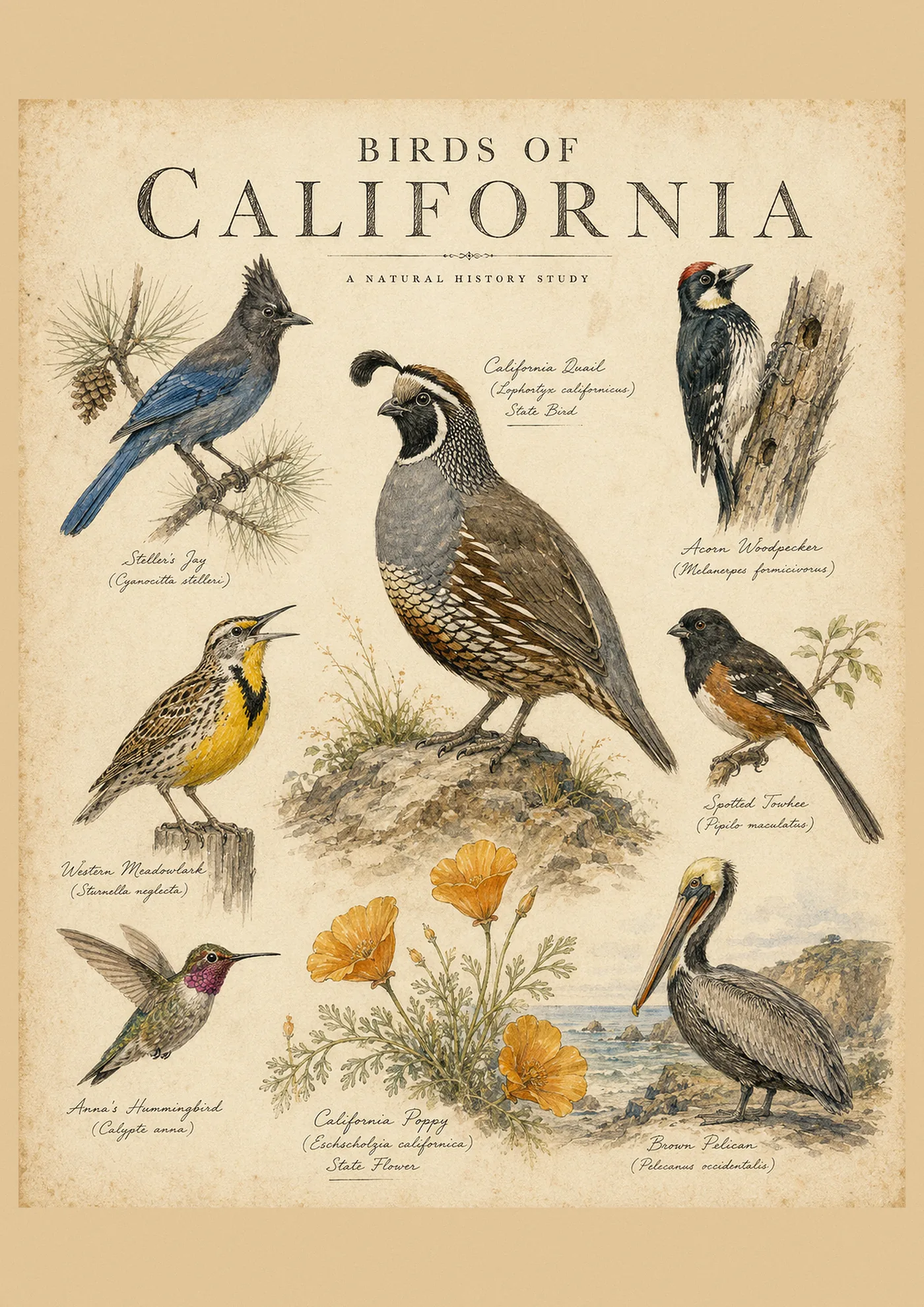
Kansas schoolchildren voted in 1925. Of 121,191 ballots cast, the Western Meadowlark (Sturnella neglecta) received 48,395 votes, roughly 10,000 more than its nearest competitor. The Kansas Legislature formalised the choice in 1937 through Chapter 319 of that year’s session. The meadowlark has been the official state bird since.
It was an honest vote. The Western Meadowlark is not a rare or difficult bird in Kansas - he is the bird of the state’s working landscape, singing from fence posts along county roads, from the edge of wheat fields, from every neglected pasture corner. Cornell’s All About Birds describes the song as buoyant and flute-like, typically seven to 10 notes, and in Kansas it carries across the open grassland far enough that you hear him before you see the yellow breast with its black V-band. The species shares its state-bird status with five other Great Plains and western states (Nebraska, North Dakota, Montana, Wyoming, and Oregon), which tells you something about how completely it defines the open-country bird experience across a huge swath of North America.
Signature and specialty species
Kansas sits at the meeting point of eastern forest and western shortgrass prairie, and the checklist reflects it. Audubon describes Kansas as the 16th birdiest state in the country, with around 460 recorded species drawing from both sides of that ecological seam.
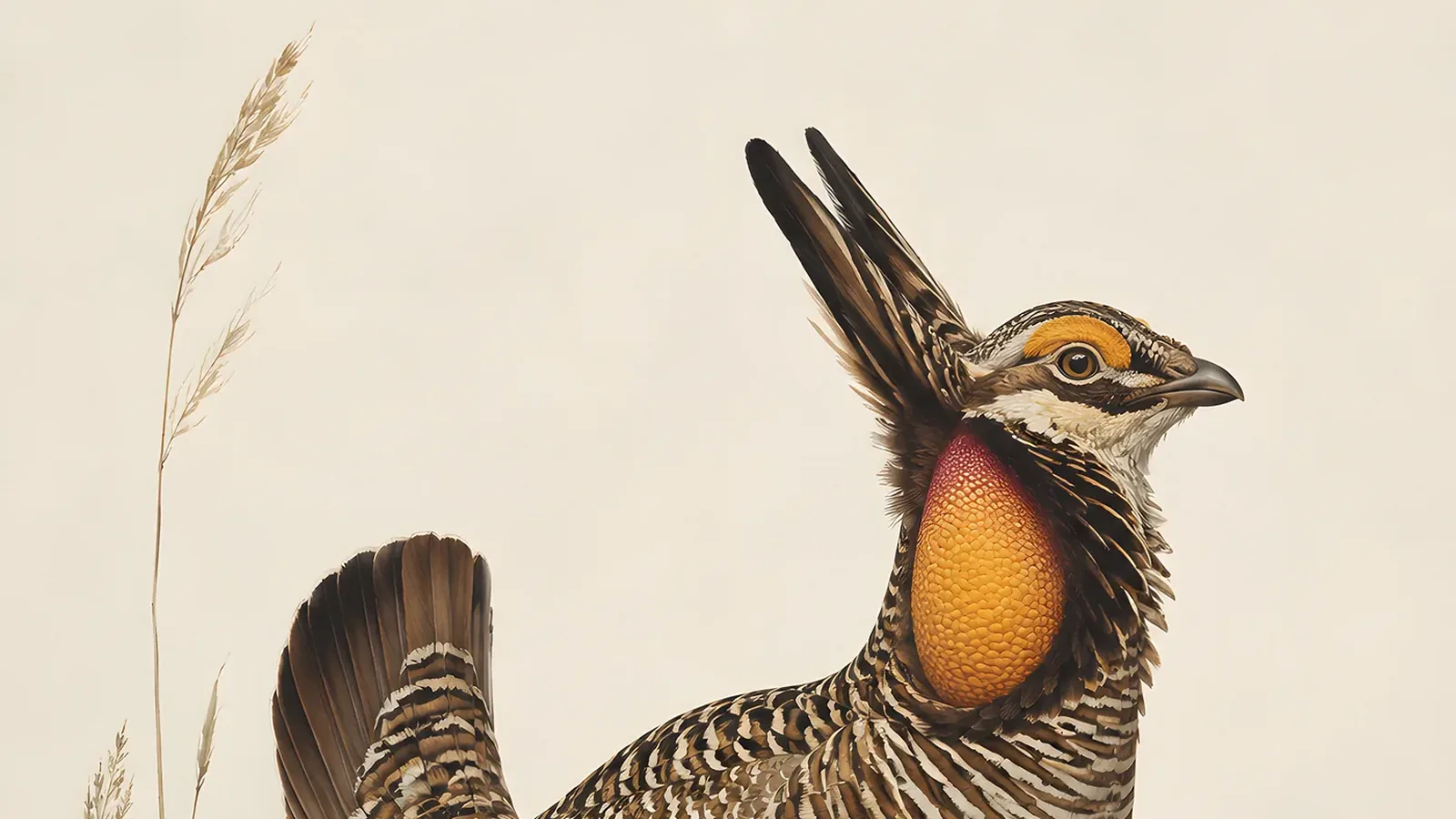
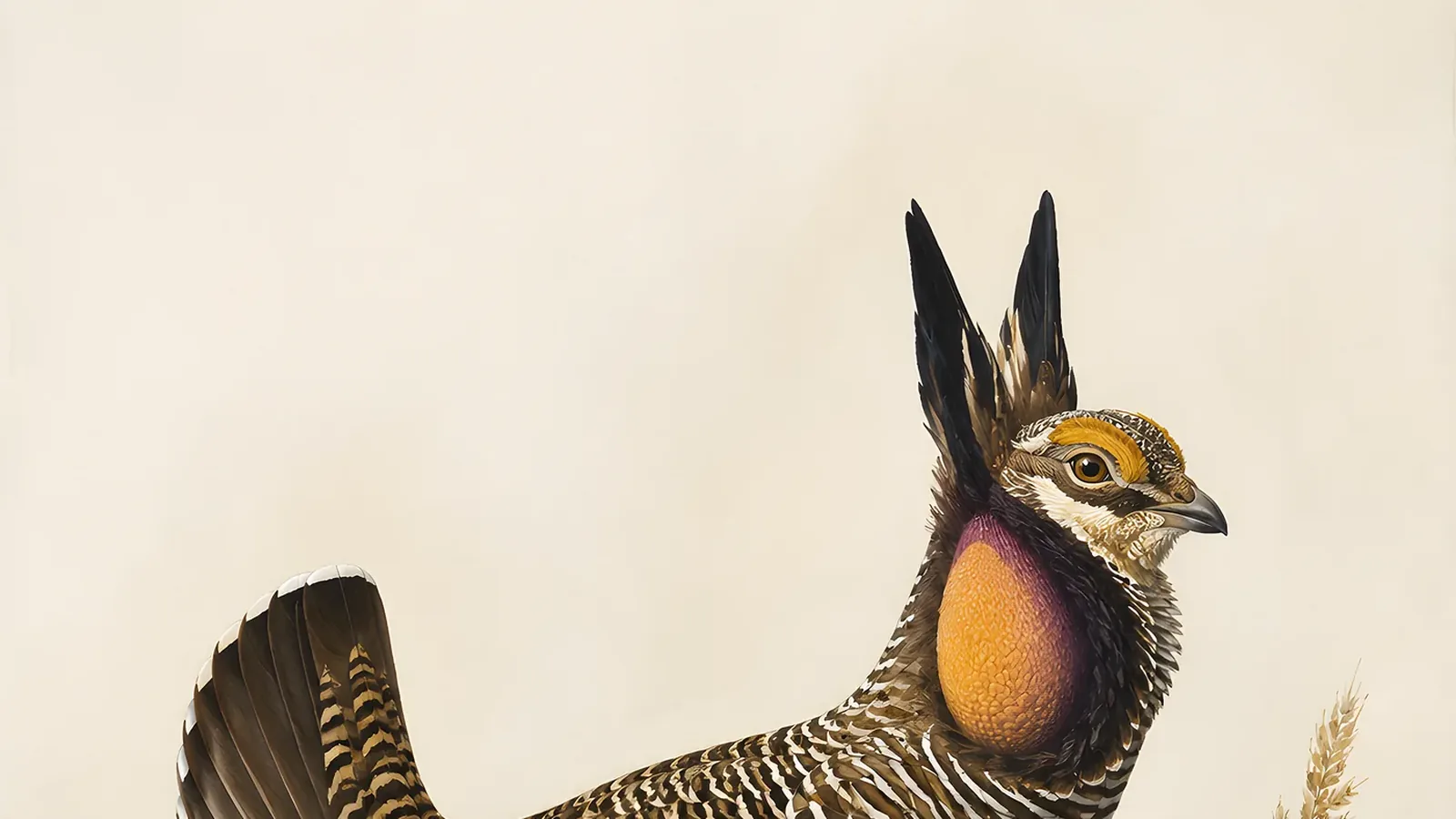
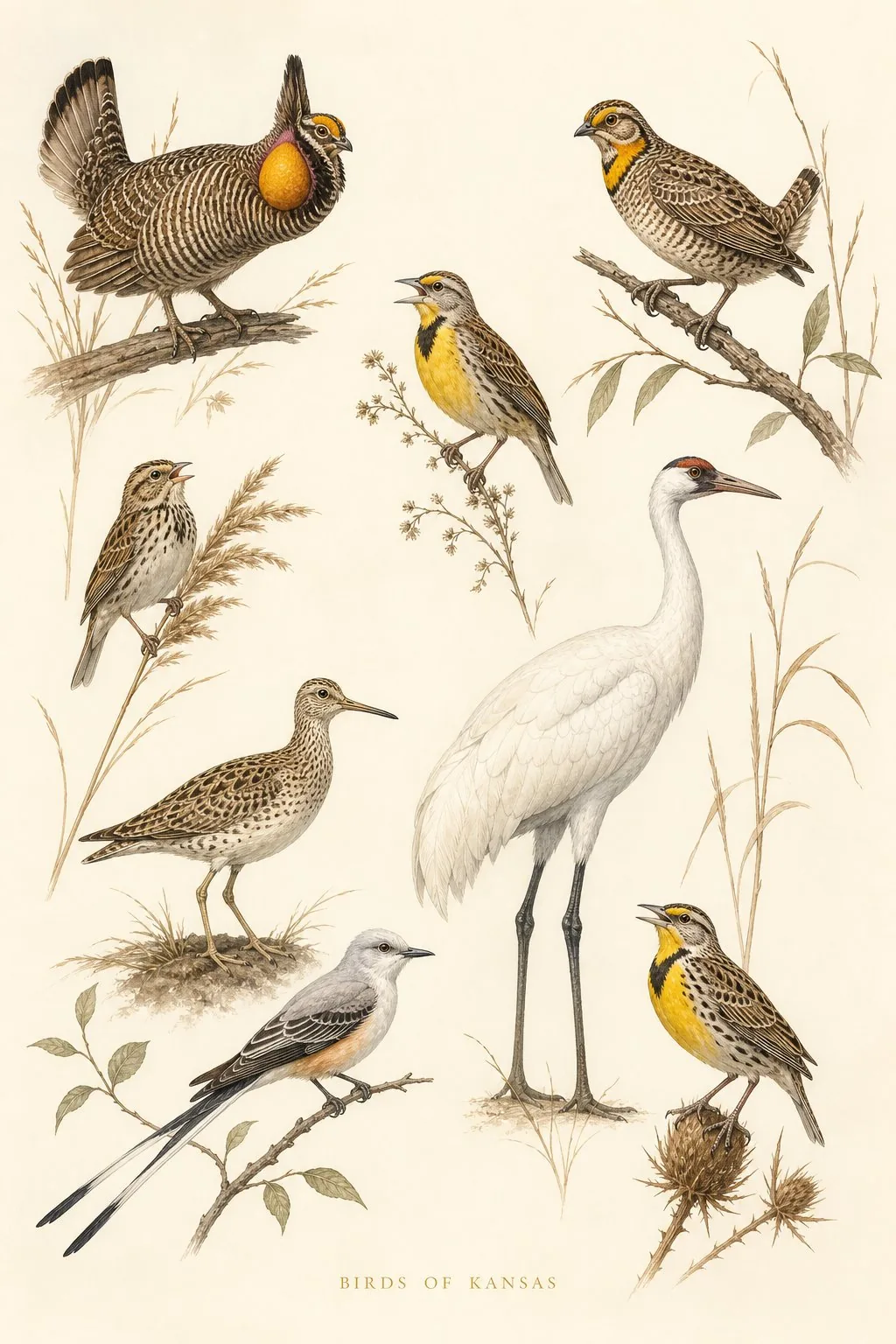
Greater Prairie-Chicken (Tympanuchus cupido) and Lesser Prairie-Chicken (Tympanuchus pallidicinctus) both occur in Kansas, which is unusual - most states hold one or the other. The Greater Prairie-Chicken leks across the Flint Hills in the tallgrass country; the Lesser is largely confined to the shortgrass and sand-sage habitats of the southwest, and Cimarron National Grassland in the far southwest corner may be the most reliable place in its entire range to find one. The Lesser Prairie-Chicken has declined an estimated 97 percent across its historic range, and western Kansas holds a recovering population on well-managed ranches.
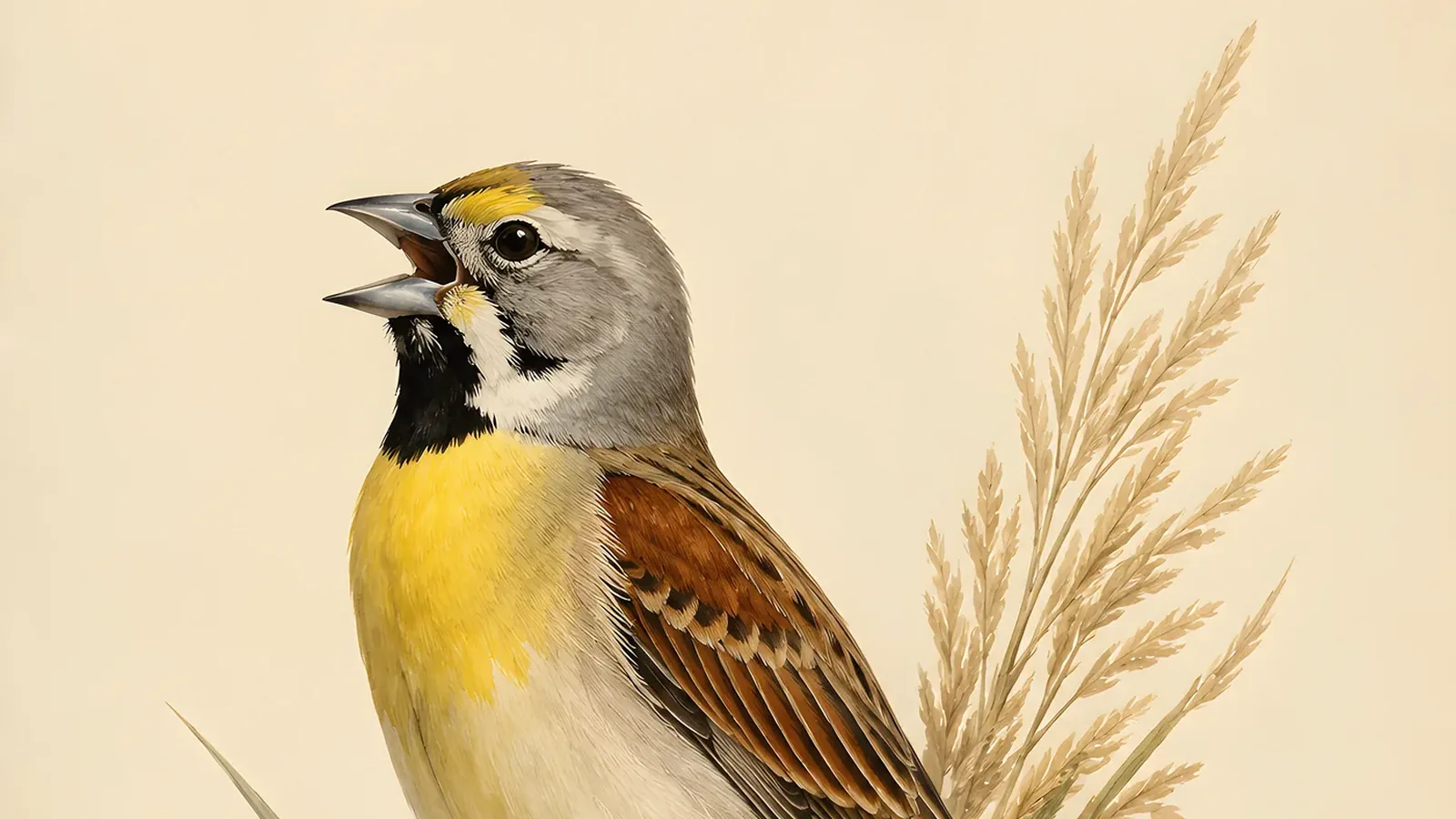
Dickcissel (Spiza americana) treats Kansas as a core breeding stronghold. The male sings his name from fencelines and tall-grass stems through June and July - a flat, mechanical rendering of “dick-dick-ciss-ciss-ciss” that fills the air over alfalfa fields and native prairie alike. He is common enough to be taken for granted here and rare enough elsewhere to count as a target bird for birders from the coasts.
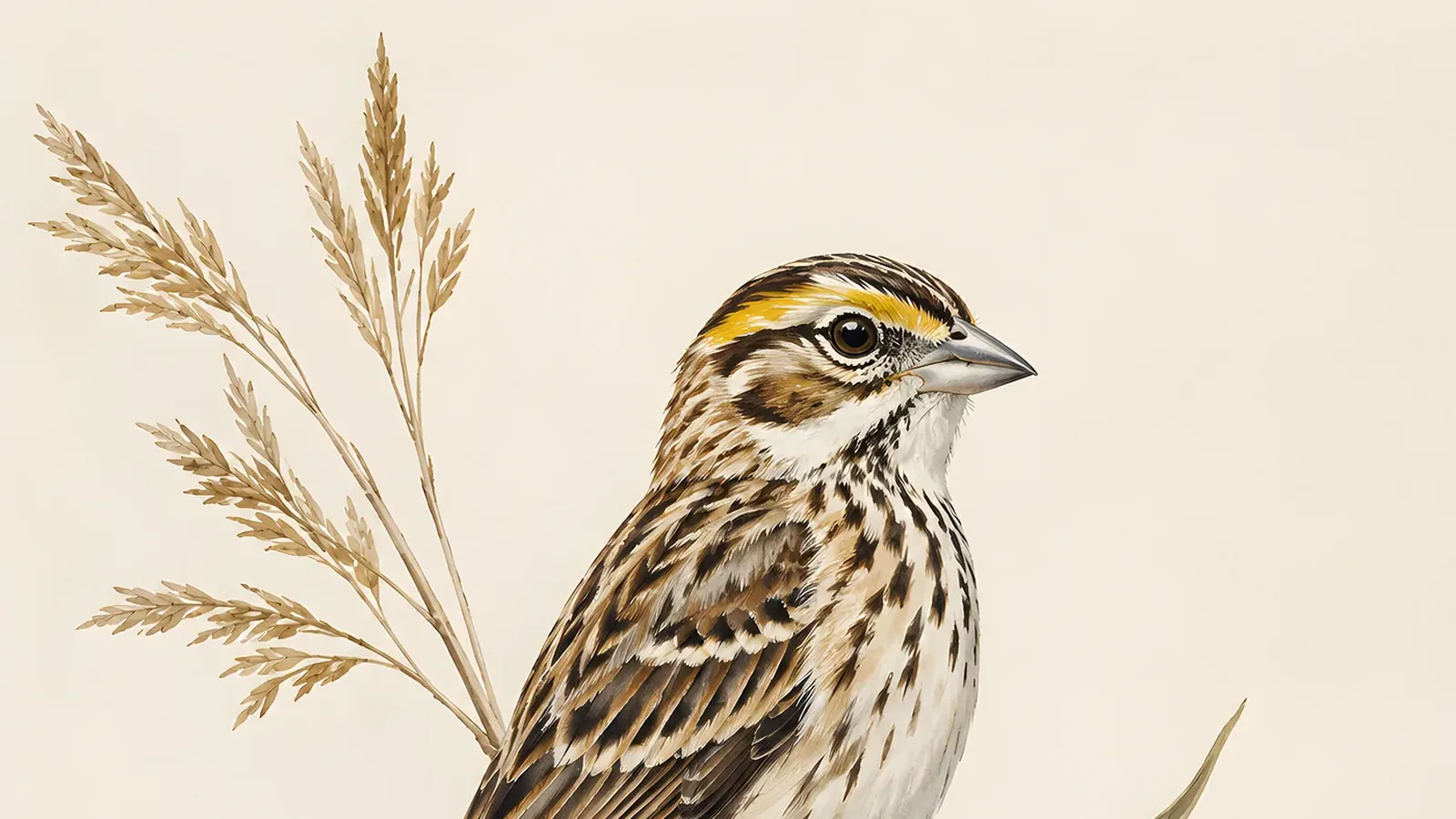
Henslow’s Sparrow (Centronyx henslowii) is a conservation priority species breeding in the tallgrass, documented at Tallgrass Prairie National Preserve in Chase County where the National Park Service’s long-term bird monitoring has tracked its recovery alongside improving grass management.
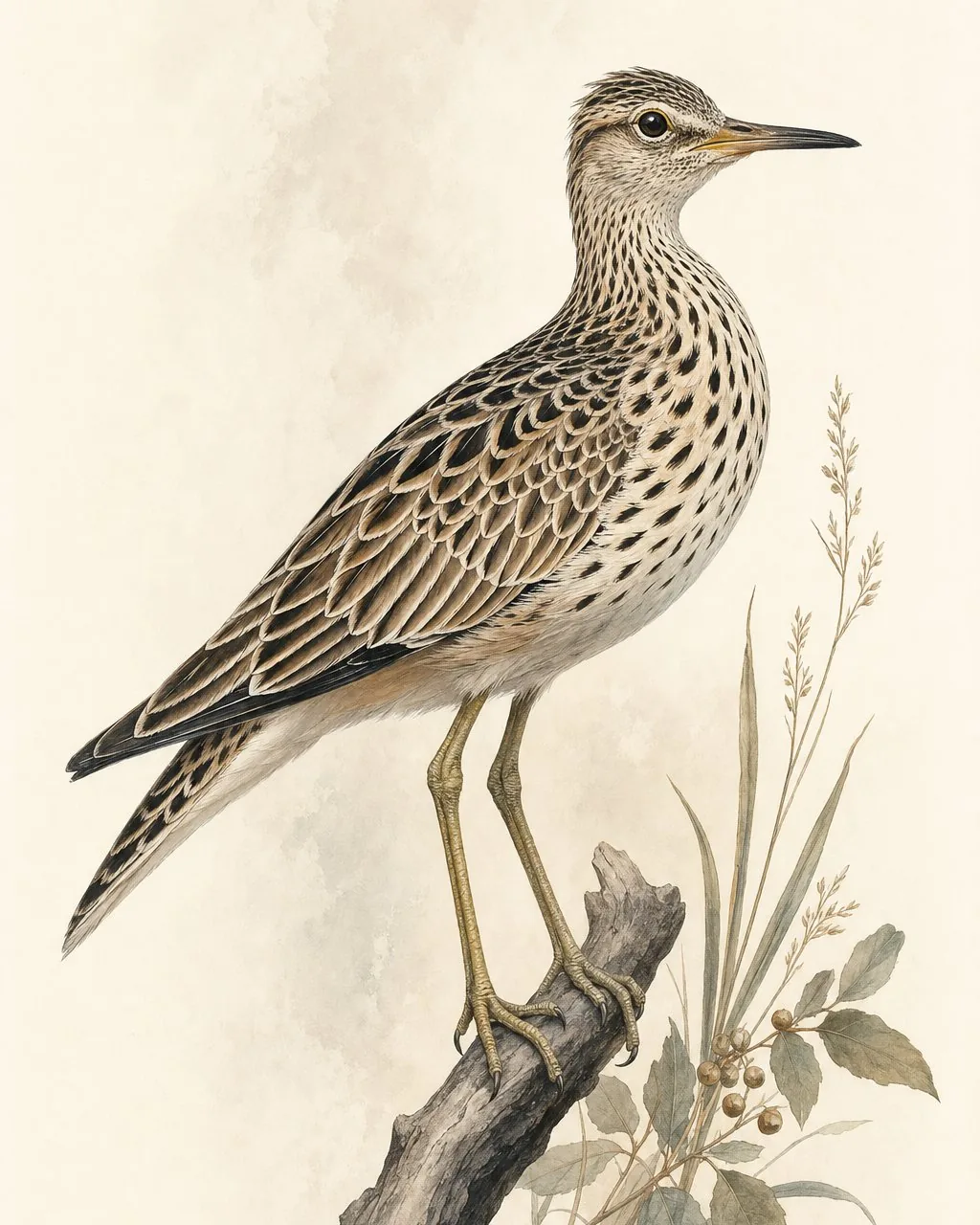
Upland Sandpiper (Bartramia longicauda) holds on in the tallgrass and mixed-grass prairies. He lands on fence posts in a way that makes no evolutionary sense given how exposed the posture is, and birders in the Flint Hills learn to scan every post in April and May.
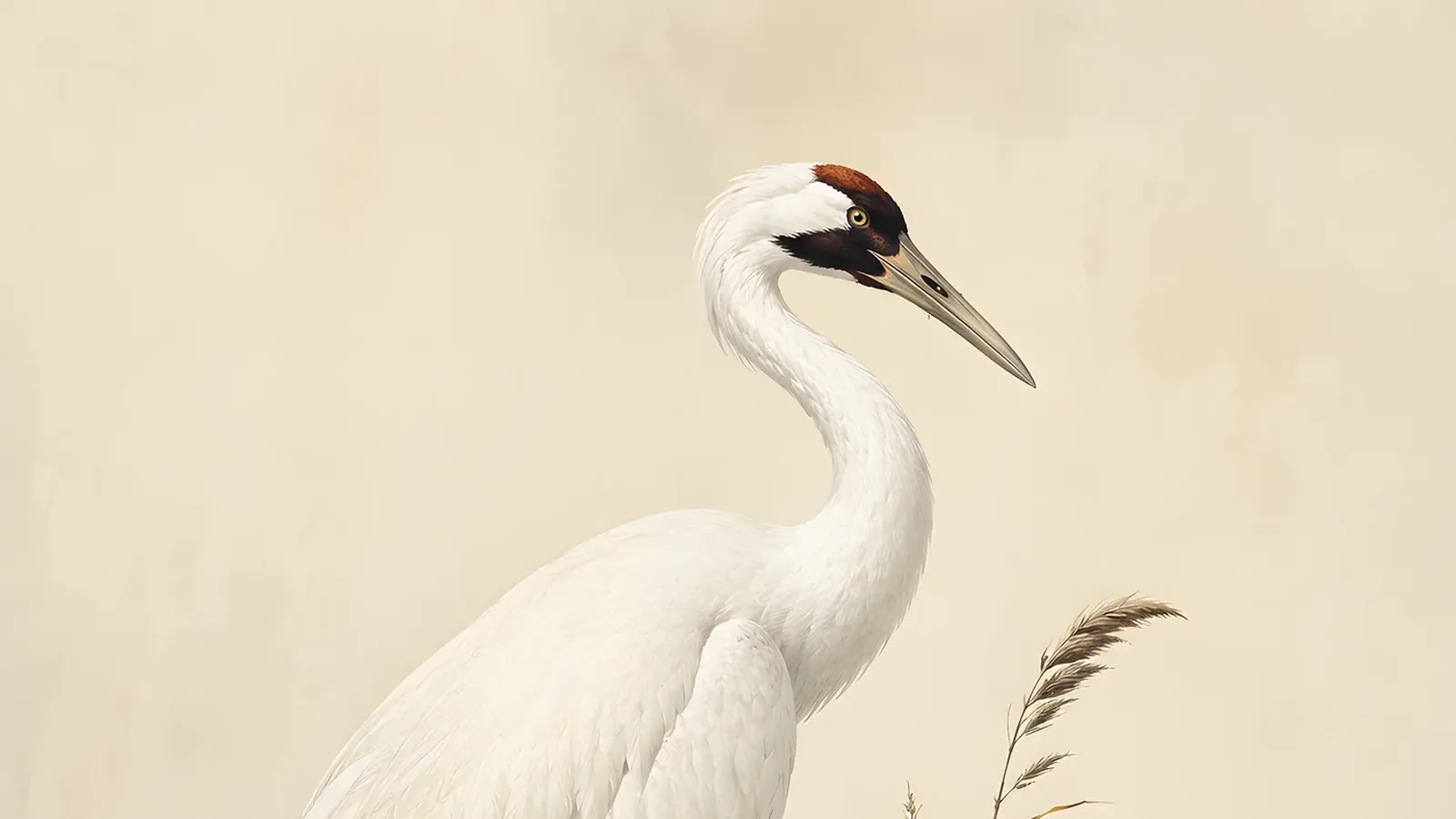
Whooping Crane (Grus americana) uses Kansas wetlands as a migration corridor. The Audubon Society’s article on Kansas birding names Cheyenne Bottoms as critical stopover habitat for Whooping Cranes, with birds typically appearing in early April and again from late October through mid-November at Quivira National Wildlife Refuge.
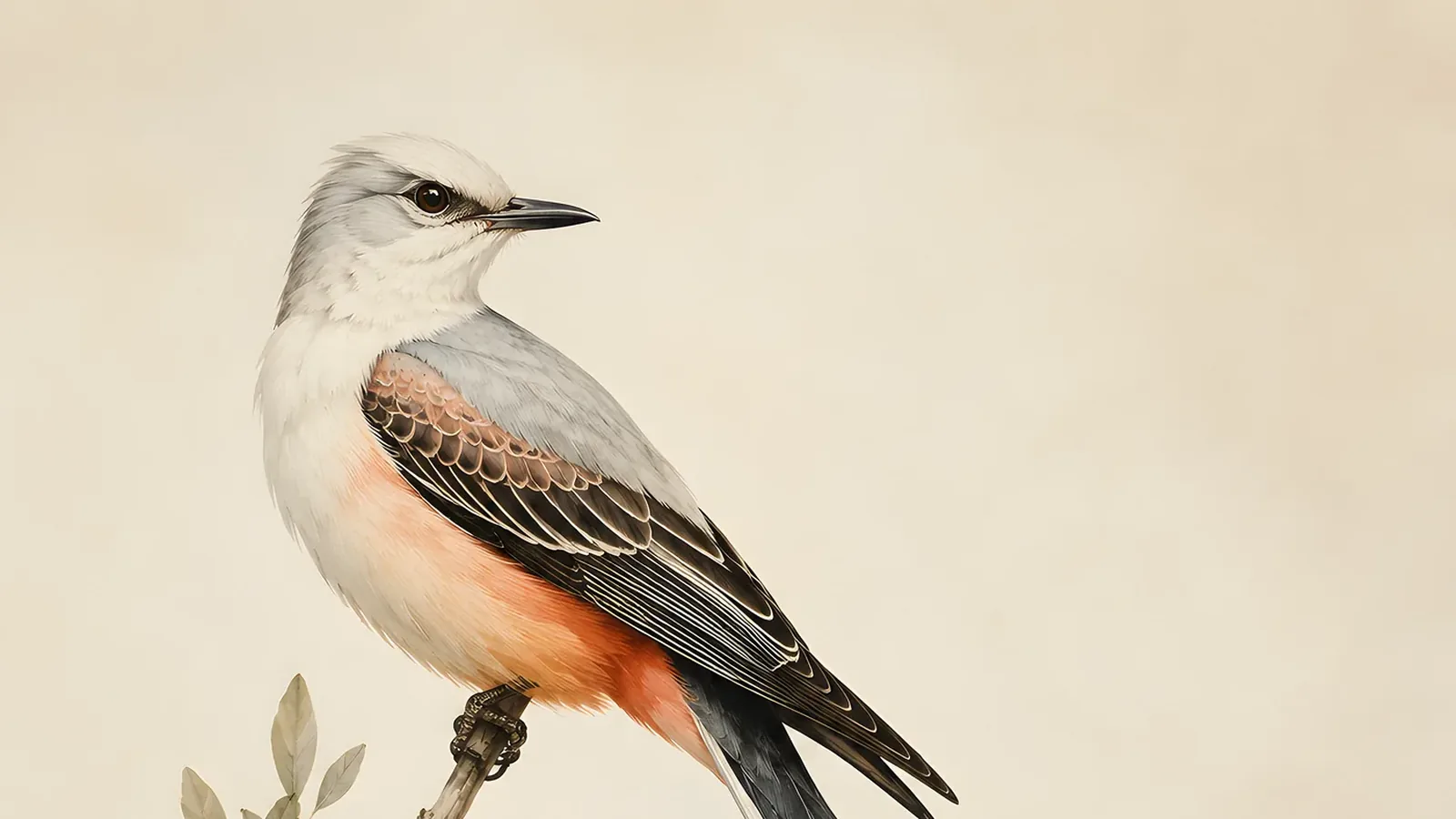
Scissor-tailed Flycatcher (Tyrannus forficatus) reaches the northern edge of its breeding range in Kansas. The core territory is Texas and Oklahoma, but significant breeding populations extend into southern and central Kansas, and the bird’s long streaming tail feathers - easily 10 or more centimetres beyond the body - have made it a sought-after summer record for birders working the state’s southern counties.
Top backyard species
A Kansas suburban yard, year-round:
- Northern Cardinal (year-round, at 97 percent of feeder sites surveyed)
- American Robin (year-round, more common in the breeding season)
- Blue Jay (year-round, the entire state)
- Mourning Dove (year-round)
- American Goldfinch (year-round)
- House Finch (year-round)
- Downy Woodpecker (year-round)
- Red-bellied Woodpecker (year-round, increasing)
- House Sparrow (year-round, introduced)
- Dark-eyed Junco (winter only)
The Red-tailed Hawk is the common soaring raptor overhead from any Kansas suburb or highway, year-round. The Turkey Vulture joins him from March through October.
Seasonal calendar
| Season | What is happening |
|---|---|
| Spring (Mar-May) | Prairie chicken booming on leks in March and April; shorebird migration at Cheyenne Bottoms peaks in May; Whooping Cranes pass through in April |
| Summer (Jun-Aug) | Dickcissel and Upland Sandpiper on breeding territories; Scissor-tailed Flycatcher in southern counties |
| Autumn (Sep-Nov) | Sandhill Crane migration builds through October; Whooping Cranes at Quivira in late October to mid-November; shorebirds again at the central wetlands |
| Winter (Dec-Feb) | Waterfowl at reservoirs; Bald Eagle along the major rivers; Short-eared Owl over open fields at dusk |
Where to watch
Cheyenne Bottoms Wildlife Area - A 20,000-acre state-owned marsh near Great Bend, recognised as one of the most important shorebird stopovers in the interior of North America. Audubon’s Kansas birding guide notes that up to 90 percent of the entire population of some species - including Stilt Sandpiper and Baird’s Sandpiper - rest here on migration. The Kansas Wetlands Education Center on Highway 156 southeast of the marsh is the right first stop.
Quivira National Wildlife Refuge - 22,135 acres of saline marshes, ponds, and grassland in Stafford County. The five-mile auto tour passes an observation tower and photo blinds. Spring and autumn bring tens of thousands of waterfowl and shorebirds; the refuge is one of the most reliable Whooping Crane stop-off points on the central flyway.
Cimarron National Grassland - Nearly 170 square miles of shortgrass prairie in the far southwest corner of the state, managed by the U.S. Forest Service. The best accessible site for Lesser Prairie-Chicken in its entire range, and also good for other grassland specialists: Cassin’s Sparrow, Burrowing Owl, and Mountain Plover.
Tallgrass Prairie National Preserve - In Chase County in the Flint Hills, managed by the National Park Service, with a bird list now exceeding 350 species. Greater Prairie-Chicken leks here in spring. The preserve documents nearly 150 species as potential breeders, including Henslow’s Sparrow, Grasshopper Sparrow, and the Upland Sandpiper.
The central positioning of the state - neither far west nor far east, straddling the 100th meridian - means the Kansas bird list includes eastern species at their western limit and western species at their eastern limit, all passing through wetlands of continental importance. The school children who voted in 1925 may not have thought of it in those terms. But they picked the bird that defines what Kansas actually is: a grassland state, open skied, where a song carries a long way.