State Guide
Birds of Missouri
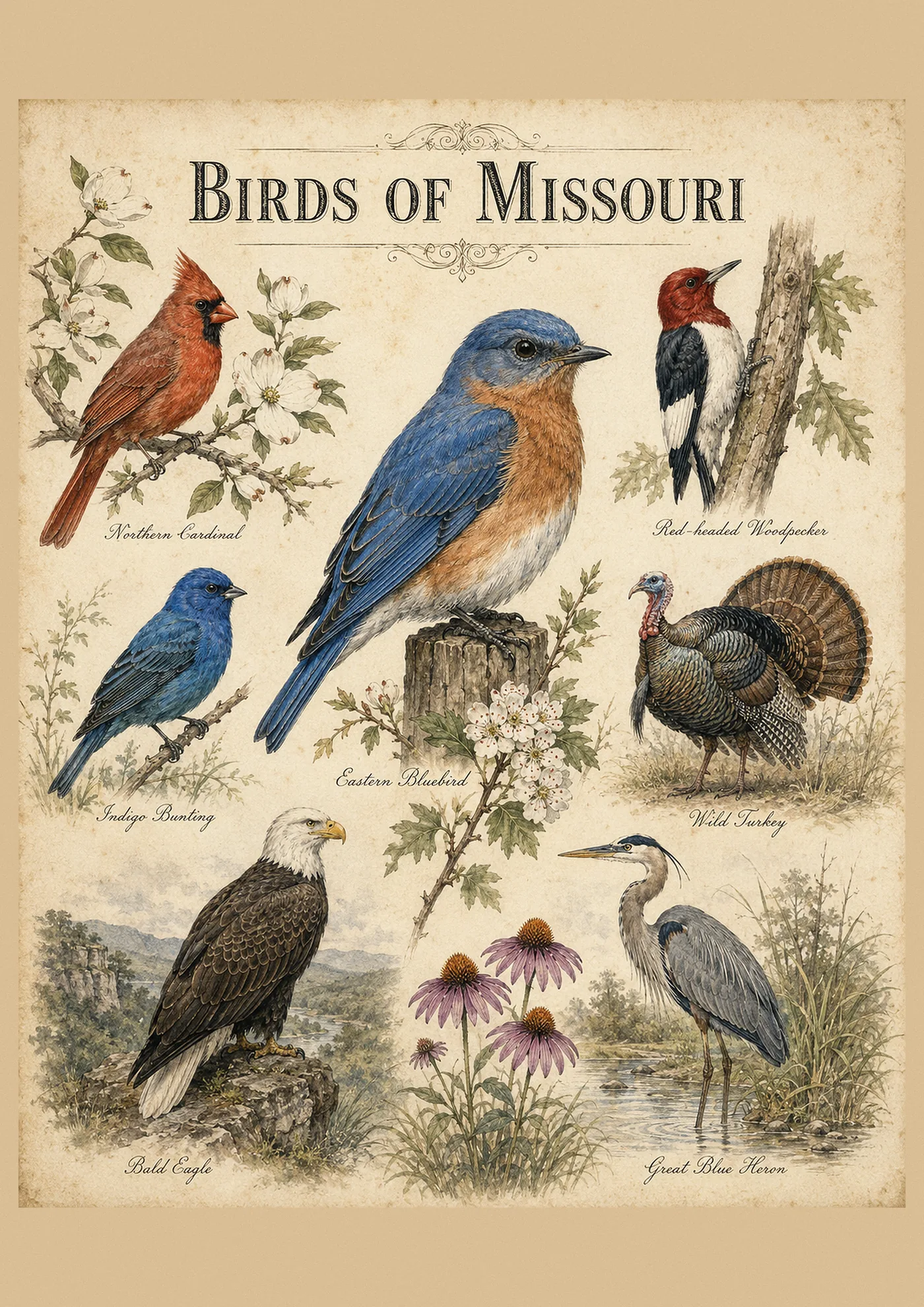
On March 30, 1927, the Missouri General Assembly made it official: the Eastern Bluebird (Sialia sialis) was the state bird, chosen because it was “common in Missouri” and “a symbol of happiness.” Missouri was the first state to claim the species. Eight others have followed since, but Missouri got there first, and the bluebird has been on the state’s wildlife identity for nearly a century.
The naturalist Henry David Thoreau wrote that the bluebird “carries the sky on its back.” That line has been quoted about Missouri’s state bird many times since 1927, and it holds. The male arrives on Missouri fenceposts in late February, a tile of cerulean blue against still-brown fields, before the trees have leafed out or the warblers have appeared. He is the earliest reliable signal that the season is turning.
Geographically Missouri runs through several distinct zones. The Ozark Plateau covers the south-central third of the state - old, deeply dissected hardwood forest country drained by the Current and Eleven Point Rivers. The Mississippi Lowlands occupy the southeast corner, a flat alluvial plain of bottomland hardwood and cypress. The northwest is glaciated prairie and Missouri River floodplain, the leading edge of the Central Flyway. That variety, compressed into a single state, produces one of the longer bird lists in the interior: the Missouri Birding Society’s annotated checklist documents 444 species.
Signature and speciality species
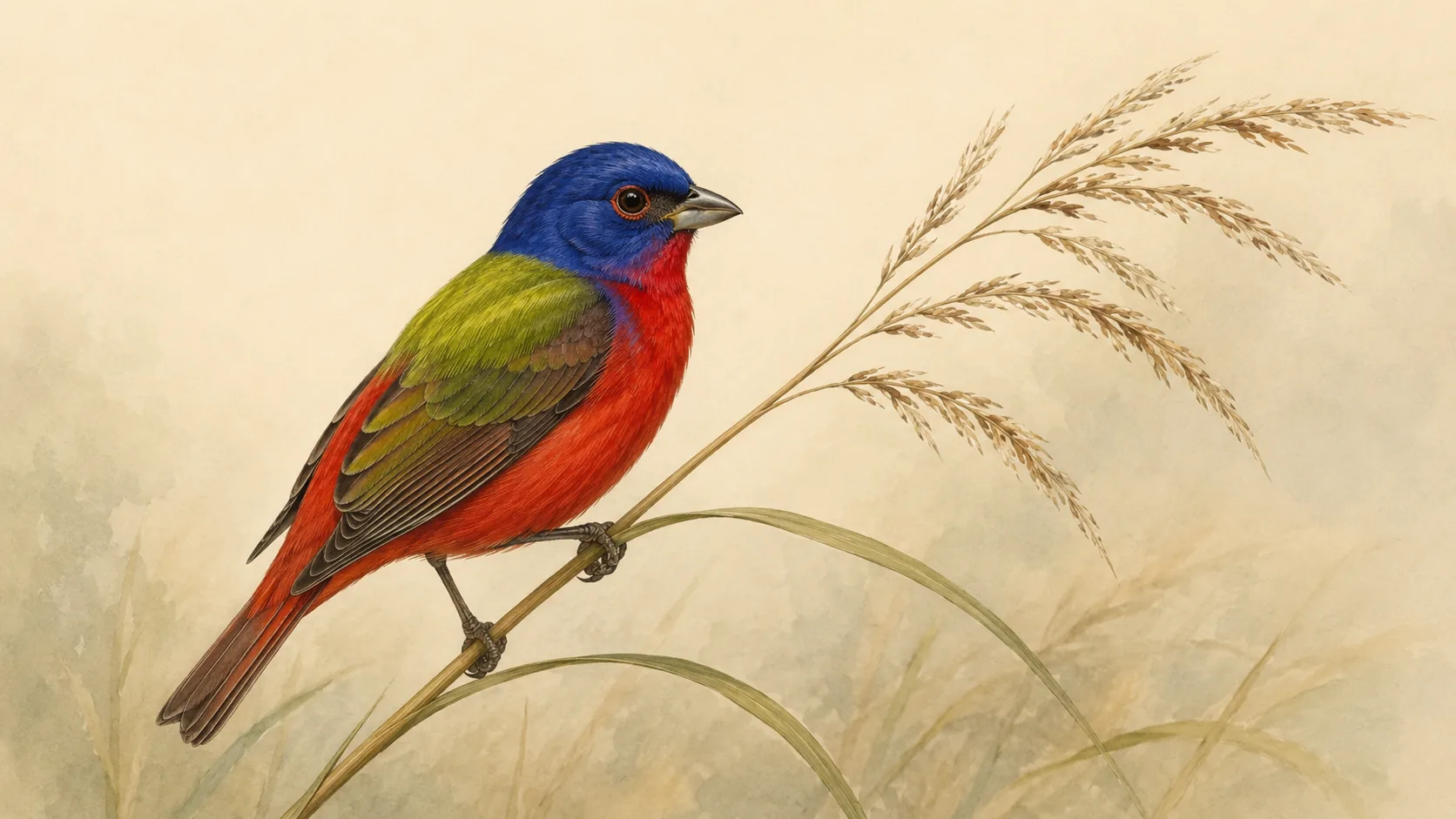
Painted Bunting (Passerina ciris) is the state’s most photogenic summer resident. The male is one of the few birds in North America where “looks like a painting” is a literal description rather than hyperbole: blue head, red underparts, green back. Missouri sits at the northeastern edge of its breeding range, and the species concentrates in the southwest of the state from May through mid-September. The area around Diamond in Newton County and the Henning Conservation Area in Taney County near Branson are the most reliable places to find one. The species does not stray far beyond the southwestern quarter.
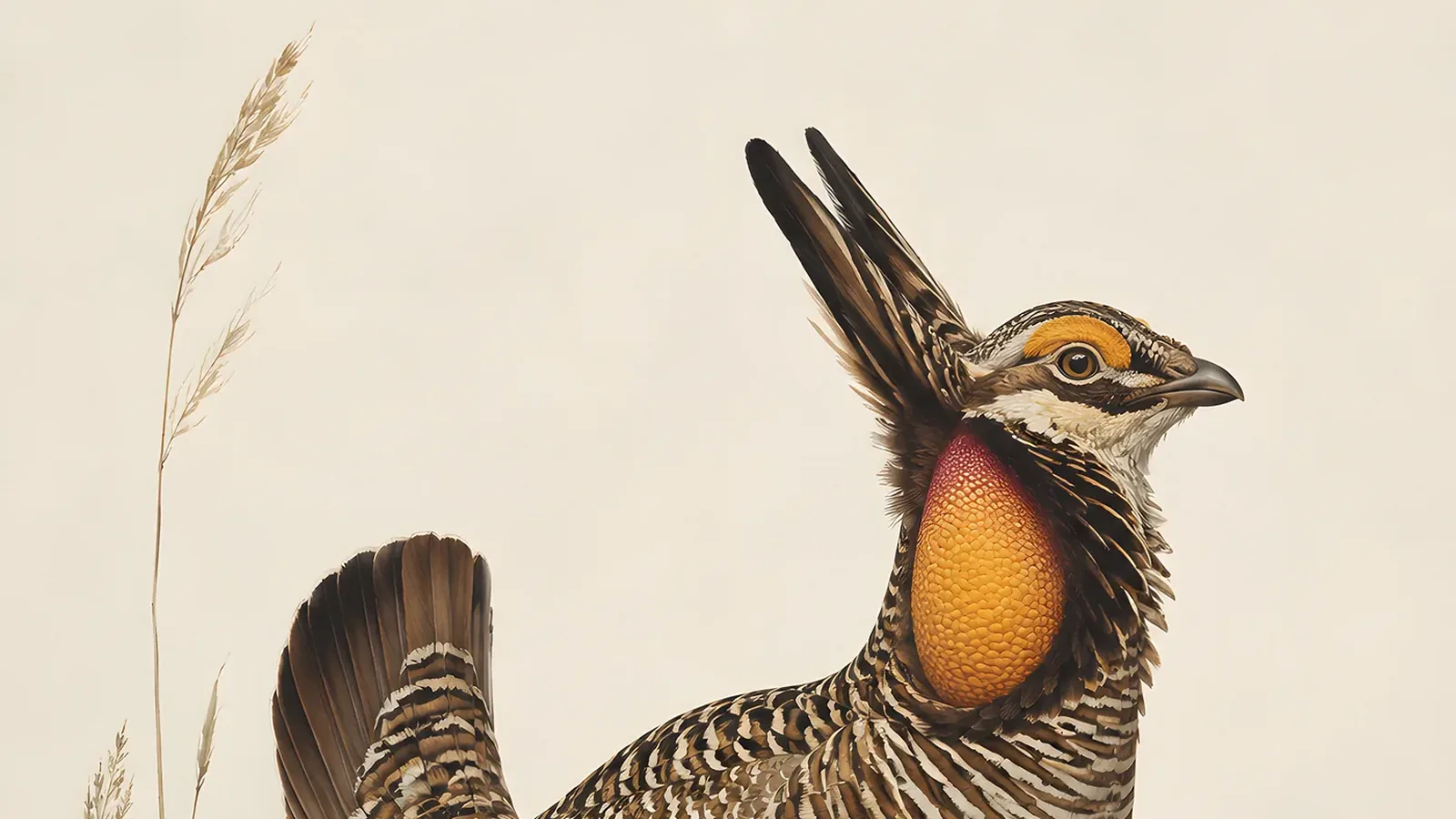
Greater Prairie-Chicken (Tympanuchus cupido) is a study in near-loss and partial recovery. The species was once distributed across Missouri’s original tallgrass prairies. The conversion of that grassland to row crops reduced the population to a fraction of historic numbers. Today approximately 3,000 birds survive in Missouri, concentrated in Barton and Dade Counties. In early March, males gather on booming grounds at dawn, inflating orange neck sacs and producing a hollow, resonant call audible for more than a mile. Prairie State Park in Barton County offers the best access.
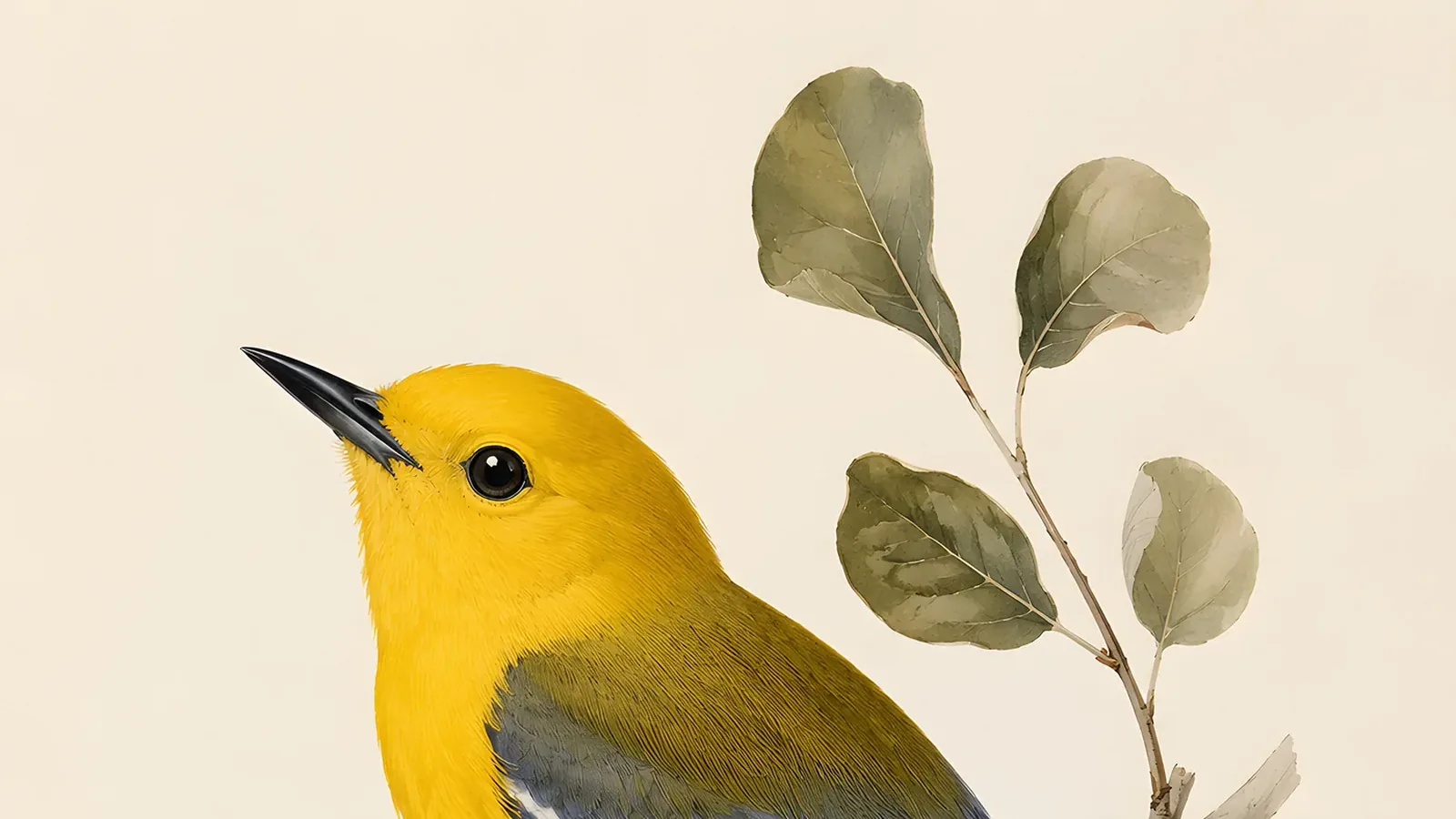
Prothonotary Warbler (Protonotaria citrea) breeds in the bottomland hardwood forests of southeastern Missouri, wherever standing dead timber rises from swampy ground. The species is abundant at Mingo National Wildlife Refuge and Big Oak Tree State Park, arriving in April to nest in tree cavities over still water. The combination of deep gold head and steel-blue wings is not easy to confuse.
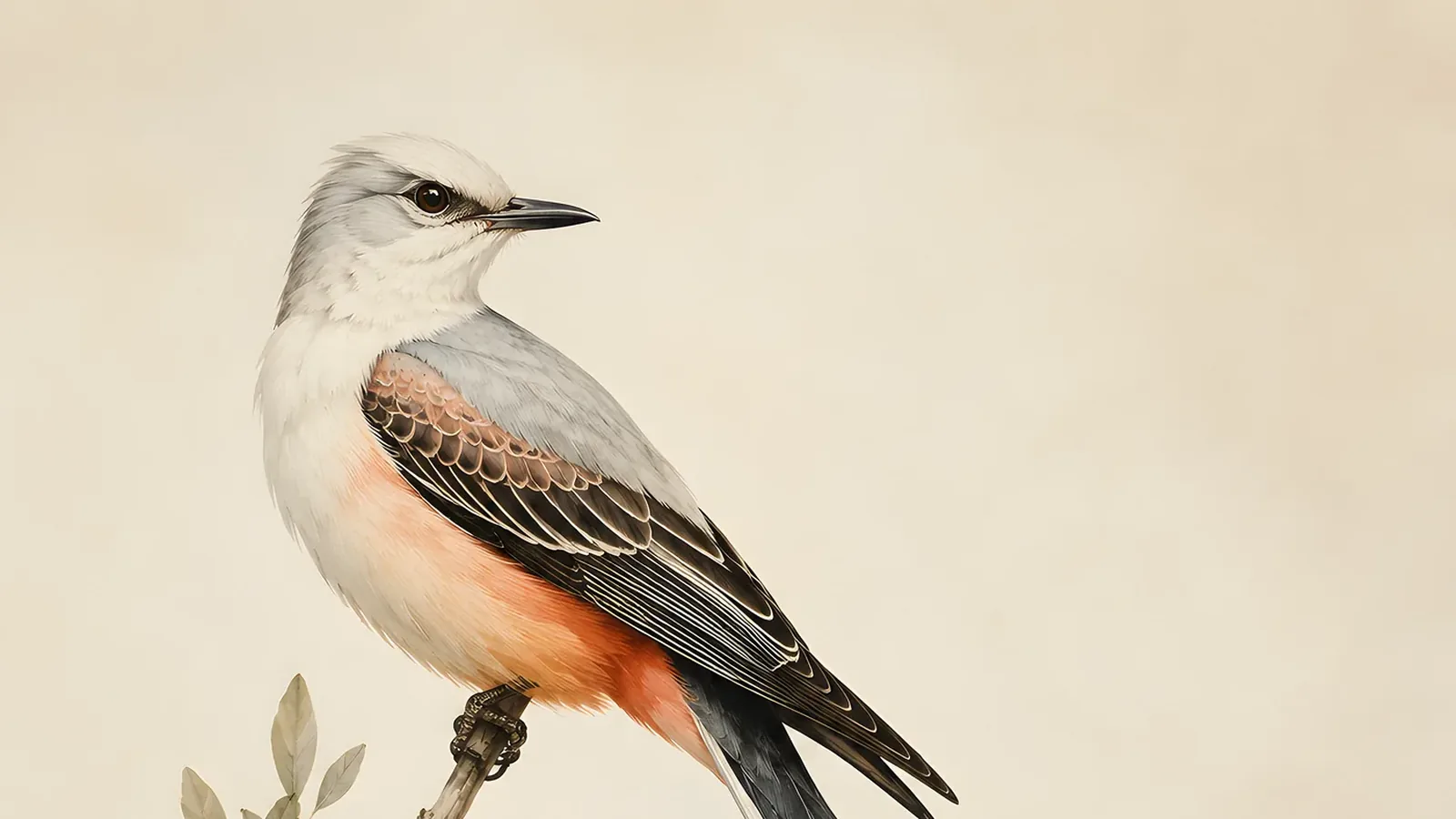
Scissor-tailed Flycatcher (Tyrannus forficatus) reaches into Missouri from the southwest, appearing in the Osage Plains by mid-April. It is not rare in the open country of the southwestern quarter of the state, though it sits well outside its core Texas and Oklahoma range. A bird perched on a wire, trailing tail feathers longer than its body, registers immediately.
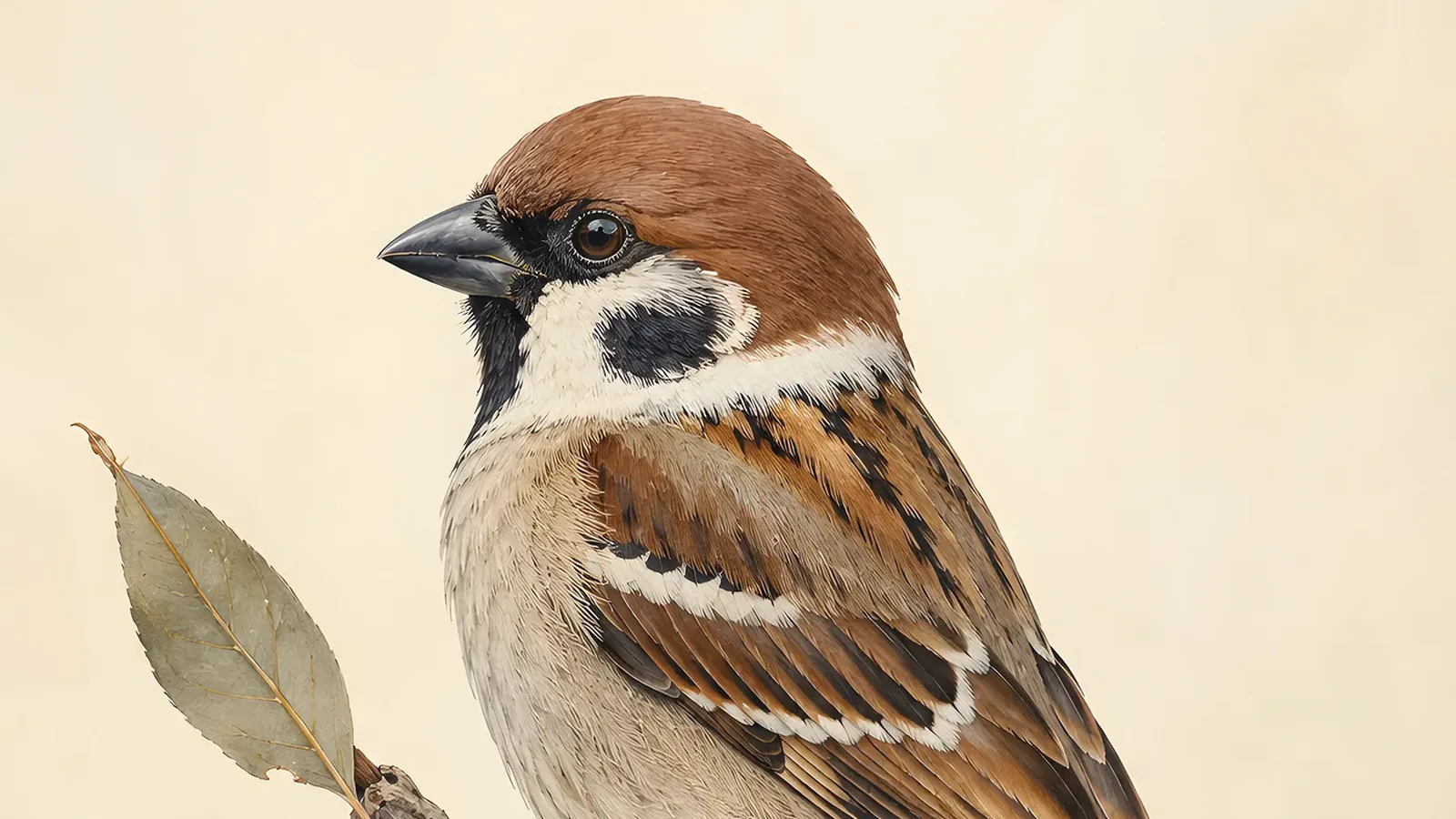
Eurasian Tree Sparrow (Passer montanus) has a backstory peculiar to Missouri. A small group was released in St. Louis in 1870 as part of the nineteenth-century European bird-introduction movement. Unlike the House Sparrow, which spread coast to coast, the Eurasian Tree Sparrow never escaped the St. Louis metro. It remains there now, a permanent resident concentrated along the Missouri and Mississippi Rivers near Riverlands Environmental Demonstration Area and North Riverfront Park. No other state can reliably produce this species.
Swainson’s Warbler (Limnothlypis swainsonii) is one of the most sought-after Ozark breeders - a skulking, coffee-brown warbler of dense canebrake and lowland forest along the Current and Eleven Point Rivers in Oregon, Shannon, and Dent Counties. Cornell Lab’s All About Birds notes it is a genuinely uncommon species with an outsize reputation among eastern birders, and Missouri is one of the northern limits of its breeding range.
Top backyard species
A Missouri suburban garden across most of the state:
- Eastern Bluebird (year-round in most of the state; boxes markedly increase breeding density)
- Northern Cardinal (year-round, abundant)
- American Robin (year-round)
- American Goldfinch (year-round)
- Carolina Wren (year-round)
- Northern Mockingbird (year-round)
- Downy Woodpecker (year-round)
- Ruby-throated Hummingbird (May through September)
- Mourning Dove (year-round)
- Blue Jay (year-round)
- Red-bellied Woodpecker (year-round)
- Tufted Titmouse (year-round)
- Carolina Chickadee (year-round; Black-capped Chickadee takes over north of the Missouri River)
Seasonal calendar
| Season | What is happening |
|---|---|
| Spring (Mar-May) | Eastern Bluebirds on territory in late February; Painted Buntings arrive May in the southwest; warbler migration peaks along the Mississippi corridor in early May |
| Summer (Jun-Aug) | Greater Prairie-Chicken chicks on Barton County grasslands; Prothonotary Warblers active in Mingo bottomlands; Scissor-tailed Flycatchers on open country wires in the southwest |
| Autumn (Sep-Nov) | Snow Geese begin arriving at Loess Bluffs NWR in late October, with peak counts reaching half a million birds; Bald Eagles concentrate along the Missouri and Mississippi Rivers |
| Winter (Dec-Feb) | Bald Eagles at Eagle Bluffs and Swan Lake NWR; Short-eared Owls hunting at Loess Bluffs; Dark-eyed Juncos at every feeder; Eurasian Tree Sparrows in the St. Louis riverfront parks |
Where to watch
Loess Bluffs National Wildlife Refuge (formerly Squaw Creek NWR, renamed in 2017), in Holt County along the Missouri River floodplain, is the single most dramatic birding event in the state. In October and November, up to half a million Snow Geese stage at the refuge on their southward migration, and Bald Eagles follow to pick off the weak. The refuge once recorded 476 Bald Eagles on a single day - a count that stands as context for how concentrated the spectacle becomes.
Mingo National Wildlife Refuge in Puxico, southeast Missouri, sits inside an ancient Mississippi River channel abandoned roughly 18,000 years ago. The 22,000-acre refuge protects bottomland hardwood and cypress habitat that supports over 280 recorded species. It is the most reliable Missouri site for Prothonotary Warbler, Barred Owl, Red-headed Woodpecker, and Worm-eating Warbler.
Eagle Bluffs Conservation Area, 10 miles southwest of Columbia, is a managed wetland complex on the Missouri River floodplain that attracts waterfowl, shorebirds, and waders in migration. Bald Eagles winter along the adjacent river channel. The area sits at the intersection of the Mississippi Flyway and the Missouri River corridor, which concentrates species passing through two routes.
Prairie State Park near Liberal in Barton County is the best site in Missouri for Greater Prairie-Chicken. The park protects one of the largest remaining tracts of native tallgrass prairie in the state. Arrive before dawn in early March and listen for the booming grounds.