State Guide
Birds of Nevada
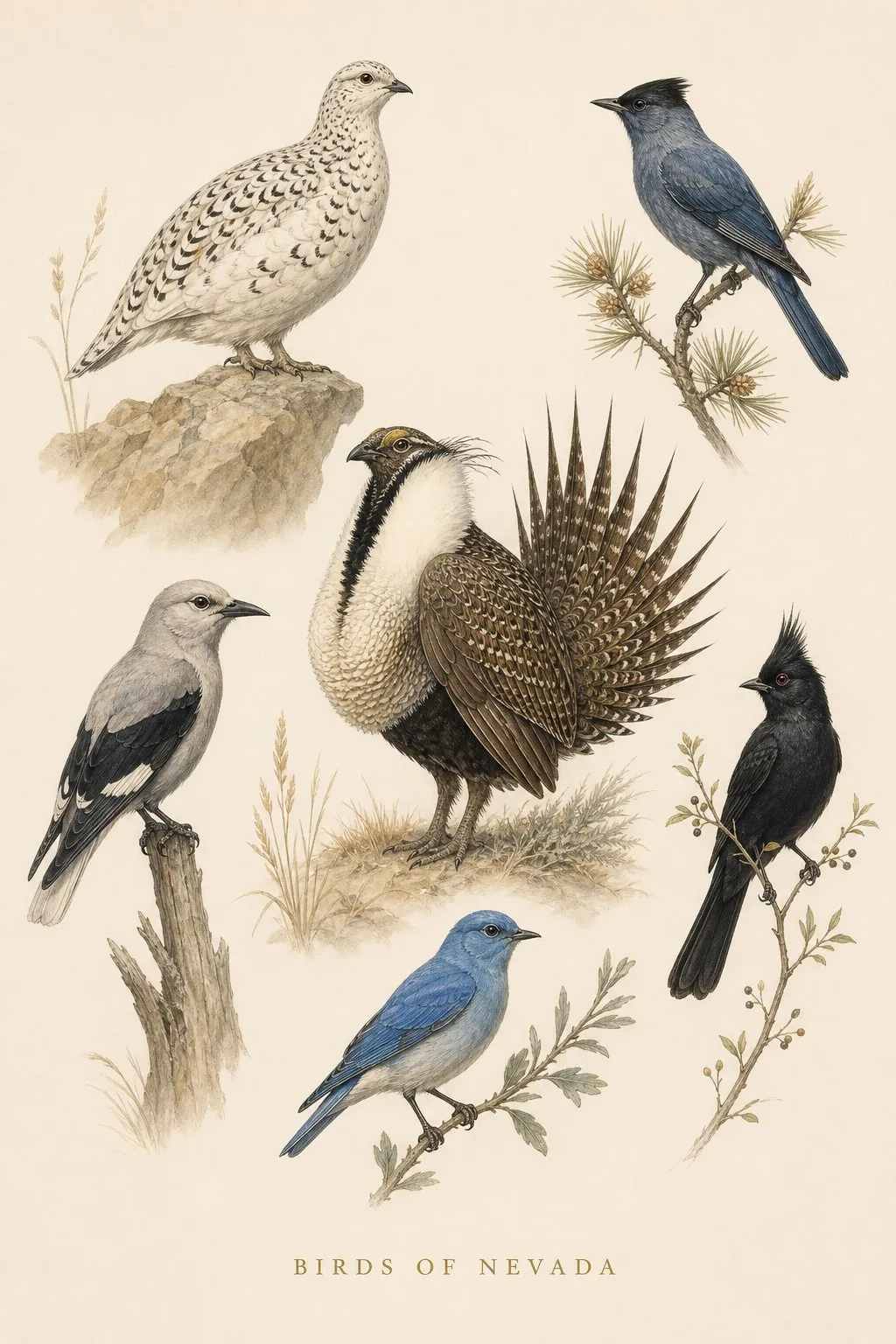
Nevada adopted the Mountain Bluebird (Sialia currucoides) as its official state bird on April 4, 1967, when Governor Paul Laxalt signed the bill into law. The groundwork had been laid 36 years earlier: the Nevada Federation of Women’s Clubs ran a citizen and schoolchildren’s vote in 1930 and 1931, and the bluebird won. It took the legislature until 1967 to make it official. The bird is worth the wait. The male in breeding plumage is one of the cleaner sights in North American birding - an all-cerulean blue without the rust bib of the Eastern or Western Bluebird, hovering low over open sagebrush country before dropping to take an insect from the ground. He is the exact colour of the Great Basin sky in morning.
Nevada is, by most measurements, the nation’s most arid state. It is also one of the most topographically varied. The Great Basin takes up most of the state - a cold desert of parallel mountain ranges and flat valleys, many of them closed basins that drain inward rather than to any ocean. The south gives way to Mojave Desert scrub around Las Vegas. The northeast rises into the Ruby Mountains, a skyline of granite ridges above 11,000 feet. The west catches Sierra Nevada spillover. Each zone runs its own bird community, and the overlaps are where it gets interesting.
The Great Basin Bird Observatory, which maintains the official Nevada state checklist and oversees the Nevada Bird Records Committee, recorded 496 species for the state as of its May 2025 update.
Signature and speciality species
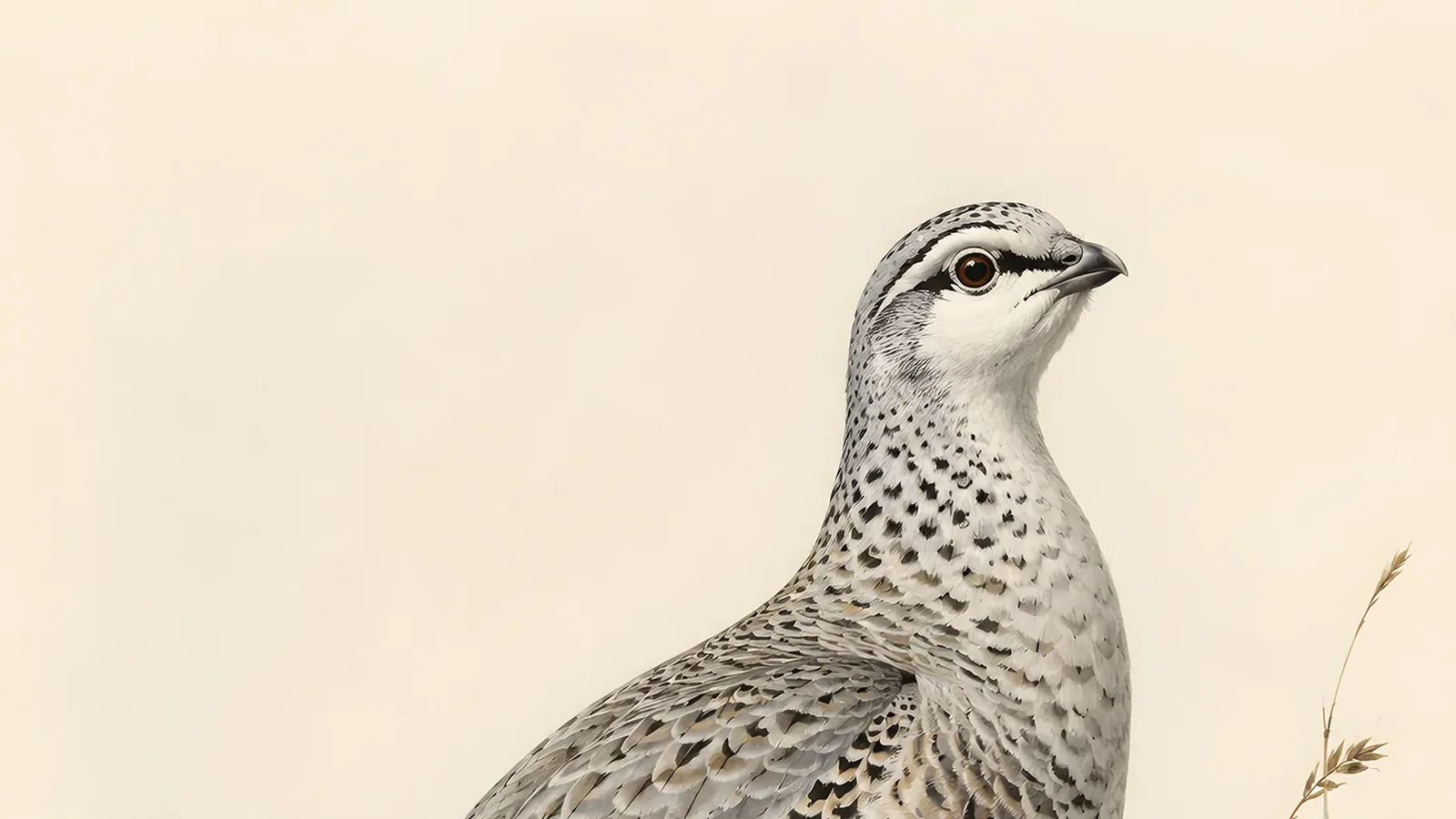
The single most sought-after bird in Nevada is also the most improbable. The Himalayan Snowcock (Tetraogallus himalayensis) is an introduced species found in the United States in exactly one location: the Ruby Mountains and East Humboldt Range of northeastern Nevada. It was introduced in 1963; a self-sustaining population of several hundred birds established itself by the 1980s. Finding one requires hiking above treeline on steep, rocky terrain at elevations between 9,000 and 11,000 feet, typically in pre-dawn darkness. The Audubon Society article on Nevada birding calls it, correctly, a bird found “only here in the United States.” There is no shortcut.
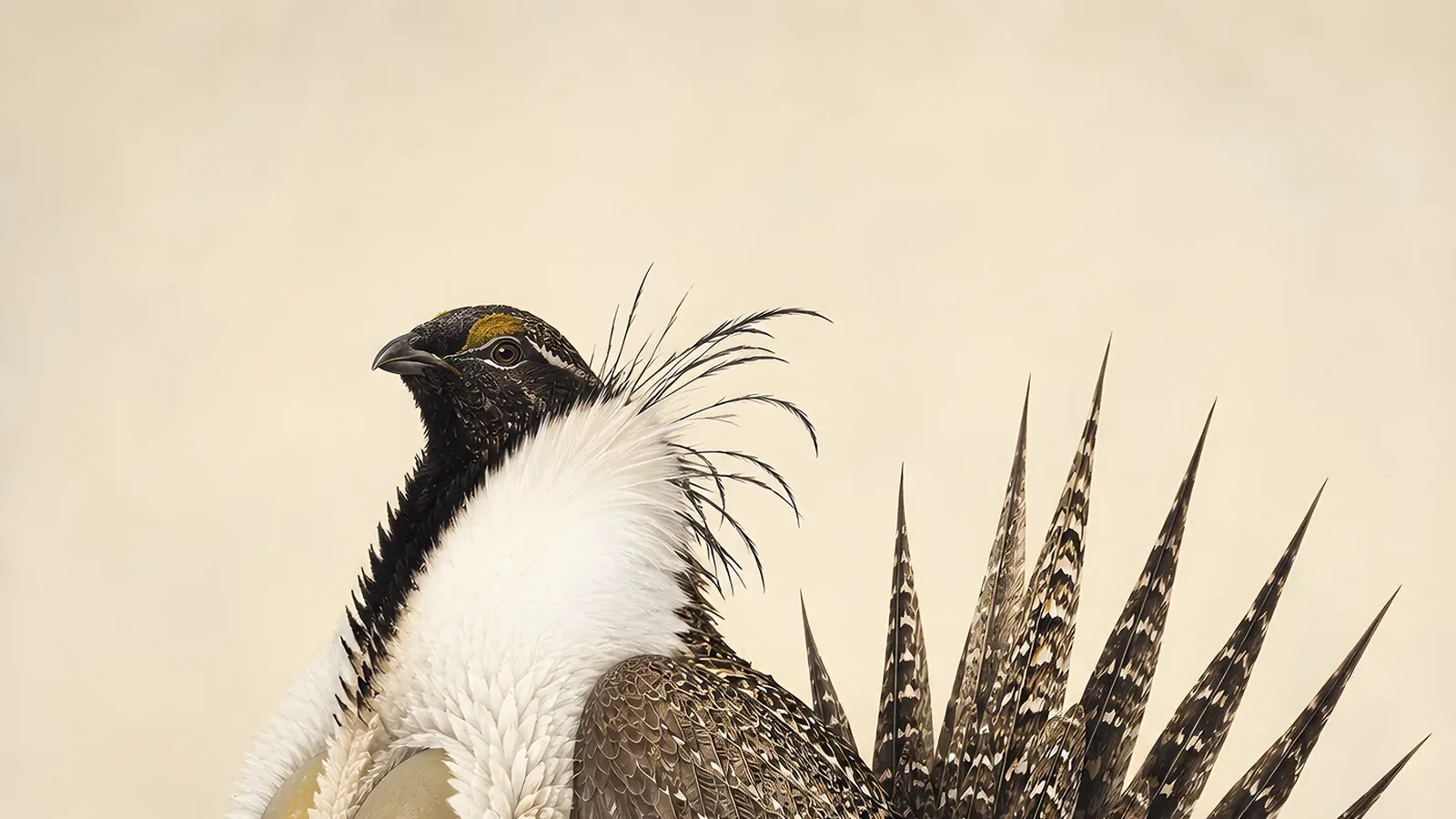
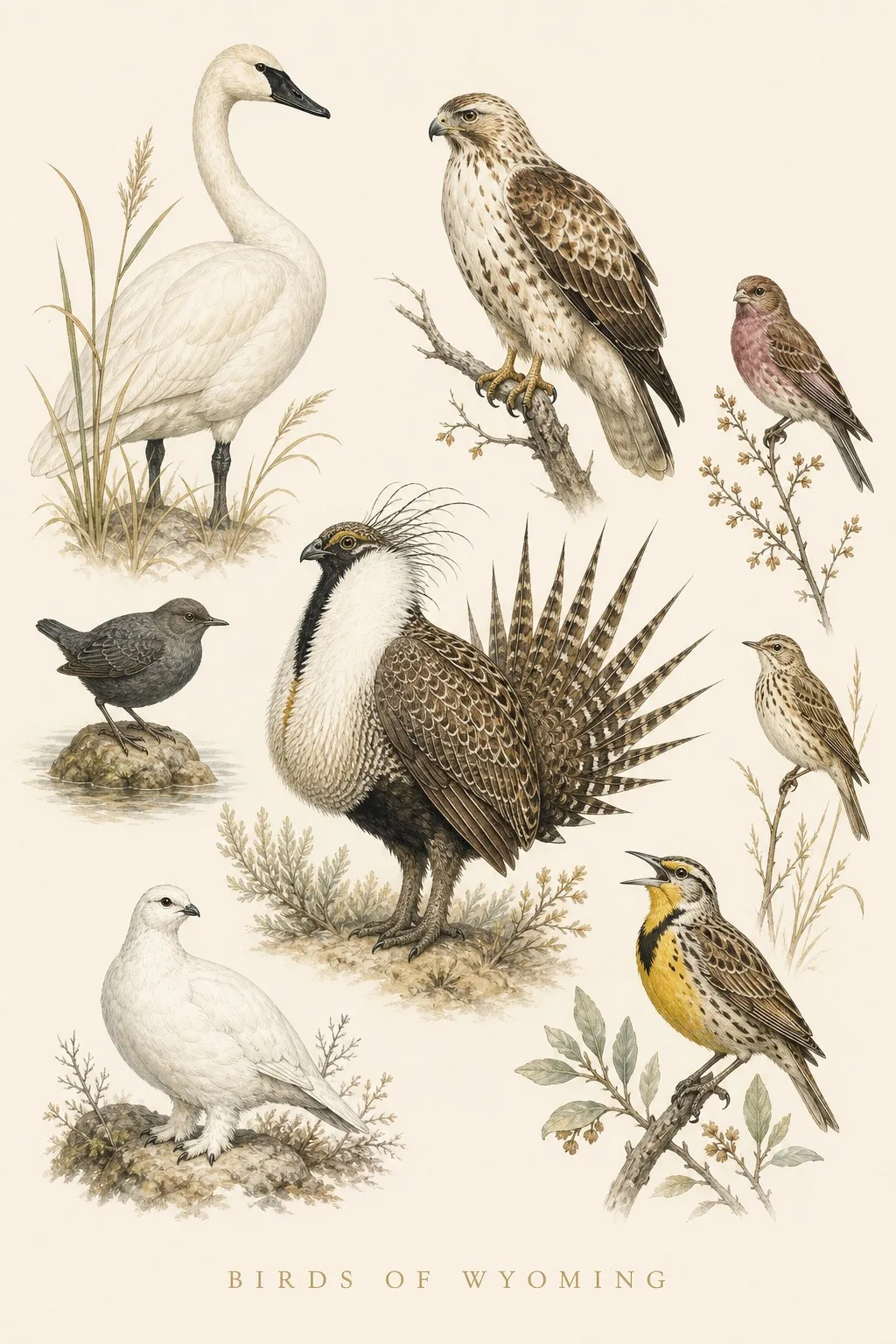
The Greater Sage-Grouse (Centrocercus urophasianus) is the Great Basin’s native icon. The Nevada Department of Wildlife manages the species as a sagebrush obligate - it depends on big sagebrush for food and cover across every season. Males gather at traditional leks in late winter and early spring to perform their gurgling, air-sac-puffing display. The leks are fixed locations, often used for decades, and the Nevada Department of Wildlife can direct birders to viewable sites.
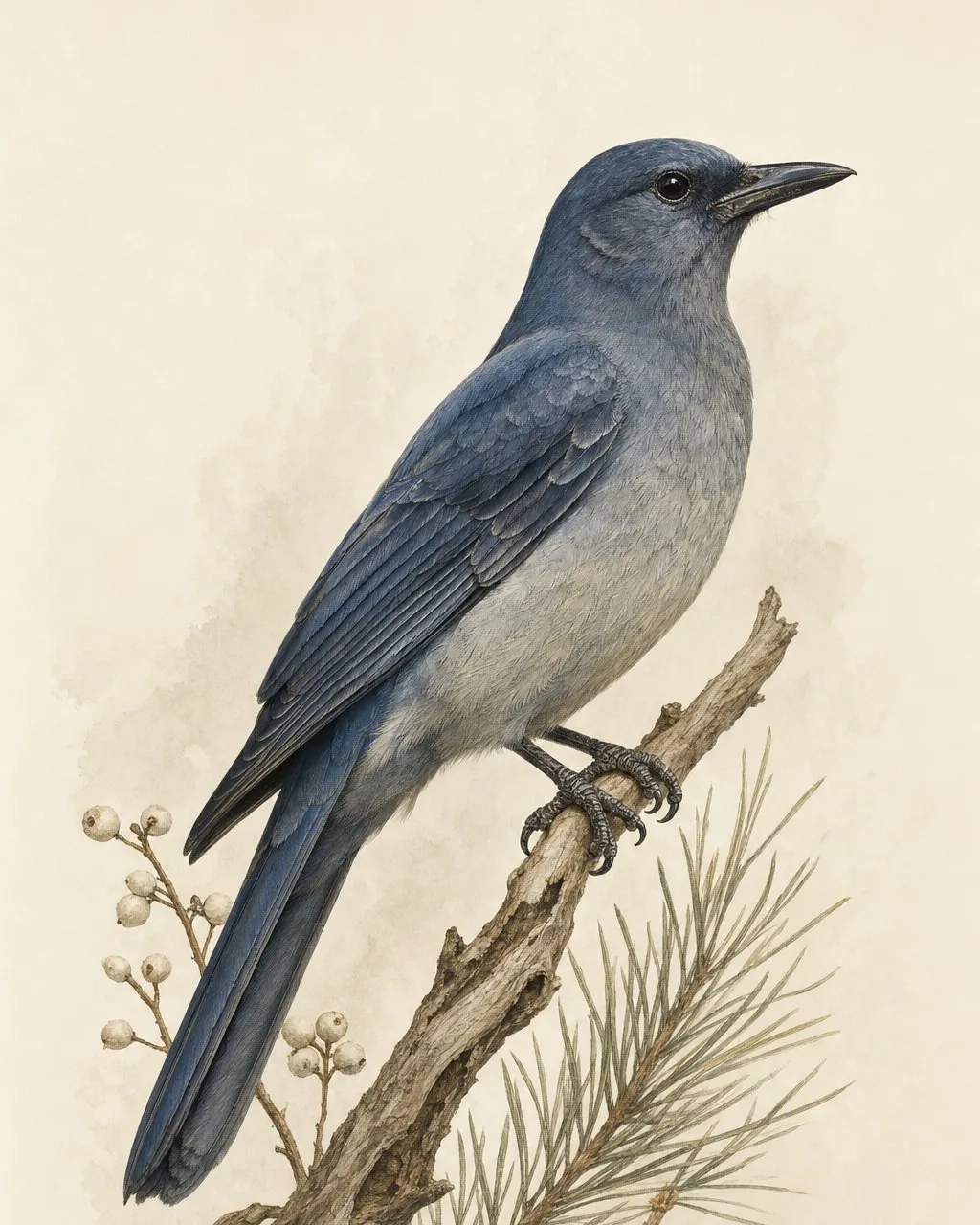
Pinyon Jay (Gymnorhinus cyanocephalus) is the corvid of the pinyon-juniper woodlands that cover the mid-elevation slopes throughout the state. It moves in loud, wheeling flocks, caching pine nuts in the ground. The Bureau of Land Management manages roughly half the Pinyon Jay’s US habitat, much of it in Nevada. The species has declined significantly in recent decades, making encounters more notable now than they once were.
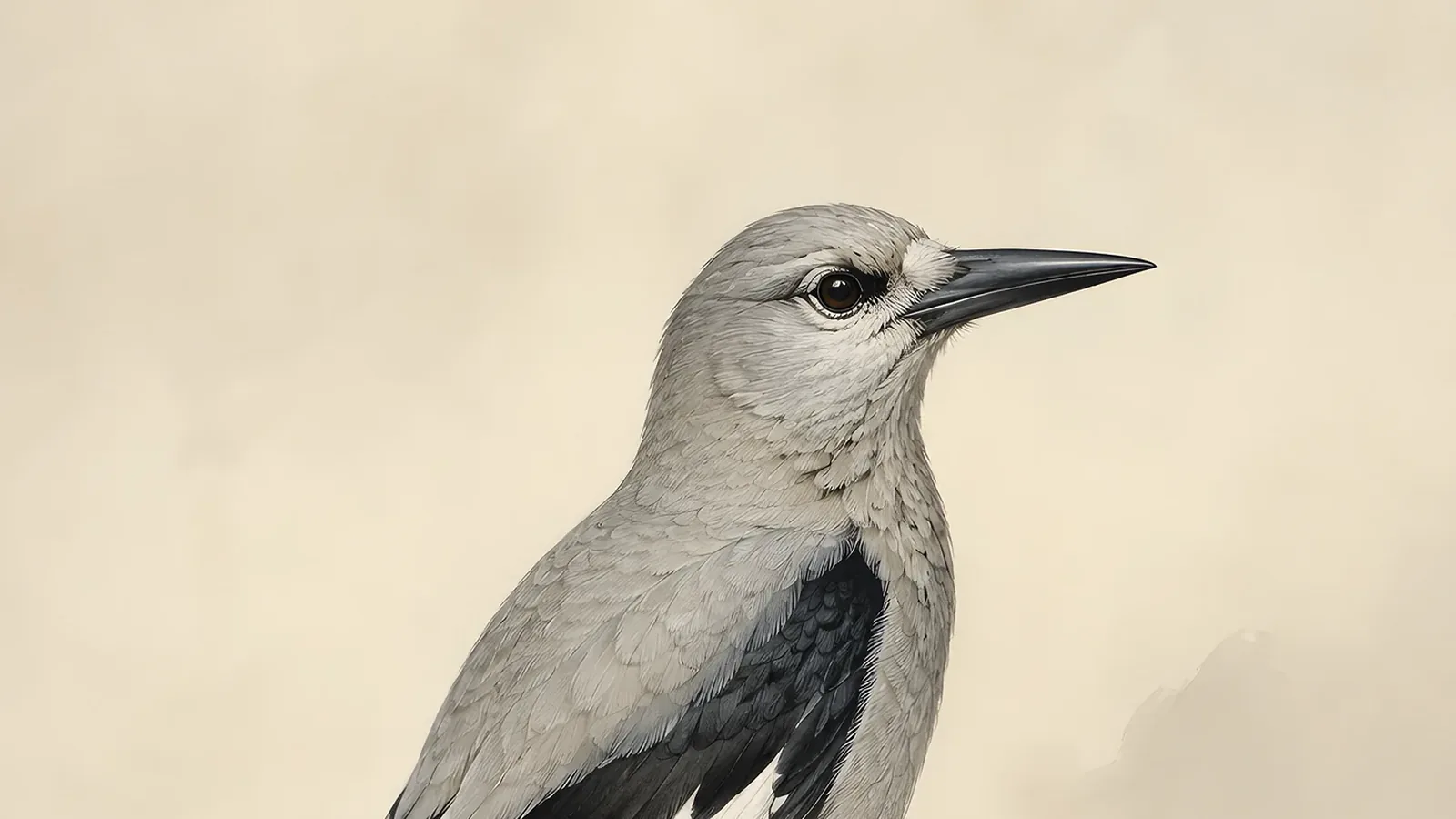
Clark’s Nutcracker (Nucifraga columbiana) works the high-elevation pine forests, particularly in the Spring Mountains and the Ruby Mountains. Like the Pinyon Jay it is a corvid with a cold-cache memory - it buries thousands of seeds each autumn and relocates them by spatial memory through winter.
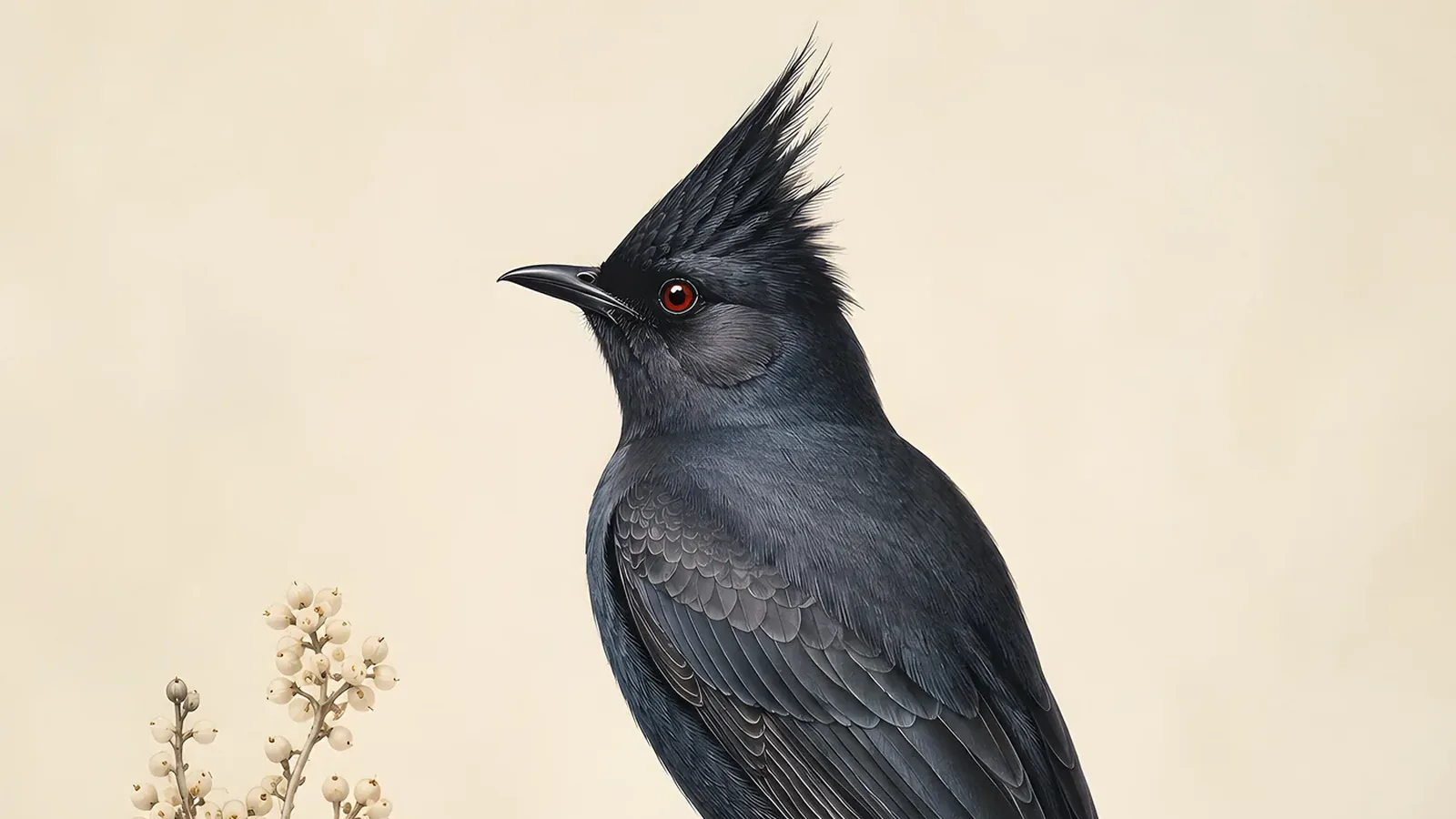
Phainopepla (Phainopepla nitens) brings a desert gothic quality to the southern Nevada washes and oases. The male is glossy black with a prominent crest and white wing patches that flash in flight. It feeds on desert mistletoe berries and is most concentrated around the riparian strips of the Las Vegas area in late spring.
Backyard species across the state
Nevada’s backyard birds divide roughly along a north-south line, with Great Basin species dominating the Reno-Carson City corridor and Mojave-adapted species more common around Las Vegas.
State-wide regulars include:
- Mourning Dove (year-round, the most frequently recorded species on Nevada eBird checklists at 32% of all submissions)
- House Finch (year-round, feeders throughout the state)
- Anna’s Hummingbird (year-round in southern Nevada and increasingly in Reno)
- American Goldfinch (winter visitor to feeders in most of the state)
- Common Raven (year-round, ubiquitous from desert valleys to mountain peaks)
- Red-tailed Hawk (year-round, hunting open country)
- Great Horned Owl (year-round, nests on cliff faces, in large trees, and in suburban trees)
In Reno and the northern valleys: Black-billed Magpie, Woodhouse’s Scrub-Jay, and Dark-eyed Junco (winter) are reliable. Around Las Vegas: Gambel’s Quail coveys cross suburban streets, and Verdin works the mesquite and tamarisk.
Seasonal rhythm
Nevada’s birding year turns on water. The state’s wetlands sit on the Pacific and Central Flyways, and during migration they concentrate shorebirds and waterfowl that have nowhere else to stop across hundreds of kilometres of dry country.
Spring migration at Stillwater National Wildlife Refuge near Fallon peaks in April and May. The Western Hemispheric Shorebird Reserve Network has designated Stillwater a site of international importance - the refuge has recorded more than 290 species, with enormous flights of Long-billed Dowitchers, Black-necked Stilts, American Avocets, and Wilson’s Phalaropes passing through the Lahontan Valley marshes. American White Pelicans stage here in numbers that read as implausible for a landlocked desert state.
Summer belongs to the sagebrush. Sage-Grouse chicks follow their mothers through the brush; Sage Thrashers and Sagebrush Sparrows sing from the tops of big sagebrush; Western Kingbirds work the fence lines along ranch roads.
Autumn pushes raptors into the valleys. Ferruginous Hawks and Prairie Falcons take up winter territories on the flat playas. The Ruby Lake Refuge in the northeast fills with Trumpeter Swans and Greater Sandhill Cranes on their southbound routes - nearly 220 species have been recorded at Ruby Lake, which sits where the Pacific and Central Flyways overlap.
Winter is quiet in the high country but productive in the south. The Henderson Bird Viewing Preserve near Las Vegas - a former water reclamation facility with nine ponds and five miles of trails - has logged over 270 species and holds one of the highest single-site totals in the state year-round. Nesting waterbirds include Cinnamon Teal, Ruddy Duck, Western Grebe, and Least Bittern.
Where to go
Stillwater National Wildlife Refuge (Fallon) - the state’s premier shorebird site, 60 miles east of Reno. The Stillwater Point Reservoir observation deck and the 1.25-mile interpretive trail give access to the core wetlands. Plan for April through May for peak shorebird diversity.
Ruby Lake National Wildlife Refuge (Elko County) - 40,000 acres of spring-fed marsh against the Ruby Mountains. Trumpeter Swans and Sandhill Cranes in autumn; waterfowl breeding in summer. Gravel dike roads provide access through the marsh and make this one of the more accessible remote refuges in the state.
Henderson Bird Viewing Preserve (Henderson, south of Las Vegas) - 140 acres within the Water Reclamation Facility, free admission. The Audubon article on Nevada birding describes it as hosting “one of the highest species totals of any birding site in Nevada.” Accessible year-round.
Great Basin National Park (White Pine County) - the elevation range from 6,200 feet at the visitor centre to 13,063 feet at Wheeler Peak gives access to montane breeding species including Clark’s Nutcracker, Mountain Chickadee, and in the right year, the state’s more elusive forest birds. The park receives few visitors relative to its birding potential.
The Ruby Mountains are the only place in the United States to reliably look for a Himalayan Snowcock. That fact alone makes Nevada a destination for serious listers. But the state’s deeper interest is the Great Basin itself - a cold desert that concentrates birds at every wetland, every canyon mouth, every spring, in ways that reward the birder who is willing to cover ground.