State Guide
Birds of New Mexico
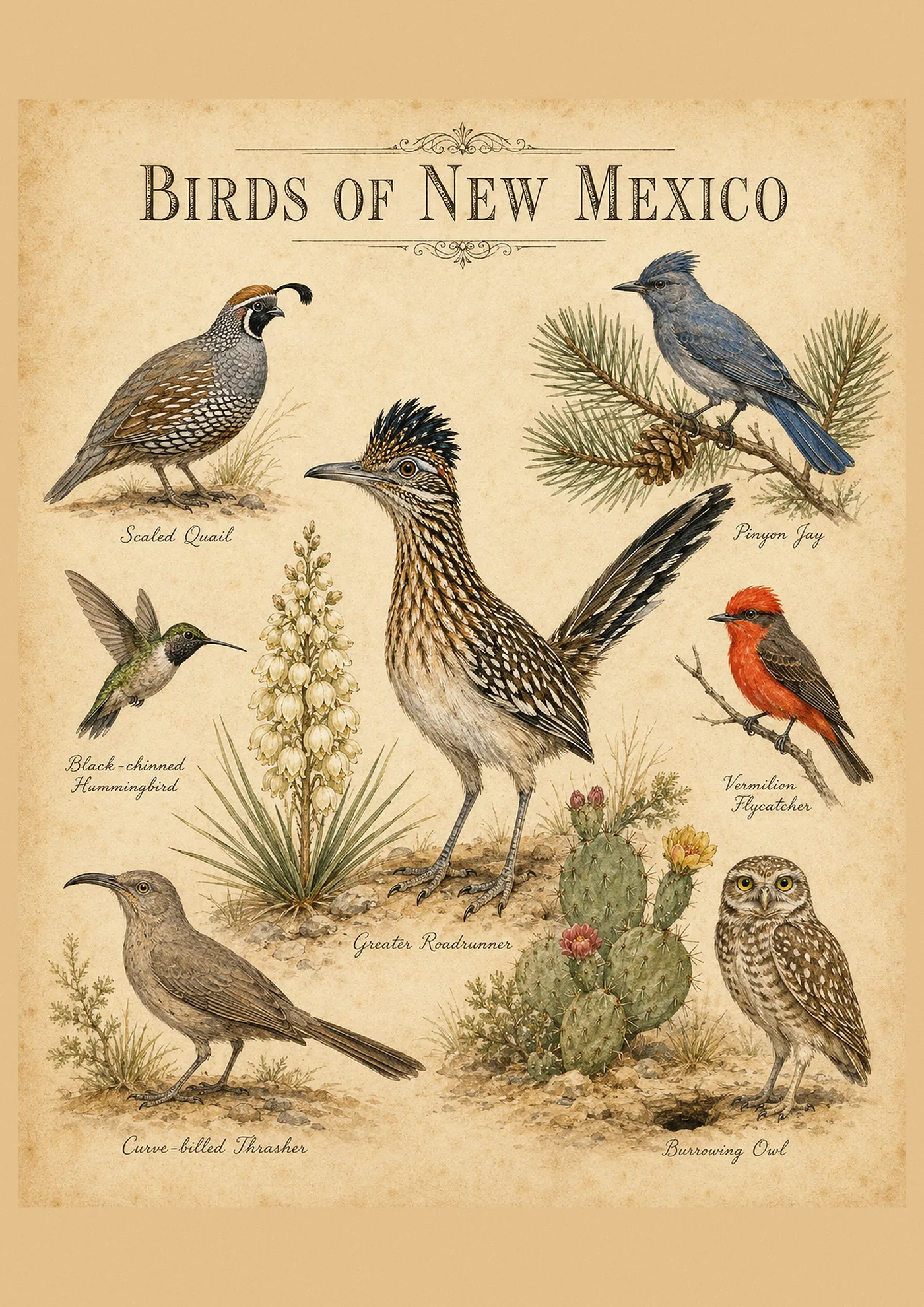
On 16 March 1949, Governor Thomas J. Mabry signed House Bill 217 and the Greater Roadrunner (Geococcyx californianus) became New Mexico’s official state bird. The road to that signature began six years earlier: in 1943, the New Mexico Federation of Women’s Clubs and local chapters of the National Audubon Society organised a statewide vote among schoolchildren. The Roadrunner won. It beat the western meadowlark and the canyon wren, two perfectly respectable candidates. The children understood something about the landscape they lived in. The legislature used the old name - chaparral bird - in the statute. The bird itself remains unchanged.
The Roadrunner is not a songbird doing its best in the desert heat. It is a ground-dwelling cuckoo that hunts rattlesnakes, scorpions, and small lizards with the same purposeful trot that gave it its name. Cornell’s All About Birds notes that the species can run at speeds up to 20 mph and kills venomous prey by slamming it against a hard surface. Two birds will sometimes cooperate to pin a snake: one holds the head while the other beats it. It is the right bird for New Mexico.
The state itself covers terrain that no single bird could fully represent. New Mexico runs from the low Chihuahuan Desert in the south - less than 3,000 feet elevation - through the Middle Rio Grande Valley and the Sandia Mountains to the Southern Rocky Mountain peaks above 13,000 feet in the north. That vertical range produces a bird list to match. The New Mexico Ornithological Society’s official checklist, current as of March 2026, stands at 559 verified species. That number places New Mexico among the top four states for avian diversity in the United States.
The state’s signature species
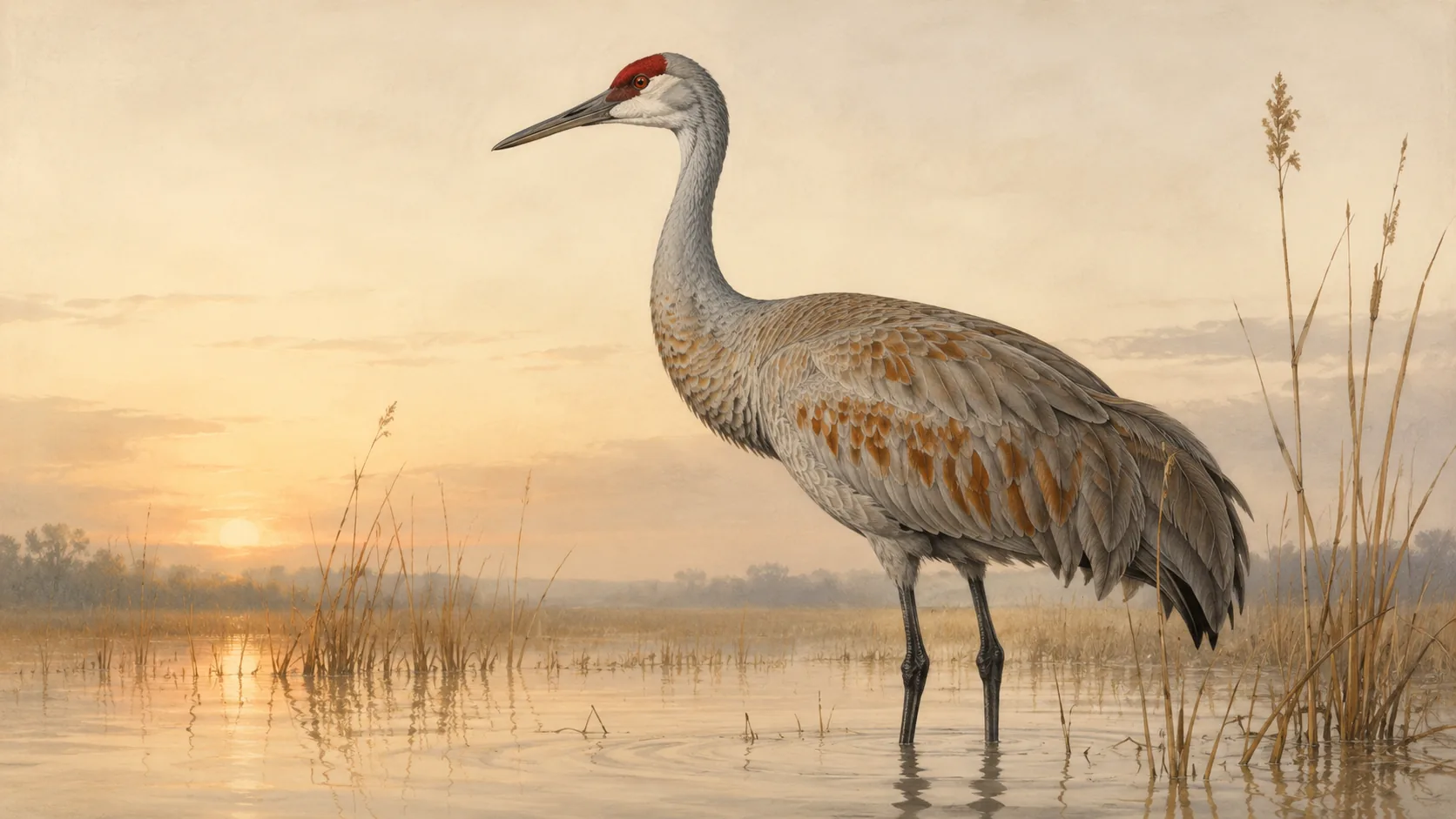
Sandhill Crane (Antigone canadensis) is the spectacle species. Bosque del Apache National Wildlife Refuge, along the Rio Grande south of Socorro, hosts tens of thousands of Sandhill Cranes each winter alongside comparable numbers of Snow Geese and Ross’s Geese. The Festival of the Cranes, held every November at the refuge, draws birders from across North America to watch the pre-dawn lift-off: a sound like static that becomes a roar, then a sky full of cranes banking over the bosque cottonwoods. eBird data consistently rank Bosque del Apache as the single most productive birding site in the state.
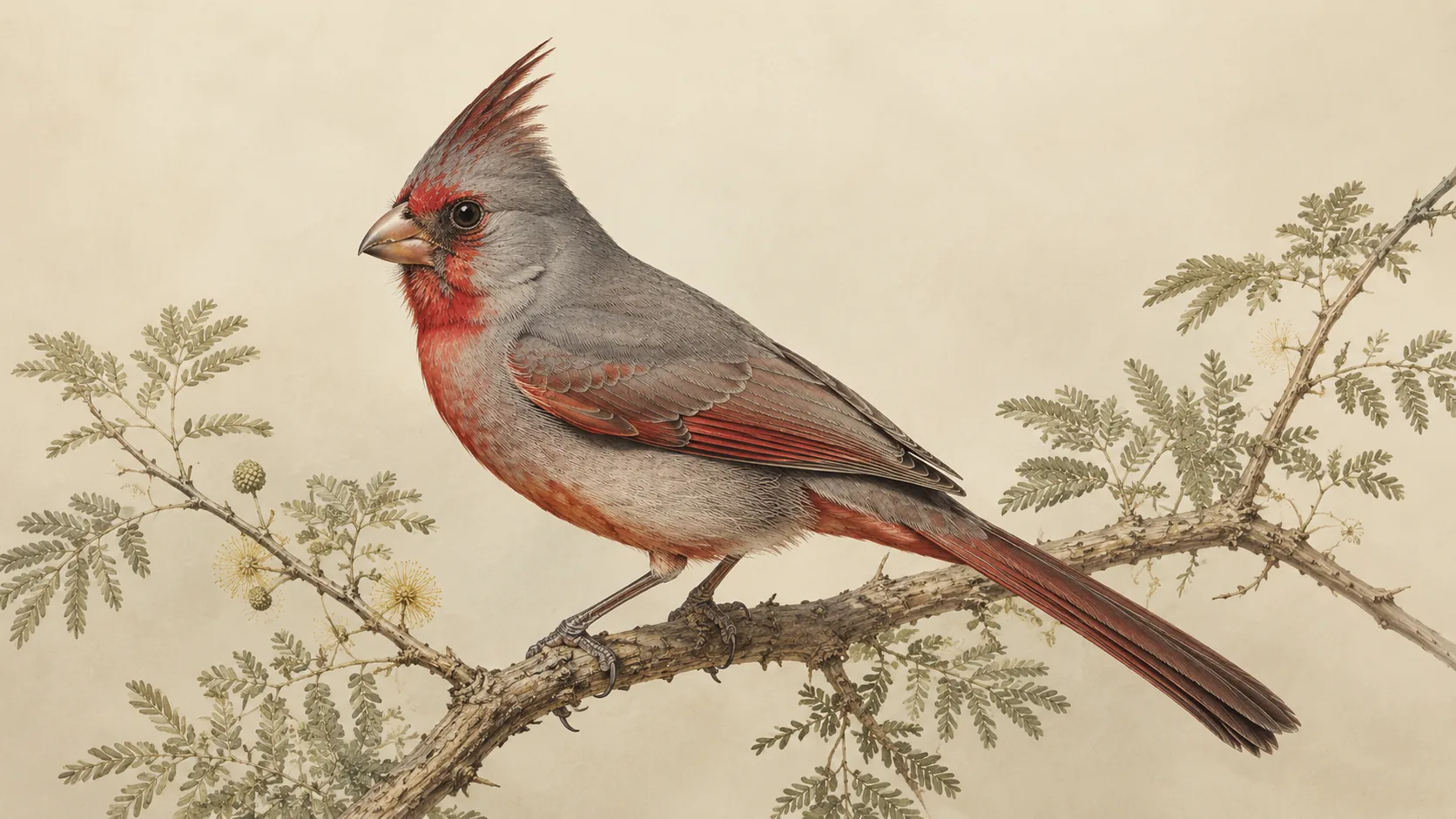
Pyrrhuloxia (Cardinalis sinuatus) is the desert counterpart of the Northern Cardinal - same family, same crest, same thick seed-cracking bill, but dressed in grey and rose rather than red. It is a Chihuahuan Desert specialist, resident year-round in the thorn scrub and mesquite thickets of southern New Mexico. The species rarely strays north of the state’s desert basin, which makes it a sought target for visiting birders who have never birded the Southwest.
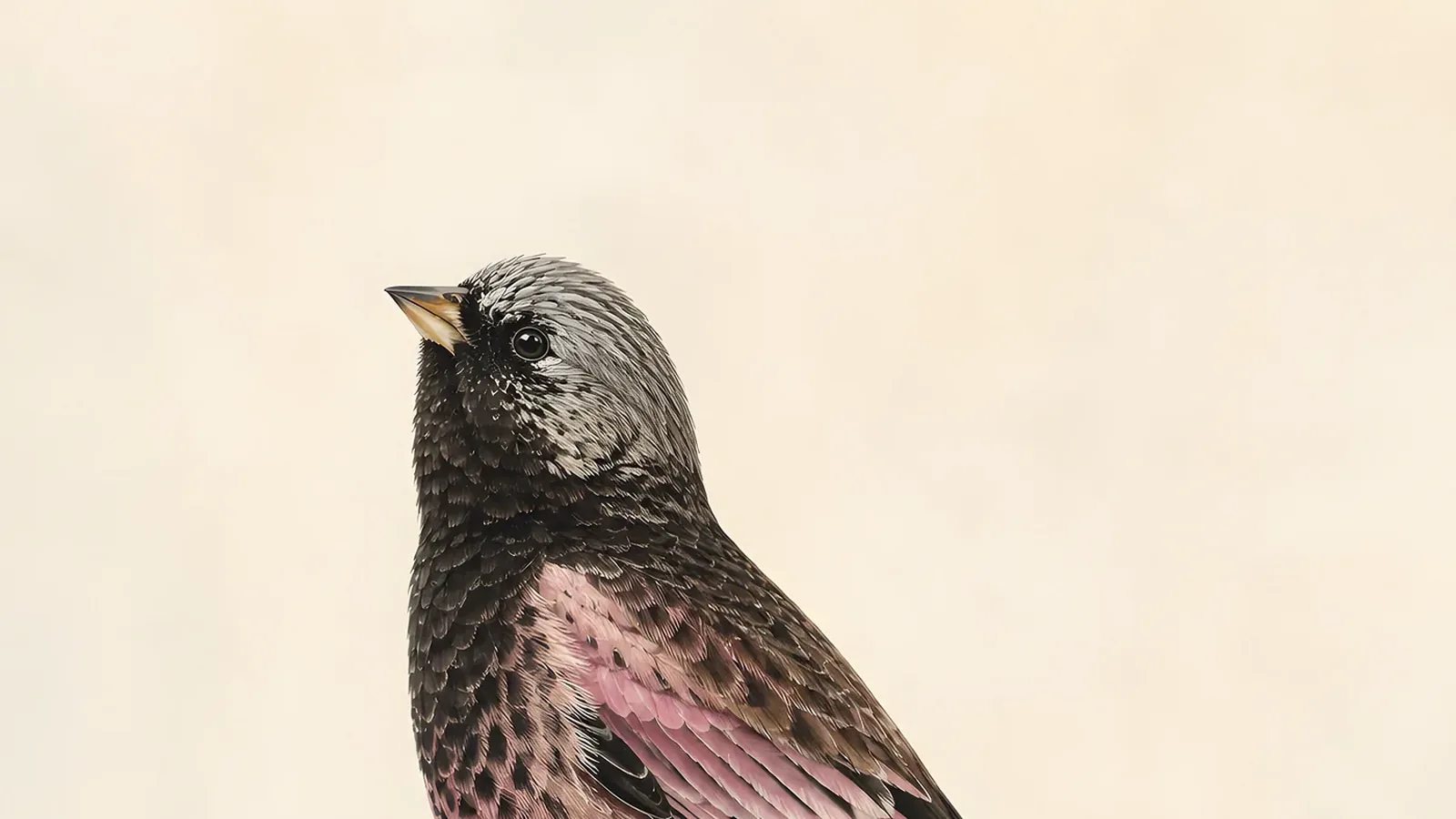
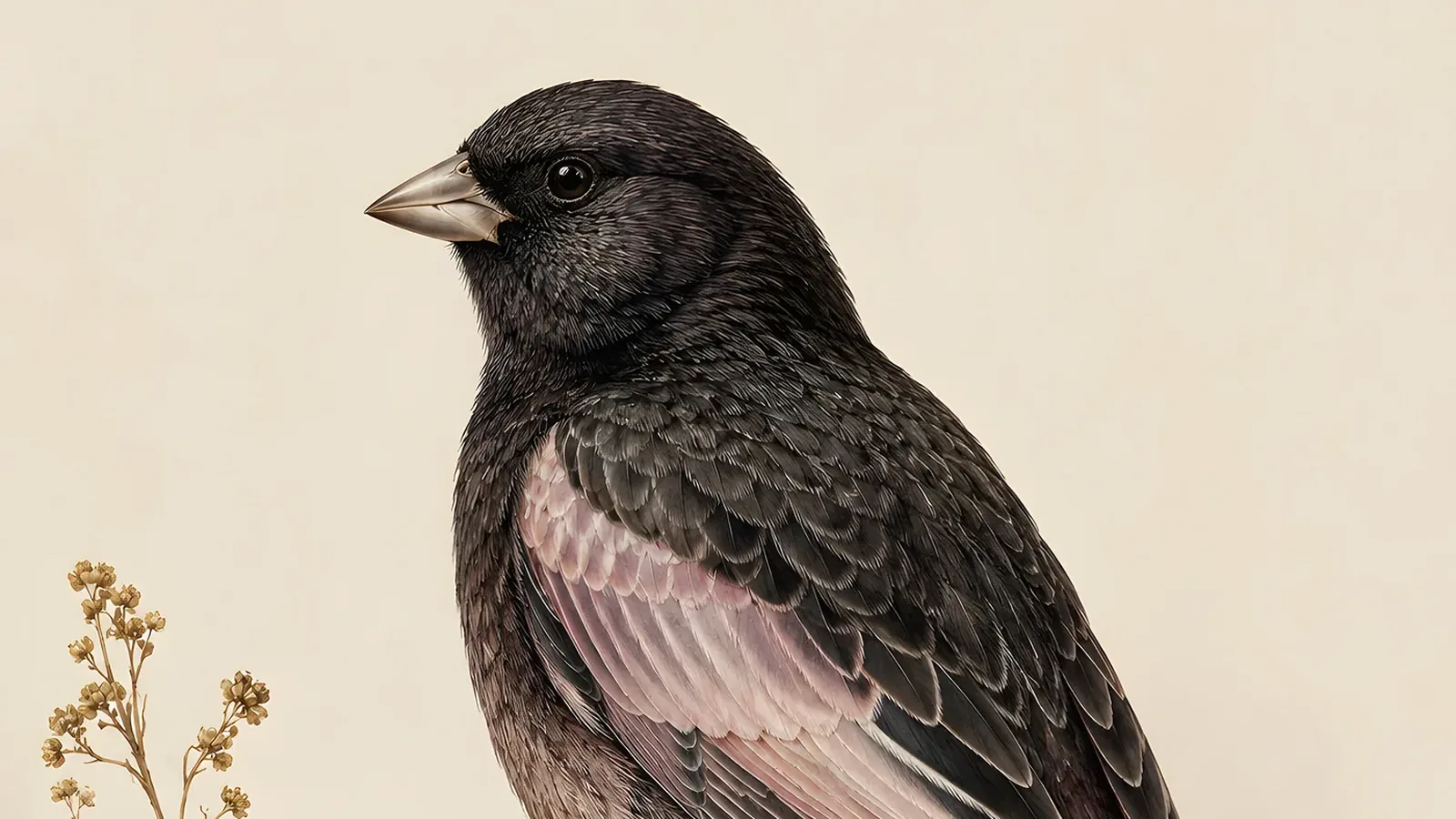
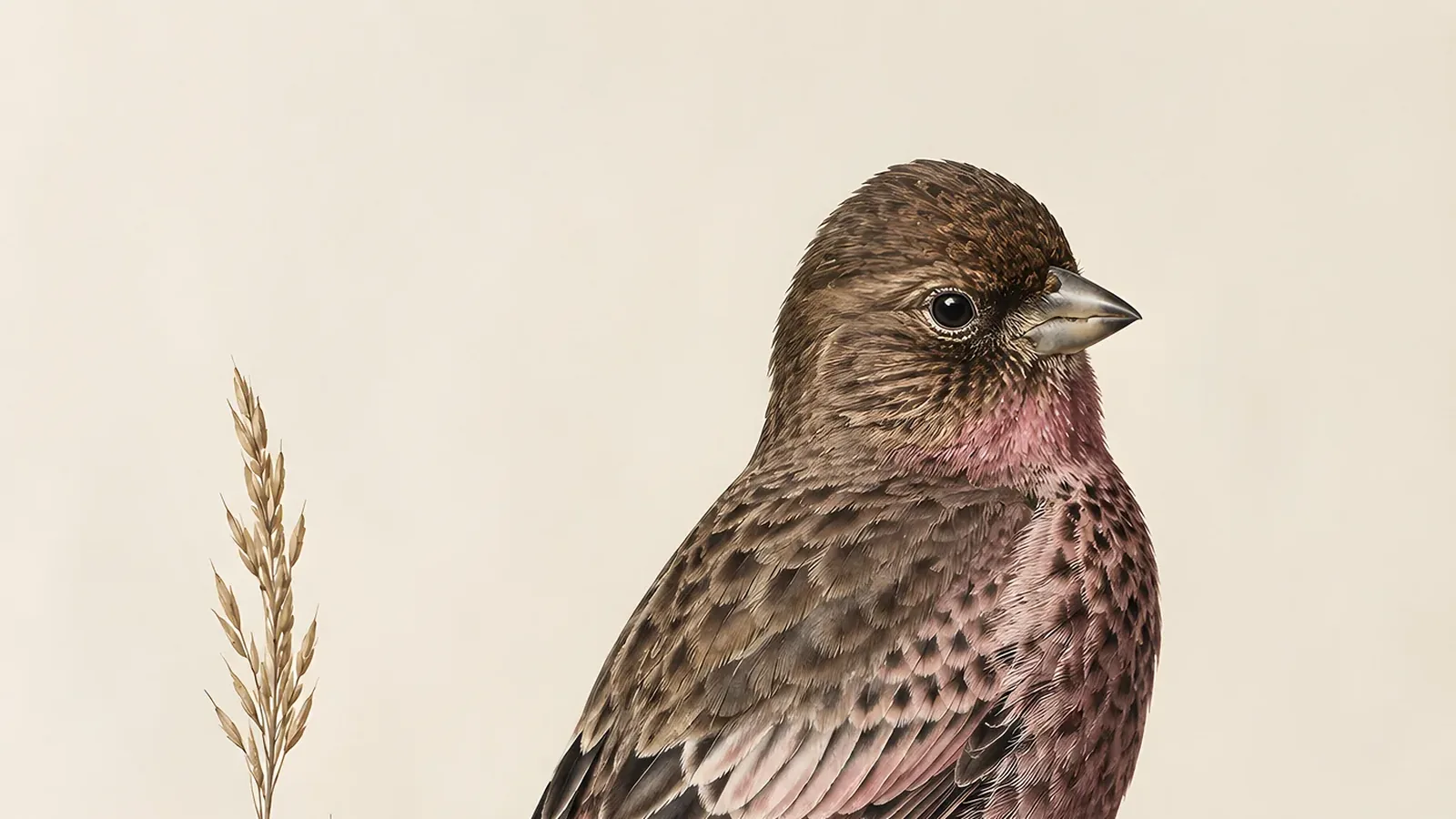
Rosy-Finches are the prize at Sandia Crest in winter. Three species - Gray-crowned, Black, and Brown-capped Rosy-Finch - descend together from the high peaks to feed at the feeders maintained near the Sandia Crest parking lot at 10,679 feet. No other site in North America offers all three species as reliably in a single morning. The Sandia Mountains also hold Flammulated Owl, Williamson’s Sapsucker, and Hepatic Tanager in summer.
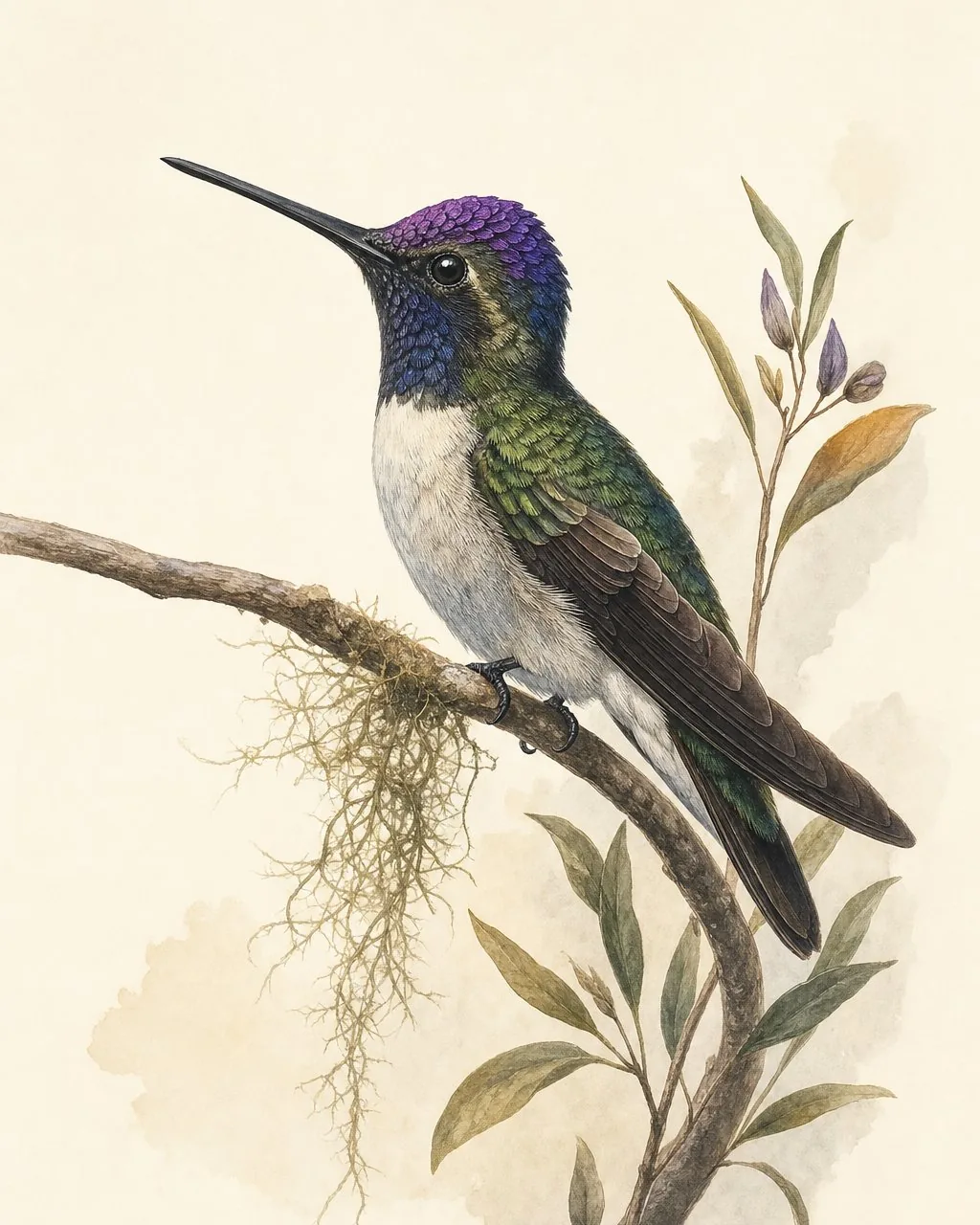
Violet-crowned Hummingbird (Ramosomyia violiceps) reaches the northern edge of its range in the Guadalupe Canyon and Hidalgo County area of the New Mexico boot-heel. The species winters in Mexico and arrives in the canyon sycamores from late spring onward. The American Birding Association lists it among the state’s prize target birds, a species that requires genuine planning to see anywhere in the United States.
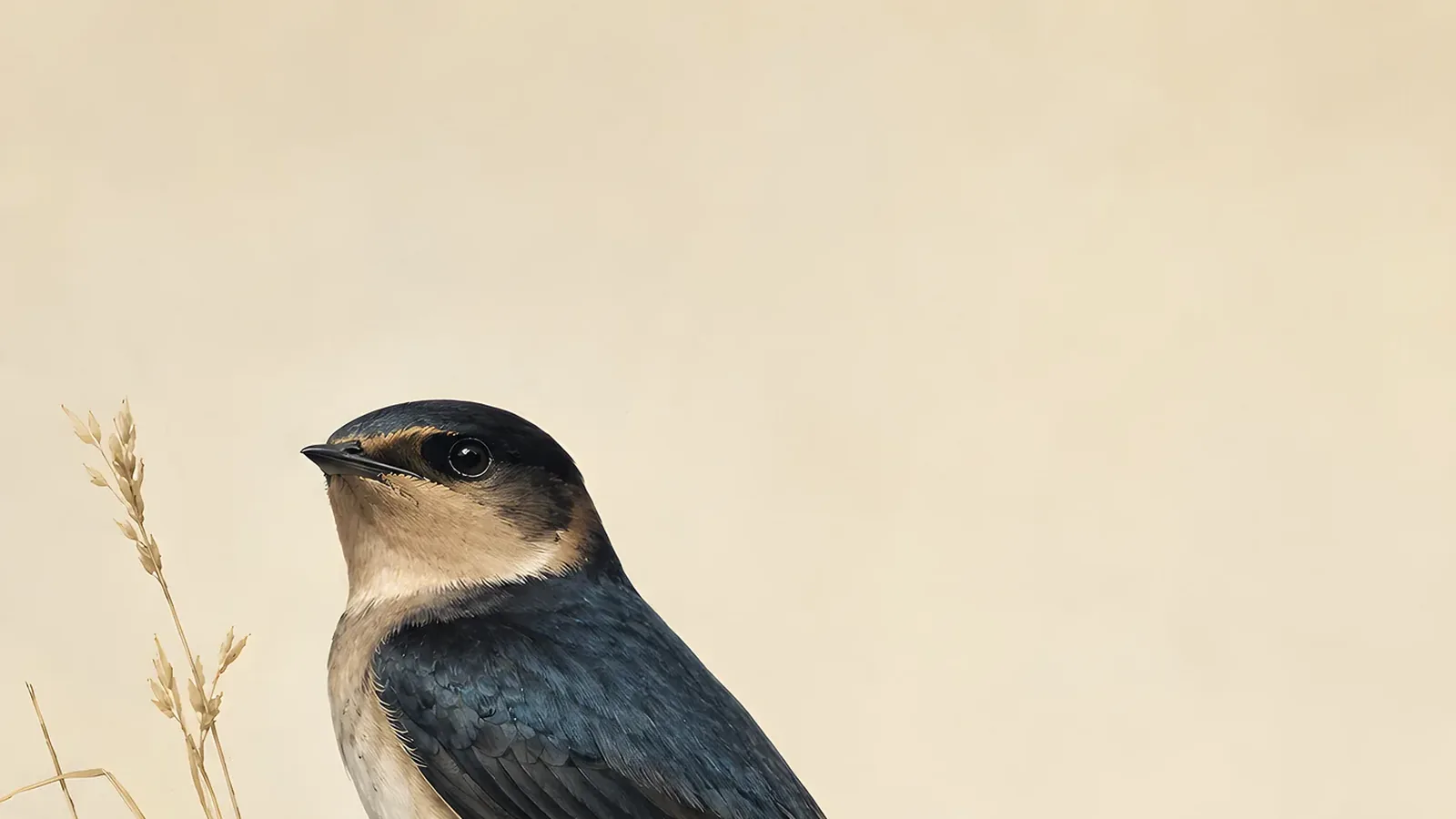
Cave Swallow (Petrochelidon fulva) nests in the limestone sink entrances at Carlsbad Caverns National Park and at Rattlesnake Springs, a riparian oasis within the park that is one of the more reliable spots in the state for vagrant landbirds during migration. The ABA’s New Mexico hotspot guide singles out Rattlesnake Springs as a location where Great Kiskadee, Groove-billed Ani, and Yellow-green Vireo have appeared - birds that belong to Mexico, showing up at the edge of their world.
Top backyard species
A typical New Mexico yard, particularly in the Rio Grande corridor towns of Albuquerque or Las Cruces:
- Greater Roadrunner (year-round, desert and suburban edges)
- House Finch (year-round, the most common feeder bird in the state)
- Mourning Dove (year-round)
- Northern Mockingbird (year-round, common in residential areas)
- Curve-billed Thrasher (year-round in desert lowlands)
- Pyrrhuloxia (year-round in southern New Mexico)
- White-breasted Nuthatch (year-round, especially at pinon-juniper feeders)
- Spotted Towhee (year-round in brushy yards)
- American Robin (year-round and winter flocks)
- Dark-eyed Junco (abundant in winter, retreating to high elevations to breed)
- White-crowned Sparrow (winter)
- Western Bluebird (mountain foothills, year-round)
- Black-chinned Hummingbird (summer, the most widespread hummingbird in the state)
- Red-tailed Hawk (year-round, ubiquitous over open country)
- Great Horned Owl (year-round, nesting in suburban trees)
Where and when to watch
Bosque del Apache National Wildlife Refuge runs a 15-mile auto tour loop through wetland impoundments and cottonwood gallery forest along the Rio Grande. November through January is the peak season for crane and goose spectacle. Bald Eagles are common from November into March, and the refuge supports breeding Sandhill Cranes in summer - the same species, in a different light entirely.
Sandia Crest and the Sandia Mountains northeast of Albuquerque offer one of the most compressed elevation gradients in the state. The crest road climbs from Albuquerque’s desert fringe at roughly 5,300 feet to the 10,679-foot summit. Each zone yields different species: pinon-juniper scrub holds Juniper Titmouse and Woodhouse’s Scrub-Jay; ponderosa pine forest holds Pygmy Nuthatch and Western Tanager; the mixed conifer summit holds rosy-finches in winter. Audubon New Mexico has documented Flammulated Owl here in May and June.
Rattlesnake Springs, within Carlsbad Caverns National Park near the Texas border, is a cottonwood-shaded spring in otherwise arid terrain - the kind of anomaly that stops migrants cold. A morning in late April or early May at Rattlesnake Springs can produce warbler fallout numbers that rival any traditional migration trap in the eastern United States.
Melrose Trap, Roosevelt County is a less-visited site in the eastern high plains. The ABA’s hotspot guide notes that the Melrose area “regularly produces a greater variety of migrant landbirds” than most comparable Plains locations, owing to a cluster of trees and water in an otherwise treeless agricultural landscape - the same concentration principle that makes any oasis disproportionately productive.
Spring migration runs through April and May, when canyon hummingbirds arrive and warbler movement peaks at the riparian traps. Summer is for breeding birds in the high country and desert specialists in the south. Autumn brings hawk migration across the desert ridges. Winter belongs to Bosque del Apache and the rosy-finches at Sandia Crest.
The Greater Roadrunner is there in every season, moving at a purposeful trot through the creosote scrub, entirely indifferent to the calendar. The children who voted for it in 1943 were right about one thing: it does not need to migrate to tell you where you are.