State Guide
Birds of Florida
On the morning of April 23, 1927, the Florida legislature settled the state bird question without a schoolchildren’s vote. The Senate passed Concurrent Resolution No. 3 and chose the Northern Mockingbird (Mimus polyglottos). The logic was practical and defensible: a bird found year-round in every corner of the state, built for Florida’s heat, and vocal enough to fill the silence of a subtropical night with other birds’ songs.
The mockingbird does not look like much. Grey above, pale below, white wing-bars that flash in flight. But Cornell’s All About Birds notes that a male mockingbird can learn more than 200 distinct song types across his lifetime, adding new sounds each year. He sings at night during the full moon, and he will defend a winter berry patch with the same ferocity as a breeding territory. Florida chose a bird that holds its ground.
The state it represents is the most ornithologically diverse in the eastern United States. The Florida Ornithological Society’s official checklist, updated in July 2024, records 545 extant species - more than any state east of the Mississippi. That count reflects the peninsula’s double role: subtropical year-round habitat for southern specialists, and the funnel through which millions of migrants cross the Gulf.
Signature and specialty species
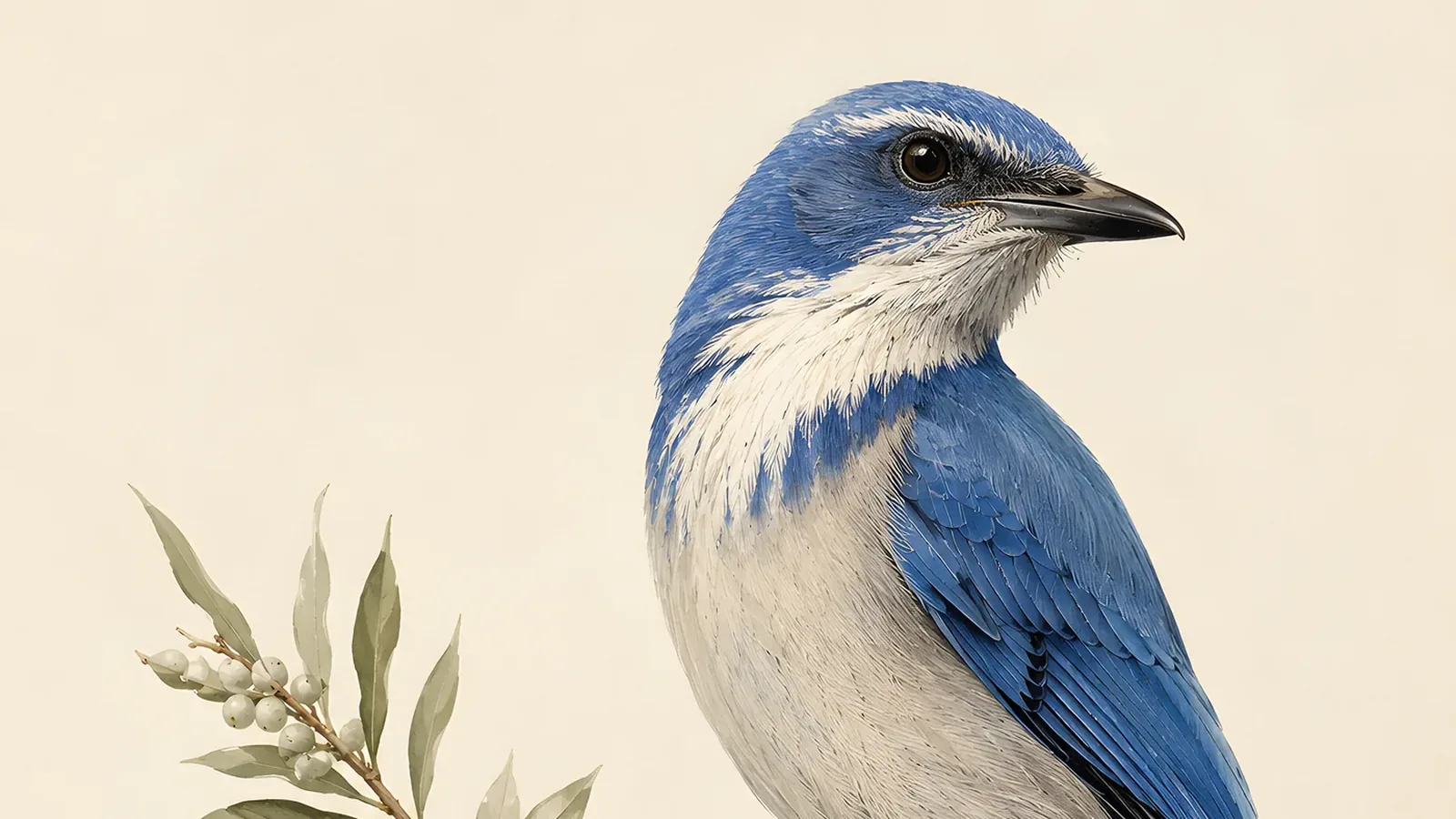
Florida Scrub-Jay (Aphelocoma coerulescens) is the only bird species found nowhere else on Earth except Florida. Cornell’s All About Birds lists it as dependent on low-growing oak scrub on ancient sandy ridges, the high dry ground that runs down the spine of the peninsula and along the old coastal dunes. It does not migrate. It rarely moves more than a few miles from where it hatched. The 2025 State of the Birds report lists the Florida Scrub-Jay as a Red Alert Tipping Point species - population down more than 50 per cent in 50 years. Merritt Island National Wildlife Refuge on the Space Coast is one of its remaining strongholds.
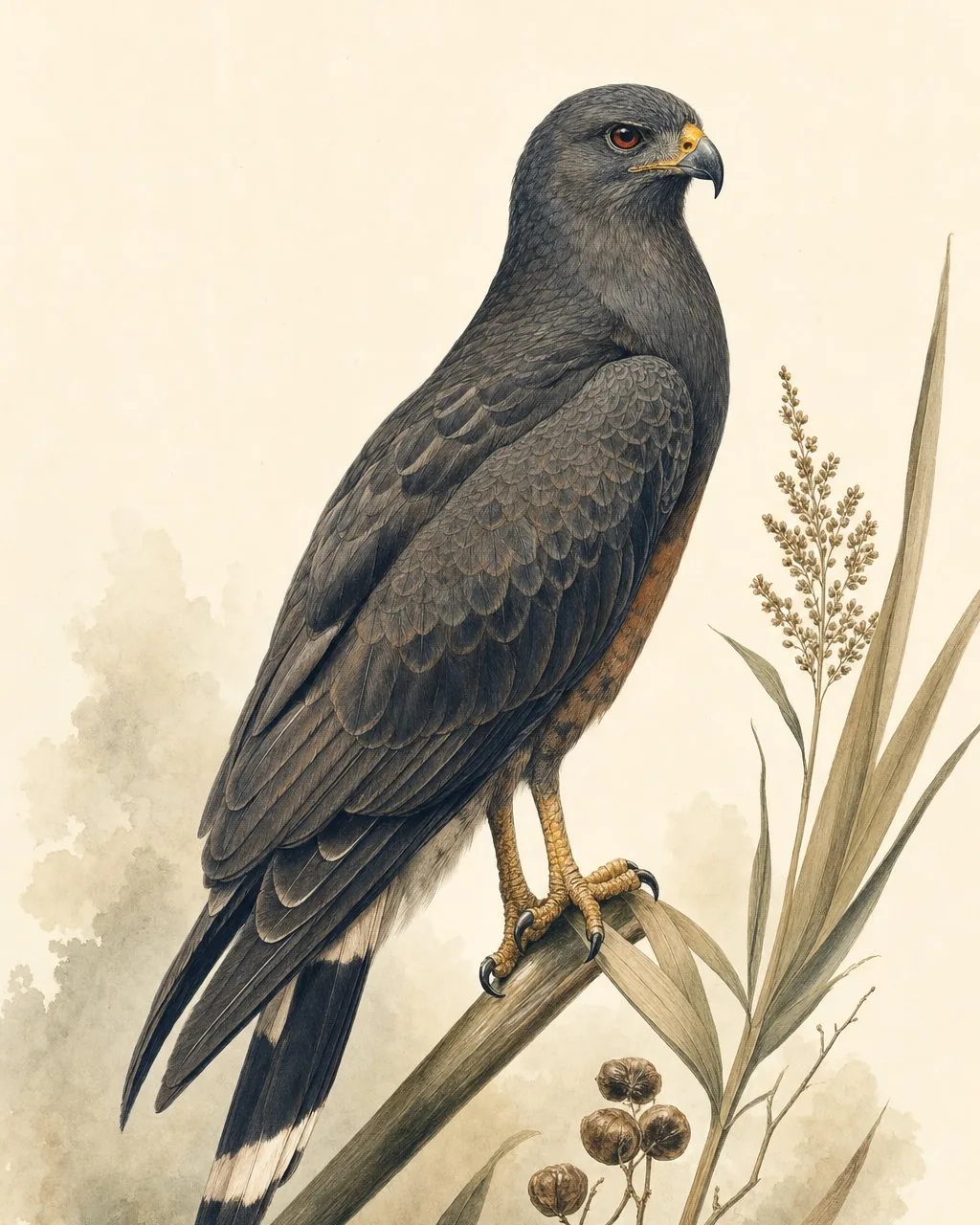
Snail Kite (Rostrhamus sociabilis plumbeus) is protected as an endangered species under both Florida law and the Federal Endangered Species Act, listed since 1967. The Florida Fish and Wildlife Conservation Commission notes its range runs through peninsular Florida - the Kissimmee River valley, Lake Okeechobee, the water conservation areas north of the Everglades. It eats one food: apple snails. Its deeply hooked bill extracts the snail from the shell whole. In a dry year, when water levels drop and snail populations crash, the kite follows. In 2025, the University of Florida reported only 30 successful nests statewide.
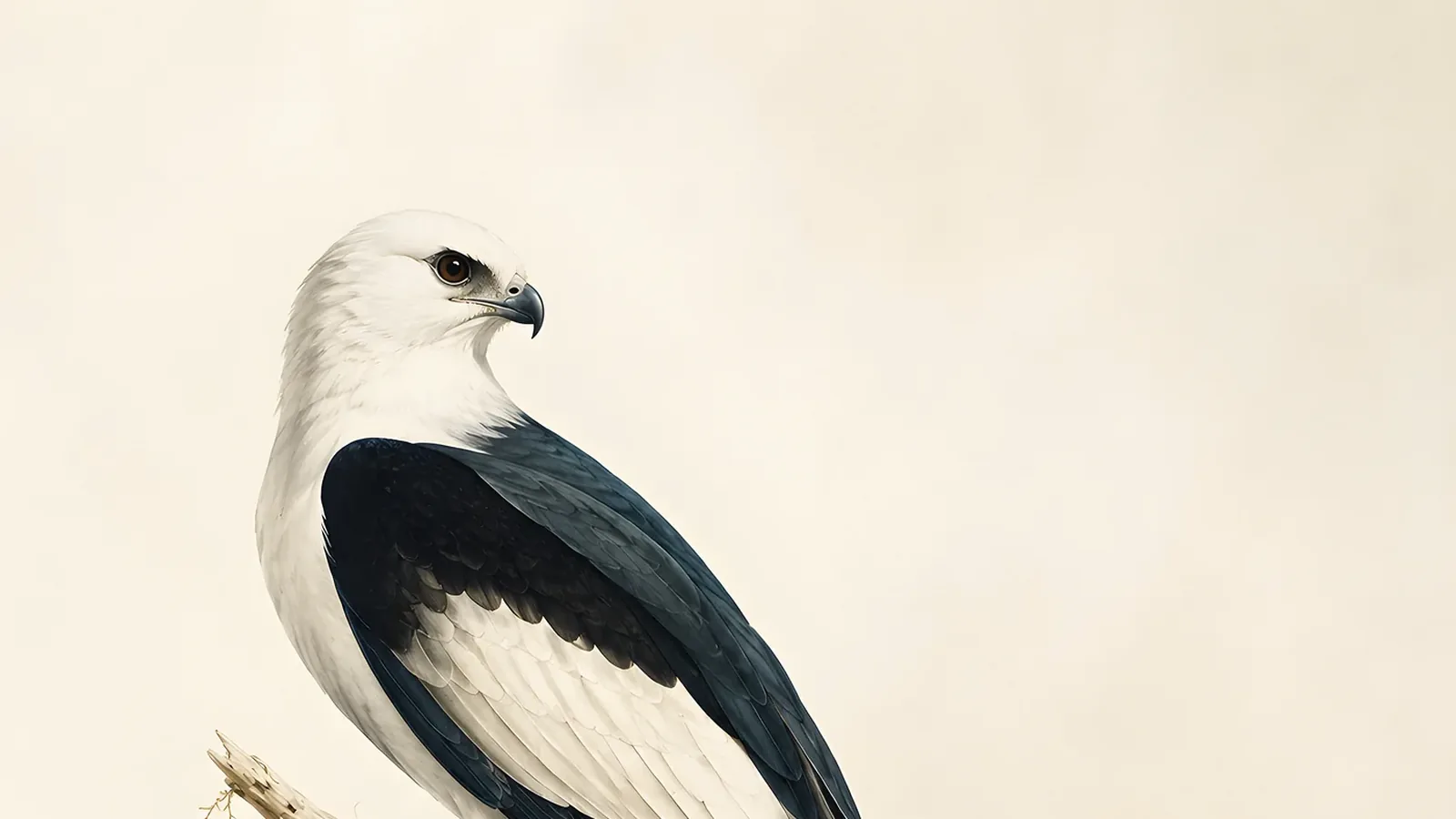
Swallow-tailed Kite (Elanoides forficatus) arrives from South America in late February and early March to breed in forested wetlands. Audubon Florida reports that FWC researchers located 132 nests in and around the Corkscrew Regional Ecosystem Watershed in southwest Florida - the largest confirmed nesting concentration in the state. By August the birds are gone again, crossing the Straits of Florida to Cuba and then continuing through the Caribbean to South America. The window between February and August is the only time you will see this bird in the United States.
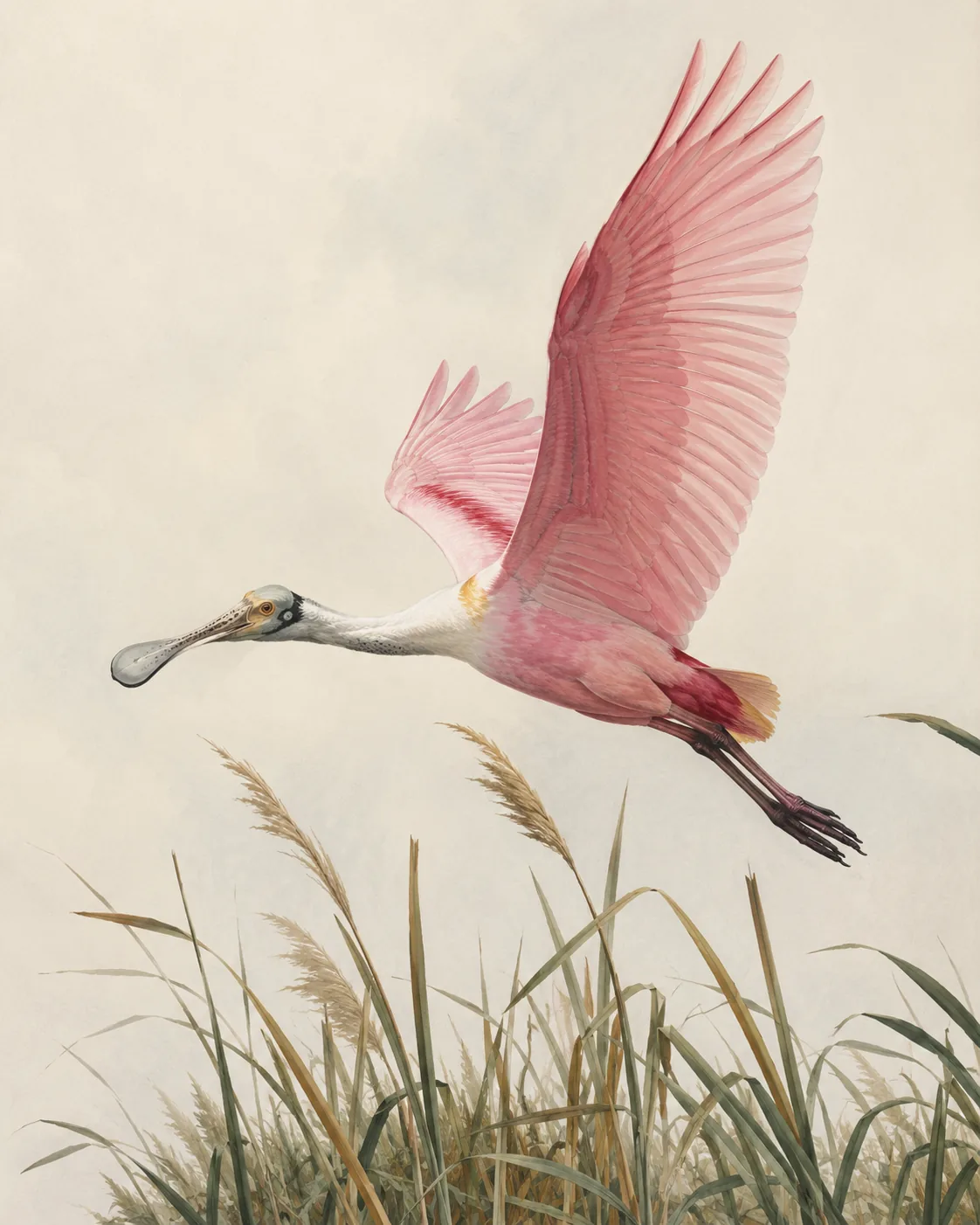
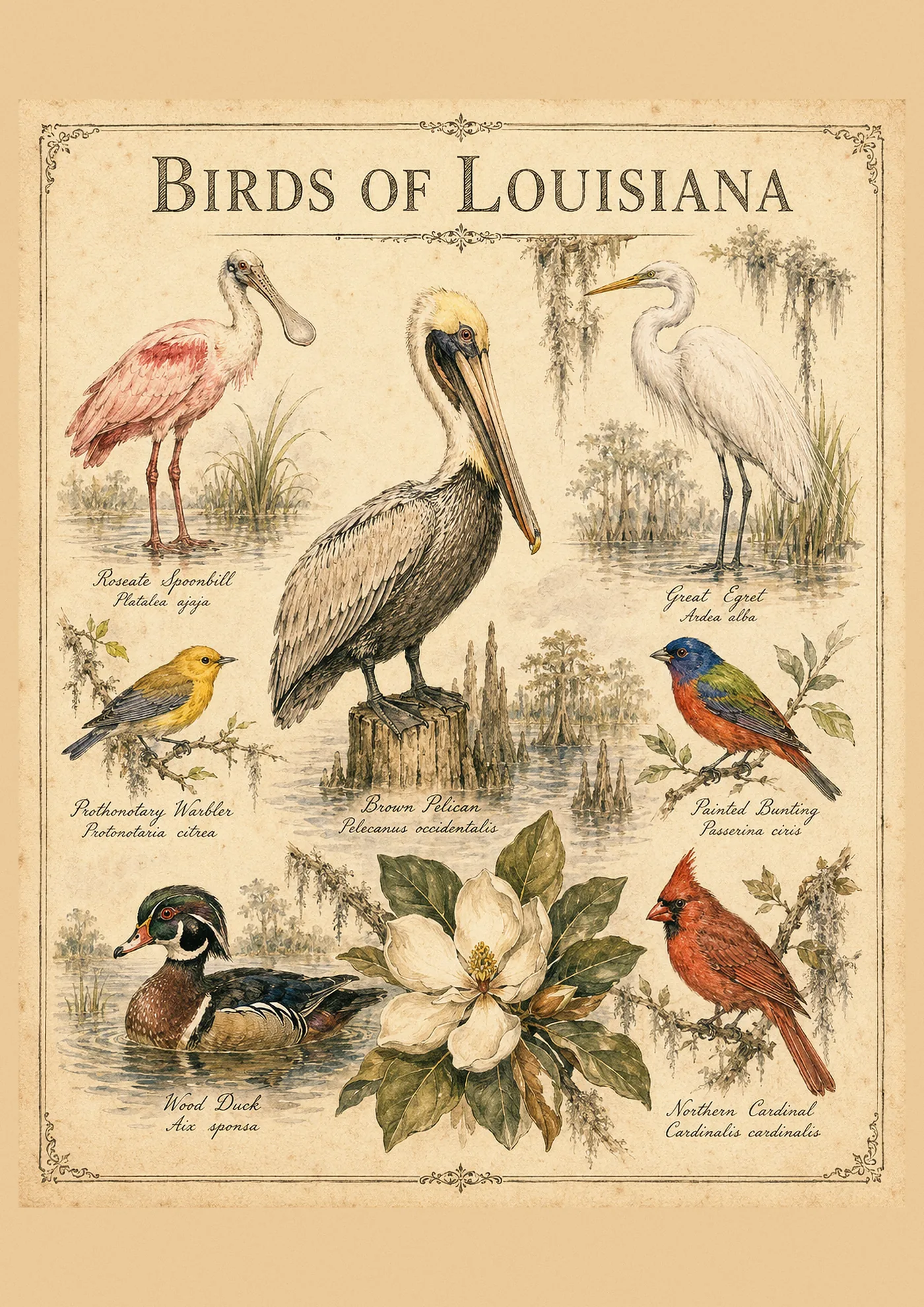
Roseate Spoonbill (Platalea ajaja) does not read as a Florida bird until you are standing in front of one. The pink is chemical - derived from the carotenoid pigments in the invertebrates it sweeps from shallow water with its spoon-shaped bill. Audubon’s field guide places it as locally common in coastal Florida, usually in small groups among other wading birds. The spoonbill recovered from near-extirpation in the early twentieth century after the plume-hunting era ended.
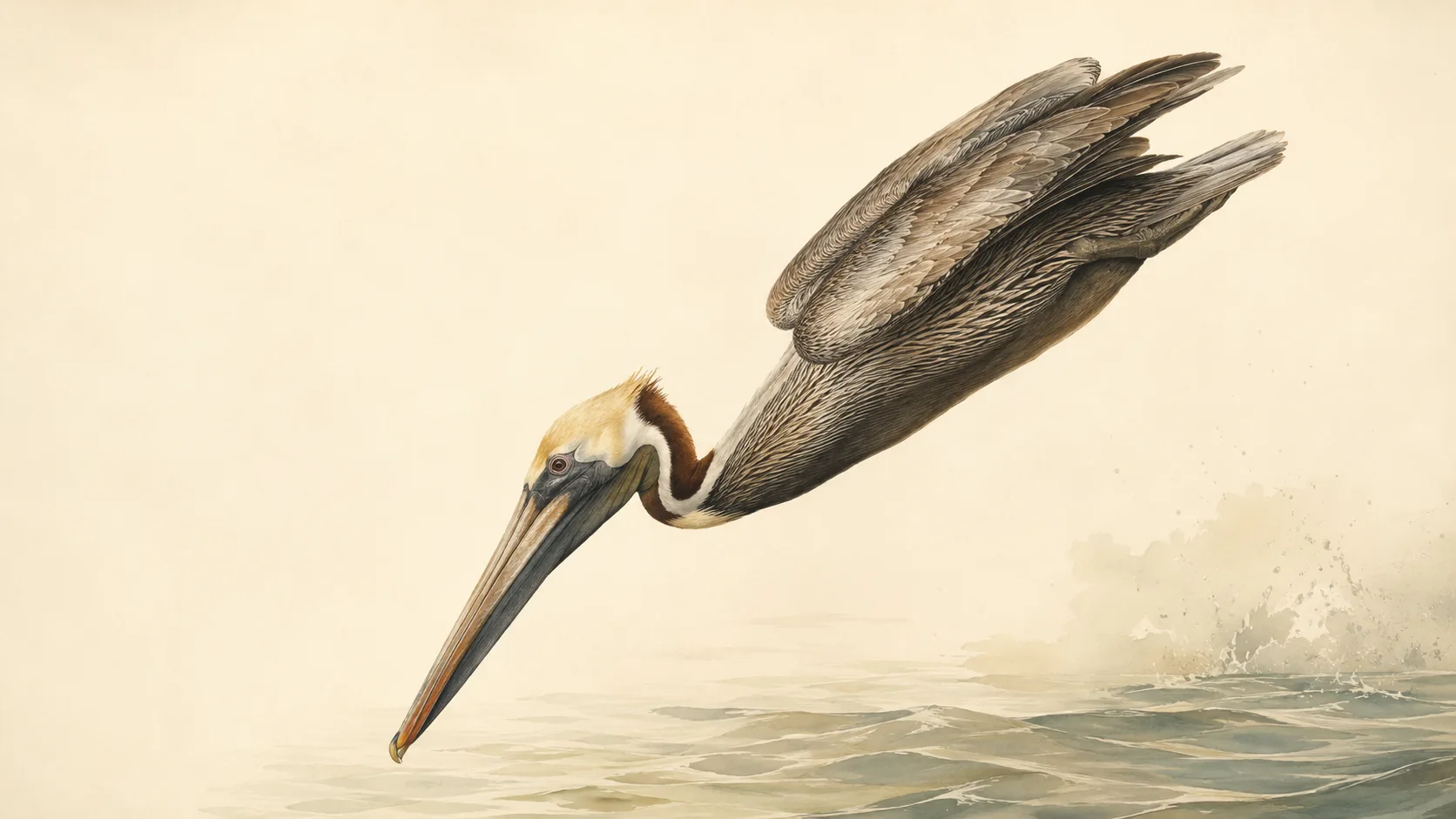
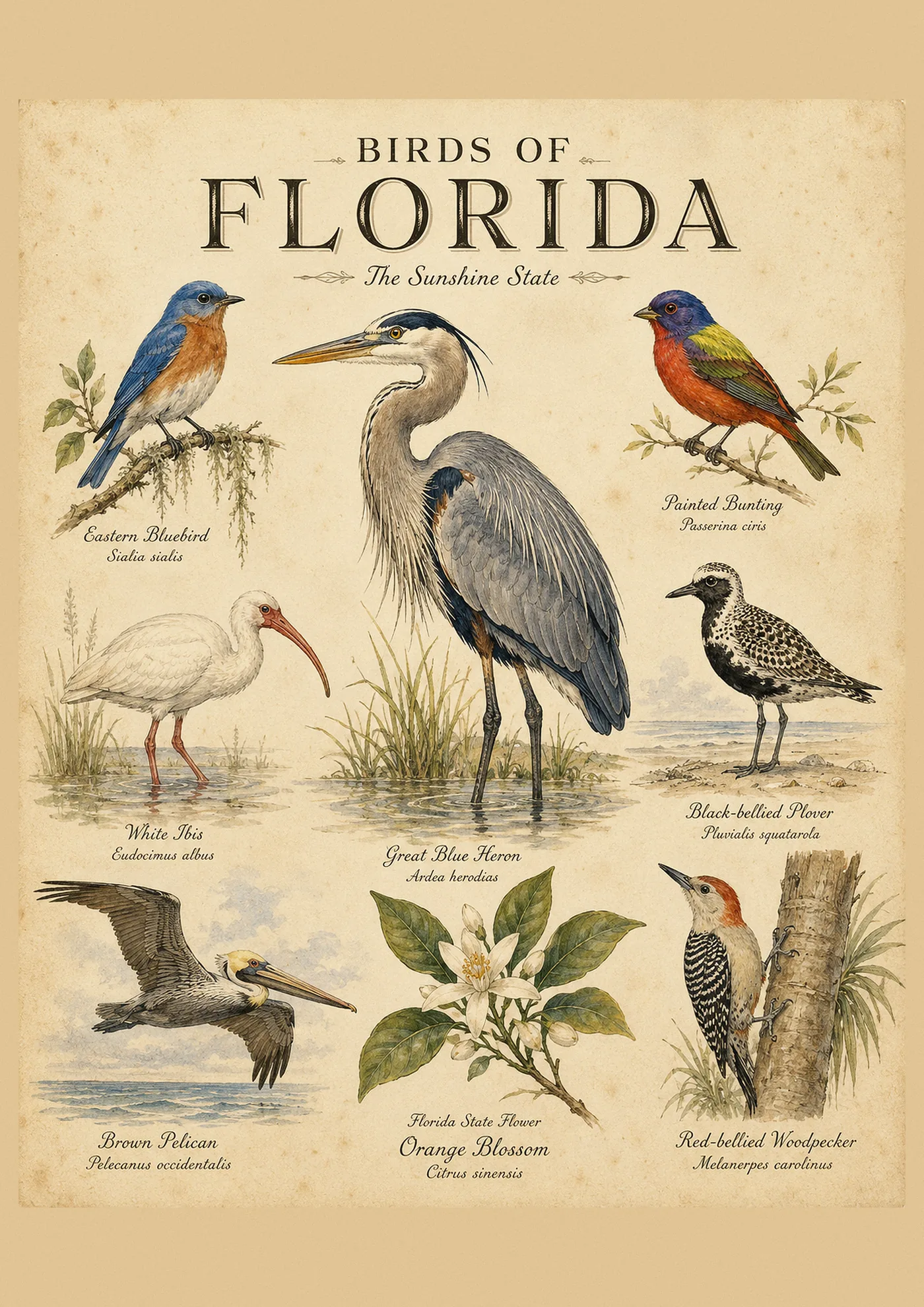
Brown Pelican (Pelecanus occidentalis) fishes Florida’s coastline year-round, dropping into the water from height with a precision that makes the action look casual. The species was removed from the federal endangered species list in 2009, a recovery story rooted partly in the end of DDT use after 1972.
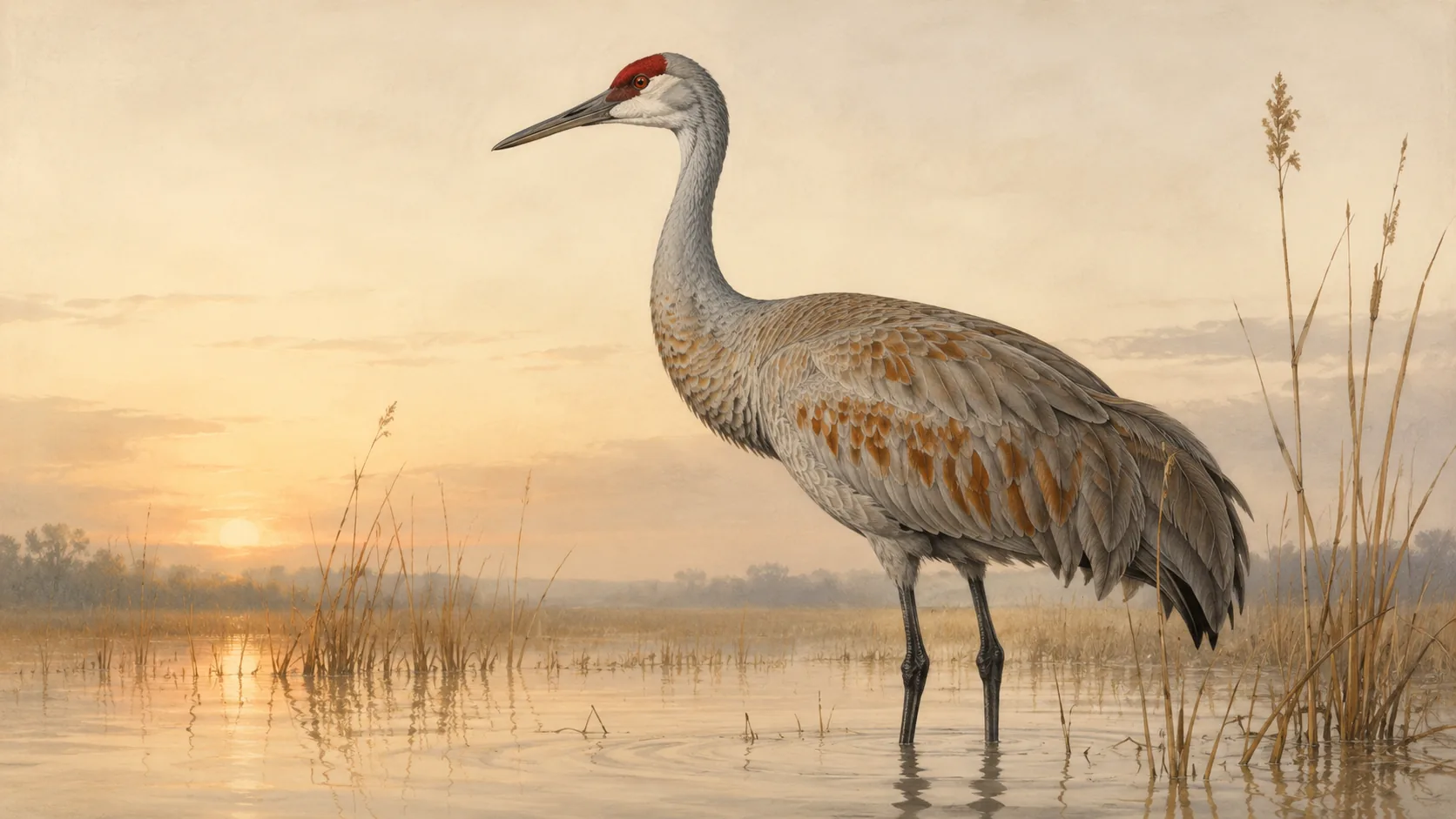
Sandhill Crane (Antigone canadensis) - the Florida Sandhill Crane, a resident subspecies - walks golf courses, roadsides, and suburban lawns with a territorial confidence that surprises visitors. It is not a seasonal visitor. It is a permanent Florida resident, and it commutes on foot.
Dry Tortugas: the best morning migration birding in North America
Seventy miles west of Key West, accessible only by boat or seaplane, Dry Tortugas National Park holds a singular position in North American birding. Each spring from early April through mid-May, songbirds and raptors that have crossed the Gulf of Mexico overnight land on the park’s tiny islands in visible exhaustion. Warblers sit in the open. Tanagers and vireos drop into the fort’s moat. The birds have nowhere else to go.
Bush Key within the park is the only regular nesting site for Sooty Tern and Brown Noddy in the continental United States. Roughly 80,000 Sooty Terns and more than 4,000 Brown Noddies return each year to breed, according to the National Park Service. The noise and motion of that colony in March is disorienting in a way that is worth the boat journey.
Top backyard species
A typical Florida garden, from the Panhandle to Miami-Dade:
- Northern Mockingbird (year-round, state bird)
- Northern Cardinal (year-round)
- Mourning Dove (year-round)
- Blue Jay (year-round)
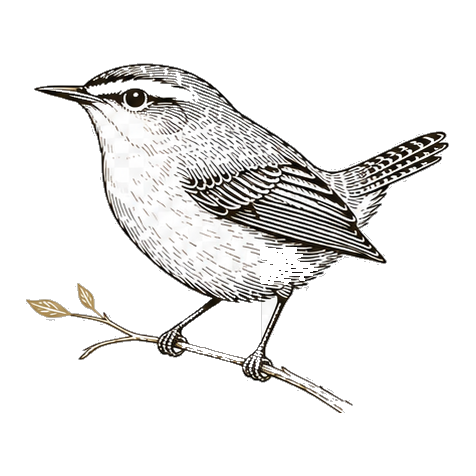
- Carolina Wren (year-round)
- Downy Woodpecker (year-round)
- Red-bellied Woodpecker (year-round)
- American Robin (winter visitor in most of the state)
- American Goldfinch (winter visitor)
- House Finch (year-round, particularly north Florida)
- Common Ground Dove (year-round, south and central Florida)
- Eurasian Collared-Dove (year-round, introduced but now ubiquitous)
Where and when to watch
Everglades National Park - the Anhinga Trail at Royal Palm in winter, when water levels concentrate wading birds in front of the boardwalk, is one of the most photogenic one-hour birding experiences in North America. Snail Kites are possible in the northern glades; Mangrove Cuckoos hold territory in the mangrove edges along the coast.
Corkscrew Swamp Sanctuary (Collier County, southwest Florida) - Audubon’s own sanctuary, managed to protect what Audubon Florida describes as “the most important nesting assemblage in the United States” for Wood Storks. Swallow-tailed Kites stage here in summer and autumn before their southbound migration.
Merritt Island National Wildlife Refuge (Brevard County) - the refuge’s Black Point Wildlife Drive has recorded more than 350 species. It is the key site for Florida Scrub-Jay on the Space Coast, and the proximity to NASA’s Kennedy Space Center means you can watch raptors and rocket launches from the same vantage.
Dry Tortugas National Park - the destination for spring migration between early April and mid-May. Book the ferry from Key West well in advance. The Yankee Freedom runs from Key West to the fort in roughly two hours.
Seasonal calendar
| Season | Pattern |
|---|---|
| Spring (Mar-May) | Peak migration at Dry Tortugas in April-May; Swallow-tailed Kites arrive March; shorebird passage on coastal mudflats |
| Summer (Jun-Aug) | Wading bird colonies active; Swallow-tailed Kites staging for return migration; heat reduces birding effort inland |
| Autumn (Sep-Nov) | Southbound hawk migration along the coasts; Swallow-tailed Kites and warblers funnel south |
| Winter (Dec-Feb) | Waterfowl flocks on lakes and reservoirs; Bald Eagles concentrating on large water bodies; Sandhill Cranes resident statewide |
The mockingbird is there in all four rows. He does not leave. He sings at two in the morning in July the same as he sings at dawn in January - the state bird that neither migrates nor retreats, fluent in the voices of 200 other species but never confused about which one he is.