


The story of the bird
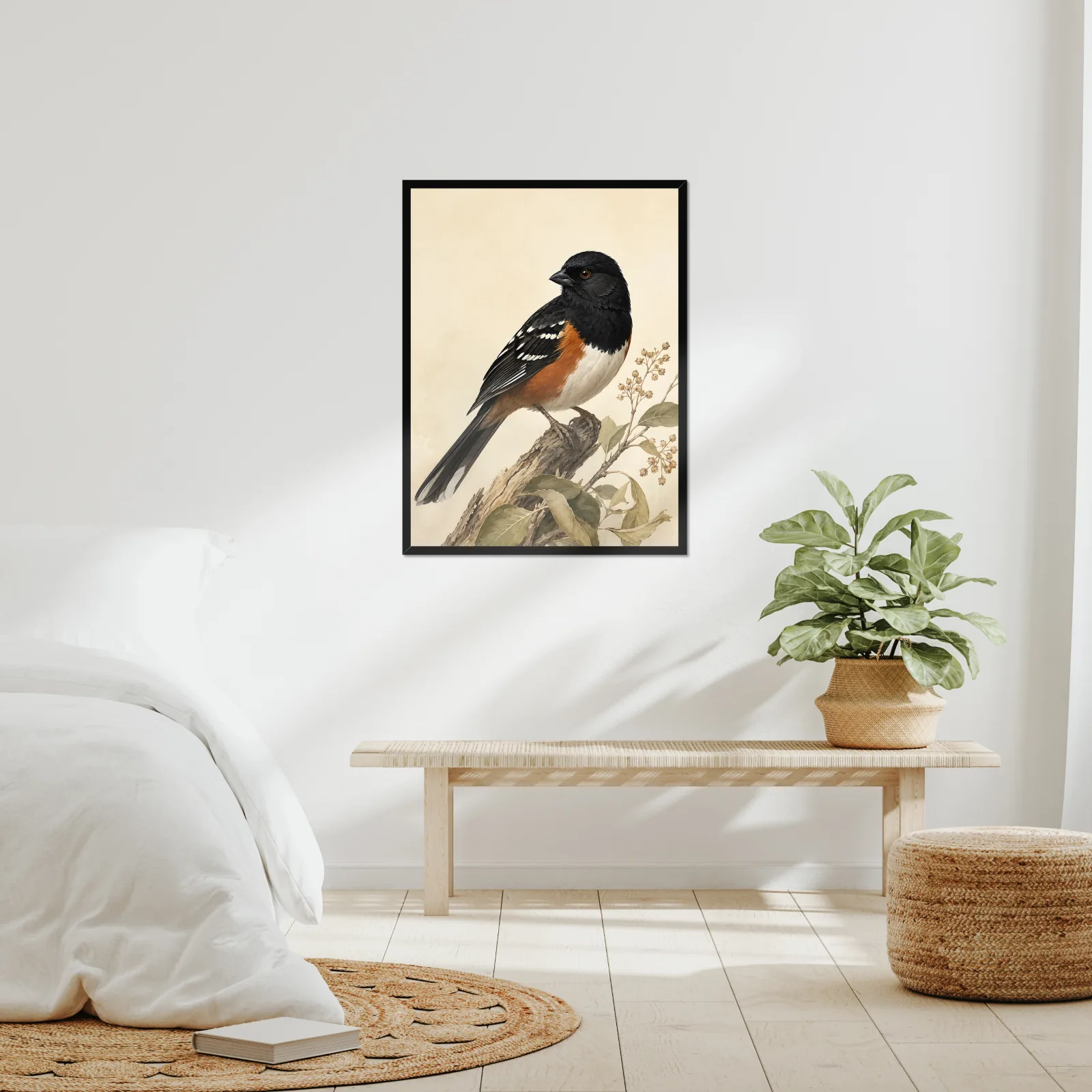
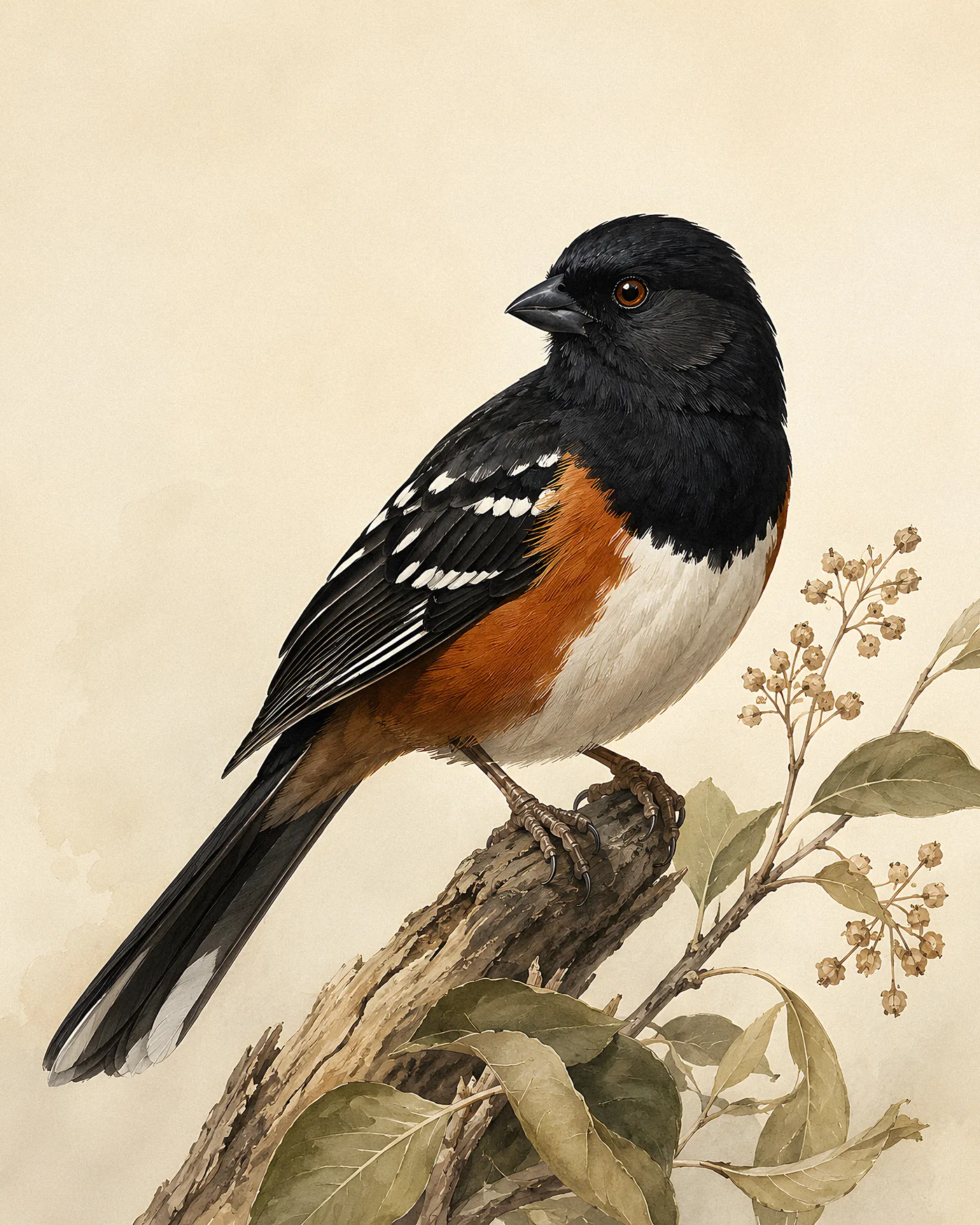
Where the Eastern Towhee rules the brushy edges of the east, the Spotted Towhee works the chaparral and thickets of the west. Pipilo maculatus is the more visually complex of the two: the male has the same bold tricolour of black, white, and rufous-orange, but the back is spangled with white spots - rows of them, precise and clean, on a blue-black ground. It is a more ornate bird, suited to the larger skies and longer sightlines of western habitat.
The rufous sides are the warm element - a burnt-orange that runs from the breast to the tail sides, contrasting with the white belly and black hood. The eye is red, bright and conspicuous against the black face at close range. In the hand, the spots on the back reveal themselves to be in neat, organised rows. Field marks this deliberate look designed.
The Spotted Towhee is a scratching specialist. Both feet together, a raking backward kick, leaves and debris thrown aside to expose the seeds and invertebrates below. The technique is audible at twenty feet - a steady shuffling in the underbrush that tells you something large is in there before you see it. The call is a rising, questioning mew; the song a buzzy trill that defines the chaparral soundscape from California to the Rockies.
It is resident year-round across most of its western range and common in brushy gardens, parks, and trail edges. Common, but always worth a long look. The spots earn it.
Paper and finish
Available in three sizes on Hahnemühle Photo Rag 308gsm - archival cotton, acid-free, matte finish. Printed by Prodigi using pigment inks rated 100+ years under display conditions.
| Size | Unframed | Framed |
|---|---|---|
| 8 × 10 in | $39 | $99 |
| 16 × 20 in | $69 | $149 |
| 24 × 30 in | $99 | $199 |
Framed prints are glazed, no mat. Frame colours: black, white or natural. Also available as a high-resolution digital download.