State Guide
Birds of North Dakota
On March 22, 1947, the North Dakota legislature designated the Western Meadowlark (Sturnella neglecta) as the official state bird. The designation followed a 1944 schoolchildren’s vote across the state - a process that took three years to complete its journey through the legislature. The meadowlark shares its status with five other states, but nowhere is it more at home than on the fence-post-studded grasslands of western and central North Dakota, where its rolling, flute-like song carries across miles of open country in June.
The meadowlark is a blackbird family member, not the sparrow-like field bird its name implies. At 8 to 11 inches long, he perches in the open and broadcasts his territory from exposed positions - fenceposts, hay bales, the tops of short willows. Prairie Public Broadcasting has noted that 60 to 70 percent of his diet is insects, which makes him a welcome presence on agricultural land as well as native grassland.
North Dakota’s bird list, maintained by the North Dakota Game and Fish Department, stands at 420 confirmed and extant species. That number reflects the state’s position at the convergence of three major ecological zones: the mixed-grass and shortgrass prairies of the west, the Prairie Pothole Region that covers much of the state’s midsection, and the Missouri River corridor running north to south.
The state’s signature species
North Dakota is not primarily a rarity destination. It is a place where birds that have nearly vanished from the rest of the continent still breed in numbers.
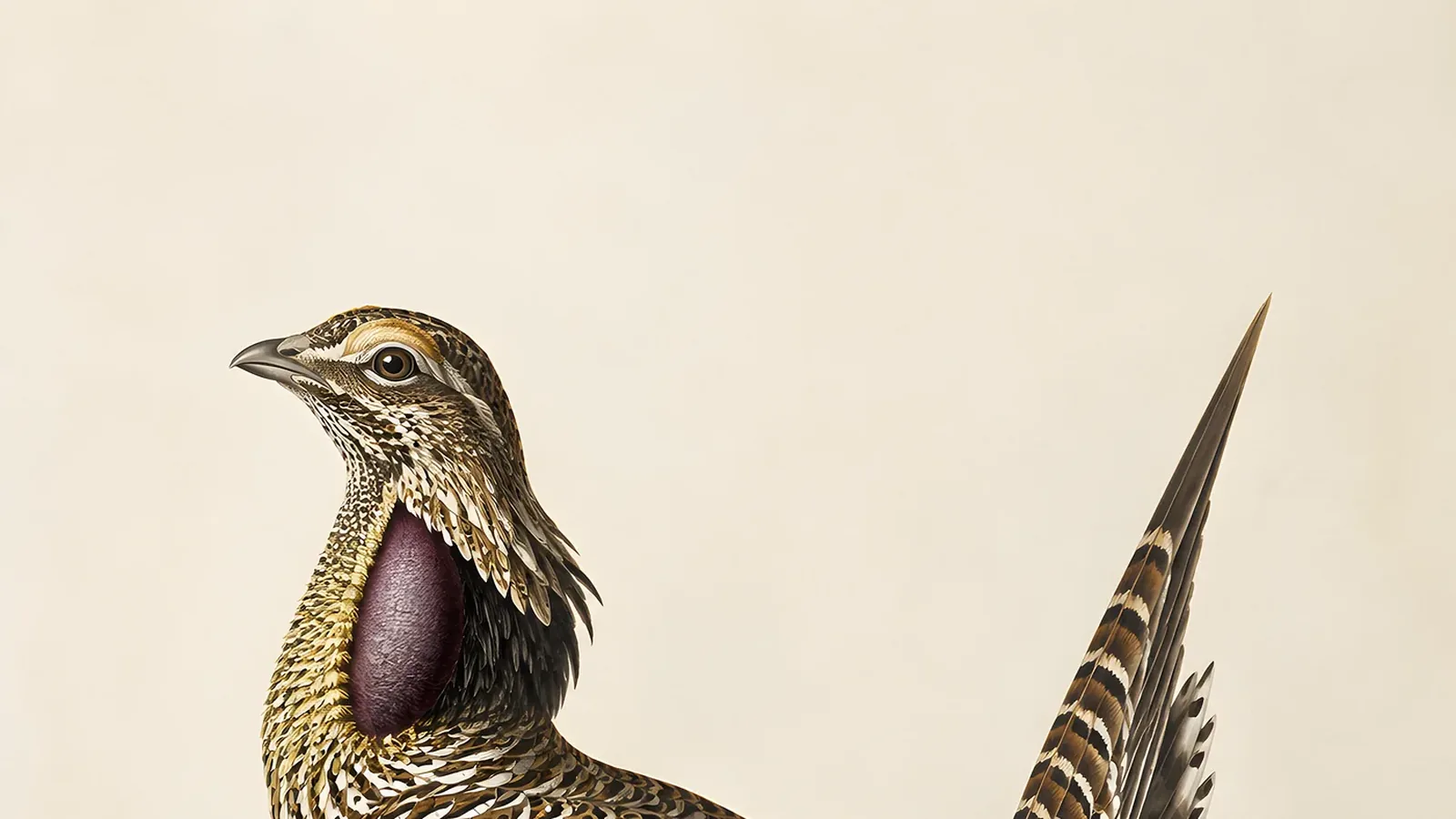
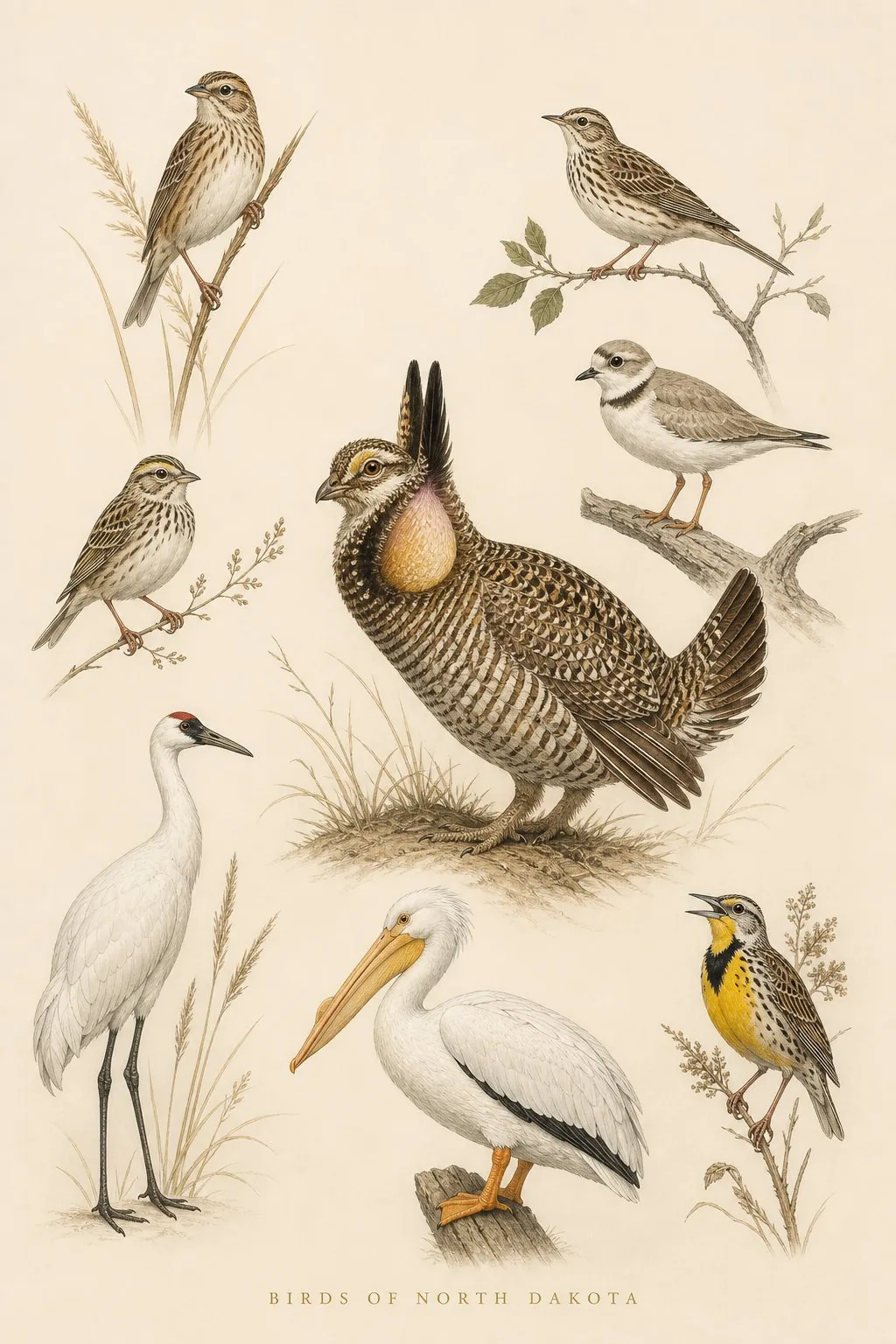
Sharp-tailed Grouse gather on courtship grounds - leks - in early April, before snow has fully left the hollows. Males stamp, rattle, and spin in display. Arrowwood National Wildlife Refuge, 25 miles north of Jamestown, maintains viewing blinds at active leks and is one of the most reliable places in the northern Great Plains to witness this display.
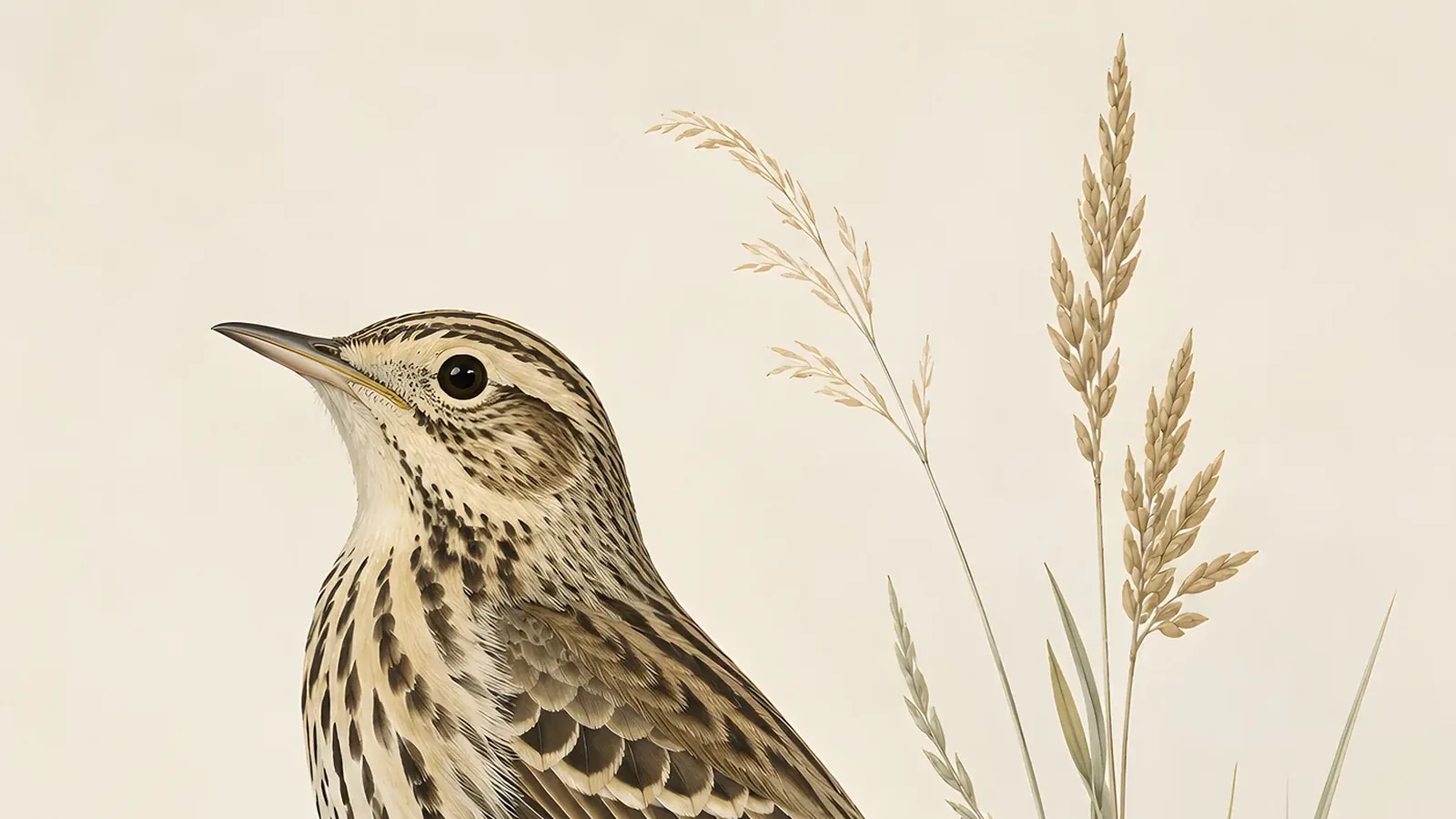
Sprague’s Pipit (Anthus spragueii) is a true prairie obligate: it nests only in native grassland and sings only in flight, circling high overhead for minutes at a time on a single sustained note. Lostwood National Wildlife Refuge in Burke County holds some of the largest remaining mixed-grass prairie in the northern plains and is among the best sites in North America to find the species during breeding season.
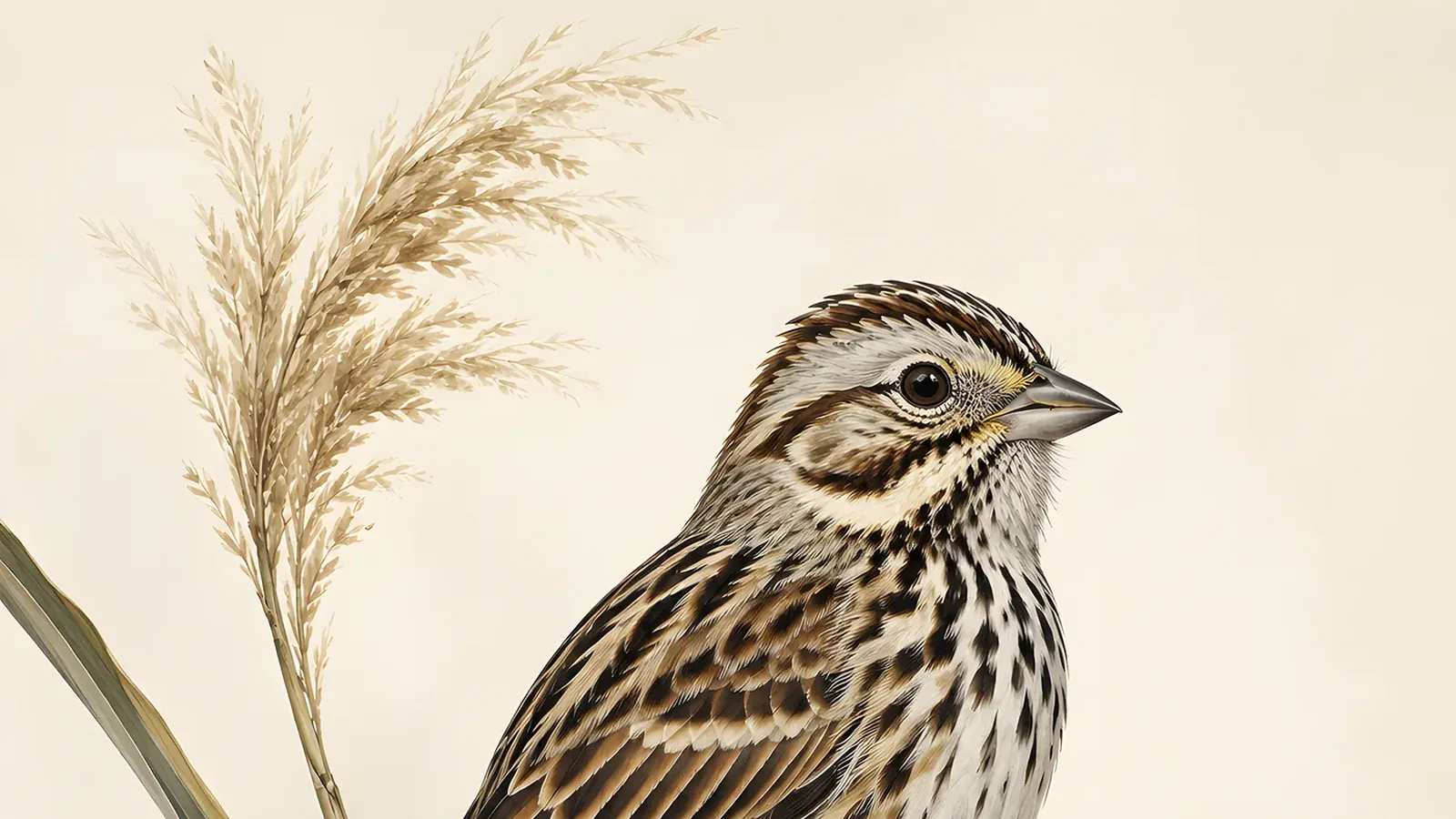
Baird’s Sparrow is another Lostwood speciality. The species breeds in native grassland and is rapidly losing ground to agricultural conversion across its range. The Audubon Society identifies North Dakota’s northwest as one of the last strongholds.
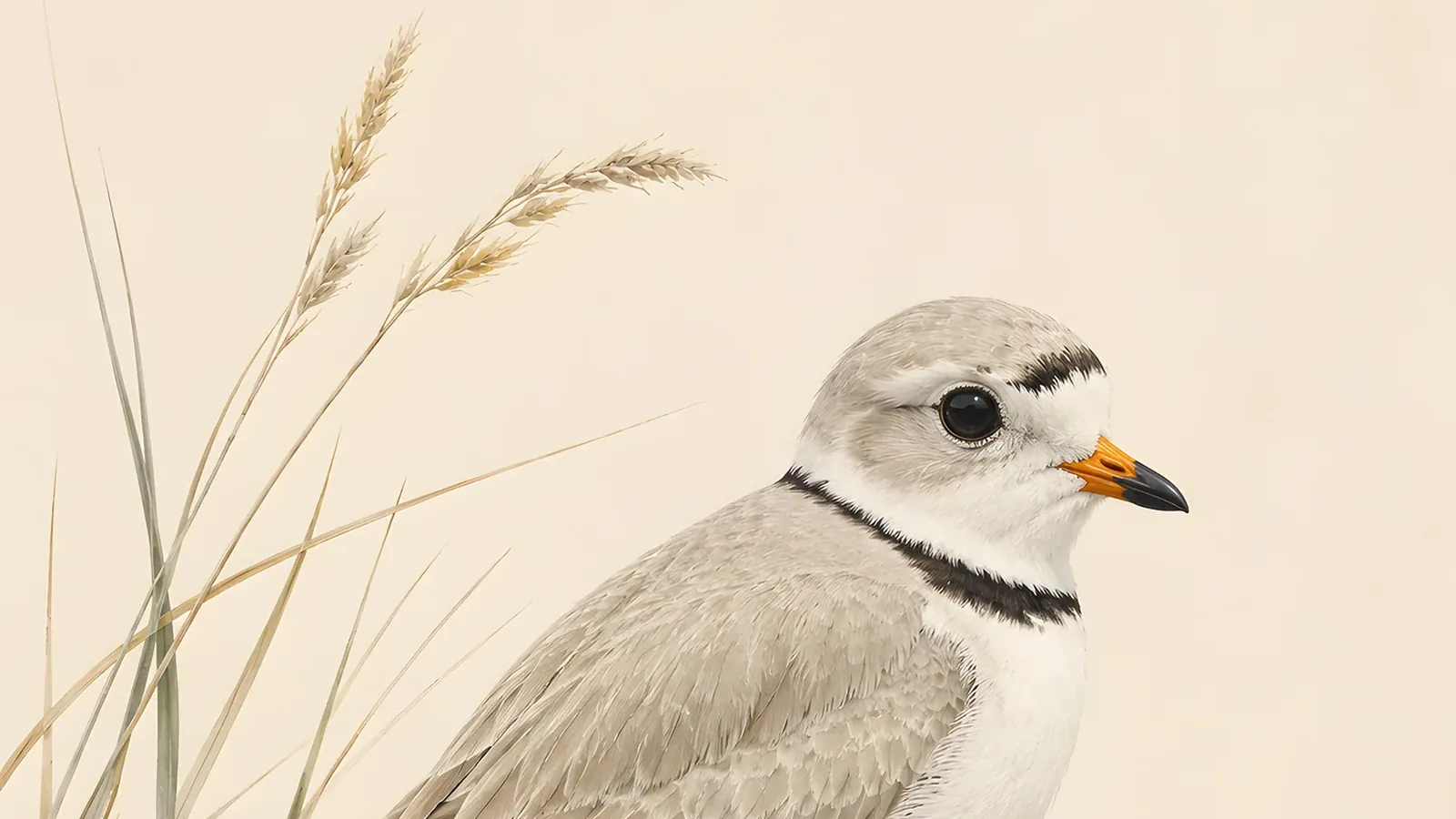
Piping Plover (Charadrius melodus) breeds on alkali lake shores and Missouri River sandbars in the central and northwest regions. More than one third of the entire interior breeding population of this federally threatened species nests in North Dakota, according to the North Dakota Game and Fish Department.
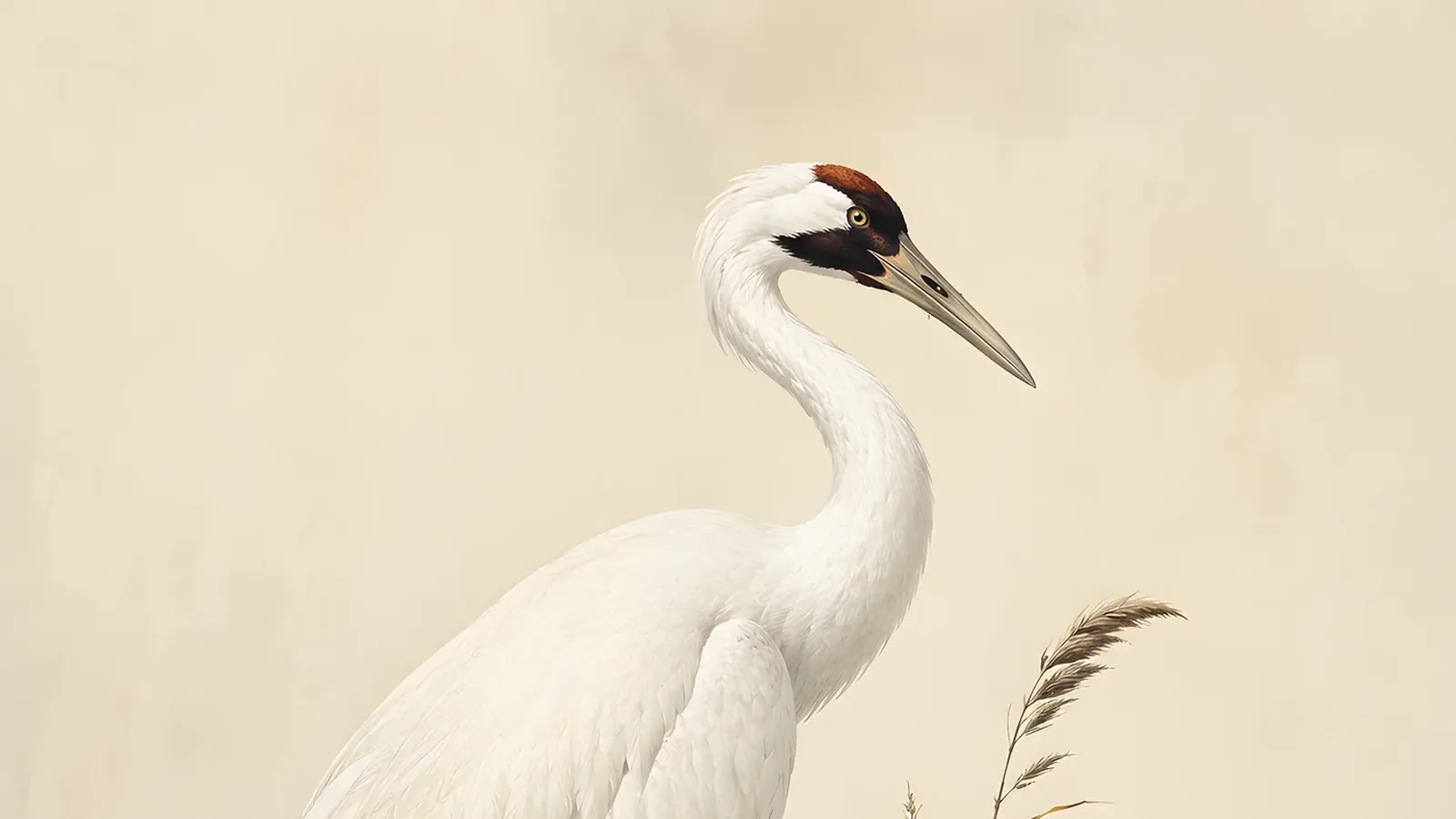
Whooping Crane (Grus americana) passes through the state on spring and autumn migration, following the Central Flyway between its wintering grounds at Aransas National Wildlife Refuge in Texas and its breeding territory in Wood Buffalo National Park, Canada. The entire migratory population numbers around 550 birds. North Dakota marshlands - particularly in the central and south-central counties - serve as critical refuelling stopover sites in April and May.
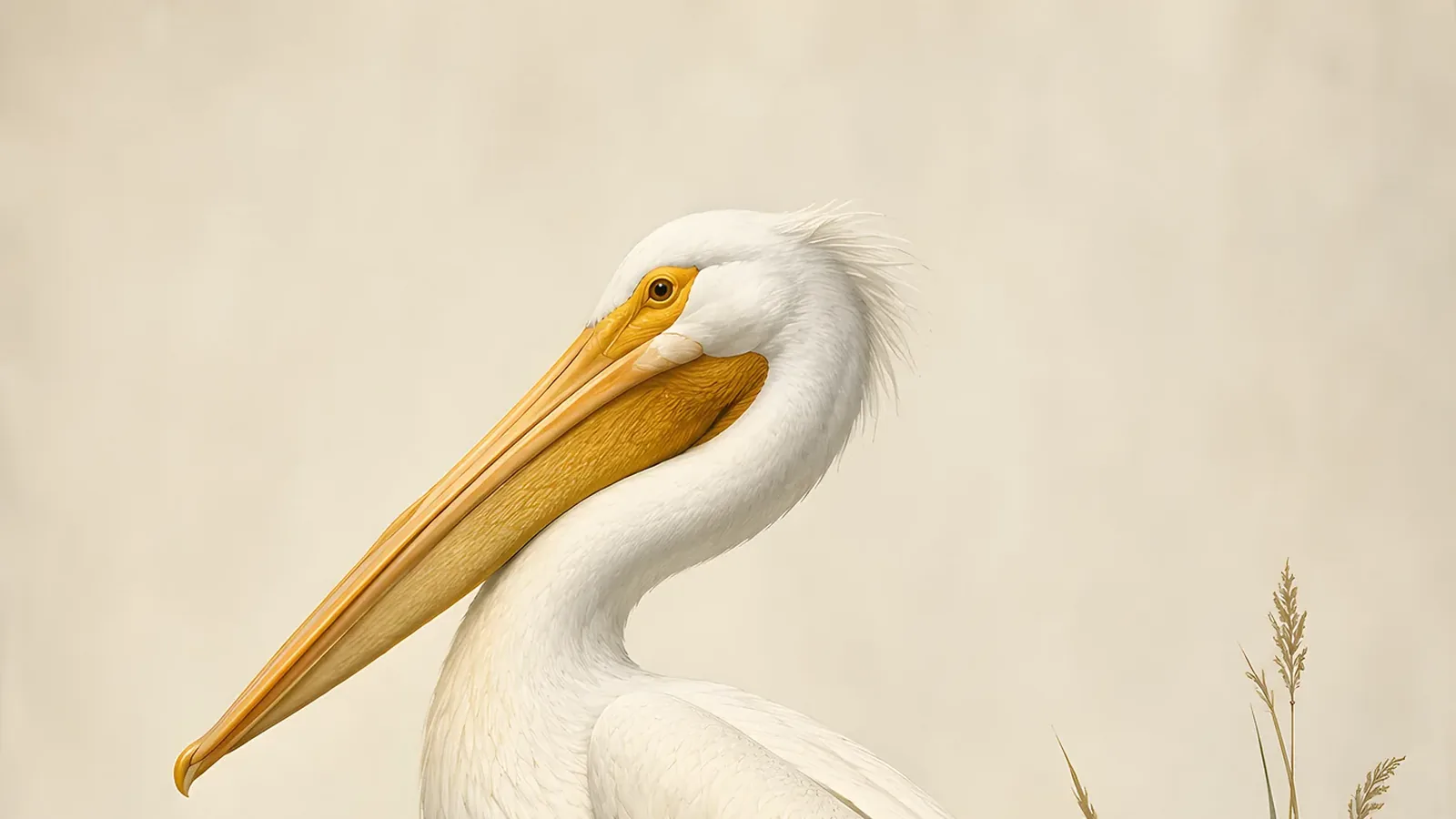
American White Pelican breeds in spectacular numbers at Chase Lake National Wildlife Refuge near Woodworth. The colony at Chase Lake is one of the largest American White Pelican colonies in North America, historically hosting 10,000 to 12,000 nesting birds. The sight of several thousand pelicans in the air simultaneously is something the state does not advertise well enough.
Top backyard species
A North Dakota suburban or rural yard in summer:
- Western Meadowlark (state bird, common in open areas)
- American Robin (year-round in eastern North Dakota; abundant breeder)
- Black-capped Chickadee (year-round)
- American Goldfinch (breeding; year-round in southern half)
- Mourning Dove (year-round)
- Canada Goose (abundant, year-round near water)
- Red-tailed Hawk (year-round, common on utility poles and fenceposts)
- Great Horned Owl (year-round, nests early - February broods common)
- Bald Eagle (year-round, concentrates on unfrozen rivers in winter)
- House Sparrow (year-round, introduced)
- European Starling (year-round, introduced)
- Downy Woodpecker (year-round)
- Blue Jay (year-round)
- Dark-eyed Junco (winter; abundant October through March)
In irruption years, Snowy Owls move south out of the Arctic and appear in farm fields and open country across the state from November onward, sometimes in significant numbers. North Dakota’s flat, treeless landscape resembles their Arctic breeding habitat closely enough that the birds often appear relaxed and confiding.
Where and when to watch
Lostwood National Wildlife Refuge (Burke County, northwest North Dakota) covers more than 14,000 acres of mixed-grass prairie and is the premier destination for grassland specialists. The seven-mile auto tour route, open May through September, gives reliable access to Sprague’s Pipits, Baird’s Sparrows, and Chestnut-collared Longspurs, as well as nesting waterfowl on the refuge’s prairie potholes. May and June are the peak months.
J. Clark Salyer National Wildlife Refuge (Upham, along the Souris River) is North Dakota’s largest national wildlife refuge at 58,700 acres. More than 300 species have been recorded here since the refuge was established. The Souris River corridor provides a mix of marsh, grassland, and riparian habitat that produces year-round variety, with spring waterfowl migration being the headline event.
Chase Lake National Wildlife Refuge (Stutsman County) is most famous for its American White Pelican colony but the refuge and surrounding prairie potholes also attract nesting cormorants, Franklin’s Gulls, and in migration, large numbers of shorebirds. Long Lake National Wildlife Refuge, a short drive to the south, hosts up to 20,000 shorebirds during peak migration and has been recognized as a Globally Important Bird Area by the National Audubon Society, the US partner that administers the BirdLife International IBA programme.
Arrowwood National Wildlife Refuge (25 miles north of Jamestown) is the most accessible introduction to North Dakota prairie birding for visitors arriving from the east. In spring, tens of thousands of Tundra Swans, Canada Geese, and dabbling ducks stage on the refuge’s wetlands. In summer, the wetland drive produces American Avocet, Wilson’s Phalarope, Marbled Godwit, Yellow-headed Blackbird, and Black Tern in close, well-lit conditions.
Theodore Roosevelt National Park in the western Badlands adds a different dimension: the park’s broken terrain and cottonwood draws produce Say’s Phoebe, Lark Bunting, and Lazuli Bunting alongside the grassland species, and the park’s raptors - Ferruginous Hawk, Golden Eagle, Prairie Falcon - are easier to find here than almost anywhere else in the state.
Seasonal calendar
| Season | What is happening |
|---|---|
| Spring (Mar-May) | Sharp-tailed Grouse leks active from late March; Whooping Cranes pass through in April-May; waterfowl staging at Arrowwood and J. Clark Salyer in April; shorebird migration peaks at Long Lake in May |
| Summer (Jun-Aug) | Peak breeding season; grassland specialists singing at Lostwood; White Pelicans nesting at Chase Lake; pothole duck broods across the state |
| Autumn (Sep-Nov) | Waterfowl migration builds in September; Sandhill Crane concentrations in October; Whooping Cranes pass through again southbound in October |
| Winter (Dec-Feb) | Bald Eagles on open sections of the Missouri and Red Rivers; Snowy Owl irruptions in strong years; Dark-eyed Juncos and redpolls at feeders |
The best single argument for visiting North Dakota in June - rather than a more celebrated birding state - is eBird data showing the state among the highest breeding densities in North America for Sora, Yellow-headed Blackbird, and Wilson’s Phalarope. These are not rare birds. They are common birds that happen to be easiest to see here.