State Guide
Birds of Minnesota
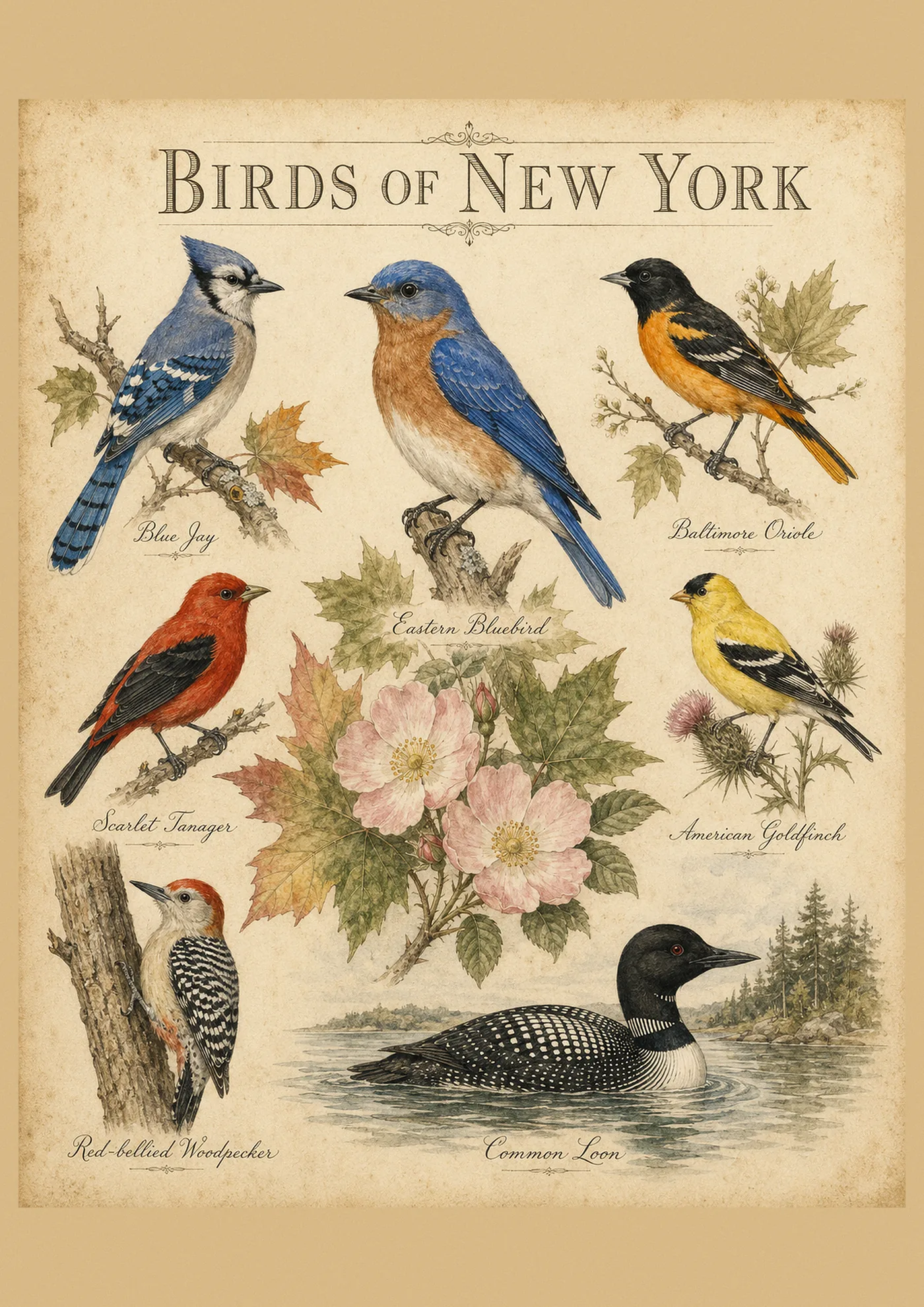
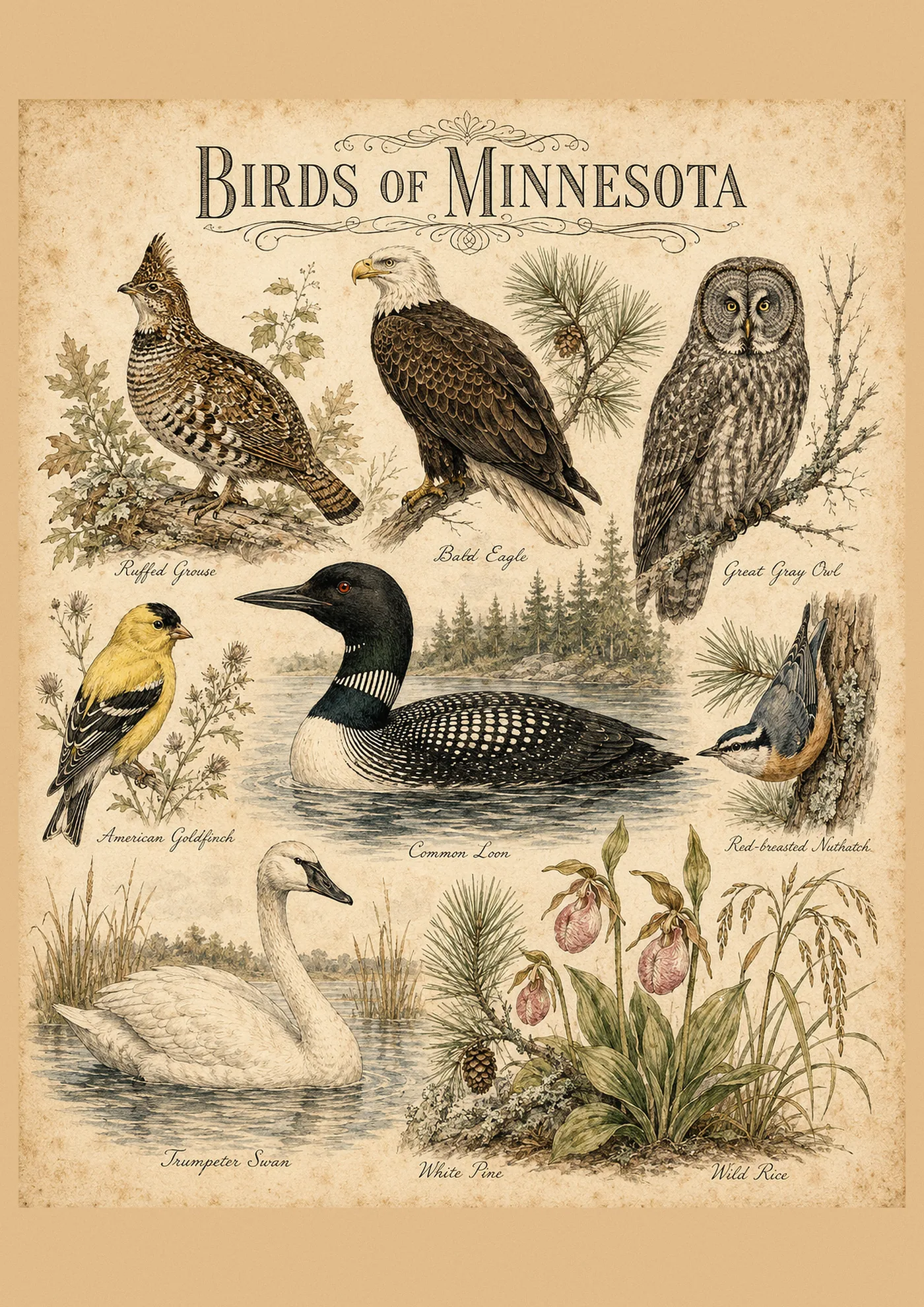
On March 13, 1961, Governor Elmer L. Andersen signed House Bill No. 79 into law, and the Common Loon (Gavia immer) became Minnesota’s official state bird under Minnesota Statutes section 1.145. The statute even required a photograph of the loon to be preserved in the Office of the Secretary of State - a detail that says something about how seriously the state takes this bird.
The loon earned its place. Minnesota’s nearly 4,700 territorial pairs constitute the largest breeding loon population in the contiguous United States. The Minnesota DNR’s long-term monitoring programme, running for over 20 years on more than 600 lakes, estimates roughly 12,000 individuals on the water each summer. They occupy the state’s 11,000-plus lakes of any size, and as the Minnesota Breeding Bird Atlas documents, about 30 per cent of small lakes between four and 20 hectares hold a nesting pair - loons are less fastidious than their reputation suggests. Water clarity is what they need, not size. The diagnostic call - the four-note wail that carries across dark water on a June evening - is the sound Minnesota’s north country is organised around.
Signature and speciality species
Minnesota is one of a small number of states where you can chase genuinely boreal birds within its borders, not just on an expedition north.
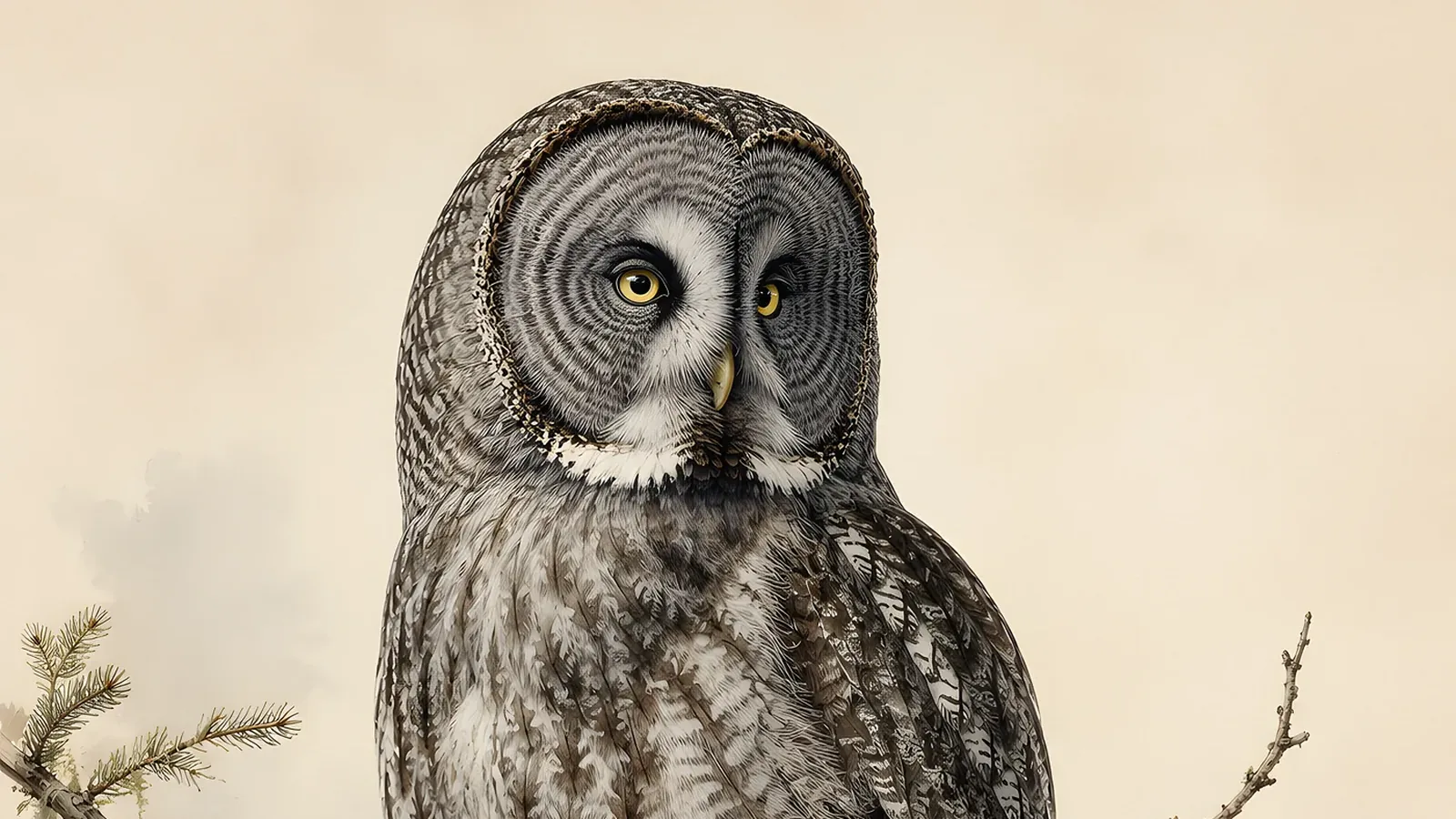
Great Gray Owl (Strix nebulosa) is the prize of a Minnesota winter. It hunts forest edges and open bogs along the Iron Range and the Gunflint Trail corridor, using exceptional low-frequency hearing to locate voles beneath deep snow. Some winters the owls move farther south than usual; some winters they stay tight to the spruce. Sax-Zim Bog, in St. Louis County, is the most reliable single address in the lower 48 for this species.
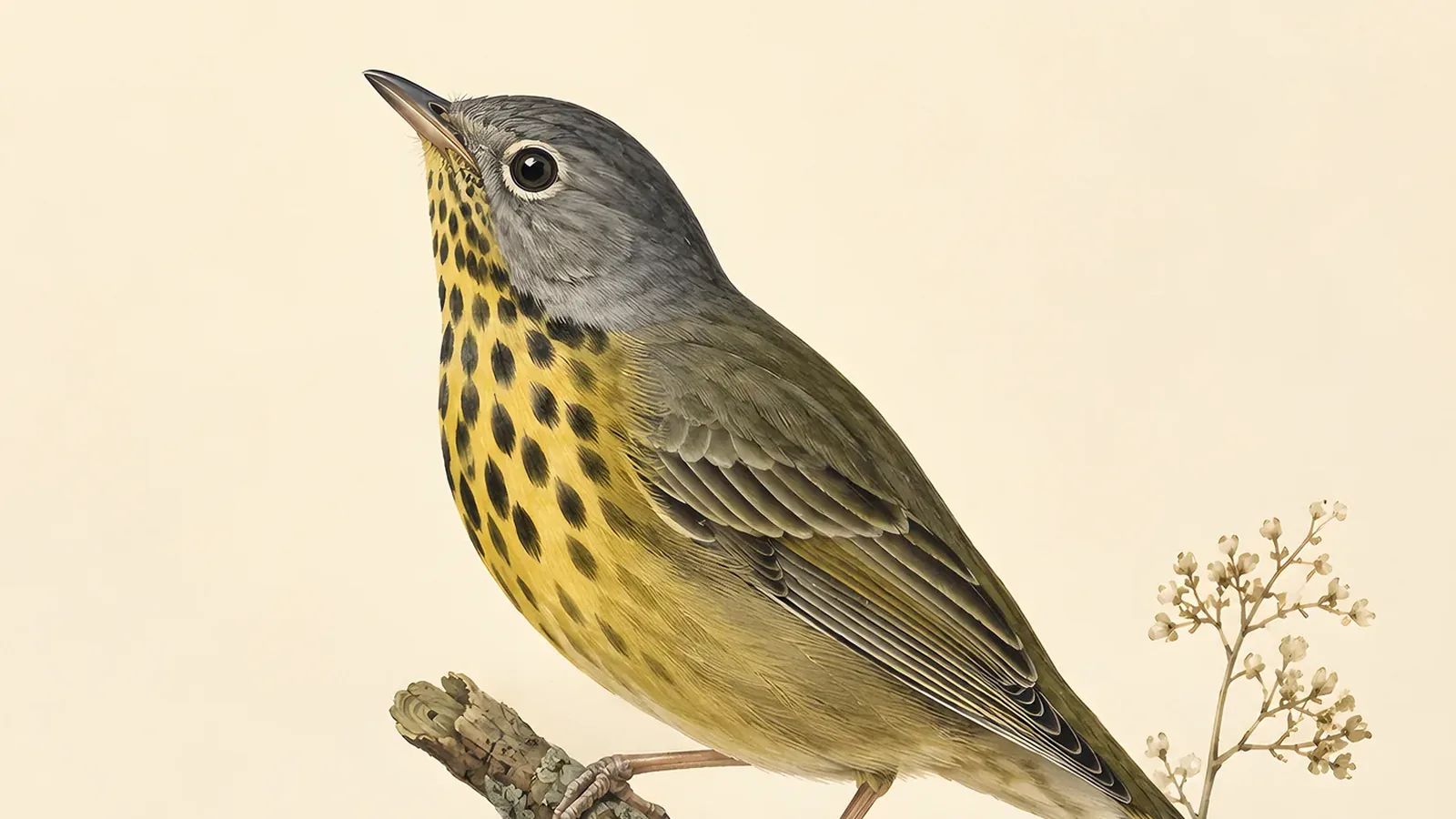
Connecticut Warbler (Oporornis agilis) is a bird that confounds beginners and satisfies experienced birders in equal measure. South of Canada, its breeding range is essentially limited to northern Minnesota, northern Wisconsin, and the Upper Peninsula of Michigan. In Minnesota it prefers mature lowland coniferous forest - black spruce and tamarack stands with a sphagnum understory - and it skulks. Sax-Zim Bog and northern Aitkin County are the places to invest a morning in early June.
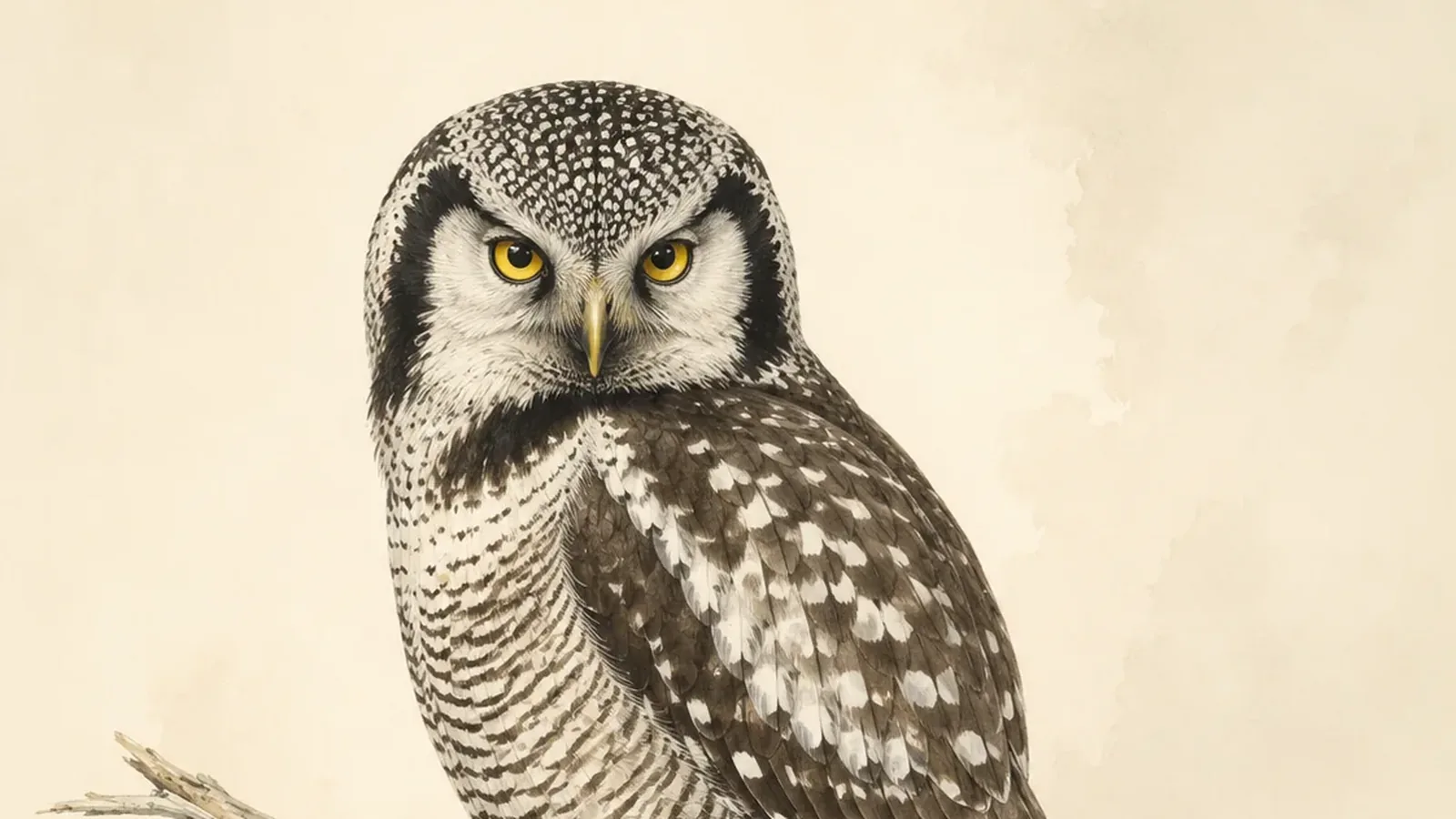
Northern Hawk-Owl (Surnia ulula) is a diurnal owl that perches openly at the tops of dead snags and hunts by sight, more falcon-like in its posture than any other owl in the state. It irrupts into northern Minnesota in years when prey populations cycle down in Canada. A winter hawkowl on a telephone pole along a forest road in Cook County is one of the more arresting sights in North American birding.
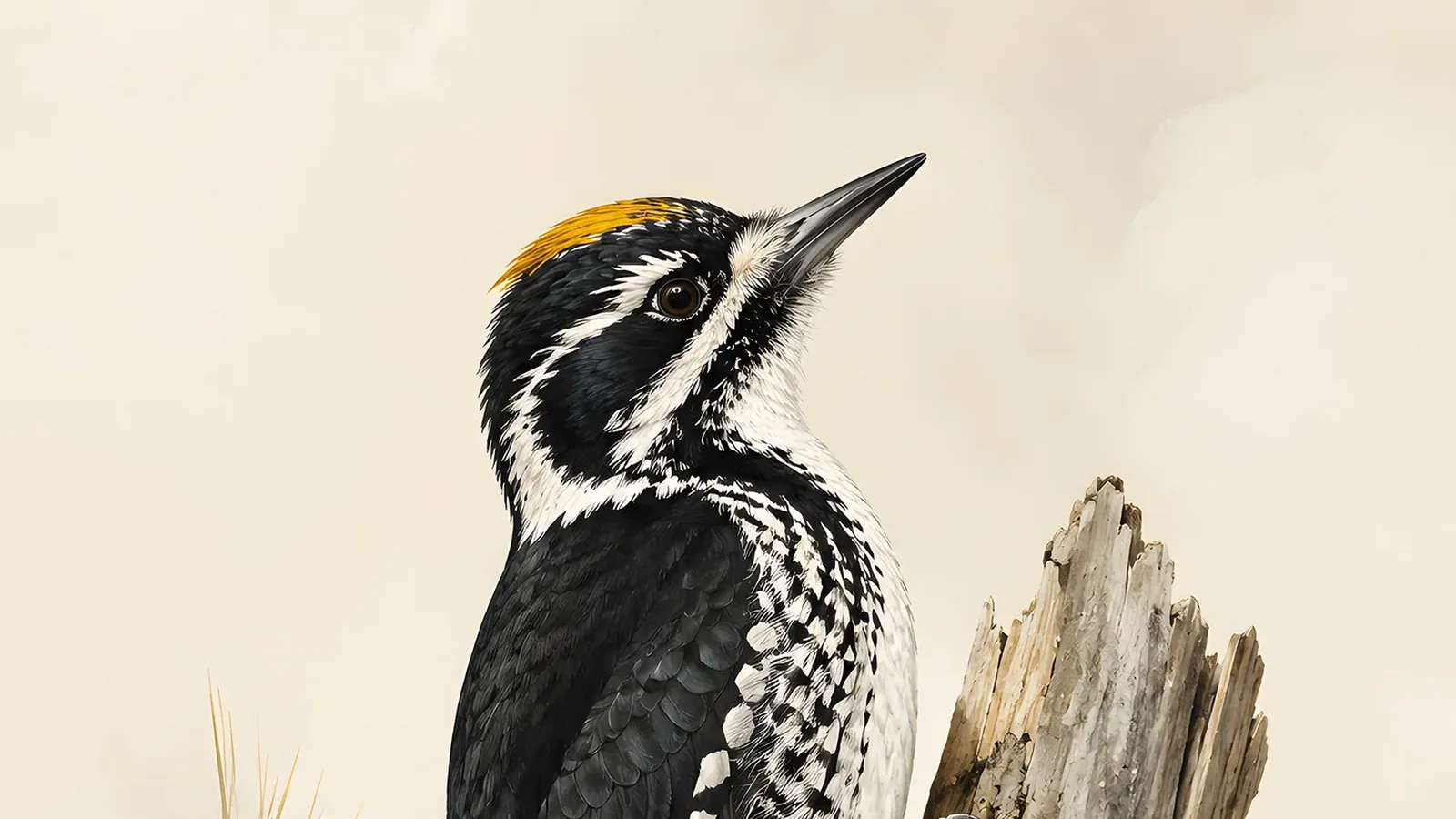
Black-backed Woodpecker (Picoides arcticus) is a boreal specialist tied to recently burned forest. Minnesota’s periodic fire years bring it down into accessible range, particularly in the Superior National Forest and along the Gunflint Trail. It forages almost exclusively on dead conifers, flaking bark to reach beetles, and the chipping sound of that foraging carries a long way in quiet winter woods.
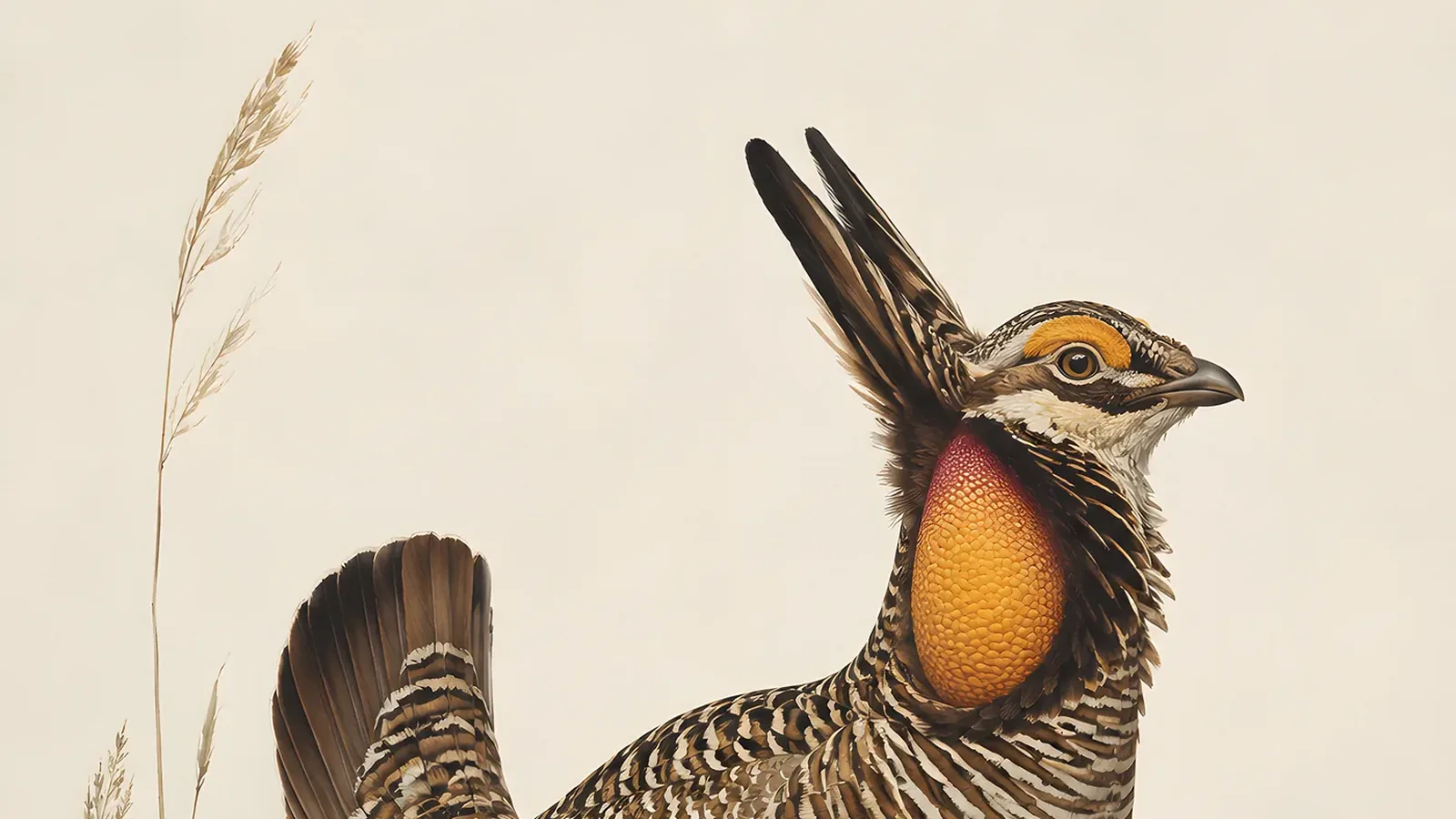
Greater Prairie-Chicken (Tympanuchus cupido) is Minnesota’s grassland urgency story. The species once ranged across the state’s western prairies; remnant populations persist at a handful of managed sites, including the Rothsay Wildlife Management Area and areas around Felton Prairie in Clay County. The booming display of males on their lek in early April is one of the more theatrical performances in North American wildlife, and the population is small enough that the sites are managed closely. The Minnesota Ornithological Union lists Felton Prairie as one of the premier sites in the state for this reason.
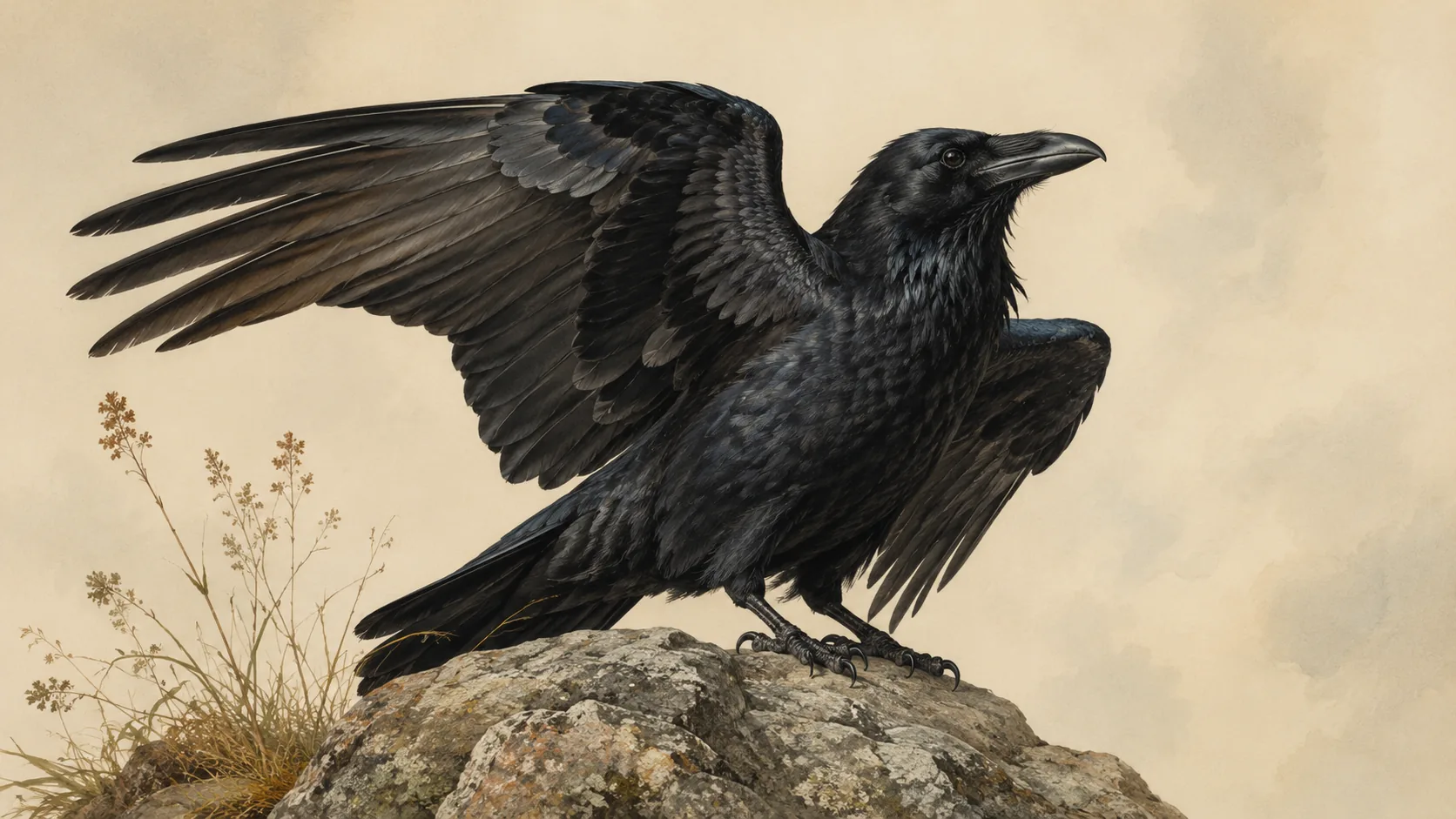
Common Raven (Corvus corax) breeds year-round across the northeast, where it is genuinely common in the Boundary Waters Canoe Area Wilderness and along the North Shore of Lake Superior. To the south it is replaced by American Crow. The line between the two ranges cuts roughly through Duluth and is worth knowing.
Top backyard species
A suburban Minneapolis or Duluth garden through the year:
- Black-capped Chickadee (year-round, the default feeder bird of the state)
- American Goldfinch (year-round, breeding male bright yellow in summer)
- American Robin (breeding season; some overwinter on fruit)
- Blue Jay (year-round)
- Downy Woodpecker (year-round)
- Purple Finch (year-round in the north; winter visitor farther south)
- Mourning Dove (year-round)
- Bald Eagle (year-round near open water; abundant)
- Great Blue Heron (breeding season on lakes and rivers)
- House Finch (year-round in towns)
- Dark-eyed Junco (winter, in large numbers)
Where and when to watch
Sax-Zim Bog (St. Louis County) is the single address most Minnesota birders give a visitor with one day to spare. The accessible coniferous bog north of Duluth hosts breeding Great Gray Owls, Gray Jays, Boreal Chickadees, and Connecticut Warblers in summer, then draws winter birders for Snowy Owls, Northern Hawk-Owls, and Great Gray Owls when prey is scarce in Canada. The Friends of Sax-Zim Bog runs a winter festival each February that brings the owls and the birders into productive proximity.
Hawk Ridge Bird Observatory (Duluth) is the Midwest’s premier raptor watchsite. The bluffs above Duluth channel migrating Broad-winged Hawks, Sharp-shinned Hawks, and over a dozen other raptor species south along the Lake Superior shoreline each autumn. The peak is roughly September 10 to 25, and a single good morning can produce counts in the thousands. Hawk Ridge volunteers have counted raptors here since 1972.
Agassiz National Wildlife Refuge (Marshall County, northwestern Minnesota) sits in the heart of the glacial lake plain and holds some of the largest wetland complexes in the upper Midwest. It hosts one of the most significant Franklin’s Gull nesting colonies in North America, along with Yellow Rail, American Bittern, Sedge Wren, Nelson’s Sparrow, and Short-eared Owl. The birding here is emphatically about habitat, not single-target species: the variety is the point.
Itasca State Park is Minnesota’s oldest state park and the headwaters of the Mississippi River. The old-growth red and white pine stands support breeding Common Loons on Lake Itasca itself, along with Northern Goshawk, Pileated Woodpecker, and winter finches in irruption years. The park sits at the edge of the boreal zone, which means the species list runs from backyard birds to boreal specialists within a few kilometres.
The state’s seasonal rhythm has a clear spine. Loons return to open water in April, as soon as ice goes out, and are gone by October. Hawk Ridge runs September through November. The deep winter - December through February - is when the boreal irruptions happen: the owls, the redpolls, the Pine Siskins arriving from Canada. Spring migration along the Mississippi Flyway moves through in May, and the warbler diversity in the northeast at that time is equivalent to anything in the Great Lakes region.
Minnesota has over 450 species on its state list, as tracked by the Minnesota Ornithological Union. It is a state where the loon’s call is still the most common sound on a summer lake - and that fact, maintained against the odds, is worth more than any number on a checklist.