Field Guide
Violet-crowned Hummingbird
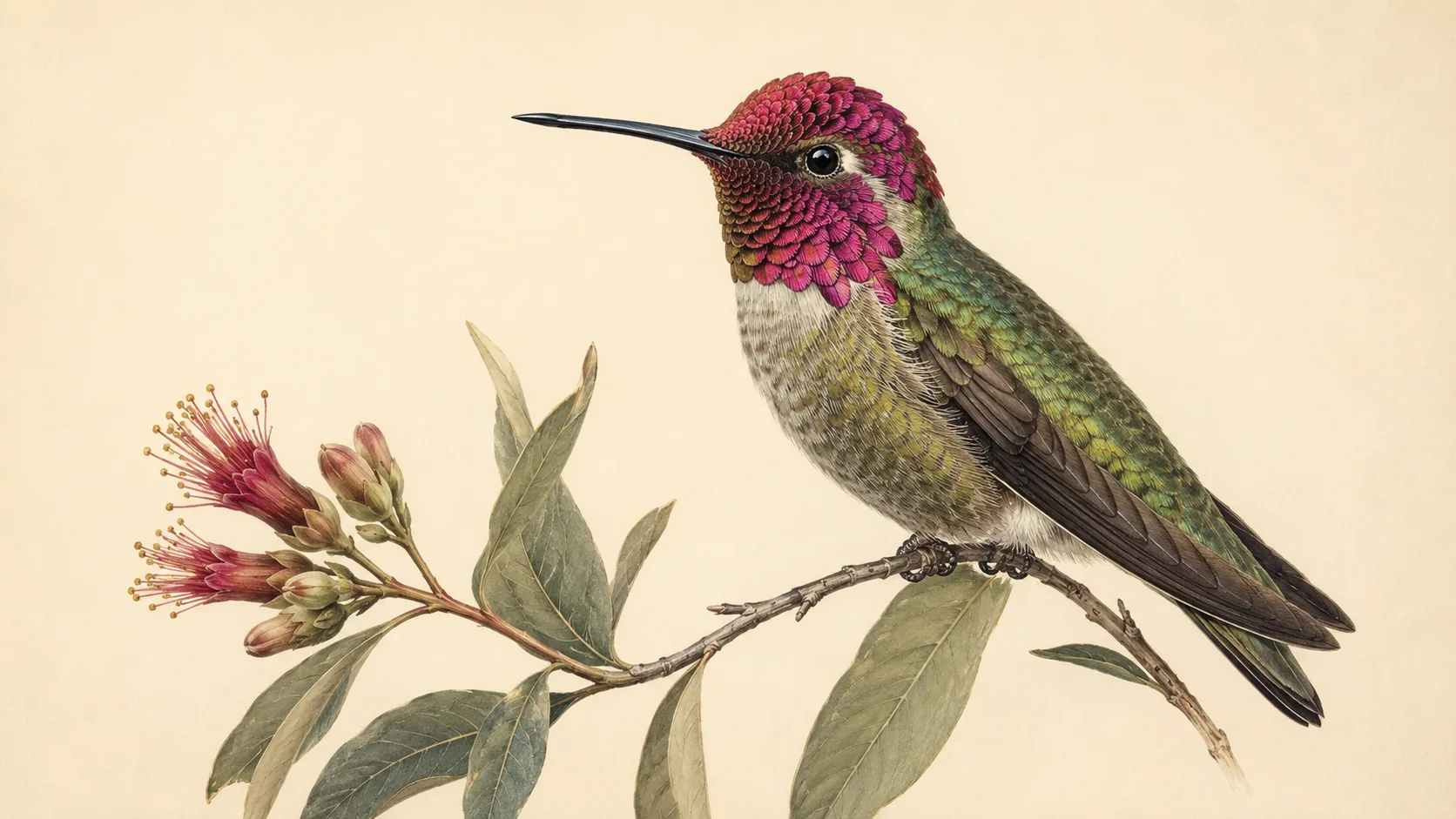
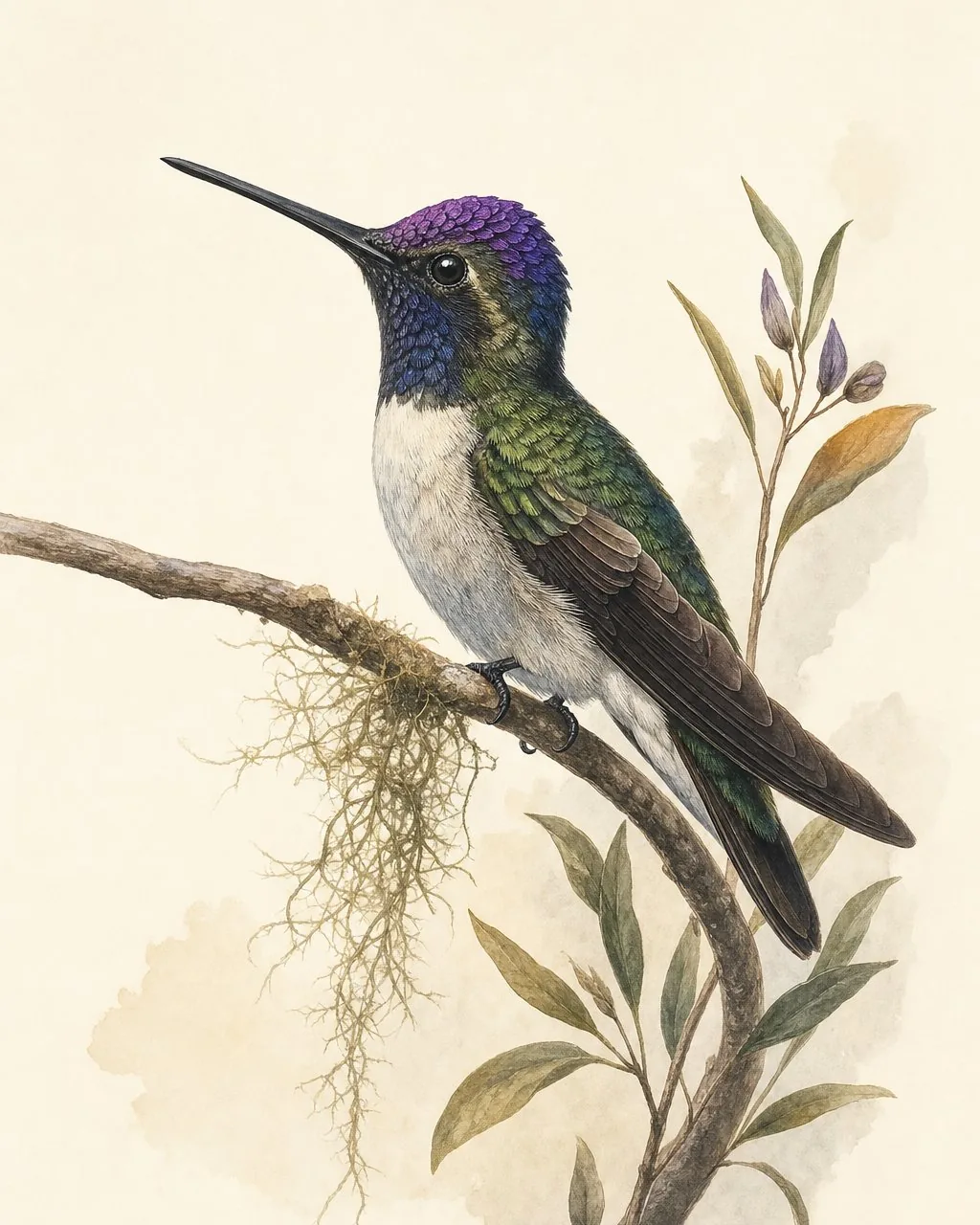
Ramsey Canyon in July. Heat off the rocks, the sycamores in full heavy leaf, and the feeders at the nature center already busy with Anna’s Hummingbird and Black-chinned. Then something different lands - snow-white below, the crown lit a deep grape-violet in the right angle of light, the bill long and straight and tipped with black at the end of a coral-red base. You reach for the field guide you already know the answer to. Violet-crowned Hummingbird. The bird stays for twelve seconds. Then it’s gone.
Most North American birders who see this species see it once, in a canyon in southern Arizona, and count themselves fortunate.
What It Looks Like
The field marks are clean and memorable. The underparts are pure white - a white that extends from chin to undertail with no streaking, spotting, or iridescent gorget coloring. The upperparts are bronze-green. The crown is violet-blue, iridescent and shifting with the light angle, appearing deep purple at one moment and electric blue at another. In poor light it can look nearly black.
The bill is the species’ most useful identification tool when the light isn’t cooperating: long, straight, and bicolored, with a coral-red or orange-red base that transitions to a dark tip. No other hummingbird commonly occurring in the Arizona borderlands shows this combination of all-white underparts and the red-based bill.
Females resemble males closely, though the violet crown is slightly less intense. Immatures show a duller crown and often some pale scaling on the upperparts.
The species was long placed in the genus Amazilia, alongside most of the medium-sized hummingbirds of Mexico and Central America. Recent molecular work has scattered that genus into several new arrangements. The Violet-crowned now sits in Ramosomyia.
| Measurement | Range |
|---|---|
| Length | 10 - 11 cm |
| Weight | 6 - 8 g |
| Wingspan | 13 - 14 cm |
| Lifespan | 3 - 7 years |
Voice
The call is a sharp, dry chip, similar to other Amazilia-type hummingbirds. The song - heard rarely, mostly from perched males during the breeding season - consists of repeated short phrases, scratchy and without the musical quality of some other hummingbirds. It is not a bird you would identify by ear without prior experience, and most encounters in the field are silent or accompanied only by the brief contact call.
Range and Habitat
In the United States, the Violet-crowned Hummingbird is found in only a handful of canyon systems in southeastern Arizona, particularly in the Huachuca and Santa Rita Mountains and adjacent lowland riparian corridors. Sycamore Canyon, Ramsey Canyon, and Patagonia Lake State Park are among the most reliable locations. The population is small - perhaps a few dozen breeding pairs north of the Mexican border.
The bulk of the species’ range lies in western Mexico, from Sonora and Chihuahua south through Sinaloa and Nayarit. The Arizona birds represent the northernmost extension of that population and are partially migratory, with some individuals wintering in Mexico and others appearing to remain year-round in sheltered canyon sites.
Habitat in the US consists primarily of riparian corridors with mature sycamore and cottonwood, often in canyon bottoms at moderate elevations. The sycamores are key - they provide both nectar from associated flowering plants and nest sites.
Diet
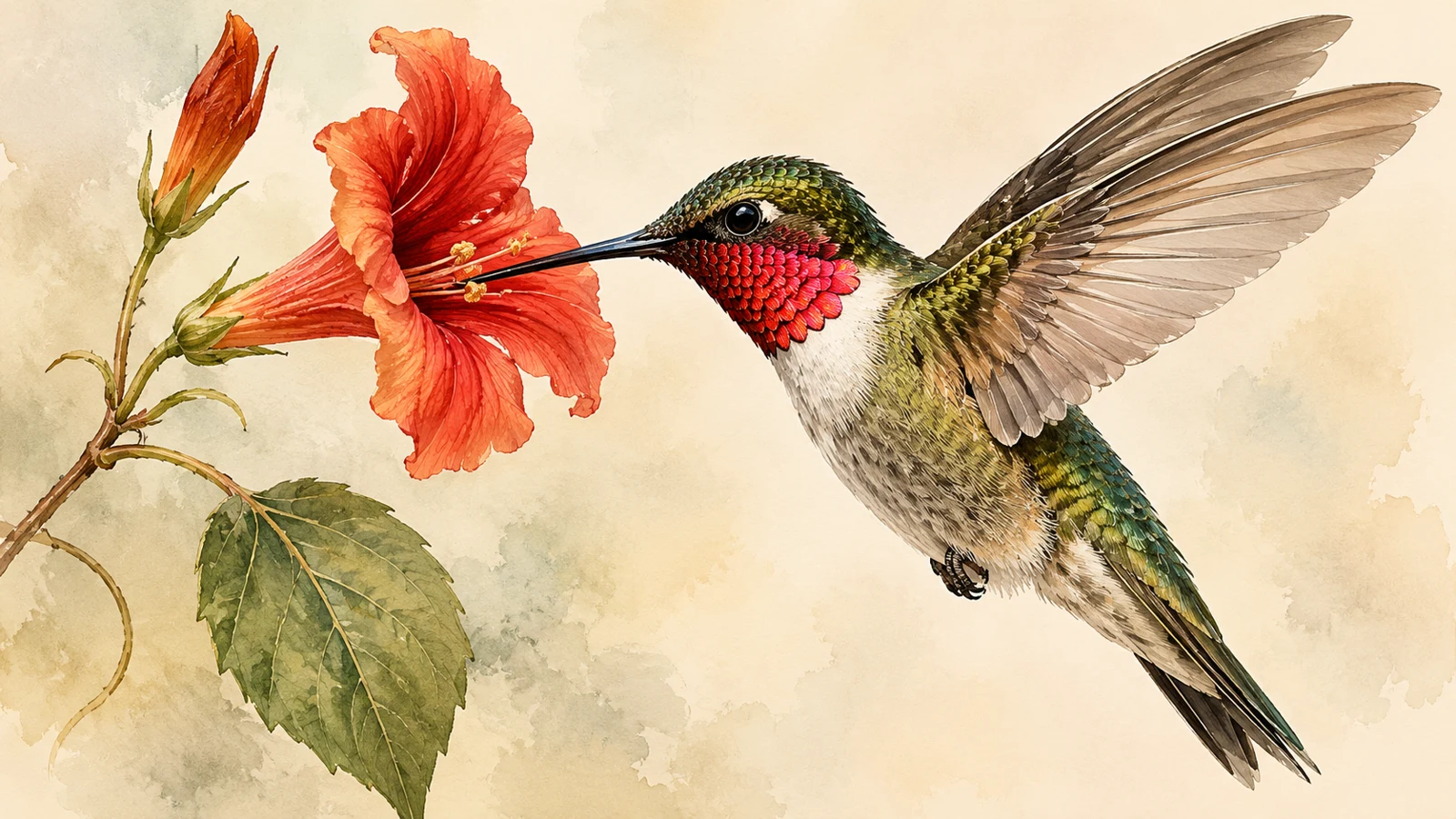
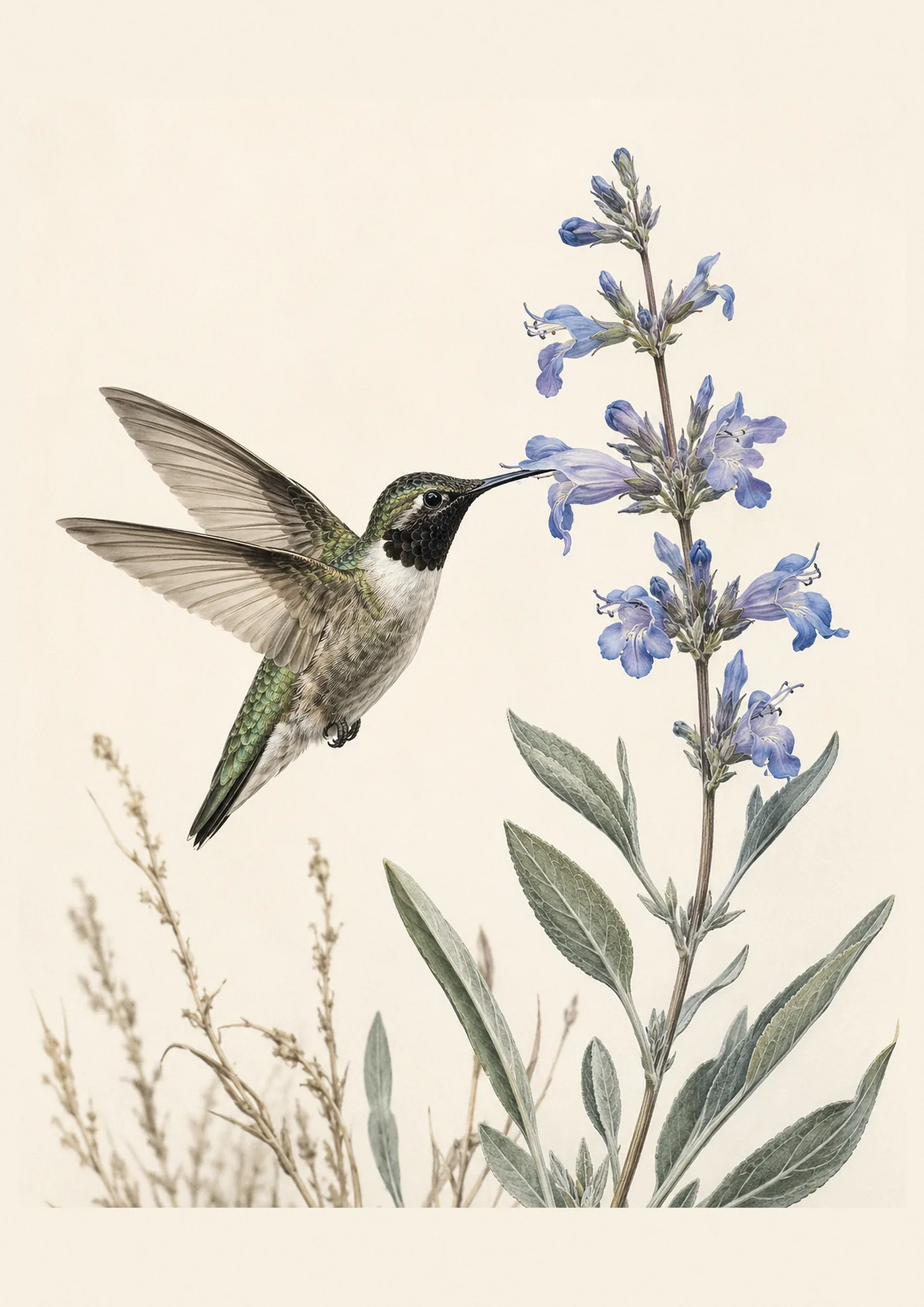
Like all hummingbirds, the Violet-crowned feeds primarily on flower nectar, supplemented by small arthropods caught in flight or gleaned from foliage. In Arizona it visits a wide variety of flowering plants in riparian areas, including native salvias, penstemons, and tree tobacco, along with sugar-water feeders at nature centers and private residences.
The straight bill suggests a generalist nectarivore rather than a specialist on curved flowers. This allows it to exploit a broader range of plant species than bill-matched hummingbirds can.
Breeding
The breeding biology in the United States is incompletely documented, given how small and localized the population is. The nest is a small cup constructed of plant fibers and bound with spider silk, typically placed in a sycamore or cottonwood at low to moderate height. The exterior is decorated with lichen and bark flakes in the manner typical of the family.
The female alone incubates the two white eggs and raises the young. Incubation lasts approximately 14 to 16 days. The chicks fledge after roughly three weeks. Whether Arizona birds are double-brooded is not well established.
Sky Island Specialty
The mountain ranges of southeastern Arizona - the Huachucas, Santa Ritas, Chiricahuas, Pinaleños - rise abruptly from the Sonoran Desert floor like biological islands. Each range hosts its own subset of species that cannot cross the desert between them. This isolation has made the region one of the richest birding destinations in North America, with a suite of Mexican species reaching the US only in these canyons.
The Violet-crowned Hummingbird is one of the most sought-after of these sky island specialties. It requires a specific kind of pilgrim: someone willing to drive to the borderlands in July, sit beside a feeder in the heat, and wait. The Ruby-throated Hummingbird is the bird of the East, familiar and abundant. The Violet-crowned is the bird of a particular canyon on a particular afternoon, seen once, and not forgotten.
The Arizona population has benefited from the proliferation of hummingbird feeders along the border canyons. It has also suffered from the pressures common to riparian specialists in the arid Southwest: drought, groundwater pumping, invasive plants replacing native riparian vegetation. The population is small enough that individual years of poor conditions at key sites can register as a range-wide decline.
What the sky islands offer, ultimately, is surprise. You go for the heat and the rocks and the Mexican birds, and you get all of it. The Violet-crowned Hummingbird is the distilled version of that promise: brilliant, brief, and found almost nowhere else.