State Guide
Birds of Montana
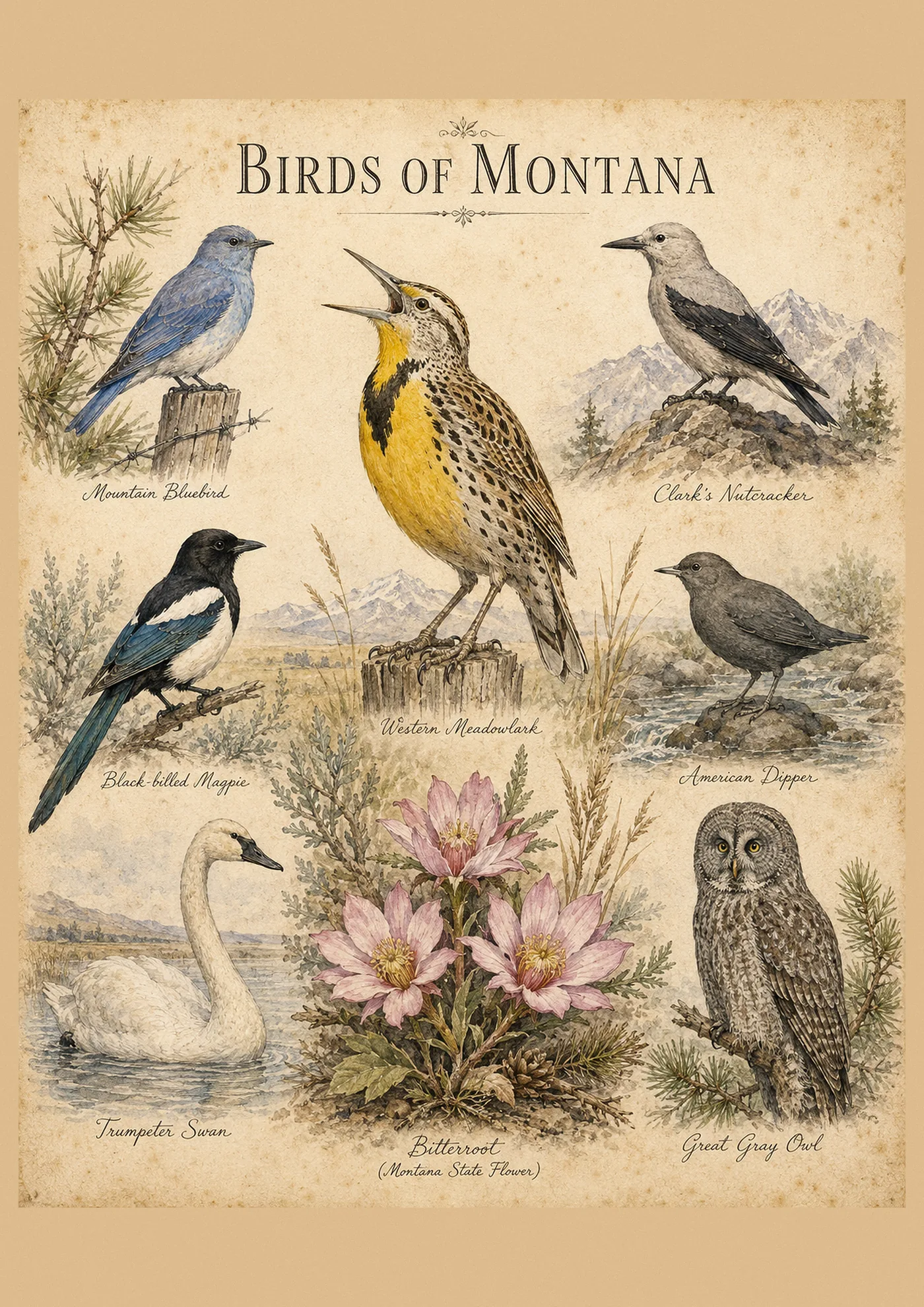
In the spring of 1930, the Montana state government put the choice of official bird to a public vote among schoolchildren. More than 37,000 children cast ballots. The Western Meadowlark (Sturnella neglecta) won decisively, and on March 14, 1931, the Montana Legislature made it official under House Bill No. 122. The bird’s full scientific name carries a small piece of history: neglecta was assigned by John James Audubon himself, who noted that earlier naturalists had overlooked the species entirely, mistaking it for the Eastern Meadowlark.
The meadowlark is a grassland bird, and the choice fits Montana exactly. The eastern two-thirds of the state is open country - shortgrass and mixed-grass prairie, coulees, river breaks, wheat fields stretching to the horizon. Here the male meadowlark sings from fence posts and highway markers from April through July, its liquid, flute-like phrases carrying far across the quiet. It is not a feeder bird and it does not come to town. You have to drive east from the mountains to find it, which is the honest story of Montana birding: the state has two distinct avifaunas, and understanding both requires travelling through it.
The Montana Bird Records Committee (MBRC), which operates under Montana Audubon, lists 448 species on the state’s official record as of August 2025. Montana Audubon, the independent statewide conservation organisation founded in 1976, has documented the distribution of 427 species in its bird atlas built from roughly 900,000 field observations.
Signature species
Montana holds species that are difficult or impossible to find in most of the lower 48.
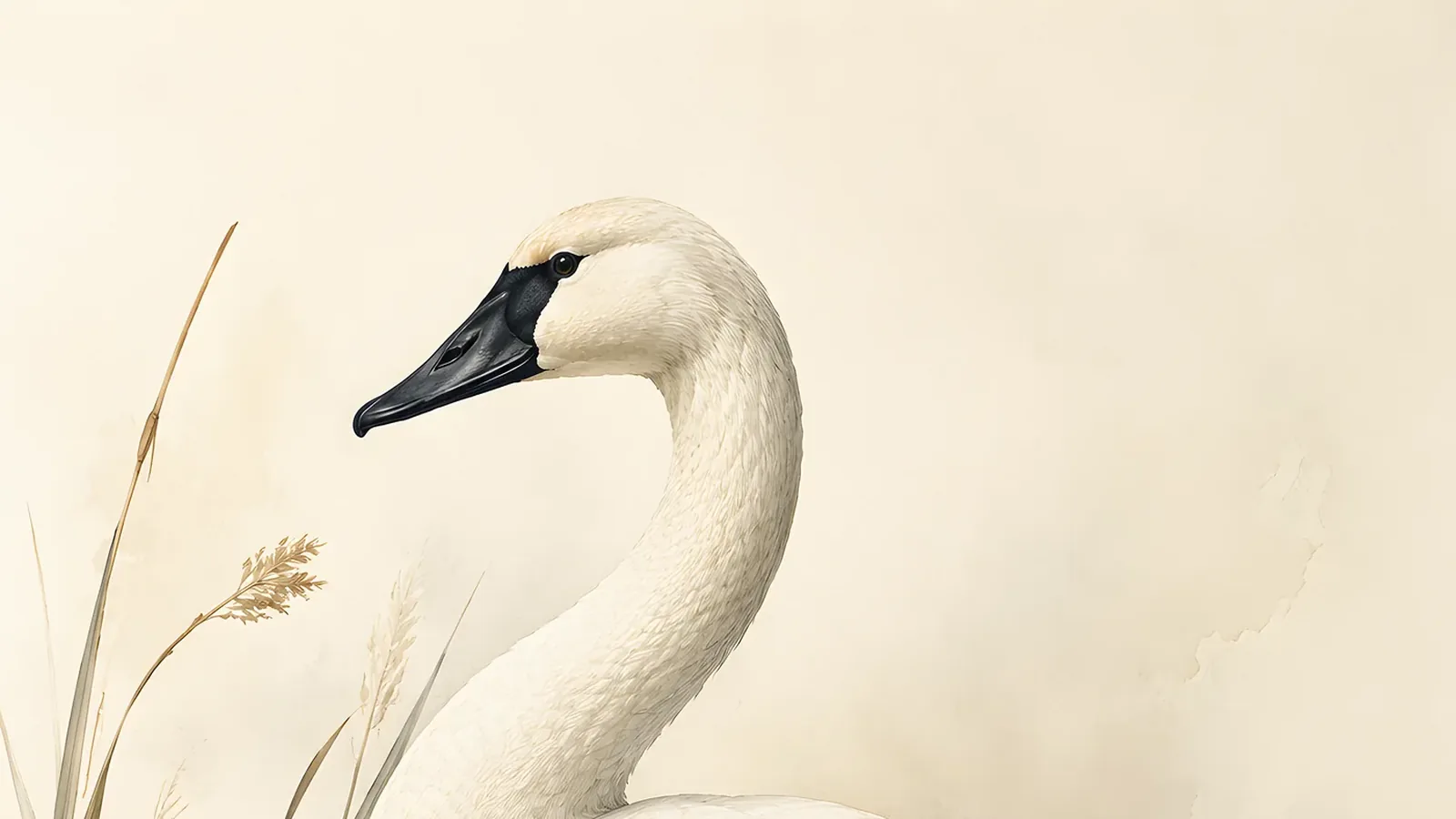
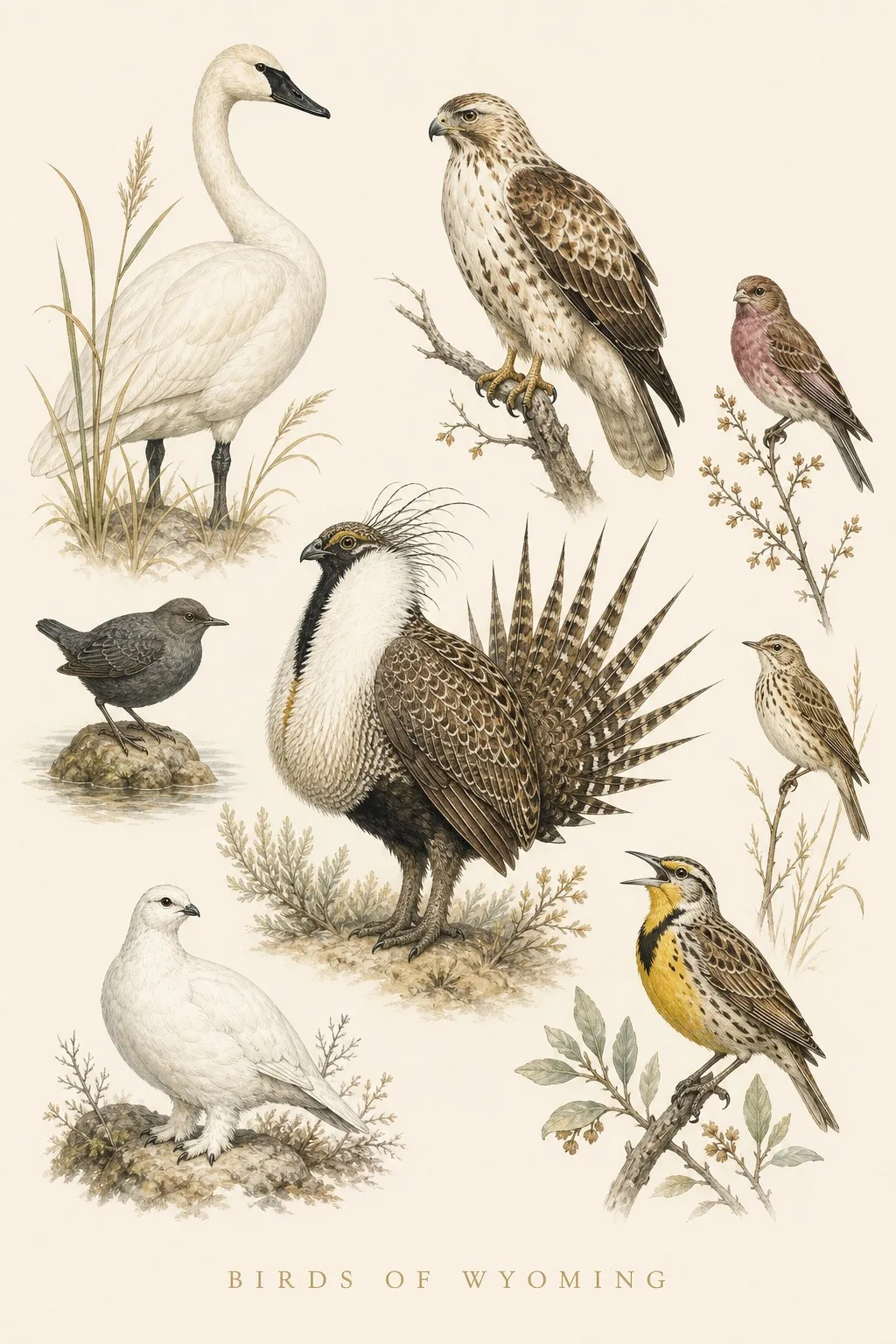
Trumpeter Swan (Cygnus buccinator) nearly disappeared in the 19th century when commercial hunting reduced the continental population to a remnant. The Red Rock Lakes area in the Centennial Valley - one of the most remote valleys in the contiguous United States - became a stronghold. Red Rock Lakes National Wildlife Refuge was established partly for this species. Today the Bitterroot Valley and the area around Lee Metcalf National Wildlife Refuge support recovering breeding pairs, and the species has spread across much of western Montana.
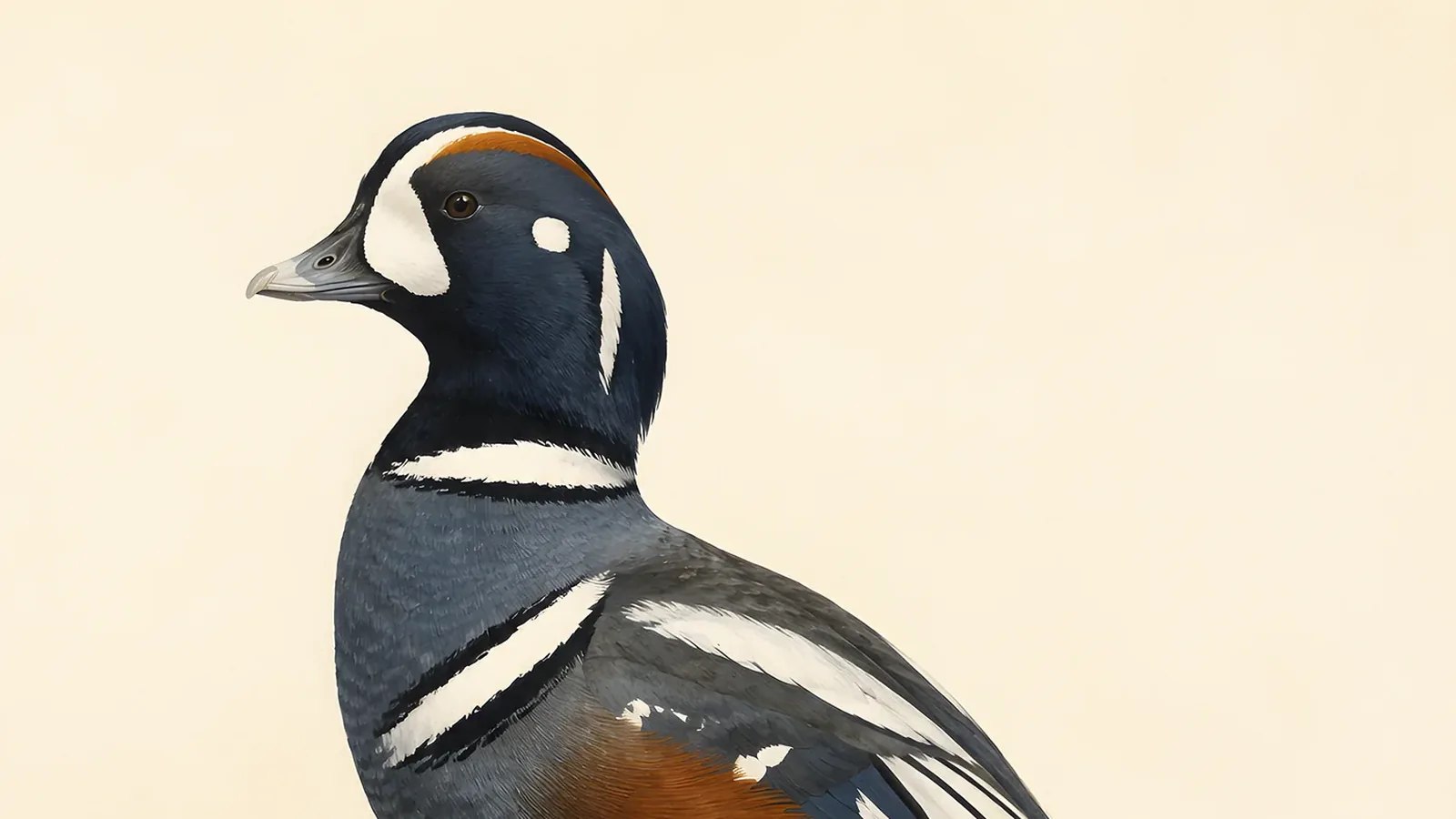
Harlequin Duck (Histrionicus histrionicus) is among the most sought birds in the inland West. Glacier National Park is widely regarded as the best place to see Harlequin Ducks in the lower 48, according to the National Park Service, which lists the species as a Montana Species of Concern. The birds breed on cold, fast-moving mountain streams and disappear to the Pacific coast in winter.
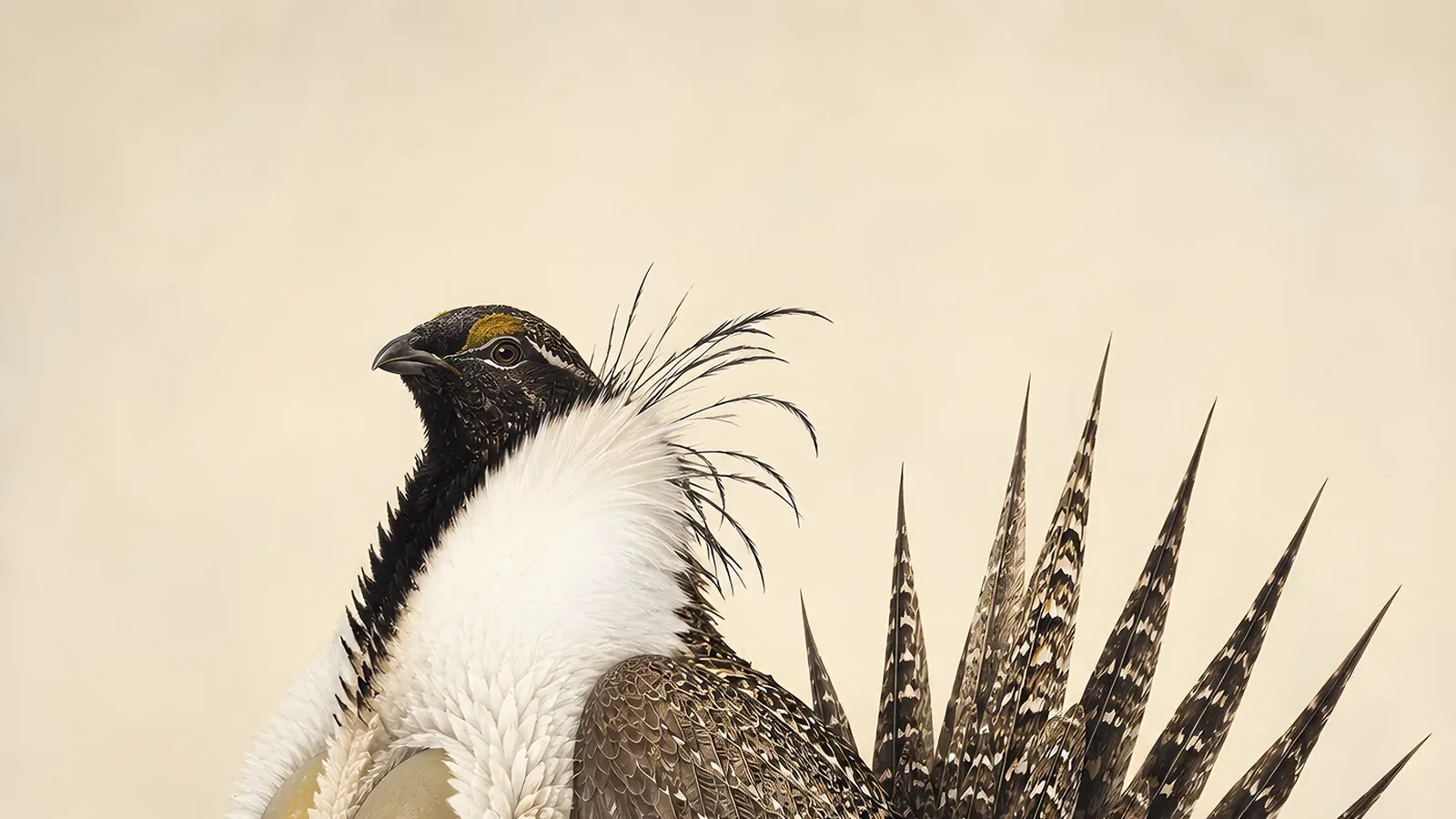
Greater Sage-Grouse (Centrocercus urophasianus) performs its lek courtship display on sagebrush flats across eastern and central Montana each April, the males inflating yellow air sacs on their chests and producing a deep, bubbling call that carries across the still early-morning air. The species is a conservation priority across the West and its numbers are tracked closely by Montana Fish, Wildlife and Parks.
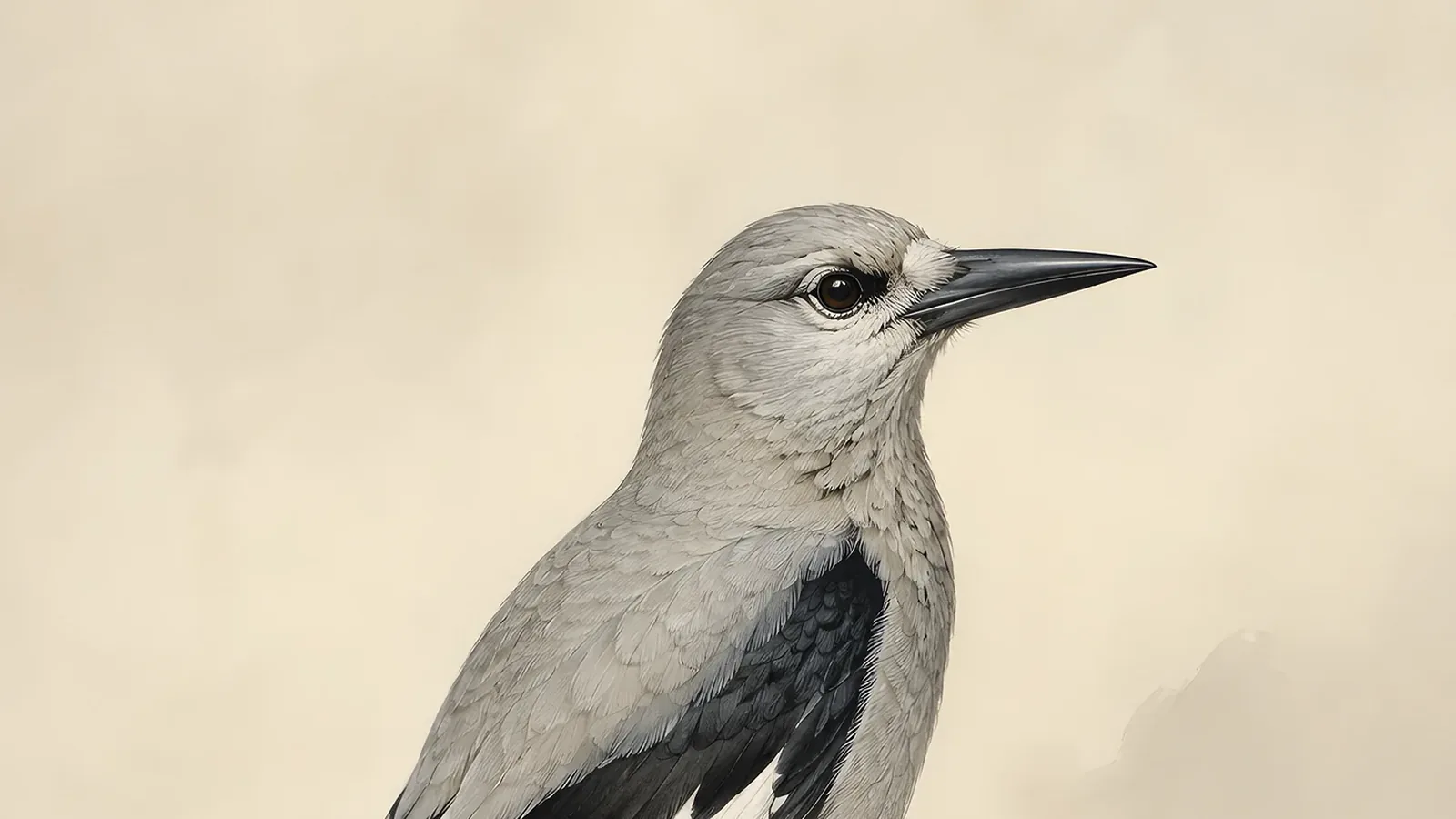
Clark’s Nutcracker (Nucifraga columbiana) takes its name from William Clark of the Lewis and Clark Expedition, who collected it in Montana. It is a corvid adapted entirely to high-elevation conifer forests dominated by whitebark pine, a tree species now threatened by blister rust and mountain pine beetle. The nutcracker caches tens of thousands of pine seeds each autumn and recovers a significant portion of them through winter - making it, in effect, the primary re-planting agent for whitebark pine above treeline.
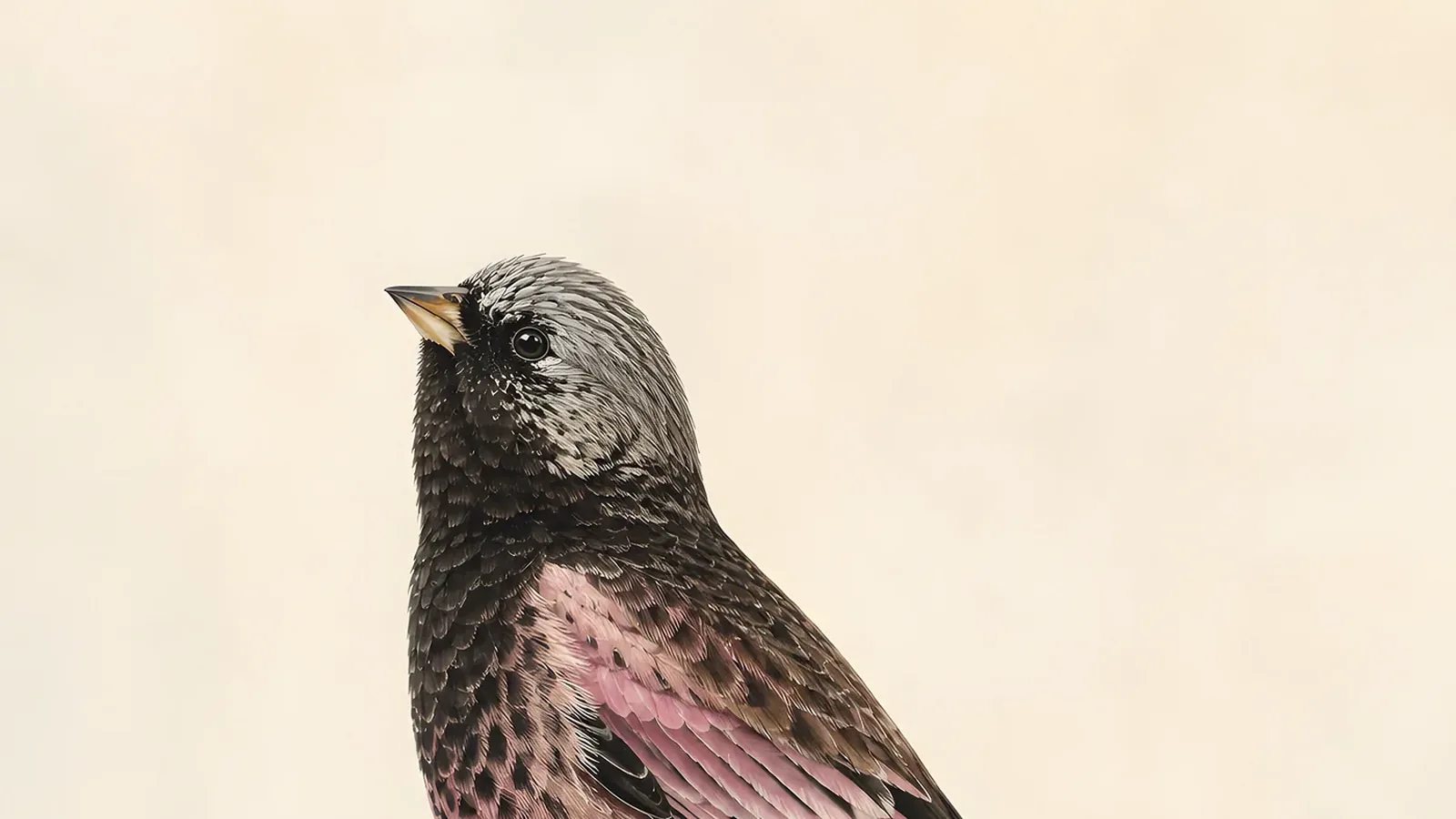
Gray-crowned Rosy-Finch (Leucosticte tephrocotis) lives at elevations where few birds follow. It breeds on alpine tundra and snowfields in Glacier and the ranges of central Montana, foraging at the edges of melting snowbanks for insects. Glacier National Park is one of the most reliable lower-48 sites for this species.
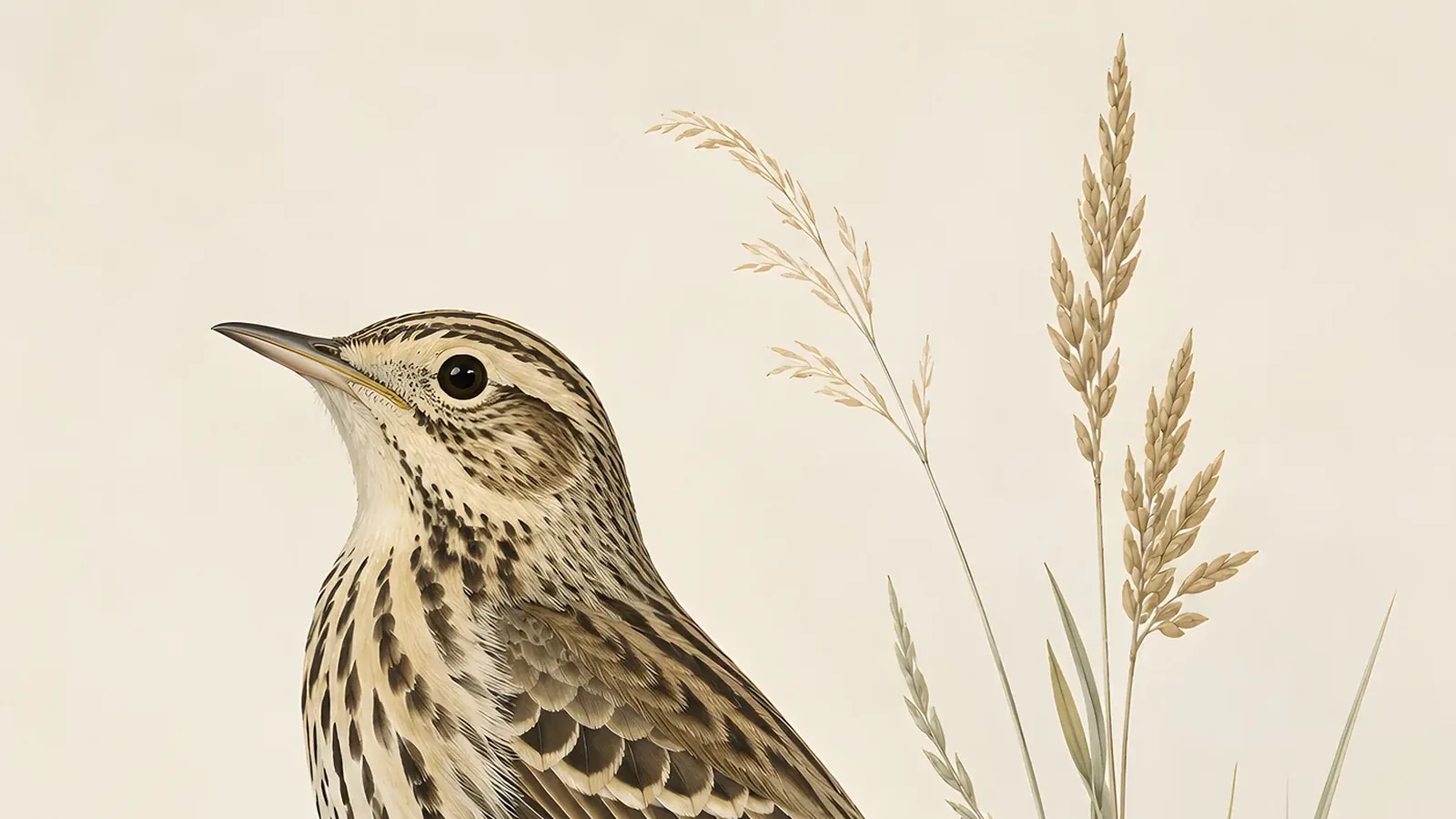
Sprague’s Pipit (Anthus spragueii) is a grassland specialist of global conservation concern. It breeds in native shortgrass prairies in the northeastern part of the state, where Partners in Flight identifies it as a high-priority species for Montana. It sings only in flight, hovering so high that it becomes invisible before the long, descending cascade of notes reaches the ground.
Backyard species
In western Montana towns and suburbs, the standard feeder community centres on:
- American Robin (year-round, the state’s most frequently recorded species)
- Black-capped Chickadee (year-round, present at the vast majority of Montana feeder sites)
- American Goldfinch (year-round, irruptive in winter)
- Steller’s Jay (year-round in forested western areas)
- Western Bluebird and Mountain Bluebird (both nest in the state; extensive nest-box trails support them)
- Mourning Dove (year-round)
- Common Raven (year-round, especially near mountains)
- Red-tailed Hawk (year-round)
- Great Horned Owl (year-round, the most widespread large owl)
In eastern Montana, the robin and chickadee remain common, but the backyard list shifts toward species more typical of the northern plains, including Horned Lark and Common Redpoll in winter irruption years.
Where and when to watch
Freezout Lake Wildlife Management Area (Teton County) hosts one of the most concentrated waterfowl migrations in the mountain West. Between mid-March and mid-April, flocks of Snow Geese and Ross’s Geese pass through in numbers reaching 100,000 birds. Breeding season from May through July adds nesting colonies of American White Pelican, Clark’s Grebe, American Avocet, Wilson’s Phalarope, and White-faced Ibis. eBird data consistently list Freezout among Montana’s top-ranked birding sites for species diversity in spring.
Bowdoin National Wildlife Refuge (Phillips County, northeastern Montana) covers 15,551 acres of prairie wetlands and has been designated an Important Bird Area and a Western Hemisphere Shorebird Reserve Network site. The refuge supports 263 documented bird species and is the central site for shorebird diversity in the Hi-Line region, with breeding colonies of California Gull and Eared Grebe.
Glacier National Park (Flathead and Glacier counties) holds 279 documented species with 144 confirmed nesters. Beyond the Harlequin Duck, the park is the most reliable lower-48 site for White-tailed Ptarmigan above treeline and for Gray-crowned Rosy-Finch year-round. Great Gray Owl is a Montana Species of Concern present in the park’s montane forests.
Lee Metcalf National Wildlife Refuge (Ravalli County, Bitterroot Valley) records over 240 species on its 2,800 acres along the Bitterroot River. Over 100 species nest here annually. It is one of the most accessible sites in western Montana for wintering Trumpeter Swans, nesting Wood Ducks, and breeding grassland species on the adjacent benches.
The broad seasonal rhythm: spring migration runs from late February through May, with the Freezout waterfowl spectacle in March-April and passerine migrants peaking in May. Summer is breeding season across all habitats, with lek species (Sage-Grouse, Sharp-tailed Grouse) active from April onward. Autumn brings shorebird and waterfowl movement through the river valleys and prairie wetlands through October. Winter concentrates raptors - Golden Eagles, Rough-legged Hawks, and Ferruginous Hawks - along the breaks of the Missouri and the open coulees of eastern Montana, and pushes waterfowl to whatever water stays open.
The meadowlark that the schoolchildren chose in 1930 is still there, singing from the same fence posts on the same roads east of the mountains. That continuity is the quiet argument for the prairie half of Montana: the grasslands that produce the state bird also produce Sage-Grouse leks, Sprague’s Pipit song-flights, and Ferruginous Hawk nests - and they are running out of champions in a state whose reputation belongs entirely to the mountains.