Field Guide
Anhinga
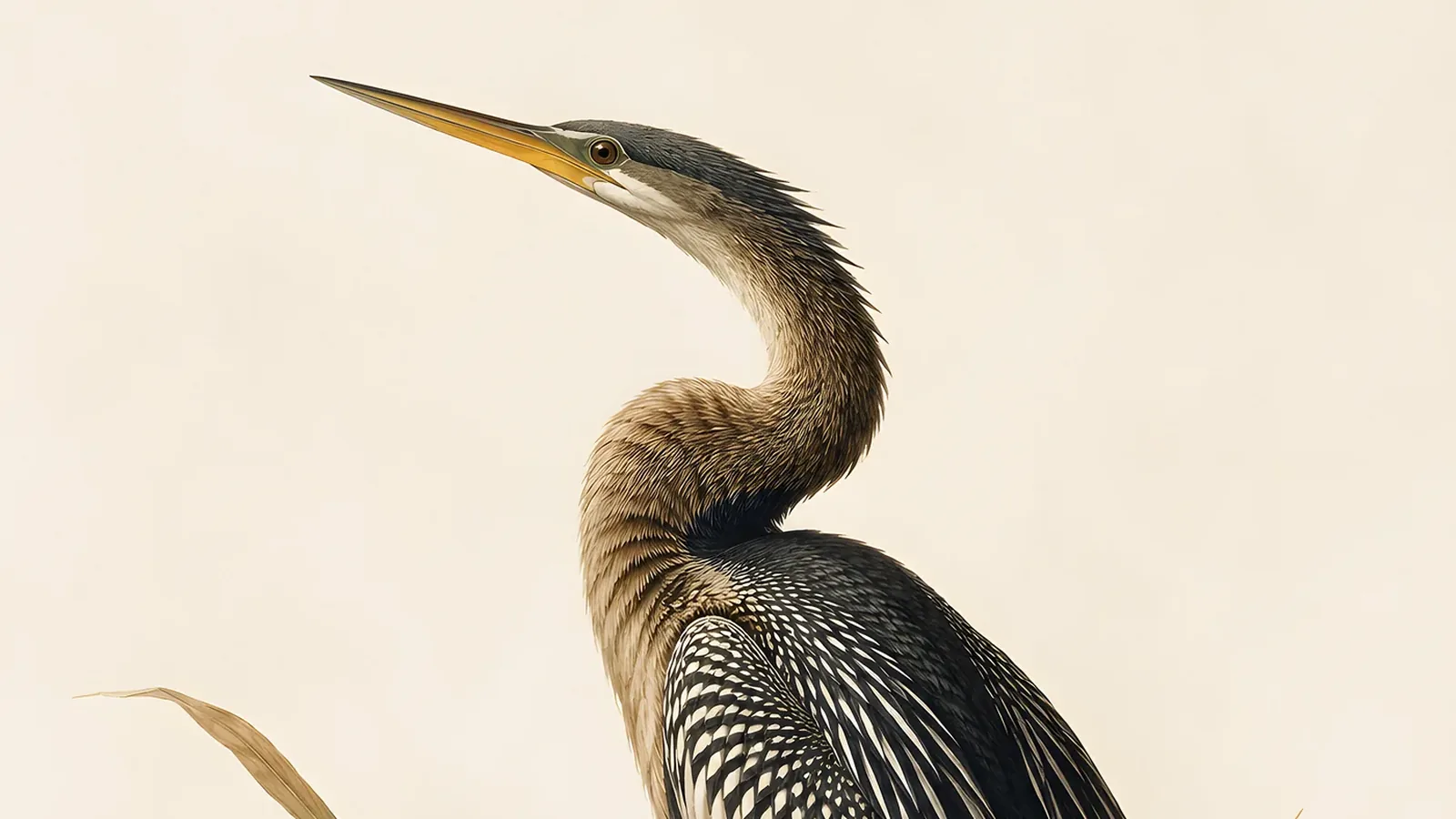
A long neck rises from a cypress-dark pool in the Florida everglades. Nothing else is visible. The body is gone - held below the surface by plumage that does what bird feathers almost never do: it soaks through. The neck and head cut a slow S through the water like a hunting snake, which is exactly what gave Anhinga anhinga the name most field birders actually use.
Snakebird.
This is a bird that built its entire livelihood around a trade that no other waterbird in its range would make: give up the waterproofing, accept the cold and the drag of soaked feathers, gain the ability to sink. Then you can wait out a fish from below.
The cost is paid afterward, always on a branch in full sun, wings held out like a pair of dark sails until they dry. It is the most recognizable posture in the Southern swamps, and it tells you everything about how the bird makes its living.
What it looks like
The Anhinga is a large, long-bodied waterbird - 86 to 91 centimetres from bill tip to tail, with a wingspan of 114 to 122 centimetres. It weighs between 1.1 and 1.35 kilograms, lighter than its bulk suggests. The bill is long, straight, and sharply pointed: not hooked like a heron’s, not pouched like a pelican’s, but a smooth dagger built for one specific motion.
Adult males are mostly black with a dark green gloss, accentuated by silver-gray feathers on the upper back and wings edged with long white streaks. In breeding condition a male develops a short black crest and vivid turquoise skin around the eye that fades once nesting ends. Adult females and immatures are brown across the head and neck, shading to the same dark-and-silver wing pattern below. Both sexes carry a long, fan-shaped tail that, in flight, fans open and catches the eye.
The neck is the diagnostic feature. In flight the anhinga does not fold it back like a heron - it extends it fully, long and sinuous, with the tail spread and the wings pumping in a glide-flap rhythm. Perched, the neck sits in a loose curve that can compress instantly into the loaded S of the strike.
| Measurement | Range |
|---|---|
| Body length | 86 - 91 cm |
| Weight | 1,080 - 1,350 g |
| Wingspan | 114 - 122 cm |
| Max recorded lifespan | 16.4 years (Bird Banding Laboratory) |
| Clutch size | 2 - 5 eggs |
| Incubation | 25 - 29 days |
The snakebird underwater
Most diving birds trap air in waterproof plumage to manage buoyancy. The anhinga does the opposite. Its body feathers wet out on immersion, leaving it with minimal air trapped against the skin. This is not an accident. It is what lets the bird achieve something close to neutral buoyancy - researcher Jeff White at the Cornell University College of Veterinary Medicine, working with Kevin McCracken at the University of Miami, published findings in the Journal of Comparative Physiology B (2024) showing that anhingas “do not sink or float while submerged,” allowing them to hold position without active swimming. White’s lab also found that anhingas can generate energy with less dissolved oxygen than most diving birds - an efficient metabolism that extends the time they can work a hunting position without surfacing.
The hunting method itself is the other half of the system. The eighth and ninth cervical vertebrae form a hinge-like joint with highly developed surrounding musculature, as documented in the Animal Diversity Web account (University of Michigan). The bird holds its neck in a compressed S while gliding toward a fish. When the strike moment arrives, the hinge releases - the neck extends in a single explosive motion and the sharply pointed bill punches through the water and into the fish. It does not grab. It impales. The fish is then carried to the surface, tossed clear of the bill, caught in the air, and swallowed head-first.
The prey list runs heavily toward slow-moving or bottom-oriented fish: catfish, mullet, pickerel, gizzard shad. The Audubon Society field guide notes the species also takes aquatic insects, crayfish, shrimp, and occasionally small snakes. It is an ambush predator, not a pursuer. The combination of neutral buoyancy and low metabolic rate while submerged makes stationary waiting - sometimes for minutes - entirely practical.
Why it must dry its wings
Wet feathers are the price of the system. When an anhinga leaves the water it is heavier and colder than a duck emerging from the same pool. It cannot fly immediately on departure. It finds a branch or a snag and spreads its wings.
This posture - wings held out horizontally or tilted toward the sun, sometimes for twenty or thirty minutes - is the anhinga’s most frequent visible behavior in the warmer parts of the day. It serves two purposes simultaneously. The feathers dry. The body absorbs radiant heat from the sun, restoring core temperature after the cooling effect of soaked plumage in the water. In this regard the bird has more in common with a reptile managing thermoregulation through behavior than with a waterproof duck that exits the water already warm and flightworthy.
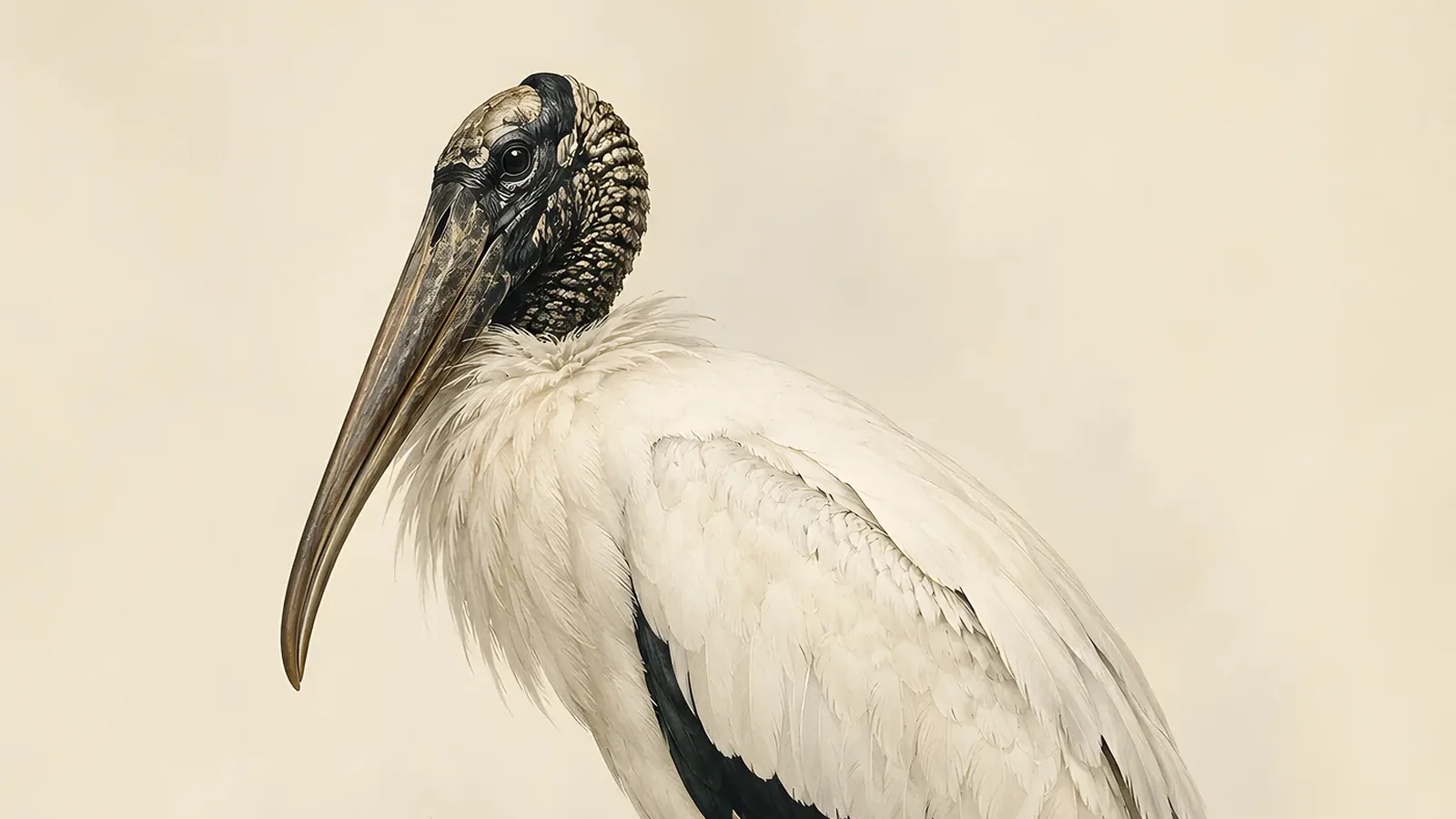
The wood stork shares some of the same warm swamp habitat and also nests colonially, but it manages buoyancy and thermal regulation very differently - a reminder that the anhinga’s strategy is specific to its family, not a general solution for large waterbirds.
The anhinga is the argument that giving something up - in this case waterproofing, the most basic protection a water bird carries - can be the key to a hunting niche no one else occupies.
What it sounds like
Anhingas are quiet birds away from the colony. The Audubon field guide describes low grunts and a series of croaking and clicking sounds heard near nests. The Animal Diversity Web account characterizes the repertoire as clicks, rattles, croaks, and grunts - functional rather than musical, the communication of a bird whose real information is transmitted in posture and position rather than song.
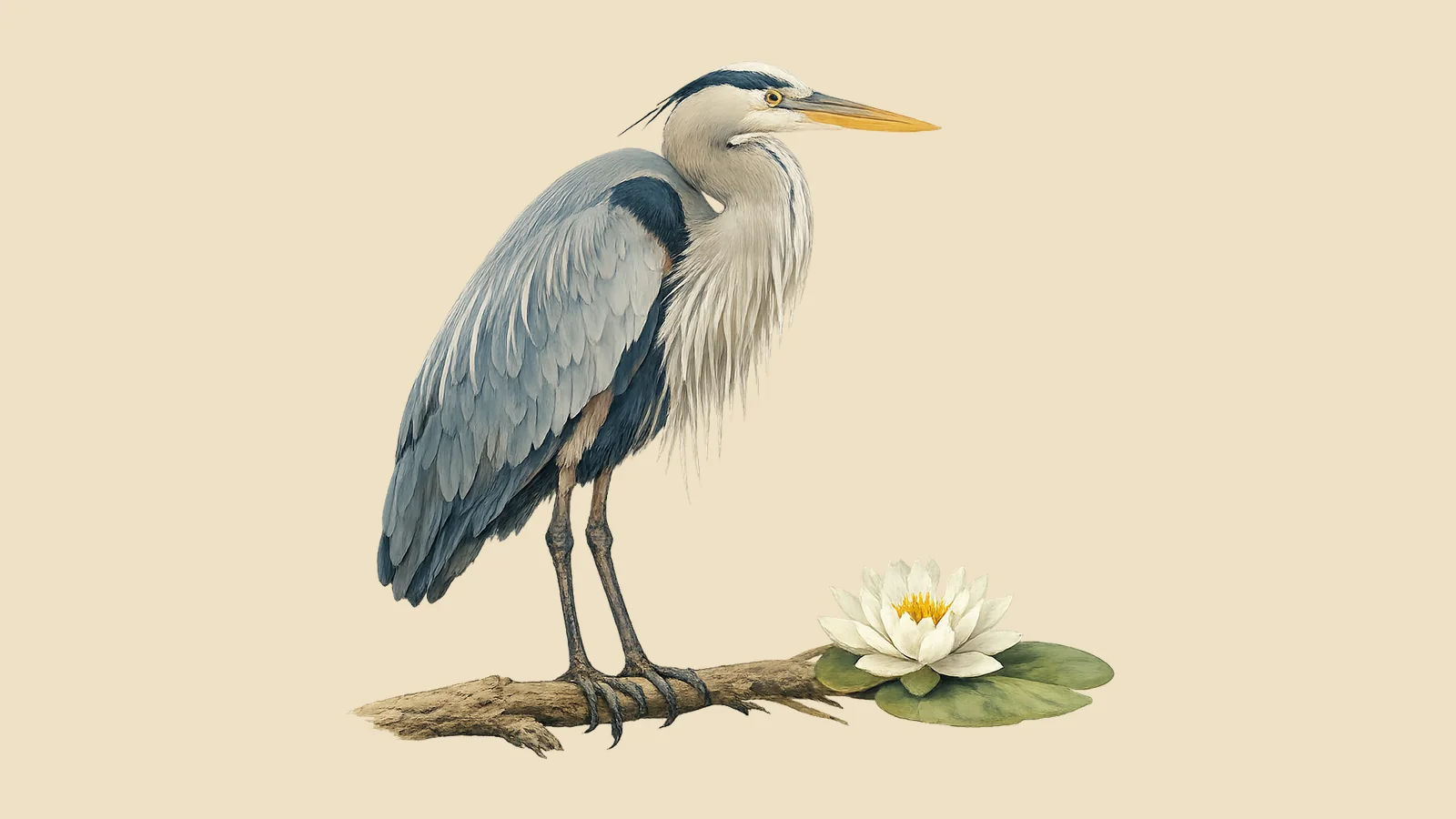
At a large mixed heronry in breeding season, the collective noise is considerable, but the anhinga’s contribution is hard to pick out of the general croaking of herons and egrets sharing the same trees. In Florida rookeries the anhinga often nests in the same cypress heads as the great blue heron, and the two species’ vocalizations blend into one continuous low-register clatter.
Range and habitat
Anhinga anhinga is a bird of warm freshwater. In the United States it breeds from coastal North Carolina and Texas south through peninsular Florida, with the greatest concentrations in the Sunshine State year-round. Northern populations retreat south in winter, following warmth rather than following fish - the limiting factor is temperature, not food availability. The Audubon field guide notes that distribution limits correspond with cool temperatures and low sunlight levels, a direct consequence of the thermoregulation problem the bird cannot entirely solve.
Beyond the United States the range runs through Mexico, Central America, the Caribbean, and into South America as far south as Argentina, with the subspecies Anhinga anhinga leucogaster covering the North American and Central American range and A. a. anhinga covering the southern continent.
Habitat is consistent: slow freshwater. Cypress swamps, sheltered river bends, freshwater marshes, wooded ponds, and lake margins with standing dead trees for perching. The Audubon Society field guide lists “quiet and sheltered waters” as the consistent requirement. Fast rivers and open coastline are not anhinga country. Mangrove lagoons appear at the coastal edge of the range in Florida and are used, but brackish and salt water are secondary to freshwater swamps.
The IUCN lists the species as Least Concern, with a global population estimated by Partners in Flight at between 500,000 and five million individuals. The National Audubon Society’s climate vulnerability analysis projects minimal range loss even under a warming scenario of three degrees Celsius.
Breeding
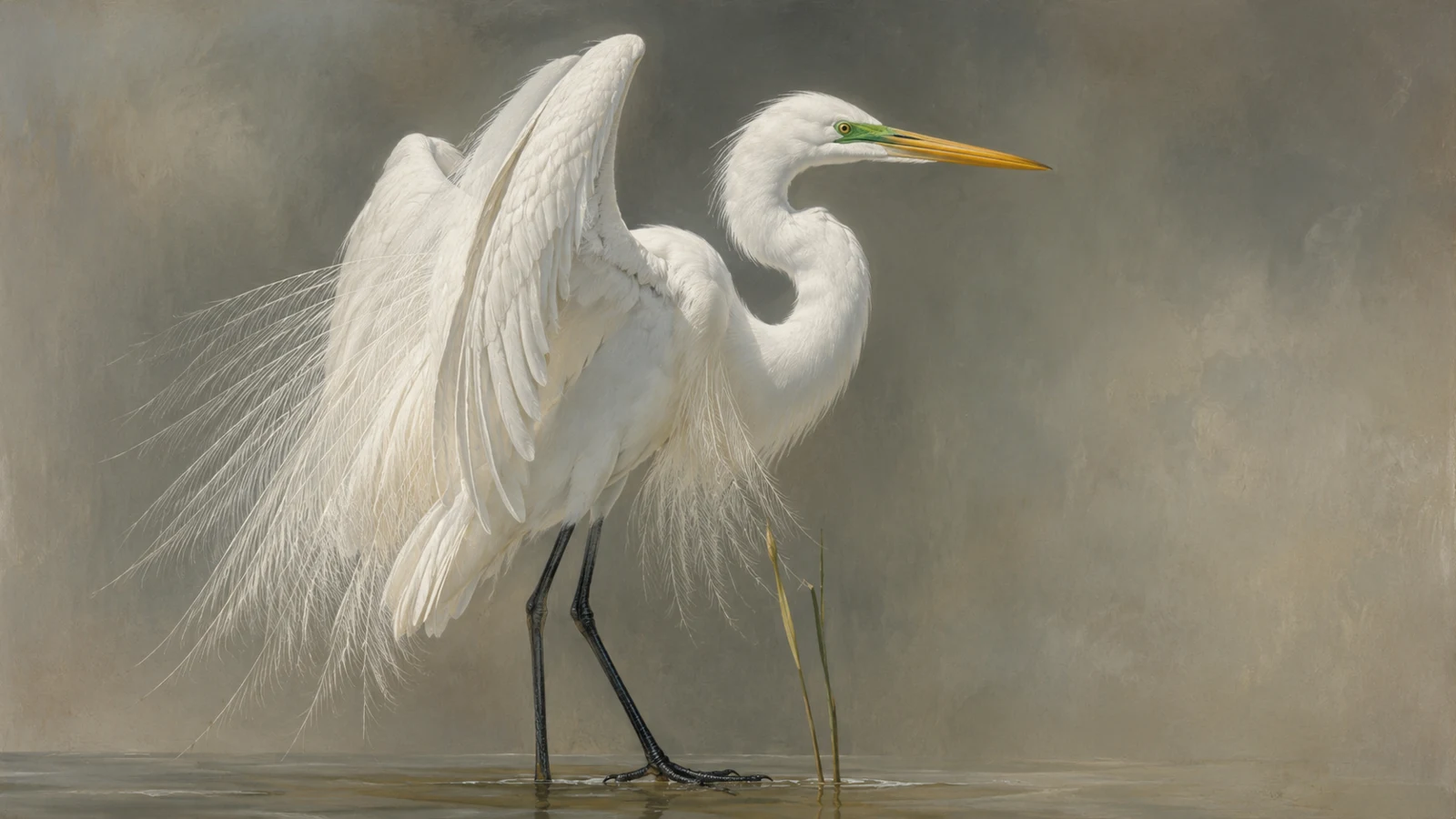
Anhingas nest colonially, typically alongside herons, egrets, and ibises in mixed rookeries. The great egret is a common colony neighbor. Males arrive first and establish nest sites, then court females from those fixed locations with wing-spreading displays - the same posture used for drying becomes, in breeding context, an advertisement of the bird’s size and condition.
Nest construction is a two-part effort: the male collects sticks and green branches while the female does the primary weaving, building a flat platform typically in a tree or shrub above water. The Audubon field guide records clutch size as two to five eggs (most commonly four), pale whitish to blue-green in color. Both parents incubate in alternating shifts over 25 to 29 days. Chicks are born helpless and are brooded continuously in the early weeks. They fledge at roughly six weeks and remain dependent on parents for further weeks of learning the spearing technique that will carry them through a life in the swamp.
In peninsular Florida breeding can begin as early as November and run through April or May, giving the state its status as the best single location in North America to find anhingas in every season. Breeding in the southern part of the range, where seasonal cues are weaker, can occur nearly year-round.
The oldest anhinga on the Bird Banding Laboratory’s records was 16 years and four months old at recapture - a long life by any measure, built on a diet of ambushed fish and the patient, sun-drying pause that comes after every dive.
What stays with you about this bird is the logic of its compromise. Every other waterbird in its range works to keep water out of its feathers. The anhinga decided, somewhere in evolutionary time, that letting water in was the smarter play - and built an entire anatomy around absorbing that cost. The low metabolism that stretches a breath underwater. The hinged neck that turns a fish into a target. The spread wings that convert sunlight into a solution. It is a system of trade-offs so interlocking that removing any one piece would break the whole. The snakebird earns its name in the water. It earns everything else in that long, still interval on a branch in the sun.