Field Guide
Elegant Trogon
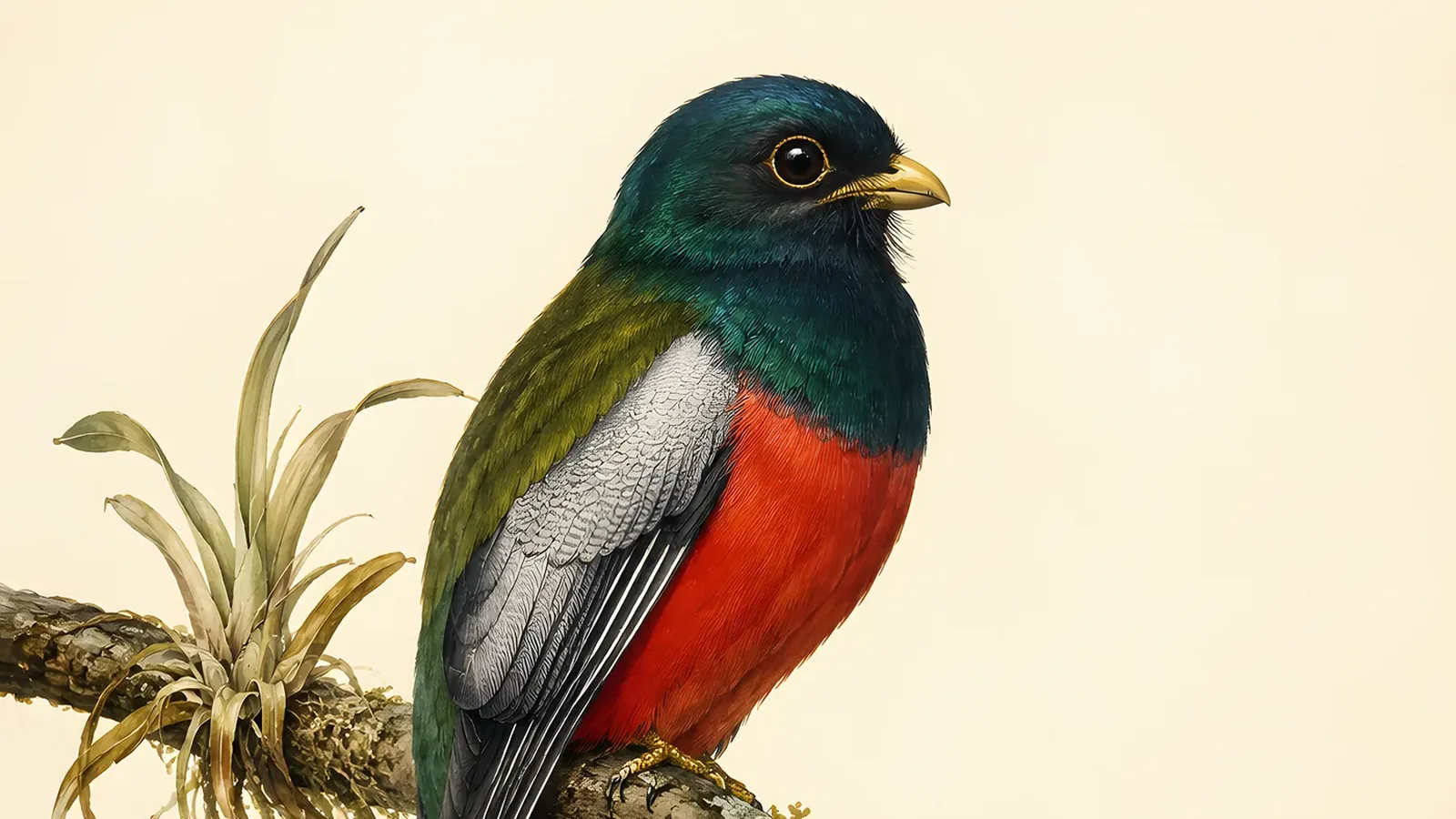
A low croak rolls down the canyon. Three syllables, then silence. Then again. Ko-ah. Ko-ah. Ko-ah. You are standing in a sycamore-lined gorge in the Chiricahua Mountains of southeastern Arizona, and everything around you is dun and dry and desert-pale. Then the bird drops from a high limb into a shaft of morning light, and the green hits you like a slap. Metallic. Hard-edged. A rose-red belly beneath it, a coppery tail hanging long and squared-off below the perch. This is Trogon elegans, the Elegant Trogon - a bird that has no business being in the United States at all, and yet here it is, in a handful of rocky canyons in the far corner of Arizona, calling from a white-barked sycamore as though it owns the place.
It does.
What he looks like
The male carries colours so improbable together that first-time viewers frequently doubt what they are seeing.
| Feature | Male | Female |
|---|---|---|
| Head and back | Metallic grass-green | Grey-brown |
| Breast band | White, narrow | White, narrow |
| Belly | Deep rose-red | Pale rose-red |
| Tail (above) | Coppery bronze, squared-off tip | Coppery bronze |
| Tail (below) | Finely barred black and white | Finely barred black and white |
| Bill | Thick, pale yellow | Thick, pale yellow |
| Eye ring | White crescent behind eye | White crescent behind eye |
The green of the head and upper parts is not paint. It is structural colour - the feather barbules are arranged so that they scatter light at particular wavelengths, producing that hard, jewelled sheen that changes with angle. The coppery tail, squared at the tip rather than rounded or graduated, is the feature that separates this species from most other trogons at a glance. The Audubon Society Field Guide (Kaufman) notes the tail as one of the bird’s signature marks: narrow black and white barring below, burnished copper above.
The female is quieter by design. She wears grey-brown where he wears green, but the white breast band holds, the red belly persists - faded, but present - and the barred tail is the same. She is not cryptic so much as restrained. Once you know what the tail says, you will find her.
Length 27-31 cm, weight 65-90 g, wingspan 35-40 cm. In body mass, roughly between a Northern Flicker and a Robin - larger than it looks when perched, because the tail adds a third of the bird’s total length. Audubon Field Guide measurements.
The sky islands
The Elegant Trogon enters the United States by the narrowest of margins. Its global range runs from Costa Rica and Guatemala north through Mexico’s Sierra Madre Occidental, and it spills just barely across the border into the mountain ranges of southeastern Arizona - the Chiricahuas, the Huachucas, the Santa Ritas, the Patagonia Mountains, and the Atascosa Highlands. Nowhere else in the country. Kunzmann et al. (1998, in the Sonoran Joint Venture species account) established that within the United States the bird nests only in this southeastern Arizona corridor, at the absolute northern edge of its global distribution.
These mountains are not the Rockies and not the Basin and Range. They are sky islands - isolated summits that rise from Sonoran Desert flats to cool, oak-and-pine woodlands above 1,500 metres, drawing their biological character more from the Sierra Madre than from anything north of them. The ecological zone that matters for the trogon is the Madrean oak-sycamore canyon: a riparian ribbon of large Arizona Sycamores (Platanus wrightii) running along permanent or semi-permanent streams, flanked by Emory and Arizona White Oak, with Apache and Chihuahua Pine on the slopes above. Cave Creek Canyon in the Chiricahuas, Madera Canyon in the Santa Ritas, Ramsey Canyon and Huachuca Canyon in the Huachuca Mountains - these are the places.
The trogon has become the flagship of the Arizona sky-island birding circuit. Birders from across the continent book trips in May and June specifically for this bird, and for the dozens of other Mexican species - Whiskered Screech-Owl, Blue-throated Mountain-gem, Arizona Woodpecker - that also reach their northern limit in these canyons. The Elegant Trogon is the draw that pulls the crowd. Everything else is a bonus.
What he sounds like
The territorial call is the easier route to the bird than the eye. Males call through the breeding season from high, open perches in the sycamore canopy, and the call carries far down a canyon: a deep, hollow ko-ah ko-ah ko-ah, repeated in slow series, sometimes five or six times in a run. The Audubon Field Guide renders it as ko-ah ko-ah ko-ah or kum kum kum - different ears, same low rolling croak. It is not a musical sound. It has more in common with a frog calling at dusk than with a songbird. That incongruity - this gorgeous creature producing something so rough - is part of what makes the bird memorable. Dennis Paulson, writing for BirdNote, described the call as sitting oddly against the bird’s appearance: you hear something ancient and reptilian, then you see the jewel.
Females call less often. Both sexes will give a shorter, harsher chatter when disturbed at the nest.
Range and habitat
In Arizona, trogons are summer residents. Most arrive in April or May, establishing territories in the sycamore canyons between roughly 1,100 and 2,100 metres. They depart from September into October, retreating to Mexico for the winter - though in mild years with sufficient food a few individuals linger into November or December. The pattern is consistent enough that the Tucson Bird Alliance has run systematic May surveys across five sky-island ranges since 2013, counting the birds that have returned to breed.
Those survey counts tell a story worth watching. Jennie MacFarland of the Tucson Bird Alliance, who has coordinated the surveys since their expansion to three additional mountain ranges in 2013, notes a strong correlation between prior-year monsoon rainfall and trogon numbers: drought years produce thin insect crops, and the trogon crop follows. In 2025, counters found just 31 birds across five ranges, far below the historical average of 136 since 2013 (Medrano, Audubon, June 2025). The 2024 monsoon had been poor. Edwin Juarez of Arizona Game and Fish called a continued decline “a significant and potentially worrisome shift.”
The global picture is more reassuring. BirdLife International estimates the total population at approximately 200,000 individuals and lists the species as Least Concern on the IUCN Red List, with populations stable across the Mexican and Central American core range. The Arizona breeding birds are a small, ecologically exposed outpost, not a barometer of global health. But they are the only ones any American birder will see without crossing a border, which makes them disproportionately important as a signal.
Diet
The trogon is an interceptor. It sits upright and motionless on a mid-canopy perch, watching. When it spots prey - an insect on a leaf surface, a small fruit cluster, a lizard on bark - it drops or sallies, plucks the target with a quick snap, and returns to the perch. The technique is called sally-gleaning, and the thick, hooked bill is built for gripping large, struggling prey.
Through the breeding season the diet is mostly animal. The Audubon Field Guide lists katydids, cicadas, walking sticks, and large caterpillars as staples. Dragonflies, grasshoppers, leafhoppers, bees, and wasps also appear in nest observations. Both parents deliver insects to nestlings throughout the nesting period. Later in the season the balance shifts toward fruit: chokecherry, wild grape, figs, and buckthorn are all documented. The shift to fruit in late summer is probably what allows a few individuals to linger in Arizona after the insect crop falls with the cold.
Breeding in the sycamores
The trogon cannot excavate a cavity. The bill that grips a katydid is not built for chipping wood. So the bird depends entirely on holes that other animals have opened first, and in Arizona that means old Northern Flicker holes in dead sycamore trunks or standing snags. Nest sites run from eight to 50 feet above the ground, with most concentrated around 25 feet. The Audubon Field Guide records the typical clutch as two eggs, sometimes three, occasionally four - pale blue to white, unmarked. Incubation runs 17 to 21 days. The nesting period stretches 34 to 40 days, with both parents feeding the young.
A link in that chain is worth noting: the trogon’s presence in a canyon depends not just on sycamores but on the woodpeckers that preceded it. Remove the flickers and gilded flickers, and the nesting slots disappear. The sky-island bird community is more interdependent than it looks from the trail.
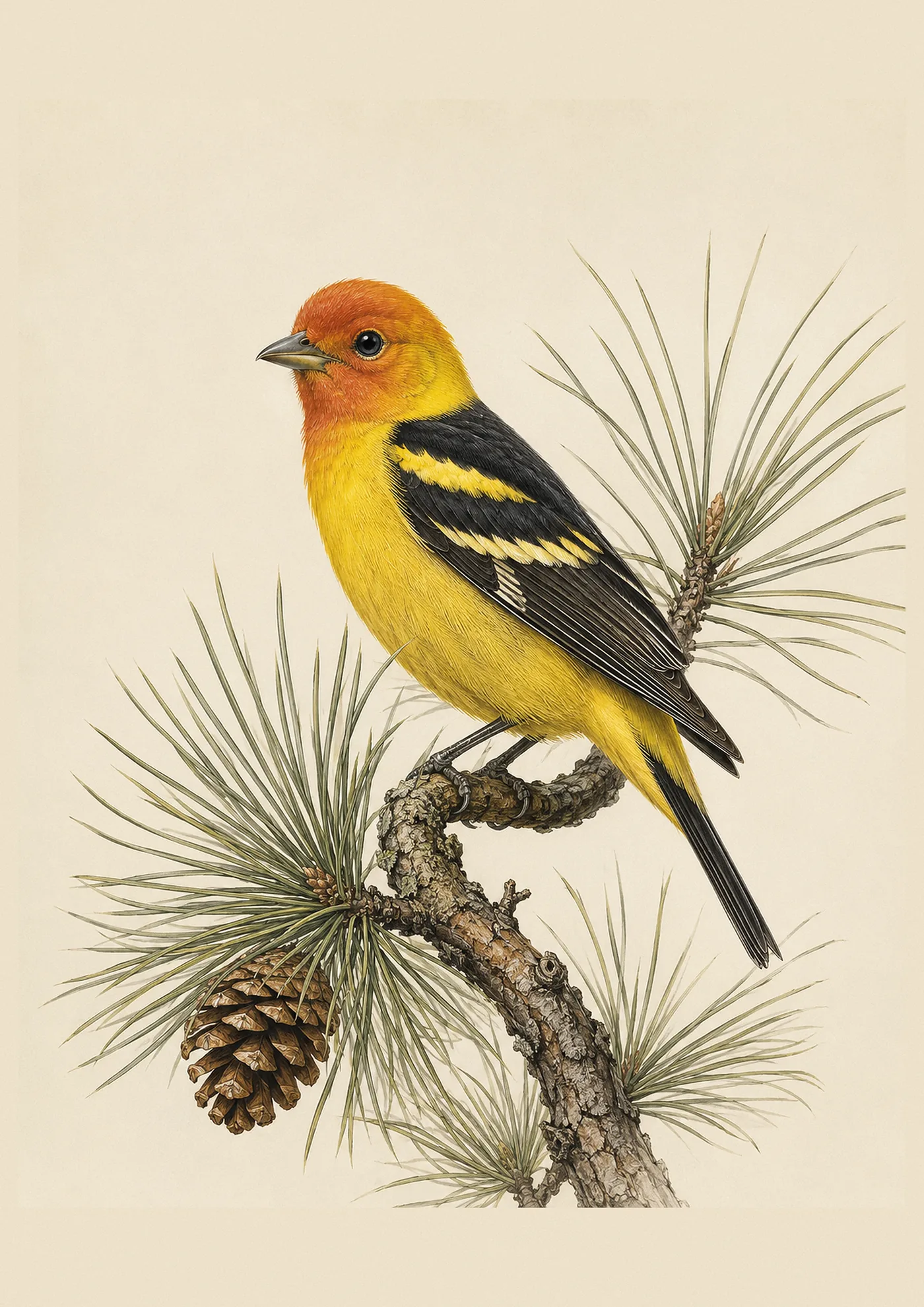
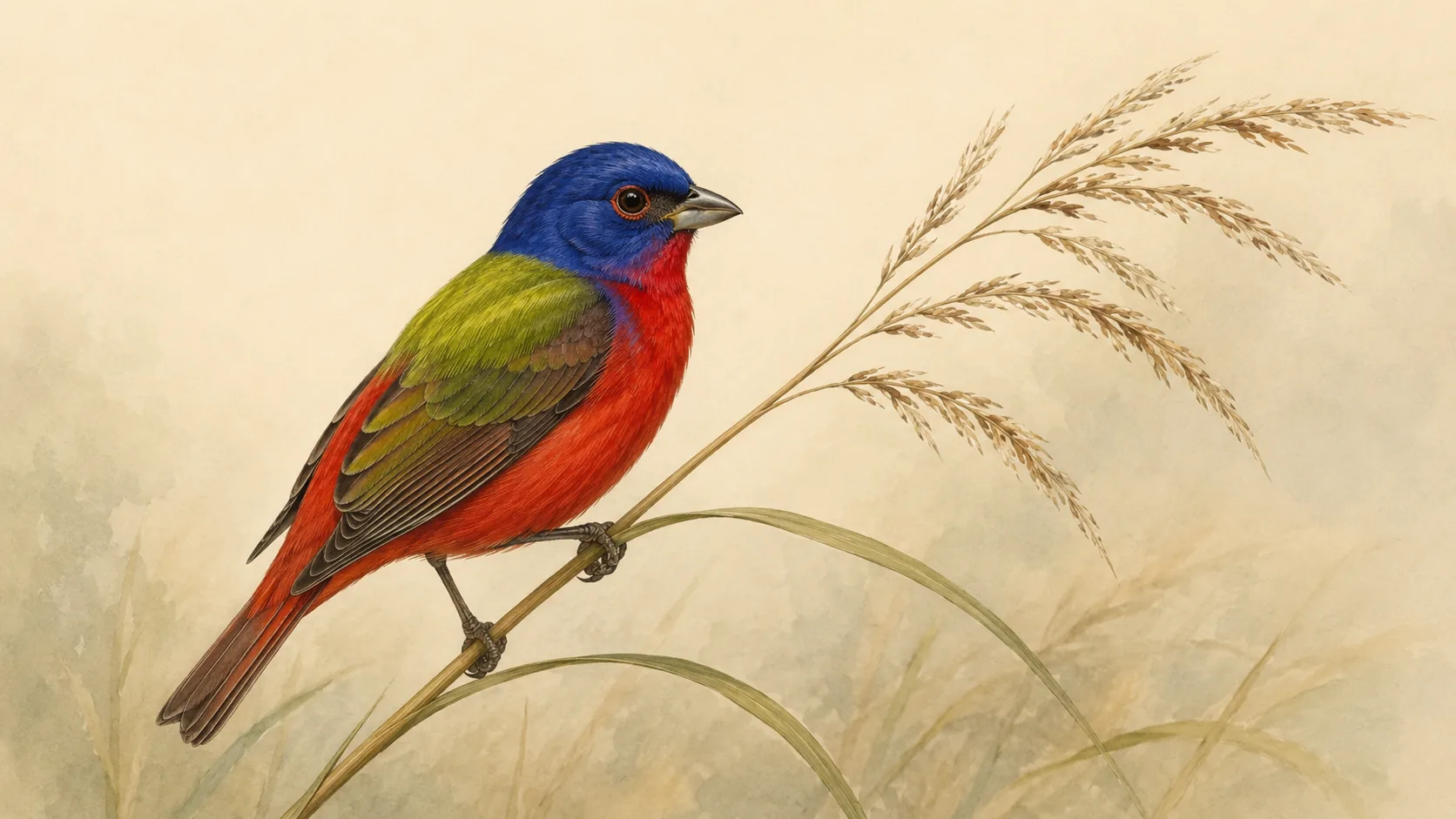
The western tanager shares the oak-pine forest above the trogon’s riparian strip in the same Arizona mountains, and the painted bunting holds equivalent status as a sought-after tropical-border species in the grasslands and thickets of Texas and Florida. But neither draws a crowd the way the trogon does. You can see a western tanager in a dozen western states. The trogon gives you one state, five mountain ranges, a handful of canyons, and a season. That scarcity is most of the argument.
A 2025 revision by the American Ornithological Society split the Arizona-Mexico bird into a separate species, Trogon ambiguus (Coppery-tailed Trogon), distinguished by call differences and the stronger coppery sheen of the uppertail. The name Trogon elegans now applies strictly to Central American populations from Guatemala south. Checklist authorities are updating accordingly. The bird in Cave Creek Canyon has not changed. Its name, for now, is in motion.
That is perhaps fitting for a species that has always been a visitor - one that wanders north out of Mexico each spring to breed in a latitude it has no geological right to claim, that crosses a political border as casually as it crosses a canyon wall. The trogon has been arriving in Arizona since long before anyone drew a line across this desert. It will keep arriving as long as the sycamores stand and the monsoon comes.