Free shipping to the US, Canada & Europe
Biology
Blue jays, bluebirds, and indigo buntings carry no blue pigment whatsoever. Their colour is pure physics - microscopic nanostructures in each feather barb scatter light so that only blue wavelengths reflect back to your eye.
June 28, 2026 5 min read
Take a blue jay feather. Grind it to powder between two spoons. The powder is brown.
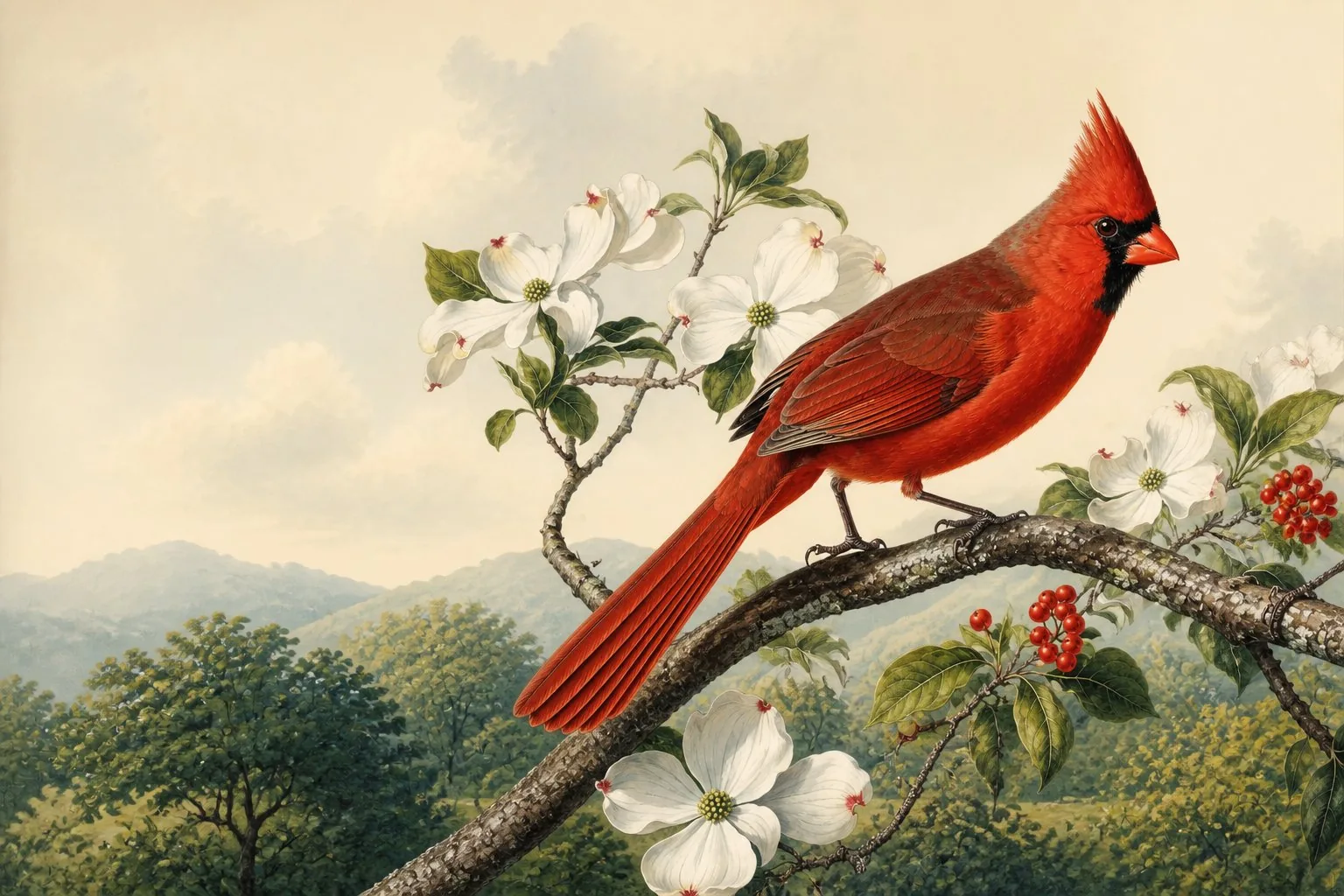
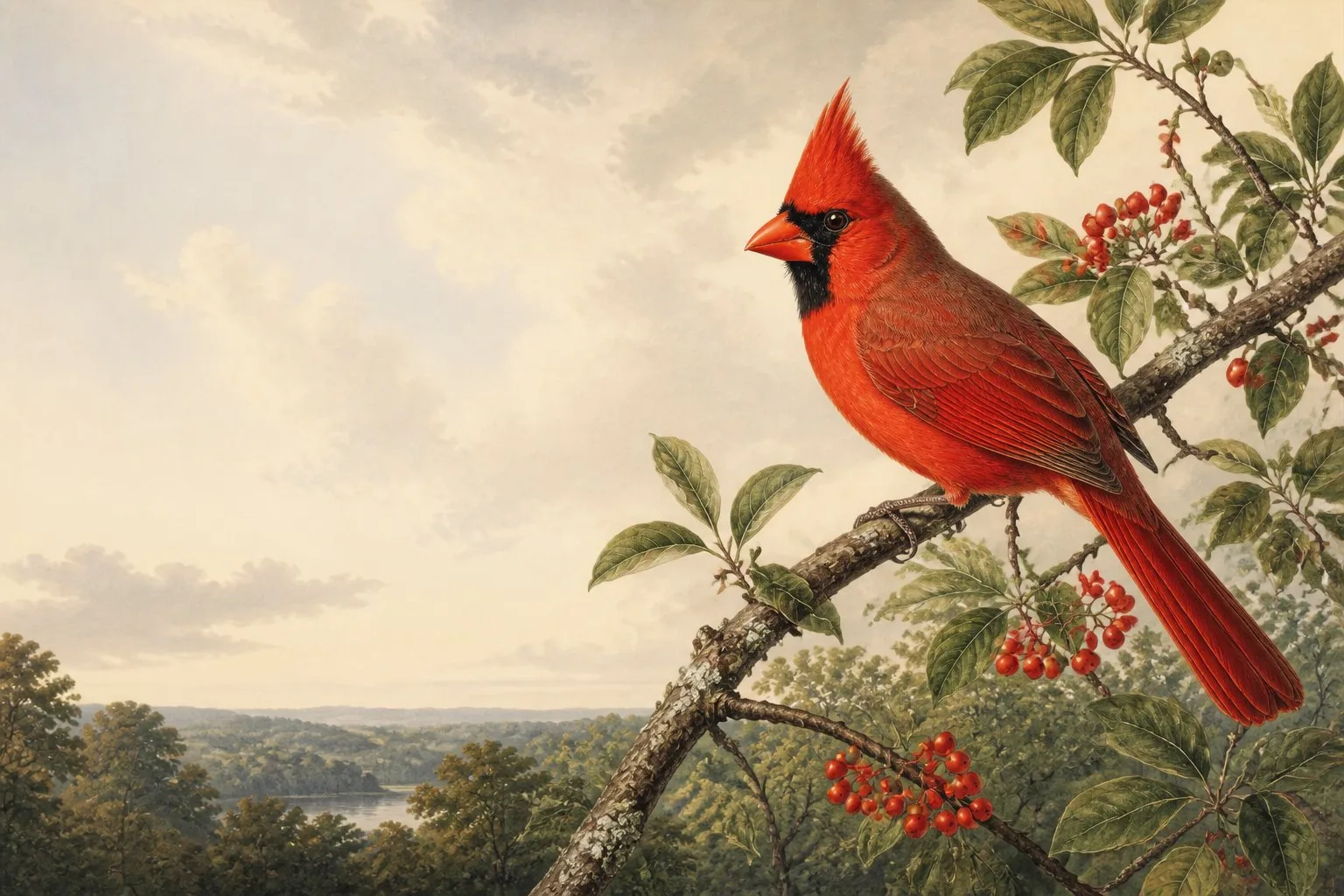
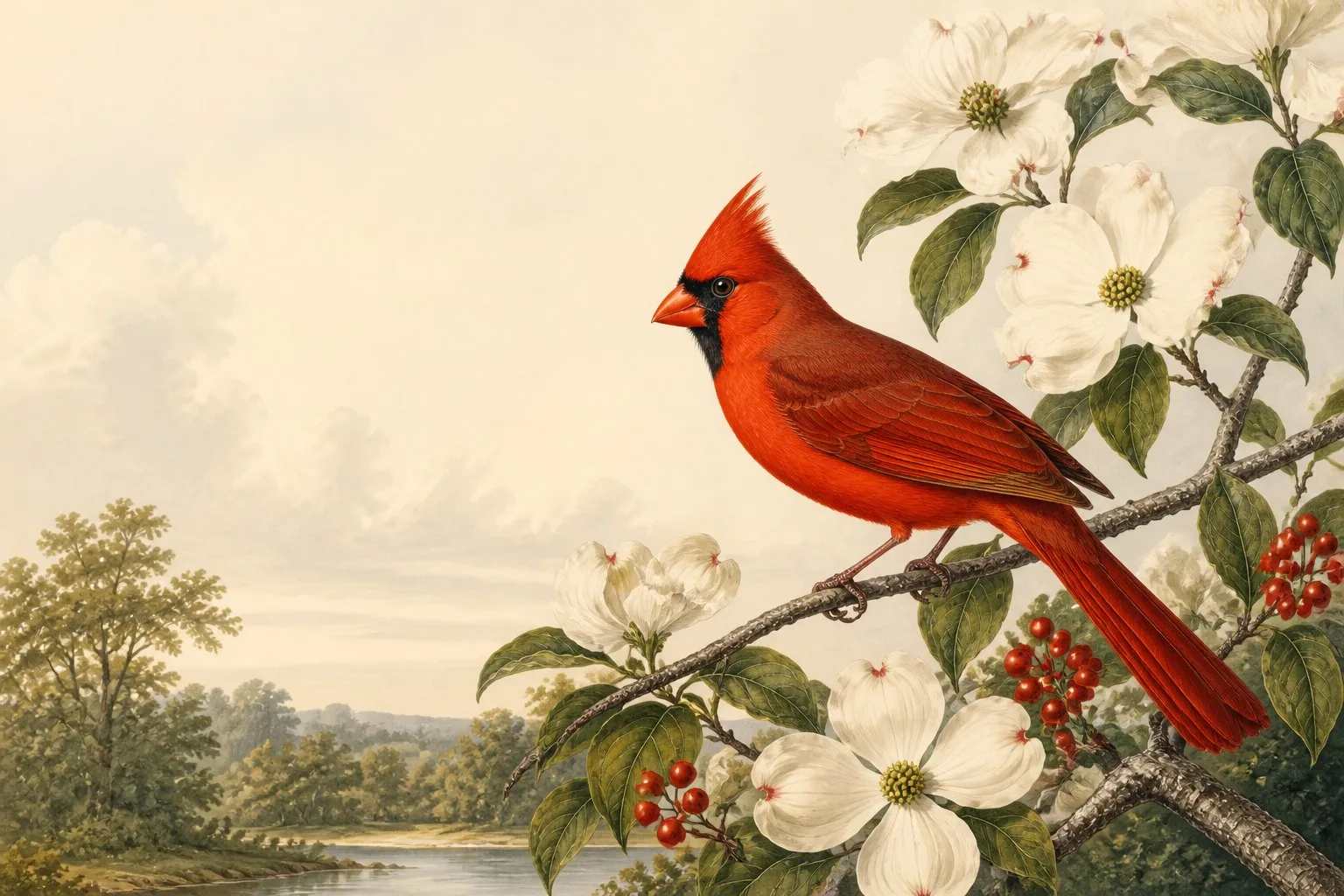
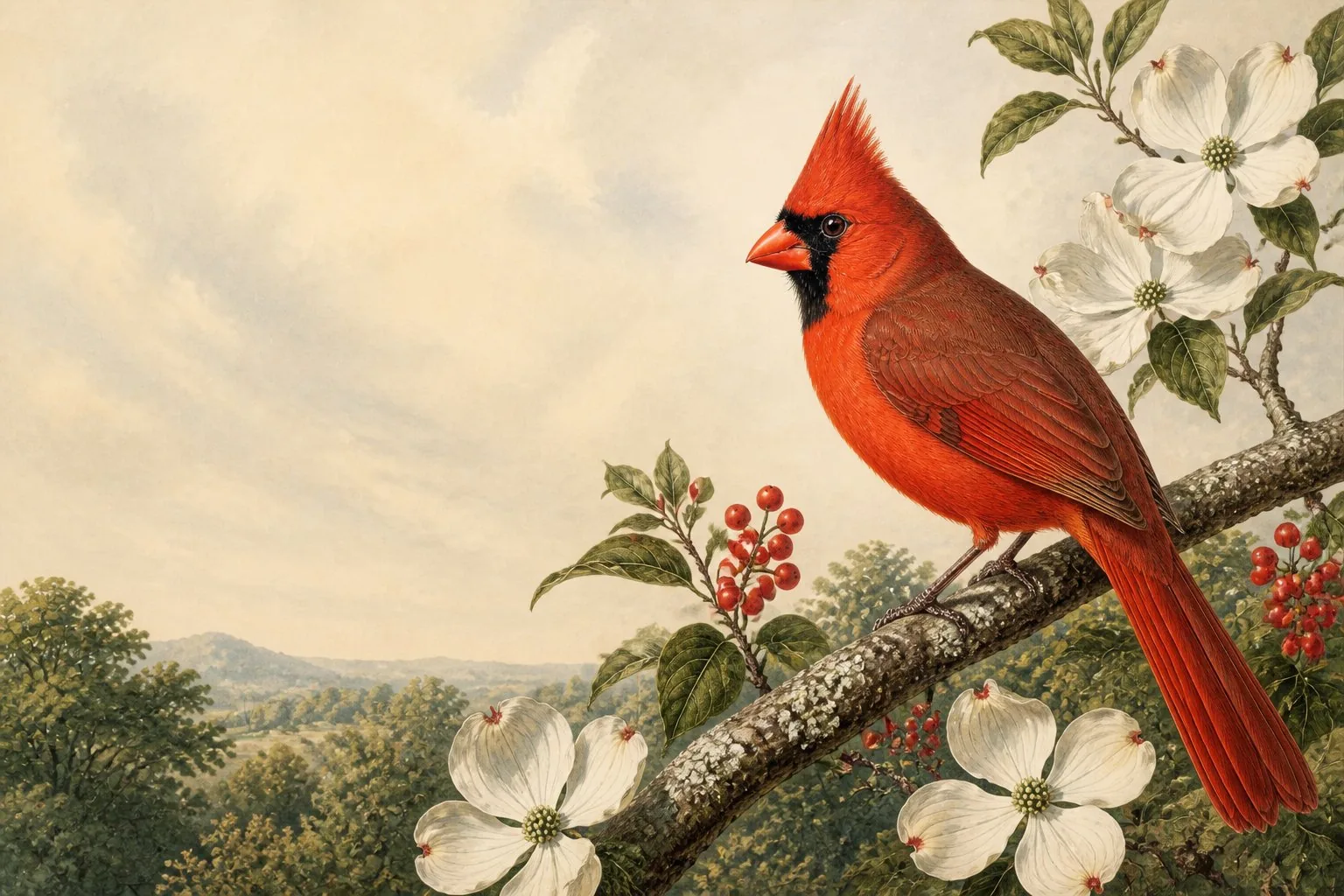
Not a little brownish. Brown. The colour you would expect from a sparrow, not a jay. Now do the same with a northern cardinal feather and the powder comes out red, because red birds earn their colour the old-fashioned way - with pigment molecules. The blue jay is doing something else entirely.
There is no blue pigment in a blue jay feather. No blue pigment in an indigo bunting, an eastern bluebird, a mountain bluebird, or a barn swallow. According to the Cornell Lab of Ornithology, blue in birds is structural colour - manufactured not by chemistry but by geometry, at a scale smaller than a bacterium.
Inside each feather barb (the side branches off the central shaft) sits a sponge-like matrix of beta-keratin rods riddled with air pockets. The architecture comes in two flavours: channel-type, where air tunnels thread through a keratin scaffold in a tangled web, and sphere-type, where tiny spherical air voids pack tightly together in the keratin. In both cases the structures measure roughly 150 nanometres across - about a third the wavelength of blue light.
That size is not a coincidence. It is the whole trick.
When sunlight hits a feather barb, it encounters hundreds of thousands of these air-keratin interfaces. Blue wavelengths - around 450 nanometres, the short end of the visible spectrum - bounce off those interfaces in a way that reinforces itself. The scattered waves arrive back at your eye in phase with each other, adding up to a vivid reflected signal. Longer wavelengths, the reds and greens, pass through or scatter out of phase and cancel. The result is brilliant, saturated blue from something that contains not a molecule of blue dye.
The correct term for this process is coherent scattering or constructive interference. For most of the twentieth century scientists called it the Tyndall effect - the same mechanism that makes the sky blue. Research by Jan Dyck in 1971 and Rick Prum in 1998 and 1999 used electron microscopy and Fourier analysis to show the old explanation was wrong. These feather nanostructures behave more like Bragg reflectors, producing colour through interference rather than simple incoherent scattering.
One thing the melanin does should not be skipped over. Beneath those nanostructures sits a layer of brown-black melanin. It absorbs the longer wavelengths that slip through without reflecting blue. Without that melanin backing, the colour would look washed out and pale. The melanin is why the blue looks vivid rather than milky - and it is also why the powder test tells you the truth. Grind the structure away and only the melanin remains, brown as dirt.
You can try a softer version of this experiment at home. Hold a blue jay feather up to a window with the light coming from behind rather than in front of it. The blue disappears. The feather goes grey-brown. Structural colour only works in reflection; it has nothing to hide when you backlight it.
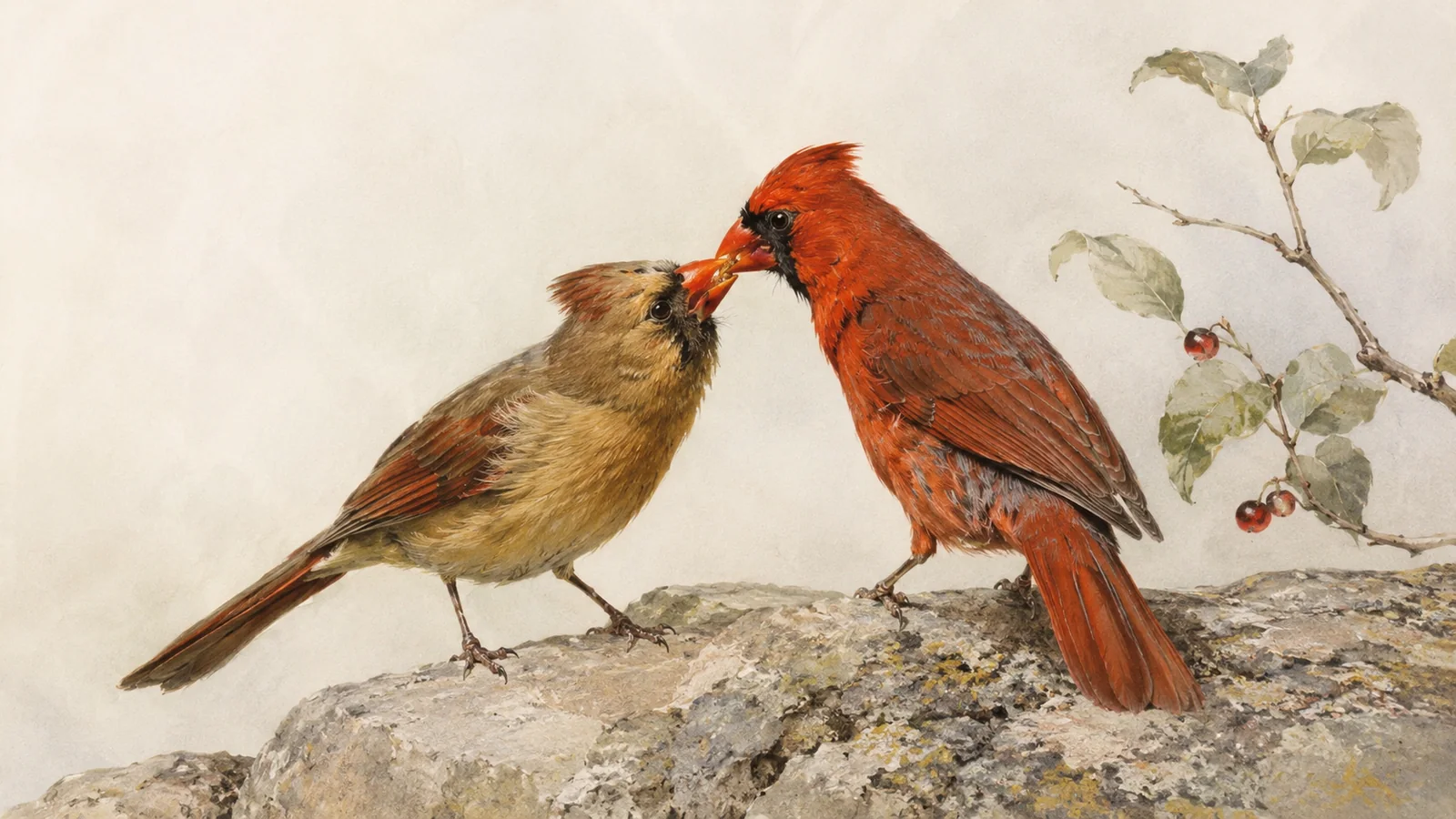
Red and yellow birds play a different game entirely. The house finch gets its raspberry wash from carotenoid pigments absorbed from berries, seeds, and insects in its diet. The American goldfinch manages its yellow the same way. Carotenoids are real molecules dissolved into the feather tissue. They absorb certain wavelengths and reflect others. Grind a cardinal feather and the pigment molecules survive intact - the powder stays red.
Birds cannot synthesise carotenoids themselves. They must eat them. That constraint shapes everything, including why blue is so rare in the way it works.
| Colour source | Mechanism | Survives grinding? | Example birds |
|---|---|---|---|
| Carotenoid pigment | Molecule absorbs light | Yes | Northern cardinal, American goldfinch |
| Melanin pigment | Molecule absorbs light | Yes | American crow, brown streaks on sparrows |
| Structural (barb nanostructure) | Constructive interference | No - turns brown | Blue jay, indigo bunting, eastern bluebird |
| Structural (barbule thin-film) | Thin-film interference | No | Ruby-throated hummingbird (iridescent) |
No plant or common food source produces a stable, true blue pigment molecule that birds can harvest through diet. Across the vertebrate world - mammals, reptiles, amphibians, fish, birds - chemically produced blue is essentially absent. The few true blue pigments that exist in living things (some fungi, some beetles, some flowers through anthocyanins) are chemically fragile or produced by organisms with entirely different biochemical machinery.
So birds did what evolution often does: found a workaround. They built the colour out of physics instead of chemistry. The nanostructures are self-assembling, encoded in the genetics of feather development, and they have been refined across millions of years to produce blues that are, in their way, more spectacular than any pigment could manage - because the colour shifts slightly depending on whether the structures are quasi-disordered (stable blue at all angles, like a blue jay or indigo bunting) or highly ordered (iridescent angle-shifting colour, like a kingfisher or hummingbird).
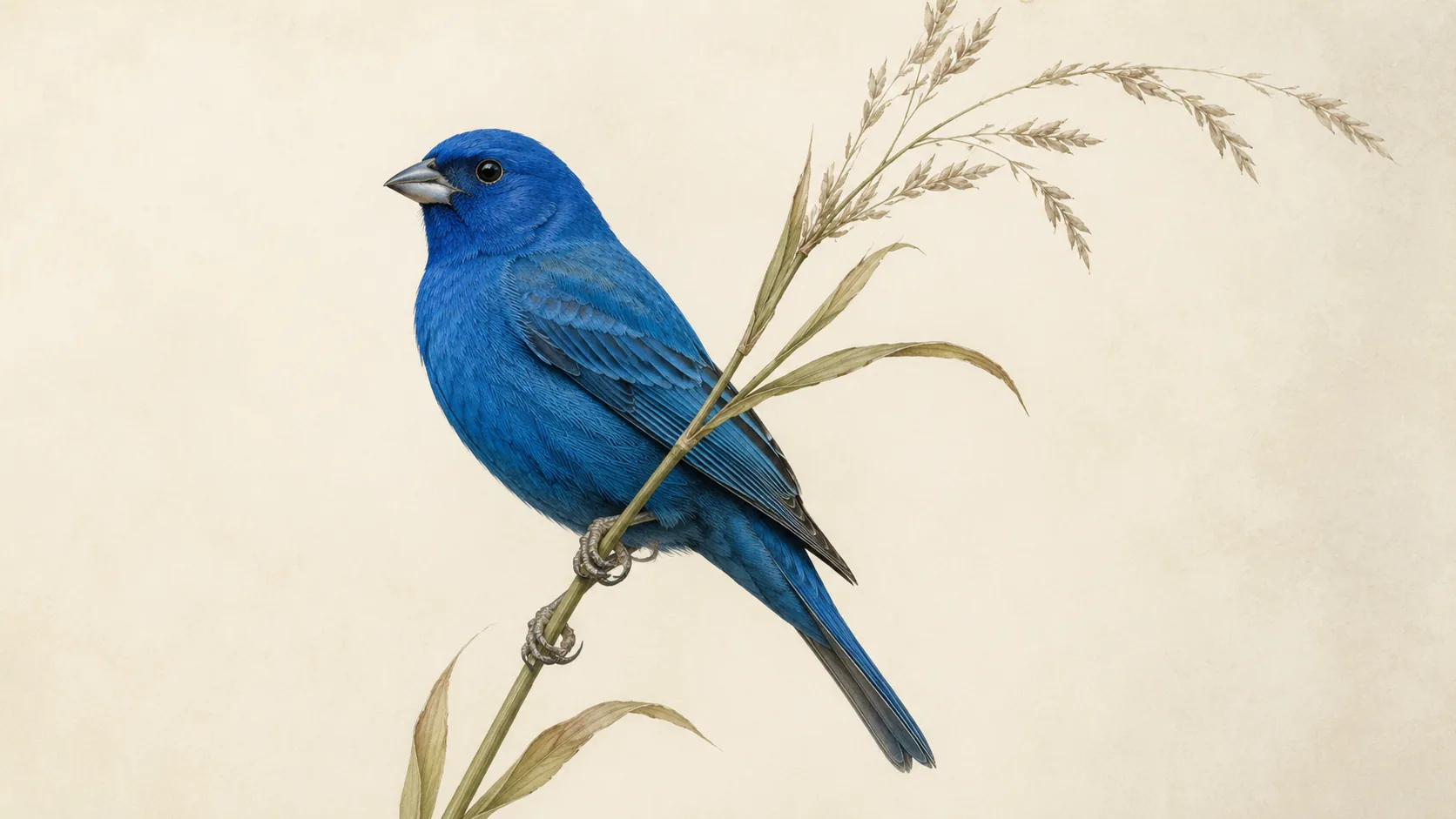
The indigo bunting, beloved to backyard birders across the eastern half of North America, is a particularly striking example. The male’s colour is so saturated and so angle-stable that in flat overcast light he can look almost dark. Tilt the light and he blazes. It is the same feather, the same nanostructure, catching the light differently.
Blue in birds is proof that colour is not always a thing - sometimes it is a relationship between structure and light, and the moment you break the structure, the colour ceases to exist.
The Cornell Lab lists the following as confirmed structural-blue species - all non-iridescent, all barb-based, all turning brown in the powder test:
Hummingbirds belong in a separate category. Their iridescence is real structural colour too, but it comes from highly ordered thin-film structures in the feather barbules rather than the quasi-disordered sponge-matrix in the barbs. The physics overlaps; the anatomy does not. Do not conflate them.
Next time you see a bluebird on a fence post, you are not seeing a pigment. You are seeing light bent by architecture finer than anything a paint factory can make, assembled feather by feather, barb by barb, air pocket by air pocket.
As an Amazon Associate we earn from qualifying purchases. Linked products are ones we genuinely recommend.
 June 28, 2026
 5 min read