Biology
Why cardinals stay in winter
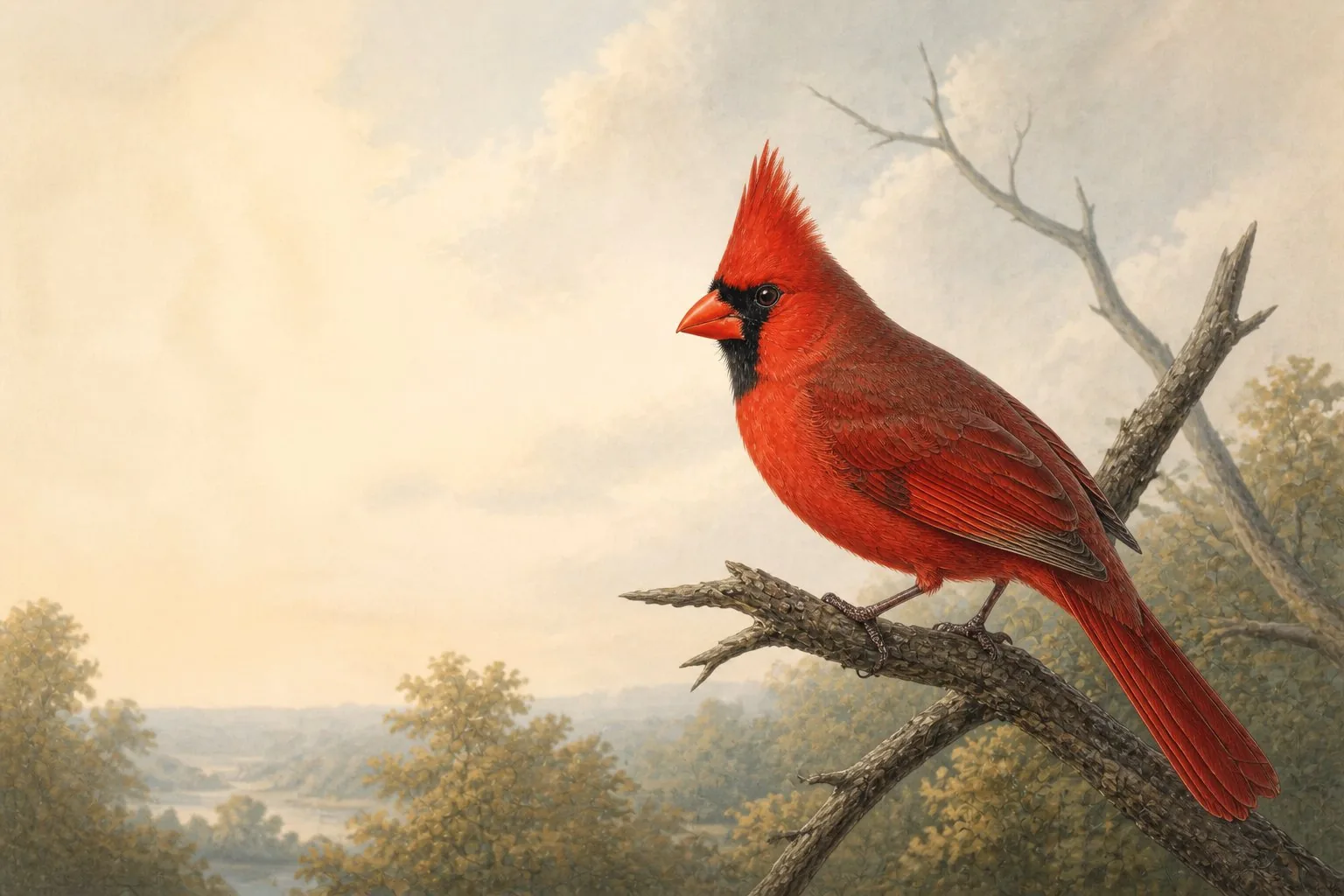
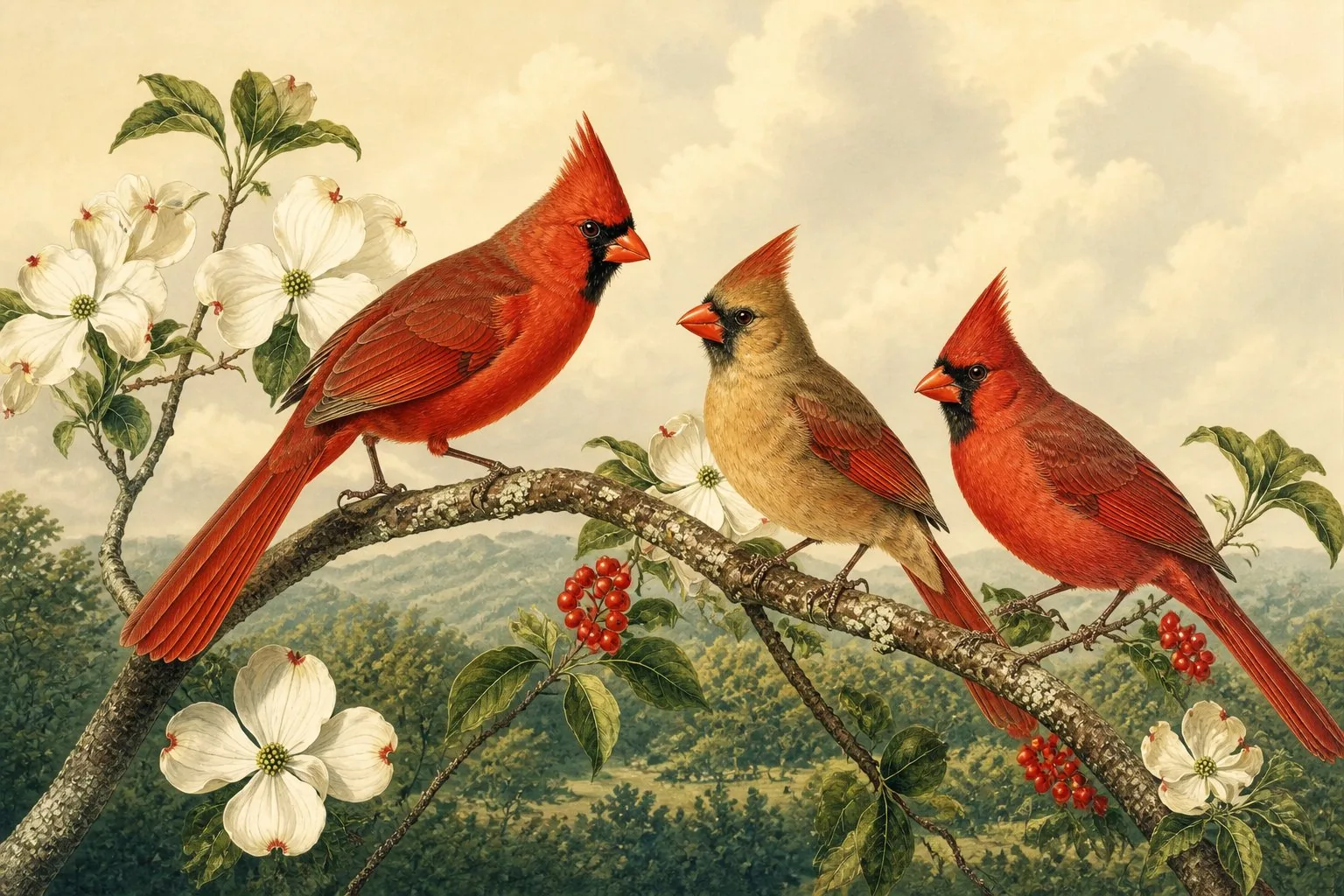
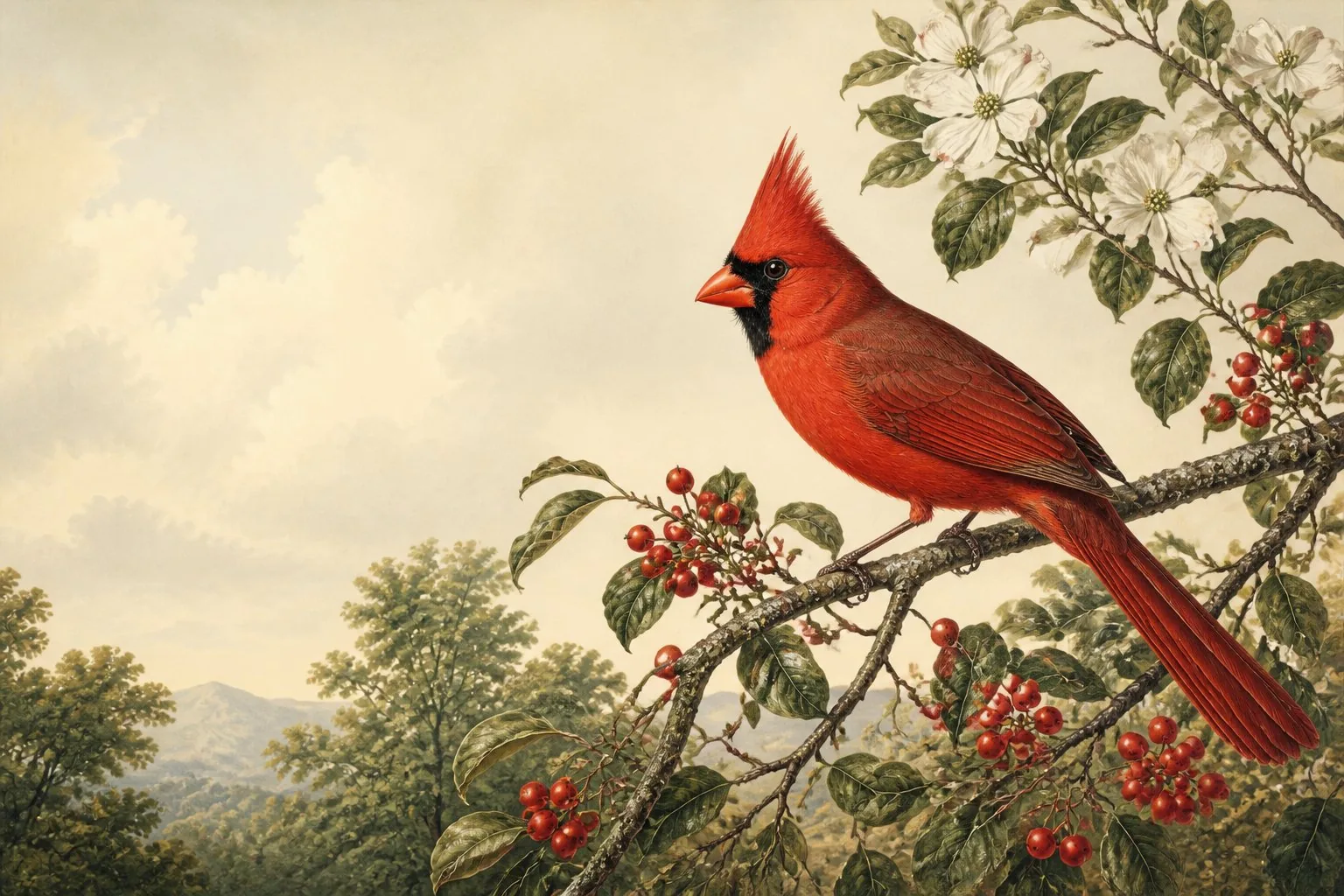
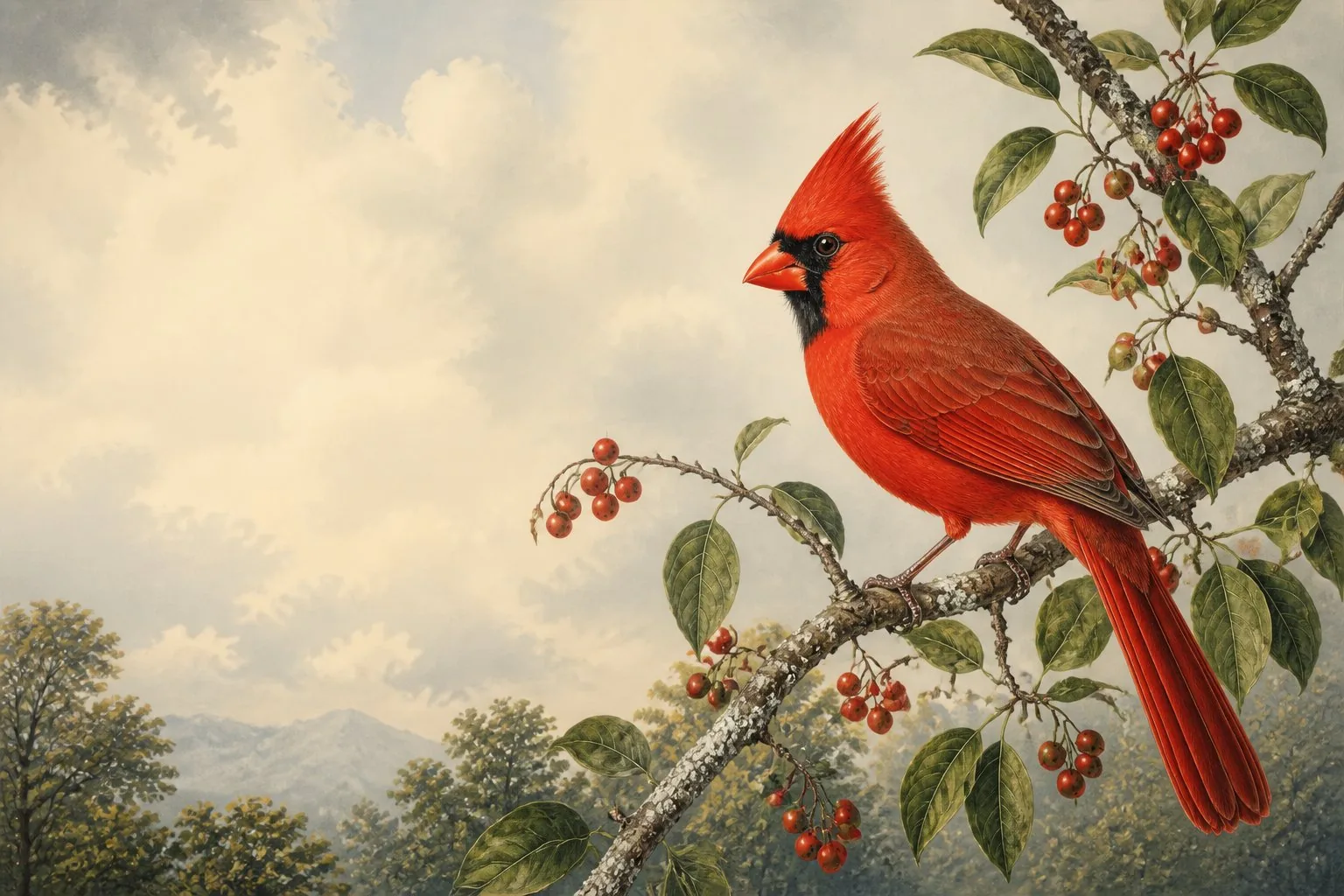
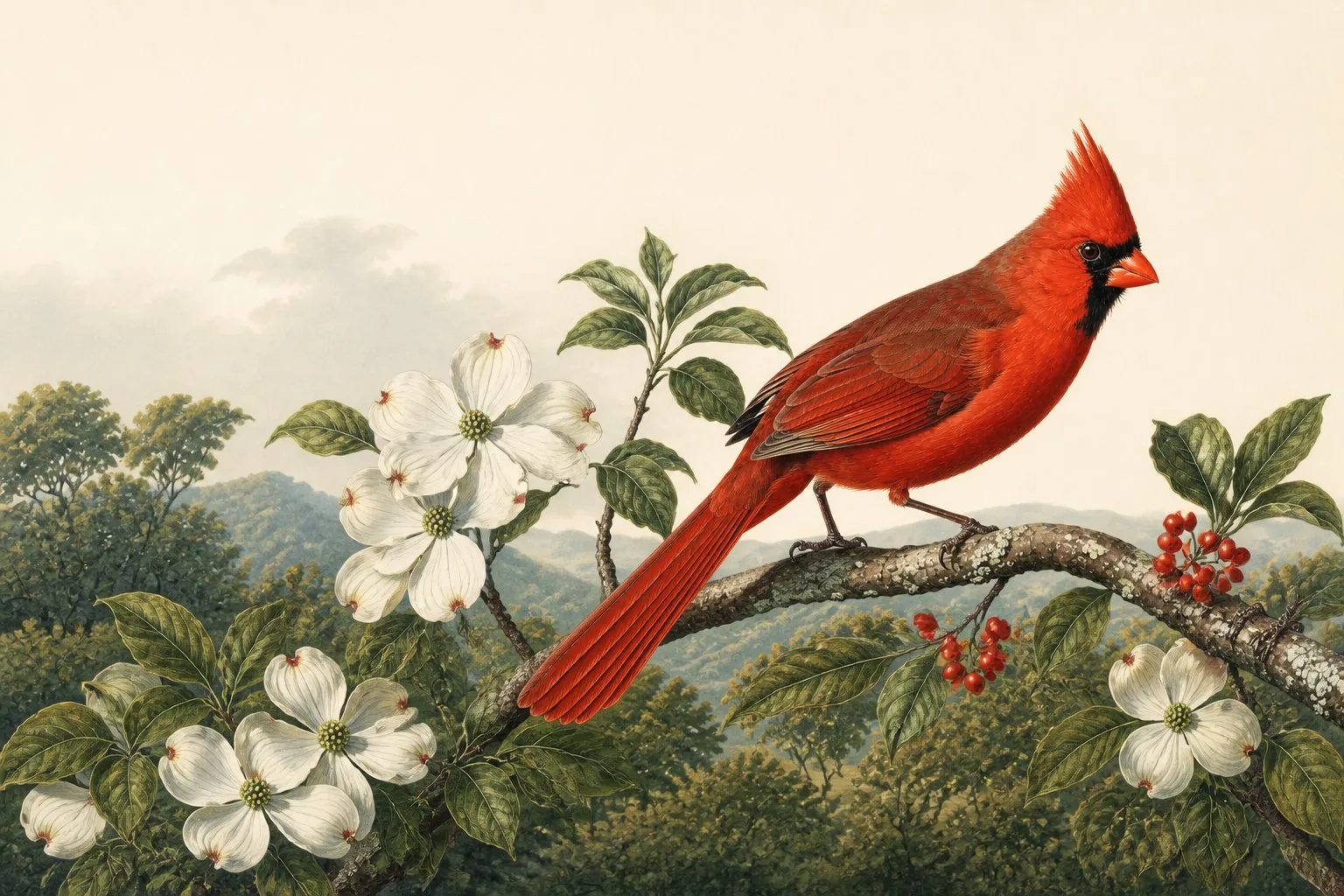
In the eastern United States, the Northern Cardinal is one of the few brightly coloured songbirds you can count on seeing all year. The orioles are gone by September. The tanagers leave with them. The Painted Buntings have already crossed into Mexico. By November, the only red bird at the feeder is the cardinal, and he will still be there in February.
Why does he not migrate, when so many of his neighbours do?
The answer is three things at once: a body that can take cold, a habitat that does not collapse in winter, and a hundred-year shift in the human landscape that has effectively extended his year-round range north by hundreds of kilometres.
The body
The cardinal’s design tolerates cold better than most songbirds in his size class. He has a relatively heavy body for his length - 42 to 48 grams at 22 centimetres - which means a favourable surface-to-volume ratio for heat retention. His feathers are dense and his down layer is thick. His feet use counter-current heat exchange to lose almost no warmth to frozen substrate. He can drop into mild overnight torpor on the coldest nights, reducing metabolic rate by 10 to 15 per cent without going into the true deep torpor that hummingbirds use.
The body could not survive the open Arctic. It can comfortably survive a Pennsylvania February.
The food
The second reason is more interesting. The cardinal’s diet is built around foods that remain available in winter.
Most migrant songbirds leave because their food leaves. The orioles eat caterpillars and nectar. Both are gone by October. The tanagers eat flying insects. The buntings eat seeding grasses that are buried by snow. Their diets do not survive winter at northern latitudes, so the birds do not either.
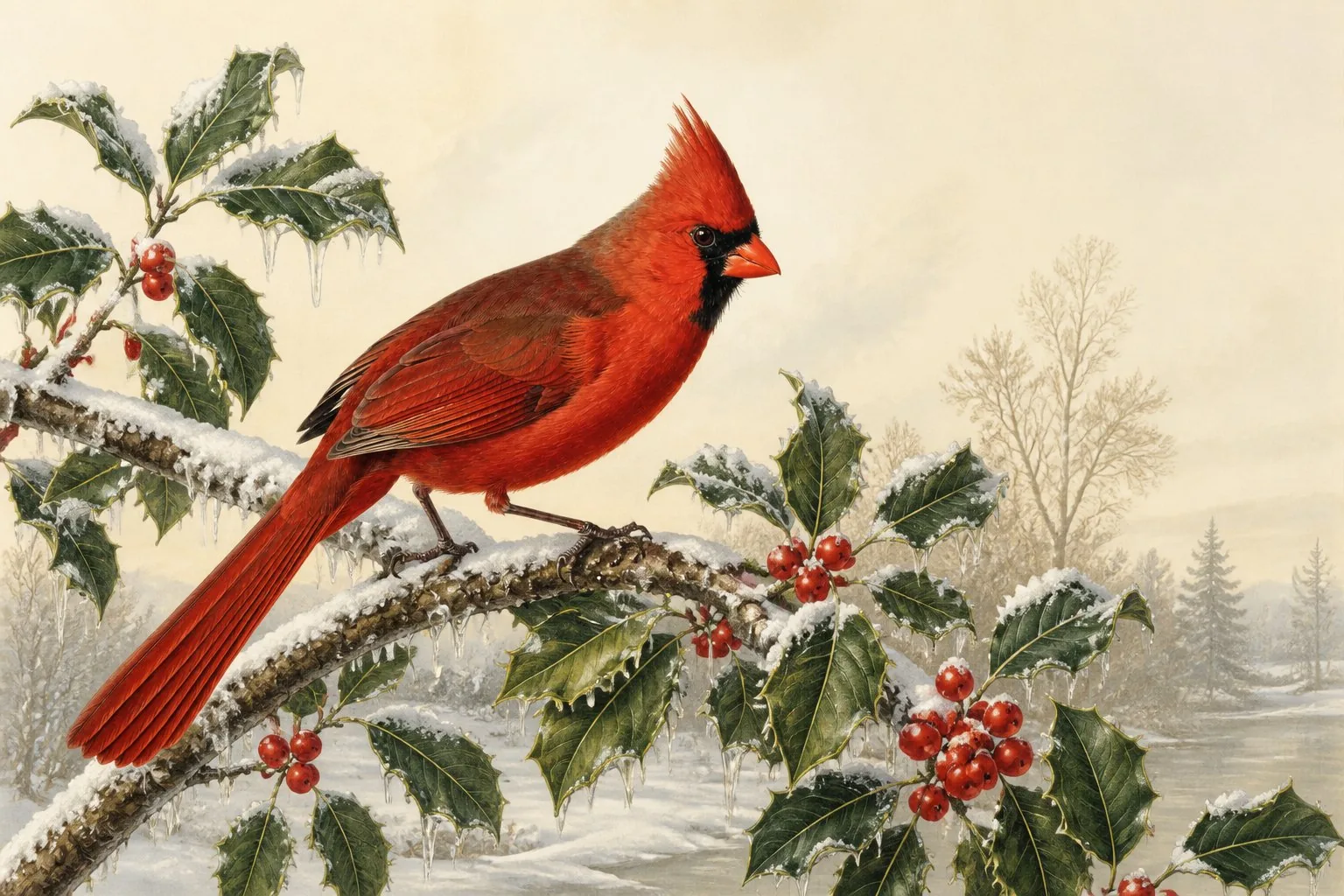
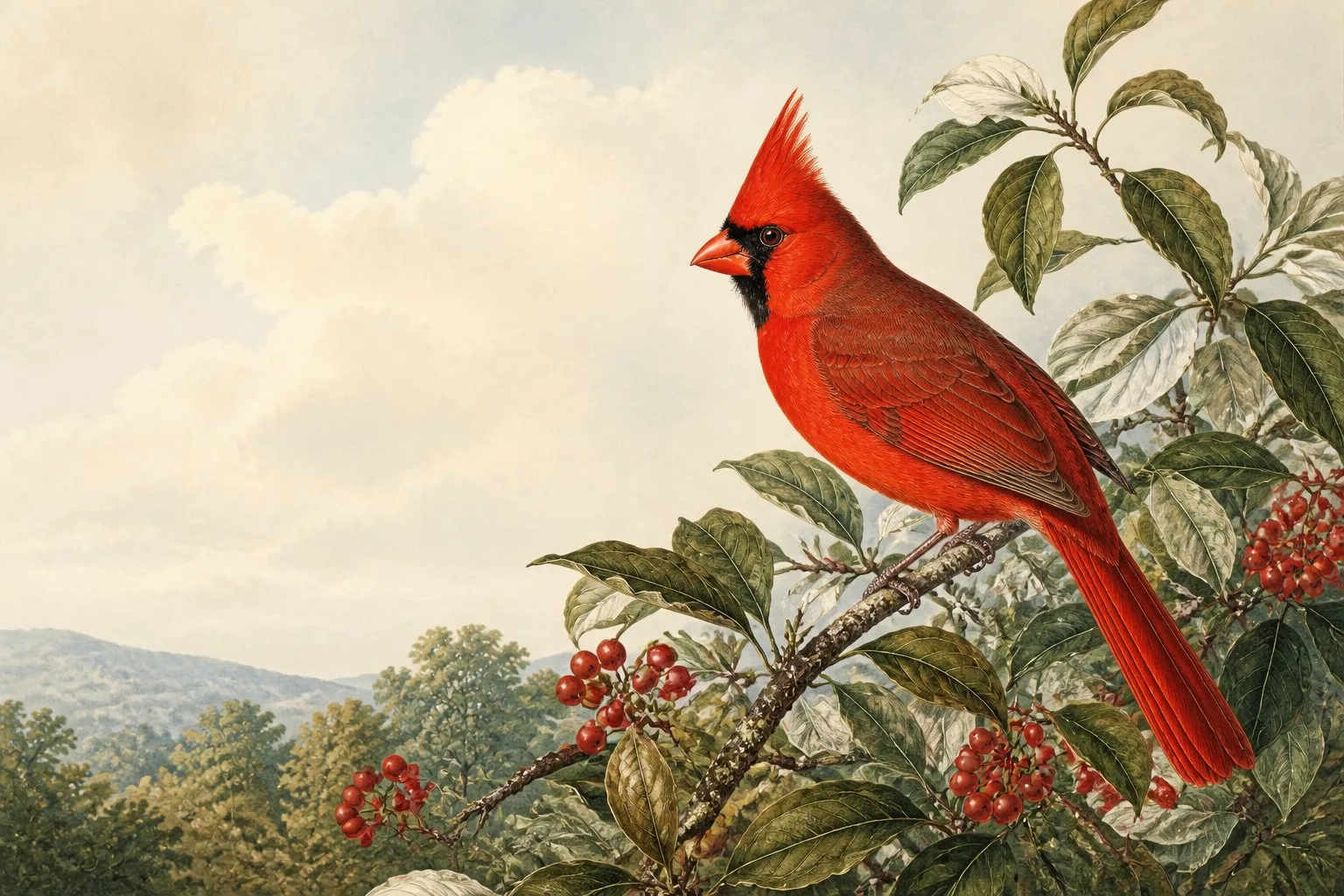
The cardinal eats seeds, fruit, and insects when available. His winter diet is sunflower-and-safflower at backyard feeders, plus wild seeds and the dried fruit of native shrubs - sumac, hackberry, holly, crabapple, winterberry. He will also take peanuts when offered. None of this disappears in December. The cardinal can find food in a Pennsylvania winter that an oriole simply cannot.
The bill is the proximate reason. A cardinal’s heavy conical bill cracks seeds the size of black-oil sunflower and safflower with no trouble. A warbler’s thin probing bill cannot.
The territory advantage
The third reason is strategic. A cardinal who stays through winter holds his territory continuously. A cardinal who migrated and came back would have to re-establish in March. Cardinals who do not migrate are, the next spring, already in position, already paired, and already breeding before the migrants would arrive.
In a competitive species this matters. A male cardinal who is on territory in early March, when day length triggers breeding hormones, is the first male to set up song posts, the first to be chosen by females, and the first to have eggs in the nest. He outcompetes any hypothetical migrant cardinal by simply having been there longer.
This is the underrated strategic logic of non-migration. Many species that could migrate choose not to because the territorial-residency dividend is larger than the calorie-savings of leaving for winter.
The hundred-year northward expansion
The fourth thread is the most interesting, and is barely a century old.
In 1900 the Northern Cardinal’s range barely reached southern Ohio. The bird was a southeastern species, common in Virginia and the Carolinas, present in Tennessee and Kentucky, and rare or absent further north. The northern climate was too cold, the food too scarce, and the bird did not push past about latitude 40 degrees.
The 20th century changed this. Three drivers, identified across a body of ecological work since the 1970s:
- Winter bird feeding. The popularisation of backyard bird feeding from roughly the 1920s onward gave wintering cardinals a stable supplementary food source they had not previously had. A bird who could not otherwise have made it through a Michigan February could now make it on a steady supply of black-oil sunflower seed in a hopper feeder. The food limitation lifted.
- Climate warming. Average winter temperatures in the eastern United States have risen measurably over the same century. Reduced winter mortality at the northern edge of the range allowed the cardinal to push north slowly but steadily.
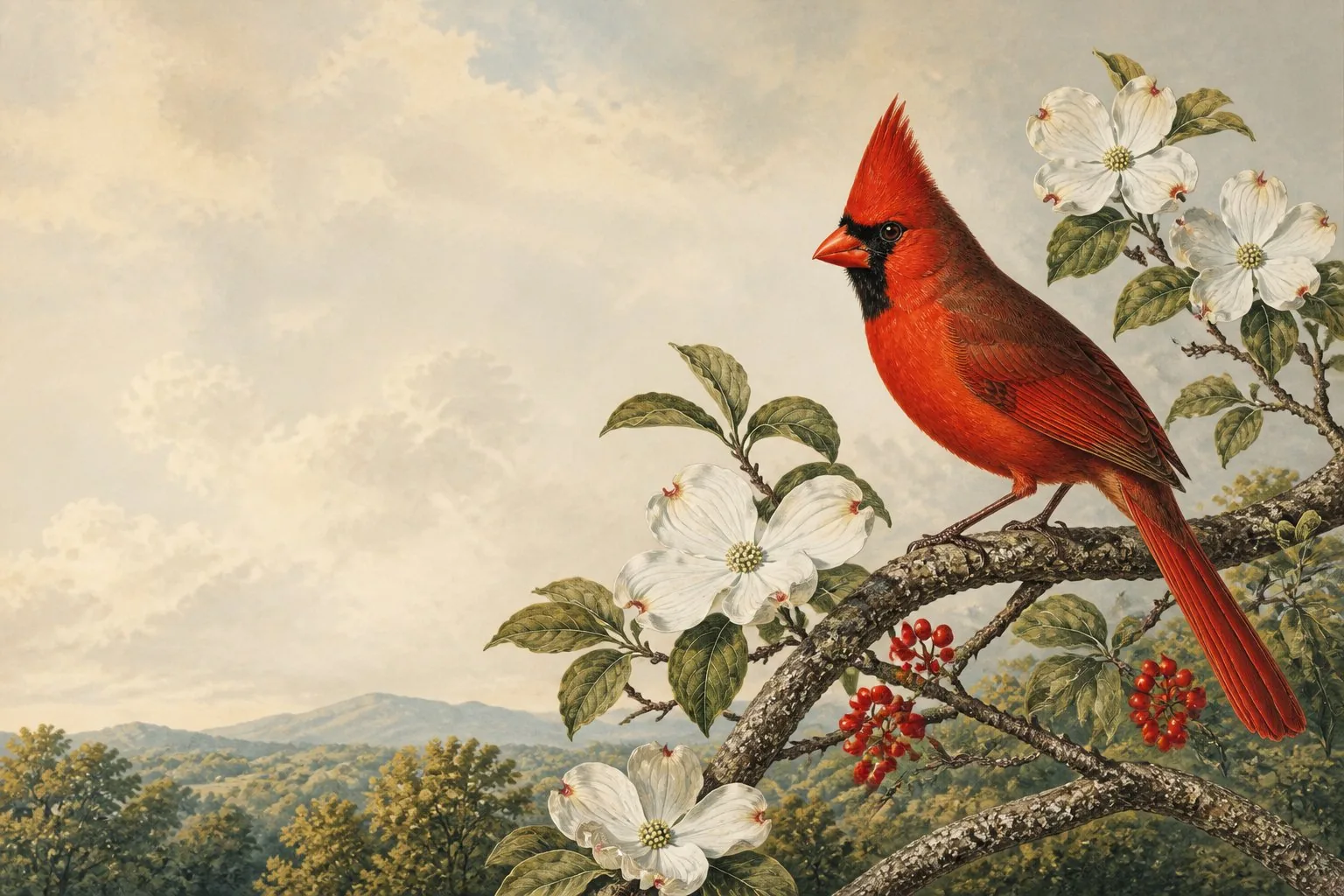
- Suburban habitat. The post-war American suburb is, accidentally, ideal cardinal habitat: low dense ornamental shrubs, woodland-edge structure, mature trees, native fruiting plants, lawns with cover. The same landscape that displaced many forest interior species opened space for the cardinal.
The cardinal range has expanded steadily through the 20th century. By 1950 the bird was common in southern Ontario. By 2000 it was breeding in Maine and Nova Scotia. By 2020 the leading edge had reached southern Quebec and the south shore of Lake Superior.
This is a rare conservation good-news story. While most North American songbird populations have declined since the 1970s, the Northern Cardinal has expanded both in range and abundance. Cornell’s annual estimates place the current US and Canadian population at roughly 130 million birds, up from earlier 20th-century estimates of perhaps 50 to 60 million.
What it means at your feeder
The bird in your December garden is therefore three things at once. He is a southern species who has, in the last 120 years, decided you live within his year-round range. He is the beneficiary of a hundred years of backyard bird feeding. He is the visible payoff for the suburb’s accidental contribution to wildlife habitat.
He stays because the food is there, because the cover is there, because the territory is worth holding, and because the species has made a slow decision over decades that your latitude is acceptable.
He is also, you should notice, doing all of this because the people in your area planted feeders and shrubs over the course of generations. The cardinal at your December feeder is partly a product of choices your grandparents made about gardens and seed without ever knowing they were shaping a species’ range.
That is the kind of small accidental work humans sometimes do well. The cardinal is, in some real sense, our contribution to North America. The bird responded by staying.