Field Guide
Himalayan Snowcock
At first light on a Ruby Mountains ridgeline, before the sun clears the Humboldt horizon, a sound carries across the talus that stops every birder dead. It is a rising, fluting whistle - not quite a hawk, not quite an elk bugle, but something between the two - loud enough to echo off the granite walls of a cirque 400 metres away. Then it comes again. The bird itself is invisible, perfectly grey against perfectly grey rock, and it may be another ten minutes before you pick out its silhouette moving steadily uphill through the scree.
Tetraogallus himalayensis, the Himalayan Snowcock, is one of the most difficult birds on the American continent to lay eyes on. It is also, in every technical sense, a foreigner. The handful of birds calling down from those Nevada ridges are descendants of a state game agency program that ran between 1963 and 1979. They are the only self-sustaining population of this species in the Western Hemisphere.
What it looks like
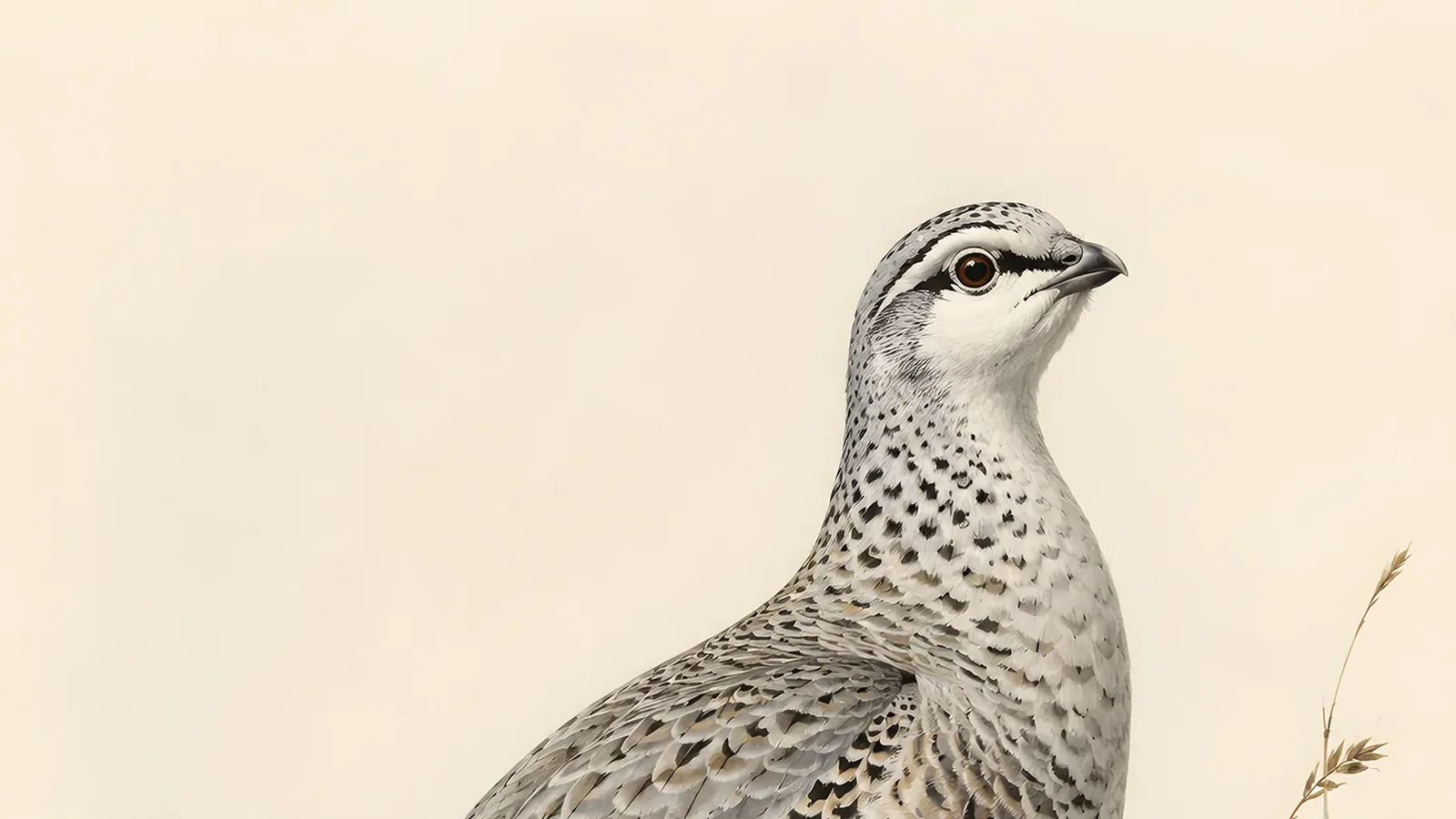
The snowcock is built for high-altitude cold. At 55 to 74 centimetres long and weighing up to 3.6 kilograms, it is a large, blocky bird - heavier than a Ring-necked Pheasant and considerably stouter. It reads as predominantly grey-brown at distance, the colour of weathered granite, which is precisely the point. At close range the patterning resolves: a pale whitish face and throat, two bold chestnut stripes running down each side of the neck onto the breast, and orange-brown barring across the flanks and back. The bill is stout and slightly curved. The legs are stout and bare. Both sexes are similar in plumage, though the male is slightly larger.
The camouflage is not accidental. A roosting snowcock tucked against a boulder in morning shadow is genuinely difficult to separate from the rock itself. The bird exploits this - it tends to hold still, then walk rather than flush, then run uphill rather than take wing, conserving energy and relying on invisibility at every stage.
| Measurement | Range |
|---|---|
| Length | 55 - 74 cm |
| Weight | 2,000 - 3,600 g |
| Wingspan | 86 - 97 cm |
| Lifespan | 3 - 6 years |
| IUCN Status | Least Concern |
| Nevada elevation | 2,740 - 3,350 m (9,000 - 11,000 ft) |
The Ruby Mountains introduction
The story of how this bird arrived in Nevada is a Cold War-era curiosity. In 1961, the Nevada Division of Wildlife purchased six birds from the Mir of Hunza, a princely state in what is now northern Pakistan. Only one survived the journey. A second importation in 1963 yielded 19 wild-caught birds, and those 19 were released into the Ruby Mountains of northeastern Nevada - the highest terrain in the state, a fault-block range topping out above 3,400 metres west of Elko.
A captive-breeding program followed. According to Christensen’s 1998 account in Birds of the World, more than 2,000 snowcocks were released in Nevada between 1963 and 1979, with roughly 1,700 of those going into the Ruby Mountain range specifically. The Foreign Game Investigation Program, a federal effort to establish non-native gamebirds in North American habitat, was closed in 1970 as conservation philosophy shifted away from exotic introductions. By then the snowcock program was already running on captive-bred stock and continued under state management through the decade.
The surprising thing is that it worked. By the early 1980s the snowcock had established a self-sustaining breeding population in the Ruby Mountains and the adjacent East Humboldt Range. No other exotic gamebird introduction from that era achieved anything comparable at this scale or altitude. Current estimates place the Nevada population at between 300 and 600 birds (Nevada Department of Wildlife, species account). The annual hunting harvest since 1980 has averaged roughly eight birds per year - a figure that itself tells you something about how hard the terrain is.
The hardest bird to find
Among serious North American listers, the Himalayan Snowcock has a reputation roughly equivalent to what the Ivory-billed Woodpecker once had - except the snowcock is real, present, and findable if you are willing to suffer for it. The species exists on this continent in one place only. You must travel to Elko County, Nevada. You must gain the ridgelines above 2,700 metres. And you must do this before the birds have moved to their morning feeding grounds, which means starting the Island Lake trailhead ascent in darkness.
The hike covers roughly three kilometres with 300 metres of elevation gain across talus and switchbacks. It is not technically demanding, but it is unrelenting, and it is done by headlamp. Most serious observers begin listening by 5:30 a.m. The birds call most actively in the 45 minutes bracketing sunrise. Geoff Hill, writing in 2020, documented hearing the call more than 20 times between 5:45 and 6:15 a.m. on a single morning - confirming that the birds are not rare on these ridges, only inaccessible.
The alternative is a helicopter charter, which is how Steve Martin’s character adds the snowcock in the film The Big Year and which remains a genuine option for those who can afford it. Both routes - the helicopter and the pre-dawn slog - have worked. Both illustrate the same fact: the bird has placed itself on the roof of a mountain range in one of the most remote corners of the contiguous United States, and it does not come down to meet you.
The Himalayan Snowcock exists in North America because a state agency spent two decades trying to give Nevada hunters a trophy bird. It is one of the few cases where that kind of program produced something the birding world ended up wanting more than the hunters did.
What it sounds like
The primary advertising call is a far-carrying, upward-sliding whistle that field observers consistently compare to an elk bugle - clear, wild, and surprisingly loud for a bird that is often invisible when it produces it. Geoffrey Hill’s 2020 field notes describe the call pattern as predominantly “bugle” calls interspersed with a shorter “rally call,” in a ratio of roughly four or five to one.
The Audubon Field Guide (Kaufman, 1996) describes the displaying male’s voice as a “loud, fluting whistle” accompanied by “various chuckling clucks.” The calls carry several hundred metres across open talus and can be heard bouncing between cliff faces, which can make triangulating a bird difficult until you have experience with the acoustics of the specific cirques they favour.
Diet
The snowcock is a ground herbivore. In the Ruby Mountains it feeds on the alpine plants available above treeline: grasses, sedges, forbs, seeds, roots, and tubers. In its native Asian range, individuals have been recorded foraging as high as 5,500 metres in summer, scratching through snowpack to reach buried vegetation. The Ruby Mountain birds operate on a compressed elevational gradient - the range simply does not go as high - but the foraging strategy is identical.
Small flocks move uphill across the feeding slopes during the day as they graze, working methodically through the available vegetation. In the evening they glide down the slopes again, typically descending on long, low trajectories that cover considerable horizontal distance before the birds land and walk the rest of the way to a roost site. The downhill glide is also the escape route when alarmed: a flushed snowcock does not flush uphill like a pheasant. It launches out and down, using gravity and the steep terrain to carry itself well beyond the disturbance.
Breeding
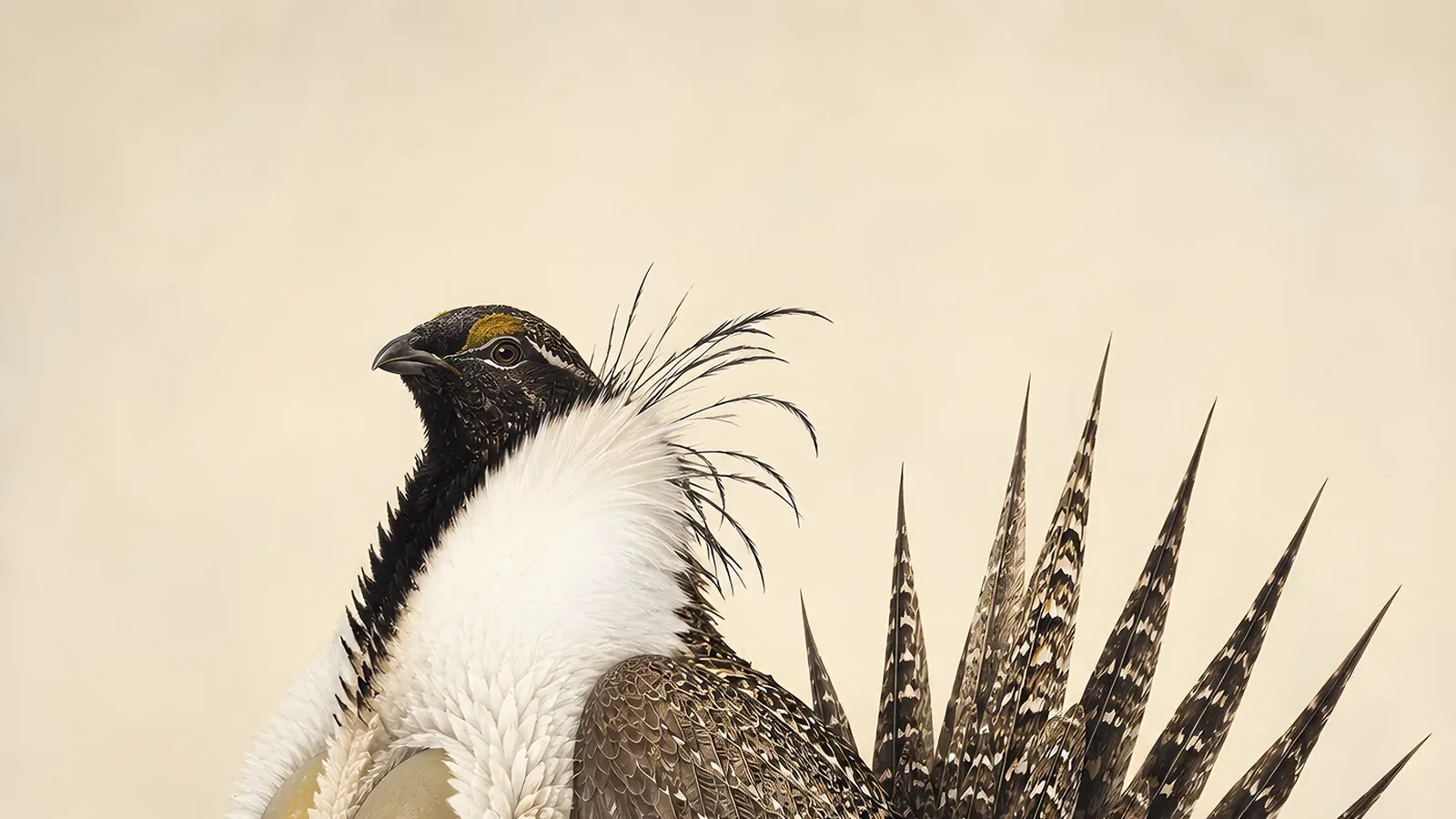
The breeding season begins in early spring, as soon as the highest ridges begin to clear. Males call conspicuously from exposed rocky outcrops, advertising territory with their bugling whistle and performing visual displays that include puffing the body feathers. Pairs are monogamous.
The nest is a shallow ground scrape, typically lined with grass and feathers and positioned in shelter provided by a rock overhang, a boulder cluster, or dense alpine shrubbery. The female incubates the clutch alone. Eggs number four to six, buff to grayish in ground colour with reddish-brown spotting, and incubation runs approximately 28 days (Nevada Department of Wildlife). The young are precocial - they leave the nest within hours of hatching and begin foraging almost immediately, though both parents attend the brood through the first weeks of growth.
Family groups remain together through the autumn and into winter, forming the small flocks that descend to slightly lower elevations when heavy snowfall reduces accessible forage on the upper ridges.
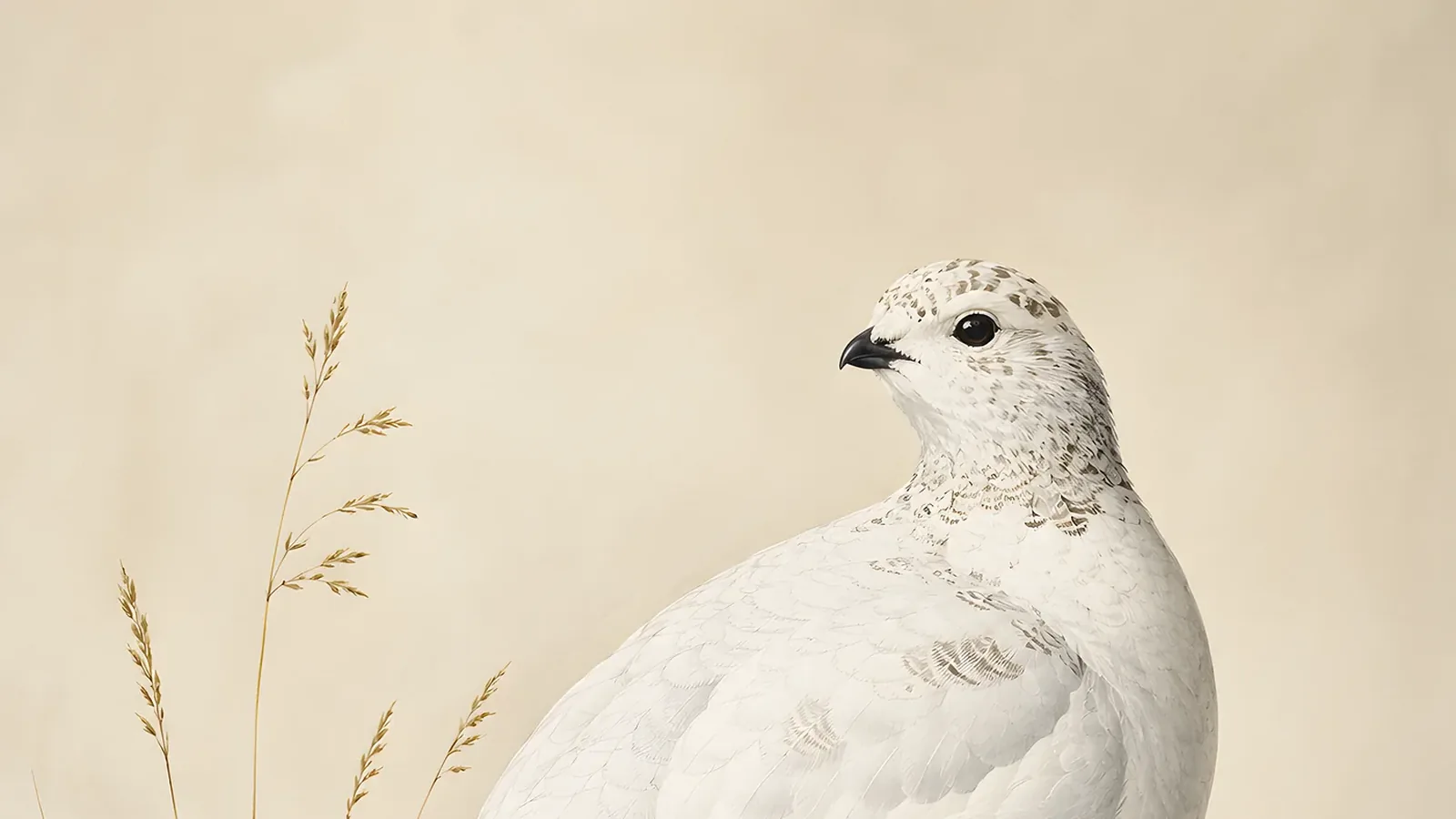
The white-tailed ptarmigan occupies similar high-alpine rock habitat in western North America and shows comparable ground-nesting and precocial chick strategies - a convergence driven by the same set of environmental pressures. The snowcock is roughly twice the ptarmigan’s weight and holds a far more restricted range, but the two species share more ecological logic than geography currently allows them to share ground.
There is something quietly strange about the snowcock’s situation. It is a bird of the Hindu Kush and the Karakoram, a species that has spent millions of years adapting to the Himalaya, now breeding successfully on ridges in northeastern Nevada because a state agency shipped a crate of live birds across the Pacific in 1963. Whether that constitutes conservation, accident, or just the particular way that human ambition sometimes produces something beautiful, the bird itself has no opinion. It is up there on the talus, calling at dawn into the Great Basin air, doing exactly what it has always done.