Free shipping to the US, Canada & Europe
State Guide
New Jersey hosts eight orange-plumaged birds, from the flame-orange Baltimore Oriole to the subtler Eastern Towhee. Here is when and where to find each one.
December 21, 2023 7 min read
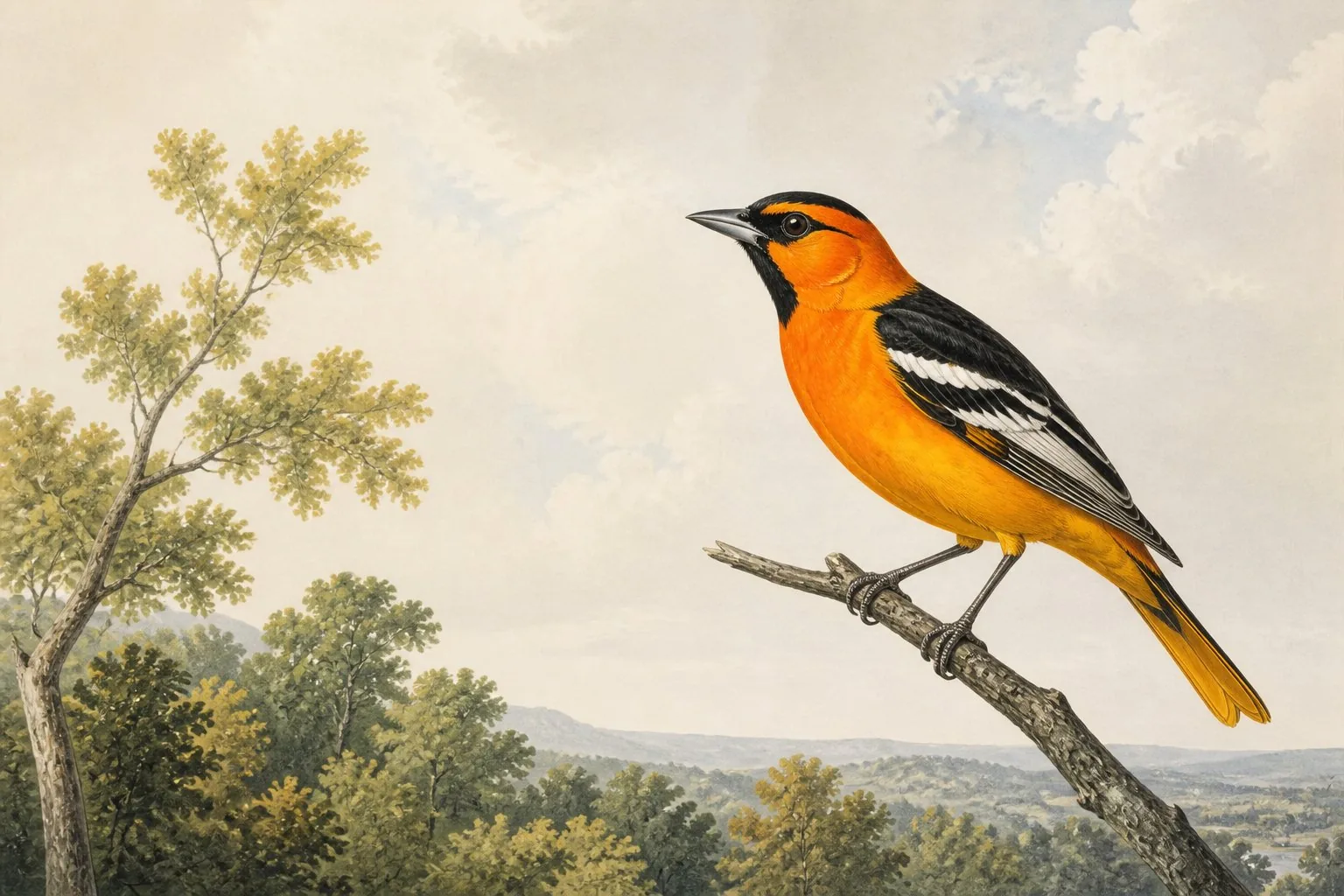
Stand at the edge of any Sussex County woodlot on a morning in the first week of May and you will hear the Baltimore Oriole before you see him. The whistle is liquid and slightly slurred, five or six notes, and then the flash of orange between the branches confirms it: the state’s most electrically coloured bird has arrived, on schedule, again.
New Jersey is a state that punches above its size in bird diversity. Coastal marshes, the Pine Barrens, the Ridge and Valley province, and Cape May’s famous Atlantic Flyway bottleneck all concentrate migrants in ways that larger, less varied states cannot. For birds with orange plumage, the result is a calendar that runs from late April through October, with one or two species present in any season.
The Baltimore Oriole (Icterus galbula) is the one most people have in mind when they search for orange birds. Adult males are flame-orange on the breast, belly, and shoulder patches with a solid black head and a single white wing bar. Females are yellow-orange below, grayer on the head, with two white wing bars. Audubon’s field guide puts the length at 7 to 8.5 inches - roughly robin-sized but built like an exclamation point.
Cornell’s All About Birds describes their preferred habitat as open woodland, forest edges, orchards, and stands of trees along rivers. They adapted well to suburban parks and backyards over the twentieth century, especially where large elms, ashes, and maples remain. Oriole watchers in New Jersey typically set up feeders with halved oranges and grape jelly by May 1 to catch the first arrivals, who come north exhausted and hungry after crossing the Gulf of Mexico. Fall departure begins early - many birds are gone by late August, well before the first hard frost.
The Orchard Oriole (Icterus spurius) is the smaller, darker cousin. Where the Baltimore blazes, the Orchard smolders. Adult males are black and chestnut rather than black and flame-orange - Audubon’s field guide calls the coloring “very distinct among this family.” Females are a clean yellow-green. They measure 6.3 to 7.1 inches, noticeably smaller than Baltimores. Like the Baltimore, they prefer semi-open habitats with deciduous trees and open space. Orchard Orioles also depart early: Audubon notes some individuals are southbound by late July, making them one of the earliest long-distance migrants to leave New Jersey in summer.
The Baltimore Oriole and the Orchard Oriole share the same New Jersey woodlot but occupy it at different volumes. One announces itself. The other has to be found.
The Blackburnian Warbler (Setophaga fusca) does not breed in New Jersey but passes through in numbers each May. In breeding plumage, the male carries a brilliant orange throat - Audubon describes it as a “blaze-orange throat” framed by a black face triangle and a white wing patch - that is, in full sun on a hemlock branch, one of the most arresting sights in eastern birding. He breeds in boreal and mixed coniferous forests from eastern Canada south through the Appalachians, and winters in Andean mountain forests in South America. New Jersey sits directly in his path between the two, and Cape May and the Kittatinny Ridge are the state’s two best concentration points for this bird.
The American Redstart (Setophaga ruticilla) is different from the Blackburnian in that some birds stay to breed. Males are black with red-orange patches on the wings, tail, and sides - Audubon’s field guide says the pattern “looks as if it was painted.” Many more pass through on migration than remain. At 4.3 to 5.1 inches, he is sparrow-sized and quick, and the orange patches flash when he fans his tail to startle insects from foliage. This fanning behaviour makes him easier to spot than his small size suggests. Females are gray-above, white-below, with yellow patches where the male shows orange. Read more about a related eastern warbler species with orange tones in the orange birds in Michigan guide.
The American Robin (Turdus migratorius) is the most frequently encountered orange-breasted bird in the state year-round. The orange-red breast on a gray-brown body is familiar enough to be overlooked, but in clean breeding plumage the breast is a warm, saturated tone that rewards the comparison with other species. Audubon lists robins as present across lawns, parks, and woodlands from urban centres to forest edges. He is not exciting. He is everywhere.
The Barn Swallow (Hirundo rustica) brings orange to open country and the coast from May through August. Males show a cinnamon-orange face and throat against iridescent navy-blue upperparts. Audubon’s identification guide specifically calls out the “strong orange face” as a defining field mark. They nest in mud cups under bridges, barn eaves, and pier structures throughout the state. Watch for them low over water or farm fields, and the orange face passes by at speed.
The Eastern Towhee (Pipilo erythrophthalmus) is a ground bird of dense brush and thicket. Males are sooty black above with a white belly and rufous - brick-orange - sides. Females mirror the pattern with brown replacing black. The Pine Barrens hold some of the best towhee habitat in the state, where scrubby oaks and dense undergrowth provide the leaf-litter foraging they require. Northern New Jersey populations are largely migratory; southern birds linger later into winter.
The Eastern Bluebird (Sialia sialis) deserves separate attention, not because the orange is particularly intense - the rusty breast is warmer and browner than an oriole’s flame - but because of what happened to the population. By the mid-twentieth century bluebirds had declined sharply across the Northeast, crowded out of natural cavities by introduced House Sparrows and European Starlings. New Jersey Audubon and state volunteers mounted a nest-box campaign. According to the North American Breeding Bird Survey, Eastern Bluebird populations in New Jersey have increased by more than five percent per year since the late 1960s. The bird recovered because people built wooden boxes and put them on posts in open fields. It is one of the cleaner conservation success stories in the state, and the bluebird on a January fence post, rusty in the frost, proves the orange calendar does not entirely close when the orioles leave.
| Species | Season | Habitat |
|---|---|---|
| Baltimore Oriole | May to August | Forest edges, parks, suburbs |
| Orchard Oriole | May to late July | Open woodlands, orchards |
| Blackburnian Warbler | May (migration) | Ridge watch points, hemlock stands |
| American Redstart | May to September | Moist deciduous woods |
| American Robin | Year-round | Lawns, parks, woodlands |
| Barn Swallow | May to August | Open areas, bridges, coastal marshes |
| Eastern Towhee | April to October | Dense brush, Pine Barrens thickets |
| Eastern Bluebird | Year-round | Open fields with scattered trees |
If you have one morning and want to maximise species count, position yourself near a flowering or fruiting tree in a mature suburban park in the first two weeks of May. That is when Baltimore and Orchard Orioles are both moving through, when Redstarts are at peak abundance, and when Blackburnian Warblers may drop into street trees after a night of migration. The brief overlap of those four species - each carrying a different register of orange - does not happen anywhere quite like this in Arizona. It is a coincidence of geography and timing that New Jersey delivers reliably.
For comparison with other mid-Atlantic and Midwest breeding grounds for the same species, see orange birds in Illinois and orange birds in Ohio.
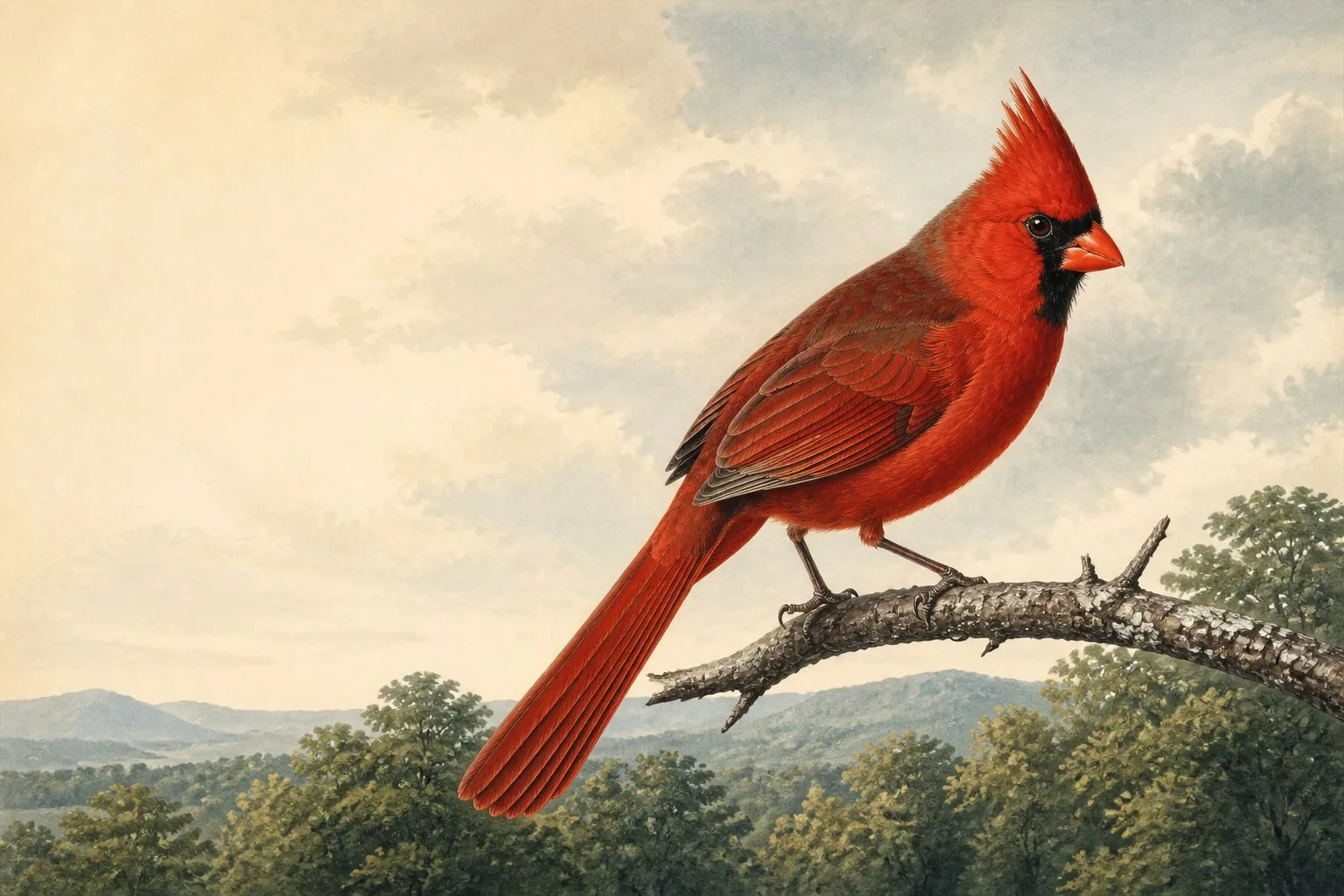
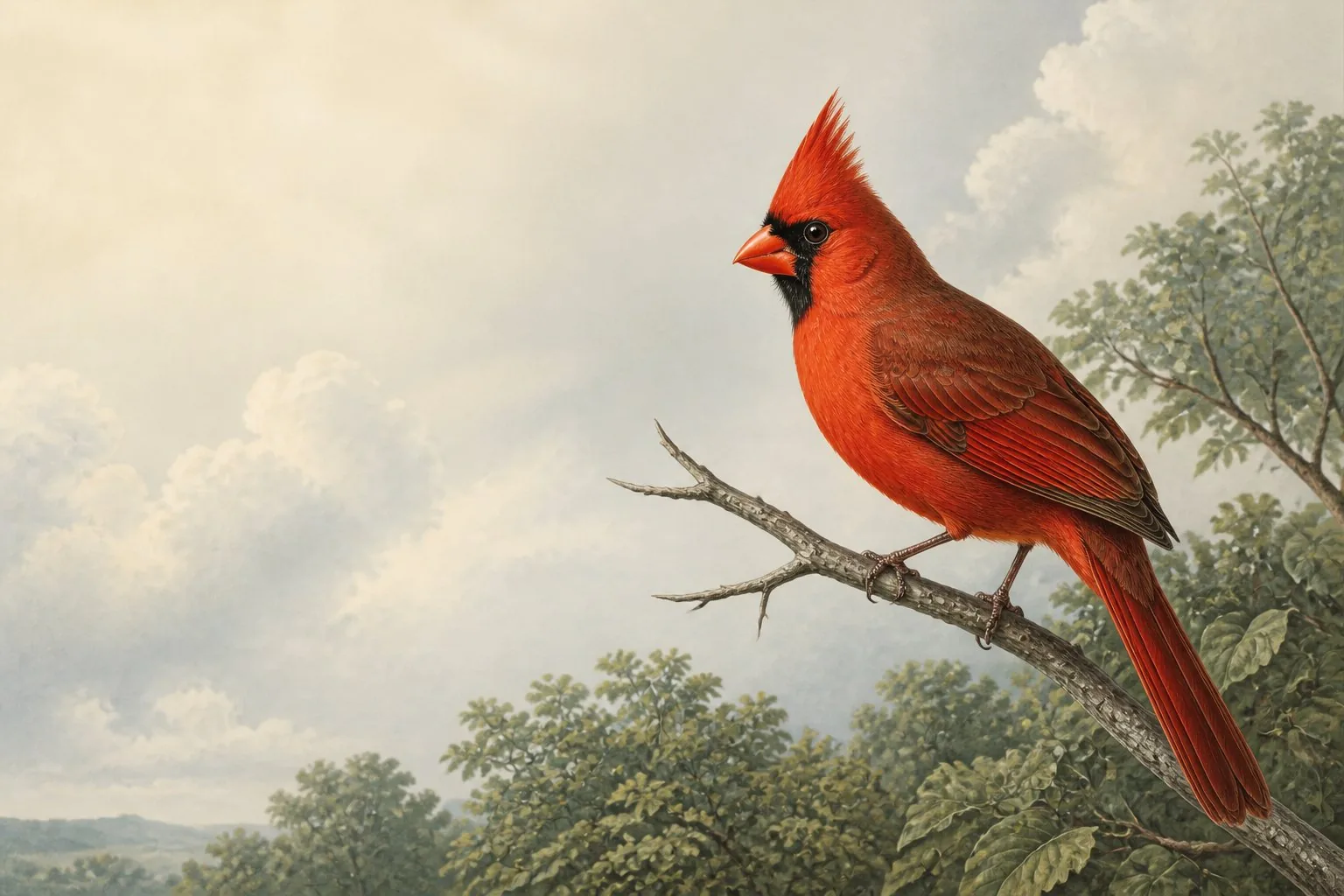
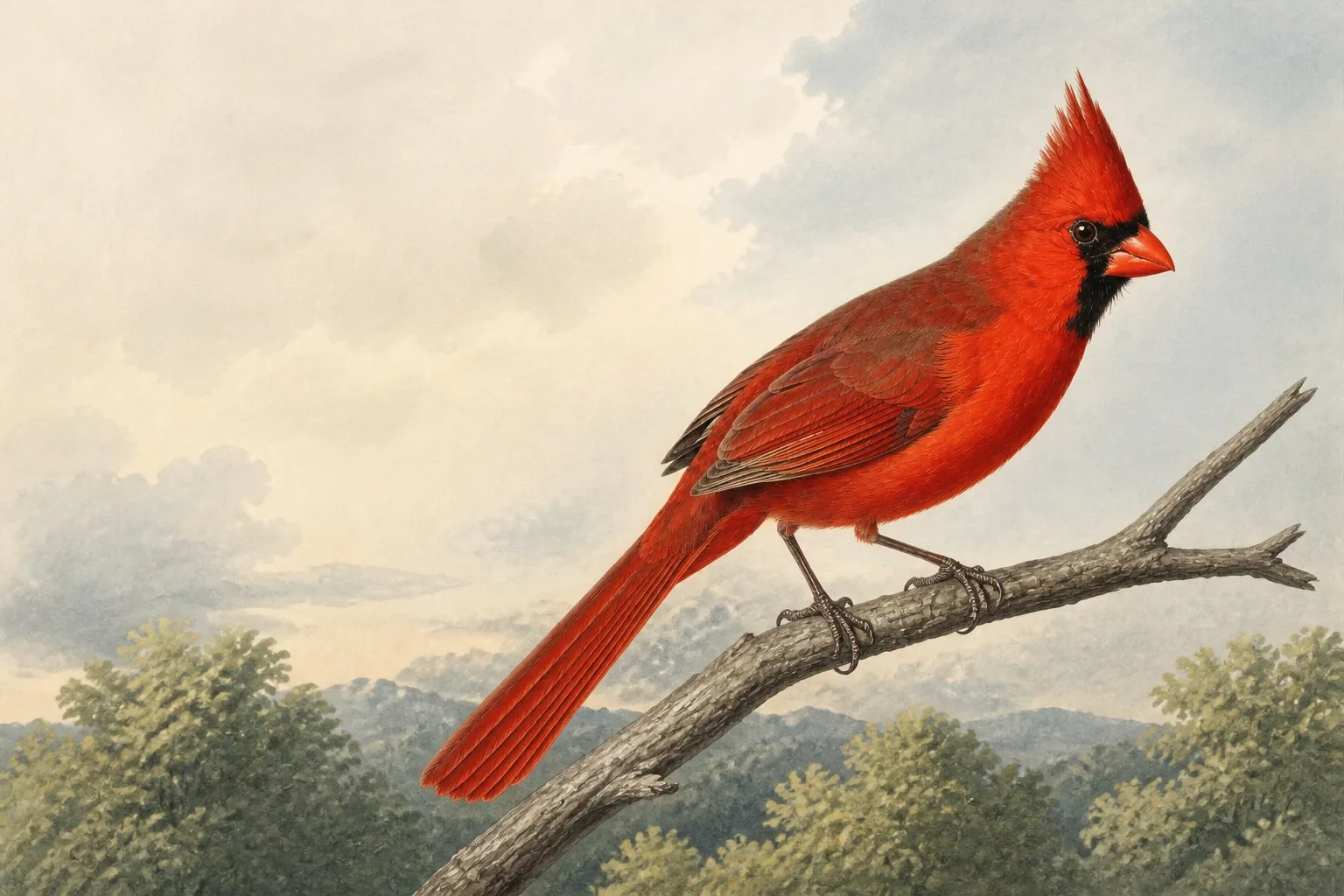
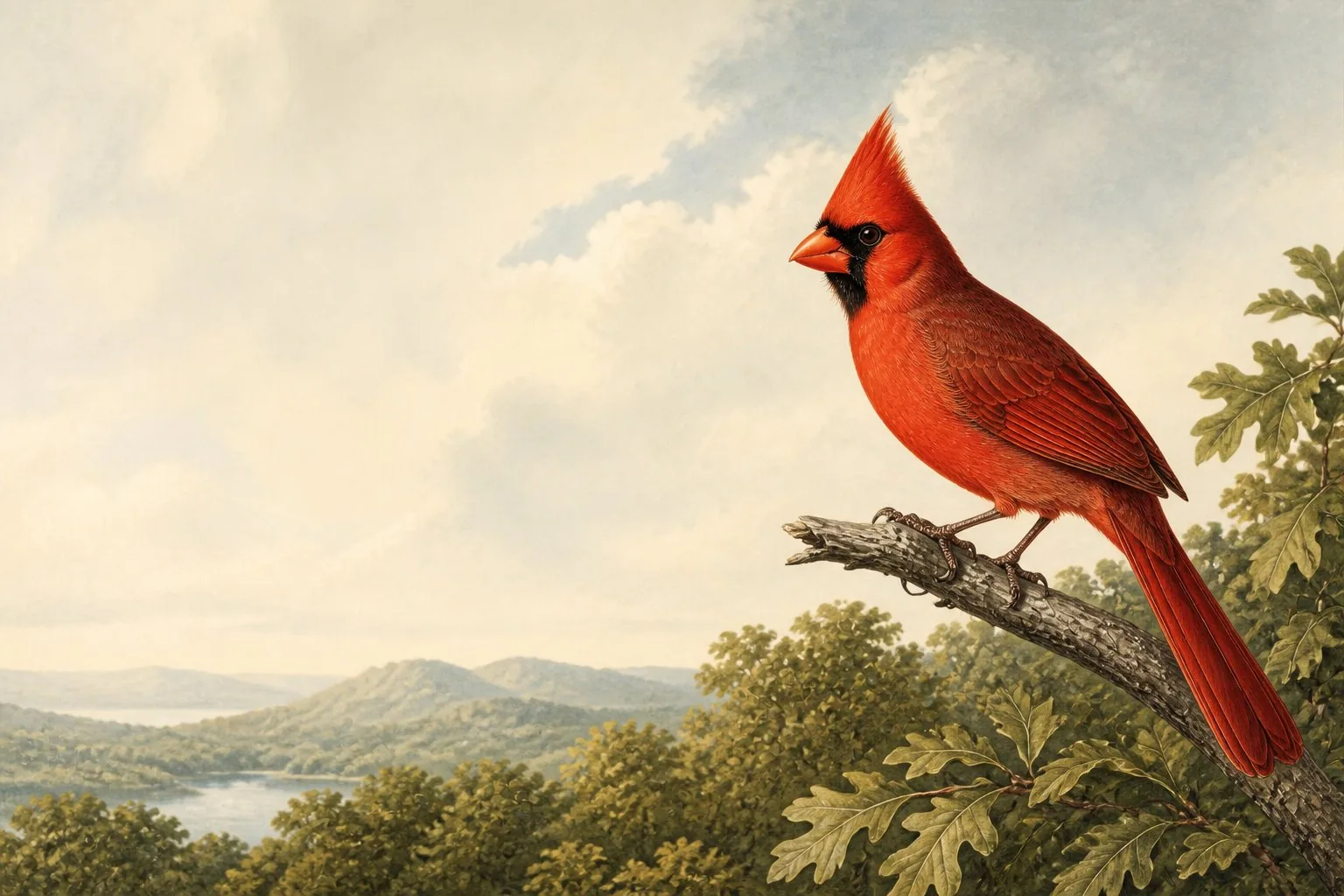
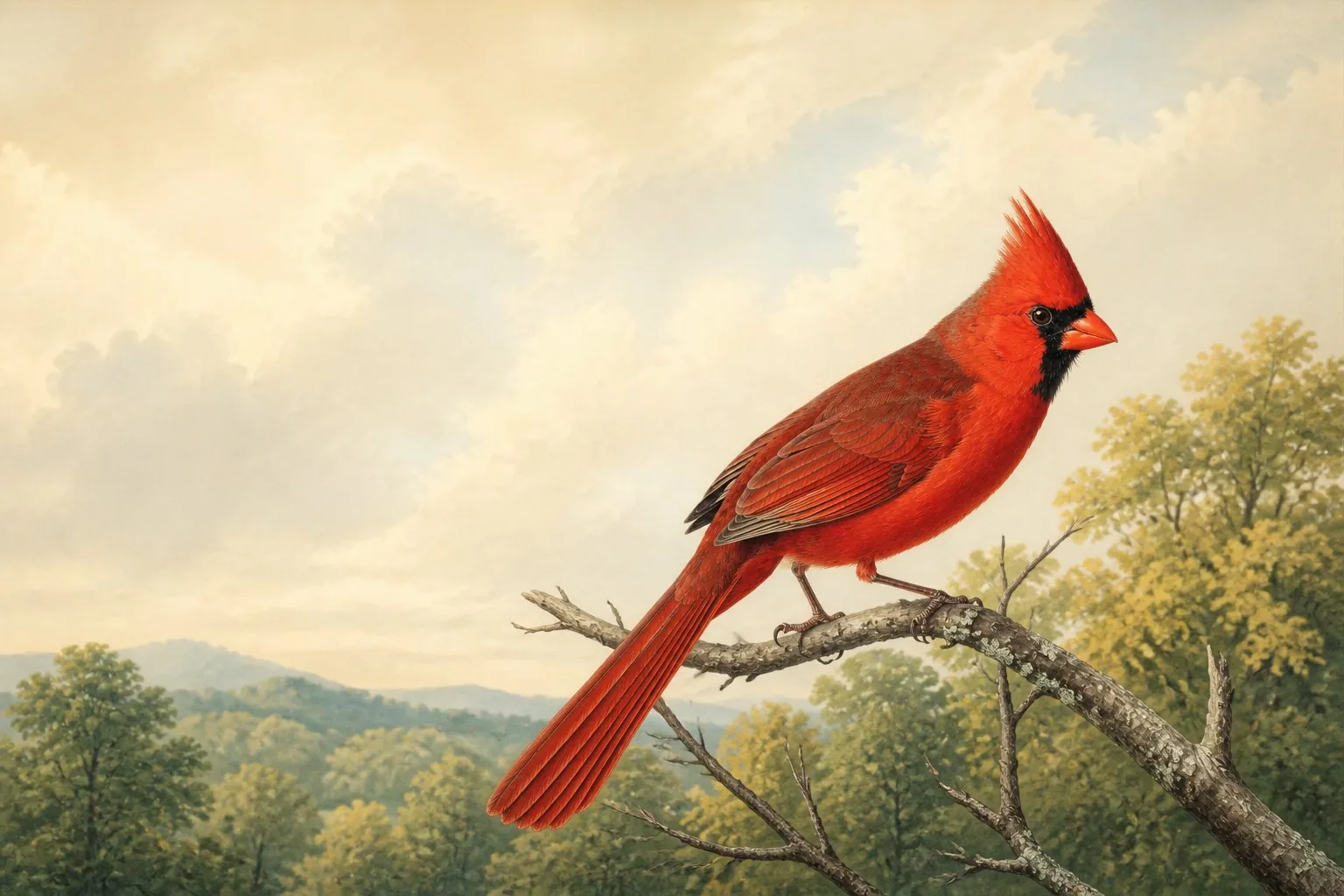
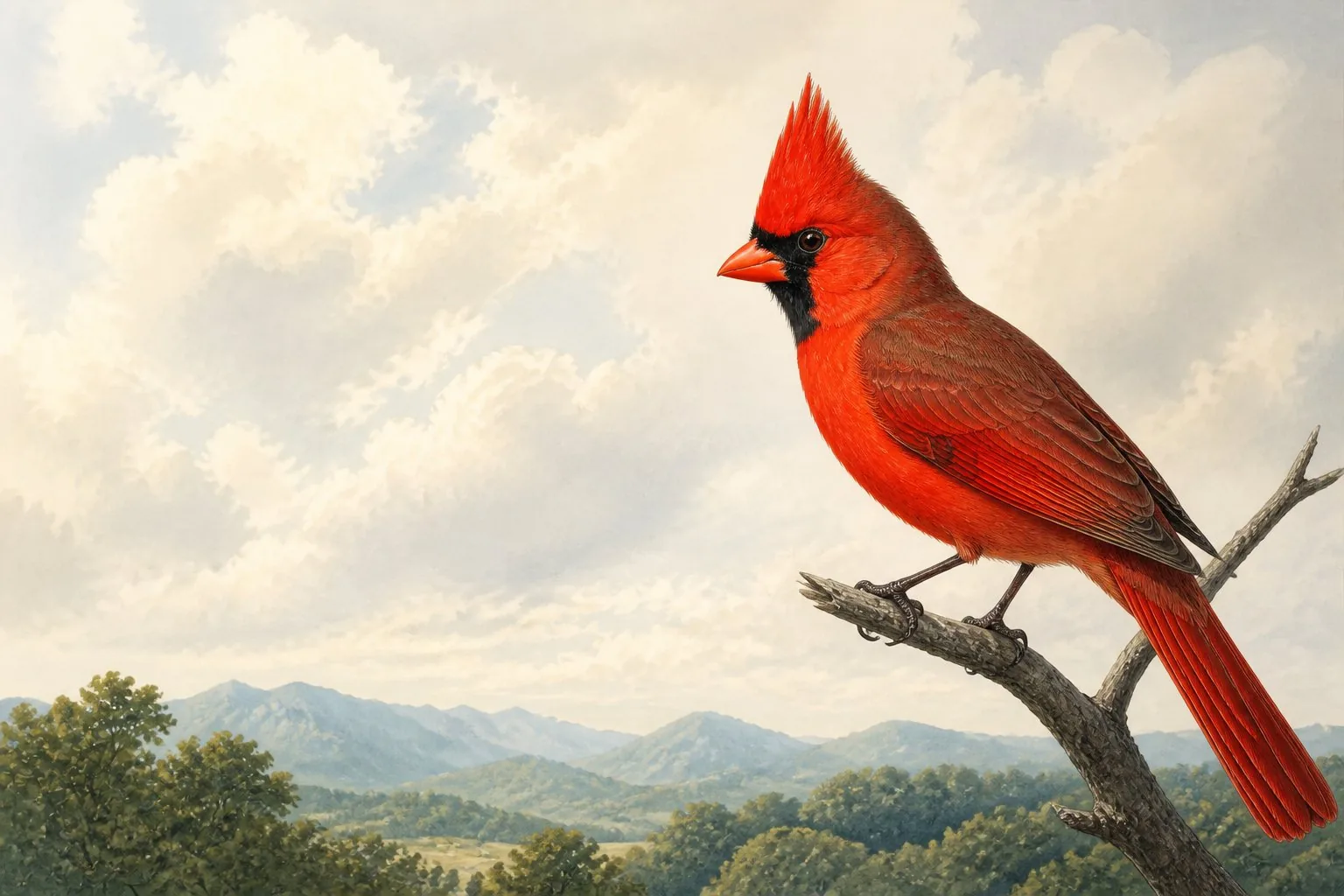
The Northern Cardinal is not orange, but the male’s deep red and the female’s warm tawny flush sit close enough to the orange spectrum that people confuse them regularly in poor light. He is present all year and earns a place in any New Jersey yard - the Northern Cardinal print is a reminder of how far into orange the red spectrum reaches. If you watch a cardinal long enough in late August, his head may go bare and scruffy mid-moult; cardinal molting explains the mechanics and why it is not cause for alarm.
The Baltimore Oriole does not stay. By late August he is already heading back to Central America and the oriole season closes quietly. The bluebird stays, and the towhee lingers, and the robin never left. But the week in May when the oriole arrives in a New Jersey oak and starts to sing - that is what the Atlantic Flyway is for.
As an Amazon Associate we earn from qualifying purchases. Linked products are ones we genuinely recommend.
 December 21, 2023
 7 min read