State Guide
Red Birds in Michigan: Cardinal, Tanager, Finch, and the Boreal Irruptives
A male Scarlet Tanager arrives in a southern Michigan oak woodland in the second week of May. He has crossed the Gulf of Mexico overnight and looks entirely out of place: electric red with jet-black wings, moving quietly through branches that have barely opened their first leaves. He will stay through August, mostly invisible 40 feet up, then disappear south again before anyone notices he has gone.
Michigan’s red birds do not travel in a pack. They come from different directions, use different habitats, and operate on different schedules. Some are at the feeder every morning for 12 months straight. Others appear once every few winters, when the birch crop collapses across the boreal forest and the birds simply keep flying south until they find food. Learning the difference is what separates a birder from someone who owns binoculars.
The permanent resident: Northern Cardinal
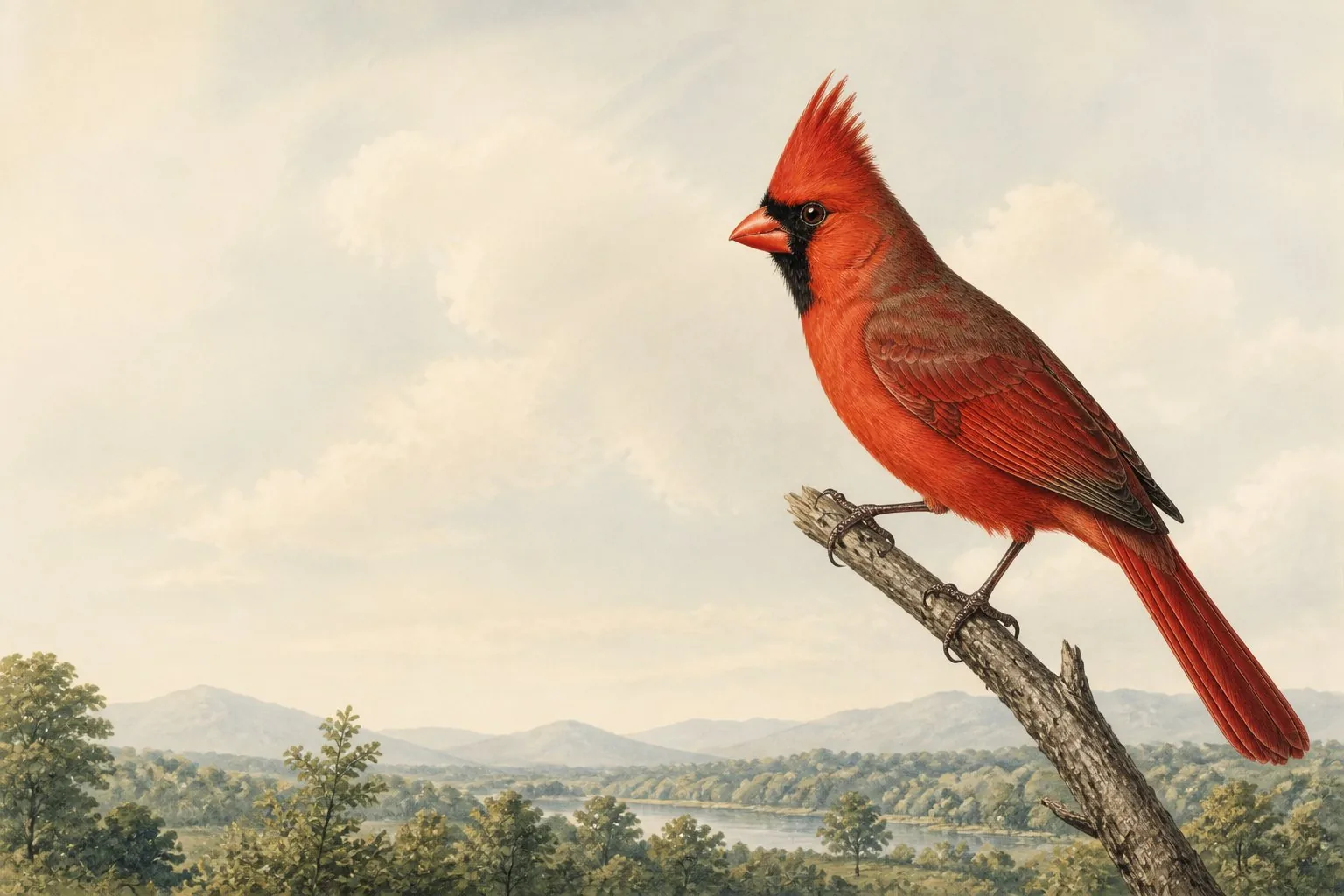
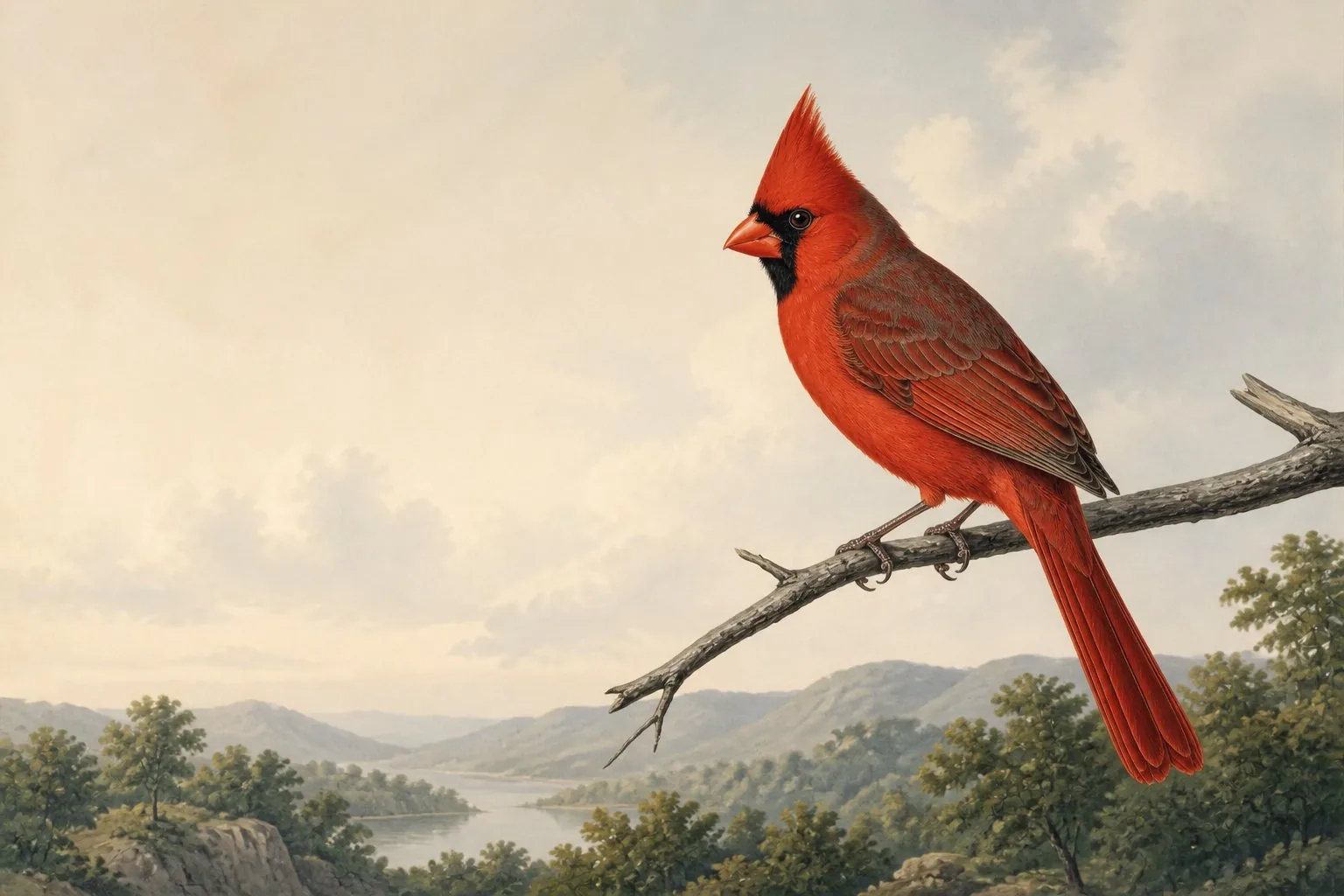
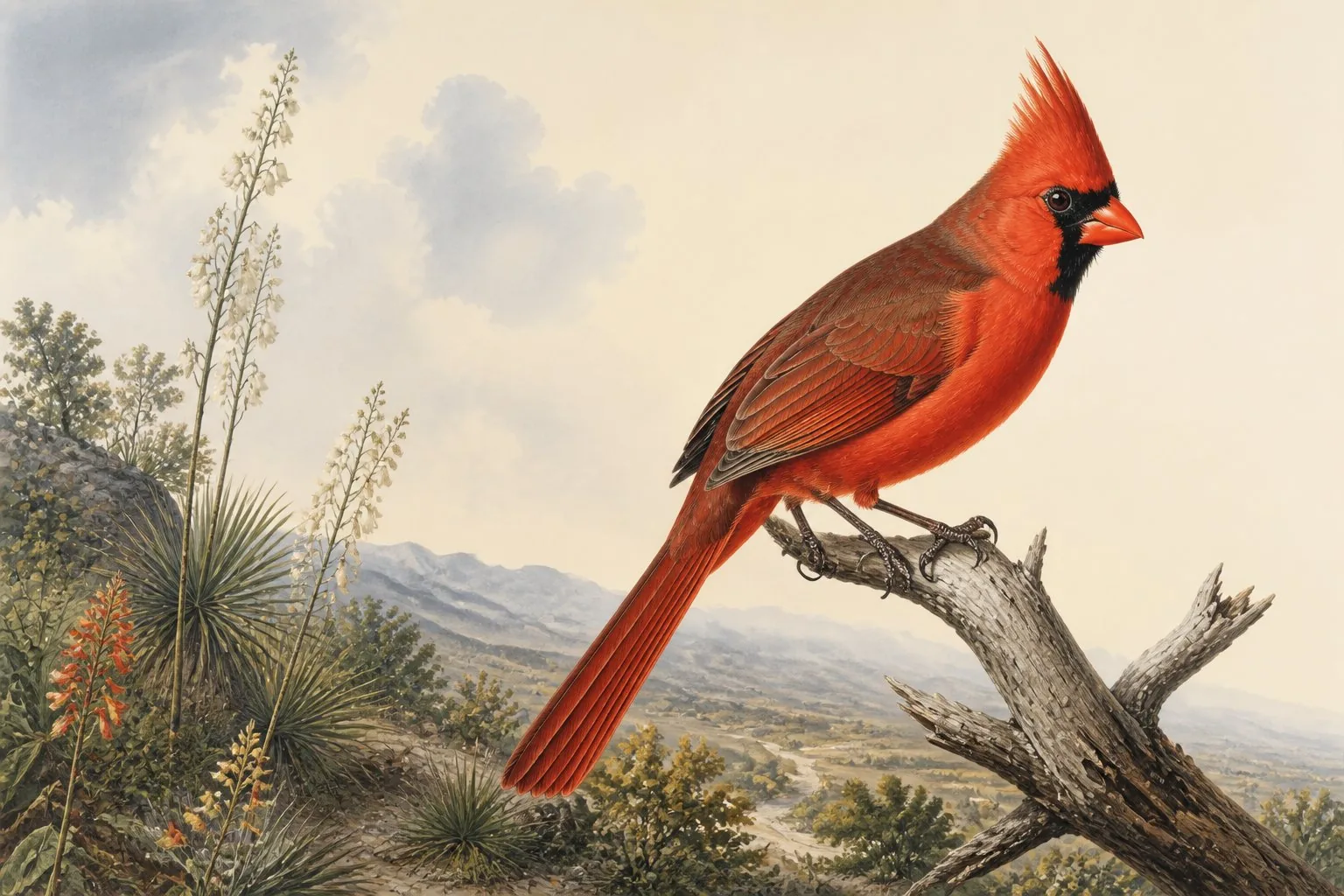
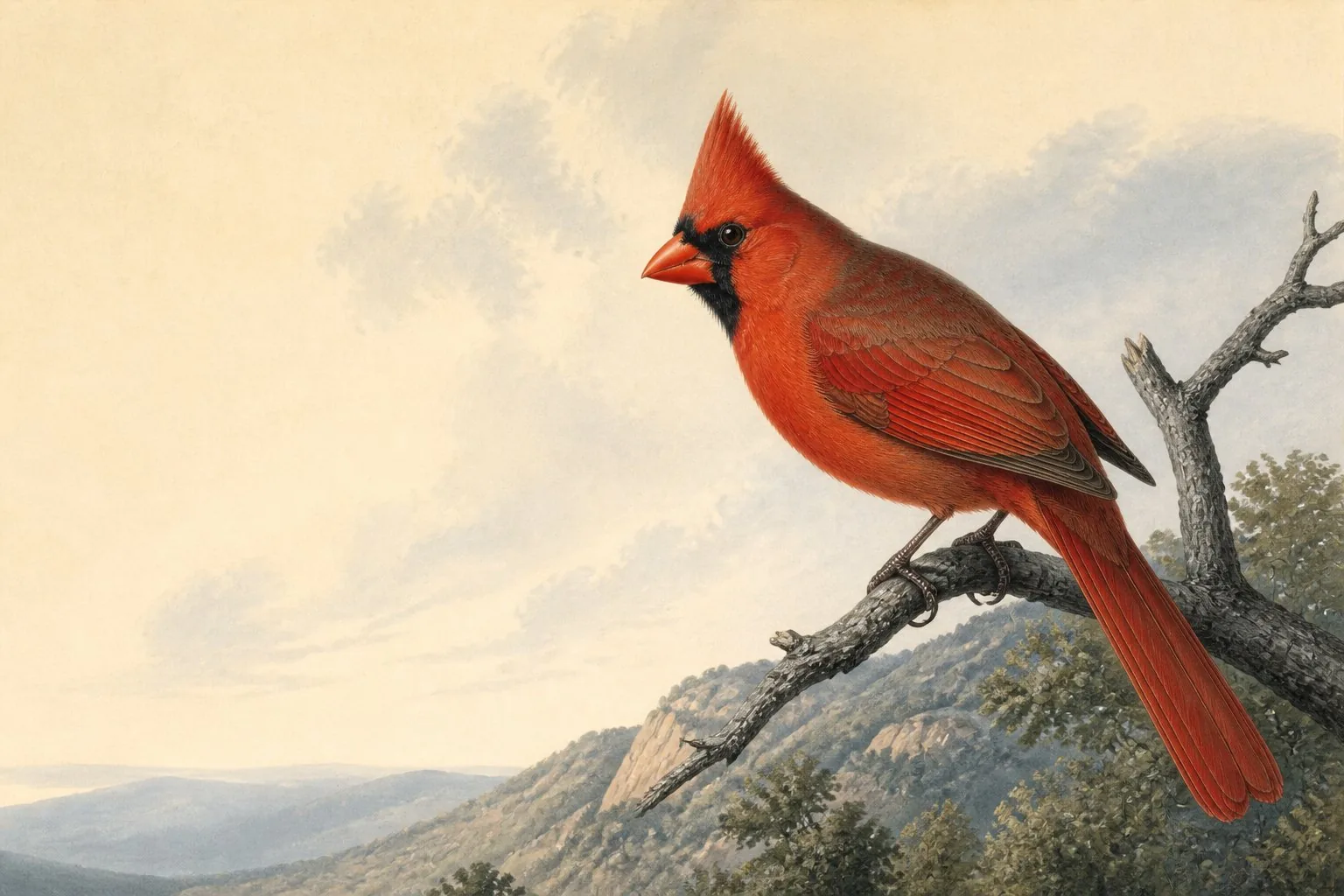
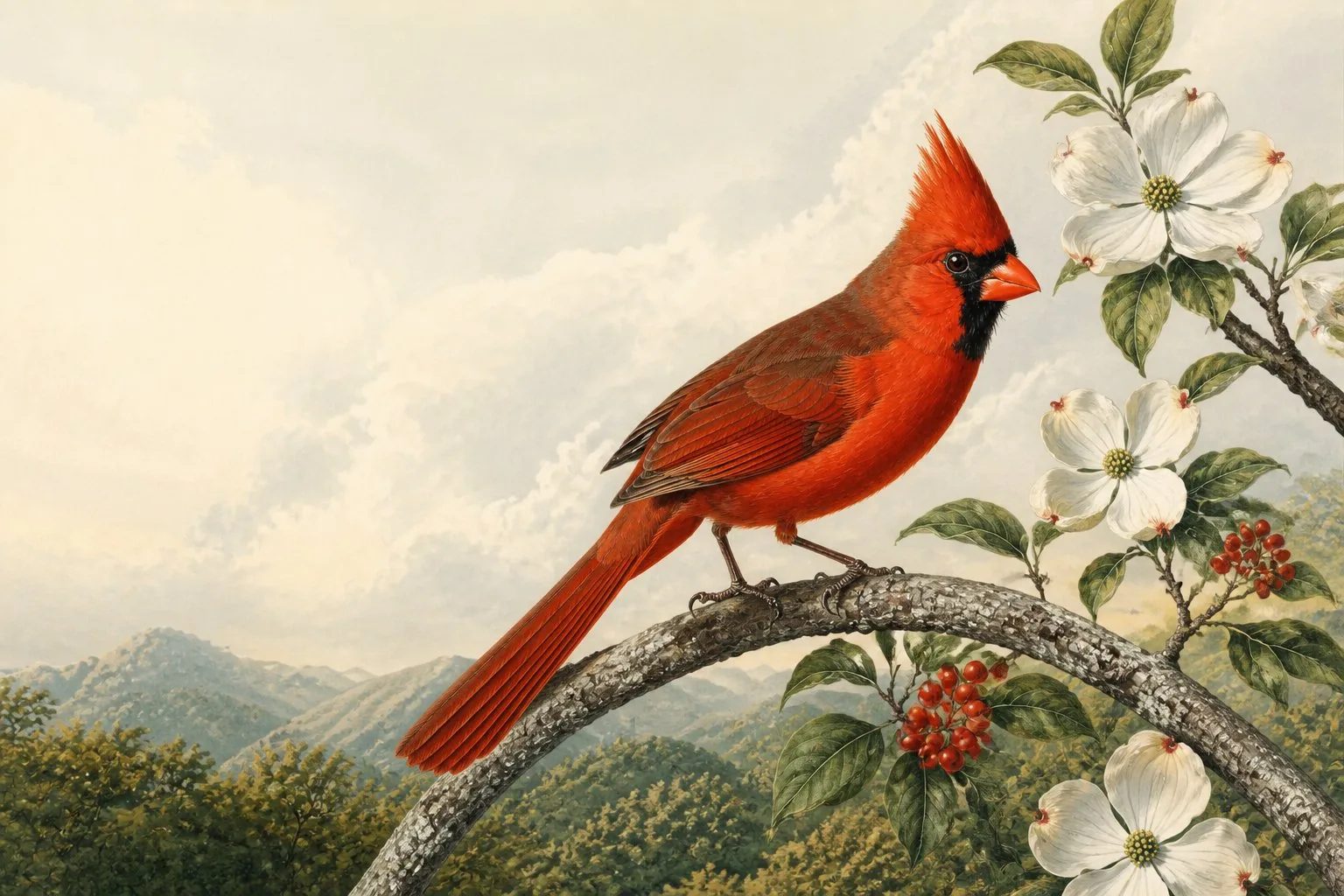
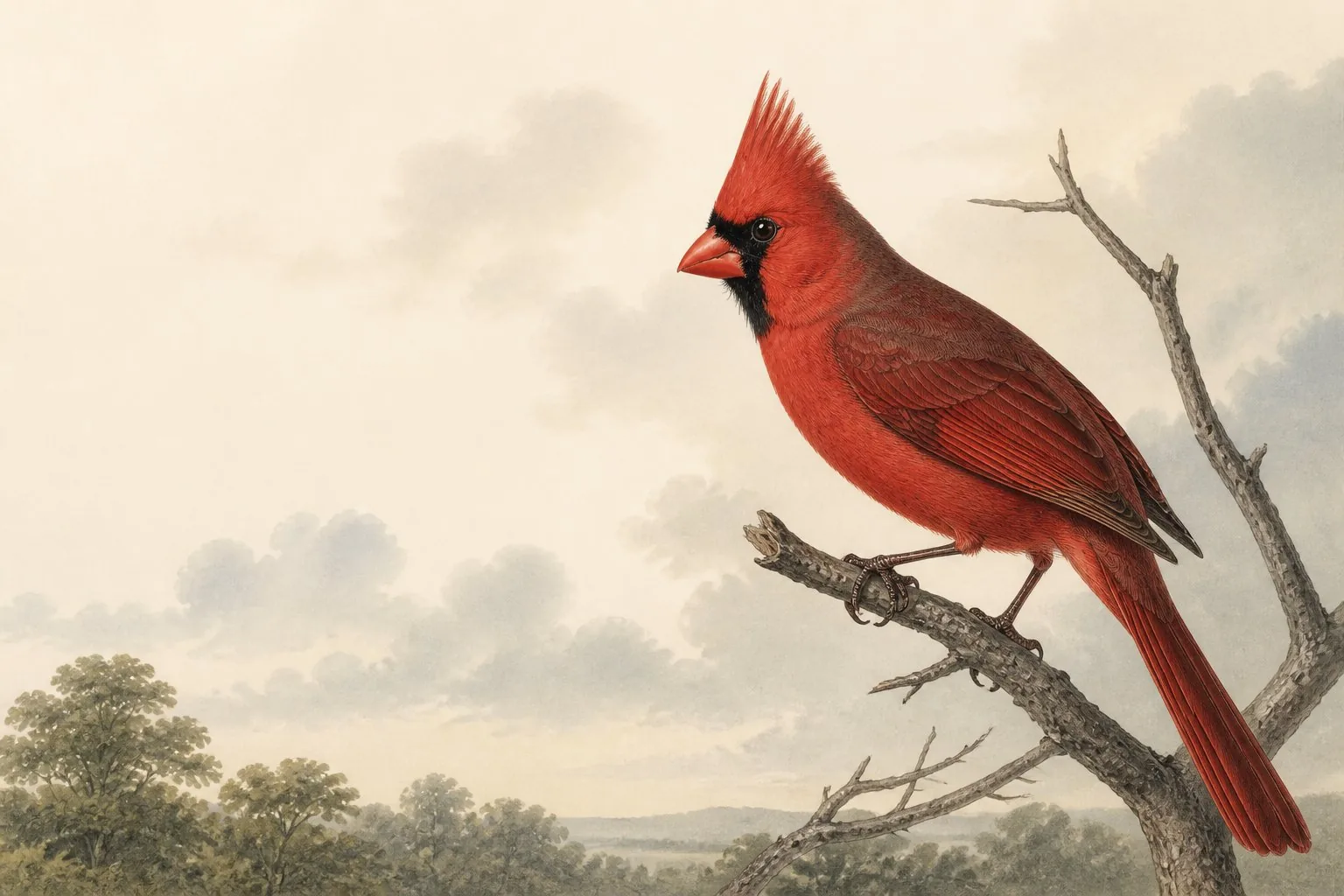
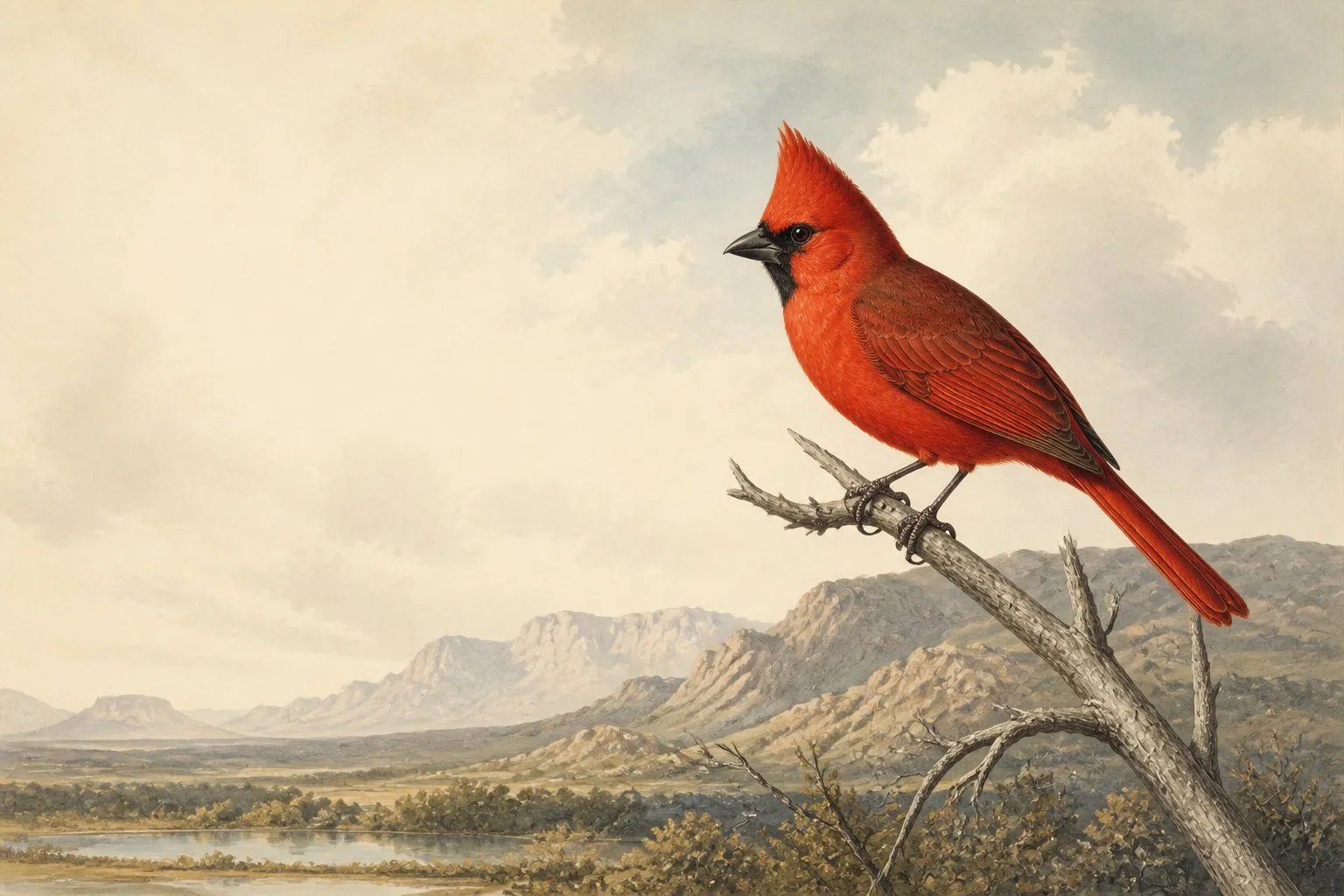
Cardinalis cardinalis is the only red bird guaranteed in every Michigan county in every season. Cornell Lab’s All About Birds notes a North American population of around 130 million, and Michigan holds a healthy slice of that. The male’s red plumage comes from carotenoid pigments absorbed through diet - berries, seeds, fruit pulp - not synthesized internally. A cardinal eating well through the summer will enter the breeding season in sharp colour; one on a poor diet may show dull patches.
Cardinals do not migrate and do not molt into a drab winter plumage. When snow covers the yard and the sky is white, that red at the feeder looks almost impossible. Black oil sunflower seeds draw them reliably. So do dense shrubs for roosting - a brushy yard edge will hold more cardinals than a tidy lawn.
Cardinals have been expanding northward in Michigan for more than a century. Early accounts treated them as a southern species pushing cautiously toward the Great Lakes. They reached the Upper Peninsula in numbers only in the 20th century, aided by feeding stations and the warmer winters that followed. They are now year-round residents statewide.
The canopy fire of May: Scarlet Tanager
Piranga olivacea is a breeding bird of mature deciduous forest - specifically, large connected blocks of it. Audubon’s field guide notes the species “seems to require large blocks of forest” and performs poorly in fragmented woodlands. That has real implications for Michigan: the species is more reliable in the southern Lower Peninsula’s oak-beech woodlands and in the patches of mature mixed forest through the centre of the state than in cleared agricultural country or suburban edges.
The male’s breeding plumage is hard to describe accurately in print. Red is not quite right - it is a saturated, almost luminous crimson, laid against wings and tail that are pure black. The female is dull yellow-green. Both spend most of their time high in the canopy, which is why most people hear the Scarlet Tanager before they ever see one. The song is a burry, raspy series of phrases - like a robin that has been out in the weather too long.
Spring arrivals in southern Michigan typically begin in late April to early May. By late July the males begin molting out of breeding plumage into greenish-yellow, retaining the black wings. By September nearly all have left for lowland forest east of the Andes, where they winter. eBird records show consistent summer presence across much of the Lower Peninsula wherever large forest tracts remain.
The place to find this species: a mature oak or beech-maple stand of at least 20 acres, on a still morning in mid-May, before 9 am. Stop at the edge, listen for the song before looking up, and give it 20 minutes.
Red-toned finches: House Finch and Purple Finch
These two species are easy to confuse at a feeder. Both are small brown-streaked birds with varying degrees of red on the male. They are distinct species with different histories in Michigan.
House Finch (Haemorhous mexicanus) is a year-round resident across the state. The male carries a wash of red on the head, breast, and rump - the exact tone shifts from deep red to orange to yellowish depending on diet during the preceding molt. Audubon’s account documents the entire eastern population descending from birds released on Long Island in 1940 by a pet dealer selling them illegally as “Hollywood Finches.” Their descendants spread east and south within decades, eventually meeting the native western population on the Great Plains.
House Finches nest twice or three times per season, readily use suburban gardens and nest boxes, and appear at feeders year-round. At a Michigan feeder in any month, this is the default small red finch.
Purple Finch (Haemorhous purpureus) is a different bird in two respects: colour and habit. The male’s red is richer and more saturated - Audubon describes it as “dull red on head and foreparts” but field observers often reach for “raspberry” as the nearest comparison. The head, breast, and back all carry the colour, giving it a dipped-rather-than-daubed appearance.
Purple Finches breed in northern Michigan - the Upper Peninsula and northern Lower Peninsula, in mixed and coniferous forests. Through winter they move south across the state, becoming irregular visitors at feeders from September through May. The female’s strong dark cheek stripe and clear white eyebrow are the cleanest ID feature separating her from the House Finch female.
The winter arrivals: Common Redpoll and Pine Grosbeak
Two northern finches reach Michigan only in winter, and only in numbers when the boreal seed crop fails to their north.
Common Redpoll (Acanthis flammea) breeds across the Arctic and subarctic. In most years it winters across Canada and the northern Great Lakes; in irruption years - when birch and alder seed crops collapse across the boreal belt - it moves south in large numbers, sometimes reaching the Lower Peninsula and beyond. Males carry a small red cap and a rosy flush on the breast. Flocks travel with other finches and settle on birch and alder stands, moving on when the seeds run out.
A Common Redpoll banded during a Michigan winter was later recovered in Siberia - a detail that puts their wandering range in perspective. In irruption winters, a birch stand near the Straits of Mackinac or along the Lake Superior shore can hold dozens. In non-irruption winters, you may not see one.
Pine Grosbeak (Pinicola enucleator) is a large, slow-moving finch - almost implausibly tame for a wild bird - with males carrying a rose-red wash over grey wings and tail. It arrives from the boreal forest in irregular winter invasions, typically every four to seven years in meaningful numbers, according to the Finch Research Network. When it does appear, it works through crabapples, mountain ash berries, and conifer seeds with methodical patience. The Upper Peninsula gets them more often than the south.
Neither species is reliable. Both reward paying attention to finch irruption forecasts each autumn - the Finch Research Network publishes annual predictions based on boreal seed crop surveys.
The crossbills: irregular at best
Red Crossbill (Loxia curvirostra) and White-winged Crossbill (Loxia leucoptera) are the most unpredictable red birds in Michigan. The male Red Crossbill is brick-red with dark wings; the White-winged male is similar but with two bold white wing bars. Both use crossed, specialised bills to pry open conifer cones. They wander nomadically across the continent following cone crops, with no fixed winter range - a flock may appear in a spruce plantation anywhere in Michigan in any month, spend two weeks, and vanish.
Red Crossbills hold on year-round in the conifer forests of the Upper Peninsula in low numbers. White-winged Crossbills are primarily winter visitors, concentrated in the north. eBird records show both species across the state but with the scattered, unpredictable pattern that characterises true nomads.
Where the list leaves you
The Northern Cardinal species page covers identification and behavior in full. The House Finch species page and Purple Finch species page work through the ID details separating those two.
Michigan shares its forest migrants - Scarlet Tanager arriving on the same May schedule - with its neighbours. The red birds in Wisconsin and red birds in Indiana lists are worth checking if you are building a Great Lakes picture. The red birds in Ohio guide covers the Scarlet Tanager in more detail for a state where it breeds more extensively. For the full range of colour in Michigan’s birds, the orange birds in Michigan guide covers Baltimore Oriole, American Redstart, and the other warm-toned summer arrivals on the same May-to-September window.
The broader context for all of these birds is at Michigan birds.
The Scarlet Tanager’s dependence on large, unbroken forest makes him something more than a bird. Where he still breeds - and breeds in consistent numbers from year to year - the forest is intact. Where he has stopped appearing at reliable historical sites, the stand has been thinned below the threshold his territory requires. Watching for him is, without any drama about it, a way of watching the health of the landscape itself.