Backyard
How to Attract Woodpeckers to Your Yard
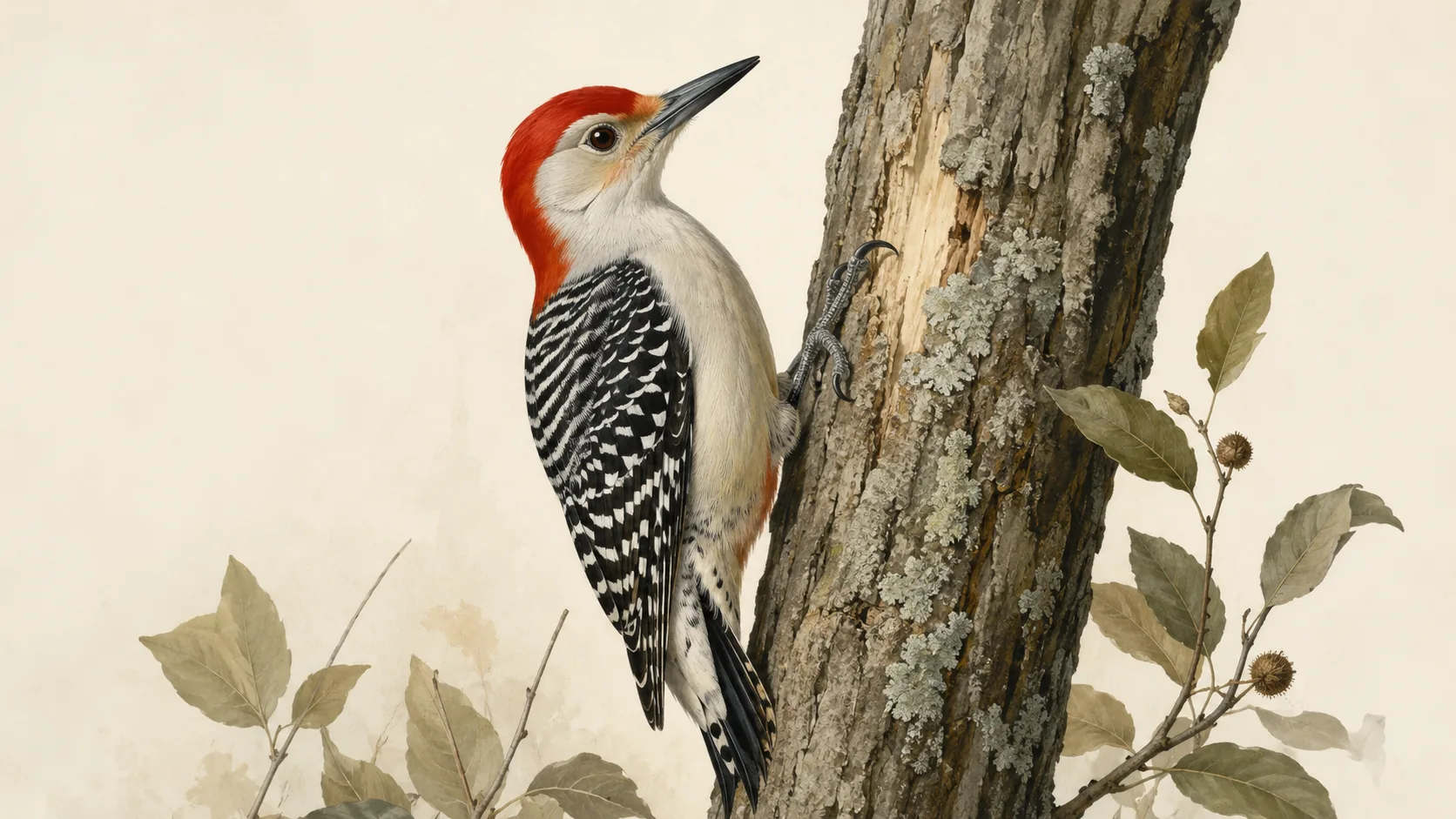
A red-bellied woodpecker lands on a suet cage and the whole yard goes quiet. Everyone notices. That crimson cap, that grip, that methodical hammering - they earn it.
Woodpeckers are not random visitors. They come to specific resources. Get those resources right and you will see them reliably. Get them wrong and the best feeder in the county will sit untouched.
Here is what actually works.
Why Woodpeckers Are Worth Attracting
Before the feeders: context.
Woodpeckers are a keystone species. When a pileated woodpecker excavates a nesting cavity in a dead snag, it creates real estate that dozens of other North American cavity-nesting species depend on - owls, wood ducks, bats, squirrels, even some amphibians. The USDA Forest Service and USGS both stress that standing dead wood is one of the highest-value features a property can hold for wildlife. That is not a feeder benefit. That is an ecosystem benefit from one decision.
They also eat enormous quantities of wood-boring beetle larvae and carpenter ants. A woodpecker working a tree is doing structural pest control you cannot hire.
Suet: The Anchor Food
Suet is rendered animal fat. In the wild, woodpeckers spend hours prying larvae from beneath bark - fat and protein in a single package. Suet mimics that exactly, which is why the National Audubon Society and the Cornell Lab of Ornithology both identify it as the most effective food for attracting woodpeckers to feeders.
The downy woodpecker is the most frequent suet visitor in most backyards. Small, bold, and adaptable, it will find a suet cage within days. Hairy woodpeckers follow the same pattern. Red-bellied woodpeckers come too, and visit year-round.
A few feeder rules that matter:
- Upside-down suet feeders. European Starlings cannot easily cling and feed from below. Woodpeckers, natural vertical clingers, have no problem at all. One inexpensive switch cuts starling competition significantly, per Audubon feeder guidance.
- Summer suet. Standard suet softens and melts in hot weather, roughly above 80°F (27°C), and can mat feathers. Switch to no-melt or hard-rendered suet cakes in warm months. This is not optional - ordinary suet in July is a hazard.
- Placement. Position the feeder well off the ground and away from branches that give squirrels easy access. Near a tree trunk is ideal - woodpeckers are comfortable moving between bark and feeder.
Peanuts and Secondary Foods
Peanuts are the second lever.
The Cornell Lab of Ornithology and Audubon both note that peanut pieces, peanuts in the shell, and plain peanut butter (no added salt, no added sugar) are highly attractive to red-bellied woodpeckers, and to downy woodpeckers as well. Pressed into a drilled log feeder or packed into holes bored into a hanging branch, peanut butter becomes a long-use resource that rewards the clingers and excludes most other birds.
Red-bellied woodpeckers also eat seasonally. The Cornell Lab notes that plant material - acorns, berries, and seeds - makes up a substantial share of their diet at certain times of year. A hawthorn or native oak nearby is as useful as a feeder.
Yellow-bellied sapsuckers are a different case entirely. They drill organised rows of shallow wells in live tree bark to harvest sap, then return repeatedly to feed on the sap and the insects it attracts. You do not attract them with feeders. You attract them by having the right trees.
Species-by-Species: Who Eats What
This is where most woodpecker feeding advice fails people - it treats all woodpeckers as one bird.
| Species | Primary draw | Feeder? | Key note |
|---|---|---|---|
| Downy Woodpecker | Suet, peanuts | Yes | Most common backyard suet visitor |
| Red-bellied Woodpecker | Suet, peanuts, fruit | Yes | Also eats acorns and berries seasonally |
| Northern Flicker | Ants on the ground | Rarely | Forages in lawn soil, not on suet cages |
| Pileated Woodpecker | Carpenter ants in large dead wood | Almost never | Needs snags, not feeders |
| Yellow-bellied Sapsucker | Tree sap and trapped insects | No | Attracted by live deciduous trees |
The northern flicker surprises people. It is a woodpecker that spends most of its time on the ground. The Cornell Lab of Ornithology’s life history account is clear: flickers eat ants more than almost any other North American bird, using a long, sticky tongue that extends roughly 4 cm beyond the bill tip to reach them in underground tunnels. The actionable advice for flickers is to leave sections of lawn unmown, avoid insecticide use, and let ant colonies establish in bare-soil patches. Adding another suet cage will not bring them.
The pileated woodpecker is the most misunderstood. Big, dramatic, crow-sized - everyone wants one. But pileateds almost never visit standard backyard suet feeders. The USFWS Habitat Suitability Index Model for the species describes their need for large dead trees, generally over 20 inches (50.8 cm) in diameter at breast height and over 30 feet (around 9 m) tall, to forage and nest. Carpenter ants and wood-boring beetle larvae in big dead wood are what they are after. Without that, no feeder will bring one reliably.
Dead Trees and Snags: The Woodpecker Supermarket
The single most important woodpecker habitat decision in most yards is not what feeder to hang. It is whether to leave a dead or dying tree standing.
Snags house the insect larvae woodpeckers depend on. They provide nesting cavities. They attract the species that no feeder will - including pileateds. The Washington Department of Fish and Wildlife’s snag guidance makes the point plainly: when it comes to wildlife value, even a stump is better than nothing.
Assess safety first. A snag in a fall zone over a structure or a path should come down. One that falls into open garden or a bed of shrubs is not a hazard - it is habitat. A certified arborist can help you assess which trees are worth keeping and how to top them safely to reduce fall risk while leaving the trunk.
If a snag is genuinely not possible, a downy woodpecker nest box is a reasonable fallback. Washington DFW nest box specifications call for a floor around 4 by 4 inches, an interior height around 12 inches, an entrance hole 1.5 inches in diameter positioned about 9 inches above the floor, and the box mounted at least 6 feet off the ground. Fill the bottom with wood shavings - downies prefer to excavate their own cavity, so do not pack it full.
Native Trees and Long-Term Habitat
Feeders are a shortcut. Native trees are the answer.
The Cornell Lab and the Audubon Society both point to the same research: native trees, oaks especially, host hundreds of insect species that support woodpeckers and the full food web. Non-native ornamentals support far fewer. A single mature oak is a better long-term woodpecker draw than any collection of feeders.
Stop or reduce pesticide use on your property. Systemic insecticides and ant killers are direct attacks on the food supply of every woodpecker species. For flickers especially, a pesticide-free lawn with bare-soil patches is the habitat equivalent of a well-stocked feeder.
Leave leaf litter. Insects overwinter in it. Ground-foraging birds, including flickers, depend on it in early spring.
The yard that holds woodpeckers year after year is not the yard with the best feeder. It is the yard with dead wood, native trees, and soil that has been left alone.
If you have heard drumming on your house rather than your trees, that is a separate issue with its own causes - see Why Is a Woodpecker Drumming on My House? for what is actually happening and how to stop it without harming the bird.