Backyard
The One Seed That Earns Its Place at Every Feeder
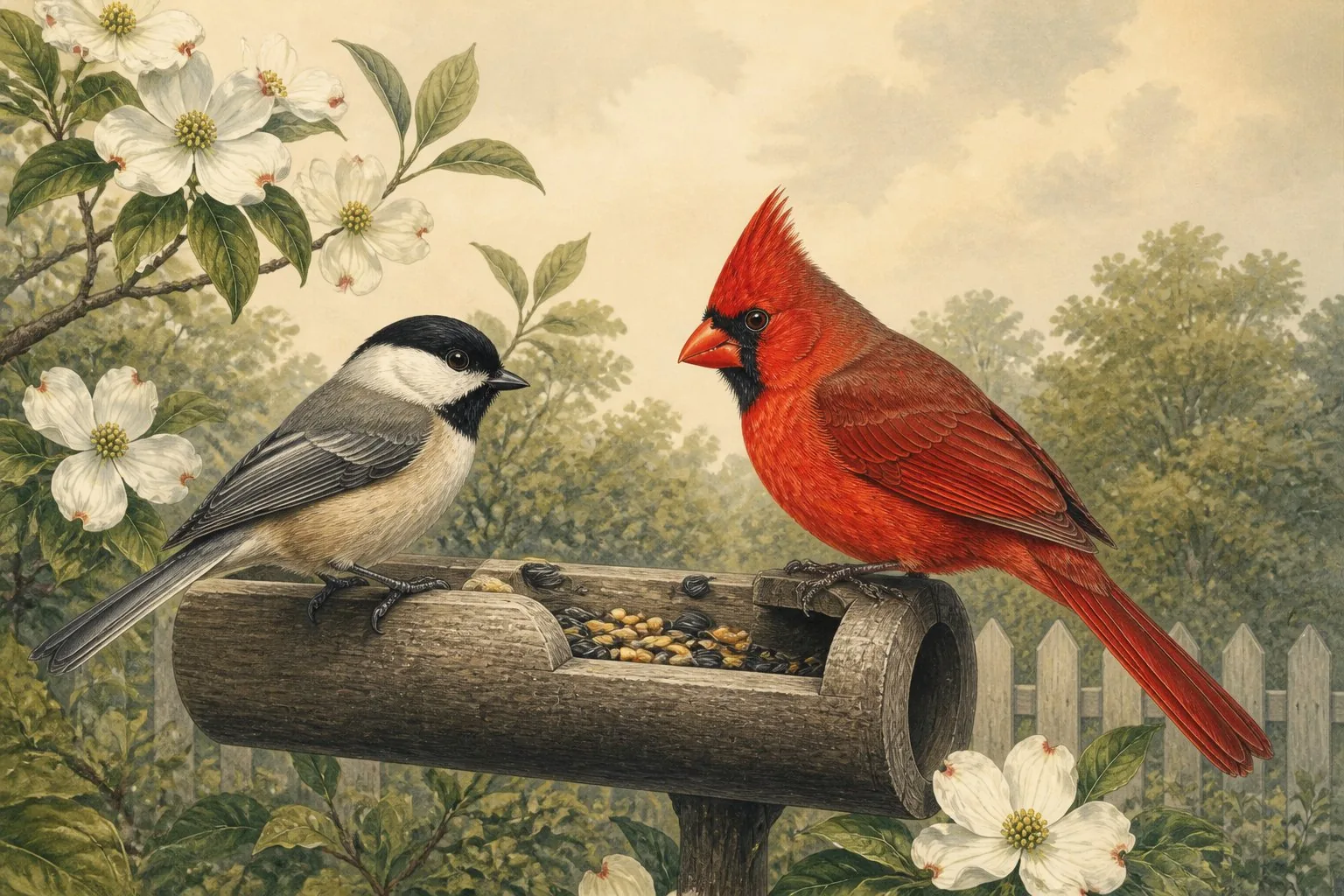
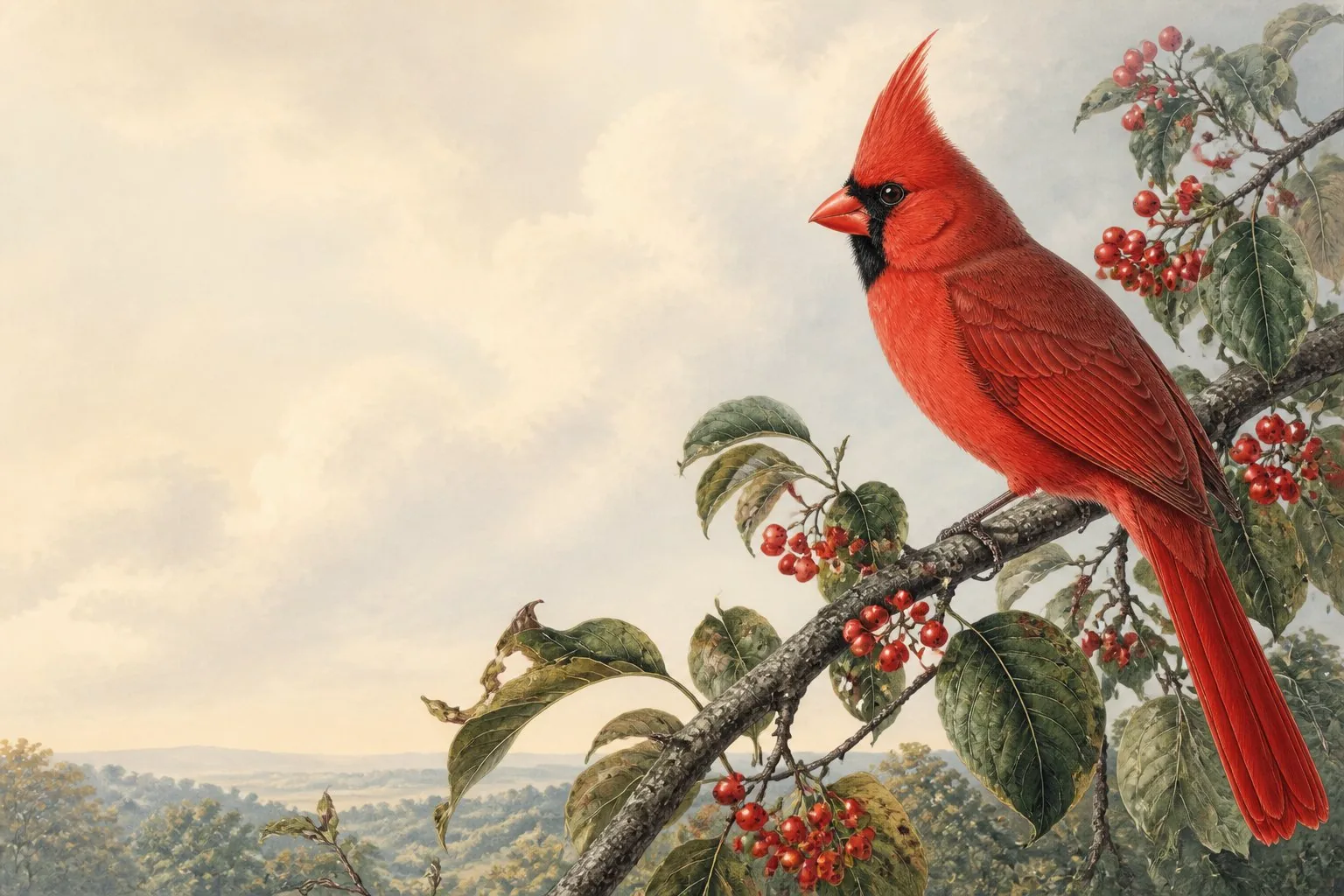
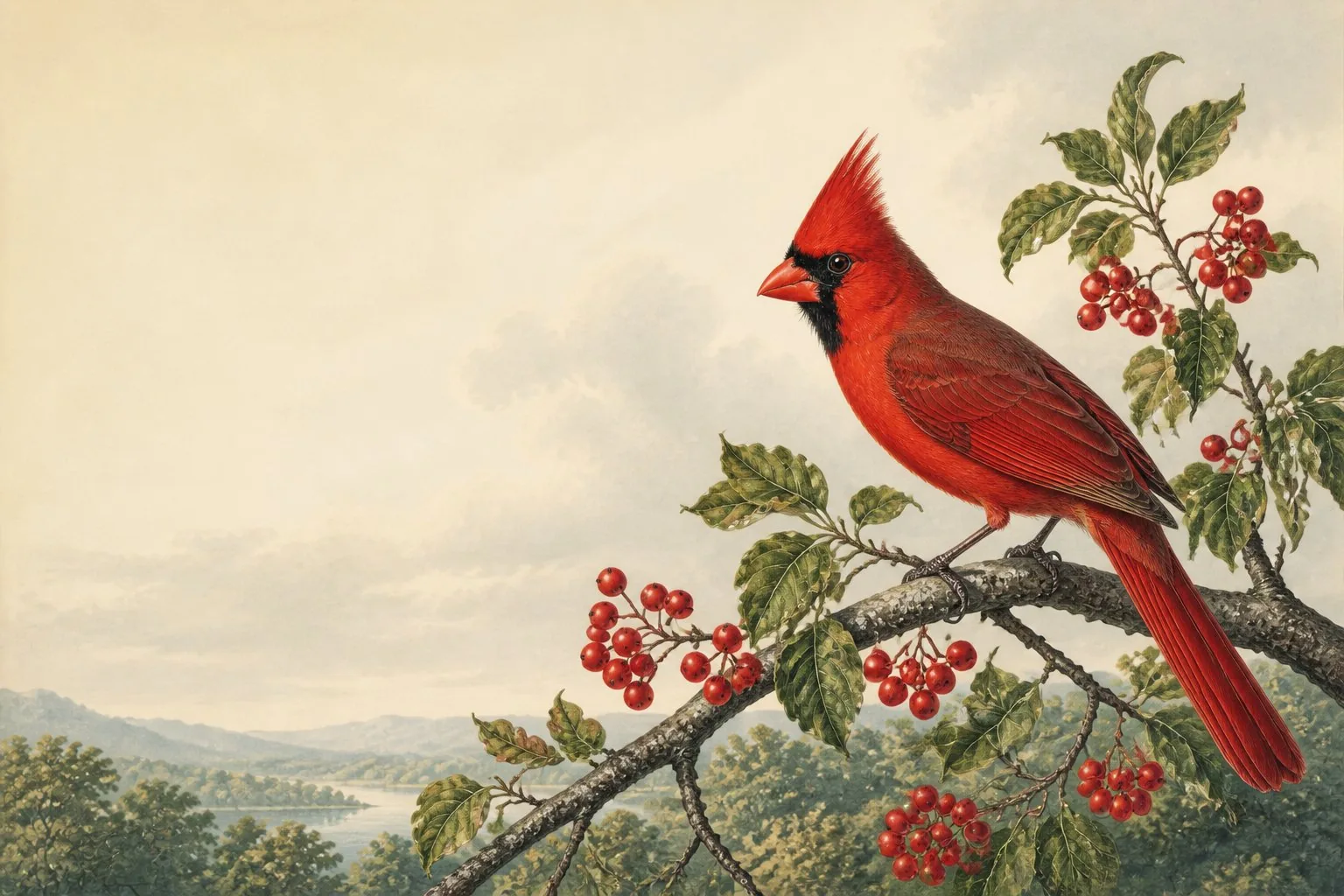
Watch a Northern Cardinal at a feeder long enough and you will see the thing that makes black-oil sunflower seed worth understanding. She picks up the seed, tips it lengthwise between the mandibles, and splits the shell in a single clean motion. Two seconds. Kernel gone. Shell gone. Next seed.
That efficiency is not coincidence. It is the reason Project FeederWatch - Cornell Lab of Ornithology’s multi-decade citizen science program - calls black-oil sunflower “the most common type of seed offered at feeders in North America.” Not the most popular with buyers. The most commonly eaten by birds. The distinction matters.
Two seeds, one clear choice
Most feeders carry two types of sunflower: black oil and striped. The case for black oil is structural, not a matter of preference.
Black-oil seeds have thin shells and kernels with a high fat content. Project FeederWatch notes that this combination makes them “the preferred food item for a wide variety of birds” - including species too small to crack a striped shell. Striped sunflower is harder-shelled and lower in oil, which limits the field to birds with strong, heavy beaks: cardinals, jays, larger finches. Black oil opens that field to chickadees, titmice, nuthatches, and small sparrows. Most of the birds people want to see at a feeder can handle it.
There is a third option: hulled sunflower hearts. No shell means no mess below the feeder and no wasted energy for the bird. The cost is higher and the hearts spoil faster - Audubon notes that sunflower seeds stored in heat “can destroy the nutrition and taste,” and the effect is more acute with hulled seed that has lost its shell protection. Hearts earn their place in winter or under covered feeders where airflow keeps them dry. Before you commit to a large bag of hulled, read about what rain does to exposed seed.
What each bird does with it
The behaviors at a sunflower feeder differ enough to be worth watching. Finches - House Finches (Haemorhous mexicanus), American Goldfinches (Spinus tristis) - process seeds at the feeder in what Audubon’s writers describe as “the blink of an eye.” The upper mandible has a groove along its cutting edge. The lower half fits into it. The bird positions the seed with its tongue, closes the beak in a slight back-and-forth slicing action, husks the shell sideways, and swallows the kernel. The whole sequence, slowed and magnified, reads like a small machine. At normal speed it reads like nothing at all.
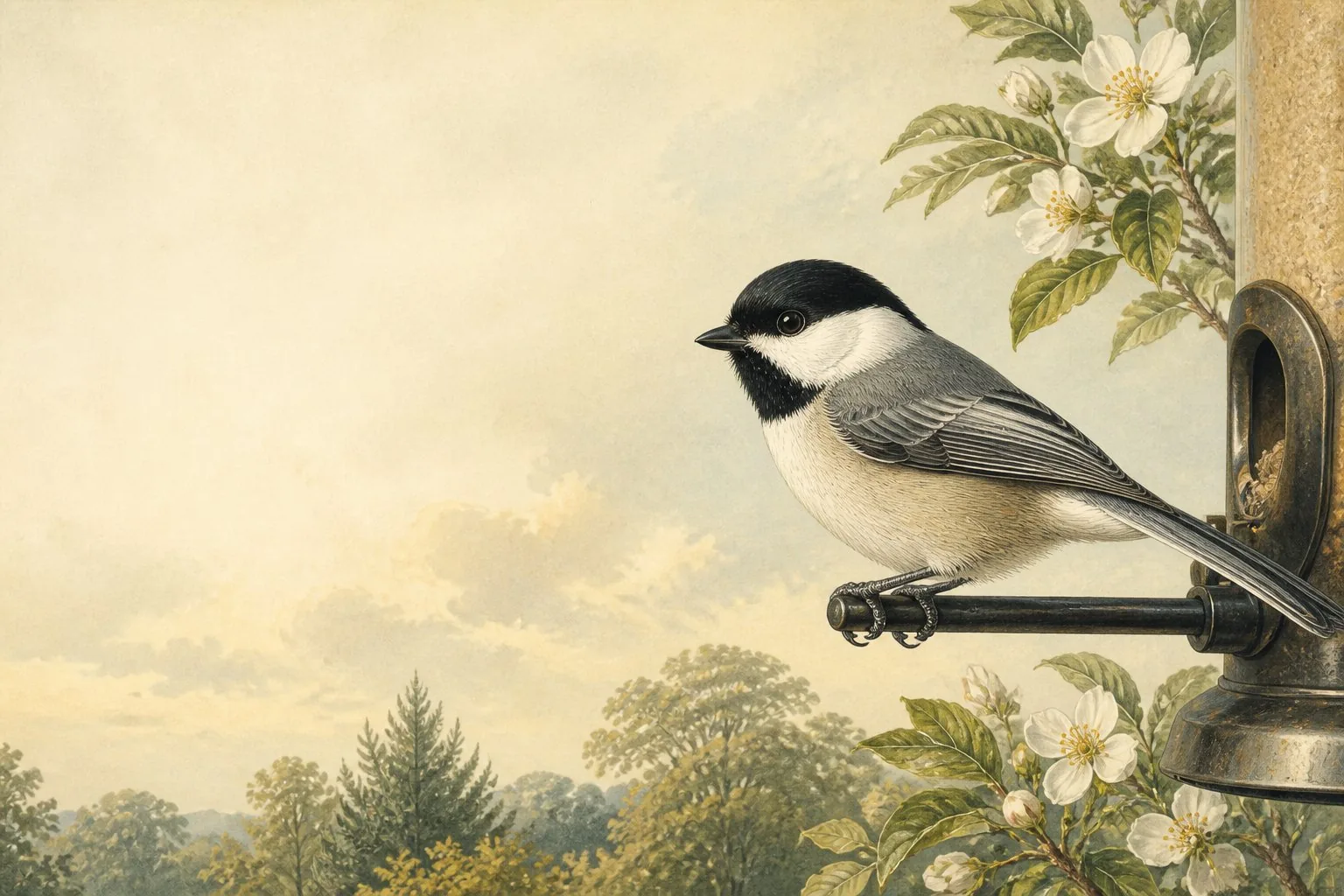
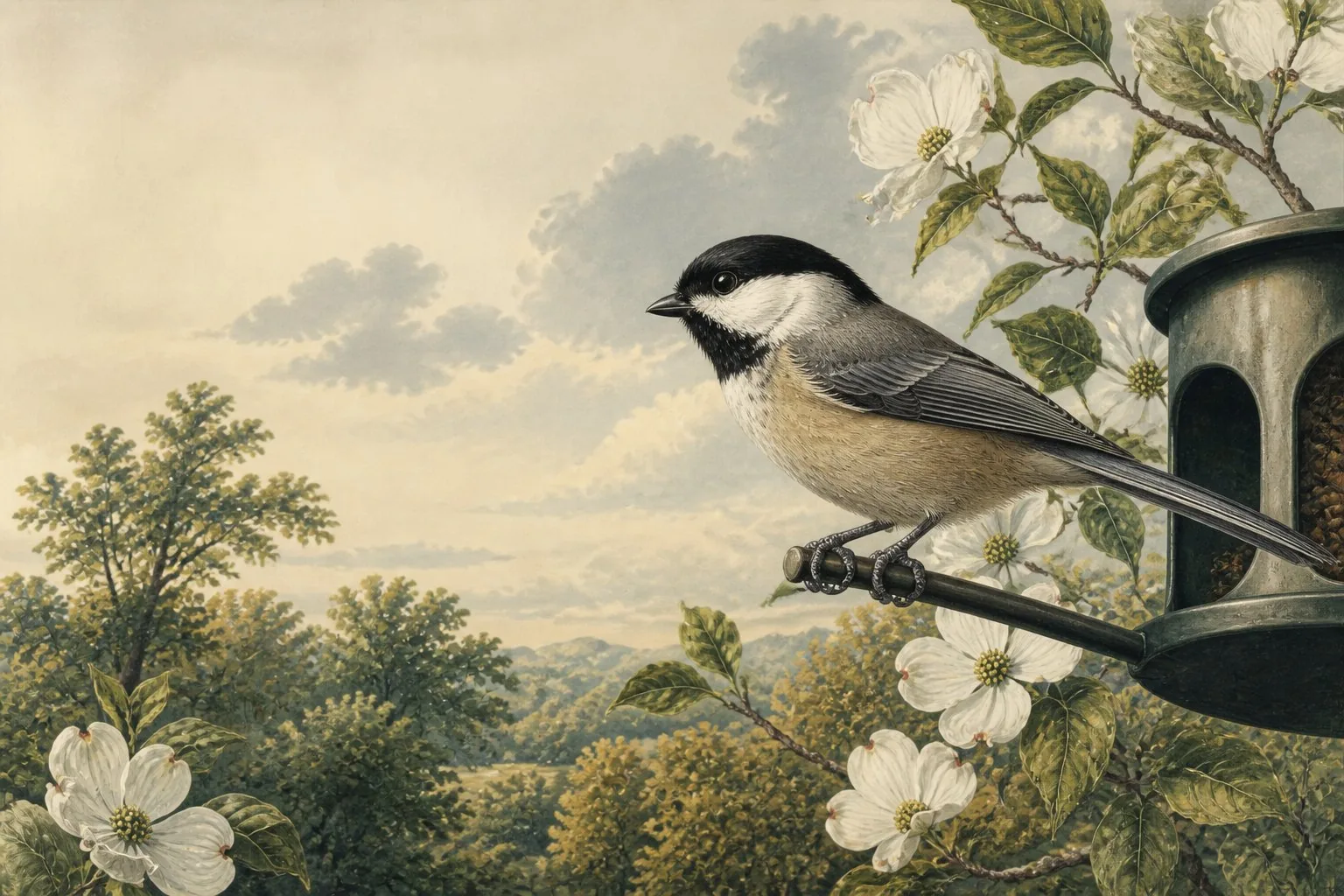
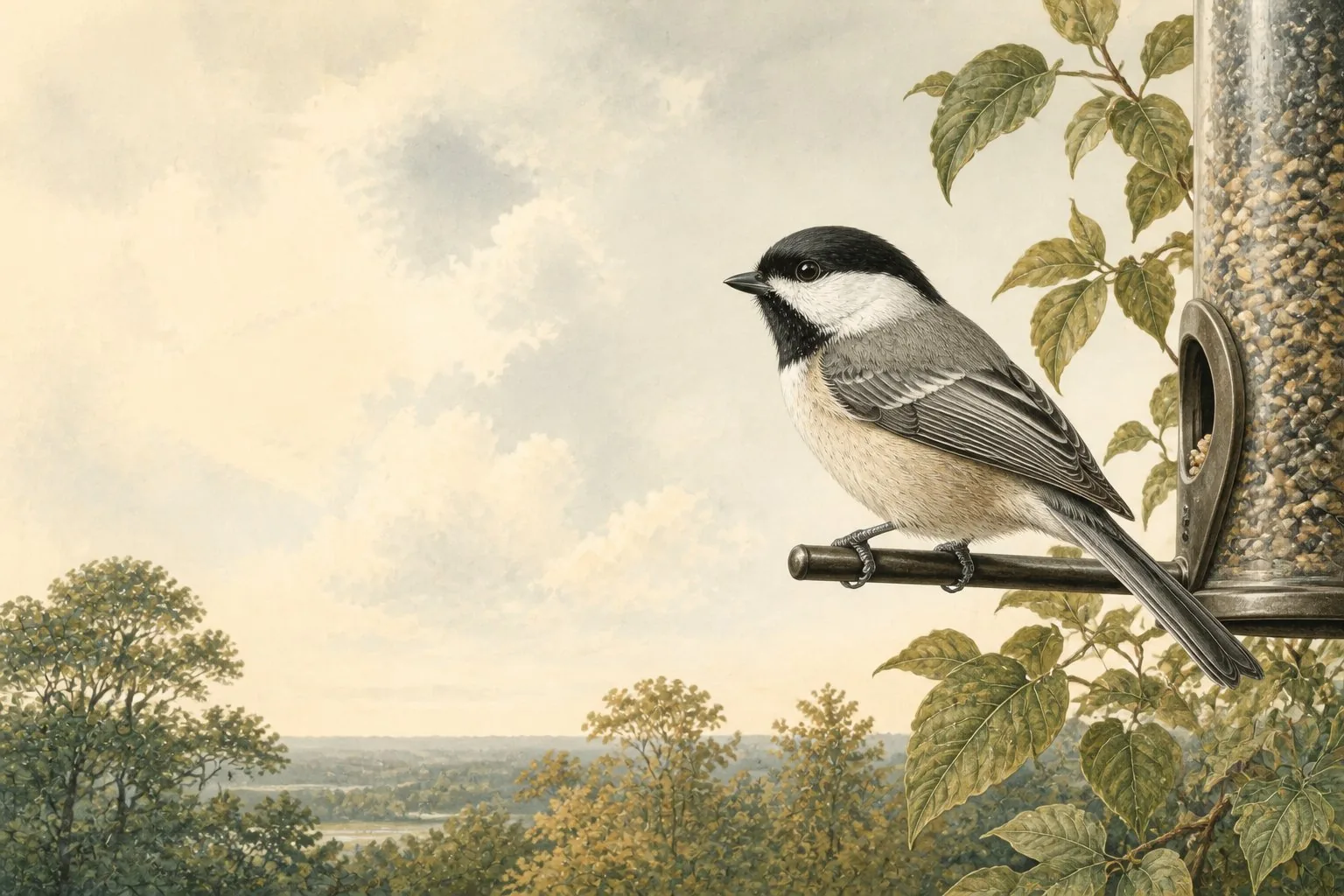
Black-capped Chickadees (Poecile atricapillus) cannot do this. They lack the finch’s specialized groove. A chickadee takes one sunflower seed at a time, flies to a nearby branch, holds the seed against the bark with its feet, and hammers the shell open with the bill tip. Then it flies back. Then it does it again. If your chickadees seem restless at the feeder, that is why: they are not eating there, they are shopping.
White-breasted Nuthatches (Sitta carolinensis) take a different route. They wedge seeds into bark crevices and hammer them open, then cache the extras - storing them one at a time under loose bark or lichen on their territory. Audubon notes they cover cached items with bark or moss. A nuthatch working your yard in November may be less interested in the meal than in the larder.
Black-oil sunflower seed is not the most convenient bird food or the cheapest. It is the one that closes the fewest doors - a thin-shelled, fat-dense seed that birds from chickadees to cardinals can open, eat, and return for.
Which birds come
Cornell’s All About Birds lists black-oil sunflower among the favorite feeder foods of cardinals, chickadees, finches, and sparrows. Downy Woodpeckers (Picoides pubescens) visit sunflower feeders between suet trips. American Goldfinches - almost exclusively seed eaters, with sunflower and nyjer as their two feeder preferences - will take black-oil from nearly any style of feeder. Mourning Doves (Zenaida macroura) and Dark-eyed Juncos (Junco hyemalis) feed on spilled seed below the feeder, so a tube or hopper stocked with sunflower effectively feeds ground birds too, at no extra cost.
An Audubon birdseed guide notes that European Starlings (Sturnus vulgaris) - an introduced species that can overwhelm feeders - struggle with sunflower seeds because their beaks are not built for cracking them. A feeder stocked with black-oil sunflower and fitted with a weight-sensitive perch does more to shape who visits than almost any other combination.
How to offer it
Audubon’s Steve Kress recommends hopper or tube feeders for sunflower seeds, positioned at the height where shrub and treetop foragers feel comfortable. The placement of the feeder relative to cover matters as much as the seed type: cardinals and chickadees both want a clear sightline with dense cover within a few feet for quick retreats.
Wet seed is a practical problem. Hulled seed in a platform feeder can mold quickly after rain. A tube feeder with drainage holes, or a covered hopper, keeps black-oil dry through most weather. How the feeder is hung also affects whether wind tips seed out faster than birds can eat it.
Crows are a different challenge. They are confident at open feeders and will displace smaller birds. Keeping crows away from feeders takes targeted steps - feeder design and placement rather than deterrents that also push away the birds you want.
One practical note about storage: black oil and striped seeds keep well in a sealed metal container in a cool, dry place. Hulled hearts turn faster without their shell. If a feeder that was busy last week has gone quiet, check the seed before assuming the birds have moved on.
The simplest argument
Bill Thompson III, writing for Audubon, calls black-oil sunflower the “hamburger of the bird world” - widely eaten, reliably useful, rarely wrong. The framing is right even if it undersells the seed slightly.
The real case is this: of all the seeds a feeder might hold, black-oil sunflower is the one that fewest birds will ignore. Nyjer suits finches. Safflower suits cardinals and discourages squirrels. Millet suits sparrows and juncos. Sunflower suits nearly everyone. A feeder with one kind of seed should hold this one. A feeder with many should anchor on it.
The chickadee hammering a seed open on your oak branch in February is doing the same thing she was doing before you hung the feeder. You have just made it easier to watch.