Backyard
How to Build a Wood Duck Nest Box
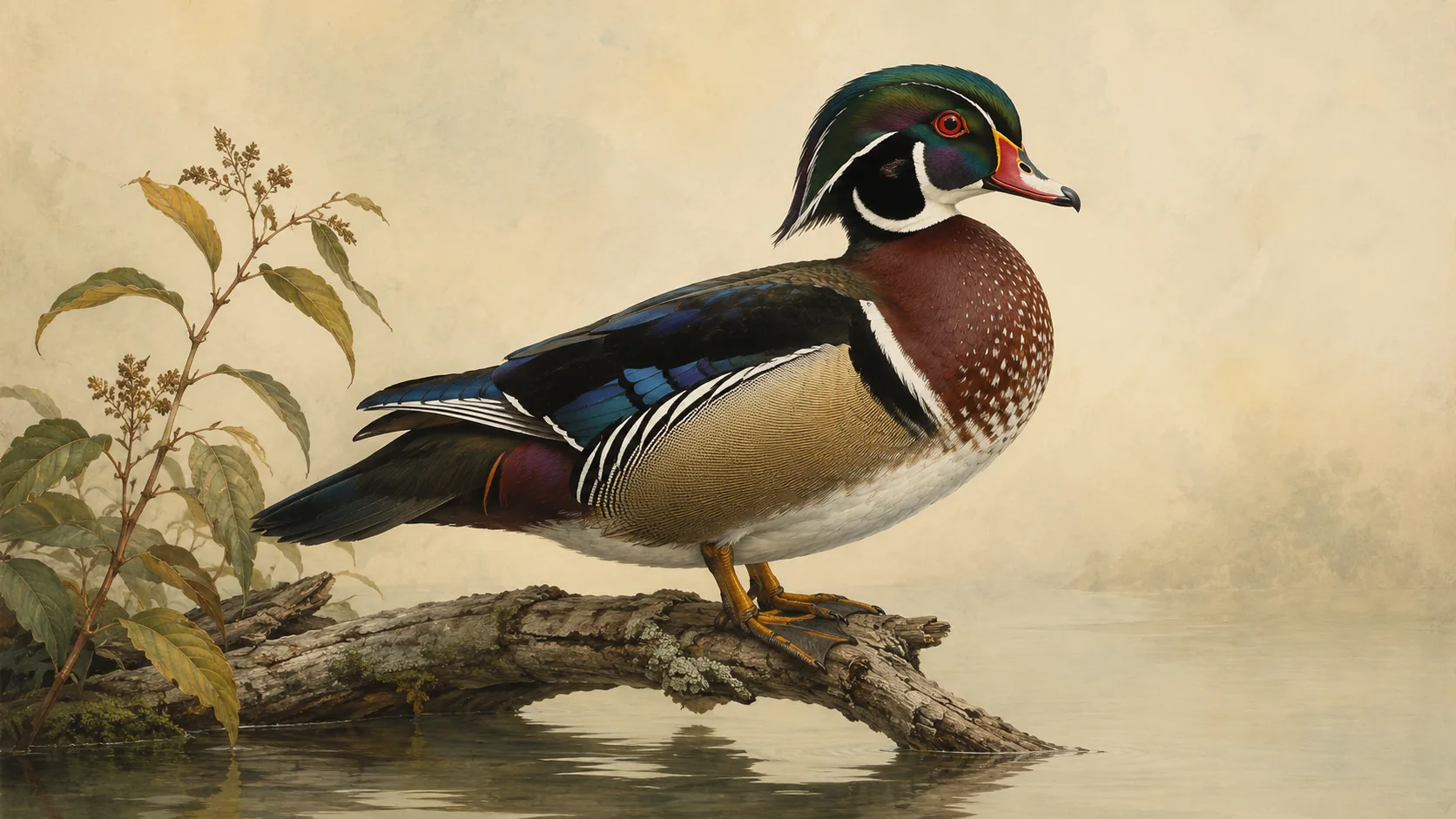
On the morning a Wood Duck hen leads her ducklings out of a nest box for the first time, they do not wait for a gentle slope to the water. They jump. One day old, from a hole six feet above the surface, they tumble and bounce and swim. That first leap is only possible if someone built the box right.
Wood Ducks are obligate cavity nesters. They cannot excavate their own holes. They depend entirely on old snags with existing cavities - or on boxes built and placed by people. By the mid-twentieth century, logging had stripped most of those old-growth snags from wetland edges across North America, and Wood Duck populations fell sharply. The recovery came through nest boxes. The Cornell Lab of Ornithology calls the Wood Duck one of the great nest-box success stories in North American waterfowl conservation. That recovery is still happening, and you can be part of it.
Why the Details Matter
A rough approximation is not enough here. The entrance hole must be the right shape. The interior ladder is not optional. The predator guard is not a suggestion. Get these wrong and you are not helping ducks - you are feeding raccoons and leaving ducklings to die in a smooth-walled box they cannot climb.
The specs below come from the Cornell Lab of Ornithology’s All About Birds, the National Audubon Society, the U.S. Fish and Wildlife Service, and state wildlife agency guidelines. They are not estimates.
Materials and Tools
Use rough-cut cedar, pine, or another rot-resistant wood. Do not use smooth planed lumber - ducklings need to grip the interior walls. Do not use pressure-treated wood anywhere inside the box. Rough-sawn cedar is the standard choice: it weathers well, resists rot, and the texture helps.
You will also need:
- Exterior screws (not nails, which work loose)
- Hardware cloth or a sharp chisel for the interior ladder
- Coarse wood shavings - not sawdust, not fine chips
- A metal post or sturdy 4x4 wooden post
- A cone-type or stovepipe predator baffle
The wood shavings matter more than most guides admit. Sawdust compacts, can suffocate eggs, and traps ducklings. Wood shavings - the coarse kind sold for small-animal bedding - stay loose and allow drainage.
Building the Box: Exact Dimensions
| Dimension | Spec |
|---|---|
| Interior floor | 10 x 10 inches (up to 12 x 12 acceptable) |
| Interior height | 24 inches |
| Entrance hole | Oval, 4 inches wide x 3 inches high |
| Hole height above floor | 16 to 18 inches |
| Wood shavings depth | 4 inches |
The entrance hole must be an oval, not a circle. A 4-inch round hole is easier for raccoons to exploit. The oval - 4 inches wide, 3 inches high - is the correct spec from both the Cornell Lab and Audubon. Cut it carefully.
Directly below the entrance hole on the interior front wall, install an interior ladder. This is either a strip of hardware cloth stapled firmly to the wood, or a series of horizontal kerf cuts made with a saw across the grain. Without this, ducklings hatched at the bottom of a 24-inch box cannot climb out. Wood Ducks use their sharp claws to scale deep natural cavities; they will use the same instinct on your ladder. Leave it out and the box becomes a trap.
Cut a clean-out panel - a hinged or screwed side panel - so you can reach the interior easily each winter. It is easier to build it now than to retrofit it later.
Do not paint or stain the exterior with anything bright. A weathered grey finish is fine. The exterior can be left bare.
Mounting and Placement
A free-standing metal or wooden post is the correct mount. Do not attach the box to a tree - it gives predators a climbing route that bypasses any baffle you install.
Over water, mount the box at least 3 feet above the historic high-water line. Over land, mount at least 6 feet up, and 10 feet is often recommended by state wildlife managers when raccoon pressure is high. The hole should face the water. If mounting on land, position the box within 100 feet of the water’s edge.
Below the box, on the post, fit a cone-type or stovepipe baffle. Research on predator guards consistently shows that boxes fitted with cone baffles achieve the highest nesting success rates of any box configuration. The baffle only works if there are no branches, fences, or other structures within reach of the entrance hole. A raccoon that can bypass the baffle will do so.
Annual Maintenance
Clean out the box every late winter - January or February across most of the range - before hens begin scouting sites. Remove all old material and replace with a fresh 4-inch layer of coarse wood shavings.
The Wood Duck is the only North American duck that regularly produces two broods in a single season. After the first brood departs, a mid-season clean and re-shaving can support a second nesting attempt by the same hen or a different one. Check the hardware, re-tighten any loose screws, and inspect for cracks or rot each winter while you are at it.
Dump Nesting: The Problem With Crowded Boxes
Dump nesting - technically conspecific brood parasitism - happens when a second or third hen lays eggs in a box already occupied by a nesting female. It is most common when boxes are close together and visible to one another. The visiting hen does not incubate; she simply adds to the clutch and leaves.
A normal Wood Duck clutch is roughly 9 to 14 eggs. A clutch of 18 or more - sometimes far larger - is a sign of dump nesting. Hatch rates in heavily parasitized nests fall sharply, and the host hen may abandon the nest entirely.
The fix is spacing. Older guidelines recommended only a short gap between boxes. Wildlife managers now recommend placing boxes much farther apart and siting them so they cannot see each other. If your boxes are crowded and you are seeing oversized clutches, space them out and screen them from one another.
Build the box right once, maintain it every winter, and space it properly - and a hen will do the rest. The Wood Duck’s recovery from near-collapse to abundance is one of the clearest proofs that careful nest-box work changes outcomes at a population level.
If you want to see what you are working toward, the Cornell Lab’s All About Birds species account for the Wood Duck has detailed breeding and habitat information. And if you are monitoring wetland areas where Mallards also breed, be aware that Hooded Mergansers also accept the same box design, so you may get a welcome surprise occupant.
For more on finding the right wetland habitat, see where to see ducks in wooded wetlands.