Backyard
How to keep crows away from bird feeders and yards
You fill the feeder on a Tuesday morning. By noon, a crow has landed, swept the platform clean, and called the rest of the family over.
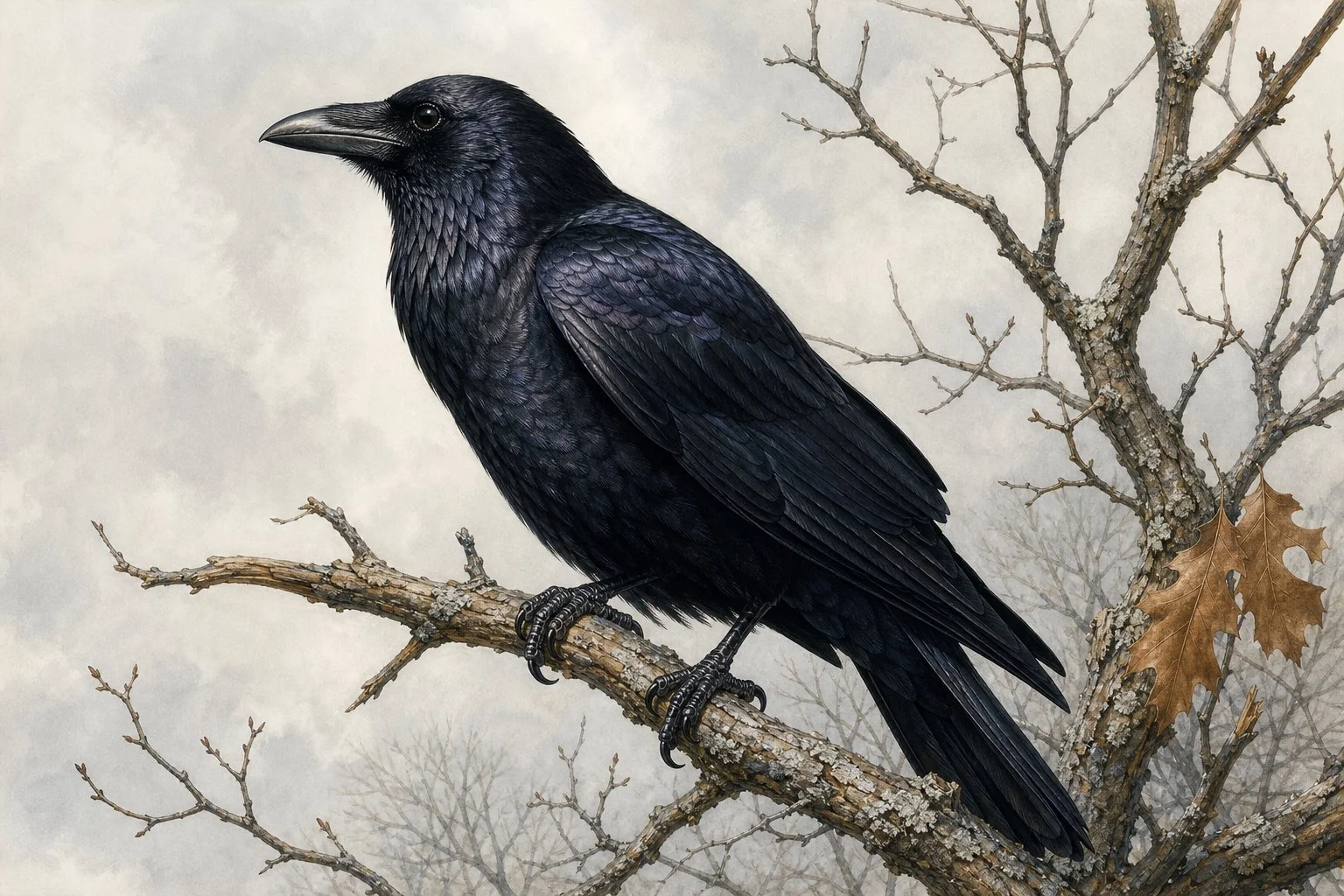
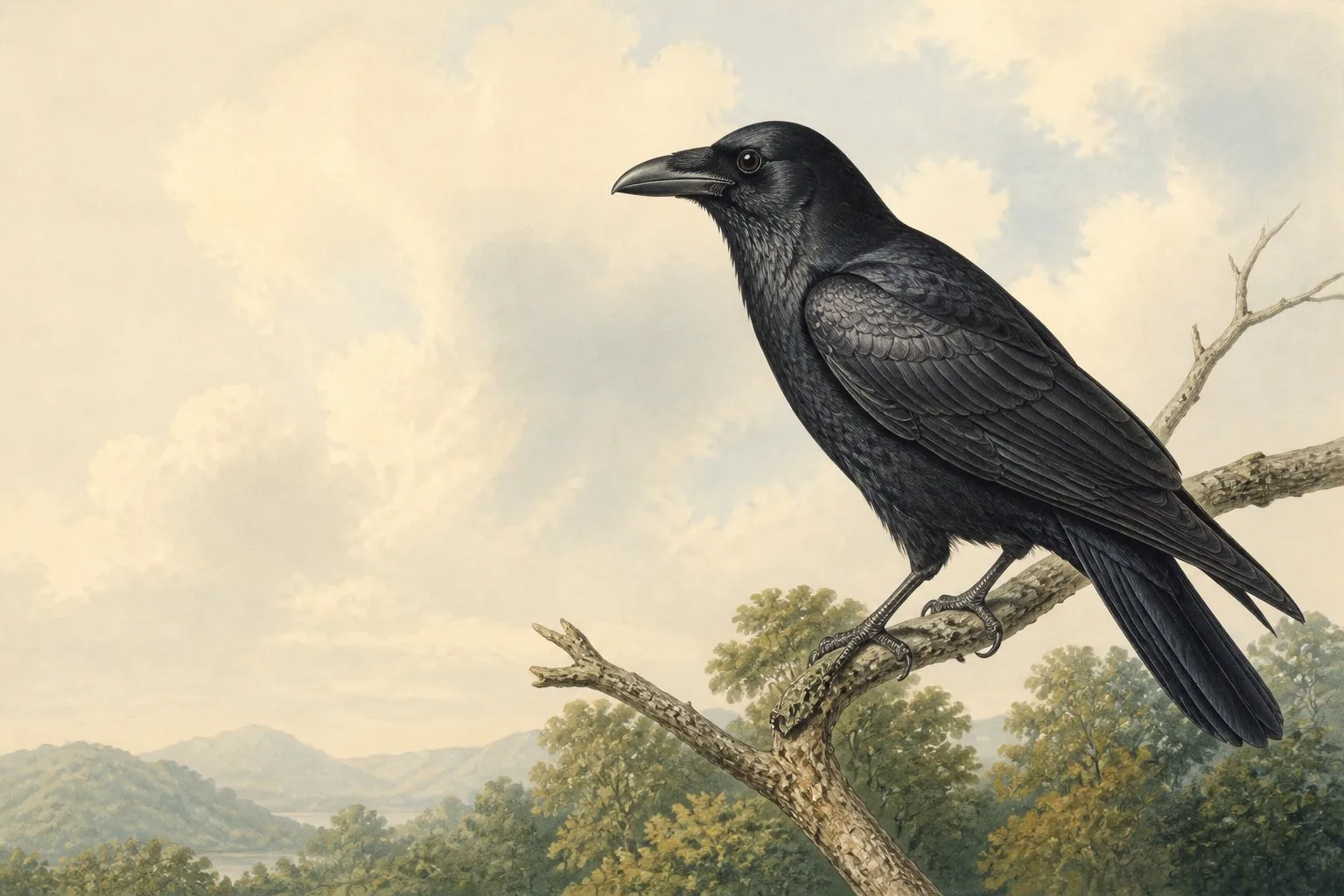
The American crow (Corvus brachyrhynchos) is not a bully in the way a grackle is a bully. It is something more inconvenient: it is intelligent. Audubon’s field guide puts the species at 16 to 21 inches long with a wingspan of 34 to 39 inches and a weight between 11 and 22 ounces. It eats almost anything - insects, carrion, grain, eggs, fruit, garbage, and the seeds you put out for your chickadees. The estimated global population stands at 28 million. They are everywhere and they are paying attention.
Most crow-deterrent advice treats crows as if they were pigeons. Pigeons can be nudged away by inconvenience. Crows notice that you moved the feeder, learn the new location, and tell other crows. A 2009 study in Animal Behaviour by Marzluff and colleagues at the University of Washington found that wild American crows recognised individual human faces and communicated perceived threats to other flock members - with that wariness persisting for at least 2.7 years. The crow you antagonise this spring may still be wary of you in 2028.
The most effective deterrent is not a decoy or a reflector. It is a feeder a crow cannot fit through.
Make the feeder structurally inaccessible
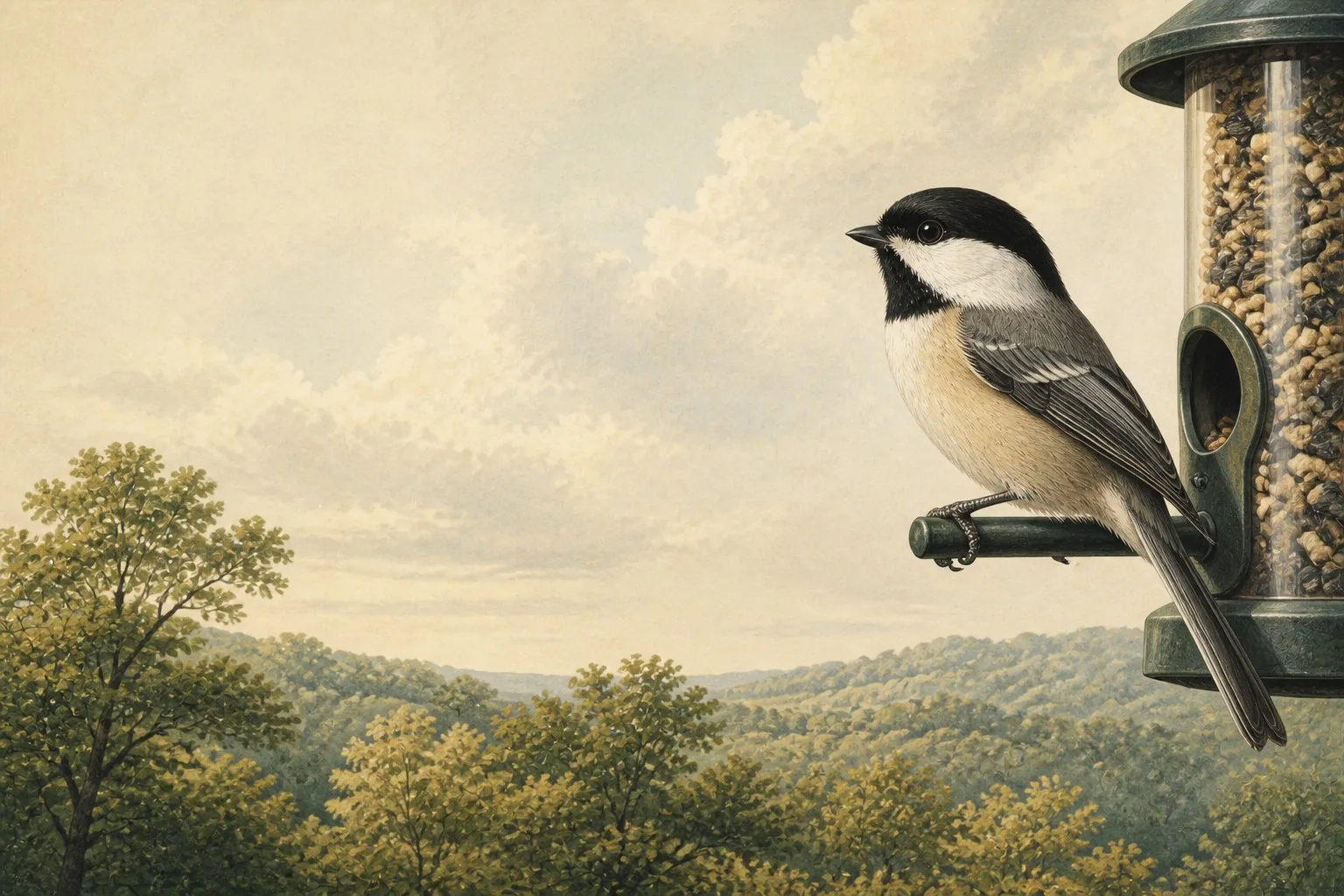
This is the only approach that does not depend on habituation. A caged tube feeder - a tube with a wire mesh cage around it - has openings sized to let American Goldfinches, White-breasted Nuthatches, and Carolina Chickadees enter while blocking birds the size of a crow. Openings around 1.5 inches allow most small songbirds through and exclude crows entirely. The crow does not habituate to this because there is nothing to habituate to. The seed is simply unreachable.
Weight-sensitive feeders operate on the same logic. A spring-loaded perch closes the seed ports when a bird above a threshold weight lands on it - usually set between 4 and 6 ounces, which excludes crows at 11 ounces and above but allows most songbirds. Both cage and weight-sensitive designs are sold commercially. Neither requires ongoing maintenance. Neither teaches the crow anything useful.
For ground-feeding species, the practical answer is to choose seed that crows find less interesting. Safflower seed, nyjer, and millet attract many feeder favorites but rank low on the crow’s preference list. Switch the platform feeder to safflower and crows often stop competing for it.
Remove what draws them in the first place
Crows do not appear at random. Cornell’s All About Birds notes that the species eats “almost anything” and is an opportunistic generalist. The problem at the feeder is rarely only the feeder. Unsecured garbage, open compost bins, pet food left outside, and fallen fruit from garden trees all function as crow attractants. A yard that is solving one problem while offering four others is not solving the problem.
A crow family that has established your yard as a foraging territory will investigate every new food source in it, including a well-placed feeder. Reduce the overall food signal and the territory becomes less worth defending. Sealed bins, latching compost containers, and pet food brought inside after meals are not glamorous solutions. They work.
Why visual deterrents underperform
Shiny tape, plastic owls, pinwheels - the advice is everywhere. The results are inconsistent, and the reason is the same intelligence that makes crows difficult to exclude. Crows investigate novelty rather than flee it. A crow that approaches a plastic owl, watches it fail to move or react, and eats from the feeder beneath it has just been trained that plastic owls are irrelevant. The next crow in the family group skips the assessment entirely.
Reflective surfaces may disrupt approach briefly - a few days, perhaps a week. Relocating decoys regularly extends that window but does not close it. If visual deterrents are the only option available, they are worth trying. They should not be mistaken for a permanent solution.
What you are working with
The American crow lives in family groups. Cornell’s All About Birds describes it as the most widespread cooperatively breeding species in North America, with family units that can include parents and up to five helpers from prior years - and sometimes as many as 15 birds in a single group. When one crow finds a food source, others follow. This is not a single bird you are managing. It is a coordinated group whose members share information.
This is also why exclusion works better than deterrence. A cage feeder that a crow cannot open remains closed no matter how many crows investigate it. A decoy that failed to deter one crow is quickly ignored by the next. The positioning of your feeders matters less than the physical design of the feeders themselves. Check that wet seed has not accumulated in any tray feeder too - fermenting seed is a signal that draws every generalist in the neighborhood.
The crow that could not get into the cage feeder this morning is already somewhere else by afternoon. Make the access cost high enough and the family moves on. They are not sentimental about it. Neither should you be.