Backyard
How to hang bird feeders the right way
The feeder that sits ignored for three weeks is almost always in the wrong spot, not filled with the wrong seed.
Placement is the variable most people skip because it seems obvious. Birds eat where food is, so any tree branch will do. But where a feeder sits relative to cover, to windows, and to every launch point a squirrel can use determines whether the yard becomes a busy station or a persistent disappointment. Get the geometry right first.
The window distance most people get wrong
The decision that causes the most harm is hanging a tube feeder roughly 10 to 20 feet from a large picture window and calling it placed. That distance is where birds die.
Research by Daniel Klem Jr. of Muhlenberg College - who has spent decades studying bird-window collisions - established that birds are killed at windows most frequently when they leave a feeder positioned 15 to 30 feet from the glass. At that distance, a flushing bird builds enough speed to kill itself on impact. Massachusetts Audubon confirms the finding: birds leaving a feeder only two or three feet from a window rarely reach injurious velocity before hitting the pane.
The practical rule is the 3/30 rule. Place feeders either within 3 feet of windows or beyond 30 feet from them. Window feeders mounted directly on the glass are not a compromise - by this logic, they are the safest option. A bird that panics and crosses two feet of air bounces off. A bird that crosses 20 feet does not.
The right place for a feeder is within 3 feet of the window or beyond 30 feet from it. The middle distance is where birds die.
Massachusetts Audubon estimates several hundred million birds die in window collisions in North America each year. Feeder placement is one of the cheapest interventions available.
Height and cover
Most feeders work best between 5 and 6 feet off the ground. That height keeps cats from reaching perched birds, stays accessible for refilling, and positions a pole-mounted baffle - which should have its top 4.5 to 5 feet above ground - where it can still block a climbing squirrel.
The best place for a bird feeder is neither deep in the yard nor out in open lawn. Mass Audubon’s guidance on cover distance is precise: position feeders 12 to 15 feet from trees and shrubs. Close enough that birds have cover to bolt to when a hawk appears, far enough that squirrels cannot use the same branches as a launch point.
The RSPB puts the same logic differently: feeders should sit somewhere quiet, sheltered from prevailing wind, and where birds can see what is approaching. A feeder tucked into a hedge corner satisfies the first two and fails the third. Birds that cannot watch their surroundings while eating get taken.
Squirrel arithmetic
Mass Audubon’s figures on squirrel capability are worth knowing before you mount anything. A squirrel can jump 6 feet straight up and hurl itself 10 feet horizontally from a tree, fence, or building. Those numbers define the exclusion zone around any feeder pole.
A cone-shaped or cylindrical baffle mounted below the feeder, with its top 4.5 to 5 feet off the ground, prevents climbing. Audubon recommends a minimum baffle diameter of 17 inches. For feeders hung on a horizontal wire, Mass Audubon’s solution is specific: thread each wire end through a 5-foot section of smooth plastic or metal pipe, 4 to 5 inches in diameter. The pipe spins when a squirrel tries to cross, and the squirrel falls.
None of it works if the pole is inside the squirrel’s horizontal range. Clear at least 10 feet from any fence, tree, deck rail, or wall.
Feeder type and the birds it reaches
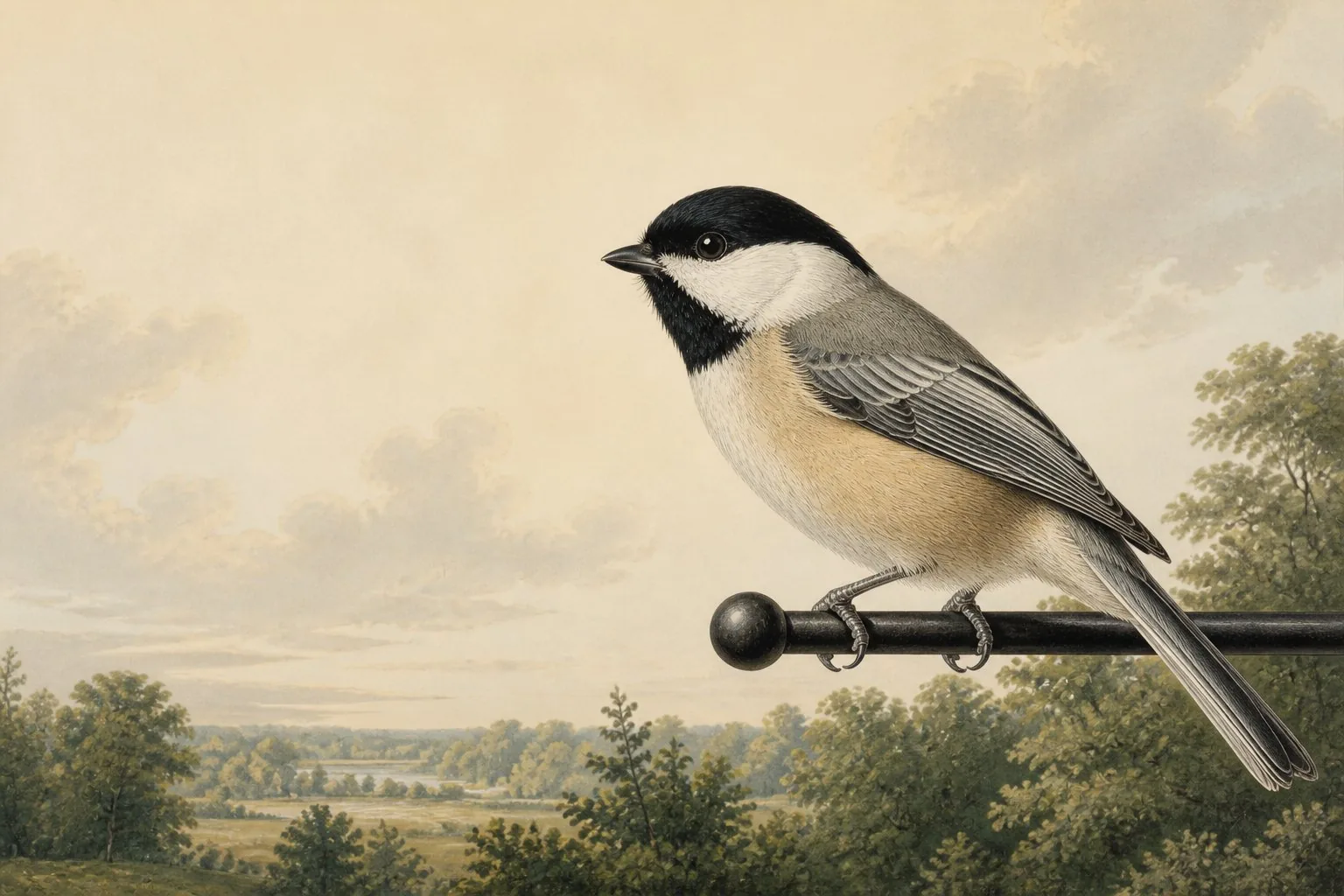
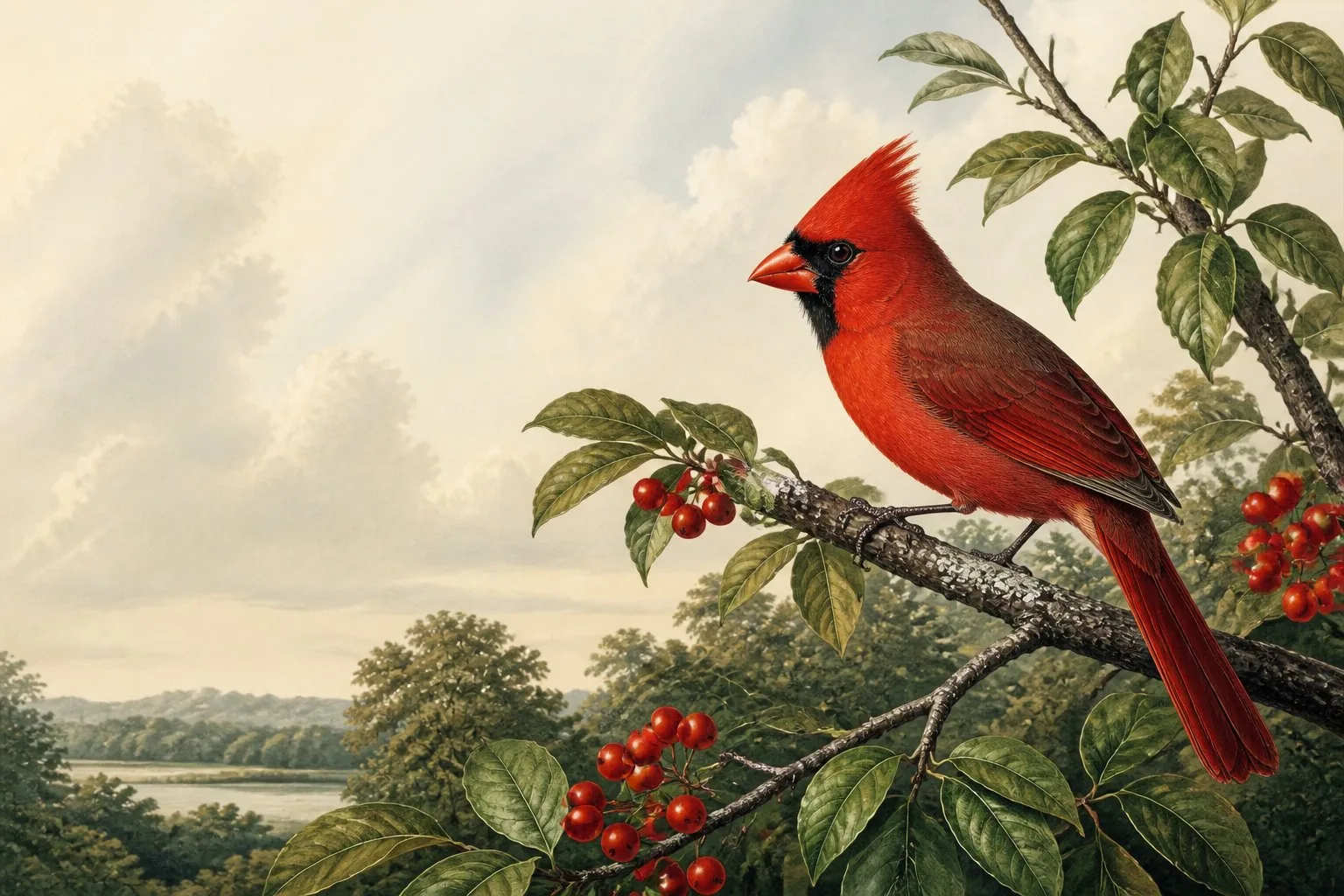
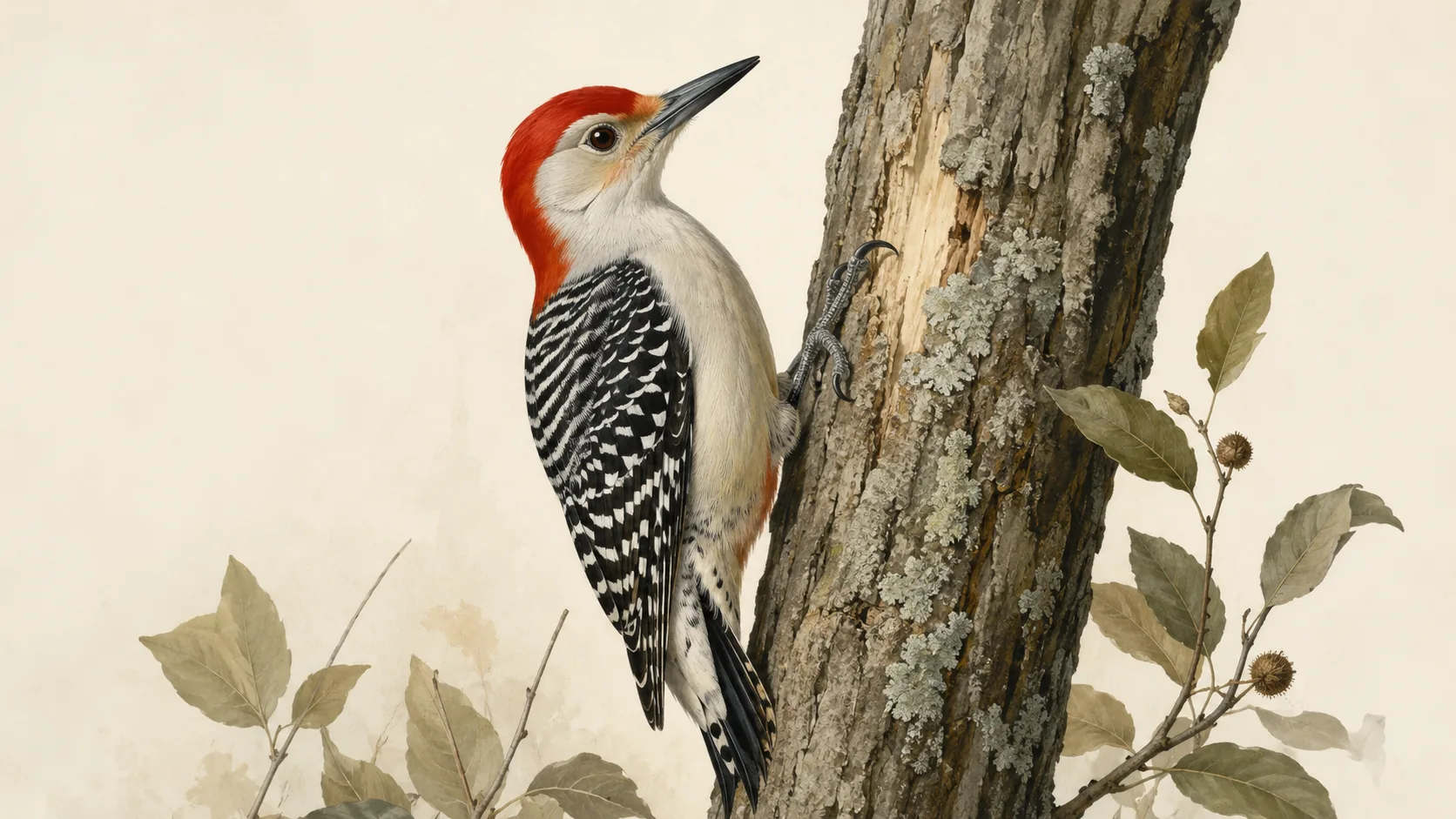
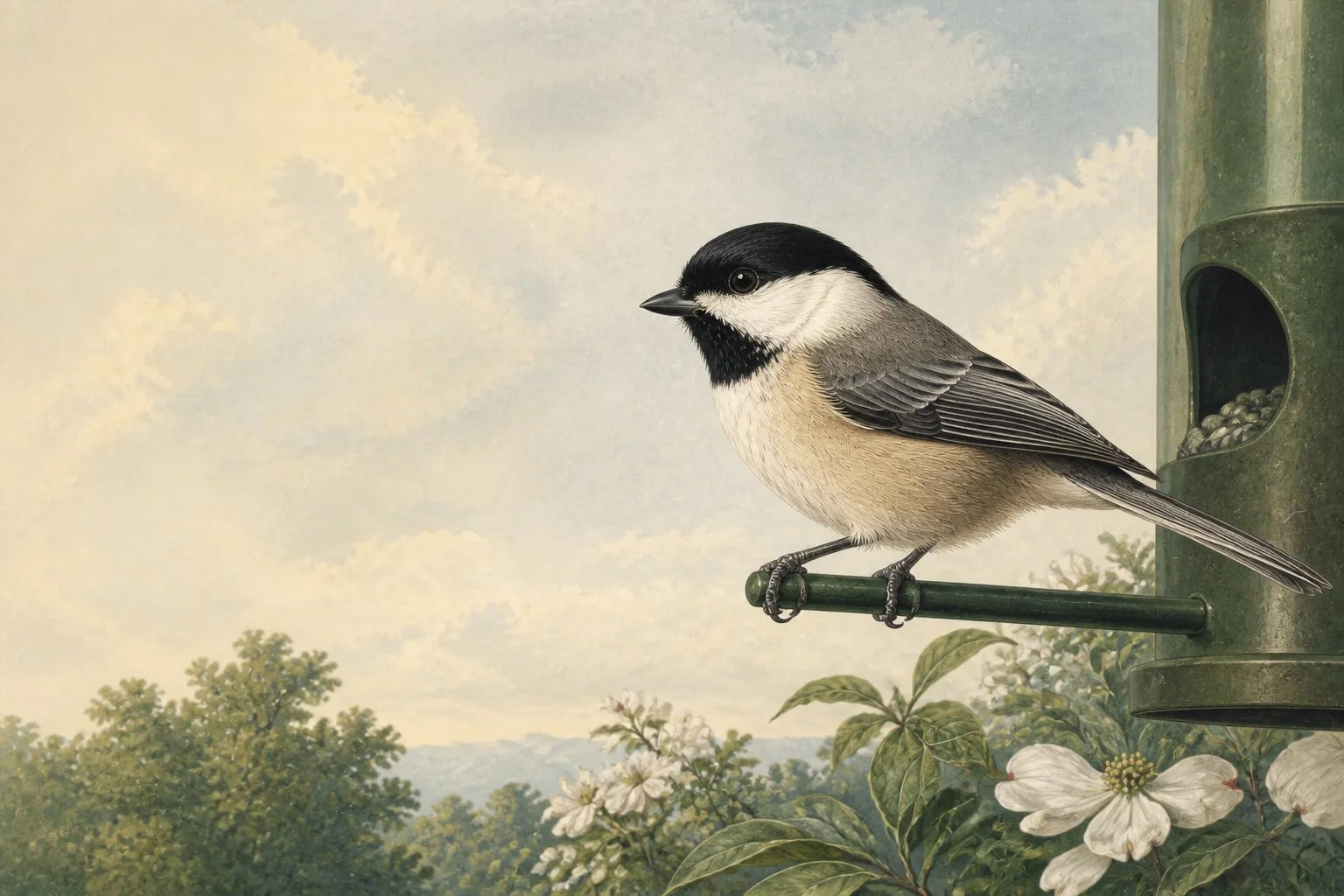
A tube feeder with small ports suits finches and chickadees. A hopper with a wide tray brings Cardinalis cardinalis and blue jays, both of which prefer to stand while eating rather than cling. A suet cage serves woodpeckers and nuthatches, which are built to hang vertical. Platform feeders and open trays attract the widest species mix but need the most frequent cleaning because seed and droppings accumulate in direct contact.
Sunflower seeds work in nearly every feeder type and pull more species than any other single seed. Black-oil sunflower in a tube feeder near a dense shrub at 5 to 6 feet is the baseline that everything else refines.
If crows are displacing smaller birds, feeder style does more than feeder location. A tube feeder with small ports physically excludes a crow. Switching from a platform to a tube removes most of that pressure without relocating anything.
Seed spoilage and cleaning
Wet seed spoils faster than most people expect. A hopper or tube with a roof overhang keeps rain off. In wet climates, fill feeders with smaller amounts more often rather than topping weekly. A dome hung above an uncovered feeder deflects rain and also deters squirrels that drop from above.
Mass Audubon recommends cleaning feeders every two weeks using a one-part bleach to nine-parts water solution. Rinse every surface and dry completely before refilling. Moldy seed kills birds directly.
The Cornell Wildlife Health Lab documents salmonella outbreaks at feeders, concentrated in winters when pine siskins and goldfinches gather in large numbers. The bacteria spread through droppings on seed. When sick birds appear - ruffled feathers, lethargy, poor coordination - Cornell recommends removing the feeder for at least two weeks and cleaning it completely before restoring it. Raking spilled seed and hulls from the ground underneath breaks the fecal-oral cycle. Wear gloves when handling feeders and wash hands after: salmonellosis is one of the few common songbird diseases that can pass to pets and people.
The setup that holds
Pole-mounted, 5 to 6 feet high, with a baffle at 4.5 to 5 feet. Positioned 12 to 15 feet from the nearest cover. Either within 3 feet of any significant window or beyond 30 feet from it. In a spot where you can observe from indoors. Cleaned on a two-week schedule.
That setup is not optimized for looks and it is not optimized for convenience. It is optimized for the birds. Once it runs for a few weeks in a stable spot, the yard builds a reputation. The Northern Cardinal at the holly in November knew before you did.