Field Guide
Yellow-bellied Sapsucker
In an Adirondack sugar maple stand in May, a horizontal row of small square holes circles the trunk at breast height - evenly spaced, precise, each one welling with clear sap. Below the row, an older row. Below that, another, years older. This is a sapsucker tree. The woodpecker is somewhere in the canopy above. The tree is not aware that it is running a restaurant.
The Yellow-bellied Sapsucker has drilled these wells, will return to them, and in doing so has created a resource that more than 40 other species will use. That number is not approximate or impressionistic. Researchers counting species at active sapsucker wells have documented hummingbirds, warblers, kinglets, nuthatches, flying squirrels, and bears returning repeatedly to feed at the same wells the sapsucker maintains. The sapsucker is a keystone. It just doesn’t look like one.
What It Looks Like
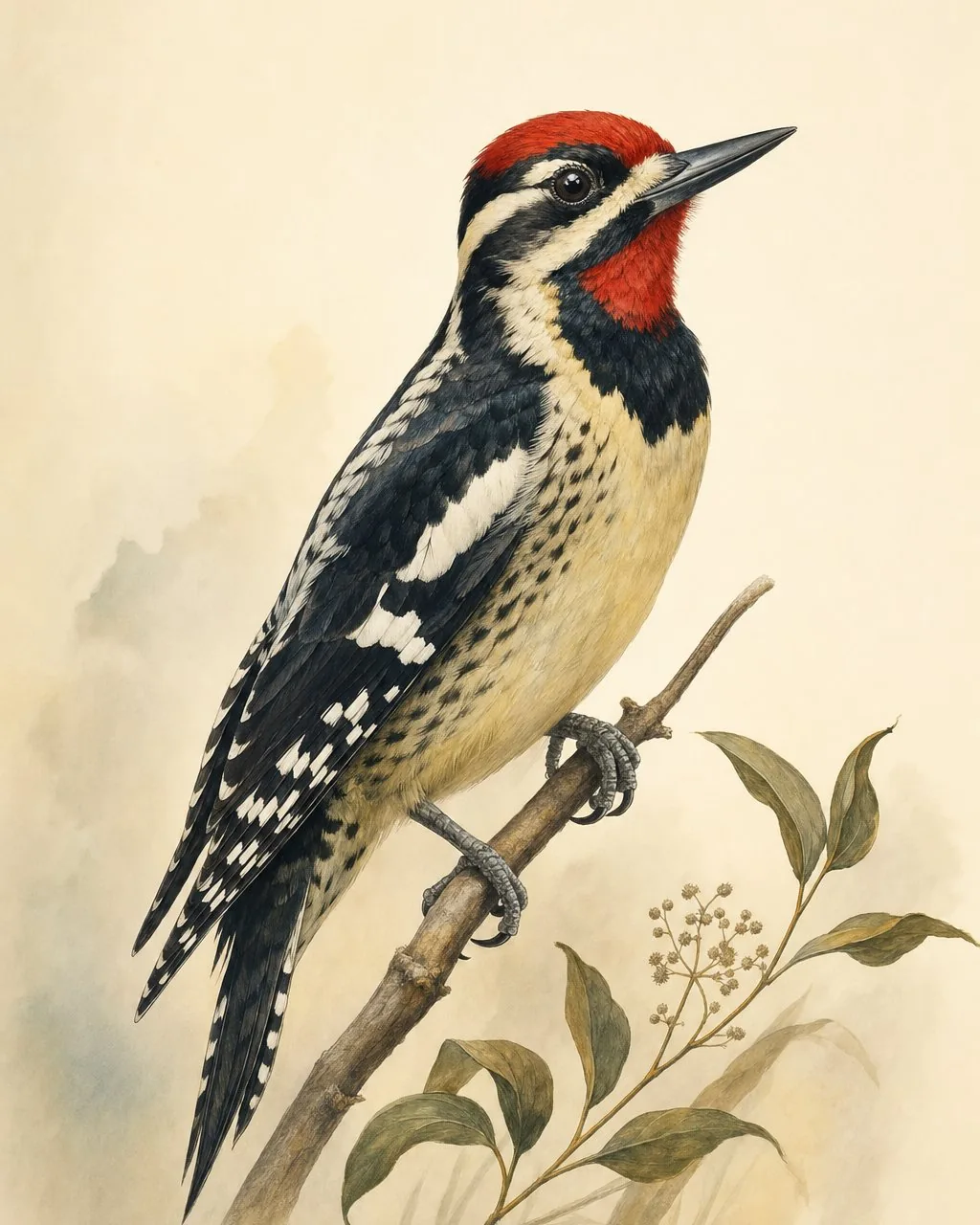
Medium-sized for a woodpecker, somewhere between a Downy and a Hairy in bulk. The plumage is boldly patterned: a red forehead patch, a black breast shield, a complex black-and-white face pattern, and a long white wing stripe that is visible on perched birds and striking in flight. The name’s “yellow belly” is real but understated - a pale yellowish wash on the underparts that is often hard to appreciate in field conditions.
Males have a red throat in addition to the red forehead. Females have a white throat, a useful mark at close range. Immature birds in their first fall are streaky brown, with the adult pattern emerging incompletely through their first winter.
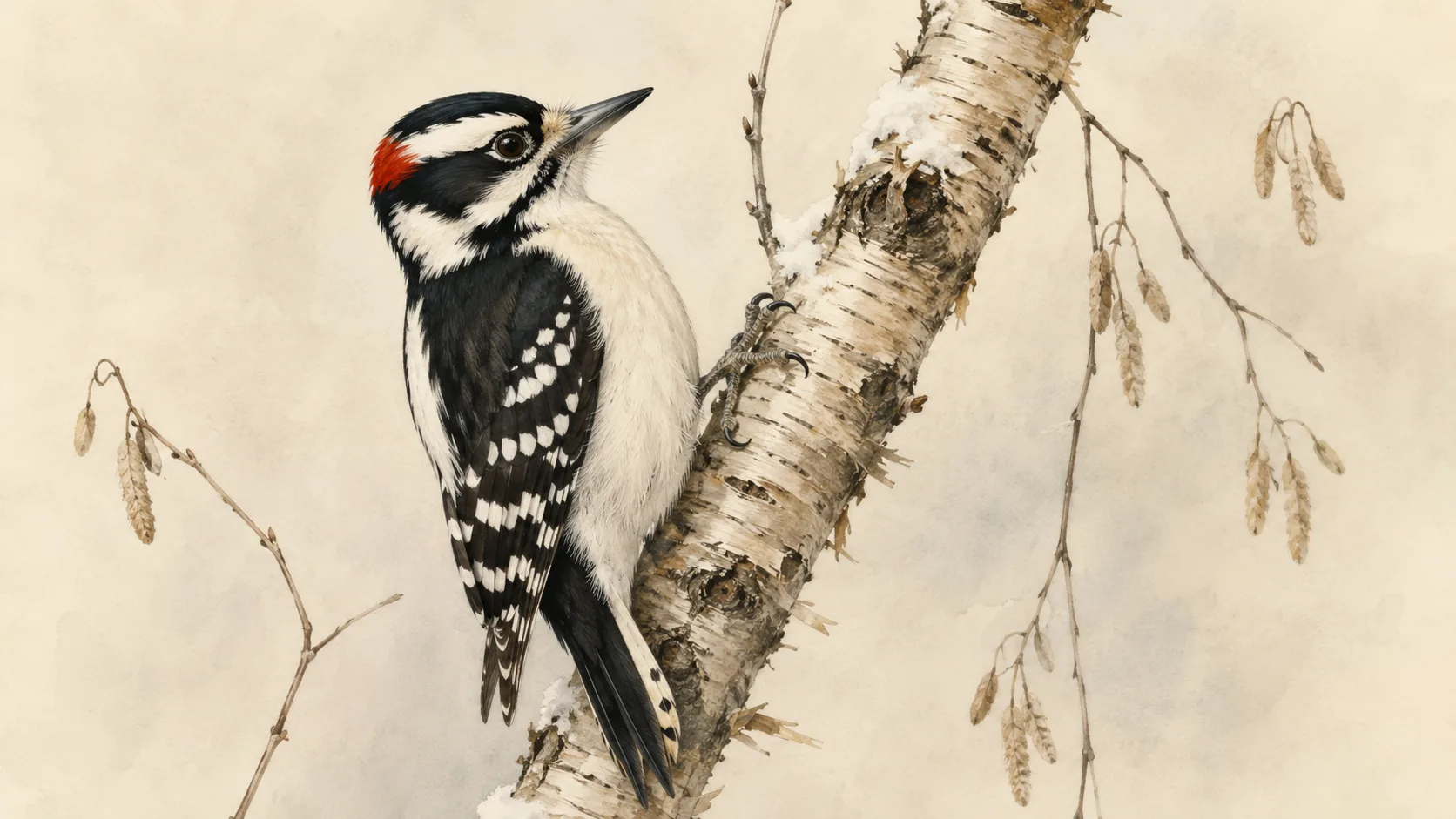
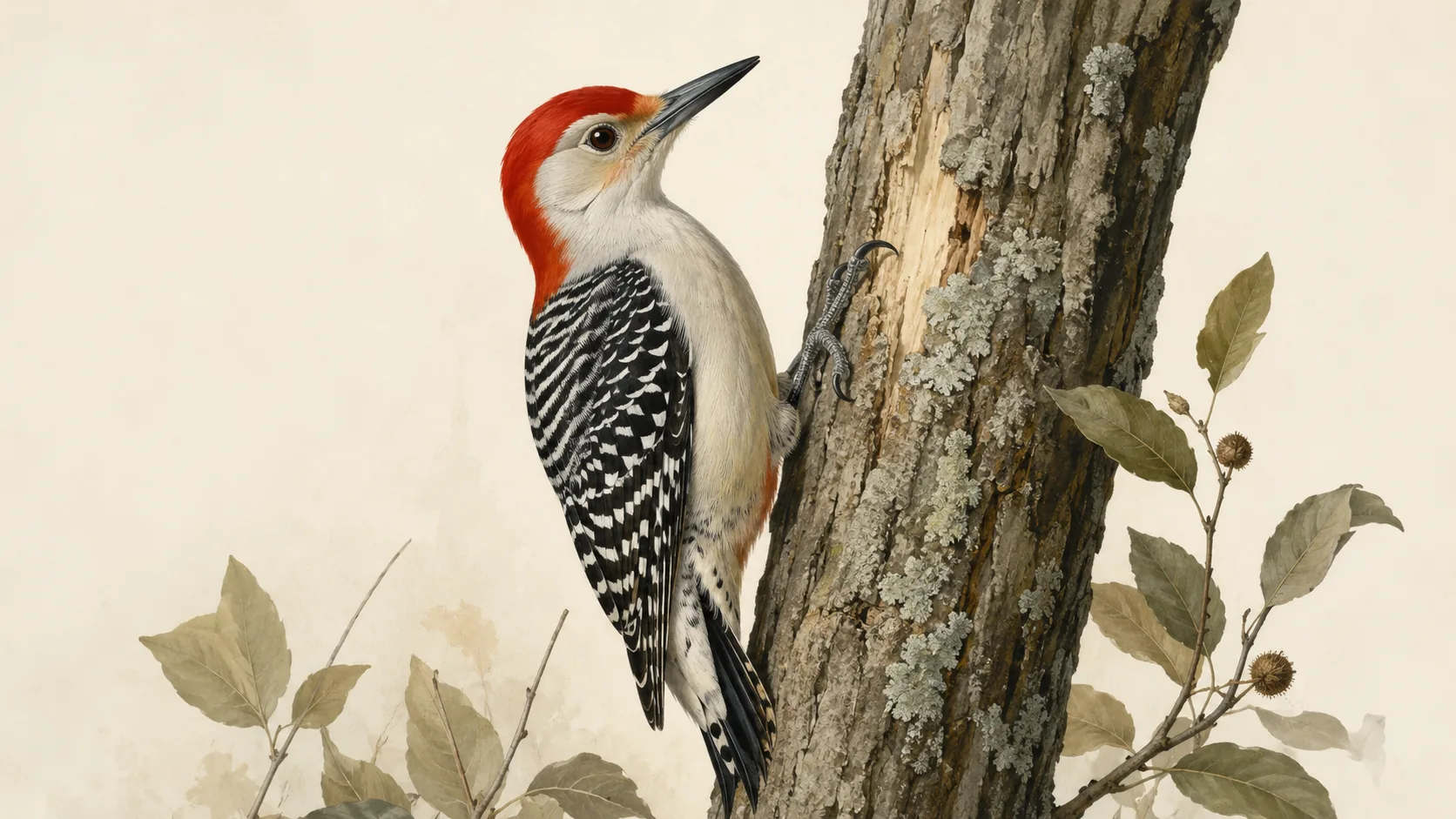
The Downy Woodpecker is smaller and lacks the bold wing stripe and red throat. The Red-bellied Woodpecker is larger, has red running from crown to nape, and shows a strongly barred back. Neither drills sap wells with the sapsucker’s characteristic geometry.
| Measurement | Range |
|---|---|
| Length | 19 - 21 cm |
| Weight | 40 - 63 g |
| Wingspan | 34 - 40 cm |
| Lifespan | 5 - 9 years |
Voice
The sapsucker is noisy for a woodpecker. Its call is a cat-like mewing that is often the first indication of the species’ presence - a nasal, querulous wheeer that drops at the end. It also gives sharp tapping notes and a churring alarm call. The drumming pattern is distinctive: a series of rapid taps that slows, speeds, and slows again in an irregular rhythm that sounds like Morse code compared to the steady roll of most woodpeckers.
This irregular drumming is an identification key in the forest. Once you know it, you hear it distinctly.
Range and Habitat
Breeding range covers the boreal and mixed forests of the northern United States and Canada, from the Atlantic Coast west to the edge of the Great Plains, and north into the boreal forests of Alberta and British Columbia. The species is common in northern hardwood forests with birch, aspen, and sugar maple - all trees that produce sugary sap readily.
In winter, Yellow-bellied Sapsuckers move south through the eastern US and into Central America, with some individuals wintering as far as Panama. They winter across the southeastern states, in open woodland, suburban areas, and riparian corridors.
The species is highly adaptable during migration and winter, turning up in almost any habitat with trees.
Diet
Sap and insects - and the interaction between them is the interesting part. Sapsuckers drill two types of wells. The first type are round holes that go deep enough to reach the phloem - the sugar-carrying layer just inside the bark. These are drilled in rows and maintained actively, the sapsucker returning throughout the day to lap the oozing sap with a brush-tipped tongue. The second type are more irregular holes that reach the xylem, the water-conducting tissue, and produce a more dilute but faster-flowing liquid.
Insects are attracted to the sap. The sapsucker laps up both sap and the small arthropods that collect at the wells. This combination - sap as a sugar source, insects as protein - makes the well system a remarkably complete foraging strategy.
The Sapsucker as Keystone
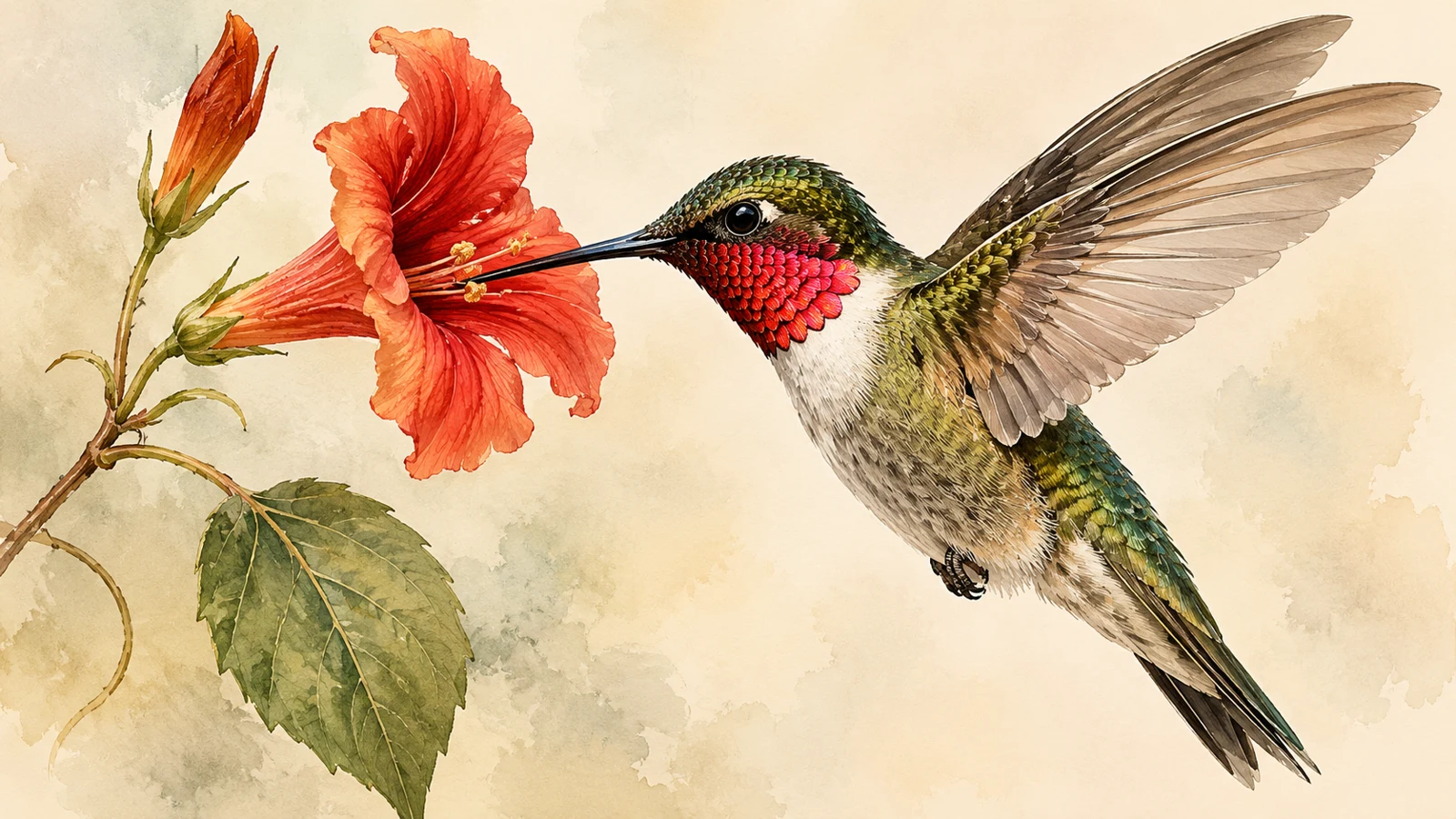
The species that benefit from sapsucker wells reads like a survey of a mixed forest community. Ruby-throated Hummingbirds in the East time their northward spring migration partly around sapsucker activity - arriving before flowers bloom and relying on sap wells to bridge the nectar gap. In years when sapsuckers fail to drill wells in good time, hummingbird productivity at northern breeding sites appears to suffer.
Warblers of multiple species feed at wells during migration. Yellow-rumped Warblers, Cape May Warblers, and Orange-crowned Warblers are among the most regular visitors. Red-breasted Nuthatches, Brown Creepers, and Ruby-crowned Kinglets forage along the edges of active well trees for trapped insects.
Mammals also exploit sapsucker wells. Red squirrels have been observed regularly visiting well trees. In some accounts from the Pacific Northwest - where the related Red-breasted Sapsucker replaces this species - black bears have been documented returning to the same trees day after day, scraping lichen from the bark around wells with their tongues.
The ecological definition of a keystone species is one whose impact is disproportionate to its biomass. The Yellow-bellied Sapsucker, weighing perhaps 50 grams, creates a resource system that supports dozens of other species across thousands of acres of forest. The keystone label is not rhetorical.
Breeding
Sapsuckers excavate nest cavities in dead or diseased trees, preferring aspen and birch where the wood is soft enough to allow efficient excavation. The male selects the site and initiates excavation. Both sexes continue the work, producing a cavity roughly 30 to 40 cm deep. The same general territory is used in successive years, though the birds usually excavate a new cavity each season.
The female lays 5 to 6 white eggs. Incubation is shared by both sexes over about 12 to 13 days. The male incubates at night. Young are altricial and are fed by both parents, fledging at approximately 25 to 29 days. The family group stays together briefly after fledging before the young disperse.
The wells in the sugar maple will still be there next spring. New wells above the old ones, the bark stained dark where the sap dried and accumulated. The sapsucker may not come back to this exact tree. But somewhere in the forest, the same transaction is happening. The woodpecker drills. The forest drinks.