Backyard
Where to Hang a Suet Feeder
A Downy Woodpecker finds a new suet feeder within hours. A Hairy Woodpecker may take days. A Pileated Woodpecker - the crow-sized, red-crested bird that looks like a prehistoric relic - may not find it at all if you hang it in the wrong place.
That gap tells you something important: the birds you attract are largely decided before the first cake goes in the cage. Position the feeder poorly and you get starlings and squirrels. Position it well and you get the birds that justify the whole exercise.
The single rule that overrides everything else
Woodpeckers, nuthatches, and Brown Creepers - the core suet audience - are woodland-edge birds. They move tree to tree. They will not cross open lawn to reach a feeder the way a House Sparrow will. They want to approach through cover, feed quickly, and retreat to a branch.
That means the single most important thing you can do is hang the suet feeder within 10 to 15 feet of a mature tree. Not near a tree in general - near a specific branch the birds can land on first. Watch where woodpeckers already forage in your yard and put the feeder into that corridor, not the ornamental space by the back door.
Everything else - height, weather exposure, distance from windows - is secondary to this.
Placement specifics
Height: 5 to 6 feet off the ground. High enough that cats cannot reach it. Low enough that squirrels cannot swing down from a roof overhang. Most woodpeckers are indifferent to height and will visit feeders anywhere from three feet to 15 feet - this range is just practical.
Distance from windows: At least three feet or more than nine feet. The Cornell Lab’s window-collision research shows that birds in the three-to-nine-foot zone build just enough speed before hitting glass to be injured. Under three feet they rarely hit hard. Over nine feet they usually course-correct.
Weather: Suet goes rancid before it visibly spoils. Direct sun accelerates this. A north or east-facing exposure extends the life of each cake. If you feed through summer, switch to no-melt formulations - standard suet turns oily above about 21 degrees Celsius.
Spacing from other feeders: 10 to 15 feet from seed feeders. House Finches and sparrows crowd seed feeders and will crowd suet feeders too, keeping skittish woodpeckers away. See how to hang bird feeders for the broader spacing logic.
Feeder type shapes the visitor list
The cage feeder is the standard. Wire mesh holds a suet cake securely and lets birds cling from any angle. It works. But the type you choose actively selects for certain species.
| Type | Who it favours | Who it discourages |
|---|---|---|
| Standard cage | Chickadees, nuthatches, woodpeckers | Nobody in particular |
| Upside-down cage | Woodpeckers, nuthatches, Brown Creeper | Starlings, grackles |
| Tail-prop feeder | Woodpeckers (braces stiff tail against the backboard) | Small clinging birds |
| Log feeder | All woodpeckers, especially Pileated | Birds that need a cage |
The upside-down cage is the most useful upgrade a regular suet feeder can get. European Starlings and Common Grackles - both heavy-bodied and adapted to feeding upright - struggle to feed when hanging inverted. Woodpeckers and nuthatches do this naturally; they are built for it. If starlings are stripping your feeder before the woodpeckers arrive, an inverted cage solves the problem without deterrents or physical barriers. And if the birds you want are staying away entirely, placement is usually the culprit before the food is.
For more aggressive deterrent approaches to problem birds, see how to keep crows away from bird feeders.
Which birds you are actually trying to attract
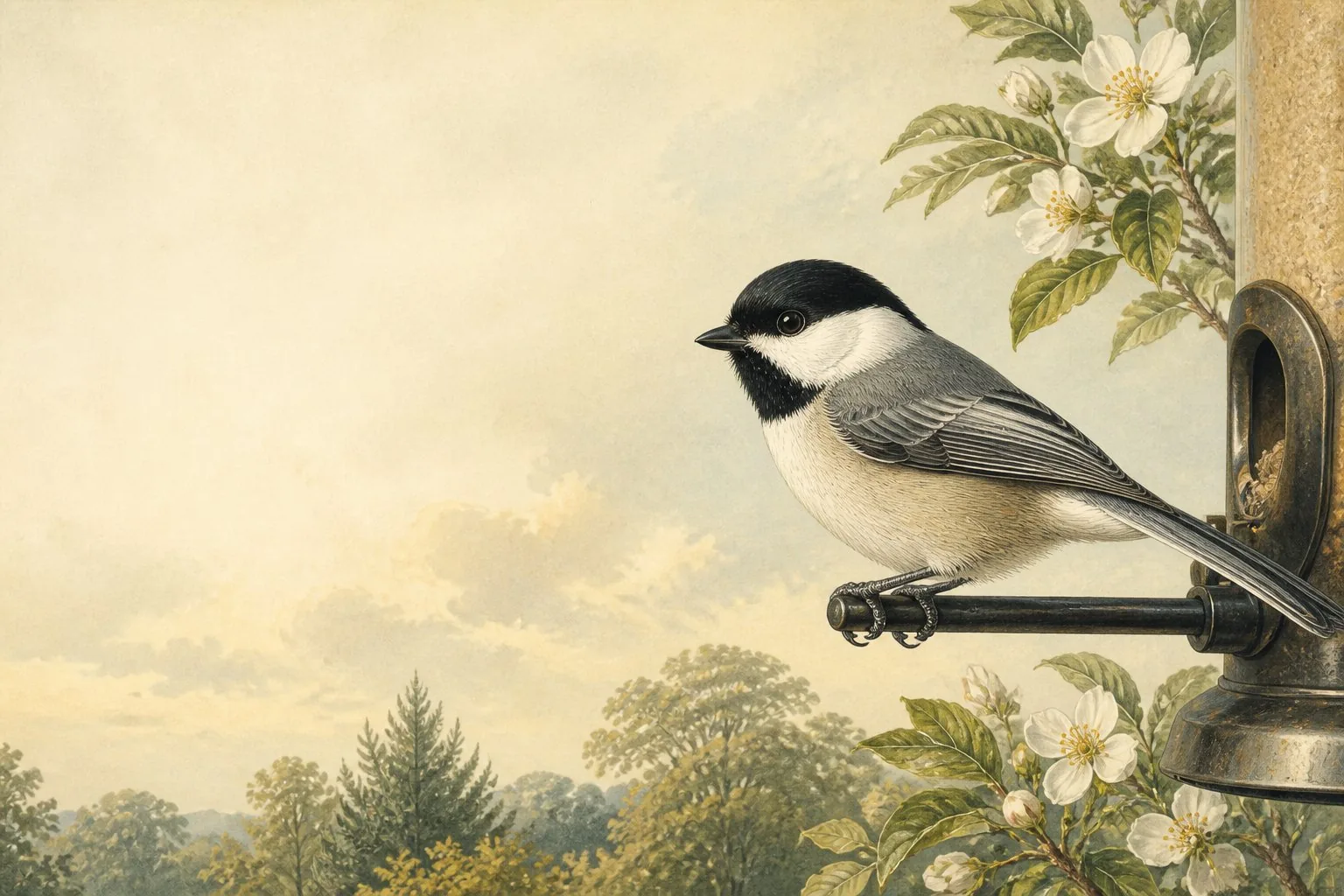
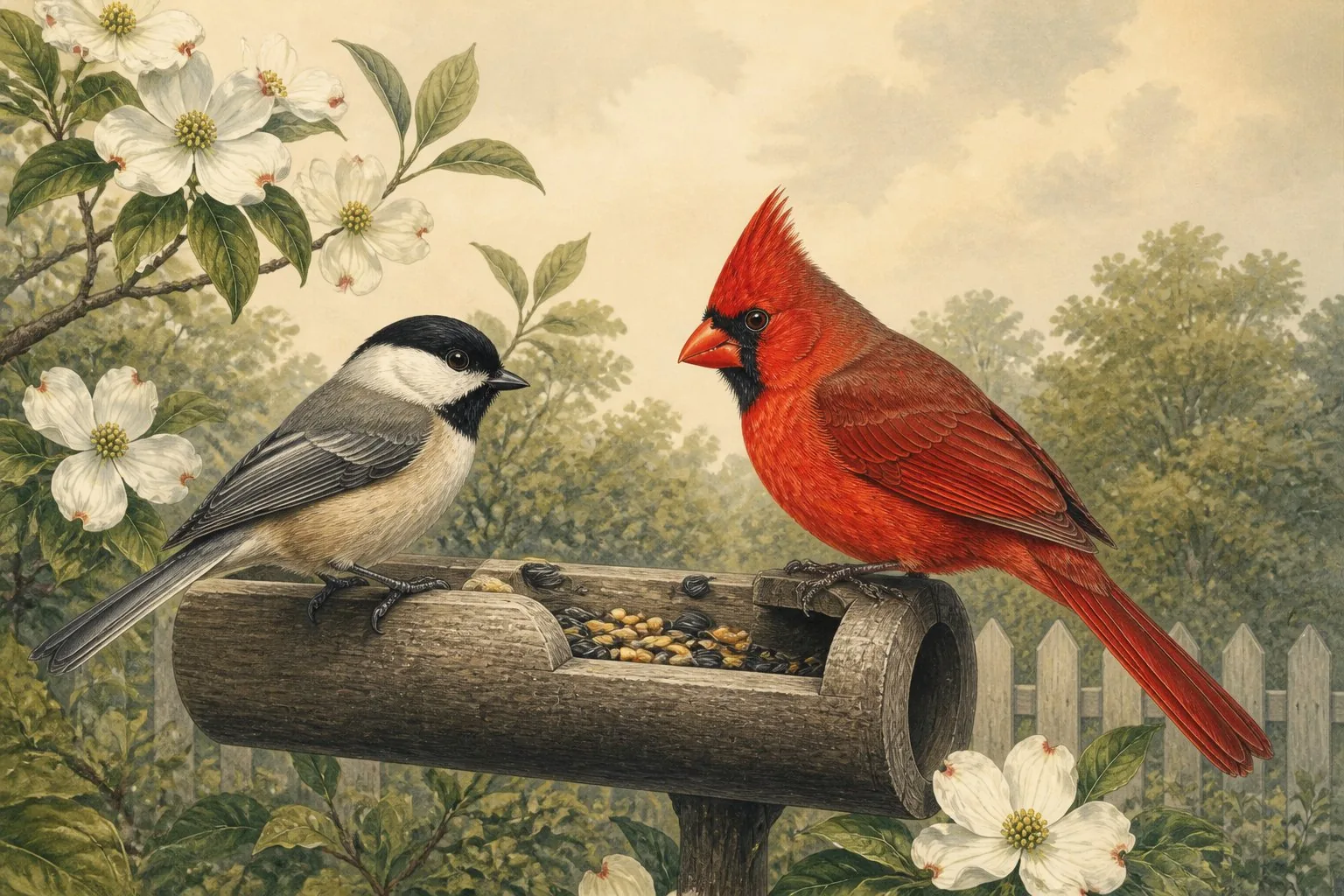
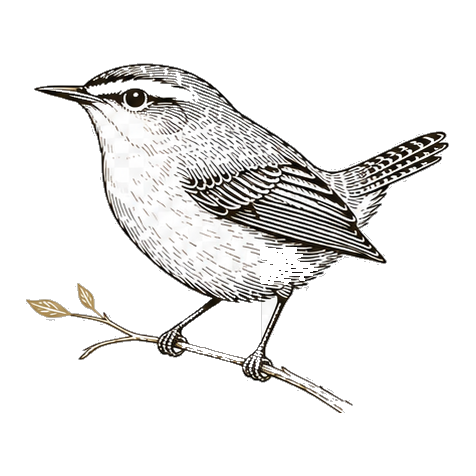
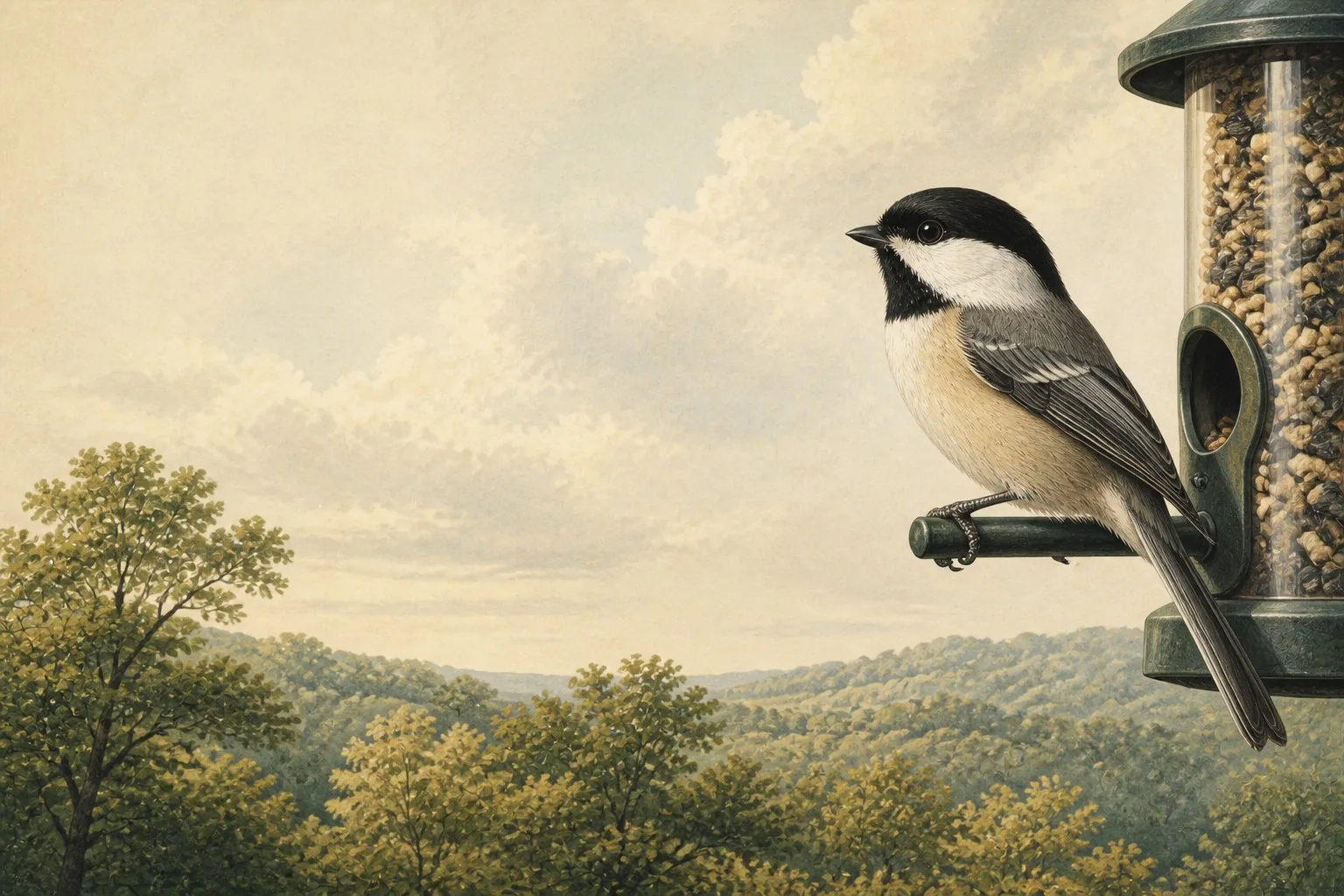
Seed feeders, however well stocked with quality sunflower seeds, attract granivores. Suet attracts insectivores - the birds that spend the rest of the year working bark for beetle larvae: Downy and Hairy Woodpeckers, White-breasted Nuthatches, Carolina Wrens, Tufted Titmice, Black-capped Chickadees. These are the birds a suet feeder positioned correctly near tree cover will pull in.
The Northern Cardinal will occasionally take suet, but it is not a core suet bird. Cardinals feed primarily on seeds and berries, and a feeder positioned for woodpeckers - near mature tree cover, with an inverted cage - will see fewer cardinals than a standard seed feeder.
A note on the best spot overall
The question of where to hang a suet feeder is almost always the wrong version of a better question: where is the best place for a bird feeder in this yard? If you have found the right feeding zone - visible from the house, adjacent to cover, clear of cats and window glass - then the suet feeder belongs inside that zone. Feeders clustered in one well-chosen location attract more species than the same feeders spread around a yard at random. One woodpecker at the suet draws another.
The upside-down suet cage is the single most effective placement upgrade available: it favours woodpeckers and nuthatches by exploiting the fact that starlings and grackles cannot feed comfortably when hanging inverted.
Maintenance changes the equation
A badly maintained feeder in a perfect location loses to a well-maintained feeder in a good one. Suet cakes in wire cages collect wet debris in the corners. In warm weather, rancid suet carries bacteria that spread through a feeding flock. Check the cake every two days above 15 degrees Celsius and replace it the moment it smells off or turns grey and oily. Clean the cage with hot water and a stiff brush once a month - droppings accumulate on the bottom bar quickly and that is where disease transmission happens most.