Backyard
Where to See Painted Buntings
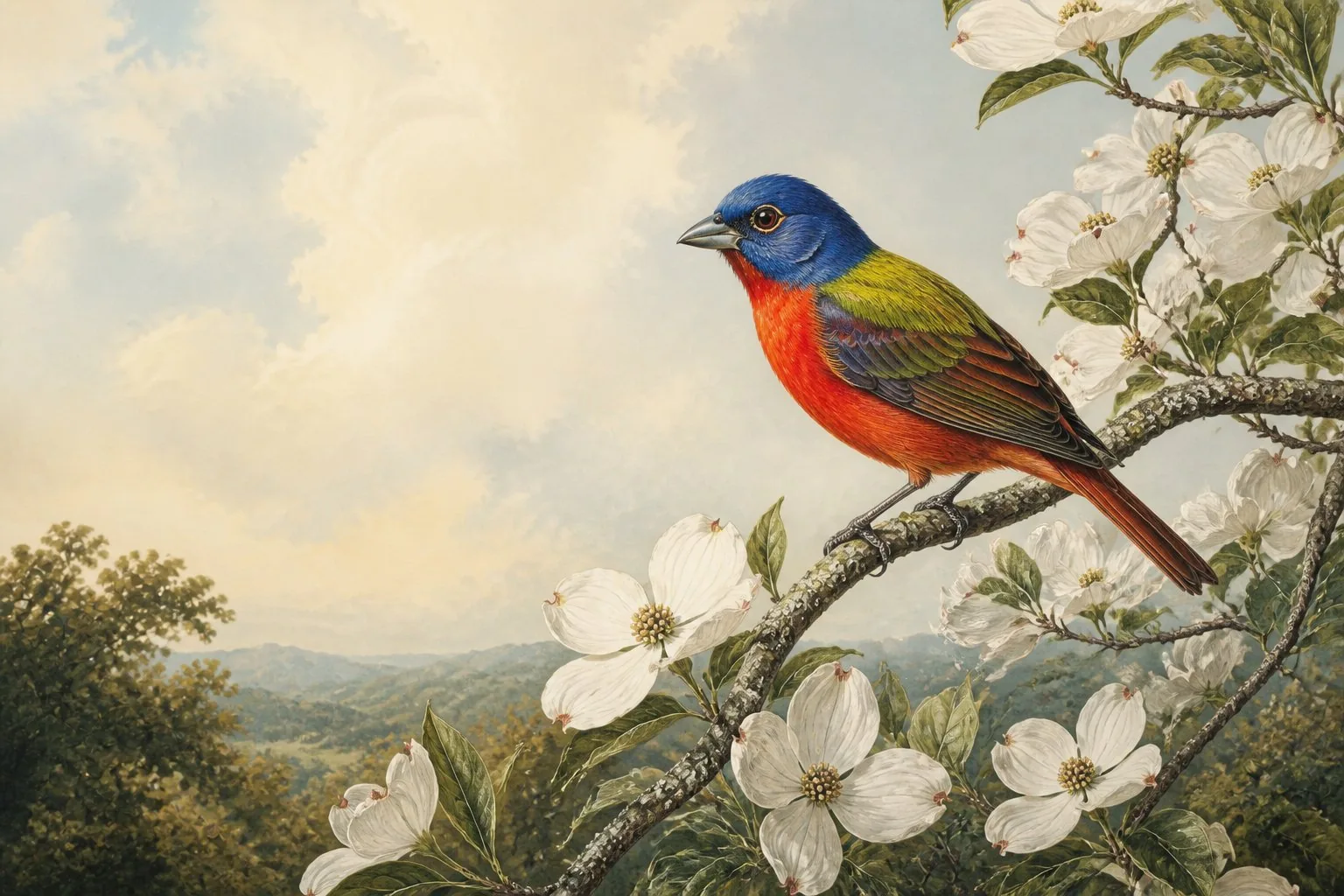
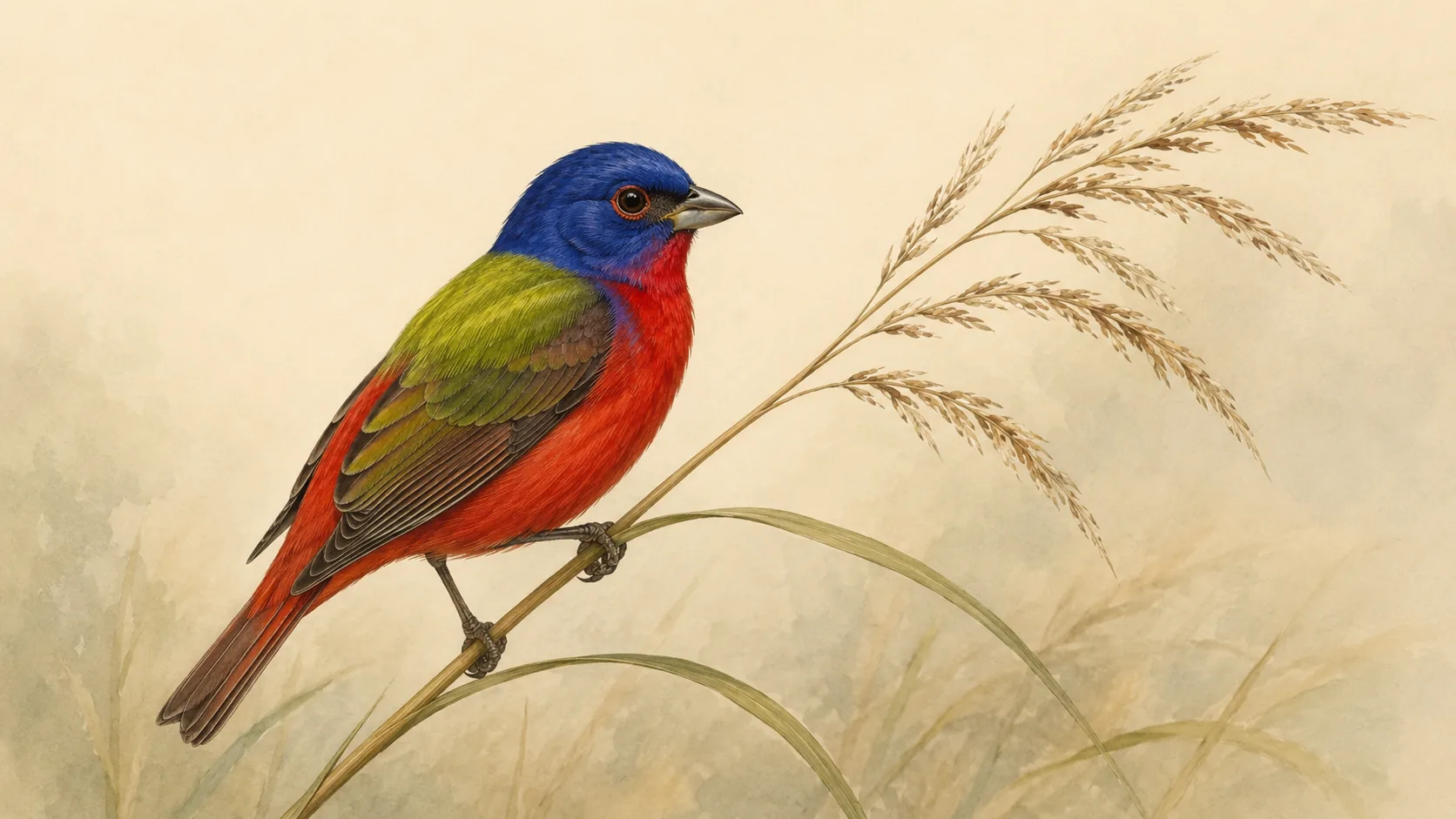
A male painted bunting singing on a telephone wire at sunrise looks like something escaped from a tropical aviary. The scarlet chest, cobalt head, lime-green back. You stop the car. You sit very still. And then, by nine in the morning, he has vanished into the brush as though he never existed.
Finding him requires knowing two things. Which of two separate populations lives near you, and exactly when in the morning to look.
Two Worlds, One Bird
The painted bunting is not a single population spread loosely across the South. It is two distinct groups with different ranges, different migration strategies, and different wintering grounds.
The eastern population occupies a narrow coastal strip running from North Carolina south through South Carolina, Georgia, and the north and central Florida coastline. That is it. It does not extend inland. South Carolina’s Lowcountry holds a large share of all eastern breeding adults, according to the American Bird Conservancy. This is a concentrated, geographically restricted population.
The south-central population is larger and covers Texas, Oklahoma, Arkansas, Louisiana, Kansas, Missouri, and northern Mexico. Partners in Flight estimates roughly 15 million breeding painted buntings across the full species range, and this western group accounts for the bulk of that number.
Why does the split matter? If you live in Georgia, you are planning a trip to the Lowcountry. If you live in Tennessee, you are driving to Texas. Saying “found across the Southeast” misleads both sets of readers. Know which population is accessible to you before you plan anything.
When to Go: The May to July Window
Males arrive on breeding grounds in mid-April and immediately begin competing for territory. The Texas Breeding Bird Atlas records breeding activity from late March into late August. But the practical window for watching singing males, birds you can actually see, is late April through July.
Here is what happens after July. Males finish their primary breeding effort, stop defending territories with the same intensity, and melt into dense low vegetation. They become cryptic. The Cornell Lab of Ornithology notes that males use specific exposed song perches during the active season, but outside that window they offer almost no such opportunities.
The eastern and western populations share roughly the same seasonal arc. Plan your visit for May or June to catch males at peak territorial intensity.
Where to Find Them: Refuges, Thickets, and Field Edges
Habitat type is the key filter. Painted buntings need semi-open land with dense low growth close by. Brushy thickets, hedgerows, scrubby coastal shrubland, and roadsides lined with dense shrubs. They do not breed in mature maritime forest or closed-canopy woodland. Nests sit low, tucked into dense vines or bushes a metre or so above ground.
Eastern population, South Carolina Lowcountry:
- Pinckney Island National Wildlife Refuge (SC): the U.S. Fish and Wildlife Service identifies the painted bunting as the refuge’s most popular and colorful bird
- ACE Basin National Wildlife Refuge (SC): a confirmed breeding summer presence
- Cape Romain National Wildlife Refuge (SC): part of the Lowcountry refuges, strong summer numbers
- Hunting Island State Park (SC): brushy habitat at the margins of the barrier island
North Carolina barrier island scrub, particularly around Beaufort and Cedar Island, also produces breeding records.
South-central population, Texas and beyond:
- The Edwards Plateau and Coastal Sand Plain in Texas show the highest breeding densities in the state atlas
- Brushy river valleys in Oklahoma and thicket edges in Arkansas hold reliable summer populations
- Look for field edges where dense shrubs meet open grass. The bird feeds on the ground, sings from the wire above, and nests in the thicket behind
| Region | Best Sites | Peak Window |
|---|---|---|
| SC Lowcountry | Pinckney Island NWR, ACE Basin NWR, Cape Romain NWR | May - July |
| NC barrier islands | Cedar Island, Beaufort area scrub | May - June |
| TX Edwards Plateau | Brushy field edges, ranch roadsides | Late April - July |
| TX Coastal Sand Plain | Kingsville area, thicket margins | May - July |
| OK / AR | River valley brush, thicket edges | May - July |
How to Watch Them: The Dawn Singing Window
This is the single most important practical fact about watching painted buntings in breeding season. Males sing from exposed perches, the top of a telephone wire, the highest spray of a shrub, a fence post at the edge of a field. They return to the same perches repeatedly across the season.
At dawn, a male will announce himself from fifty metres away. You hear the song first, a bright, hurried warble, sustained and rapid. You scan the wire tops. You find him.
By mid-morning, he is gone. Into the thicket. Not migrated, not dead, simply invisible in three feet of dense vegetation. A birder who arrives at a Lowcountry refuge at 10am in June and walks the brushy edges may hear nothing, see nothing, and conclude the birds are not there. They are there. You needed to arrive at 6am.
One watching tip. Not every yellow-green, finch-sized bird is a female. First-year males look the same, lime-green like the hens, and do not gain full adult plumage until their second year. At a known painted bunting site, do not dismiss the green birds without a careful look.
The painted bunting rewards the early riser and punishes the late sleeper. Arrive at dawn, listen for the rapid warbling song, find the wire. By the time the light is good enough for casual photography, the male has already gone back to work in the thicket.
If You Are Outside the Range
Outside the South Carolina to Florida coastal strip and the Texas, Oklahoma, Arkansas, Louisiana block, wild breeding painted buntings are not reliably seen. That is honest geography, and planning a trip on a vague “found across the Southeast” description wastes a journey.
One exception worth knowing. South Florida hosts wintering painted buntings from roughly October through April. These are eastern birds that have finished breeding and migrated south. Corkscrew Swamp Sanctuary near Bonita Springs is a well-documented feeder site for them, and garden feeders around Miami and Broward County attract them regularly in winter. This is winter habitat, not breeding habitat. The birds at a Corkscrew feeder in January are not the same birds nesting in South Carolina scrub in June.
The Cornell Lab’s eBird database is the most reliable tool for finding the nearest confirmed recent sighting, whatever your location. Filter for May through July and look for clusters of reports along brushy field edges and coastal refuge trails.
If you want to bring them to a home feeder instead, the companion post how-to-attract-painted-buntings covers seed types, feeder placement, and the shelter that keeps them coming back.