Backyard
Wet seed is not just bad seed - it is a disease delivery system
After three days of rain, a House Finch at a tube feeder tries to crack open a seed port that has compacted into a grey-brown plug. One eye is crusted shut. She keeps working at it anyway.
Yes, birds will eat wet seed. They will eat it because they are hungry, because they have no way to assess what is growing inside it, and because the feeder they trust is the one in front of them. The question is not whether birds accept wet seed - they do. The question is what you are feeding them when they do.
What grows in wet seed, and how fast
The danger is not the water. The danger is time.
In warm, humid weather, mold can establish itself on damp seed within hours. The fungus most directly linked to wet stored grain is Aspergillus flavus, which produces aflatoxin - a mycotoxin toxic to birds at low doses. The mold is not visible until it has already colonised the seed interior. By the time you see a grey-green dusting on the surface, the chemistry has been underway for a while.
Beyond aflatoxin, a wetter problem exists in the feeder itself. Researchers at Kutztown University, writing in The Wilson Journal of Ornithology, found that even after cleaning, bird feeders containing debris had enough Salmonella enterica bacteria remaining to risk disease transmission when washed with soap and water alone. Only a dilute bleach soak reduced counts to reliably safe levels. The implication is that seed residue - clumped at feeder ports after rain - is where bacterial load accumulates between cleanings.
Aspergillus does its damage through the respiratory system, not the gut. According to Avian Report, aspergillosis is caused by birds inhaling Aspergillus spores that lodge in the lungs and air sacs, causing inflammation and, in severe cases, respiratory failure. Finches and chickadees are among the most susceptible species. Symptoms include difficulty breathing, lethargy, weight loss, and eye discharge. There is no field treatment.
Audubon’s guidance on disease-free feeders identifies aspergillosis alongside salmonellosis and house finch eye disease - caused by the bacterium Mycoplasma gallisepticum, first observed in House Finches in 1994 - as the main feeder-associated diseases. Project FeederWatch adds that Pine Siskins, Redpolls, and American Goldfinches are especially vulnerable to salmonellosis, which spreads through fecal contamination of food and water. A platform feeder where birds stand in wet seed is close to ideal transmission geometry for both.
Wet seed is not just unpleasant for birds. It is a vector. The feeder is only as clean as the seed inside it.
What to do when seed gets wet
Discard it. Not dry it and reuse it - because drying does not eliminate mold that has already formed inside the kernel. Not pick out the visibly clumped parts and leave the rest. Discard it, then clean the feeder.
Amy Tegeler, Bird Conservation Coordinator at the South Carolina Department of Natural Resources, recommends cleaning seed feeders at least once a month with a one-to-nine bleach-to-water solution, soaking for 10 minutes, scrubbing clean inside and out, then rinsing for at least 10 seconds and drying completely. The National Wildlife Health Center gives the same ratio. The Kutztown University study makes clear why sequence matters: visible debris must be scrubbed off before soaking, because debris on feeder surfaces blunted the effectiveness of every cleaning method tested when left in place.
If a bird with crusted eyes, laboured breathing, or obvious lethargy visits your feeder, Project FeederWatch’s advice is to remove all feeders in that location for at least two weeks - not just the feeder that bird used. The birds visiting a small yard feeder are largely the same population, and a sick bird is already depositing pathogen load on every perch it touches.
The management habits that actually prevent this
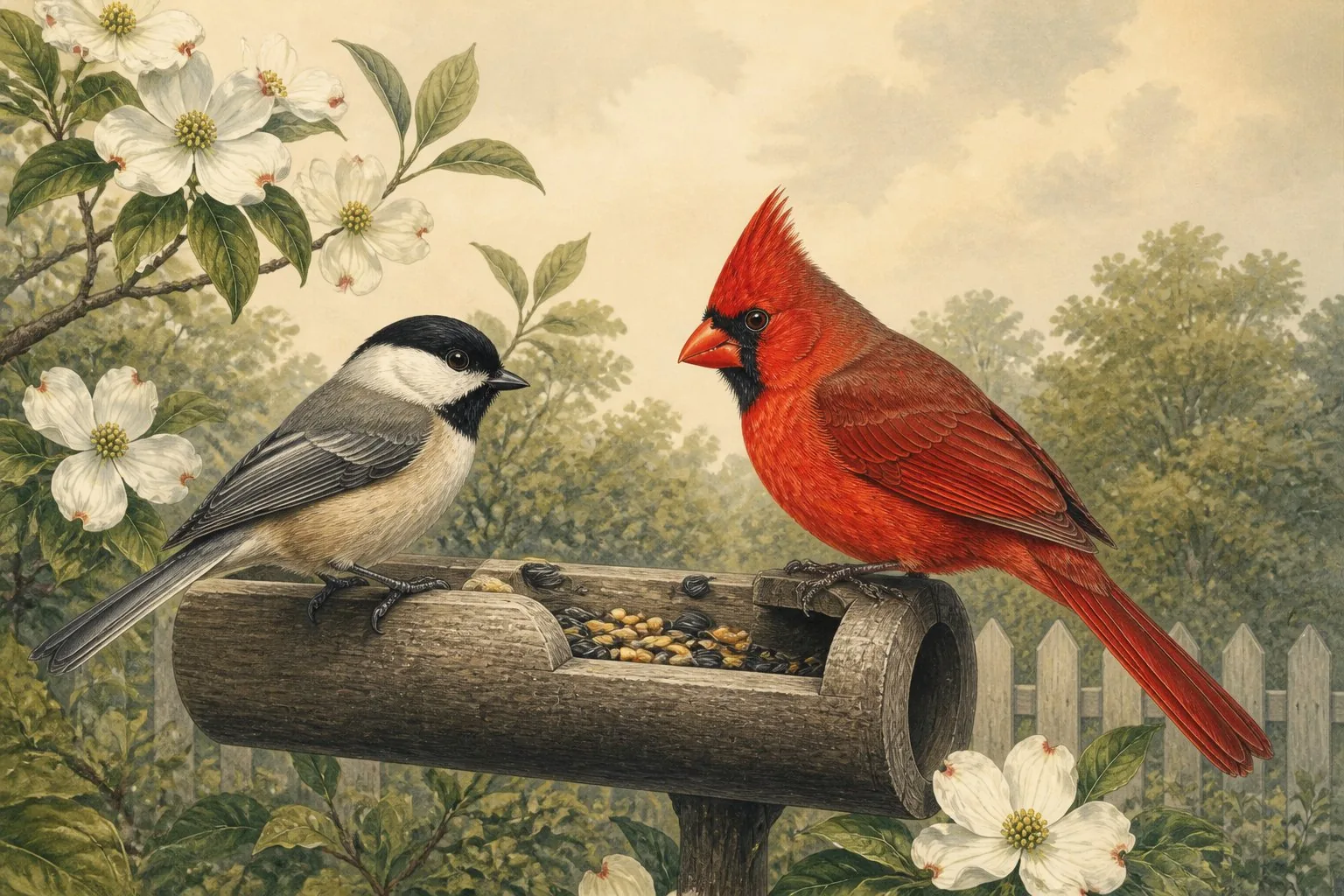
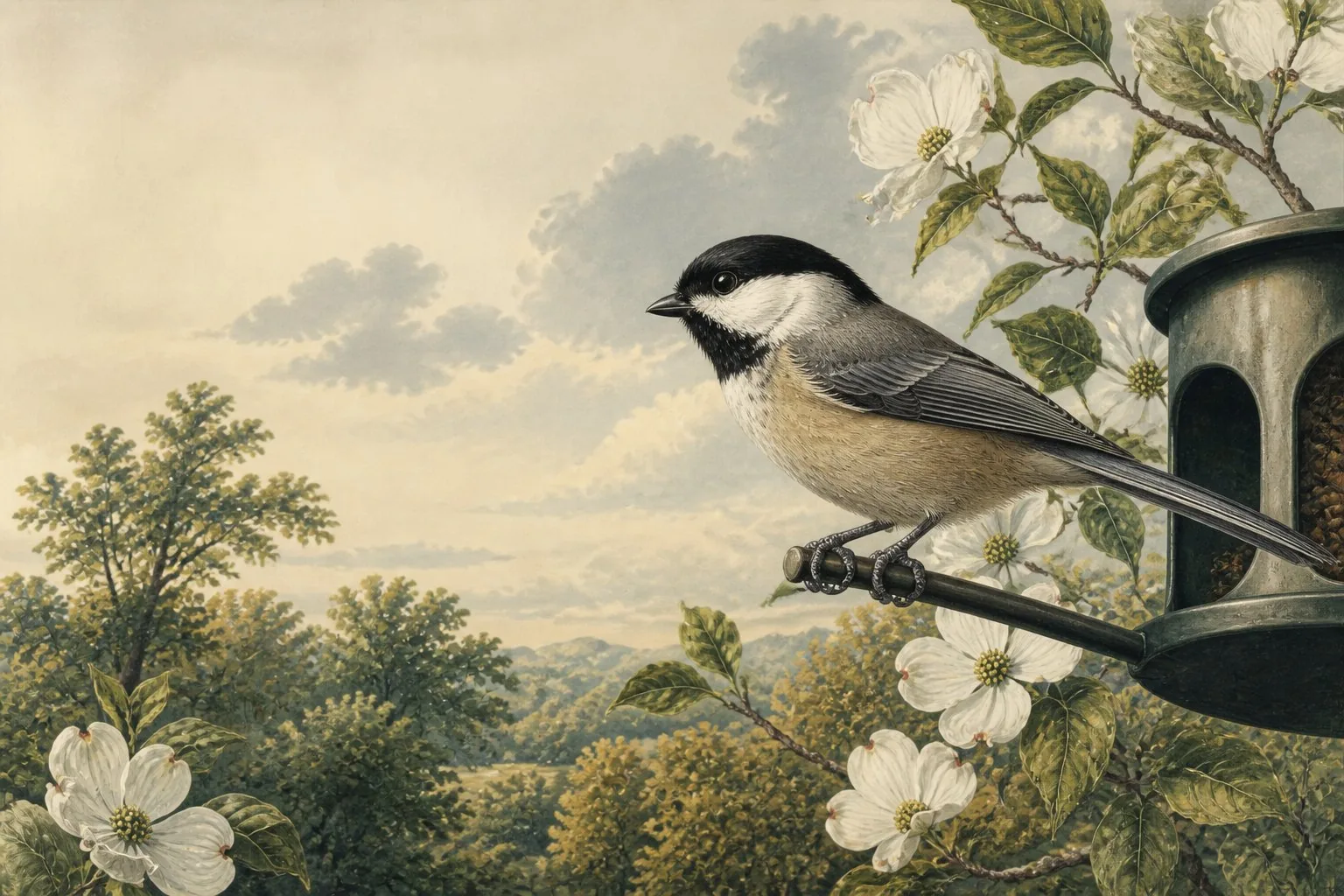
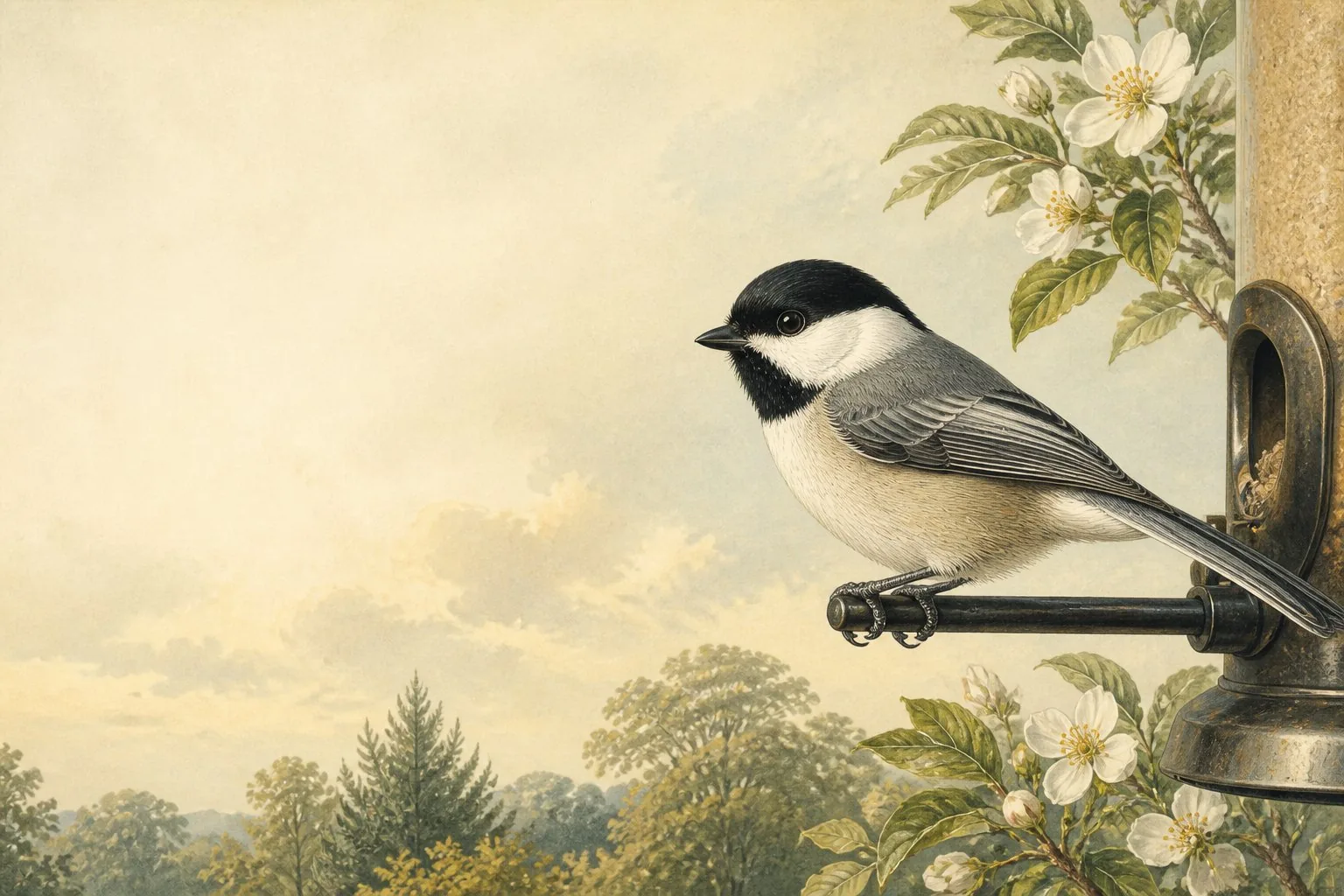
Feeder design helps at the margins. A tube feeder with recessed ports and drainage holes sheds water better than an open platform. A hopper feeder hung under an eave stays drier than one in the open. But design does not rescue poor habits.
The change that matters most is filling less, more often. Seed that birds clear in one or two visits never has time to go bad. A feeder crammed full on Sunday and checked again Thursday is a liability through any wet stretch. For advice on how to hang feeders so they drain correctly and dry between uses, the positioning logic there is directly relevant.
Black oil sunflower seed - the seed most backyard birds prefer - is among the oiliest, and compresses into dense clumps when wet in a way that nyjer or safflower does not. Clumped seed in a port blocks feeding, stays damp at the core even after the surface dries, and is exactly where Aspergillus establishes first. If you feed sunflower seeds exclusively, port inspection after every rain is not optional.
Where you place a feeder affects moisture exposure significantly. A feeder in a well-chosen location - under partial canopy, away from pooling ground water, where it catches afternoon sun - stays drier and sees less disease pressure than one placed for human convenience. Ground scatter in wet weather is almost always a bad idea: dark-eyed juncos and sparrows picking millet from wet soil are working through a medium that combines Salmonella transmission risk with aspergillosis exposure in the same handful of seed.
Wet seed and rotting ground debris also reliably draw crows, which can displace smaller birds from the feeder area entirely. If crow pressure is already a problem during wet spells, the guide on keeping crows away from feeders and yards is worth reading alongside this one.
The bird with the crusted eye
The House Finch at the tube feeder in October - that feeder should have come down before it went back up clean. The bird may have recovered. The seed that caused it did not.
Wet seed is an indicator. When you see it, you know what you are looking at and what to do. The birds who visit your feeder are making no such assessment. That judgement belongs entirely to the person who fills it.