Backyard
Cardinals in the snow
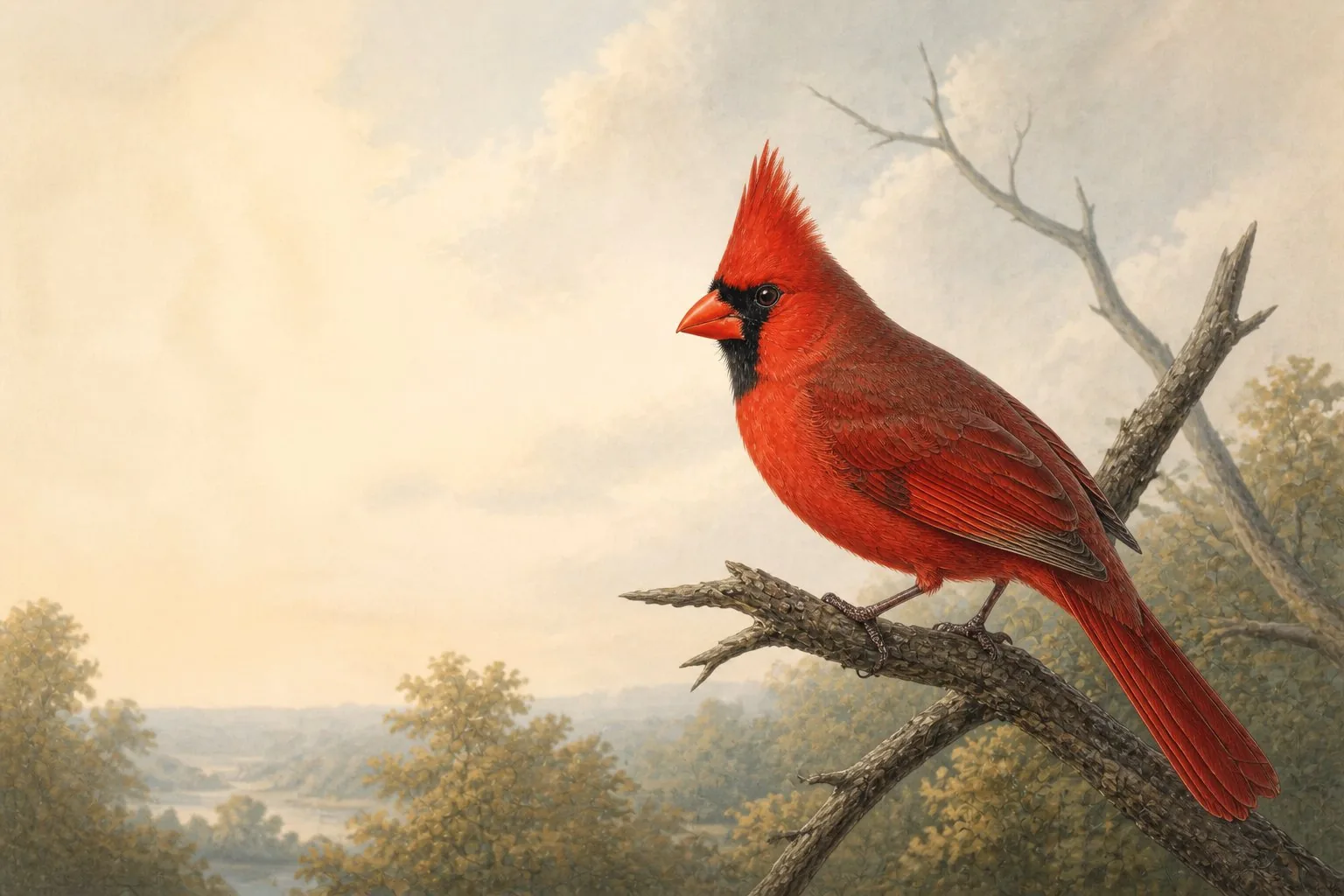
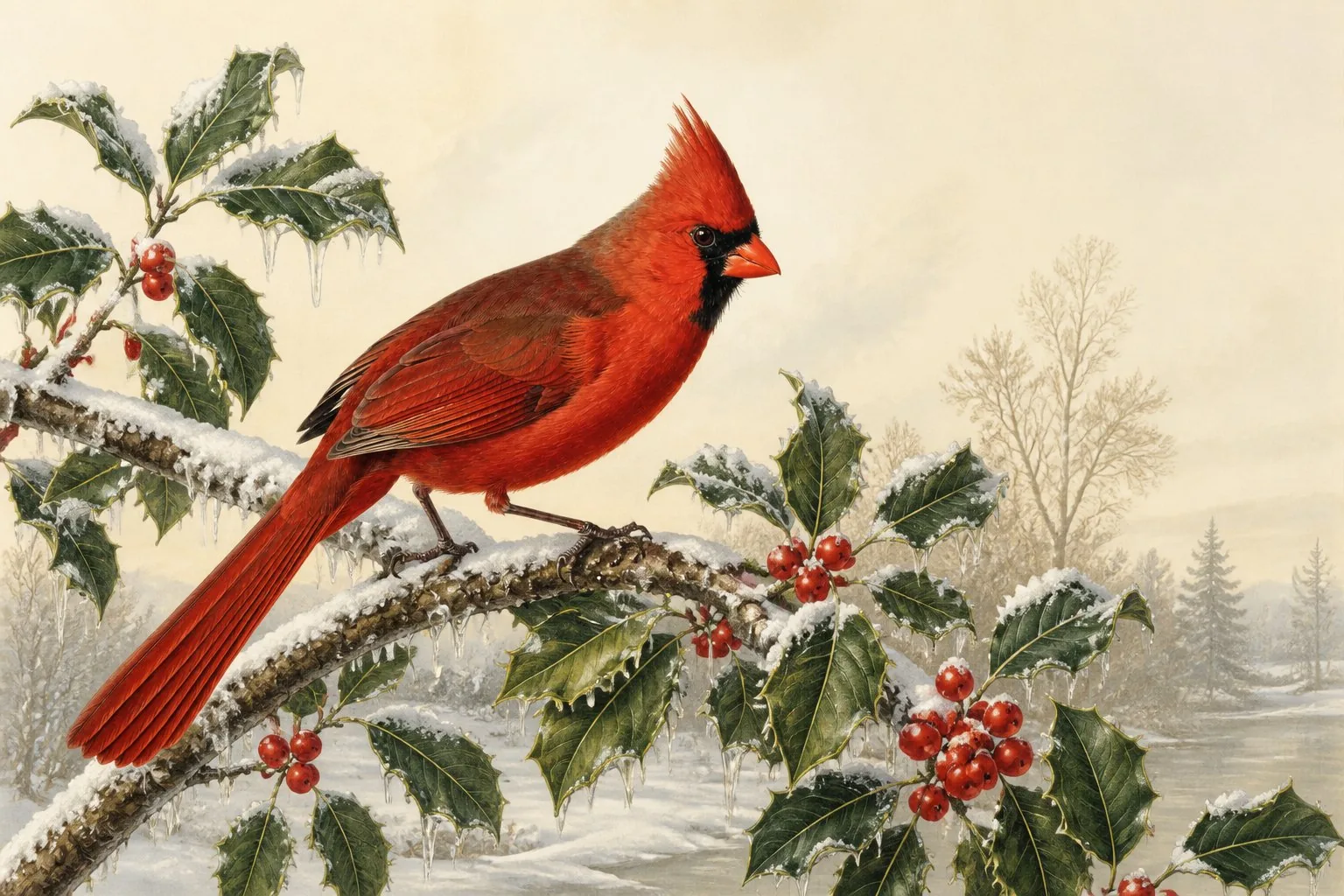
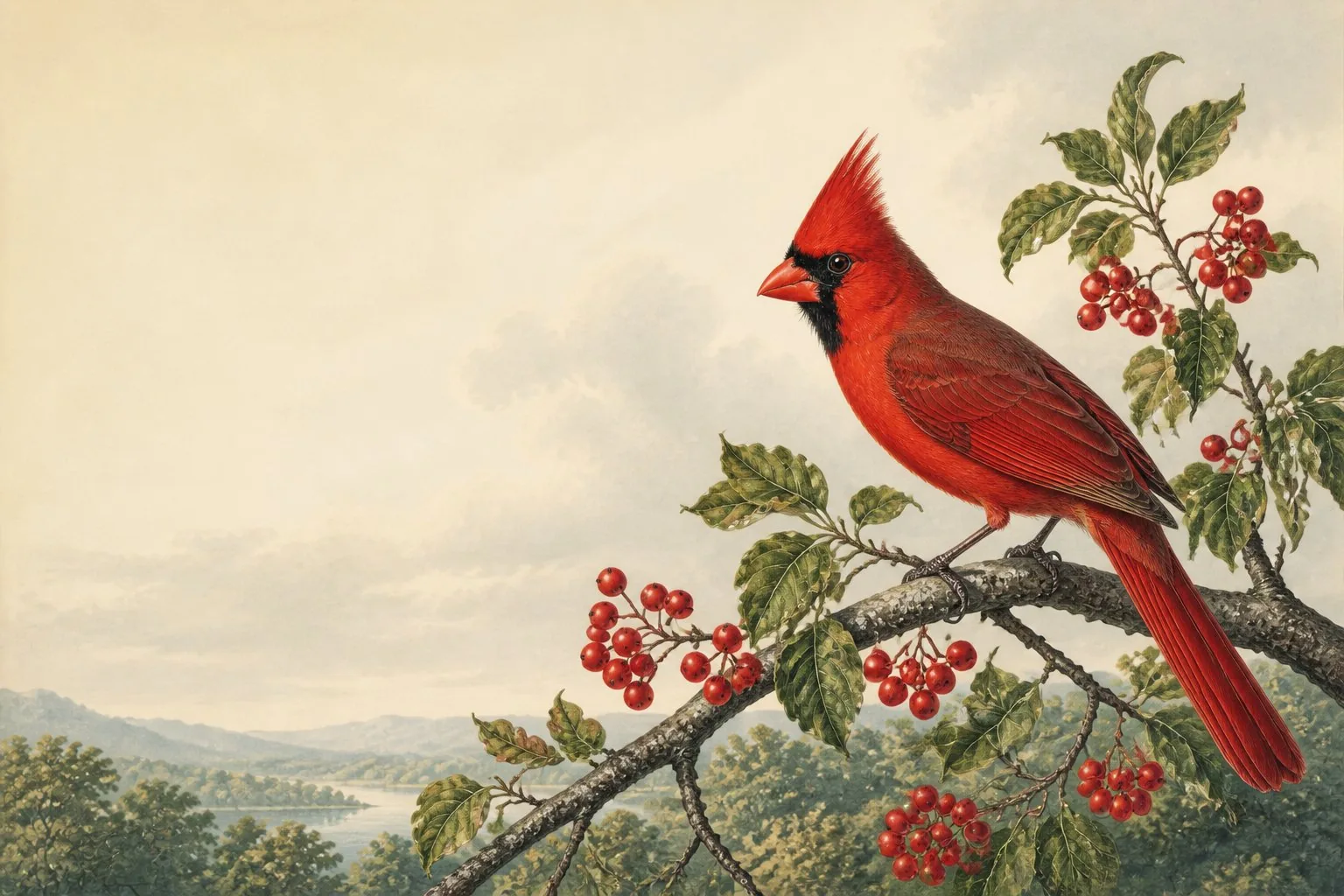
A male cardinal on a snow-covered branch in February is the most-photographed wild bird in North America. The image is a Christmas card cliché for a reason that has nothing to do with sentiment: the red of the bird against the white of the snow is one of the highest-contrast pairings in the natural world, and your eye is involuntarily drawn to it from across a garden.
What the camera does not capture is what the bird is doing. Holding 41 degrees Celsius core temperature in an outdoor air temperature that may be twenty below. Burning roughly nine per cent of his body weight in fat overnight. Maintaining feather function with regular bathing in water that wants to freeze on him. Surviving a season that almost every other red bird on the continent has the sense to leave.
The cardinal is the only common North American songbird who stays bright red through the worst of winter. He is also one of the few who pays the metabolic cost to do it. This piece is about what that cost is and how a backyard can lower it for him.
What he is actually doing in the snow
A wild cardinal weighs 42 to 48 grams in summer. By midwinter, after fattening, he is closer to 50. The fat is stored as a thin layer along the flanks and belly, plus a denser deposit in the body cavity. He needs to consume roughly three to four grams of fat-equivalent calories per day to break even.
His insulation is the dense down layer beneath the visible contour feathers. On cold mornings he fluffs them, which traps a thicker air layer between body and environment. The fluffing doubles the effective insulation. A fluffed cardinal looks twice the size of a sleek one because, functionally, he is.
His feet are the vulnerable part. Cardinal feet are not feathered. To prevent heat loss through bare skin in contact with frozen branches, the bird uses counter-current heat exchange: warm arterial blood descending to the foot is cooled by cold venous blood returning to the body. By the time arterial blood reaches the toes it is close to ambient temperature. By the time venous blood returns to the body it has been pre-warmed by the descending arterial flow. The foot stays cold enough not to lose heat. The body stays warm enough to function. The cardinal can stand on snow at -20 C indefinitely.
He shivers through the coldest nights. Bird shivering is not violent and not visually obvious - it is a sustained low-amplitude muscle contraction that produces metabolic heat from glucose and fat. He shivers for hours. He emerges in the morning thinner than he was the night before. He needs to replace what he burned, fast.
The roost
He does not sleep in the open. Cardinals roost in dense evergreen cover - juniper, holly, yew, arborvitae, or a tight pine. The roost cover blocks wind, reduces radiative heat loss to the night sky, and hides him from owls.
In areas with severe winter, multiple cardinals roost together in the same dense evergreen, sometimes a dozen birds in a single bush. The body heat is shared. Pair-bonded cardinals roost adjacent in winter even when they would not in summer. The garden that hosts a pair of cardinals through January is, almost certainly, a garden with a dense evergreen of some kind within a few hundred metres.
If you want to host wintering cardinals, planting or preserving dense evergreen cover is the single highest-impact thing you can do. The feeder is secondary. The roost is primary.
The morning
He wakes hungry. The single most important meal of his day is the first hour after dawn. He feeds for forty to sixty minutes, intensively, then takes a long break and feeds again in late afternoon to top up reserves before the next night.
A reliably stocked feeder is therefore most valuable at exactly two moments each winter day: dawn and dusk. Cardinals are often the first birds at a feeder in the morning and the last to leave in the evening. If you stock your feeder at noon, the cardinal misses the morning window and may have spent the morning hunting more dispersed wild seeds across his territory. If you stock the feeder at dusk in advance of the next morning, you have done him a real favour.
What to put out
The simple answer: black-oil sunflower seed. The complete answer:
| Food | Why in winter specifically |
|---|---|
| Black-oil sunflower (in shell) | High calorie density, the thin shell yields easily to a cold bill, the top cardinal choice in every season |
| Safflower | Cardinals love it, squirrels mostly ignore it, snow does not damage it as fast as some seeds |
| Beef suet | Pure fat. The single highest calorie-per-gram food at the feeder. Cardinals visit suet in winter that they ignore in summer. |
| Peanut hearts (unsalted) | High fat and protein |
| Cracked corn | Eaten if dropped to the ground; less preferred at the feeder |
| Mealworms (dried) | Protein, eaten readily by females in particular |
A heated birdbath does more for winter cardinals than most people realise. Open water in a frozen landscape is rare, and a clean bird is a better-insulated bird. Sixty watts at the bottom of a standard birdbath, on a thermostat, keeps the water liquid down to roughly -25 C. The cost across a winter is roughly the price of a few coffees.
What to plant if you want him to stay
The winter-resident cardinal is not casual about his territory. He has chosen yours. The garden features that lock him in for years:
- Dense evergreen within a few hundred metres of the feeder. Holly, juniper, yew, arborvitae, hemlock.
- Native fruiting shrubs that hold fruit into winter: winterberry holly, hawthorn, sumac, viburnum, crabapple. These provide the carotenoid-rich food that produces next summer’s bright plumage.
- Dense thicket cover for emergency escape from Cooper’s Hawks: multiflora rose, blackberry, brambles.
- Open ground beneath the feeder for ground foraging, kept clear of deep snow drifts.
- Water at ground level, heated.
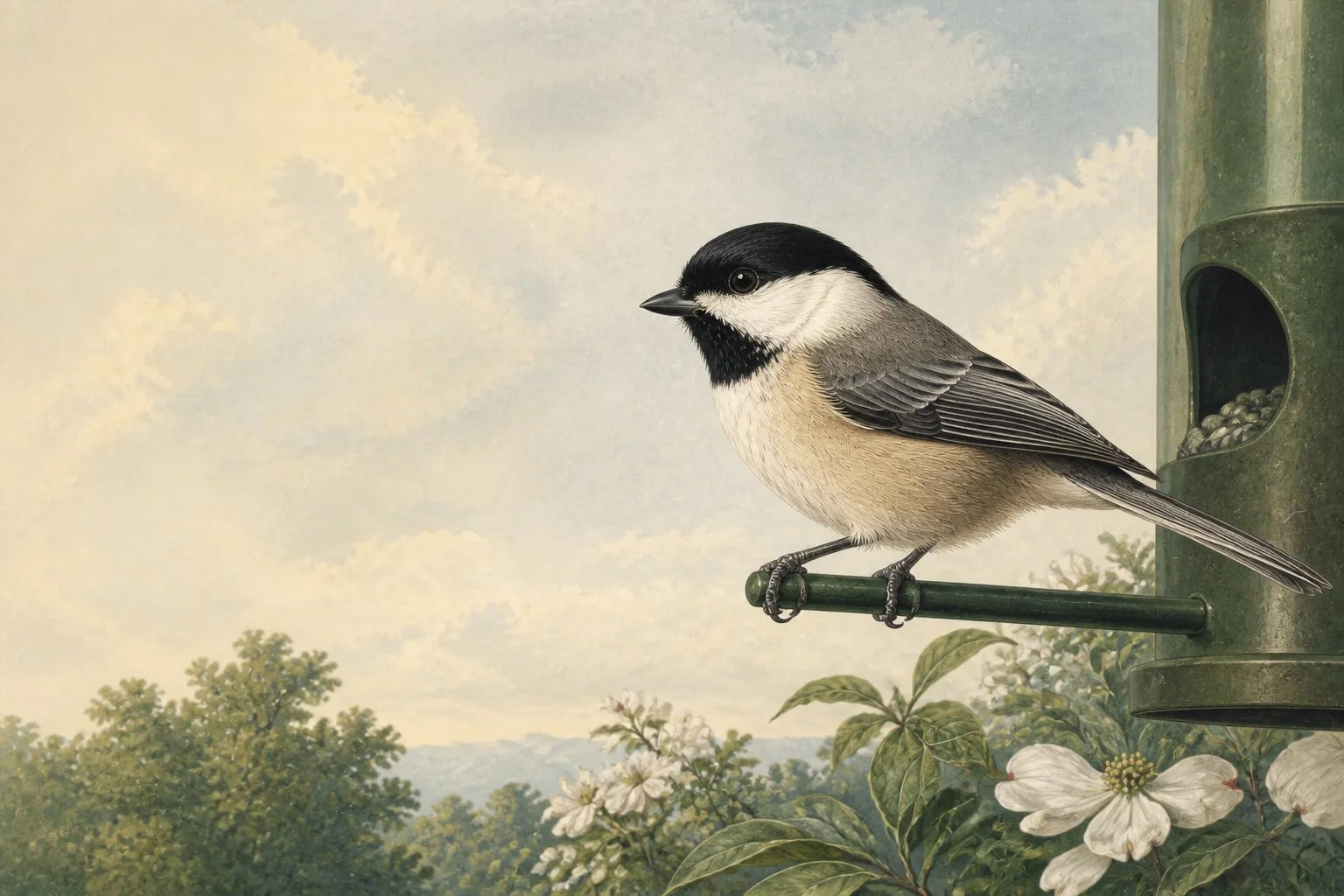
A garden built for winter cardinals supports the rest of the winter feeder community as well: chickadees, juncos, white-throated sparrows, finches. The cardinal is the headline species. The rest follow.
What the photo does not show
The image on the Christmas card is a snapshot of one second. The bird in that second has been doing the work that produced it for weeks. The fat reserves were built in September. The plumage was grown in August. The territory was chosen years ago. The pair was formed last spring. The roost was scouted in October.
The cardinal on the snowy branch is the visible tip of a year of work, and the work continues for as long as he is in the garden. He stays because the work is paying off. The food is reliable. The cover is good. The water is open. The pair is intact.
A garden where this is true is a garden that earns him.