Free shipping to the US, Canada & Europe
Backyard
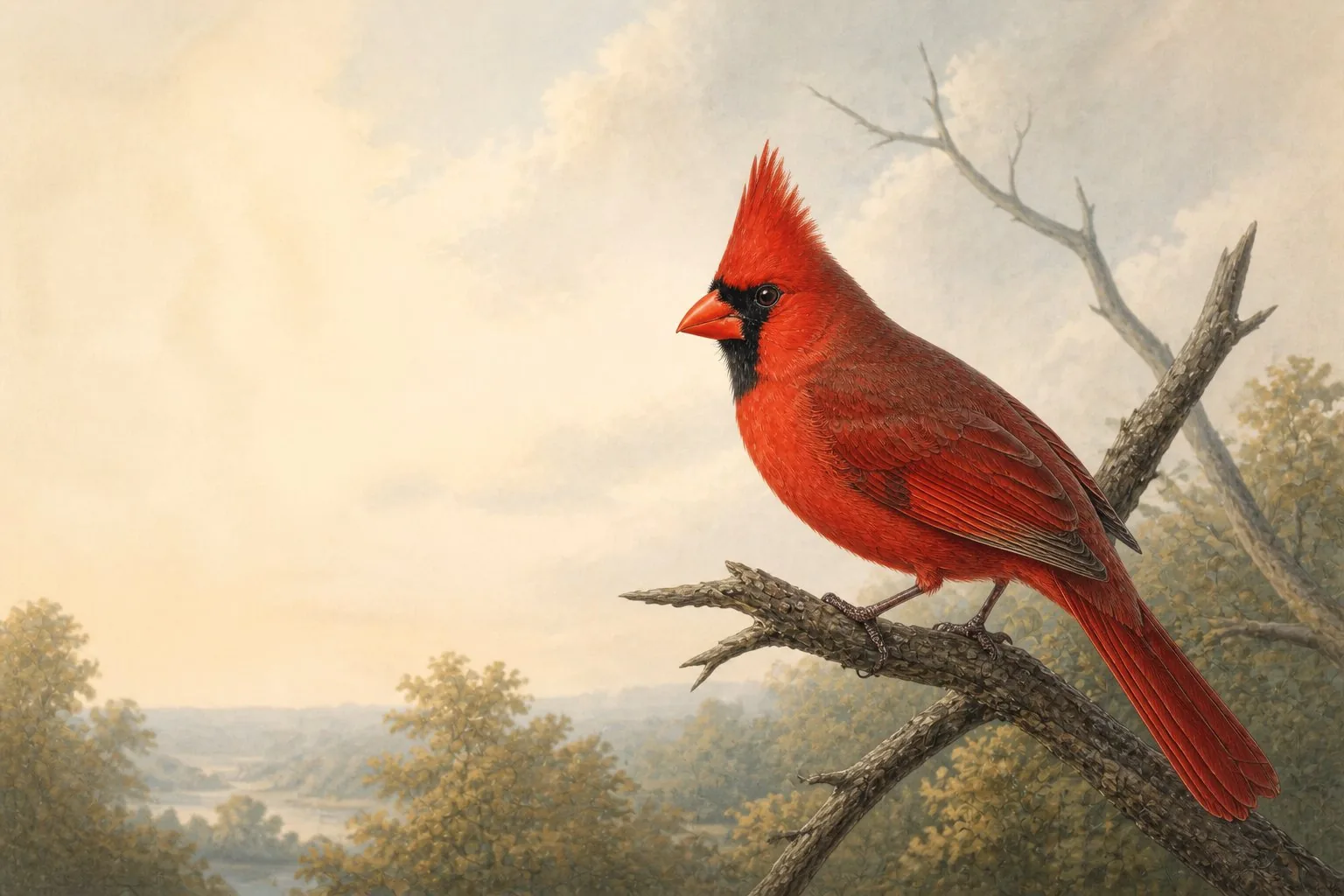
A cardinal does not want a tube feeder, a tidy garden, or a midday visit. He wants the things he has wanted for two million years.
May 19, 2026 6 min read
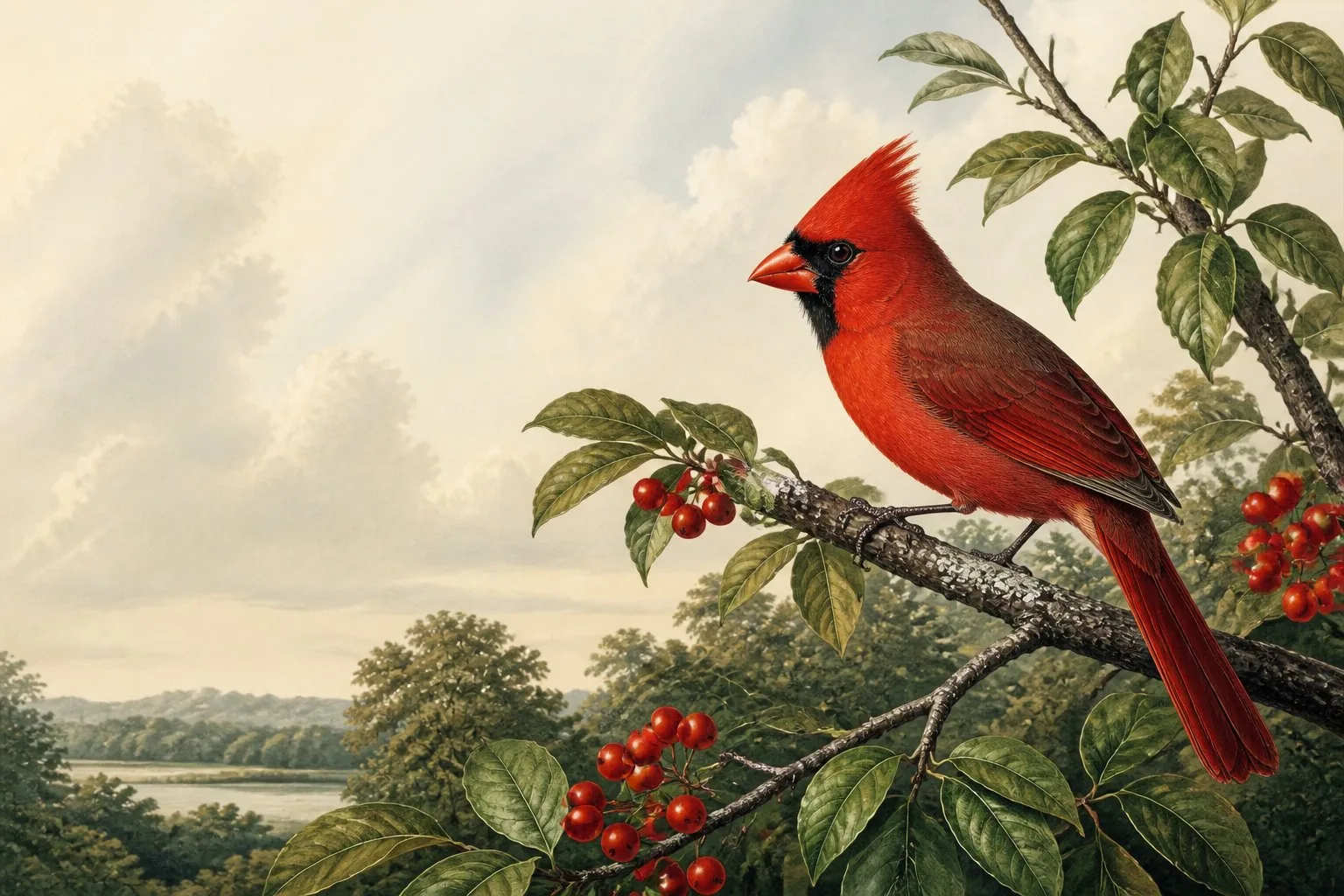
A Northern Cardinal moves through three to four hectares of habitat in his daily routine. He has, at most, four or five feeders in that area to choose from. Your yard is competing with the neighbours.
He does not pick the prettiest one or the most expensive one. He picks the one that does five things right.
If you only do one thing, do the first one. If you can do two, add the shrub. The other three multiply the effect.
Cardinals have heavy conical bills built for cracking sunflower. Tube feeders with small perches are sized for chickadees and titmice. A cardinal arrives, finds nothing to grip, and leaves.
| Seed | Cardinal takes it |
|---|---|
| Black-oil sunflower (in shell) | First choice. Reliable. |
| Safflower | Strong second. Excludes squirrels and grackles. |
| Sunflower hearts | Eaten readily, no shell waste, more expensive per kilo of usable food |
| Striped sunflower | Eaten, slower to crack than black-oil |
| Cracked corn | Taken on the ground, not preferred at the feeder |
| Peanut hearts | Occasionally |
| Milo | Will pick this out and discard it |
| Nyjer | Ignored, bill too big |
The reliable single-bag answer is black-oil sunflower in the shell. It is also the cheapest per kilogram of bird-grade seed in most US markets. Cheap mixed seed is the most expensive way to feed a cardinal because most of the bag goes to waste.
A couple of links below go to Amazon. They point to gear we would actually put in our own yard, and we earn a small commission if you buy through them.
What works:
What does not:
A cardinal will not feed in the open. He wants a flight to dense cover within seconds. Six to ten feet from the feeder is ideal.
Best cover plants:
A feeder mid-lawn with no cover gets a brief dawn or dusk visit at best. Move it within three metres of a shrub and the use pattern shifts within a week.
Cardinals bathe daily. Often more in summer. A ground-level dish or low pedestal birdbath, kept clean, is one of the strongest single attractants in the toolkit.
In winter the water is more important than the food. A bird that cannot bathe cannot keep his feathers compressed and waterproof, which means he cannot insulate properly. A heated birdbath deicer, around 50 to 60 watts at the bottom of an existing bath, costs the price of a few coffees per winter to run.
Sunflower will hold a cardinal pair through summer. In autumn and winter, native fruit extends the feeding window and supports nesting later. The carotenoids in native fruit are also the pigments that produce the next spring’s red plumage in the male. A garden full of dogwood, sumac and serviceberry produces brighter cardinals.
Top performers:
See Plants that attract Northern Cardinals.
Cardinals memorise feeder routes. A bird that finds your feeder reliably stocked in November adds it to his daily route through the winter. A bird that finds it empty for a week drops it from the route and may not come back.
Stock daily. Top up before storms. Keep the seed dry. Replace mouldy seed.
| Season | What he wants |
|---|---|
| Spring | Sunflower, mealworms for nesting females taking protein, native nesting cover |
| Summer | Sunflower, fresh water, dense cover for the second and third broods |
| Autumn | Sunflower, safflower, native fruit ripening |
| Winter | Sunflower, suet (will be visited), water above freezing |
For the winter-specific version see What to feed cardinals in winter.
First sighting after putting a feeder up is typically two to six weeks. The bird is cautious by nature and is also adding the new feeder to a memorised route, which takes time. To speed this up:
The male is the one you will see first, but the female is the one who decides. She chooses the nest site and judges whether the cover is safe enough to raise a brood in. Win her and you have a pair, and cardinals keep strong site fidelity: banding studies have tracked the same males returning to the same feeders across consecutive winters, so a pair that nests in your holly in May will likely be back the following spring.
A yard that holds a cardinal pair for a decade is a yard where the feeder is full every morning, the water is clean, the dogwood has been there longer than the homeowner, and the cat lives indoors.
As an Amazon Associate we earn from qualifying purchases. Linked products are ones we genuinely recommend.
 BackyardWet seed is not just bad seed - it is a disease delivery system
 BackyardThe best place for a bird feeder is closer to the window than you think
 BackyardWhy Birds Are Not Coming to Your Feeder
 BackyardDo bluebirds and cardinals get along?
 BackyardCardinals in the snow
 BackyardThe Christmas birds (four backyard species who stay through winter)
 May 19, 2026
 6 min read